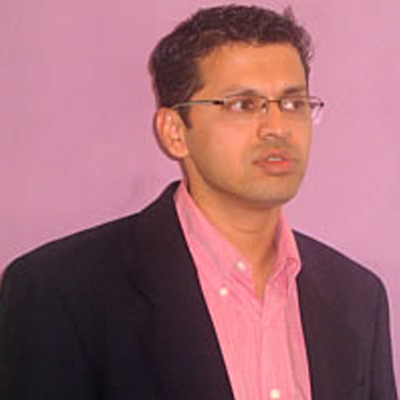
Tag: Rahul Welde

  • Rahul Welde exits Unilever after 31 years

    Rahul Welde exits Unilever after 31 years

    MUMBAI: Unilever’s EVP – Digital Transformation and Digital Business Rahul Welde has decided to move on from Unilever after a stint of more than three decades at the FMCG conglomerate. He made the announcement on social media. While Welde did not disclose details of his future plans in his post, he said he is embarking on a new chapter, adding– “building a portfolio career, charting new waters and fostering the spirit of reinvention”.

    Sharing a pic of himself handing over his Unilever employee pass, Welde wrote: Time does fly. It has been 31 years since I started my career at Unilever on a bright day. What a ride! I am fortunate to have been able to ‘pivot’ my career several times, long before the word became fashionable, all while being in the same company.

    “I have always believed in owning your spirit – in my case, following my mantra of ‘Joy over Success’. And sustaining my undying thirst for the new and left field,” he continued, adding, “Unilever is a great company – just too good to sum up in words. When I completed 30 years I said (and it’s there on Twitter for posterity) – “When you are in the company that long, I guess you really bleed blue. It’s so much more than brands and business – it’s a family.”

    “How does one leave family then? A fork in the road does come though, and it is time to move on from Unilever,” he further added.

    Having joined Unilever as a management trainee back in 1991, Welde was appointed media director – south asia and general manager – media services in 2005. Thereafter, he held various senior positions like VP-media and global VP-Digital Transformation before being elevated to the post of EVP-Digital Transformation in April 2018. He undertook the additional role of EVP-  digital business at the British multinational in February 2020.

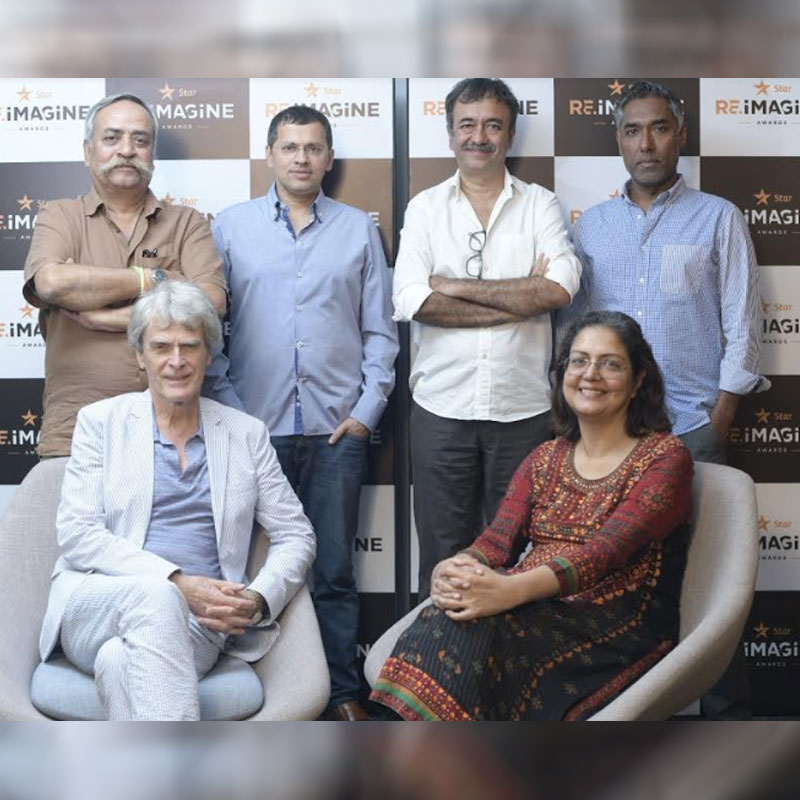
  • Bespoke elite jury for Star Re.Imagine Awards comprising Sir John Hegarty, Piyush Pandey, Raju Hirani, Vibha Rishi, Rahul Welde and V Sunil deliberate on May 26, 2018

    Bespoke elite jury for Star Re.Imagine Awards comprising Sir John Hegarty, Piyush Pandey, Raju Hirani, Vibha Rishi, Rahul Welde and V Sunil deliberate on May 26, 2018

    MUMBAI: Star India introduced the Star Re.imagine Awards this year, an award that will recognize creativity and innovation in the use of integrated media in advertising campaigns aired during the VIVO IPL 2018 on Star India Network & Hotstar.On Saturday May 26th a bespoke independent jury including advertising legend Sir John Hegarty, Piyush Pandey, acclaimed filmmaker Raju Hirani, marketing veteran Vibha Rishi, digital evangelist Rahul Welde and adman V Sunil deliberated on the winners. Over 300 campaigns by 120 brands were vying for the awards, these campaigns are the ones that were aired during the entirety of the VIVO IPL 2018 until Friday, May 25th, on Hotstar and the Star India Network

    The jury chose two top awards that cut across sectors, for ‘Best Creative’ and for ‘Best Use of Integrated Media’ that will be announced in June 2018. The awards will not only celebrate creativity but also recognize and appreciate teamwork. Two winning teams of 24 members each will be hosted for a premier global sporting event outside of India. The magnificent winning trophies have been designed by Europe’s pre-eminent glass artists Peter Layton, the award itself is a celebration of creativity and enduring art.

    Gayatri Yadav, President Consumer Strategy & Innovation, Star India, said, “Sports is a great platform to connect with consumers and the Star Re.Imagine Awards is about recognising great advertising that truly leverages the power of the biggest canvas of them all – the IPL. The awards celebrate inspiring creativity and the integrated use of television plus digital on display this season of VIVO IPL. I’m truly thankful to the bespoke talented jury – who painstakingly went through all the work, whose expertise, attention and focus on quality will help set the standard and build the Star Re.ImagineAwards as a brand for the future.”

    Sir John Hegarty said, “Instituting the Star Re.Imagine Awards has been a great idea because rewarding good work with recognition is the best way to keep the creative juices flowing. We’re judging and showing great, real work that’s been seen by the public who have responded to it in many different ways. This will encourage other clients to be brave and create work that stands out and engages. For me that is the more important part.”

    Piyush Pandey said, “I think Star Re.Imagine Awards is a fantastic idea. It’s a wonderful step that Star has taken in terms of encouraging creativity. I hope it will grow, become bigger and more attractive to people and give a boost to IPL advertising.”

    Acclaimed Filmmaker Rajukumar Hirani:  “It’s a good initiative because for anyone who is making any kind of films, ads or documentaries, if there is an appreciation of the work, it motivates them to do better. Star Re.Imagine Awards will give the opportunity to a whole lot of people to see the kind of good work that is being done in advertising.” 

    Marketing Veteran Vibha Rishi, “IPL is watched by hundreds of millions and IPL advertising is all about showcasing what you are capable of. It is a huge big platform for creativity and innovation. The Star Re.Imagine Awards will definitely go a long way in ensuring better quality and more imaginative work.”

    Adman V Sunil said “I think the Star Re.Imagine Awards is an excellent start. It will give the advertisers and creative people the next level of pressure to do better work. Hopefully, it will be a platform inspiring great work on a great scale.”

  • Mobile Marketing Association reveals speaker list for 4th MMA Forum India

    Mobile Marketing Association reveals speaker list for 4th MMA Forum India

    MUMBAI: The Mobile Marketing Association (MMA) has revealed the full speaker line-up and agenda for the upcoming MMA Forum India to be held on 16 September, 2015. Themed: Acquiring, Reaching and Engaging the Right Consumers with Mobile, this one-day conference will see prominent experts and thought leaders from across the mobile marketing ecosystem dissect the different components of mobile marketing from programmatic, mobile video, and location, to creativity and innovation. In-depth discussions will reveal new ways in which marketers can harness the power of mobile to keep up with the ever changing needs of today’s discerning consumer.


    Rahul Welde, Regional Vice President – Media of Unilever, will kick-start this year’s Forum, providing insight into Unilever’s innovative approach to marketing, discussing the opportunities presented by the consumer in his session ‘Leveraging Mobile To Drive Innovation and Enhance Brand Experiences.’


    CVL Srinivas, CEO GroupM will moderate a key panel discussion on key principles to becoming mobile capable with Vipul Prakash, Vice President – Beverages Category, Pepsico India, Ajit Mohan, Executive Vice President & Head, Digital for Star India and Novi Digital Entertainment Limited, Amrit Thomas, CMO, United Spirits Limited and Amarjit Singh Batra, CEO, OLX India. They will share examples from their client’s perspective and will give insight into how media owners can best work with agencies to build mobile insight and capability so companies can reach a level of maturity quickly and more effectively.


    The Forum will also see Fergus O’Hare, Head of APAC at Facebook Creative Shop, talk about the creative renaissance in mobile marketing. His session will explore creativity in today’s connected world, the explosion of mobile video and the implication and opportunities for marketers.


    In addition, Dippak Kurrana, Co-Founder & CEO Vserv will host a Fireside chat with Media Specialist and writer Vanita Kohli-Khandekar on the discovery to transaction in the mobile internet world. The smartphone explosion and ever-evolving technology has brought us closer than ever in achieving the marketer’s ultimate goal of shrinking the intent-purchase gap. This session will see the industry leaders discuss how marketers can get ahead of the curve, to maximize their opportunities and future-proof their strategy.


    Other key speakers include


    ·         Rohit Dadwal, Managing Director, Mobile Marketing Association Asia Pacific Limited

    ·         Nitin Bawankule, Industry Director, Ecommerce, Local Classifieds & Technology, Google India

    ·         Shireesh Joshi, Head Strategic Marketing, Godrej Group

    ·         Joshua Maa, Founder & CEO MADhouse Inc

    ·         Scott Zalaznik, Head of Global, Strategy, Xad

    ·         Joe Nguyen, Senior Vice President, Asia Pacific comScore, Inc

    ·         Nitin Mathur , Senior Director Marketing, Yahoo Asia Pacific

    ·         Vikas Gulati, Managing Director, Asia Opera Mediaworks

    ·         Avinash Jhangiani, Managing Director –Digital & Mobility OmnicomMediaGroup

    ·         Chris Steedman, Managing Director APAC, M&C Saatchi Mobile

    ·         Anita Nayyar, CEO India & South Asia, Havas Media Group

    ·         Milind Pathak, COO Madhouse – South Asia

    ·         Manav Sethi, Group CMO, ASKME India & Findit Malaysia

    ·         Jayesh Easwaramony, VP & GM, Asia Pacific, Middle East & Africa, InMobi

    ·         Rohit Sharma, CEO & Founder Pokkt

    ·         Joby Babu, COO, Nimbuzz Internet Media Pvt Limited


    “I am extremely excited about the diverse mix of speakers at this year’s Forum, who will be sharing their insights into how marketers can adapt and reinvent their approaches to mobile marketing to acquire, reach and engage the consumer in line with continuously changing technologies and consumer behaviours,” said Rohit Dadwal, Managing Director, MMA APAC.


    The MMA Forum India 2015 will conclude with the awards ceremony of the SMARTIES™ INDIA 2015, recognizing the best mobile marketing works in the region.


    The MMA Forum India 2015 is partnered by Vserv.com, MADhouse, InMobi, Nimbuzz, Opera Mediaworks, Pokkt, Hotstar, Yahoo!, Unites Spirits Limited and Pocket Math. 

  • Media, marketing & technology experts to gather for ad:tech

    Media, marketing & technology experts to gather for ad:tech

    MUMBAI: Ad:tech global digital marketing & advertising conference and exhibition, having 14 shows worldwide, will host its fifth edition of the New Delhi Show on 19 – 20 March, 2015. The event will be held at the Leela Ambience Hotel and Residences, Gurgaon where more than 4000 thousand marketing, technology and media communications professionals are expected to attend.


    dmg :: events EMEA & India digital marketing head James Drake-Brockman said, “The fifth edition of the ad:tech promises to be a testament to this ever expanding digital market in India. This year the show will have 110 plus speakers and more than 70 exhibitors and sponsors for the event. We have witnessed overwhelming success since ad:tech’s inception and we are confident that this year, the legacy will be continued. At ad:tech New Delhi 2015, you can experience two action-packed days with keynotes, education led by digital marketing’s best and brightest, hundreds of leading-edge suppliers – from established players to the newest startups – nonstop networking and much, much more.”


    This year the keynote speakers include: Unilever Asia, Africa, Middle East, Turkey and Russia vice president Rahul Welde, GroupM chief digital officer Rob Norman, Myntra CEO and Flipkart head of fashion Mukesh Bansal and BBC news and current affairs director of digital development James Montogomery. 


    Among the big themes this year will be: M-Commerce, the future of E-Commerce, data fuelled marketing, analytics, fresh insights on programmatic advertising, digital content, media measurement in the digital era and multi-screen world, evolution of native advertising, digital’s impact on entertainment, music & news, experiential e-commerce, performance marketing, the role of data and automation in future media planning, 


    This year’s event will be attended by some of the biggest brand from India and the world like Airtel, Oberoi Group, Axis Bank, Kotak Mahindra Bank, Thomas Cook, Yes Bank, Olx, HDFC Life, American Express, Indus Ind Bank, Max Life Insurance, Tata Capital, Tata AIG, Amazon, Johnson & Johnson, ITC, Star India Pvt Ltd, ITC, FlipKart, GSK, HDFC Life, Mahindra & Mahindra, Wipro, HCL, Madison Communications, GroupM, Lintas and Cheil Worldwide amongst others.

  • Unilever’s Rahul Welde: Consumer communication in a digital world

    Unilever’s Rahul Welde: Consumer communication in a digital world

    SINGAPORE: “Advertising and campaigns are not dead,” said the red-frame bespectacled executive on stage. “Whosoever says that is foolish. The TV commercial is changing from three seconds to as much as three minutes or six minutes. Its form may change but advertising and campaigns are here to stay.”


    Most professionals in India are familiar with this gent. Rahul Welde is Unilever vice-president Media for Asia, Africa, Middle east, Turkey and Russia, and he is seen as a media tour de force in the world as he controls ad spends running into billions of dollars for a large part of the emerging markets for the consumer giant.


    Welde was speaking at the closing session of Social Matters in Singapore. He said he welcomes the explosion; the fragmentation in media. “I believe it has brought with it tremendous opportunity.  It allows to not go by classical reach and frequency approach that we have to do with mass media where we do a shot gun spray gun approach. It allows us to specifically target specific audiences. But we need to ride all the platforms – TV, print, outdoors, radio, online, social and what have you.”


     He pointed out that Unilever is constantly listening to whispers in the digital social universe. “We are constantly on the alert. We are listening. We are reacting to what consumers are saying. It helps us tweak products; attributes and helps build brand love amongst consumers,” he stated.


    He spoke about a campaign that Unilever ran in India on the day of the election results on 16 May on Facebook. “We knew everyone was going to be on Facebook to comment, give their views on the election results. The reach block we resorted to asked engaged Facebook users to embrace the change that is coming. We got 35 million impressions; 165,000 reacted and interacted. It was very effective,” he explained.


    Welde said that digital is also permitting Unilever to deliver on “target moments.”


    For instance, he said that if the weather prediction is that the temperature is going to rise four days from a specific date, then he can choose to flood the various social and digital sites with advertising or messaging pushing ice-creams.


    “Let’s take this further,” he said. “This month is Magnum ice cream’s 25th birthday in Singapore. I can reach out to all those who are celebrating their birthday this week or this entire month individually and help create a personal touching moment for each of them with their brand which is Magnum. In the old world of print and television, I could have never done this. “


    He also spoke about the Dove Real beauty sketches campaign which was conceived in Latin America but broke in Australia. The idea of the campaign was to convince 96 per cent of women who think they are not beautiful that their beliefs about themselves are untrue.


    As part of the campaign, a forensic artist asked women to describe themselves and he drew them without ever taking a look at their faces. The next day a stranger – who had met the women – then described the women sketched the day before to the artist who once again drew them. In almost all’ the cases, the women’s description of themselves and their beauty was not as charitable as the strangers and it showed in the two version sketches.


    “The video which was produced by our agency Ogilvy went viral wildly,” says Welde. “We wanted every woman to know and believe you are more beautiful than you think and I think it worked very well.”


    Welde and the Unilever team are obviously pressing the right levers.

  • Atit Mehta made media head for South Asia at Unilever

    MUMBAI: Fast moving consumer goods giant Hindustan Unilever Ltd (HUL) has made a couple of changes in its senior management.

    Atit Mehta, currently manager media services, has been appointed as head – media, South Asia, Unilever succeeding Abhiroop. He will report to Rahul Welde, vice president-media, Unilever.

    An HUL spokesperson confirmed the news and spoke about the other change in the senior team. “Abhiroop Chuckarbutty, currently head – media, South Asia, Unilever, has been appointed as GM – packaged foods, HUL and will report to Geetu Verma, executive director – foods, HUL.”

    Chuckarbutty was appointed to the post of head – media, South Asia in November 2011. Mehta has been with HUL since 2008 when he joined as senior media services manager. Before that he was with Colgate Palmolive as country media manager from 2007 to 2008. He has also worked on the agencies‘ side as business director with GroupM for seven years from 2000 to 2007.

  • ”Economically sensible model is a combination of CPT and correction of income growth’ : Paritosh Joshi- Star India President

    ”Economically sensible model is a combination of CPT and correction of income growth’ : Paritosh Joshi- Star India President

    It’s now a known fact that HLL has pulled its advertising off the Star India Network, but whether a non co-existence and exchange between the biggest advertiser on television and the top rated television network in the country is a healthy proposition for either of the two parties, is the moot point?


    Even though TRP rates have declined across the network by 1-1.5 per cent after the implementation of Cas, it is also true that the television universe has grown drastically. And the truth is, Star has been singled out, leading one to question if there is a larger issue at stake here between the two mammoth corporations in this face-off that kicked off in March this year.


    Star president advertising sales and distribution Paritosh Joshi says that it is more than just an individual client issue but part of a larger debate for which the industry cannot behave like a cartel because that is unethical.


    Presented here are comments made to Indiantelevision.com on the matter by Star India president Paritosh Joshi. Additonally, relevant comments made in earlier interactions with Indiantelevision.com by HLL GM – Media Services Rahul Welde and Zee Network executive V-P Joy Chakraborthy have been provided in an attempt to offer a more rounded overview of the issue.

    Excerpts:

    How do you propose to address the issue that HLL has put the forth through its boycott of the network and rejection of Star’s advertising rate card?
    A solution to this will emerge as a fallout of the understanding of two dramatic developments in television. First the growth in television homes in the Hindi speaking markets of the East, West and North but not the South that is already saturated.

    Secondly, the GDP, which is estimated to grow by 8.9 per cent year on year. However, there is a disproportionate income increase in which the top 60 per cent of the population absorbs this growth. Out of the 120 million TV homes, 70 million are C&S, therefore with the kind of growth in disposable incomes that the country is seeing, the number of C&S homes will grow by twice that rate.

    The aggregate value of television ad sales is likely to see 20-22 per cent Y-O-Y growth. If this is not reflected as an industry then we are under monetized.

    Is CPT is the answer?
    I believe an economically sensible model is a combination of CPT and correction of income growth.

    Should broadcasters be united on this front?
    The industry cannot behave like a cartel because that is unethical. We have to, as individual broadcasters, explain this to the client in a sensible manner and get them to recognize and find merit in the argument.

    But how then do you fill up the bulk of your inventory?
    The Cricket World Cup has in some ways contributed to clients looking for a more reliable, robust and stable inventory. With April to June being a buoyant period with new category launches and the new financial year, there are enough interested clients. We are seeing high activity from the skin care sector, bottled beverages, refrigerated foods and air conditioner brands.

    XXXXXXXXXXXXXXXXXXXXXXXXXXXXXXXXXXXX

    Money is shifting from the big to the small or from the leaders to the challengers

    With HLL always known to be television heavy, what happens in the case of mass channels and niche channels, what strategy would you follow in that case?

    Well, we do spend on niche and mass channels, but with the whole area of fragmentation of audiences with multiple channels emerging, where stickiness is a challenge and competition is high. Now what it really means for us is that segmentation and multiplication of channels provides the opportunity to peg note and talk to the consumer.

    Unfortunately, the costs have increased and given that the overall advertising pie is fixed. The ad pie doesn’t grow because there are more channels, but what is happening is money is shifting from the big to the small or from the leaders to the challengers.

    The growth of channels, we will see an increase in the number seconds, but what is often interpreted is that spends are also increasing in the same proportion. It is of course a big challenge as fragmentation makes the task of planning even more difficult, where agencies will produce software and optimizers making the process more sophisticated. This scenario is good for segmentation, bad for costs. Thus I don’t know whether to call it a ‘happy situation’ because after a point of time your returns become sub-optimal when costs are high. Then that becomes a worry.

    XXXXXXXXXXXXXXXXXXXXXXXXXXXXXXXXXXXX

    The big news currently seems to be around how Hindustan Lever is significantly increasing spends on your network. You have even been on record as saying you are looking at a growth of at least 100% on Lever spend in FY08 over FY07? How do you justify that optimism?
    Levers is the biggest client in the television space and we have channels across all genres, Levers is a good client for consumption also because they are perennial clients. There has been rate correction but we have also given them big properties. At the same time, Levers buying process over the last two years has changed, initially they used to buy slots that appeared at a particular time band but now they have started buying quality as well so they would necessarily have to pay for that. Therefore, there has been a jump in ad sales rates this year over the previous year.

    When you say ‘rate correction’ – what do you mean?
    The Zee network itself is very under-priced, so we are continuously correcting our rates. I have over my tenure here (which is two years) revised my rates three times, but no rate correction is very drastic, it’s really a gradual correction.

    After all we are still in a World Cup year and although India is out of the tournament, we will see loads of other cricket action as well?
    As a network, we haven’t suffered at the hands of cricket. However a lot of money is diverted there. But thanks to cricket and sport, I believe that the overall PUT (people utilizing television) will also increase, because of World Cup TV sales will also increase, so the whole space is only going to expand.

    It will eventually benefit us also, but my only concern and what I see as a challenge this year is that the unofficial currency is cost per rating point (CPRP), which has to move cost per thousand (CPT). CPT is more important and with Tam’s expanded panel the absolute number of people watching has increased by 50 per cent and we as an industry should be paid for that. Even more, if you are a listed body you also should subscribe to the CPT model, which will happen sooner or later.

    But how soon do you think the transition from a CPRP model to CPT model will take to materialize?
    The IBF and AAAI have already met on two occasions, the next one is in April. But at the end of the day this shift will benefit all of us. It’s not that it is unfortunate for the client alone, as the television medium continues to grow the cost of programming, distribution, marketing and manpower is increasing every day. With the CPT model the ad rates will go up, infact most agencies buy on CPRP and give it to the client on CPT, but after expansion the minimum rate has increased. The recommendations of these two industry body’s should materialize within a month’s time.

    It has been previously stated that Cas impact only accounts for a 1- 1.5% drop in C&S 4+ level across TV. However, with moves to extend Cas to cover the full metros and then possibly go into other cities and towns this argument cannot be sustained for much longer. How does Zee view this situation and how do you plan to use it to your advantage?
    Cas is here to stay but the thing is that Cas growth was marginal, across the Zee network the drop accounted for 2.5 per cent, which is very less in comparison to the kind of growth that we are experiencing.

    With Cas rolling out further, the pressure from media buyers on rates is only going to go up? Do you see the possibility of many channels, including entertainment channels, going FTA to protect advertising revenues? For instance, Peter Mukerjea’s Hindi entertainment channels will be FTA when it launches…?
    Sometime we really wonder whom the media buyers really work for, the channel or the client. They will always pressurize us. Do you think they deal with rate hikes easily? They will fight for each rupee just as we fight for the same. But that is what makes our relationship so lasting.

  • ‘TV will continue to be important, but its importance will decline’ : Rahul Welde – HLL general manager – media services

    ‘TV will continue to be important, but its importance will decline’ : Rahul Welde – HLL general manager – media services

    For over 50 years FMCG major Hindustan Lever has dominated the Indian market with brands that have become a household name for many. Now it is about to turn over a new leaf to welcome its mother company Unilever. After having hogged the media space, especially television and now opening its doors to new media like internet and radio, the time seems right to question its experts on their outlook to the fast developing media landscape.


    In conversation with Sujatha Shreedharan and Renelle Snelleksz, HLL general manager – media services Rahul Welde, who is most uncomfortable in front of a camera, puts aside all his inhibitions once he begins speaking on his area of proficiency – media and advertising.


    Excerpts:

    With the HLL name change announced, the next question is how would this pan out in terms of a branding and marketing strategy?

    Since it’s just been announced, we haven’t really planned that out as yet. It will be put to vote in the AGM in May, after which it will get adopted and implemented.

    One of the biggest advertisers on television, HLL is now looking beyond the medium. What kind of media mix does HLL now look at? You have also maintained that TV is bound to decline?

    Television will continue to be important. However it will also continue to decline in importance. The reason for this primarily has to do with the way consumers are reacting to television messages. Studies indicate that there is a greater degree of ad avoidance, greater degree of clutter on television and that has resulted in lesser interest in television by consumers.


    Simultaneously people are spending more time outdoors, doing other things than just watching television. As a result television is facing a lot of competition from the other media.


    There was a time when there was no television and print had all the advertising – but that lasted only until television made an appearance. It ate big time into print advertising. Something similar will happen to television with the advent of radio, internet, mobile communication and other types of new media. Eventually they will fight for the same share of the rupee.


    I don’t think anything as drastic as the death of television is bound to happen anytime soon but it is staring into the face of a huge challenge even while other media grow at an exceptionally fast pace. The same applies to our understanding of media buying as well. Our focus has shifted to alternate media and is much higher than what it used to be two years ago.


    Also, I must say that there is also nothing like an HLL mix, as it depends on our brands. Some will focus on TV and spend nothing on print and vice versa, so the strategic thinking as to what to use comes from the brand and consumer lens. We are thus excited about the internet when it comes to youth brands, while outdoor and DD are key for brands like Wheel. From an industry perspective, I think radio will experience growth.

    With HLL always known to be television heavy, what happens in the case of mass channels and niche channels, what strategy would you follow in that case?

    Well, we do spend on niche and mass channels, but with the whole area of fragmentation of audiences with multiple channels emerging, where stickiness is a challenge and competition is high. Now what it really means for us is that segmentation and multiplication of channels provides the opportunity to peg note and talk to the consumer.


    Unfortunately, the costs have increased and given that the overall advertising pie is fixed. The ad pie doesn’t grow because there are more channels, but what is happening is money is shifting from the big to the small or from the leaders to the challengers.


    The growth of channels, we will see an increase in the number seconds, but what is often interpreted is that spends are also increasing in the same proportion. It is of course a big challenge as fragmentation makes the task of planning even more difficult, where agencies will produce software and optimizers making the process more sophisticated. This scenario is good for segmentation, bad for costs. Thus I don’t know whether to call it a ‘happy situation’ because after a point of time your returns become sub-optimal when costs are high. Then that becomes a worry.

    Given that you are the biggest advertiser on kid’s channels, what is the potential that you see in this space and how do you (as an advertiser) think it will shape up in the coming years?

    For us it is important, but the degree of importance it would be very low because you have to look at it from the brand and consumer fitment perspective. There are a few of our brands that actually talk directly to kids while a larger percentage of our brands look at the older demographic.


    Even then we are the largest advertisers. So you can imagine if kid’s were to become important then we would really have to up our spends. But the interesting part is that kid’s involvement in influencing the purchase decision is growing. Now does that mean that they participate in the decision to buy a laundry powder? My guess is that they don’t.


    Thus, it’s not really a major part of our media thinking but it’s interesting because there is a lot of stuff happening in the kid’s space.

    You’ve shown a lot of enthusiasm about radio. But it seems HLL mostly uses AIR and not private station. How do you view private FM?

    I see private FM as a very exciting space for us because suddenly with the addition of newer towns, viewers will have more choice in media. This viewer engagement will attract more advertising, so from our perspective which brand will resort to using radio will depend on the brand and consumer fit. Right now we are in the process of taking stock of radio advertising and as we see it increasing to about 300 stations, but more importantly the excitement is about the increase in towns.


    Now whom we are in partnership with has to be strategically thought out, but we are in talks with several partners. The good part is that there are new and established players coming into the fray. Even now we are the largest advertisers on AIR and FM, this will only mean that our footprint will become broader within the radio space.

    Media planners are hesitant about radio due to the lack of key differentiators, what are your views on that?

    Somewhere a woman/man is being wooed and while people begin to analyze this space I think we will get on to the bus much faster. We have in the past invested in the medium and will continue to do so. We will not wait to see who emerges as different, as differentiators are what you create. You don’t view TV the way you used to therefore, radio will also be consumed differently. I don’t know what media agencies generally view this space, for us what is important is what we can do to it. Currently, we are holding our excitement.

    Following Wheel Smart Shreemati and Rin Mera Star Super Star will AFP’s be given greater importance going forward?

    All our AFP’s played out very well for us, Wheel was the top rated show on Doordarshan. Although, it may appear like something we mounted and happened to do well for us, but the truth is we were working on it for three years. In 2004, the germ of the idea began, 2005 we tested it on a smaller channel and 2006 we took it to DD. Our planning and research helped us get to where it is as the top rated show.


    The challenge is that you have to combine the arithmetic of the brand, communication and commercial and get the trio to work. However, the effort required for AFP’s is disproportionate. It calls for a genuine collaborated effort with the channel, the clients and the production house. It gives a new lens to the planning effort and it’s the next practice.


    We have been cautious with in-films as we don’t really know how it pays back. It is one step higher than AFP in terms of collaborative effort, in fact it ends up being more of a ‘punt’ than TV.

    Talking about the online space could you highlight what is currently being done with online marketing after Sunsilk Gang of Girls and Axe land?

    We have got stuff in progress but not in the development stage yet. The Gang of Girls gave us better results that what we expected both from the returns and consumer engagement we got. The sheer numbers were amazing, we tracked all the measures and it appears the time spent by these girls was almost 11 to 14 minutes. We did it to get engagement rather than exposure and it was a collaborated effort with partners like Monster.com, Elle and Cosmopolitan. It went beyond just talking about hair to discussing everyday issues among friends, to have an extended conversation with the consumer. So both thematically and in terms of engagement it played out very well.


    Also with Axe we did Axe Unlimited Academy and will roll out something along the lines shortly. So will we have all brands participate aggressively on the net? Probably no. But definitely our youth brands will, because it’s really about redefining the role of engagement. Therefore for us the whole space of internet is going to grow very fast and it will grow through a combination of such websites and simultaneously through traditional web based advertising. The net allows a huge amount of interaction but it depends on how you exploit it.

    How does this translate into sales?

    This was a brand building effort, but of course everything that goes towards building a brand must translate into sales. But it is about driving brand preference and an alternate way of communication.


    A big change is likely to be seen which is currently under the surface, but the in the coming years the numbers in terms of advertising will show that.


    The only thing that we consider is the brand and the consumer, the media needs to fit into that, so if online would largely be urban, but this is also applied to the rural I-Shakti programme, however, net penetration is still restricted to urban India, but progressively it will spread.


    Even the outdoor space is very interesting, however it’s not being exploited sufficiently. Every time people travel, it’s an opportunity for advertisers. In fact, among different forms of media there are definitely some that are really likely to rock!

    Could you name three different media that you think will rock in 2007?

    I think for the next two-three years radio will rock, maybe not in 2007 because lets not forget that print is some 1,000 crores (Rs 10 billion) and radio only some 100 crores. If I were to have a prognosis I believe that radio will really double, because it’s just the sheer scale that cannot be ignored. But within this space there are also so many players, coupled with the lack of measurement at the moment will make it even more difficult, so who do you back, how do you know it works? Thus a half baked science gets applied. But the minute you put measurement, predictability and science behind it that will cause inflection, otherwise people will be cautious.


    What will also make a big shift, whether it will rock financially I cannot say, but the whole business of in-store on-screen advertising, suddenly you will find them all over the place and therefore it will peel off mainstream advertising and then get evaluated analytically by agencies.


    Even in the TV space, the whole area of Cas and DTH will keep the excitement alive. DTH is getting into rural space so that will be interesting. There is great action happening there as well, KBC 3 and others.


    Another thing is that regional media is also getting more and more important across all genres, whether it has been Marathi, Bengali, Oriya and traditionally Telugu, Tamil and Kannada have been strong anyways.

    We’ve talked conventional media and new media but HLL has always been a strong advocate of rural marketing? But the focus keeps shifting and after some time all talks of rural marketing die out. Can you give us an update on what has been happening on this front?

    The biggest challenge for us is that a large part of India is still media dark. What that means is that television or print does not really reach there. Then there is the problem of infrastructure and literacy. Therefore from our perspective we’ve really tried to concentrate on on ground activation- demonstration, sampling and events.


    While the problem of infrastructure, non motorable roads, etc. remains there is also a challenge of scalability. We’ve been active in the rural areas for a long time and progressively have increased our thrust in this area. The big change is of course in the scale. We have upped the scale in these initiatives.


    We’ve got two-three programmes which we have been looking at for the last few years. One of them is Lifebuoy Swasthya Chetana- a rural communication programme around Lifebuoy that has touched over 130 million consumers across Bihar, UP and Rajasthan. Similarly, there is Project Shakti. The Shakti Vani is a programme that we started keeping in mind communication with rural consumers.


    While Lifebuoy Swasthya Chetana is a brand specific programme, Shakti Vani cuts across all the brands to speak to the consumer. The action in rural India is all about being ‘their type.’

    Is there also a challenge of making these initiatives profitable? You have talked to us about scaling it up? Since you do talk about the challenges, how do you go about building your capabilities and expanding it?

    The issue is not so much about profit although there is a worry of cost effectiveness. So when you know that there is a cost involved in physically being there which cannot always be done. When I say scalability, the challenge is to do with two things – one is to do with researches on ground.


    If you want Western class communication to reach rural India, you need a full stream of resources which works down the line, is well trained and which understands what is being spoken about. The fact remains that the scope of the country is so vast and immense that no matter how much you do, it’s never going to be enough. Despite this, I don’t know any other company which does as much in rural marketing as we do.


    We work with one agency on our rural initiatives – Ogilvy Outreach and have built a strong network through our vendors. I think over time we have built our capabilities in this segment. As for expanding this further, yes we would look into that as well. We are expanding in almost every sphere and rural marketing will come under that focus too.

    Big monies are being pumped into cricket on TV, but I don’t see the same quantum of returns

    If we could just talk about HLL brand and brand categories. You have largely spoken about brands in the health and personal care segment, in this respect has the push in the food division been milder?

    We do have firm positions in beverages. In fact, we just re-launched Taj across a multimedia campaign. There is excitement in foods but the scale and salience is very different. It is largely to do with the category and not so much to with the brand itself. Our tea brands are the largest in the category but if you look at these brands in advertising terms they are not as active as the personal care. Inevitably you would see Lux, Lifebouy, Sunsilk, Surf, Rin as large media and advertising brands.

    As opposed to the parent company, which has a strong presence in the food category, therefore would the recent global alignment following the inclusion of Unilever into the companies name, mean that there expertise in foods would be brought to India?

    It’s outside my remit to comment on that because that’s a matter of corporate strategy and how the food units would grow and I can only comment on advertising. But in totality the investments in this space are as hot as personal care and it’s growing as much. It is smaller in scale but as active.

    Finally, with the World Cup Cricket right around the corner, any new initiatives or plans for the season?

    (Laughs) You know every year there is great excitement over World Cup Cricket among advertisers and also channels. We share that excitement too, but we don’t want to be carried away by it. We will have certain things in place for cricket, some of our brands will have World Cup Cricket branding. But the fact of the matter is that a lot of money is pumped into cricket on television. The question to ask is where does this extra resource come from? It is but obvious that it is either pulled out from some other kitty or companies start following a cost cutting plan. So while I may be excited about it, I don’t see the same quantum of returns in World Cup, so I am cautious.


    So it is great that the advertisers are looking at World Cup. For us the larger worry is the movement of eyeballs from the general entertainment channels to the sports and news channels. Finally it’s a question of checks and balances. Is this rupee spent worth it? Any advertiser would ask himself that before putting up his money. Otherwise it becomes like a punter’s game.

  • Star Plus partners HLL for kids talent hunt show; Endemol to produce

    Star Plus partners HLL for kids talent hunt show; Endemol to produce

    MUMBAI: Star Plus is kicking off its programming series with high advertiser participation with the kids talent hunt show Rin Mera Star Super Star. The channel has teamed up with the FMCG major Hindustan Lever Limited (HLL) for the initiative. Endemol India has been roped in as the producer of the show.

    Rin Mera Star Super Star is a nationwide talent hunt dedicated to unearthing talent in children aged 5-14. The programme promises to offer a national platform for talented children to showcase their potential in three categories – singing, acting and dancing. The winning contestant will get a scholarship of Rs 5,00,000 to help him/her pursue the dream of becoming an artist or to take up future education, states an official release.

    Rin Mera Star Super will be aired every Friday on Star Plus at 7:30 pm beginning September 2006.

    With Rin Mera Star Super Star, HLL’s brand promotion, Rin Advanced White Star Hunt, is being taken to national television. Since June, over 1,00,000 children across 22 cities have already auditioned and the entries are still coming in. Around 2,000 schools are also participating in the audition process. The top 50 kids from across the country will compete for the coveted crown on Star Plus, the release adds.

    Speaking on the initiative, says Star India ad sales & distribution president Paritosh Joshi said, “This is our first show of this scale, which has focused on strategic brand solutions. And for the first time an advertiser, with the brand, Rin, is a strategic content partner. To enliven brands in the minds of consumers through content takes our partnership with advertisers to a new level, making us a partner of our advertisers.”

    HLL marketing manager Priya Nair adds, “Rin is all about making an impression and a talent hunt among kids is the perfect arena. Many children are blessed with amazing talent and Rin provides them with a great platform to make an impression.”

    Says HLL media services GM Rahul Welde, “This marks a new approach to brand building with a much higher level of engagement than the more traditional forms of commercial advertising. The launch of this show is a true win-win association for Rin and Star, providing Rin a nationwide platform from which to communicate with consumers and Star, an excellent format show to entertain its audiences”.

    Endemol India MD Rajesh Kamat offers, “Rin Mera Star Super Star is a combination of entertainment and branding, a concept which will be brought alive on TV in a fun and exciting show. This is one of the first local formats that we have developed and we look forward to creating many such shows for Indian television”.