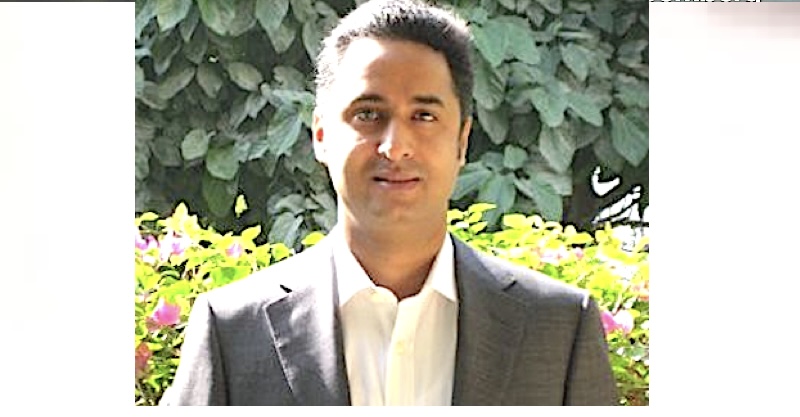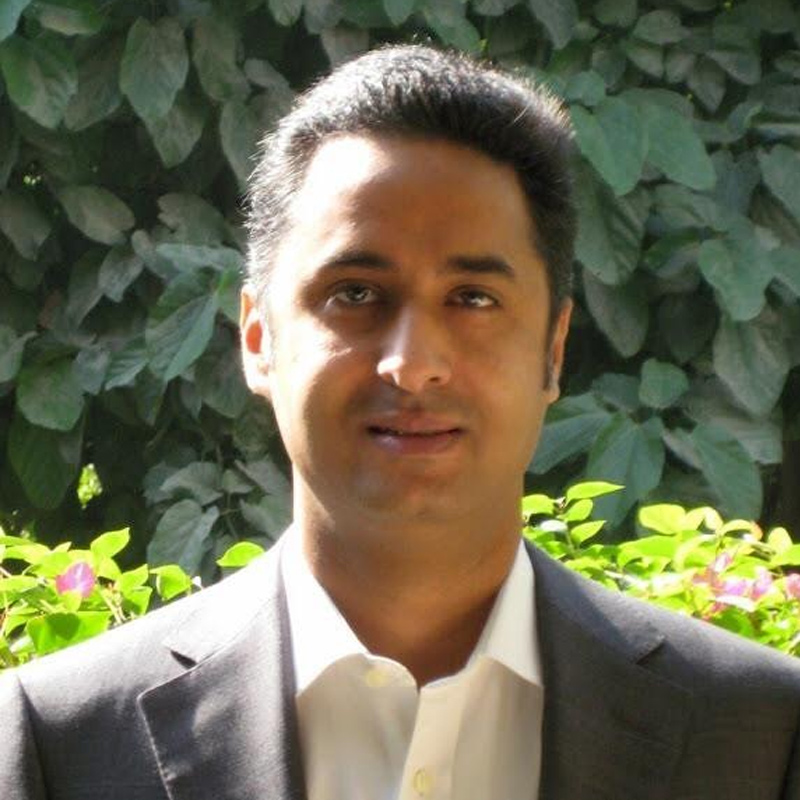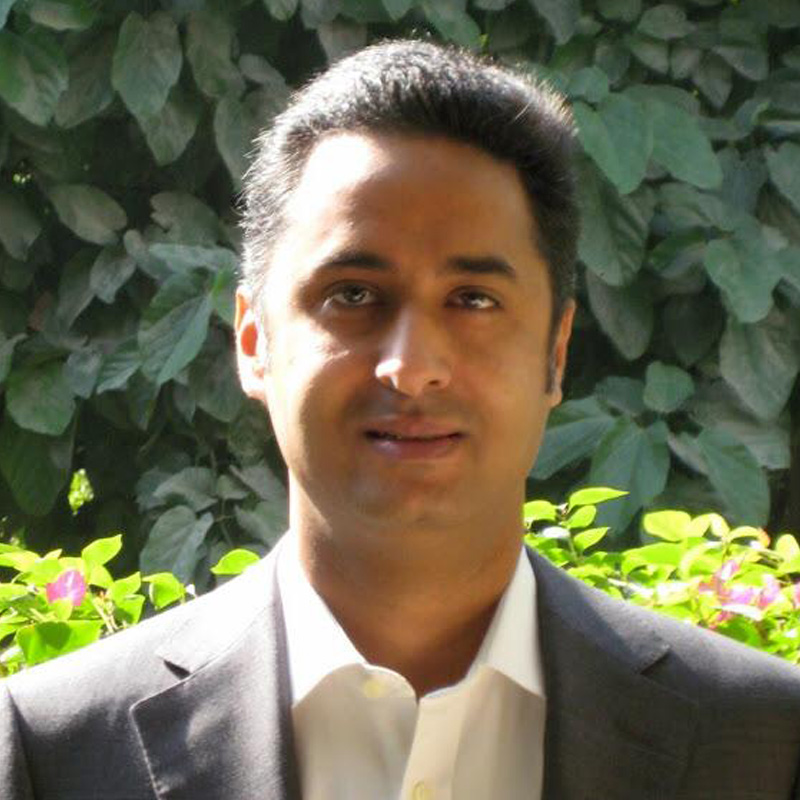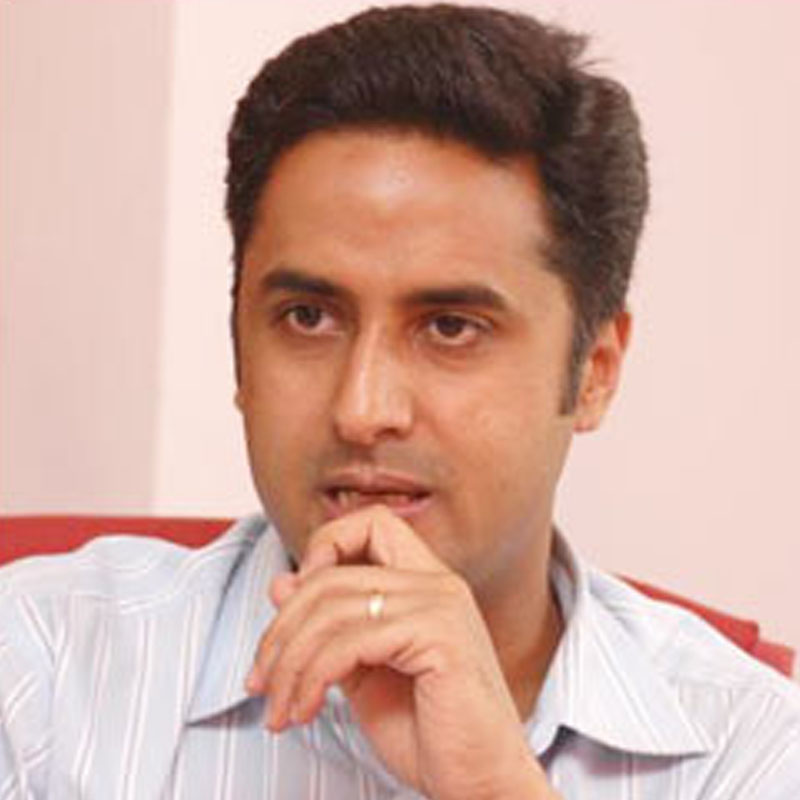
Tag: Rahul Sood

  • Bloomberg Media expands reach with Brandwidth Mediaè tie-up

    Bloomberg Media expands reach with Brandwidth Mediaè tie-up

    MUMBAI: Bloomberg Media, the multi-platform media company for business and financial information, is doubling down on its regional presence with a strategic partnership with Brandwidth Mediaè. The collaboration aims to deliver Bloomberg’s cutting-edge financial intelligence to a wider audience across the subcontinent.

    Brandwidth Mediaè founder & managing director Rahul Sood said, “This partnership with Bloomberg allows us to bring unparalleled financial insights to audiences across the subcontinent. We’re excited to deliver Bloomberg’s dynamic and authoritative news to viewers on all screens.”

    Bloomberg is globally celebrated for its rapid, precise and insightful reporting on business and financial affairs, empowering audiences with real-time updates and deep market intelligence. “We are excited to introduce not just Bloomberg TV, but also Bloomberg TV+ and Bloomberg Originals, further expanding their reach and strengthening the brand in this dynamic region,” said Brandwidth Mediaè founder & managing partner  Rohit Jaiswal.

    Brandwidth Mediaè is an independent content, technology, and media sales company, dedicated to helping global brands expand their footprint and monetise their services. It provides high-impact opportunities for businesses to generate new revenue streams and amplify their reach.

    With a star-studded roster of partners—including CNN, Al Jazeera and TV Today in broadcast, and Frammer AI & Benchmark in tech—Brandwidth Mediaè continues to build up its presence in the media world. Its latest partnership with Bloomberg Media is set to raise the bar for financial journalism in the region, delivering top-tier insights to an ever-growing audience.

  • CNN inks south Asian digital distribution deal with Rahul Sood’s Brandwidth Mediae

    CNN inks south Asian digital distribution deal with Rahul Sood’s Brandwidth Mediae

    MUMBAI: There’s life beyond employment. No one is proving this adage better than former NDTV senior exec Rahul Sood who spends his time working for select clients  and improving his golf handicap, when he can grab a few hours off from work. Which is pretty often.

    Recently, his firm Brandwidth Mediae of which he is co-founder and managing director signed on CNN International Commercial to handle its digital content distribution across six south Asian markets. 

    The agreement allows regional platforms to access CNN’s video-on-demand content, including flagship shows Fareed Zakaria GPS and Anderson Cooper 360, across the Maldives, Sri Lanka, Nepal, Bangladesh, Bhutan, and Pakistan.

    “This collaboration will offer audiences greater access to world-class coverage at their convenience,” said Sood who also represents Al Jazeera, India Today Network, global streaming platforms like Hallmark Movies and Frammer AI on the tech side.

    “We are excited to work with CNN International Commercial to enhance their presence across the South Asian region by leveraging leading telcos and OTT platforms,” added co-founder & managing partner Rohit Jaiswal, 

    The partnership aims to expand CNN’s presence in South Asia through telecom and OTT platform partnerships.
     

  • Will going subscription-based improve news content on Indian television?

    Will going subscription-based improve news content on Indian television?

    NEW DELHI: As per a recent Media Partners Asia (MPA) report, India is going to be the most scalable pay-TV market in the APAC region, with a CAGR of 6 per cent, touching $15 billion by 2024. India will also contribute almost half of the net subscriber additions in the Asia Pacific over the next five years, it highlighted. The increase in consumer awareness, the choices they have, and growing disposable income are a few factors that are going to contribute to this. 

    More and more, Indian news channels are toying with the idea that if they go the subscription way, a course correction in terms of content they are serving will also happen. 

    Certain players like Times Network, Aaj Tak (SD), Zee News (SD), and News 18 Bihar Jharkhand have already made a successful transition from being FTA to pay-TV in the past few years, while still maintaining their viewership and ad revenues. And there are others who are willing to move to that model. 

    Times Network MD and CEO MK Anand also advocated the subscription-based model for news channels at the recent Indiantelevision.com News Television Summit.

    He had said, “When you go the subscription route, there is no need to be ratings-led. The current subscription numbers are 10X of what they were in 2014 when I joined the Times. We have to benchmark ourselves on net distribution income (NDI). When it comes to NDI, a news channel should look at the top of the population pyramid more.” 

    Anand had estimated that 54 per cent of the Times Network’s revenue in FY21 is going to come from subscription. “The total ratings-led business in our topline is less than 25 per cent. Earlier it used to be 90 per cent. Back then we didn’t have branded content or premium-led ground or digital business. Specifically, Times Now’s TRP-led business is less than 11 per cent of the total.”

    In a similar vein, ABP News Network CEO Avinash Pandey had shared in an earlier virtual fireside chat with Indiantelevision.com that he’s quite determined to make all the channels and websites in his network subscription-based – because anything free in this country is taken for granted. 

    “Our regional channels were already on a pay model. We only went FTA because of the uncertain environment caused by NTO 1.0. From a carriage perspective, NTO 2.0 is favourable. In today’s world when you have WhatsApp circulating all the videos you are likely to show in the evening and Twitter already debating views and counter views, before you discuss anything on TV it’s already discussed online. In this scenario, how to build a pay channel is the challenge,” he had remarked.

    Channels like BBC and CNN that have always been subscription-based also vouched for the success of the model, even from an advertising standpoint.

    BBC Global News MD – India and South Asia Rahul Sood noted that having more subscription-based news channels will move it to a point where the players will have to be conscious of which space they want to be in – serious, investigative journalism, or competing with TikTok and cat-and-mouse videos of Facebook. He insisted that going subscription-based will attract the niche audience, thereby helping the pricing. 

    However, the top marketing executives have mixed views on the pay-tv option for news improving editorial content. They were, however, more positive about the impact on ad revenues. 

    Wavemaker India chief client officer and head – west Shekhar Banerjee pointed out that merely shifting to a pay structure will not solve the content issue on TV news channels. He said, “We have seen such migrations in the past. While the subscription model brings in a bit of cushion for the business, the dependence of the channel on advertiser revenue still remains significant and so will be the pressure to top the viewership race. We will see a real impact in editorial content only when a news channel is brave enough to only earn from subscription and not chase popular journalism.”

    Dentsu International CEO – India Anand Bhadkamkar was a bit more optimistic on the impact of subscriptions on quality of content as he noted, “Yes, a course correction in the sort of content that we are seeing today will happen if more and more news channels start moving towards subscription-based entities. And the ad rates will also be reflective of that, considering bundled rates for websites and digital content. Also, it will provide a better return on investment to the advertisers as they will have more breadth to understand the sort of audience they will be getting.”

    As for advertising revenue, Pay channels are in a better position to demand a premium on ad rates because they will have the niche audience, who are also going to be better spenders, according to IdeateLabs MD Amit Tripathi.

    But does this entail that FTA channels will lose out on ad revenues? The industry doesn’t think so. 

    Bhadkamkar said, “I don’t think FTA channels will have anything to lose even if more channels start going subscription-based. The advertising revenues will still be dependent on the viewership that they are getting and if you see the likes of NDTV and Republic Bharat, they have really benefited from being FTA.”

    Hindi FTA news channels have enjoyed the privilege of quoting higher ad rates because the viewership is high there, Bhadkamkar observed. Meanwhile, it’s the opposite for English news channels. He insisted that it will depend upon the viewership in the future as well. 

    Tripathi also agreed with the sentiment, adding that the type of advertisers might see a little shift with more premium brands choosing to go for the subscription-based channels. However, the final trend will only be decided by viewership numbers as certain premium customers might still be watching FTA channels. 

    As advertisers and viewers alike repudiate toxic, tone-deaf content, the penny has finally dropped for news channels. They’ve realised it’s high time to switch gears and focus on editorial content, and whichever way they decide to go – whether pay or FTA – broadcasting responsibly should be their guiding principle from here on out; if news organisations serve the viewers (and not their own political agendas), they will come to the channels of their own volition.

  • Indiantelevision.com strives to decode brand safety in association with BBC World News

    Indiantelevision.com strives to decode brand safety in association with BBC World News

    NEW DELHI: Brand safety has emerged as a serious concern for the advertising industry, especially in the past few months, with content on television and web getting more controversial. From racist, misogynist, to inflammatory communal content, various publishers and broadcasters are facing flak from viewers and advertisers alike. In recent days, we also heard about several advertisers taking their money out of many news channels. 

    This has sparked a great deal of conversation, within all stakeholders involved, on how a trustworthy environment can be created for the advertisers and ensure them positive brand equity. From content operations to weighing in what other advertisers are present in the realm, everything is garnering a closer look. 

    To shed light onto the same and discuss the way ahead with leading advertisers and agencies, Indiantelevision.com, in association with BBC World News and BBC.com, will be hosting a webinar titled “Is Your Brand Truly Safe: Decoding The Right Brand Equity With The Power of Trust” on Wednesday, 2 December 2020 at 11:30 am. 

    The panel will include worthies like: Wavemaker CEO – South Asia Ajay Gupte, Parle Products Pvt Ltd senior category head- marketing Krishnarao S. Buddha, Future Group India CMO – FBB Prachi Mohapatra, BBC Global News MD Rahul Sood, Accenture director – supply chain, network and sales operations Shekhar Tiwari, and Initiative CEO Vaishali Verma. The panel will be moderated by Indiantelevision.com founder, CEO, and editor-in-chief Anil Wanvari. 

    Register now at https://lnkd.in/eyWJ8Bk 

  • Advertisers cannot be fence-sitters in today’s time: BBC’s Rahul Sood

    Advertisers cannot be fence-sitters in today’s time: BBC’s Rahul Sood

    NEW DELHI: 2020 has been a wild year for the news industry. On the up side, viewership skyrocketed in the wake of Covid2019 pandemic; then again, it drew aggressive flak from viewers and advertisers alike for their reportage in a number of high-profile cases, including the Sushant Singh Rajput suicide. Adding to the woes of the industry was the TRP rigging scam, which left a bitter taste in the mouth of many.

    Addressing all these issues and the grave concern of brand safety that has risen in these sensitive times in a chat with Indiantelevision.com, BBC Global News MD – India and South Asia Rahul Sood shared that it is high for brands to stop sitting on the fence and take some concrete steps to ensure they are not placing their products with any content they wouldn’t want to be associated with. 

    He said, “I am happy that there are a few advertisers like Parle, who have taken this conscious call of taking out their ads from problematic channels. But there is still a lot of work to be done in that area. I think it’s time that advertisers start putting their money where their mouths are. The industry doesn’t need more fence-sitters as silence means compliance. This really needs to change.”

    Sood added that media planners and marketers, who are the prime brand custodians, should really ponder whether they want to support the misogyny, communalism, and baseless stories that most news channels are propagating these days. “If they can’t let their children watch those channels, how can they advertise on them?” 

    On being asked whether TRPs are to be blamed for most of the advertisers still being cautious about taking their investments out of news channels, Sood noted that TRP numbers are not anyway reflective of the true set of audience interest, especially for English news channels. 

    “There are 120-odd boxes placed in some remote households, which anyway doesn’t have the audience for English news. And then with the TRP rigging scam, we saw that even that data is not authentic,” he quipped. 

    Sood insisted that advertisers should instead rely on currencies like subscriptions on a particular channel or website, their social media handles, and the sort of discussions that are happening online on one’s content to decide where they want to invest. 

    He continued, “There is also a need to do a qualitative analysis of one channel’s content and then advertise there.”

    So, how’s BBC ensuring that brands find a safe environment at the network to publish their content?

    “There is a very stringent advertising compliance policy that we have in place at the BBC. To add to that, our 100-year-old legacy is proof of the sort of content we create and brands can see that,” Sood explained. He also added that they are strictly against signing “private treaties” with brands. 

    “We are also very particular about what ads we put on our channel. For example, we will not run any ads of fairness creams, any brand communication that is racist, communal, or misogynist. We have stopped running ads of fossil brands taking cognisance of climate change. We also do not allow any individual to utilise a government platform to appear larger than life and promote himself/herself on our channels,” he elaborated. 

    Sood also addressed the recent Tanishq controversy and said that brands will need to stand up for themselves and not give in to bullies. 

    “I have friends in Pakistan, who used to tell me that they look up to India for the kind of social fabric we have, the sovereignty we display. But after the Tanishq controversy, he called me up and said ‘tum bhi hamare jaise nikle yaar…’ (‘you are also like us’). It is very embarrassing. I think, what is going on right now, and not just in India but in many other countries too, that the people in power are dog-whistling. They will divert the attention of people to things like this to stop them from focusing on the real issues,” he said. 

    However, he is not without hope that the current situation with several brands taking the call of removing ads from controversial channels will start a course correction within the industry. 

    “There is a grave deficit of trust and credibility and decaying of truth right now and I am hopeful that this will change with more brands and advertisers standing up against the content that certain channels are spewing these days. I wish there is more news and less noise and credibility in the media's work, going ahead,” he signed off. 

  • BBC Global News ropes in Rahul Sood as south Asia, India MD

    BBC Global News ropes in Rahul Sood as south Asia, India MD

    MUMBAI: The Beeb has a new Indian boss. In an announcement earlier today, BBC Global News stated that former NDTV India professional Rahul Sood will be taking over as its managing director for India and south Asia, come January 2020. Sood will have responsibility for leading the strategic growth of commercial activities across the business which is the International commercial news, sport and features arm of the BBC.

    In fact, a new position has been created for the media vet, reflecting India and the wider region’s position as a key market for BBC Global News. India is BBC News’ largest overseas market, with an audience of over 50 million people. Its India bureau is one of BBC’s largest outside the UK, becoming a video, TV and digital content production hub for the whole of South Asia.

    Sood will report to global EVP marketing and distribution Chris Davies and SVP commercial development, Asia and ANZ Alistair McEwan. He will assume management of the commercial sales teams across the region with distribution head Sunil Joshi, and advertising sales director Vishal Bhatnagar, reporting directly to him. 

    Sood has had experience at NDTV (New Delhi Television Ltd) where, as sales and business development head he successfully launched NDTV channels across linear and digital in over 70 countries. He previously worked for Fox International channels in Singapore, monetising and expanding their south east Asian markets, and started his media career at Turner Broadcasting.

    BBC Global News SVP commercial development, Asia & ANZ, Alistair McEwan says: “We are delighted to be welcoming Rahul to the new post of managing director of BBC Global News, India and South Asia. He brings a wealth of knowledge and experience which is sure to add great value as we continue to realise our significant ambitions in the region, bringing together the expertise of our current teams on the ground.”

    Says Sood: “Working for the BBC in the current news environment is a privilege. My goal will be to further develop the BBC’s presence and profit across the region, ensuring audiences across India and South Asia can benefit from the BBC’s impartial, trusted journalism.”

  • Comcast adds Zee TV, Star India, Sony & NDTV to Xfinity TV

    Comcast adds Zee TV, Star India, Sony & NDTV to Xfinity TV

    MUMBAI: American pay-tv platform, Comcast, has added 42 international channels that are available to Xfinity TV customers and the Xfinity Stream TV app, portal on mobile devices, computers, and Roku devices in the home.  

    With this, X1 customers can now find Indian content on Sony Entertainment Television (SET) HD , Star Plus HD, Zee TV HD, Star Bharat, Star Gold, Star Vijay, NDTV 24X7 and NDTV Good Times according to the media note released by Comcast. Additionally, consumers can stream and play on OTT platform Eros Now through the Xfinity Stream TV app and website on mobile devices, computers, and Roku devices in the home.

    From Bollywood shows and movies to Chinese news, Russian cinema and Brazilian telenovelas, X1 customers can now find and enjoy foreign language content such as TV Asia, Globo, Record TV, TV5Monde, TV JAPAN and Willow sports content.

    “Xfinity X1 is now the go-to platform for the best international programming and viewing experience,” said, Comcast Cable executive director, international strategy Rebecca Simpson. “With the demand for multicultural content increasing, we are thrilled to complement our existing array of international programming by adding more channels all thoughtfully curated into an easy way to navigate, discover and enjoy.”

    NDTV head affiliate sales and international business Rahul Sood said, “We are delighted that Comcast, the world’s largest platform has launched NDTV to augment their Indian offering by adding our news and lifestyle channel. With NDTV 24×7 being the most watched Indian news channel in the international markets, our launch has given us the opportunity to further expand our viewership in the US.” 

    The channels from India apart from Star Vijay are available at a price of $34.99 with TV Aisa HD added in it which is named as Hindi 8 pack. The Hindi 10 pack includes Hindi 8 pack plus Eros Now(Indian OTT) and Willow HD(USA sports channel) which is priced at $49.99.  

    The new international experience on X1 now includes over 415 networks in more than 20 languages and the content is organised and curated in a way that makes search and discovery by geography or language simple and easy. 

    X1 customers can just say, “International” to go directly to the International destination on Xfinity on Demand.  Additionally, customers can use their voice to discover programming relevant to a specific region of the world — “Asian Entertainment,” “South Asian Entertainment,” “European Entertainment,” or “Brazilian Entertainment” are all voice commands that take the viewer directly to a curated assortment of channels, shows, movies, music and more.

    Also Read :

    With Fox Deal, Comcast and Disney Wish Upon a Star in India 

    Netflix beats Comcast in market value

    eSports viewers to cross 800 mn globally by ’22; India’s share minor

  • NDTV 24×7 available on StarTimes in Africa

    NDTV 24×7 available on StarTimes in Africa

    NEW DELHI: Expanding its presence in the African region, NDTV’s flagship English news channel NDTV 24×7 is now also available on leading African pay TV operator Star Times.

    NDTV head – network distribution & affiliate sales Rahul Sood said: “NDTV 24×7 was the first Indian news channel to launch on DStv, and we are pleased to now also join hands with Star Times to serve their subscribers with our award winning news coverage from the best journalists and News production team in India.” “This is in addition to many cable operators who also carry our channels in their countries like Nigeria and Tanzania,” he added.

    StarTimes vice-president and managing director of media division Michael Dearham said: “We are very pleased to welcome NDTV 24×7 in our platform, reflecting the ambition of Star Times to always offer more diversified high quality content.”

    The platform carries over 440 TV channels, including quality international third party channels, most popular African local channels and StarTimes owned-and-operated channels. The platform also offers all genres of content, ranging from news, movies, sports, entertainment, kids programs, music, life style and religion. The channels are broadcast in 10 different languages, such as English, French, Portuguese, Africa local languages and Chinese.

  • NDTV 24×7 available on StarTimes in Africa

    NDTV 24×7 available on StarTimes in Africa

    NEW DELHI: Expanding its presence in the African region, NDTV’s flagship English news channel NDTV 24×7 is now also available on leading African pay TV operator Star Times.

    NDTV head – network distribution & affiliate sales Rahul Sood said: “NDTV 24×7 was the first Indian news channel to launch on DStv, and we are pleased to now also join hands with Star Times to serve their subscribers with our award winning news coverage from the best journalists and News production team in India.” “This is in addition to many cable operators who also carry our channels in their countries like Nigeria and Tanzania,” he added.

    StarTimes vice-president and managing director of media division Michael Dearham said: “We are very pleased to welcome NDTV 24×7 in our platform, reflecting the ambition of Star Times to always offer more diversified high quality content.”

    The platform carries over 440 TV channels, including quality international third party channels, most popular African local channels and StarTimes owned-and-operated channels. The platform also offers all genres of content, ranging from news, movies, sports, entertainment, kids programs, music, life style and religion. The channels are broadcast in 10 different languages, such as English, French, Portuguese, Africa local languages and Chinese.

  • NDTV 24 x7 expands its presence in Singapore

    NDTV 24 x7 expands its presence in Singapore

    MUMBAI: New Delhi Television Limited (NDTV) on 26 September announced the launch of its flagship channel, ‘NDTV 24×7’, on Singtel in Singapore.

    The company formally released the information of the launch of its Hindi news channel in Singapore to the BSE today. ‘NDTV India’ is the other NDTV channel already available on Singtel. With this launch, the channel is expanding its presence in Singapore.

    NDTV’s third channel in the portfolio is India’s first ever 2-in-1 channel NDTV Profit-NDTV Prime (business news and infotainment). The three channels target Indians across the global with news. NDTV has had a roller-coaster ride as a media company-turned-broadcaster in the last 25 years.

    Commenting on the launch, NDTV Affiliate Sales & Distribution head Rahul Sood said, “With this launch on Singtel, NDTV 24×7 is now available to a large majority of the Indian TV-viewing homes in Singapore. It helps us further penetrate the market and reach out to all those viewers who have a deeper political, commercial and cultural interest in news and stories from the sub-continent.”

    ‘NDTV 24×7’ is available on the Singtel TV Kondattam and Desi Starter, Trio, Variety and Value Packs.