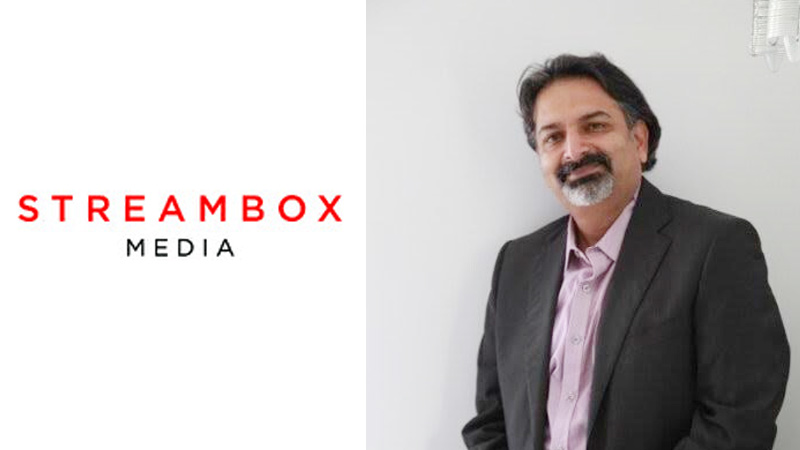
Tag: Rahul Sharma

  • Streambox Media unveils Dor India’s first subscription-based TV service

    Streambox Media unveils Dor India’s first subscription-based TV service

    MUMBAI: Gone are the days of debating over iOS and Android or boasting about who owned the fastest gadget. The era of squabbles about which TV brand—LG, Xiaomi, or Samsung—rules the market is fading into nostalgia. Buying a television back then felt like assembling a puzzle: first, the TV itself, then a dish connection for channels, followed by an OTT device to smarten it up. And even then, you were stuck playing detective—Googling endlessly to figure out which platform hosted your favorite show, live match, or breaking news.

    But now, the tide has turned. The clutter and confusion of old-school television are making way for an extraordinary transformation. As the sun sets on fragmented entertainment, a bold new dawn emerges in the Indian living room. Welcome Dor—the future of home entertainment that combines everything you need into one seamless subscription experience. It’s not just a TV; it’s a revolution. Or so claims the company behind it. 

    Streambox Media, a leading media-tech venture founded by cable TV industry and distribution vetera Anuj Gandhi and backed by Micromax Informatics, Zerodha’s Nikhil Kamath, and Stride Ventures, has launched Dor—India’s first subscription-based television service. Designed to revolutionise home entertainment as claimed by the company, Dor integrates a high-performance 4K QLED TV with over 24 premium OTT platforms, 300+ live channels, gaming, news, and more into a single, affordable subscription model.

    Dor is set to debut in India via Flipkart on 1 December 2024, with plans for expansion to other platforms and offline distribution channels. This innovative TV-as-a-service model eliminates fragmented content navigation across devices, offering users a seamless, unified experience powered by India’s indigenously developed Dor TV OS.

    Micromax Informatics co-founder, Rahul Sharma emphasised the shift in consumer preferences, “The home entertainment landscape is witnessing a tectonic shift with the rise of subscription and leasing models. Younger audiences prioritise flexibility and value over ownership. With Dor, we are introducing a market disruptor that addresses these evolving preferences while showcasing India’s capabilities in developing future-ready technology.”

    Streambox Media, COO, Romil Ramgarhia added, “Dor democratises premium entertainment by making advanced technology accessible to Indian households. Our innovative approach significantly reduces costs by 50-60 per cent, consolidating the expense of smart TVs and content services.”

    Indiantelevision.com Sreeyom Sil got into an exclusive conversation with Anuj Gandhi  on the sidelines of a press conference in Mumbai to announce Dor and Streambox’s launch. He shed light on how Dor is setting new benchmarks for connected TVs in India. Excerpts from the interview: 

    * What differentiates Streambox’s Dor service from others in the market?
    The key difference is simplicity: everything should be plug and play. Why should I worry about subscriptions, when my payments are due? It should be as convenient as possible in one single shop. And that’s what we have endeavored to do here. 

    Then, fragmented services and high upfront costs deter many households from adopting connected TVs. Dor’s subscription model integrates cutting-edge AI, content platforms, and hyper-personalised recommendations to deliver an unmatched value proposition  with an immersive experience. With its integrated Dor OS, users can enjoy a seamless interface consolidating OTT platforms, live channels, and on-demand content. 

    Dor’s subscription model offers unparalleled flexibility and cost-efficiency. Consumers can own a 43-inch 4K QLED TV with Dolby Audio and solar-powered remote for an upfront activation fee of Rs 10,799, including the first month’s subscription. Post the initial month, the subscription costs Rs 799 per month for 12 months, after which customers can customise their packages. 

    The subscription includes access to platforms like Prime Video, Disney+ Hotstar, Jio Cinema, Sony Liv, and many more, with a single sign-on and AI-driven personalised recommendations simplifying the entertainment experience. Larger 55-inch and 65-inch TV variants are set to launch in early 2025, expanding options for Indian households.

    With its integrated Dor OS, users can enjoy a seamless interface consolidating OTT platforms, live channels, and on-demand content. A four-year warranty and regular software upgrades every quarter are on offer with which Dor aims to make a real difference in how India consumes entertainment.

    * What specific challenges in content discovery does Dor address, and how does it enhance the user experience compared to existing software?
    Dor takes content discovery beyond the siloed limitations of individual apps. Our intuitive AI and large language models power a seamless search experience across multiple platforms. Dor personalises recommendations based on user preferences, ensuring a richer and more tailored viewing journey.

    Anuj Gandhi quote

    *  How does Dor use advanced machine learning for personalised recommendations and ensure diversity in content?
    Personalisation is at the core of Dor. We analyse individual preferences—language, genre, or favorite actors—and adapt recommendations in real-time. For example, if you select action movies but increasingly watch romantic films, our system dynamically adjusts your homepage to prioritise romantic content.

    * How does Dor aggregate content from OTT platforms and live channels, and what partnerships have been instrumental?
    We’ve secured partnerships with over 24 OTT platforms and various linear television providers, especially in the free-to-air (FTA) category. These long-term deals ensure a comprehensive content catalog, enabling us to deliver unmatched variety to users.

    * With a growing emphasis on data privacy, how does Dor ensure user data is protected?
    Data security is paramount. We comply with all data protection laws in India and employ robust security measures to prevent breaches. Sensitive user information, such as installation addresses and phone numbers, is safeguarded through strict privacy policies and best practices.

    *  How is Streamworks Media capitalising on India’s growing connected TV market, and what role does Dor play?
    We aim to democratise connected TV with competitive pricing and an intuitive OS like Dor. By addressing the needs of a growing audience, we plan to secure a dominant market share in this burgeoning ecosystem.

    *  What inspired you to venture into the media-tech space, and where do you see Streambox Media and Dor in five years?
    Simplicity and accessibility inspired me. Our goal is to make content discovery and consumption effortless. Within five years, we envision Dor holding a double-digit global market share, solidifying its place as a leader in the entertainment OS market.

    With Dor, Streambox Media and Micromax Informatics have not just launched a product—they’ve unveiled a statement of technological prowess and national pride. Proudly ‘Made in India’, the launch resonates deeply with the Indian spirit of innovation and ambition. It’s not just a device; it’s a symbol of India’s leap into the global tech arena. The moment leaves one awestruck, tingling with pride, and breathlessly waiting for what’s next in this revolutionary saga.

  • Digital Transformation: The evolving landscape of sustainability in the Oil & Gas Industry

    Digital Transformation: The evolving landscape of sustainability in the Oil & Gas Industry

    Mumbai: Digital transformations are sweeping industries, reshaping businesses, and creating altogether new ecosystems that were never seen before. Like other sectors, the applications of digital technologies are helping the oil and gas industry to become more efficient, competitive, and eco-friendly in its operations. All these changes, in turn, are boosting the sustainability of the sector while allowing participating stakeholders to deliver enhanced benefits across the value chain.

    Oil and Gas Sector: Digitalisation Challenges

    While digitalisation brings multiple benefits to the table, the integration of digital technologies in the oil and gas sector faces some tough challenges. Legacy methods and physical infrastructure are challenging to do away with as they have been deeply integrated into the industry for a long time now. In addition, the digitalising strategies mandate the integration of large swaths of data into the business functions and operations which in itself is a hard nut to crack.  Further, upgrading employees’ skills to achieve effective digital integration is a demanding task that mandates investment of both time and resources on behalf of the oil and gas firms. Moreover, the fast-evolving nature of technologies makes it difficult for firms to finalise which tools need to be selected to achieve the desired levels of digital transformation.

    Building Sustainable Oil and Gas Sector: Recommended Digitalisation Strategies

    a) Decentralised Access: Data silos are created when the data is collected, compiled, and analysed at functional levels without offering any centralised access to other departments. To achieve sustainability in the oil and gas sector, it is crucial to break these silos and to that end, the creation of a centralised database is a prerequisite. This central data repository will offer data access to all participating stakeholders, leading to agile operations, faster decision-making, and more transparency. All these benefits, in turn, will come together and help make the oil and gas sector more sustainable and resilient while delivering better value to stakeholders across the value chain.

    b) Leverage Technology: Artificial intelligence (AI), machine learning (ML), and automation can play a crucial role in enhancing the sustainability of the Oil and Gas industry. These digital technologies can help firms in demand forecasting, inventory management, and supply chain optimisations. Further, the use of these tools can help in reducing wastage, lowering emissions, and cutting costs associated with the inbound and outbound logistics of oil and gas firms. All these benefits then accrue to elevate the sustainability quotient of the entire ecosystem of the oil and gas industry.  

    c) Digital Replicas: Creating digital twins of strategic activities can prove extremely beneficial for enhancing the sustainability of the oil and gas sector. The biggest advantage of digital replicas is the deep understanding these offer to stakeholders and partners to deliver better value to end customers. This profound knowledge helps firms know their strengths, identify weaknesses, and detect the potential issues that might hamper the sustainability of the sector in the long term. The comprehensive assessment also allows organisations to make changes with the desired speed and efficiency, thereby helping the oil and gas industry to become more sustainable and eco-friendly in its operations.

    d) Collaborative Partnerships: By striking collaborative partnerships with researchers, entrepreneurs, and tech startups, the oil and gas industry can achieve higher levels of digitalisation and sustainability. Such partnerships can prove extremely beneficial in enhancing the reliability of assets, delivering operation insights, strengthening configuration management, and promoting technology innovations, thereby putting companies on the path of digitalisation and enhanced sustainability. The enabling role of policymakers also becomes crucial here as open and constructive policies can prove instrumental in catalysing such collaborative partnerships in the oil and gas sector.

    Digitalisation can become instrumental in enhancing the sustainability of the oil and gas industry. Firms operating in the industry must integrate digital technologies as it will help them achieve superior functional effectiveness and operational efficiency. Digital tools also strengthen workflow improvements and increase net productivity by facilitating superior forecasting and data-driven decision-making. In addition, digitalisation also makes oil and gas firms more sustainable by helping them cut down their carbon footprints significantly.  

    The article is authored by UPES ON assistant professor Rahul Sharma.

  • Micromax announces comeback

    Micromax announces comeback

    NEW DELHI: Popular Indian mobile manufacturer Micromax is poised to make a comeback with its "In" range of smartphones.

    Micromax founder Rahul Sharma made the announcement, saying the homegrown company is once again looking to re-enter the smartphone market. In a video posted on Twitter, Sharma narrated Micromax’s journey – the brand’s growth to the top as well as the mistakes which were made on the way – and that it’s now ready for a fresh start.


    Sharma stated that he does not condone the recent events playing out on the Indo-Sino border. At one point the number 2 smartphone maker in India, Micromax faced tough competition from Chinese brands, and was eventually forced to call it quits.

    “The Chinese mobile manufacturers wiped me out in my own country. This time, whatever I do, will be for the sake of India," he said in the video, adding that he has taken PM Narendra Modi’s call of Atmanirbhar Bharat to heart.

    Micromax, along with 15 other smartphone manufacturing companies, was approved for incentives under the government's Production-linked incentive (PLI) scheme.

    Earlier this year, the Centre had amended the rules to the PLI scheme to make it more market-friendly by removing caps and other contentious clauses. The incentives range from 4 per cent to 6 per cent over a five-year period, provided the manufacturer makes smartphones valued at around $200.

    According to a Reuters report, the approved companies are expected to make Rs 10,50,000 crores worth of smartphones in India.

    A few years ago, brand Micromax was shining and thriving in the sub-Rs 10,000 and sub-Rs 5,000 segment phones. It also launched several premium smartphones and did an interesting campaign with Hollywood superstar Hugh Jackman.

  • Micromax aims to make a comeback: Reports

    Micromax aims to make a comeback: Reports

    NEW DELHI: Homegrown smartphone brand Micromax is reportedly planning to make a comeback to the Indian market. This time, the company is banking on the government support, with its Production Linked Incentive (PLI) scheme which was announced recently. The company said that it would invest Rs 500 crore towards manufacturing and research and development, as per an online report. The brand also plans to launch 20 new phones by the end of the next fiscal.

    The PLI scheme will help boost local manufacturing as part of government’s initiative to make India self-reliant (Aatmanirbhar). The PLI scheme was announced on April 1, 2020, under the National Policy on Electronics 2019 shall extend an incentive of 4% to 6% on incremental sales (over the base year) of goods manufactured in India and covered under target segments, to eligible companies, for a period of five (5) years subsequent to the base year as defined.

    Micromax co-founder Rahul Sharma in an interaction with a leading daily said that the company was looking to regain its spot in the smartphone market through the multiple handsets it has planned to launch in the future. He also mentioned that the phone would look to disrupt the market.

    On 15 August, the smartphone brand had also uploaded a teaser across its social media handles captioned “73 years of independence or being in dependence? On our 74th independence day, let’s stop being doosron pe nirbhar and become truly Atmanirbhar. Are you ready to join the revolution with us?”

    Due to the influx of Chinese brands including Xiaomi, Oppo, the homegrown smartphone brands got wiped out of the smartphone market. Reportedly, Xiaomi is currently leading the smartphone market with a 30 per cent market share.

  • CNN’s new weekday programme to start with Micromax CEO

    CNN’s new weekday programme to start with Micromax CEO

    MUMBAI: CNN is all set to put the spotlight on one of the world’s fastest growing economy, India. Starting 17 November, a series of vignettes will be featured in a show titled “India 20 Under 40.” The show will see 20 young Indian entrepreneurs who are re-shaping how India does business. 

    A new entrepreneur will be featured every fortnight commencing with Micromax CEO Rahul Sharma. It will air within CNN Money with Maggie Lake airing from 7:30 pm to 8:30 pm every Monday to Friday.

    A week of special programming will be broadcast from 28 November on the channel. India 2020 will take viewers to meet some of the entrepreneurs who are overcoming various obstacles and bringing their ideas to life in India. These include visionaries and innovators across diverse industries. 

    An iconic motorcycle brand

    Royal Enfield is one of the world’s oldest motorcycle manufacturers with die-hard fans, who gather for weekend rides and huge festivals. The company was struggling when Siddhartha Lal took the helm back in 2000, at the age of 26. Now the Chennai-based company is expanding sales in the U.S. and Europe, and building a third manufacturing facility.

    The future of manufacturing

    The robotics industry is expected to double in India over the next 3-4 years. Hi-Tech Robotic Systemz is an up-and-coming company based in Gurgaon whose innovations include India’s first indigenous driverless car. The world’s first production brain controlled wheelchair, “Manav” is completely made in India by A-Set. As cutting-edge research continues to push the industry forward, CNN meets A-set’s Head of robotics and research Diwakar Vaish who is helping to lead the way. 

    Innovating from ancient tradition

    Indian innovators are finding new inspiration from old ideas. Take turmeric: an ancient, and common spice in Indian cooking is a hot commodity thanks to its applications in medicine and beauty products. The Himalaya Drug Company has a long tradition of creating products ranging from facewash to toothpaste, supplements to shampoo by applying scientific research to Ayurvedic principles. CNN catches up with CEO Philipe Haydon, who has helped transform the company, reaching consumers in 92 countries.

    Brighter businesses

    In India, two out of 10 people do not have access to electricity. Orb Energy manufactures and distributes solar energy systems with more than 100 branches across eight Indian states and employing about 500 people in the field. It’s opening a new factory to produce solar modules in Bangalore and aims to provide 2 gigawatts of solar energy by 2022, or 5 per cent of the national total. 

    Creating new opportunities

    India’s animation and VFX industry grew nearly 14% in 2015, and is projected to be a US$1.6-billion industry by 2020. One such leading studio is Makuta VFX. It’s working on the sequel to Baahubali, one of India’s highest grossing movies. Makuta is based in Hyderabad, which is trying to position itself as a hub for gaming and animation. The government has broken ground on a new facility to house more than 200 startups in multimedia and entertainment, and recently launched an initiative to connect those emerging companies to the global marketplace. 

    India 2020 half hour special airs at:

    http://www.indiantelevision.com/sites/drupal7.indiantelevision.co.in/files/styles/large/public/cnn_0.jpg?itok=pNoHnKRn

    November also marks the launch of a fully dedicated CNNMoney India subpage devoted to covering business and economic news coming out of the country. The launch of CNNMoney India underscores the company’s commitment to bringing global audience the latest economic developments from India and will highlight the most exciting young innovators from the region, and the successes and challenges of doing business here.


  • CNN’s new weekday programme to start with Micromax CEO

    CNN’s new weekday programme to start with Micromax CEO

    MUMBAI: CNN is all set to put the spotlight on one of the world’s fastest growing economy, India. Starting 17 November, a series of vignettes will be featured in a show titled “India 20 Under 40.” The show will see 20 young Indian entrepreneurs who are re-shaping how India does business. 

    A new entrepreneur will be featured every fortnight commencing with Micromax CEO Rahul Sharma. It will air within CNN Money with Maggie Lake airing from 7:30 pm to 8:30 pm every Monday to Friday.

    A week of special programming will be broadcast from 28 November on the channel. India 2020 will take viewers to meet some of the entrepreneurs who are overcoming various obstacles and bringing their ideas to life in India. These include visionaries and innovators across diverse industries. 

    An iconic motorcycle brand

    Royal Enfield is one of the world’s oldest motorcycle manufacturers with die-hard fans, who gather for weekend rides and huge festivals. The company was struggling when Siddhartha Lal took the helm back in 2000, at the age of 26. Now the Chennai-based company is expanding sales in the U.S. and Europe, and building a third manufacturing facility.

    The future of manufacturing

    The robotics industry is expected to double in India over the next 3-4 years. Hi-Tech Robotic Systemz is an up-and-coming company based in Gurgaon whose innovations include India’s first indigenous driverless car. The world’s first production brain controlled wheelchair, “Manav” is completely made in India by A-Set. As cutting-edge research continues to push the industry forward, CNN meets A-set’s Head of robotics and research Diwakar Vaish who is helping to lead the way. 

    Innovating from ancient tradition

    Indian innovators are finding new inspiration from old ideas. Take turmeric: an ancient, and common spice in Indian cooking is a hot commodity thanks to its applications in medicine and beauty products. The Himalaya Drug Company has a long tradition of creating products ranging from facewash to toothpaste, supplements to shampoo by applying scientific research to Ayurvedic principles. CNN catches up with CEO Philipe Haydon, who has helped transform the company, reaching consumers in 92 countries.

    Brighter businesses

    In India, two out of 10 people do not have access to electricity. Orb Energy manufactures and distributes solar energy systems with more than 100 branches across eight Indian states and employing about 500 people in the field. It’s opening a new factory to produce solar modules in Bangalore and aims to provide 2 gigawatts of solar energy by 2022, or 5 per cent of the national total. 

    Creating new opportunities

    India’s animation and VFX industry grew nearly 14% in 2015, and is projected to be a US$1.6-billion industry by 2020. One such leading studio is Makuta VFX. It’s working on the sequel to Baahubali, one of India’s highest grossing movies. Makuta is based in Hyderabad, which is trying to position itself as a hub for gaming and animation. The government has broken ground on a new facility to house more than 200 startups in multimedia and entertainment, and recently launched an initiative to connect those emerging companies to the global marketplace. 

    India 2020 half hour special airs at:

    http://www.indiantelevision.com/sites/drupal7.indiantelevision.co.in/files/styles/large/public/cnn_0.jpg?itok=pNoHnKRn

    November also marks the launch of a fully dedicated CNNMoney India subpage devoted to covering business and economic news coming out of the country. The launch of CNNMoney India underscores the company’s commitment to bringing global audience the latest economic developments from India and will highlight the most exciting young innovators from the region, and the successes and challenges of doing business here.


  • Amarinder S Dhaliwal joins YU as chief operating officer

    Amarinder S Dhaliwal joins YU as chief operating officer

    MUMBAI: Micromax Informatics has appointed former co-founder and CEO of Done By None, Amarinder S Dhaliwal, as the chief operating officer (COO) for its new internet brand, YU.

    With over 20 years of experience in managing and incubating businesses, Dhaliwal has earlier led leading brands including Indiatimes Shopping and Zigwheels.com.

    Dhaliwal’s appointment is a testimony to the vision for YU, which is to bring in the best minds from the internet industry and build a world-class team. He will work closely with co-founder Micromax Rahul Sharma to build an innovative digital brand that engages directly with the user community.

    Sharma said, “These are exciting times for us. With YU, our aim is to reach out to a very unique set of audiences; tech-enthusiasts, digital natives and the developer ecosystem. Amarinder brings a unique combination of expertise with his entrepreneurial and leadership roles in internet & ecommerce space. He will be leading marketing initiatives for building the brand with a community of highly engaged users, driving revenue from product & services and setting-up world class internet operations. His rich experience will give an edge to our business and help us achieve this aim.”  

    “I am very excited with the opportunity to build YU as the first truly global internet and technology brand originating from India. My strong beliefs resonate with the company’s vision to be user centric and build world class products. We are building a brand where the user has the power to co-create and make things happen their way. We will build a strong ecosystem of connected devices thereby creating a revolutionary, new age internet brand,” said Dhaliwal.  


  • Micromax crowned owners of IPTL India franchise, Indian Aces

    Micromax crowned owners of IPTL India franchise, Indian Aces

    NEW DELHI:  Micromax has been named as the owner of the Indian franchise of the first Indian Premier Tennis League (IPTL). Named ‘Indian Aces’, the team will be lead by legendary player Roger Federer. Around 80 broadcasters have been confirmed around the world for reportage of the league.


    While a source informed indiantelevision.com that Star India was all set to cover the event in India, IPTL COO Eric M Gottschalk said that he had permission to name just one of the broadcasters which is the Abu Dhabi Sports Channel.


    Marquee player Roger Federer, 14-time Grand Slam Champion Pete Sampras and teammates Gael Monfils, Ana Ivanovic, Sania Mirza, Rohan Bopanna and Fabrice Santoro will make up the formidable Indian squad which will commence in Delhi on 6 December and conclude on 8 December. 


    World number two, Rafael Nadal who was representing the team, has been forced to withdraw from the League due to injury and the need for rehab time during the off season.


    In a televised message, Swiss ace Roger Federer said, “Namaste India! I’m really looking forward to making my first trip to New Delhi and playing for the Micromax Indian Aces. My team tells me that there are a lot of tennis fans and my supporters in the region, so I hope you can come out and support me in December. See you there!”


    Meanwhile IPTL founder Mahesh Bhupathi commented, “I take this opportunity to welcome Micromax to the IPTL family as owners of the India franchise. I believe the time for innovation in tennis has come. This December, New Delhi will witness tennis action like never before – one that will change the way people enjoy the sport.” 


    “As a tennis fan, I am excited to see Roger and Pete play for the same team, it’s unprecedented! I think Indian sports fans are in for a real treat,” Mahesh added.


    Talking about the association Micromax co-founder Rahul Sharma said, “I would like to congratulate Mahesh on this great initiative, and we are very excited to own the India franchise in IPTL. We are delighted to have the best names from the world of tennis with Roger Federer spearheading the challenge of Indian Aces. This partnership is part of our vision to bring India to the forefront of world class sporting events. Our long term intent is to bring a transformation for sports in India by developing world-class sports infrastructure in the country to encourage more youth to take up professional sport.”


    Later speaking on the sidelines to indiantelevision.com, he said that Micromax would go the full 360 degrees in promoting the event, adding that with the likes of Federer and Bhupathi there was little need for any build-up.


    Asked about the budget, he said that would not be a problem and Micromax will go to any level for successfully managing the team and its marketing.


    “The IPTL is a challenging initiative taken by Bhupathi in bringing the highest level of tennis to Asia in a competitive format and it was a privilege to partner with the organizers and team owners to make this event a great success for sports fans in India,” said  Asian Tennis Federation (ATF) president Anil Khanna.


    In his message, Nadal said, “I am very disappointed to announce that I will not be part of the first edition of the IPTL. I was looking forward to representing Indian Aces and playing in front of fans in New Delhi in the exciting new League. I wish the team the very best and hope to be back next year.”


    Bhupathi said the venue had been chosen over Mumbai because it was two and half times more than the size of the tennis court available in Mumbai.


    The IPTL matches will feature live entertainment, a running shot clock and many more features to ’Break the Code’ of the traditional etiquette of tennis to attract a new audience to the sport across the world.


    The League will feature four teams in the inaugural season before adding additional franchises to the calendar with the Indian “Aces” competing against the UAE “Royals”, Manila “Mavericks” and Singapore “Slammers” for a total prize money of USD 1 million.


     The IPTL format has been designed in a manner that will be very attractive to broadcasters and fans. The traditional scoring format has been changed to single-set no-add scoring which will speed up the games and allow the fans to up to 24 different players in one evening while the broadcasters for the first time, will be able to schedule predictable start and finish times of each match. Each match will consist of five sets played by different players (men’s singles, women’s singles, men’s doubles, mixed doubles and former Champions singles) and each game won counts as one point for the team points total – the team that wins the most games overall across the five sets wins the match.

  • Taj  A Flavor of Darjeeling – Taj’s richest flavor

    Taj A Flavor of Darjeeling – Taj’s richest flavor

    MUMBAI: Brooke Bond Taj Mahal has been a forerunner in setting the standard of fine tea in India. Over the years it has pioneered  innovations and provided superlative connoisseur experiences. Enhancing its brand commitment towards master-craftsmanship, , Taj Mahal has launched its richest and most premium blend – Taj A Flavor of Darjeeling. Taj Mahal continues its connection with well-known personalities of Indian classical music by associating with Sitarist Niladri Kumar for its new premium variant.The young maestro has also composed “Raag Darjeeling” – a fitting tribute to Taj A Flavor of Darjeeling.


    The brand has always been personified by icons who symbolize perfection, passion and unmatched finesse. To capture the essence of the new variant, Taj A Flavor of Darjeeling was unveiled during an enthralling evening of Indian classical music. The music programme was beautifully crafted by young maestro Sitarist Niladri Kumar. Madhuri Dixit Nene the current brand ambassador, also attended the event and added further splendour to the evening. 


    On the eve of the launch, Krishnan Sundaram, General Manager, Tea, Hindustan Unilever Limited. said, “Taj Mahal tea has been India’s most loved premium tea brand and it has been our consistent endeavour to improve our offering. Taj A Flavor of Darjeeling,is definitely our most premium offering and we are confident that we will improve the tea drinking experience for our growing consumer base. This launch is also special as it sees us continuing our collaboration with Indian classical music with Niladri Kumar, Rahul Sharma and Ayaan Ali Khan personifing our brand commitment.”


    As the face of the brand, Niladri Kumar said, “I have been a Taj Mahal tea loyalist, and it is indeed my pleasure to be associated with it. Taj A Flavor of Darjeeling is also special. I have composed the Raag Darjeeling, in honour of the superlative flavour and experience related with Taj Mahal’s newest offering.”


    Enriched with long leaves of pure Darjeeling tea and carefully sourced finest tea leaves from choicest tea gardens in India, Taj A Flavor of Darjeeling promises to make your tea drinking experience extra  special as it is created with a great amount of precision and passion. Every sip promises to reflect great craftsmanship of our master blenders and truly become a connoisseur’s delight.

  • Micromax brings on board Sanjay Kapoor as chairman

    Micromax brings on board Sanjay Kapoor as chairman

    MUMBAI: Micromax brings on abroad Sanjay Kapoor, former CEO of Bharti Airtel, to the Micromax promoter group and chairman of the board with immediate effect.


    This development reflects Micromax’s vision of stepping up to the next phase of growth of the company.  


    Commenting on the development Micromax co-founder Rahul Sharma said, “We are glad to have Sanjay to be a part of Micromax’s promoter group and on our board as the new Chairman. Sanjay is one of the most respected professionals in the Indian corporate world and has been instrumental in building some of the most successful technology brands in the country over the past three decades. I am confident that he will be able to provide required strategic direction to take our billion dollar business to the next level of growth and expansion.”


    “Sanjay’s strategic and inspirational leadership skills will certainly provide strong impetus to Micromax as we pursue our aim to be the first Indian hardware brand driving success globally. He will be instrumental in building synergies for our existing international businesses and spearhead our foray into other international markets in the near future,” added Sharma.


    On his appointment, Kapoor said, “I am excited as an entrepreneur to be a part of the promoter group and as a professional to lead the Micromax board & management. I look forward to adding value to all stakeholders leveraging my strengths in building scale, developing brands and understanding consumers. There is a tremendous potential for Micromax, a vibrant youth brand that has led the democratization of technology for masses, offering affordable innovations to the consumers.”


    “Micromax is truly the new age brand that has made an indelible mark on the industry within a short time by changing the dynamics of the mobile eco-system. Proliferation in data services and cutting edge devices that make technology affordable for masses will be critical for next phase of growth and I am confident that Micromax will lead this transition,” mentioned Kapoor.