Tag: Rahul Puri

  • Reel luxe: Mukta A2 rolls out Opulence format in Vadodara

    Reel luxe: Mukta A2 rolls out Opulence format in Vadodara

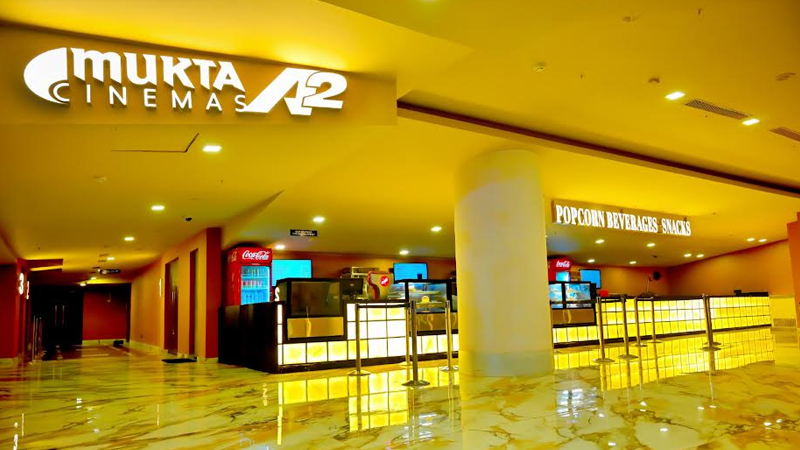
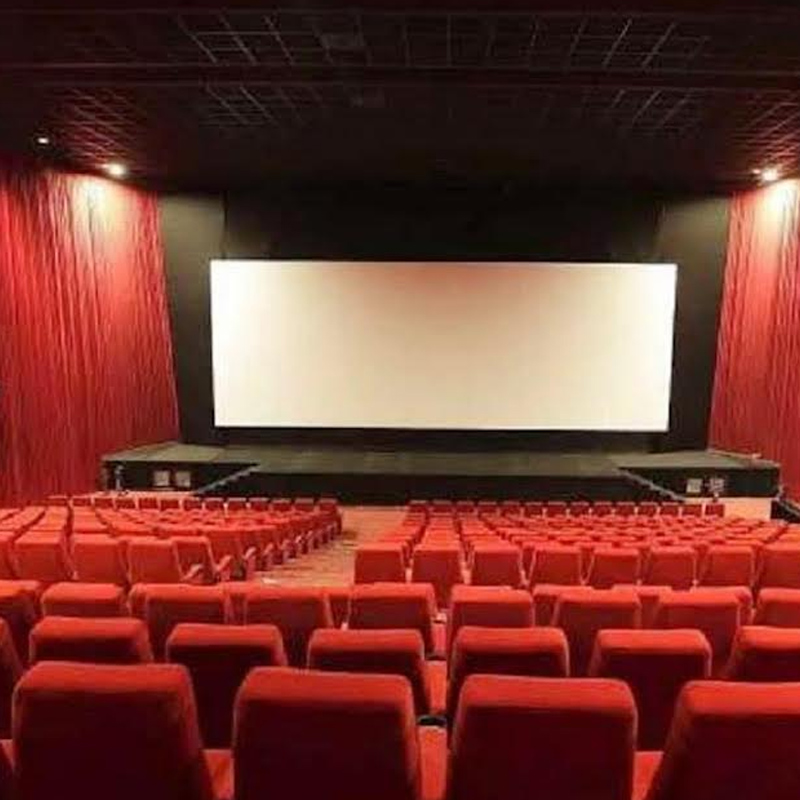
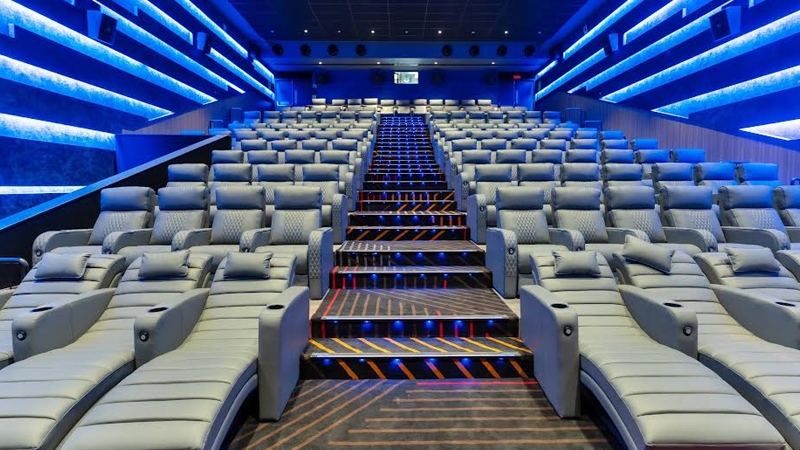
    MUMBAI: Forget first-class, Vadodara’s movie buffs can now go full throttle with ‘Opulence’. Mukta A2 Cinemas has just unveiled its most premium offering yet with the launch of ‘Opulence’, a swanky four-screen multiplex housed inside The Emperor Mall, Vadodara. With 528 plush seats, Dolby Atmos sound, 2K laser projection, all-silver screens, and immersive 3D, it’s not just a trip to the movies, it’s a full-blown affair of the senses.

    From recliners and loungers to couple’s beds and leather sofas, comfort here doesn’t come in small measures. Add to that gourmet snacks, ambient lighting and a thoughtfully designed lobby, and you’ve got yourself a cinematic spa day.

    As a cherry on top, the launch syncs with the release of ‘Housefull 5’, giving audiences a blockbuster to match the opulence.

    “This isn’t just a format, it’s a reimagined moviegoing experience,” said Mukta A2 Cinemas managing director Rahul Puri. “We wanted to launch where the love for cinema runs deep, and Vadodara was the perfect fit.”

    Located beside VCA Ground on Vasna-Bhayli Road, the venue features a gourmet F&B counter with wraps, pizzas, desserts, and a range of beverages all served up in style.

    Satwik Lele, COO, added, “With Opulence, we’ve married comfort, technology, and hospitality into one seamless space. It’s cinema, but elevated.”

    With this launch, Mukta A2 Cinemas which operates nearly 100 screens across India and overseas including Bahrain reaffirms its ambition to lead with innovation. And if the seats at Opulence are anything to go by, they’re not just raising the bar they’re reclining in it.

  • Mukta A2 Cinemas reopens in Vizag with Luxe upgrade and cutting-edge tech

    Mukta A2 Cinemas reopens in Vizag with Luxe upgrade and cutting-edge tech

    MUMBAI: Mukta A2 Cinemas has reopened its iconic venue at Vizag Centro Mall after a stunning makeover, launching with the highly anticipated Eid blockbuster Sikandar, starring Salman Khan and Rashmika Mandanna.

    The three-screen multiplex has been transformed into a luxury movie destination. Step inside, and you’ll find chic interiors, a stylish lounge, and, most importantly, a whole new level of comfort. The outdated pushback seats are gone replaced by plush recliners and spacious sofas with extra legroom and superior cushioning.

    Technology has had a dramatic upgrade, too. Expect razor-sharp visuals with 2K Laser and 3D projection, and immersive Dolby Atmos surround sound that pulls you right into the action. Enhanced air-conditioning ensures a perfect viewing experience, even during packed summer screenings.

    Moviegoers can also indulge in a revamped gourmet menu featuring sandwiches, pizzas, wraps, burgers, and classic cinema favourites like nachos and popcorn buckets. Drinks include everything from filter coffee and cutting chai to iced teas and coolers.

    Mukta Arts Ltd. managing director Rahul Puri remarked, “This theatre has always meant something to Vizag. So we didn’t just renovate it we brought it back to life with heart.”

    The reopening is perfectly timed, with Telugu cinema on fire this week. Nithiin’s Robinhood is off to a strong start, paving the way for Brotherhood of Robinhood, while MAD Square is drawing in the college crowd as excitement builds for MAD 3.

    Mukta A2 Cinemas CEO Satwik Lele added, “We believe the audience deserves the very best—because they are the real stars of cinema.”

    With cutting-edge tech, ultimate comfort, and an upgraded menu, Mukta A2 Cinemas Vizag is ready to redefine movie magic.

  • Mukta A2 Cinemas celebrates the spirit of India with exclusive pricing for Maidaan

    Mukta A2 Cinemas celebrates the spirit of India with exclusive pricing for Maidaan

    Mumbai: Mukta A2 Cinemas, a leading name in the filmed exhibition industry, announced a groundbreaking initiative with exclusive ticket pricing to enhance the cinema experience for moviegoers. To provide exceptional value to its patrons, Mukta A2 Cinemas is set to offer a special ticket pricing scheme of Rs 99 for the highly anticipated film “Maidaan” starring Ajay Devgn, directed by Amit Ravindernath Sharma.

    The cinema chain in a statement stated that the aim was to unite movie patrons across its chains with the special pricing initiative. The pricing will be made available from the 10th of April across all its chains in the country.

    Speaking about this one-of-a-kind initiative, Mukta A2 Cinemas managing director  Rahul Puri said “At Mukta A2 Cinemas, we have always been committed to providing unparalleled entertainment experiences to our valued patrons. Maidaan is a film that celebrates the spirit of India and celebrates the golden era of Indian football. We hope to amplify this celebration with the introduction of our special pricing and exclusive discounts on F&B combos.”

    “We have always aimed to create memorable moments for our audience while promoting the spirit of the country with such cinema.” He added.

    In addition to the attractive ticket pricing for “Maidaan,” Mukta A2 Cinemas is also rolling out special discounts on food and beverage combos. This complimentary offer is designed to elevate the overall moviegoing experience nationwide.

    “Subhash Ji (Subhash Ghai) and Mukta A2 Cinemas have always paved the way for making cinema accessible to moviegoers. I am happy that this exclusive pricing of tickets for our film ‘Maidaan’ is yet another step in that direction.” Said Mr. Satwik Lele, C.O.O, Mukta A2 Cinemas  

    A sports biographical film Produced by Boney Kapoor, directed by Amit Ravindernath Sharma and starring Ajay Devgn, ‘Maidaan’ depicts the golden era of Indian football.

    The film will be released in cinemas on 11 April with paid previews starting from 6 pm on April 10. 

  • Masters’ Union collaborates with PepsiCo

    Masters’ Union collaborates with PepsiCo

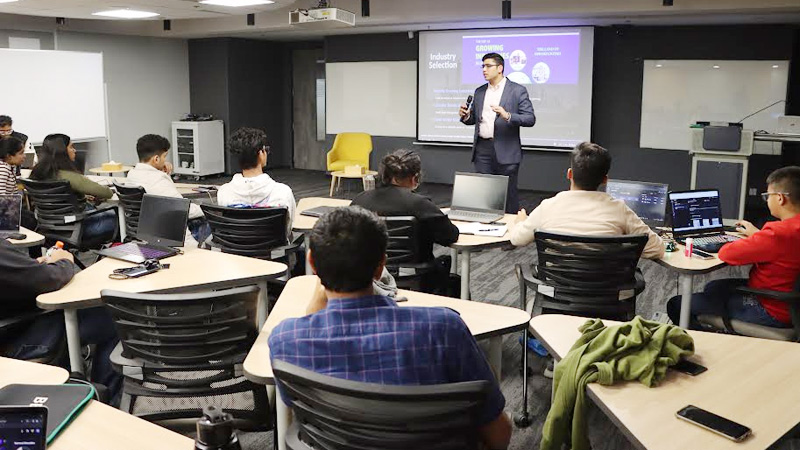
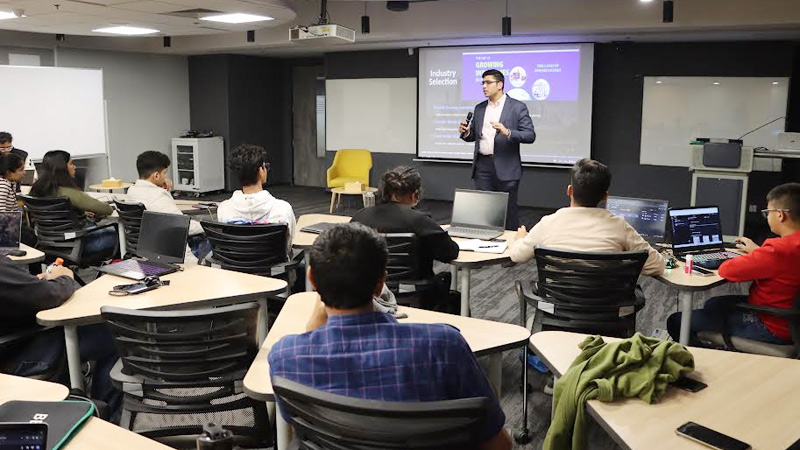
    Mumbai: Masters’ Union, the new-age business school, and PepsiCo, the global f&b corporation, recently organised a Winter Week Bootcamp from 18 to 22 December focusing on nurturing high school students’ talents. The five-day event aimed to equip young minds with practical skills, mentorship, and real-world insights.

    The Bootcamp provided a platform for students to explore diverse disciplines such as design principles, content creation, and stock market trading through hands-on activities, workshops, and discussions led by industry experts. Key workshops were led by professionals including Geetha Radhakrishnan, Franchise Commercial Director – India Beverages, PepsiCo, Susheel Lakhera, Associate Director – Franchise, PepsiCo, Neha Verma, Senior Marketing Manager, Vaango, and Rahul Puri, vice president of Information Technology, Vaango, covering innovation, marketing strategies, and the role of technology in shaping industries.

    Masters’ Union founder Pratham Mittal said, “Collaborating with PepsiCo for the Winter Week Bootcamp was an incredible opportunity to drive practical learning beyond traditional education boundaries. The event aimed to empower students with hands-on skills and insights, preparing them for the dynamic demands of the industry. Education extends far beyond textbooks, and this collaboration aligns perfectly with our vision to equip students with practical expertise that transcends theoretical knowledge.”

    PepsiCo hub lead, e-commerce DTX, data science and analytics Sourabh Agarwal said, “Partnering with the Masters’ Union for the Winter Week Bootcamp was a rewarding experience. Engaging with young minds and further fueling their enthusiasm for learning reaffirms PepsiCo India’s commitment to help foster innovation and skill development in the youth. We are glad that we could be part of this Bootcamp and engage with such young and great talent.”

    Students engaged with real-world case studies, working on tasks like crafting advertising campaigns for PepsiCo, trading stocks on platforms like StockGro, and developing apps for Vaango, bridging theoretical knowledge with practical application. The bootcamp culminated in students showcasing their growth and expertise through final projects, offering insights into their comprehensive learning experiences. The event attracted students from schools like Manthan International School, Sanskaar Valley, CS Academy, Sarvottam International, and KC High. It left a lasting impression, setting the stage for future educational collaborations.

  • Masters’ Union collaborates with PepsiCo

    Masters’ Union collaborates with PepsiCo

    Mumbai: Masters’ Union, the new-age business school, and PepsiCo, the global f&b corporation, recently organised a Winter Week Bootcamp from 18 to 22 December focusing on nurturing high school students’ talents. The five-day event aimed to equip young minds with practical skills, mentorship, and real-world insights.

    The Bootcamp provided a platform for students to explore diverse disciplines such as design principles, content creation, and stock market trading through hands-on activities, workshops, and discussions led by industry experts. Key workshops were led by professionals including Geetha Radhakrishnan, Franchise Commercial Director – India Beverages, PepsiCo, Susheel Lakhera, Associate Director – Franchise, PepsiCo, Neha Verma, Senior Marketing Manager, Vaango, and Rahul Puri, vice president of Information Technology, Vaango, covering innovation, marketing strategies, and the role of technology in shaping industries.

    Masters’ Union founder Pratham Mittal said, “Collaborating with PepsiCo for the Winter Week Bootcamp was an incredible opportunity to drive practical learning beyond traditional education boundaries. The event aimed to empower students with hands-on skills and insights, preparing them for the dynamic demands of the industry. Education extends far beyond textbooks, and this collaboration aligns perfectly with our vision to equip students with practical expertise that transcends theoretical knowledge.”

    PepsiCo hub lead, e-commerce DTX, data science and analytics Sourabh Agarwal said, “Partnering with the Masters’ Union for the Winter Week Bootcamp was a rewarding experience. Engaging with young minds and further fueling their enthusiasm for learning reaffirms PepsiCo India’s commitment to help foster innovation and skill development in the youth. We are glad that we could be part of this Bootcamp and engage with such young and great talent.”

    Students engaged with real-world case studies, working on tasks like crafting advertising campaigns for PepsiCo, trading stocks on platforms like StockGro, and developing apps for Vaango, bridging theoretical knowledge with practical application. The bootcamp culminated in students showcasing their growth and expertise through final projects, offering insights into their comprehensive learning experiences. The event attracted students from schools like Manthan International School, Sanskaar Valley, CS Academy, Sarvottam International, and KC High. It left a lasting impression, setting the stage for future educational collaborations.

  • Mukta A2 Cinemas to establish cinemas in Saudi Arabia

    Mukta A2 Cinemas to establish cinemas in Saudi Arabia

    Mumbai: After expanding its businesses in India and internationally, Mukta Arts Ltd. through its Bahrain subsidiary, Mukta A2 Multiplex W.L.L. has entered into an agreement with Al-Othaim Investment Company to establish and operate cinemas across the Kingdom of Saudi Arabia. The partnership highlights the synergies between the real estate footprint of the Al-Othaim group and the experience of Mukta A2 Cinemas across the value chain in the movie exhibition business.

    Mukta Arts Ltd. managing director Rahul Puri commented, “We are thrilled to be partnering with the Al-Othaim group to help build out the Kingdom of Saudi Arabia’s fledgling exhibition market. We are excited to add our experience and ethos in providing world-class entertainment to the region to follow up the stellar success we have found in Bahrain with the properties we manage there. We are deeply committed to this project and are humbled by the faith shown in us. We look forward to the partnership and the value it brings.”

    “Strategically positioned within Saudi Arabia, the key focal points for expansion lie in the burgeoning Tier 2 and 3 cities, which are experiencing dynamic growth as part of the Vision 2030 initiative. Mukta, while not currently engaged in direct investment, has strategically positioned itself through contractual agreements solely focused on providing Management and Operations services, aligning seamlessly with the evolving landscape of these emerging markets,” he further added.

    Mukta A2 Cinemas COO of ME  Akshay Bajaj commented, “We look forward to the synergies of our partnership with the Al-Othaim group and to provide movie-goers with unrivaled experiences as Saudi Arabia increases its ever-growing cultural and entertainment offerings.”

    This further boosts the expansion plans for the cinema exhibition business of Mukta Arts Ltd, which already has in its control over 100 screens, i.e. through Mukta A2 Cinemas Ltd, subsidiary company, Mukta A2 Multiplex WLL, subsidiary at Bahrain and through its joint ventures.


  • DroneAcharya and Whistling Woods launch drone centric courses for filmmaking

    DroneAcharya and Whistling Woods launch drone centric courses for filmmaking

    Mumbai: The stage was set aglow with stars and drones as DroneAcharya Aerial Innovations Limited, India’s first Listed  Drone Startup and a DGCA certified drone training organization, collaborated with the esteemed Whistling Woods  International to unveil a dazzling array of drone-centric courses in Mumbai. The event,graced by luminaries such as Whistling Woods International founder & chief mentor Subhash Ghai, and Indian cinema stalwarts  Karan Johar and Shashank Khaitan, Meghna Puri Ghai and Rahul Puri, celebrated the convergence of film-making and cutting-edge drone technology.

    This collaboration introduces a groundbreaking suite of Drone – centric courses that are set to revolutionize the world of  film making and cinematography. This exciting collaboration promises to provide aspiring filmmakers and drone  enthusiasts with the knowledge and skills they need to soar to new heights in the industry.

    The launch of these courses is a significant milestone in the ever – evolving landscape of drone technology, marking a transformation in the way drones are integrated into various sectors. The courses are designed to cater to the diverse interests of students, including Aerial Cinematography, DGCA certified drone pilot training, Geographic Information  System (GIS) for Drones, and even Drone Building. This comprehensive range of offerings ensures that students  gain hands-on experience in the field of filmmaking, creating virtual environments through drone surveys for animation and VFX and are well – prepared for a future in the drone industry.

    DroneAcharya, known for its pioneering role in drone training and innovation, has rapidly become a driving force in the Indian drone ecosystem. They are the first Private DGCA certified drone training organization to achieve over 550 drone pilot training. The collaboration with Whistling Woods International, led by Ghai, is a testament to their dedication to fostering innovation in filmmaking and education.

    “We’ve had drones as a part of our curriculum for a long time. However, earlier this year, the Central Government announced the liberalized Drone policy for the nation, and in lieu of that, we’ve decided to partner with an  organization known as DroneAcharya, which is a publicly listed company, to set up programs specifically meant for  drone courses,” added Whistling Woods International VP, business head & emerging media head Chaitanya Chinchlikar.

    DroneAcharya founder & managing editor Prateek Srivastava commented, “This partnership with Whistling  Woods International is a giant leap forward in our mission to democratize drone education in India. We believe  that our courses will not only equip students with the necessary skills but also inspire them to push the boundaries of creative expression through drones.”

    “This is a revolutionary convergence of art, technology and applications. The collaborative effort between DroneAcharya  and Whistling Woods International is set to make Mumbai a hub for drone education and innovation in the film  industry. The courses will be taught by industry experts and professionals who bring a wealth of experience to the classroom,” added DroneAcharya Aerial Innovations CTO Amit Takte.

    DroneAcharya director – HR & culture Nikita Srivastava also commented, “Adding to the theme ofCelebrate  Cinema 2023, the future of storytelling is definitely going to be the adoption of advanced technologies like Drone  and Artificial Intelligence. Apart from this, we look up to the highly influential and nationally – recognized network of individuals to spread awareness about the legalization of drones. This will contribute, in a big way, to the vision of our  Honorable Prime Minister Narendra Modi, of making India a Global Drone Hub by 2030.” 
    Enrollments for the drone-centric courses are now open, and interested individuals can visit the official websites of DroneAcharya and Whistling Woods International for more information and registration details.

  • OTTs to benefit from the availability of price-discovery platform as cinemas reopen

    OTTs to benefit from the availability of price-discovery platform as cinemas reopen

    Mumbai: As many as 15 Bollywood movie release dates were announced within 24 hours of the news of cinema theatres reopening in Maharashtra on 22 October. These include the much-awaited titles such as ‘Sooryavanshi’, ‘Bunty aur Babli 2’, ‘Satyamev Jayate 2’, ‘83’, ‘Jersey’, ‘Tadap’, ‘Chandigarh Kare Aashiqui’, ‘Pushpa’, ‘No Means No’, and ‘Bhavai’ in 2021 and more for the next year.

    The enthusiasm is palpable with many welcoming the decision as a ‘victory’ of sorts for Cinemas over OTT. Yet, just a week back, multiplex chains that refused to screen the Hindi version of ‘Thalaivii’ were staring at a similar struggle over the gap between theatrical and digital screening for new releases. Having been released on 10 September, the Hindi version of the Kangana Ranaut-starrer is now streaming on Netflix, challenging conventional windowing norms.


    Cinema experience is unparalleled and in a film-crazy nation like India, it is expected that movie viewing will eventually return to the old normal. However, some things will definitely change, perhaps for the better. The direct-to-digital wave which saw digital rights revenues double during 2020 to Rs 35 billion (EY-FICCI March 2021 report on Media and Entertainment Sector), and continuing, was after all, not all ineffectual.

    The Box-office Barometer

    A study by Ormax Media published in July revealed that the 26 films which were originally conceived for a theatrical release but were released on streaming platforms due to the pandemic, fetched the producer a net gain of Rs. 350 cr, which more than offset the Rs 120 cr loss at the box office. However, it added that the “numbers look what they are, because of the absence of big Rs 150-200+ cr grossers (‘Sooryavanshi’ and ‘83’) at the top and the price premium streaming platforms paid in 2020 which can be seen as a marketing cost to acquire new subscribers.”

    Based on the industry estimates, the total monetisation from streaming rights across the 26 films stood at a “staggering Rs 720cr” as against Rs 250 cr if the 26 films had been released theatrically, at pre-covid streaming acquisition prices, it said. According to the EY-FICCI March 2021 report on Media and Entertainment Sector, digital rights grew as much as 86 per cent in 2020 compensating producers (wholly or in part) for lost theatrical revenue. This approach is, however, not sustainable.

    Mukta Arts MD Rahul Puri points out that it’s natural for a Rs 20-25 cr medium budget film to do good business on OTT platforms that are paying upwards of Rs 30-35cr for it. “Not only is the production cost being recovered, but when you go directly to OTT there’s no distribution and marketing cost to be incurred. It’s a sizeable profit, therefore. But the issue is going to be with the kind of legacy that the film earns. The brand value of a film that hasn’t been released in the theatres obviously goes down, and when it comes to a subsequent rights sale, its IPR value will diminish much faster; more so if the movie didn’t do well releasing directly on digital.”

    Stressing on the importance of theatrical releases for movies, Mumbai Movie Studios CEO Naveen Chandra notes, “A film’s box office performance typically serves as a price discovery platform, in the absence of which everyone is grappling with various formulas. A lot of good and bad decisions have been taken in this process of experimentation.”

    While in order to grow their subscription on the back of increased digital consumption OTT platforms may have agreed to acquire films for a premium, Chandra believes “there needs to be rationalisation in prices going ahead. By now the OTT platforms must also be having an idea of what their viewers are seeking, and should therefore tailor the content in terms of language, formats, and genres,” he adds.

    As regards ‘Thalaivii’ both Puri and Chandra are of the opinion that the situation would have played out differently had the big markets which contribute 35-40 per cent to the box office been open. “It was mainly the large multiplex chains that boycotted ‘Thalaivii’; the single screens are unfortunately in no position financially to hold out, and so they allowed the film to go ahead. Realistically speaking, Tamil Nadu is a strong single-screen state. So, with Maharashtra being shut the producers didn’t have much to lose,” states Puri.

    Direct-to-digital, shorter release windows stay

    The digital medium has not only provided another platform for the audience to watch movies, but also to filmmakers and producers to tell more stories with diverse formats, characters, and narratives. The nuances of the medium are sure to provide it some sort of exclusivity in story-telling.

    Shemaroo Entertainment, COO, Kranti Gada says, “OTT audiences have now got a taste of watching new movies at home, and this new reality is expected to continue providing a feasible release option for smaller, lower-budget films. Movies that can be enjoyed on smaller screens are more feasible for OTT platforms in the long run and therefore, they are expected to commission more original movie content going forward. Earlier, we used to see smaller movies that were unable to get a theatrical release go direct to video or television. This has now been replaced by direct-to-OTT.”

    Sharing Shemaroo’s experience through the pandemic years, Gada states that the outlook of big production houses and producers about the digital medium has changed, and they are now more open to reaching a wider audience through digital platforms. “The balance between commercial feasibility and reach will decide the way forward. One thing is certain; the eight-week exclusive theatrical window will not be something that producers will be held to and the norm will be broken. From eight weeks to four weeks or even shorter, the OTT release window is bound to change,” she asserts.

    Eros STX, chief executive officer, Pradeep Dwivedi also believes that windowing opportunities for theatricals will significantly reduce even after the situation eases. “In pre- pandemic days, a movie would take anywhere between two-to-six months to premiere on television after its theatrical release. Now I see this reducing to two weeks even after the pandemic is over. Post which, the movie will premiere on OTT followed by broadcast or, in some cases, the other way around.”

    In an industry-first move, Eros International had opted for the same-day digital and satellite release for the Rana Daggubati and Pulkit Samrat starrer ‘Hathi Mere Saathi/ Kaadan/ Aranya’ on 18 September. The film’s release on ZEE Cinema was immediately followed by streaming on Eros Now, the OTT platform owned by Eros STX Global Corporation.

    “With limited windowing opportunities for theatres, launching on OTTs is a natural choice for large studios like Eros Motion Pictures.  Since we also own Eros Now, we prefer the straight-to-OTT route till the pandemic situation improves and markets open up. In fact, going straight to OTTs allows large studios like Eros to produce more content with a wider diversity of talent from across India in addition to working with top stars,” observes Dwivedi.

    Even though Mukta Arts’ Puri is convinced of a return to the (old) normal when the pandemic is over, he does agree that OTTs will continue to invest in the films they think will work on their platforms. “While small/medium budget movies will still look for theatrical releases, there are a number of producers who will go primarily to OTT without even having a conversation about cinema. Big, commercial movies that are going to make 250-300 cr at the box office have no reason to do so. OTTs will pay a substantial amount for these films because of their brand value.”

    Chandra hopes that among and between the 30-second ad films, 100 hrs TV shows, 15-20 hrs web series, and two-hour films, the experimentative and edgy medium of OTT will find its place even as movie lovers return to the theatres.

  • Mukta A2 Cinemas enhances hygiene measures in preparation for lockdown end

    Mukta A2 Cinemas enhances hygiene measures in preparation for lockdown end

    MUMBAI: Mukta A2 Cinemas has announced its readiness to resume nationwide operations once the ongoing lockdown comes to an end. In order to guarantee the safety of its patrons, Mukta A2 has further enhanced its existing health & public safety measures across India and ensured that all of its locations are compliant with the enhanced safety and precautions plan for cinemas as per guidelines followed across the globe.

    Under this plan, a series of stringent SOP’s on sanitation for health and public safety norms will be implemented for the first few months of operations upon reopening. The newly implemented mandates include:

    ·   The prioritisation of new standards of hygiene and sanitisation. This will include the disinfection of all areas within a cinema’s premise, including the box office, security area, lobby, restrooms, and food and beverage stands. This measure will further be strengthened by daily deep cleaning and sanitisation of strategic locations within the cinema including auditorium seats.

    ·    The implementation of social distancing norms. This will be achieved through compulsory body temperature checks upon entry to the theatre for all guests, employees, and visitors, making masks mandatory, and the proper demarcation of all queues. Patrons will be encouraged to book tickets, food and beverages online and digital, contactless transactions to maintain social distancing.

    ·   Social distancing will be enforced in auditoriums with Matrix Seating, in line with global cinema standards as per the directives received from the government of India. All entry and exits will be done row-wise and monitored to maintain one metre space between guests during this time.

    ·   All cinema employees will be held to the highest standards of cleanliness, with only medically certified staff, permitted to work. The usage of masks, gloves and the Aarogya Setu app will be mandatory.

    Mukta A2 Cinemas managing director Rahul Puri said, “The spread of the COVID2019 pandemic has had an unprecedented impact on the world, confining millions of families to their homes. At Mukta A2 Cinemas, we understand the passion and love that people in our country have for cinema and remain confident that they will return to the big screen once operations resume,”

    Puri added, “In order to ensure our patrons a safe and stress-free cinematic experience, we have implemented the health and hygiene guidelines in accordance with Global Standards. With these measures in place, we stand ready to resume business and look forward to welcoming all our guests back at the earliest.”

    Mukta A2 Cinemas business head Sachidanand Shetty said, “We at Mukta A2 Cinemas have always believed that our guests' safety and well-being matter the most to us. Hence, when the current pandemic scenario drastically changed the way we look at the future, Mukta A2 Cinemas has during this downtime period geared up for the new normal hereafter.”

    He further added, “The new normal will consist of proactive measures taken to increase public health & safety by ensuring disinfection, increased pest control, and repetitive sanitation processes along with social distancing will be the action plan for us to move forward. We at Mukta A2 Cinemas pray that all our guests take care of themselves in these trying times and look forward to hosting them once we re-open."

  • OTT, cinema will exist in a symbiotic ecosystem: Mukta Arts MD Rahul Puri

    OTT, cinema will exist in a symbiotic ecosystem: Mukta Arts MD Rahul Puri

    MUMBAI: Mukta A2 Cinemas, from the house of Mukta Arts Ltd, now has 72 screens across the country after including the JV that it had with Asian Cinemas (11 properties). It also owns 22 properties and one in Bahrain. It is looking at properties at a place where it can fulfil a niche. The southern part of India is relatively under-screened terms of multiplexes, so that’s a destination Mukta Arts Ltd finds interesting.  “The important thing is that we are looking at screens that add value, that are profitable and the screens that we believe that are going to make sense for our stakeholders,” says Mukta Arts Ltd managing director Rahul Puri, in a freewheeling conversation with Indiantelevision.com. He dwells at length on the impact of COVID-19 in the cinema industry, industry trends, expansion plans, etc.

    He feels that there is still great potential for the industry. For an industry like this, he says, 8000 screens for 120 crore people is nothing. So there is great potential. But, according to him, it can’t be done by the private sector alone, because the government holds the largest land bank in the country; everyone can talk about recession, but this is a sector that is resistant to recession. Though this is an interesting time for the OTT platforms considering the lockdown, he believes, OTT cannot supplant a theatre experience. As far as India is concerned, cinemas are part of household habits. The treat of a cinema visit, he says, cannot be replaced for many families across the country. He feels that the OTTs and cinemas will exist in a symbiotic ecosystem, both having their own USPs.

    Excerpts from the interview:

    How has the COVID-19 outbreak impacted the cinema industry in India? What kind of impact – short- and long-term – will it have on the sector?

    The COVID-19 has impacted the sector and all businesses hugely. Projects are delayed, theatres are closed and business, in general, is at a standstill. This is hurting theatres most as they are businesses with high fixed costs which need to be running in order to make ends meet. In the short term, there will be a lot of issues for smaller players just being able to stay afloat at this point and in the long run as things return to normal you will see a bunching together of delayed projects which will continue to put pressure on distribution and exhibition infrastructure. The industry is in for a tough 2020.

    What are the technological advancements and experiences Mukta A2 Cinemas offer?

    Technological updation is imperative for any cinema chain to keep up with the progressing times. Mukta A2 Cinemas constantly updates itself with the latest technological trends to provide a high level of consumer satisfaction. With Dolby speakers and advanced projections, Mukta A2 Cinemas provides its patrons with pocket-friendly pricing, best quality technology and services, comfortable seating and varied options in food and beverages.

    Please talk about the current footprint across India. What are the growth strategies and expansion plans of Mukta A2 Cinemas in India?

    We are now at 72 screens across the country after including the JV that we have with Asian Cinemas in the Southern part of India. We are now at 34 properties across the country – with Asian Cinemas we have 11 properties. We own 22 properties and one property in Bahrain. The important thing is that we are looking at screens that add value, that are profitable and the screens that we believe that are going to make sense for our stakeholders.

    Having said that, we have plans to expand in the next two years.  Our model has been two – three screens and we have some single screens. But mainly our advantage is that these screens were never particularly large with 250 – 300 seats. Therefore, our occupancy remains relatively high. And our catchment area does not have to be significantly large. However, now we are looking at much larger properties – some greenfield properties. In Bangalore, we are looking to build a 10-12 screen project in Yehlanka. In Bahrain, we have a six-screen theatre, which is also our largest by far. So, the model has shifted over the years.

    Now the idea is to look at a much more big format where one can afford to dedicate certain screens to certain target groups – kids screen, screens for the bigger films, and particularly in the South that helps – they have Tamil, Telugu, Kannada, Hindi, English, Malayalam, so that helps. So those have a wide range of content. You can then fill up eight to 10 screens reasonably well.

    What are your efforts in the preservation and restoration of various old theatres across India to preserve their heritage value?

    It depends on where these heritage properties are. If they are in the heart of the city, then they are a value add. In Mumbai, we did Excelsior (at Fort), which was a renovation. I think it’s important to understand that we have to go where we believe there is a strong value proposition for us. That ultimately helps in pulling the TG to that screen, particularly if that is a two- to three-screen theatre. And I think that has been our model for success – you pick your content to bring TG, you get them loyal and then you surprise them with the content on screens.

    Please talk about your expansion into tier I, II, III cities.

    They are spread across the country – Kharagpur, Pune, a couple of properties in Bangalore and Ahmedabad. The south is a market of interest. We are looking at properties at a place where you can fulfil a niche. The southern part of India is relatively under-screened (not in terms of single screens, but in terms of multiplexes), so that’s a destination we find interesting. We are looking at doing a good mix between these bigger format screens, which probably will be the bulk of it, and less of traditional screens that we have done in the past – single screen renovations.

    How has the industry evolved over the years? How do you evaluate the current and future trends in the field?

    Well, the cinema business has been growing from level to level. If I must analyze the past few years, I could attribute the growth to two major factors. Primarily, the focus of cinema chain brands on updating technology and their endeavour to deliver a premium service to their consumers. Secondly, there is a major shift in the kind of content in films today. Last year, for example, was a landmark year. We had the superstars of the industry delivering underwhelming box office numbers while the “content-driven” films seemed to have masses flocking to the cinemas instead. Of course, this also has to do with the shifting mentalities of the audience; however, the shift comes from the producers first. In totality, for a cinema chain, this is all music to my ears. To have small films do two-three week runs at the box office.

    The struggle, however, is more macro in that sense. For an industry like ours, to be honest, 8000 screens for 120 crore people, is nothing. So we should be looking for a way to try to push five to seven years to get up to 12,000- 14,000 screens but for that government as well as the policies are important. It can’t be done by the private sector alone, because the government holds the largest land bank in the country and everyone can talk about recession, but this is a sector – would not say is recession-proof but resistant to recession.

    Do cinemas face an existential threat from the OTTs? How are cinema houses coping up with the change?

    This is an interesting time for the OTT platforms considering the lockdown. People have no other option but to watch shows and films online. But to talk about the trend in general, the streaming industry has certainly found their niche; however, the cinema-going experience cannot be compared. Hindi cinema has always been evolving and coming with interesting technologies that are making the movie-going experience all the more exhilarating. However, there are films that need a cinematic platform. As far as India is concerned, cinemas are part of household habits. The treat of a cinema visit, I suspect, cannot be replaced for many families across the country. To answer your question objectively, I think the OTTs and cinemas will exist in a symbiotic ecosystem, both having their own USPs.