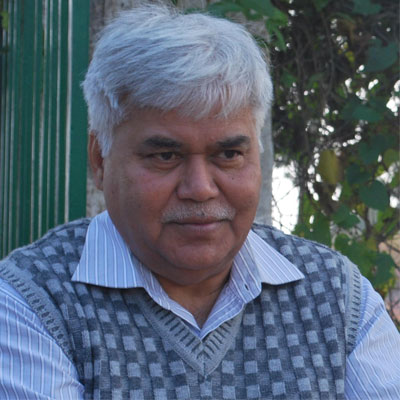
Tag: Rahul Khullar

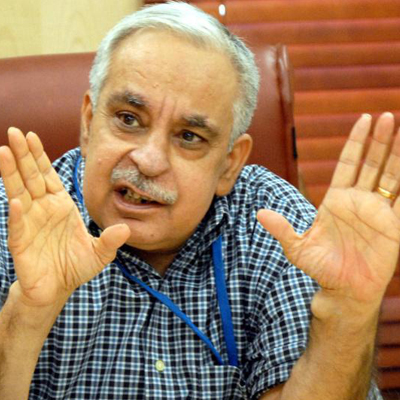
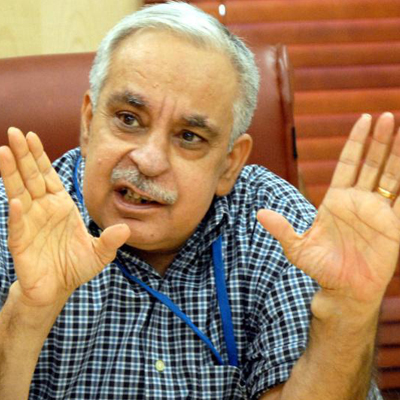
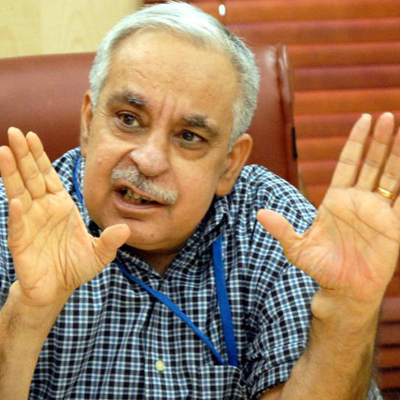
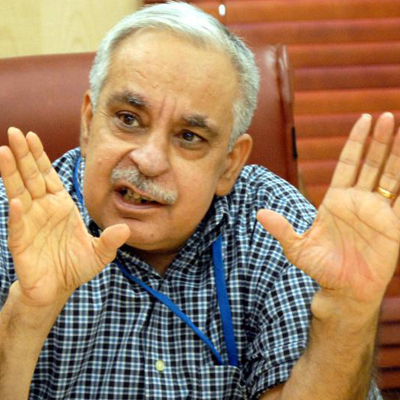
  • RS Sharma new TRAI chairman; challenges aplenty

    RS Sharma new TRAI chairman; challenges aplenty

    MUMBAI: The position had been lying vacant for almost three months. And his was one of the names mentioned as amongst the front runners to become the next Telecom Regulatory Authority of India (TRAI) chairman. (See: TRAI Chairmanship: An onerous responsibility fraught with delicate diplomacy & balancing acts)


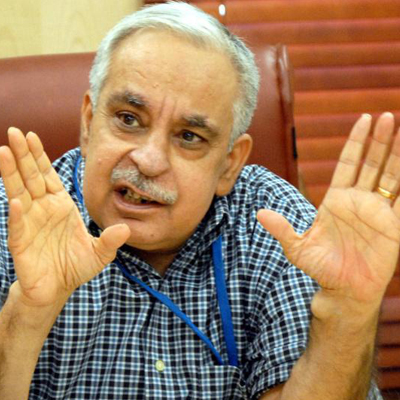
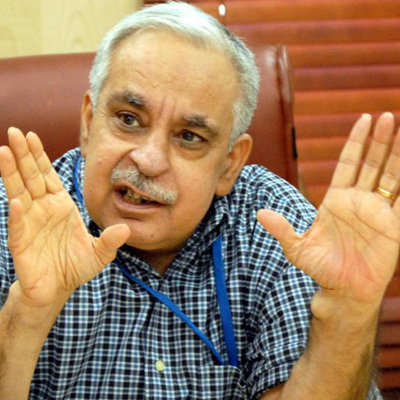
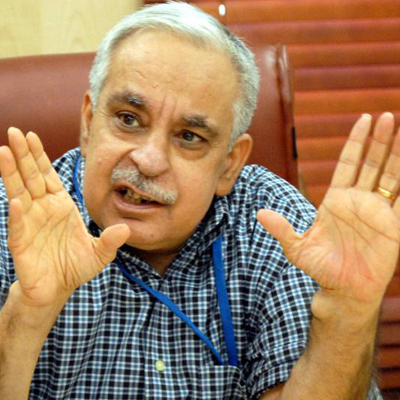
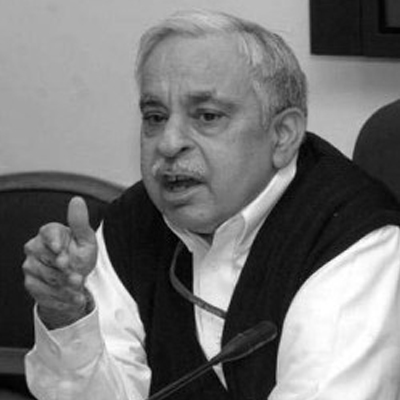
    So when the announcement came that IT secretary Ram Sewak Sharma would be stepping into the shoes of Rahul Khullar whose term ended in May, it didn’t come as much of a surprise.

    The appointment committee of the Cabinet approved his name yesterday. Sharma is an IAS 1978 batch from the Jharkhand cadre. He was heavily involved in the implementation of the Aadhar project apart from designing the road map for the government’s digital India programme. He was director-general and mission director of the Unique Identification Authority of India.

    Sharma holds quite a few scholarly degrees from academia’s best. He has a Masters degree in Mathematics from IIT Kanpur, and a Masters in Computer Science from the University of California.

    Other names, which were being considered for the post, according to Business Standard, included Power Secretary PK Sinha, Information and Broadcasting Secretary Bimal Julka, Commerce Secretary Rajeev Kher, former telecom secretary M F Farooqui, and former Reserve Bank of India deputy governor Subir Gokarn.

    Sharma will have a key role to play on the net neutrality issue and also find solutions for the poor call quality that mobile companies are offering today. This apart, he has challenges facing him on cable TV digitisation, which has been in near limbo for a while now, especially when it comes to phase III and phase IV. The I&B ministry has been unable to push the pace on its own.

  • TRAI Chairmanship: An onerous responsibility fraught with delicate diplomacy & balancing acts

    TRAI Chairmanship: An onerous responsibility fraught with delicate diplomacy & balancing acts

    NEW DELHI: For any bureaucrat assigned to an autonomous organization under any Ministry, the biggest problem is to ensure smooth functioning between the Ministry and the organization.


    Even as Ram Sewak Sharma, a 1978-batch IAS officer of Jharkhand cadre who is currently serving as secretary in the Department of Electronics and Information Technology appears to be the favourite for the hotseat of chairman of the Telecom Regulatory Authority of India (TRAI), he is one of over seventy-five contenders who reportedly include Information and Broadcasting secretary Bimal Julka.


    Erstwhile chairman Rahul Khullar had taken charge of the regulatory body on 14 May 2012, and demitted office earlier this month on 13 May.


    TRAI had been established under an Act of Parliament to deal with telecom issues, but was given additional charge of broadcasting just over a decade earlier. Even though it appears to have handled broadcasting issues with fair competence, the bent of mind of the officials in the regulator is still towards telecom.


    Convergence: A delicate balancing act


    The task for the seventh chairman of TRAI becomes even more onerous: he has to ensure smooth coordination with two Ministries. Even though TRAI technically falls under the Communication and Information Technology Ministry, it has to also work at tandem with the Information and Broadcasting Ministry. 


    This balance between the two Ministries becomes crucial, considering that the National Democratic Alliance (NDA) Government is again talking about convergence at a time when two of the primary players who were involved on this issue a decade earlier when the matter had come up – to utter failure – are still in the cabinet. Arun Jaitley then headed Law and now heads the Finance and I&B Ministries, whereas Sushma Swaraj, who was then in charge of I&B Minister is now in External Affairs. In that round, the late Pramod Mahajan as Communications Minister was also part of the Group of Ministers headed by then Finance Minister Yashwant Sinha.


    The fact remains that convergence is bound to become a hotly debated subject during the tenure of the new chairman, and a lot of diplomacy will be required to balance the demands of the two ministries.


    Digital India and Broadband


    Even as a lot has been heard about programmes on Digital India and Make in India with little tangible showing so far in telecom and broadcasting, one of the greatest challenges the new incumbent will have to face is ensuring the growth of broadband.


    At present, India is at the 89th position in Network Readiness Index with countries like Singapore, Finland and Sweden having become leaders and by TRAI’s own admission the broadband connectivity is abysmally low with just 99.2 million subscribers by March this year. 


    In view of this, the government’s ambitious national broadband plan to connect as many as 2.5 lakh villages through optic fibre appears to be too far-fetched and even came in for sharp criticism from outgoing chairman Khullar, who termed the move as “impossible” to implement and something that is bound to “fail.” In fact, he said a plan to connect the entire country at one go is not the right way of providing broadband connectivity to all.


    Broadcasting Sector


    Expectedly, TRAI will need to not only strengthen its broadcasting team but also ensure greater coordination among officers in both broadcasting and telecom. This is also obvious from the number of policy decisions with regard to broadcasting, which have been taken to the Telecom Disputes Settlement and Addressable System and the Courts.


    The primary challenge that TRAI faces in broadcasting is to establish its credibility of being impartial and not playing into the hands of the broadcasting lobby. The cable operators and independent multi-system operators have been crying hoarse over this issue, often leading to litigation.


    In fact, the regulator has had to backtrack several times in the recent past, either on its own or because of Telecom Disputes Settlement and Appellate Tribunal (TDSAT) and court decisions and hopes the Supreme Court will come to its aid.


    A day after Khullar laid down office, TRAI on 13 May announced that amendments to its tariff orders issued on 1 October, 2004 and 21 July, 2010, which had been set aside by TDSAT earlier this month would be subject to the outcome of the appeal filed by the regulator before the Supreme Court.


    The two amendments made by the TRAI to its tariff orders that aimed at preventing broadcasters from giving their channels directly to the subscribers and putting commercial subscriber at par with ordinary subscribers were struck down by TDSAT on 9 March.


    TDSAT said TRAI must now undertake a fresh exercise ‘on a completely clean slate. It must put aside the earlier debates on the basis of which it has been making amendments in the three principal tariff orders none of which has so far passed judicial scrutiny. It must consider afresh the question whether commercial subscribers should be treated equally as home viewers for the purpose of broadcasting services tariff or there needs to be a different and separate tariff system for commercial subscribers or some parts of that larger body. It is hoped and expected that TRAI will issue fresh tariff orders within six months from to-day.’


    On 16 May, TRAI failed to get a stay from the Supreme Court of the order of TDSAT setting aside the amendments in two tariff orders, which had sought to put an inflation-linked hike of 27.5 per cent on addressable and non-addressable systems.


    The regulator also failed to get permission to take action against television channels violating its diktat of a total of 12 minutes of commercial and promotional advertisements every hour, though all broadcasters were asked to keep records of this by the Delhi High Court.


    Despite announcements, there has been little progress in the Make in India campaign as far as indigenous set top boxes for digital addressable systems go and most consumers have to put up with Chinese or other boxes.


    Similarly, analogue transmission continues in many parts of the cities and towns that have gone digital and the Government failed to get the stay of Digital Addressable Systems (DAS) in Chennai vacated.


    The subscription charges for the average consumer under DAS still continues to create confusion as far as free to air and pay channels go and that is the primary reason for the LCO’s inability to do proper billing – giving a reason for the broadcaster to complain.


    The Direct-to-Home (DTH) sector also complains about the fee charged by the Ministry, which they say makes it difficult for them to continue or earn profits.


    Both Internet Protocol TV (IPTV) and headend-in-the-sky (HITS) are still considered nascent technologies despite having been around for some years, and TRAI will have to find ways to encourage their growth, particularly in the face of smartphones which can receive live TV signals for which they often pay nothing.


    While the nation is talking about digital technology, Prasar Bharati feels that Frequency Modulation, which is an analogue technology, should be promoted until the nation is read for digital radio sets. This seems to militate against the crores of rupees spent by All India Radio (AIR) in Digital Radio Mondiale technology. Though TRAI has not interfered as it is a matter between the I&B Ministry and the public service broadcaster, it may have to do so if digitization has to succeed.


    Both the Government and TRAI have been announcing that e-auctions of the first batch of Phase III FM would begin in May but the month is almost at an end and no date has been fixed yet.


    Telecom Sector


    The new chairman would be taking charge at a time when the telecom sector is facing major turmoil with the emergence of over-the-top (OTT) operators. While the broadcasting community appears to be happy as the communication OTT will help popularize its programmes, the cellular operators feel OTT will affect their revenues adversely. The TRAI consultation paper also touched upon net neutrality, which is bound to gain controversy in the era of convergence.


    If the successor is Sharma, then his task will become even more challenging as it is bound to militate against the post he has been holding until now and where he had in fact set up a committee on the same subject even as a Parliamentary Committee is also considering this issue.


    Spectrum and the inability of the government to auction the entire spectrum available in the last e-auction – with 12 per cent remaining unsold – is bound to trouble the regulator. Added to that is the fact that despite the fact that the last e-auction was held in the tenure of the present government, Minister Prasad recently assuring the industry that the auction of spectrum in the future too would be conducted in a timely, fair and transparent way.


    Even as 3G is still to become a success, the regulator has been asked to look at 4G at a time when many telecom service providers are facing problems.


    Other challenges in telecom include extending the mobile network to rural India, and a debate whether India is ready for Virtual Network Operators.


    Clearly, the new chairman has to burn the midnight oil and at the same time avoid heartburn as he goes about his task of resolving the multifarious tasks before him.

  • TRAI proposes more data pack usage for mobile users; Khullar non-committal on net neutrality

    TRAI proposes more data pack usage for mobile users; Khullar non-committal on net neutrality

    NEW DELHI: The Telecom Regulatory Authority of India (TRAI) wants telecom service providers to provide ample information about subscribed data pack usage.


    TRAI said in the draft ”Telecom Consumers Protection (Eighth Amendment) Regulations, 2015” that it proposes to mandate the service providers to provide information, through SMS or unstructured supplementary service data (USSD), to mobile users, who have subscribed to data connection other than through data packs about quantum of data used and the tariff thereof after every 5,000 kilobytes of data usage.


    The draft was released on 29 April and comments of stakeholders can be submitted till 12 May.


    TRAI has been receiving several complaints from consumers regarding non-availability of information relating to the amount of data used during a data session.


    The service providers offer concessional tariff for data, up to a certain limit, through special tariff vouchers or combo vouchers (data packs) and also through certain tariff plans. The tariff for any usage beyond the specified limit is substantially higher, and in case the customer does not know about reaching the limit for concessional tariff, it results in substantial charges levied, leading to sudden bill shock or unexpected deduction of balance amount.


    ”The consumers have also voiced their concern about activation of internet service on mobile phones without their consent and knowledge leading to sudden deduction of charges for data usage,” the statement said.


    TRAI has examined these complaints and has felt that measures need to be taken for addressing these genuine concerns of customers. In this regard, TRAI proposes to amend the Telecom Consumers Protection Regulations, 2012.


    The regulator also proposed to mandate the service providers to provide the mobile subscriber who has taken data connection through data packs or through tariff plan with discounted tariff up to certain limit, an alert through SMS or USSD, whenever the limit of data usage reaches 50 per cent, 90 per cent and 100 per cent of data limit.


    ”Also when the usage reaches 90 per cent of the limit, information about the applicable tariff beyond the data limit shall also to be communicated,” the statement added.


    It is proposed that data services should be activated or deactivated only with the explicit consent of the subscriber through toll free short code 1925, following the prescribed procedures for obtaining explicit consent of the consumer and for deactivation data.


    In fact, TRAI chairman Rahul Khullar recently said that TRAI is likely to announce new parameters for improvement of quality of service for telecom operators in a month’s time to tackle call dropping and other problems being faced by customers.


    He was speaking at the 2nd National Summit on ‘IT & Mobile Banking: Digital Transformation of Indian Banking. Enabling Financial Inclusion,’ organised by the Associated Chambers of Commerce and Industry of India.


    Regarding the ongoing debate on net neutrality, Khullar said, ”The consultation process on network neutrality is still on till that consultation is complete, I will not make any statement.”


    Khullar also said that financial inclusion could be deeply achieved by harnessing new technology, which does not cater exclusively to those who are already banked or those living in urban areas.


    ”Do not delude yourself into believing that merely because technology exists, it will be suddenly harnessed for everybody’s good. The way it has worked so far at least, it has been harnessed for the good of a very few as it’s only those having devices and are electronically savvy who are in good shape,” he added.

  • Net Neutrality: TRAI receives a million mails, Indians awaits judgment day

    Net Neutrality: TRAI receives a million mails, Indians awaits judgment day

    MUMBAI: One of the largest mass movements online in India came to an end as we crossed the 24 April, 2015 deadline day to send online responses to the Telecom Regulatory Authority of India (TRAI).


    The Net Neutrality debate began after Indian telecom operators lobbied to TRAI to change certain rules as per their convenience, which would have a direct impact on the consumer’s pocket. TRAI, in response to the telecos on 27 March, released a 118-page long consultation bulletin, which concluded by asking 20 questions. The last date to respond to that bulletin electronically was 24 April, 2015 while all the counter responses could be sent till 8 May, 2015.


    From 27 March to 24 April there have been certain incidents, which managed to ruffle quite a few big feathers. Many came on record to make a statement.


    Some of the major developments throughout the net neutrality debate tenure are as follows:


    All India Bakchod (AIB) Video


    AIB’s video conveyed the message – “Internet is not a luxury but a utility” and the video ended with a link (www.netneutrality.in), which directed people to the net neutrality home page where all of TRAI’s 20 questions were answered in detail. One could send an email with the pre-written answers by a single click or could edit the replies and send it as well. The video saw the Internet savvy youth getting into action and a complex concept like net neutrality spread through word of mouth as thousands of mails were sent to the Authority.


    Net Neutrality Website


    www.netneutrality.in: After AIB’s video, thousands of people came to the website and mailed TRAI with the pre-written responses. The website also posted all the developments that were happening around the topic, tweets of dignitaries and most importantly the number of mails that were sent. The website also shared their perception which read, “The Internet’s success in fostering innovation, access to knowledge and freedom of speech is in large part due to the principle of net neutrality — the idea that Internet service providers give their customers equal access to all lawful websites and services on the Internet, without giving priority to any website over another.”


    Internet.Org Backout


    Internet.org is a Facebook-led initiative, which aims to bring five billion people online in partnership with tech giants like Samsung and Qualcomm. In India, Facebook partnered with Reliance Communications to provide free Internet access to 33 websites as part of its Internet.org initiative, which came under controversy and raised quite a few eyebrows with free Internet activists saying that it violated the idea of net neutrality. Major participants like Flipkart, Cleartrip, NDTV and Times Network, which had earlier joined this initiative, opted out later as the Net Neutrality debate gathered momentum in India.


    NDTV co-founder Prannoy Roy tweeted, “NDTV is committed to Net Neutrality and is therefore exiting, and will not be part of Facebook’s Internet.org initiative.”


    Mark Zukerberg’s letter


    Facebook founder Mark Zukerberg wrote a note justifying the Internet.org initiative. It read, “In many countries, there are big social and economic obstacles to connectivity. The Internet isn’t affordable to everyone, and in many places awareness of its value remains low. Women and the poor are most likely to be excluded and further disempowered by lack of connectivity. This is why we created Internet.org, our effort to connect the whole world. By partnering with mobile operators and governments in different countries, Internet.org offers free access in local languages to basic Internet services in areas like jobs, health, education and messaging. Internet.org lowers the cost of accessing the Internet and raises the awareness of the Internet’s value. It helps include everyone in the world’s opportunities.”


    He further added, “We fully support Net neutrality. We want to keep the Internet open. Net neutrality ensures network operators don’t discriminate by limiting access to services you want to use. It’s an essential part of the open Internet, and we are fully committed to it. But Net neutrality is not in conflict with working to get more people connected. These two principles — Net neutrality and universal connectivity — can and must coexist.”


    TRAI chairman Rahul Khullar’s statement


    “There are passionate voices on both sides of the debate. And if that was not enough, there’s a corporate war going on between a media house and a telecom operator, which is confounding already difficult matters,” Khullar told The Indian Express. “They have a moral anchor… Equally, there are others on the opposite side. But there are many others in between that one should not ignore despite the passionate nature of the debate between the two extremes. We need a democratic debate on the issue, not shrill voices,” he added


    Sabka Internet Campaign


    The battle for net neutrality in India saw an interesting twist after the Cellular Operators Association of India (COAI) launched a campaign called Sabka Internet. The Sabka Internet initiative was launched to counter the net neutrality campaign. The campaign communicated the positives of the zero Internet venture, where one gets whatever they pay for.


    Million Mail Mission


    In a span of 12 days, a million emails were sent and the ‘million mails’ mission of Netneutrality.in was accomplished before the due date. That sums up the entire net neutrality voyage.


  • TRAI chairman wants debate to settle net neutrality not spars between companies

    TRAI chairman wants debate to settle net neutrality not spars between companies

    MUMBAI: The Telecom Regulatory Authority of India (TRAI) chairman Rahul Khullar has said that there is a need for a democratic debate on net neutrality, especially against the backdrop of a big corporate war between a media house and a telecom operator.


    “There are passionate voices on both sides of the debate. And if that was not enough, there’s a corporate war going on between a media house and a telecom operator, which is confounding already difficult matters,” Khullar told The Indian Express.


    The authority has received over 800,000 mails since it floated a consultation paper on regulatory framework for over-the-top (OTT) services and applications on 27 March. TRAI requested stakeholders to comment on its paper by 24 April and offer counter comments by 8 May. It is also likely to hold an open house discussion on the issue soon. Stand up comedy group All India Bakchod (AIB) and other net neutrality activists were the prime reason behind so many mails sent to the Authority. 


    According to Khullar, there are people who are passionately concerned about net neutrality. “They have a moral anchor… Equally, there are others on the opposite side. But there are many others in between that one should not ignore despite the passionate nature of the debate between the two extremes. We need a democratic debate on the issue, not shrill voices,” he said.


    The regulator has heard arguments on both sides. For instance, telecom service providers have pointed out the contradiction in the government’s digital inclusion agenda, which may not be achieved if they strictly adhere to the net neutrality principle, because they will be unable to raise any additional resources for rolling out networks and infrastructure. On the other hand, OTTs argue that if telecom operators are allowed to pick and chose, they might build alliances with the big OTTs at the cost of the nascent ones.

  • SK Gupta moved to broadcasting in TRAI, N Parameswaran to look after network services

    SK Gupta moved to broadcasting in TRAI, N Parameswaran to look after network services

    NEW DELHI: S K Gupta, who was until now looking after broadband issues in the Telecom Regulatory Authority of India (TRAI), has been made the Principal Advisor in charge of Broadcasting issues.


    He thus takes the place of N Parameswaran, who will now be looking after network services and licensing as Principal Advisor.


    Telecom Ministry sources confirmed that the term of Parameswaran in TRAI is to expire later this year. He has been in the telecom sector since January 1980. He played a key role in the liberalisation of the telecom sector in India. He was the first executive director of the Information & Communication Technologies Authority, Mauritius, wherein he set up the Authority and facilitated the liberalisation of the ICT sector. He has held various positions in Department of Telecom and MTNL.  He joined TRAI in 2007 and was looking after broadcasting since 2009.


    The term of TRAI chairman Rahul Khullar is also expiring in May this year. A 1975 batch IAS officer of Delhi cadre, Khullar succeeded J. S. Sarma in May 2012 for a three-year term. 

  • India SatCom-2015: Ushering in a new era

    India SatCom-2015: Ushering in a new era

    MUMBAI: Accounting for approximately 17 per cent of the global population and with a growing middle class and a large population still living in rural & remote areas, India presents large market opportunities for satellite communication services. With the government’s focus on ‘Digital India’, one of the significant market enablers for broadband penetration shall be over satellite, as a large share of the population still remain beyond the reach of the terrestrial broadband network including fiber and cable.

    To shake off  the inertia and cynicism and bring about an awakening call to the policy makers for the need to refocus on satellite communication policy and to realise the dream and vision of our Hon’ble Prime Minister – Narendra Modi to make  “ Digital India “ –India’s road map for providing inclusive growth & development for its entire population of 1.3 billion, we are organising a unique day long seminar about Satellite Communication and how we can use this technology to transform  the lives of the people of India. On behalf of Broadband India Forum ( BIF ), we are pleased to invite you to attend this gala event to be held on 16 January 2015 at  Hotel Le Meridien , Janpath, New Delhi  from 10am.  The theme of the conference is India Satcom-2015: Ushering in a new era.

    The chief architect of the ‘Digital India’ program- Hon’ble Minister of Communications & IT-Shri Ravi Shankar Prasad ji has been invited to grace the occasion by inaugurating the conference and delivering the inaugural address.

    The dignitaries who have been extended the invitation to be a part of the conference are Rahul Khullar, Chairperson- TRAI, Rita Teotia, Special Secretary- Dept. of Telecom and Kiran Karnik prominent Indian administrator chiefly known for his work in the broadcasting and outsourcing industries, RK Arnold, Member TRAI besides leading industry veterans viz. Vern Fotheringham-CEO & MD, Kymeta Corp, USA who shall be delivering the keynote address & David Hartshorn-Secretary General, Global VSAT Forum ( GVF ) who shall be bringing an international perspective  to the discussions.

    The occasion will also see the release of the White Paper on Satellite Vision – 2020 besides the launch of the India SatCom Forum under the aegis of Broadband India Forum. This will be entrusted to take the recommendations of the conference forward and work diligently to provide industry inputs in the New Satcom Policy-2015.

    The conference is expected to be attended by eminent visionaries, technocrats, industry specialists and bureaucrats from Telecom Regulatory Authority of India, Ministry of Information and Broadcasting, Doordarshan, Prasar Bharati, Bharat Sanchar Nigam Limited, Department of Telecommunications, Government of India, Telecom Engineering Center, Indian Space research Organization / ANTRIX,WPC (Wireless Planning & Coordination Wing) and from the Broadcasters, Satellite Service Providers,Satellite Operators, Telecom Service Providers, Broadband Service Providers / Internet service Providers, DTH Operators , VSAT Service Providers, System Integrators, Technology Providers  and Users.

    The conference has been supported by two large international organisations- the Global VSAT Forum (GVF)  and the Cable & Satellite Broadcasters Association (CASBAA).


  • Broadband target by government needs to be evaluated, says Khullar

    Broadband target by government needs to be evaluated, says Khullar

    MUMBAI: Telecom Regulatory Authority of India (TRAI) chairman Rahul Khullar said the target set by the government for providing broadband network for all was unrealistic and called for evaluating it. He said it would be simpler to first connect the metros and then look at connecting cities and talukas in a gradual manner.

     “Right now we are sort of deluding ourselves by saying we will achieve 100 per cent and all of you know exactly what has been achieved,” said Khullar. “This can’t be an infrastructure project. Focus on just building the infrastructure is wrong. The entire ecosystem – from applications to services — needs to be developed. The approach should be more practical and realistic,” Khullar added.

     The government plans to link 2.5 lakh village panchayats across the country by December 2016 through the national optical fibre network (NOFN) programme, while promoting initiatives like e-governance, e-education and e-health. The project also aims to ensure that all villages in India have high speed internet.

     In an interview with the Economic Times in August this year, telecom minister Ravi Shankar Prasad had said the government of Prime Minister Narendra Modi wants to ensure a smartphone in the hands of every citizen by 2019. Currently, nearly 74 per cent of the population has mobile phones, most of which though are in the hands of urban Indians.


  • TRAI’s Khullar lashes out at DoT for delay in giving spectrum to Airtel and Vodafone

    TRAI’s Khullar lashes out at DoT for delay in giving spectrum to Airtel and Vodafone

    NEW DEHI: The Telecom Regulatory Authority of India (TRAI) has lashed out at the Department of Telecom (DoT), noting that it is “unable to understand the reasons for the inordinate delay in the assignment of spectrum despite the clear provision in the notice inviting applications fo the assignment of spectrum and after the payment has been made by the licencees.


    In a letter by TRAI chairman Rahul Khullar to Telecom secretary Rakesh Garg, it has been stated that the Authority is seriously concerned that this delay on the part of WPC in assigning spectrum in the 1800 MHz band may lead to a partial breakdown of services offered by  Airtel and  Vodafone especially in Delhi, the national capital.

    This will inconvenience consumers greatly. Both these operators have around 20 million subscribers in Delhi which constitute around 45 per cent of the total subscriber base of Delhi Licence Service Area. It is apprehended that in December 2014, there will be a serious deterioration in the quality of service to these subscribers because of call drops, network congestions etc.
     
    The Authority has suggested that the DoT should immediately call a meeting of both Telecom Service Providers and arrive at a feasible solution so that consumers’ inconvenience can be avoided.
     
    At the outset, Khullar said in the three metros of Delhi, Mumbai and Kolkata, the first two CMTS/UAS licences given in 1994 are due to expire on 29/30 November 2014. These “expiry” licensees were holding spectrum in the 900 MHz and 1800 MHz band which was put to auction in the February 2014 auctions. Except Loop which did not participate in the auctions, other “expiry” licensees.  and Vodafone were successful in re-acquiring spectrum in these LSAs.
     
    In the Delhi LSA, Airtel and Vodafone, which were both having 8MHz in 900 MHz, could re-acquire only 6 and 5 MHz of 900 MHz band respectively in the auctions. Moreover, the spot frequencies now assigned to them are almost entirely different from the earlier different from the earlier assignment.  To make up for the shortfall int eh 900 MHz band, these TSPs have acquired additional spectrum in the 1800 MHz band, but it will require sufficient time to build a new network in the 1800 MHz spectrum.  In addition, in the Delhi LSA, Idea has acquired 5 MHz in the 900 MHz band, which has to be assigned to it after getting it vacated from these two TSPs.
     
    As reported by these TSPs, this whole exercise of change over of frequencies will need to be carried out in two stages. First, these TSPs will have to build a new network of 1800 MHz spectrum by putting new BTSs and augmenting the capacity of the existing ones. In the second stage, they will have to reduce their holding in the
    900 MHz band in steps and carry out swapping of spectrum andreleasing spectrum to the new entrant (Idea). Both of them will berequired to do rigorous planning and work in tandem. The above change  over  will be  a huge challenge  as all these changes are to be carried out on a live network catering to millions of subscribers and any lapse may result in service interruption and serious deterioration in quality of service.
     
    Anticipating the above challenges in mind, the Authority, in its recommendations on ‘Auction of Spectrum’ dated 23 April 2012 had recommended that the 900 MHz spectrum be auctioned at least 18 months in advance so as to enable the winning bidders to be ready with the deployment plans. According to the NIA of 12 December 2013 for the auctions of February 2014 in case of bidders whose licenses were about to expire in 2014, the effective date of spectrum assignment in 1800 MHz band, will be the preferred date of allotment of spectrum indicated by the successful bidders which in no case shall be later than date of expiry of existing licenses in the respective service area.
     
    Khullar noted that media reports had reported and Vodafone and Airtel had told the Authority that there has been inordinate delay in the assignment of spectrum in the 1800 MHz band. Vodafone says it has been assigned spectrum only on 10 October 2014, that is, after almost 8 months from the February 2014 auctions despite a number of representations to the WPC.
     
    In its representation of 16 October, Vodafone has indicated that it would require at least one week for the deployment of new frequencies assigned in the 1800 MHz band and 9 weeks for freeing up the excess 3MHz in the 900 MHz band in a progressive manner.  Subsequently, it would require another three weeks’ time for swapping of its frequencies in the 900 MHz band with Airtel.
     
    However, only seven weeks are left before the expiry of licences, Khullar noted.


  • TRAI to finalise views on AGR in four to five weeks

    TRAI to finalise views on AGR in four to five weeks

    NEW DELHI: The Telecom Regulatory Authority of India (TRAI) has sought a time of three to four weeks for finalising its views on the definition of Revenue Base (AGR) for the Reckoning of Licence Fee and Spectrum Usage Charges.


    TRAI Chairman Rahul Khullar said in an Open House Discussion (OHD) on the subject that the regulator had issued a consultation paper in July-end at its own insistence since the matter was important. Most of the stakeholders present felt that AGR should not apply to those stakeholders who do not need to apply for licences to operate.


    The OHD was attended largely by telecom players and internet service providers. From the TRAI, member Vijayalakshmi Gupta and principal advisor N Parameshwaram were present.  


    The paper had been issued following a multitude of cases by both telecom and broadcast operators to review the definition of Gross Revenue (GR) and the permissible deductions to arrive at Adjusted Gross Revenue (AGR) in the context of the National Telecom Policy 2012.


    It was also aimed at examining the components of GR, AGR and minimum presumptive AGR, rates of licence fee and spectrum usage charges, formats of statements of revenue and licence fee and audit and verifiability of revenue and licence fee.


    The paper on Definition of Revenue Base (AGR) for the Reckoning of Licence Fee and Spectrum Usage Charges will also examine the changes made in the licensing regime, the transition from the administrative allocation regime towards market-determined prices for spectrum, and the conclusion of tenure of many licences. The paper provides the relevant background information on the subject covering various issues involved.


    On the definition of AGR specifically, the authority had in 2012 recommended that only the revenue from the wireless services shall count towards AGR calculation for the limited purpose of calculation of Spectrum Usage Charges (SUC) that would continue to be determined on service area basis, and should be levied only in respect of those service areas where the licensee holds any access spectrum.


    TRAI wanted to know whether there is a need to review/revise the definition of GR and AGR in the different licences at this stage; the guiding principles for designing the framework of the revenue sharing regime; and whether the rate of licence fee (LF) be reviewed instead of changing the definitions of GR and AGR, especially with regard to the component of USO levy in the interest of simplicity, verifiability, and ease of administration.


    The paper also wanted to know whether the revenue base for levy of licence fee and spectrum usage charges include the entire income of the licensee or only income accruing from licenced activities if the definitions are to be reviewed/revised.


    It has asked whether LF be levied as a percentage of GR in place of AGR in the interest of simplicity and ease of application, and should the revenue base for calculating LF and SUC include ‘other operating revenue’ and ‘other income’.


    The government prepared a draft licence agreement for International Long Distance (ILD) services in September 2000 containing a provision that LF was payable as a percentage of revenue. For the Public Mobile Radio Trunk Service (PMRTS) too, the revenue share regime was made applicable from 1 November 2001.


    The definition of AGR has been litigated since 2003. TSPs questioned the inclusion of various components of revenue in the reckoning of AGR as well as the legality of the definition before TDSAT. In 2006, TDSAT, after noting that revenue from non-licensed activities needed to be excluded from the reckonable revenue, asked TRAI to make recommendations on the inclusion or exclusion of the disputed items in the AGR. TRAI made its recommendations on September 13, 2006 and the Tribunal gave its final order in the matter on August 30, 2007 after accepting most (but modifying some) of TRAI’s recommendations.


    In the course of finalising the recommendations of the authority on the reference from TDSAT, the views of DoT were obtained by the authority through its representative and incorporated in the “Recommendations on components of Adjusted Gross Revenue” dated 13 September  2006. The authority was informed that the basic rationale adopted by the government while formulating the definition of AGR was that it should be easy to interpret – so as to pose fewer problems in application and less disputes and litigations, and to make it less prone to reduction in LF liability by way of accounting jugglery; and it should be easy to verify.


    The TDSAT’s judgment of 30 August 2007 was taken in appeal by DoT to the Supreme Court and was set aside by its judgment on 11 October 2011 on the grounds, among others, that TDSAT had no jurisdiction to decide the validity of the terms and conditions of the licence including the definition of AGR incorporated in the licence agreement. It was for DoT – and not TRAI and TDSAT – to take a final decision on the definition of AGR. The Supreme Court also held that a licensee can raise a dispute about the computation of AGR relating to a particular demand and that TDSAT can then examine whether the demand was in accordance with the licence agreement and the definition of AGR.


    The judgment of the Supreme Court settled important points of law and has clarified the nature of the contractual relationship between the Government as licensor and the TSPs. The judgment also laid down the parameters of institutional responsibility in arriving at the contractual terms and conditions.


    Litigation regarding the computation of LF continues before the TDSAT in the case of individual demands made on TSPs. It has also been reported that writ petitions re-agitating the revenue share definition have been filed by TSPs in different High Courts.