Tag: Rahul Kanwal

  • “India Today TV has become a very strong alternative to the noise that dominated news television:” Ashish Bagga

    “India Today TV has become a very strong alternative to the noise that dominated news television:” Ashish Bagga

    May 2015 marked the re-branding of the English news channel Headlines Today as India Today Television. The group cited research conducted by the group, which showed higher brand recall value for India Today than Headlines Today as the reason for the name change. The change immediately showed results as it saw India Today Television toppling market leader Times Now to claim position as the leading English news channel in terms of viewership according to BARC ratings in the first week of its re-launch. 

    The journey from there on has been a good one for the channel as it has maintained the number two rank on the ratings chart. The challenge now is to take it to the top and sustain the pole position.   

    In an interview to Indiantelevision.com’s Seema Singh, India Today group CEO Ashish Bagga talks about the journey so far and the plans ahead.

    Excerpts:

    It has been seven weeks since the channel revamped to India Today TV. How has the response been?

    Of late, the English news television genre was dominated and characterised by loud debates with little being added to viewers’ usable knowledge. The last seven weeks have witnessed a starkly different product with a clear vision to take forward the 40 year legacy of the India Today brand.

    The launch has been amongst the most successful media launches in recent times with the channel showing considerable growth from the launch week itself as per BARC ratings. A lot of the success of the new channel can be credited to the brand strength of India Today along with the new content strategy, dynamic visual format and robust marketing that added to the increased popularity of the channel. The success of the launch has been very promising especially as the channel is built on the same ‘Gold Standard’ of journalism of the India Today brand. This clearly underlines that the brand extension was the right decision and the product has become a very strong alternative to the noise that dominated news television.

    What was the channel’s positioning in the ratings chart before the revamp? What is the percentage hike in viewership that you have witnessed after revamping?

    On a comparative level with Headlines Today, the average weekly market share for a four week period since the launch of India Today Television has increased from 11 per cent to 23 per cent. (four weeks average of last available data from TAM Week 10 to Week 13, CS 25+ M AB Top 6 Metros and post launch four week ratings as per BARC Week 21 to Week 24, CS 22+ M NCCS AB Top 6 Metros: Table below).

    The launch of India Today Television showed the highest growth, of almost 110 per cent in market share over Headlines Today, while most other channels showed negative movement during the same period.

    This positive growth clearly establishes the acceptance of the India Today brand among news viewers.

    How has the revamp helped the channel in attaining the number two rank? What were the changes that were made in the channel, that worked in favour?

    India Today Television was launched on a philosophy of keeping the India Today ethos of journalism at the core, while being relevant to the evolved news audience. This philosophy called for a paradigm change in TV news delivery formats to make the channel the definitive knowledge source. The most radical change was in the form of a pioneering visual format, which integrates digital interactivity and makes it possible for multiple news updates simultaneously on the screen. The digitally inspired screen with innovative elements like the roller deck has redefined the news viewing experience on television.

    The immense pull of the India Today brand along with a renewed content strategy designed to be a knowledge source had the viewership of the channel grow from the launch week itself.

    Has there been a shift in the positioning and target audience of the channel post the revamp due to which it has started gaining eyeballs?

    The content strategy is built on the principle to be the ‘fact factory’ as against an ‘outrage factory.’ Therefore the new positioning builds on the ethos of the India Today mega brand and goes after the viewer that seeks knowledge as against entertainment. The channel is engineered to cater to the viewer’s intelligence and to specifically appeal to a progressive audience that is seamlessly consuming news across platforms.

    The focussed promotions around the launch of the channel saw a lot of additional viewers who were drawn to the channel due to its distinct offering. 

    What is your strategy now to ensure that you move to the top position or maintain the current position?

    India Today Television is slated to become the No. 1 English News channel backed with a journalism that builds on the values that have defined news in the country for around four decades. The convergence has created synergy of content that will see the launch of a series of new shows. In addition, a lot of thought leadership event properties are lined up that are sure to provide the channel with unrivalled content. We will continue with focussed marketing for the brand to keep it ahead in preference.

    Though the growth in ratings has been very encouraging, our focus will be to make India Today TV a knowledge source by staying true to the same principles of journalism that had kept the magazine brand an undisputed leader. 

    How much of a role has distribution played in the numbers that the channel has achieved?

    It was a tactical booster made to facilitate and give the new brand enough sampling. This intervention seems to have done its job.

    What has been the response from advertisers?

    The consistent ratings of the channel from the launch week itself has created a steady increase in advertising. We are targeting shorter commercial breaks and increased premium. The value that the channel provides to advertisers has led to an increase in advertising and premium has definitely grown manifold for marquee shows led by Rajdeep Sardesai, Karan Thapar and Rahul Kanwal.

    What is the channel’s perception on BARC ratings and measurement mechanism?

    The channel’s focus towards excellence in journalism is clearly being reflected in the ratings. We are happy that the measurement system by BARC provides a robust and scientific measurement tool for viewership trends. We had in fact used the BARC system very effectively to build on the launch media plan.

  • “Four smaller channels don’t match up to Times Now:” Arnab Goswami

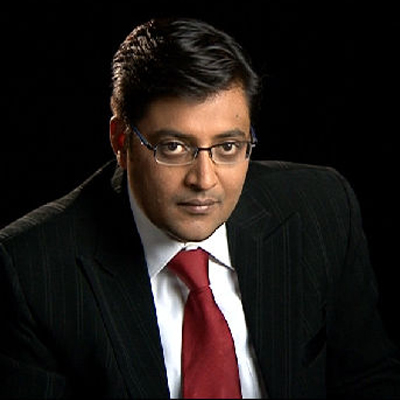
    “Four smaller channels don’t match up to Times Now:” Arnab Goswami

    MUMBAI: Reporting an event and informing viewers with occurrences from that event is no longer enough for a news channel in India. Week 23 of calendar year 2015 showed the television industry some never before incidences.

    When the Broadcast Audience Research Council (BARC) India announced its ratings for week 22, it showed how India Today Television pipped Times Now to take the pole position in the English News genre. And that’s something Times Now did not like!


    The zest to go back to number one saw Times Now and ET Now news president and editor-in-chief Arnab Goswami getting into action mode on the first day of the week, which incidentally is Sunday – a day when he is generally off action. The Sushma Swaraj – Lalit Modi controversy turned out to be just the right fodder and Goswami exploited the opportunity by covering the news as extensively as possible. The action that began in the Times Now studio certainly irked the then number one India Today Television’s Rahul Kanwal and he even took to Twitter to express his disdain by tweeting the following:

    Not only that, another tweet from Kanwal read as below:

    While Goswami in his coverage mentioned time and again that he broke the Keith Vaz – Lalit Modi story, Kanwal tweeted his reservations thus:

    The week got over, Times Now regained pole position after securing 345 (000s sum), whereas India Today Television managed 151 (000s sum) followed by NDTV 129 (000s sum). 


    Commenting on the ratings and indirectly responding to Kanwal and other channels Goswami said, “My experience has been that leadership is built by doing the news, not by negative marketing campaigns. Each time someone mocks or apes us, our viewership grows. There is a big lesson in this fact. Besides, the massive public response to our LalitGate expose matches the growing number of our viewers. Four smaller channels don’t match up to Times Now. I think it is time for the smaller channels to realise that aping the leader, or spending a lot of money mocking the leader is futile.” 


    Now it remains to be seen if this jingoism continues and how it affects viewers and if ever any other channel succeeds to grab the pole position. Overall, not only is the news industry providing news, it is also making headlines.

  • ‘Election Express’ flies high with Quidich’s aerial cams

    ‘Election Express’ flies high with Quidich’s aerial cams

    MUMBAI: In an election season when every second channel is belting out poll-related news and shows, how does one stand out in a crowd?

    The answer lies in how Headlines Today has deployed a new technology from a little-known company, Quidich, to give a facelift to its show, Election Express (EE).

    Launched in December 2013, Quidich provides aerial photography and videography using quadcopters and octocopters. Till date, Quidich members are busy touring the country with Headlines Today editor-at-large, Rahul Kanwal and his EE team.

    Quidich is constituted by three young men including CEO Rahat Kulshreshtha, who studied at the University of Westminster and worked with Star News, Nirvana Films and the British film industry; technical head Tanuj Bhojwani, an IIT Mumbai alumnus who left a management consultancy firm for Quidich; and marketing head Gaurav Mehta, a mechanical engineer from the College of Engineering, Pune. Currently, the office is based out of New Delhi and there are plans to have another one in Mumbai to tap into the Hindi film industry. For now, it’s a six-strong team with four permanent members.

    Aerial machines are fitted with cameras to provide shots which are called drones or multi-rotors. Explains Bhojwani, “The technology behind these drones is easy to grasp, but hard to master. It’s very easy to get something into the air, but to keep it there and stable is a very hard task.’

    The essential part of the equipment is the flying object which needs to be designed based on the client’s needs and the flight time. Next is the flight controller, which consists of a remote in the hand of the pilot and a microchip on the drone that receives the remote’s signal. Handling of this decides the precision and stability of the flight.

    For EE, two quadcopters (four motors) and one octocopter (eight motors) are being used. The batteries used are 7700 mAh, whose drainage is inversely proportional to the size of the copter. For example, an octocopter with a 5D DSLR can work with two such batteries for approximately 15 minutes in air. More motors means capacity to carry bigger cameras.

    Then comes the essential part of stabilizing the camera on the drone. An essential scientific technology called gimbal, which is present in a variety of instruments like gyroscopes and accelerometers, is utilized to stabilize the camera. After all, you wouldn’t want to break expensive cameras! For advanced and larger equipment with expensive flight controllers, the camera may also be programmed for self-control or manipulated using a device such as an iPad from the field so that it can fly on a set pattern.

    Using these drones, the Quidich and EE teams have been touring India for the past few weeks with the day beginning at 6:00 am and ending at 10:30 pm. Of this, a lot of time is consumed by bus travel while shooting goes on for about two to three hours a day. “We have our own drones but Quidich’s drones fit our bill as they are on the higher end and their operators are unbelievably deft with the controls,” says India Today group chief creative officer and India Today group digital chief operating officer Kalli Purie.

    So how did Quidich come up with the idea of the aerial camera? “The idea for the aerial camera actually came from our own experience. Rahat was trying to shoot a video for which he required aerial cameras. Attempting to experiment with the camerawork being employed, he discovered that services in India for aerial footage were literally non-existent or non-affordable. It was then that the idea to facilitate such a process was seeded, and shortly after, Quidich was formed,” says Bhojwani.

    Quidich services have also been employed for a short film for IRCTC, Volkswagen Motor Sports and NDTV for one of their companies called Red Dot Films. Bhojwani points out that such a service is used on a small scale in India mainly due to requirements of large scale production for news services, advertisements, sports coverage and feature films.

    Drones have been used in news channels for producing stock footage, unlike its usage for live telecast in EE. The range of the shot varies from 500 metres to 10 kms while the height can go up to 500 feet. Currently, Quidich owns three GoPro cameras that are used for action shots, one Nikon D500 mini, and one Nikon D800. While the GoPro is built for such shots, it cannot work precisely in low light and narrow areas.  Tie ups with camera rental companies assure that the client’s needs are met with good pricing. Now it is looking at buying the portable Blackmagic Design production camera that records 4k videos and supports different types of lenses.

    The bigger copters weigh about six to seven kg and are built of carbon fibre that is a lighter version of steel while the smaller ones are made of sturdy plastic and weighs about 1.5 kg. This, along with the gimbal ensures that the drone doesn’t crash and neither is it blown away by the wind.

    Although Quidich presently provides video services, it is looking at exploring other possibilities. Work is currently on on developing innovative options for out-of-home branding for marketers in India through quadcopters such as sky writing. “We are not restricting ourselves to being a technology company. There are just eight to 10 such large scale operators in the country,” says Kulshreshtha.

    For live transmission, radio equipment is fitted on the drone that corresponds to receiving stations on the ground. One signal beams back the video to the pilot that works on radio frequency while the main signal sent to the mixing station for live or recorded use is through OFDM (Orthogonal frequency-division multiplexing) technology. This ensures uninterrupted HD video being sent back unlike in radio frequencies. The RF tech can cost around Rs 15,000 to Rs 20,000 while the OFDM is on the higher end at about Rs 1 lakh. The setup for a live link can be up and running in 15 minutes.

    Purie feels that the usage of drones has given the viewer a more realistic experience apart from the five existing cameras on the show. “Good election coverage happens on the ground and drones are a perfect compliment,” she adds.

    The alternative options that are currently in use are helicopters and Jibs that are cumbersome and unable to fly to heights. “In contrast to any of these methods, Quidich’s technology can be availed at competitive rates and less than around one fifth the cost,” says Bhojwani. Pricing for this technology depends on a range of things such as type of copter, camera, timing, footage receiver etc, but for a full day shoot, prices could range from Rs 20,000 to Rs 1.5 lakh.

    The only thing the pilot has to concentrate on is to steer the drone away from obstacles or keep it away from the reach of passer-bys. So how do they deal with people staring into the flying camera while shooting? “We start flying five to ten minutes before actual live time so they get bored after that,” laughs Bhojwani.

    “We at Quidich believe in always providing state-of-the-art service to our clients, so that we can push the limits of what is possible,” says Kulshreshtha. On the experience working with EE, Bhojwani says, “It may be one thing to step out of the comfortable confines of a news studio to make your reporting distinct, but it is another ball game altogether to be negotiating with that amount of travel on a daily basis. With everyone pushing themselves physically and mentally, it was a gruelling but deeply satisfying experience.”

    EE being Quidich’s first big assignment, has the company managed to get some eyeballs? “We are currently in talks with a diverse group of prospective clients. These include an ad film for a sports brand, a full-length regional feature film that may be shot in Ladakh, and a Bollywood film that would be shot in Goa. We are also negotiating offers for corporate films that include property clients. Unfortunately, given that we are still finalizing most of these assignments, I would be unable to get into the specifics of these offers,” says Bhojwani.

    TV Today on the other hand has already decided to sign up with Quidich for a new show.

  • Elections 2014: Live from Ground Zero

    Elections 2014: Live from Ground Zero

    MUMBAI: The 2014 election fever has gripped the nation and news channels in their quest to feed the hungry electorate with innovative and comprehensive news coverage, are venturing out, literally. Studio produced shows are steadily seen replacing on ground coverage ensuring that information is delivered at source. Some of these shows include Open Mike by CNN-IBN; Kaun Banega Pradhan Mantrai, Nukkad Bahas and Ghosnapatra by ABP; Campus Connect by NewsX; Janta Ka Agenda, Akhada, Pradhan Mantri Pachchisi by News Nation etc.  Well known journalists, the face of these channels including Barkha Dutt of NDTV, Sagarika Ghose of CNN-IBN, Ajay Kumar, Ramesh Bhatt from News Nation, Abhisar Sharma of ABP and Athar Khan of NewsX, have all stepped out of the four walls of the studio to reach out to the janta.


    What have been the primary reasons for news channels venturing out from the comforts of the studio? IBN Network managing editor Vinay Tewari says, “Elections have been always about people. Going out on the field and interacting with the 80 crore electorate is very important for us.”


    News Nation CEO and editor in chief Shailesh Kumar said, “Our endeavor is to give a feel that we are present at ground zero. We cannot call voters from far flung areas to our studios. But our studio can certainly move to the door steps of the voters.”  Echoing a similar thought about its show Campus Connect, NewsX says that the show has come up as a unique youth electorate engagement initiative that hopes to build the political power of young people in order to achieve progressive change in the country.


    Producing such shows in the open involves a lot more investment, manpower and planning compared to a studio produced show. According to Castle Media director Vynsley Fernandes, producing a half-an-hour show in a studio costs around Rs 45,000 which nearly triples for an hour long show produced on ground costing roughly around Rs 1, 25,000. “But news channels feel it’s worth the effort as they get to know the real pulse of the nation,” he says.


    News Nation has deployed about 100 crewmen including journalists, four OB vans and 30 bag packs for its different programmes while News   X ‘Campus Connect’ employs 20 odd personnel.  To transmit these shows a combination of 3G back packs and OB vans are being used. Some of these shows are broadcast live while others are pre-recorded.


    Bigger states like Uttar Pradesh (UP) and the Hindi speaking belt command more weightage as they send more MPs to the parliament. News Nation says that states like UP, Bihar, Karnataka and Rajasthan are more important as BJP expects maximum swing of votes in these areas while for ABP News states in the Hindi heartland are of utmost priority and its show Ghosnapatra is limited to bigger cities only. NewsX differs and says that every state is important for them.


    As the counting day draws nearer and the election mania reaches its peak, News Nation says that counting day is for results and therefore the studio will be more important to them although reporting from important constituencies will get equal importance. On the other hand, ABP News and NewsX have said that on ground reporting will see a surge on the day results will be declared. For all the effort that has gone in producing these shows and formats it is crucial that an efficient marketing plan is devised to pitch these shows to the right audience. NewsX is relying on considerable amount of word of mouth communication through the audience who take part in their shows. They are also promoting extensively through promos on the channel to build additional viewership. At the same time, each episode is uploaded on YouTube and promoted to digital subscribers.


    On the other hand according to MCCS marketing manager Vikas Singh ‘aap apni rajneetik rai kahan banate hain’ is the question that the ABP News brand campaign asks its viewers. Politics is national pastime and is perhaps the only thing after cricket where everybody has a point of view. People can be seen having animated political discussions at bus stops, cafeterias, inside trains, tea stalls, at work station in office, almost everywhere. However not all discussions are backed by sound knowledge. “The campaign tries to get the viewers watch ABP News to form the correct political opinion. It leaves behind a powerful message ‘sahi rajneetik rai banana ke liye dekhiye sirf ABP News’,” says Singh.


     According to Lowe Lintas executive vice president Syed Amjad Ali the key objective of the campaign was to take the thought further through an interesting story. “The story is so simple that anyone can connect with and understand it. People resonate with this campaign far more strongly given the timing of such a large scale election that’s going on in the country,” informs Ali. The social media space too is being used extensively to market these shows. ABP News is using interactive poll banners that run on popular sites to establish the message.


    As per IPSOS study-‘Kaun Banega Pradhan Mantri’ has the highest awareness amongst all election related shows across news genre. “Audiences specially the youth talk a lot of the Campus Connect show on social media,” says Singh. These dynamic formats have been a huge hit and have developed a big following among the ‘aam janta’ as it gives them an opportunity to share their views and thus makes the audience feels empowered.


    NewsX plans to integrate social media to a larger and greater extent to engage with their audience.  The audience response to these new shows has been positive.


    All the channels that indiantelevision.com spoke to said that this new format is here to stay even post elections, although the degree and extent to which currently these shows are produced might be low due to budget constraints.

  • Prime time content on news channels needs to evolve

    Prime time content on news channels needs to evolve

    NEW DELHI: What would one expect when editorial heads from some of the premiere News Television channels in the country participate in a panel discussion? Riveting stuff is what comes to mind.


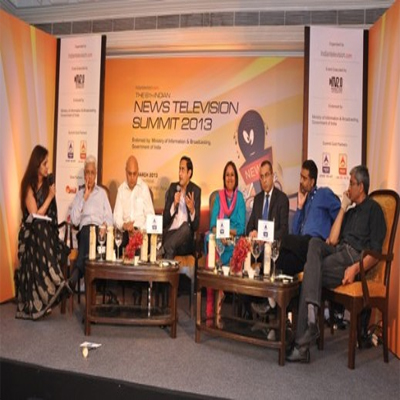
    And that’s what unfolded when Barkha Dutt, Karan Thapar, Vivek Law, Rahul Kanwal, Sanjeev Srivastava, Deepak Chaurasia, Ashutosh, all joined in to discuss the issue of, “Differentiating Prime Time News TV Shows/ Content” at the 6th Indian News Television Summit 2013.


    Session moderator BBC Global News COO India Preet Dhupar kick-started the session with a question to the panellists on prime time content and its impact on the ultimate stakeholders.
        

    CNN-IBN’s Karan Thapar said, “Content during prime time is in a confused mess. It is all about multiplicity of screeching heads. Anchors instigate people to quarrel on their shows and the ultimate product is unsatisfactory. When news is governed by ratings, it becomes an issue. What is really needed is a structure based discussion; focus on current affairs based debate and bifurcation between news and entertainment.”


    Doordarshan’s Sanjeev Srivastava while agreeing with Thapar, added that prime time content has become similar to edit pages of newspapers wherein the thoughts of the editor or the anchor are often reflected. But he also called for a ‘balance between forming opinions and proper dissemination of news.’


    Also agreeing with Thapar, Bloomberg TV India Editor Vivek Law said that the concept of talking heads of channels was not new and it was possible that organisations were revolving business model around it.


    NDTV Group Editor Barkha Dutt struck a cynical note by saying, “TV channels are stuck in a sluggish cycle. There is nothing interesting happening as channels have failed to tap appealing people who can talk sense. I don’t share too much optimism about prime time space.”


    Headlines Today Managing Editor Rahul Kanwal, had a diverse opinion. “Well, I am very proud of what I do and I must state that TV channels have played a stellar role in making politicians accountable and voicing the fact that no one is untouchable.”


    He also talked about the audiences’ demand for masala (adding juiciness) to news packaging.


    The debate between Hindi and English News channels was sparked by IBN 7 Managing Editor Ashutosh who said that English channels were elitist in their approach and embarked on intellectualism whereas Hindi channels had larger and “many layered” audiences to cater to.


    India News Editor-in-Chief Deepak Chaurasia observed, “News channels must understand that people have changed over the years. The environment and approach have also changed. One has to understand this to realise the confused state of affairs during the prime time slot.”


    Chaurasia also stressed on the fact that renowned faces were reluctant to come for interviews and discussions on Hindi channels as compared to English ones. Disagreeing with Chaurasia, Kanwal said that he had interviewed many politicians on his Hindi show.


    Other subjects that were touched upon in brief were budgetary cuts that production teams faced, the need for more reportage by anchors, whose reputations drew eyeballs to the show.


    All the panellists agreed that prime time content should focus more on news which would educate the masses.