Tag: Rahul Bhatia

  • Lockton India appoints Rahul Bhatia chief of staff for strategic growth

    Lockton India appoints Rahul Bhatia chief of staff for strategic growth

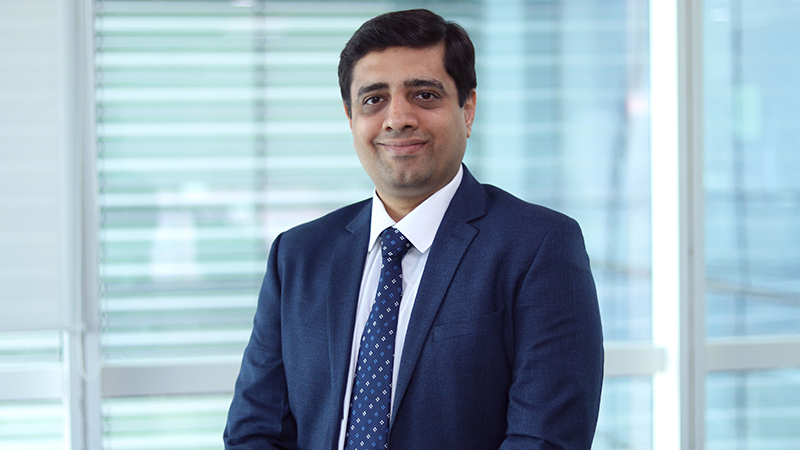
    MUMBAI: Lockton India locked in a power move as the world’s largest independent insurance broker appointed Rahul Bhatia as chief of staff, a strategic addition to its leadership as it sharpens its focus on business growth, operational efficiency, and strategic excellence.

    With over 17 years of experience spanning wholesale banking and consulting, Bhatia is stepping into this pivotal role with a wealth of expertise in strategy, operations, and financial planning. Translation? He’s got the chops to shake things up.

    Before joining Lockton, Bhatia made his mark at Deloitte and First Abu Dhabi Bank (FAB) India, where he held leadership positions that had him steering strategy, operations, and governance. At Deloitte, he served as operations controller & chief of staff, overseeing key functions across multiple locations. Meanwhile, at FAB India, he played a crucial role in designing and implementing strategies, launching new projects, and reinforcing governance frameworks. Add to that his tenure at RBS India, and you’ve got a resume that screams ‘game changer.’

    As chief of staff, Bhatia will work directly with the CEO, advising on strategic initiatives and ensuring Lockton India’s business vision turns into reality. His mission? To fine-tune operations, optimise financial planning, and drive long-term growth. In short, he’ll be the brains behind the scenes making sure everything runs like a well-oiled machine.

    “Rahul’s vast experience in strategy, financial planning, and corporate advisory makes him a valuable addition to our leadership team,” said Lockton India CEO & country head Sandeep Dadia. “As we continue to scale our presence in India, his expertise will be pivotal in driving operational efficiency and strategic growth initiatives. We are excited to have him on board and look forward to the impact he will bring.”

    Lockton India has been on a mission to expand its presence and strengthen its client service capabilities. Bhatia’s appointment aligns perfectly with the firm’s long-term vision of delivering cutting-edge risk management and insurance solutions to businesses navigating an ever-evolving market. Expect bold moves, strategic pivots, and a whole lot of innovation ahead.

  • Dubbing comes to a standstill; subtitling goes on

    Dubbing comes to a standstill; subtitling goes on

    MUMBAI: The outbreak of Covid2019 has not only brought the film and TV production industry to a halt, but even the associated sectors. The dubbing industry is one.

    However, the pandemic hasn't stopped people from consuming content. In fact, people are consuming content more than ever. According to a recent study conducted by KPMG, there has been a perceptible increase in media consumption during the last few weeks as people have remained homebound.

    With no new content in the making, most dubbing and subtitling companies are suffering huge losses.

    Business Of Languages (BOL) founder and CEO Rahul Bhatia says, “Currently, the dubbing industry has completely shut down. In this case, working from home is also not possible. We, in fact, tried doing it with artists with setups available at home but the outcome was not that great. So, technically everything is shut down as far as dubbing is concerned.”Prime Focus Technologies AVP Dubbing Bipin Doshi said, "Creating fresh viewing content requires lot of personal interaction which in the current scenario is neither permitted nor advisable. This means localizing existing or older content is the only option to ensure that audience currently ensconced at home gets entertained. Traditional method of dubbing currently is on a halt due to the restrictions in place but PFT is working on couple of approaches to start the dubbing process without endangering health of team or talent."

    Bhatia says that though dubbing is not happening,  other kinds of works like e-learning content where video reference is not required are going on. It can be recorded on the phone and shared with the client. Apart from that, IVR and audiobox projects are also being conducted from the confines of people's homes.

    Even for dubbing content in the regional language, Bhatia says it is not possible without studios and proper artists.

    Mega Media Studio MD John Joseph says that nobody is approaching for dubbing work right now. Most of the films are halfway through and those which are lined up do not have a release date.

    "Covid2019 has immensely affected our studio. Nothing is happening right now on the production side but post-production work is slowly happening. We are just continuing with films which were happening in the studio before lockdown."

    According to Joseph, unless films are completed, they cannot go ahead with the dubbing work.

    Doshi begun taking tentative steps for remote dubbing last year and managed to do a couple of tests just before the lockdown came into place. According to him voice quality is something that will take a while in addressing. The output will get homogenised to a certain extent and better quality can be achieved if talent can acoustically treat their rooms, mics are used etc so that voice quality can be monitored. It is important to solve for change in room tonality which is inherently found when audio is recorded in different setups.

    He adds, "Although we have begun using remote dubbing solutions it has lot of technical and user end challenges as this industry has never tried it before."

    Fakt Marathi Enterr10 MD Shirish Pattanshetty, however, says that the dubbing industry is making use of some other sectors to survive.

    "As far as industry norm goes people have been deferred from operating dubbing studios but some large corporates are using dubbing to their benefit to tap various content for different languages to ensure there is freshness in the content to cater to the audiences so that the retention level is high," he says.

    As the lockdown continues, no new episodes are being made. So, Pattanshetty thinks that the second-best option would be to dub the existing projects into native languages that are demanded by the audiences. He also believes that dubbing content is a beter option that showing OTT shows on TV.

    On the contrary, subtitling is happening with the help of cloud-based platforms where artists are translating the content and sharing on the platform. The cloud-based solutions enable them to download and transfer easily and quality issues do not come into play like they do for audio in dubbing.

    Cloud-based solutions enable editors also to work from home as long as they have stable broadband connectivity. Prime Focus Technologies has a cloud-based solution on its flagship product called CLEAR for content sharing, viewing and reviewing of the same at the other end. For localization, the options of reviewing multi-language audio tracks without creation of additional video screeners is a lifesaving facility. "Ability to give access through independent user IDs with watermarking of the content ensures online viewing of the files without having to send them to any one separately," Doshi adds.

    While different states are mulling over various lockdown-lifting strategies, Bhatia says, “We have to wait till the government grants permission to resume work. We work with a lot of professional dubbing artists but due to the lockdown most of them are in their hometown. So, we are waiting for permission so that people could travel. As of now we are completely clueless what is going to happen next.”

    Pattanshetty thinks that even if Mumbai  remains shut there would be dubbing studios based out of Pune, Kolhapur or Sangli who could ensure work is delivered to other connecting places. If Delhi becomes fully functional, Hindi content can take help from Delhi studios.

    Bhatia also points out that even after the lockdown is lifted clients will cut down the numbers of hours of dubbing. As cost-cutting measures, they might want to have only 20 hours of dubbed content rather than 50 hours.

    Joseph says, "We are currently suffering as there is no payment coming in. Initially, we would be finishing three to four movies a month and now we are restricted to just one."

    In a recent announcement, Kerala cultural affairs minister AK Balan  said that the Malayalam film industry will soon resume the post-production work of pending films. Meanwhile, FEFSI association president RK Selvamani has requested the Tamil Nadu government to grant them the permission to resume post-production works such as dubbing, re-recording and editing for films and TV soaps. Additionally, the Karnataka government has also granted indoor shoot permission with minimal 18 to 20 people. While there were rumours that the Maharashtra government was likely to give some leeway, the sudden spurt in the number of cases has closed that door.

    ZEEL executive vice president and cluster head South business Siju Prabhakaran says, “We are waiting for the Maharashtra government to grant permission to resume post-production work. In the meantime it is a good opportunity for people to use footages of short-form content which is pending for a long time.”

    Although new shows are not in production, ZEEL says it has certain shows as backup which will be used in the content pipeline for future. Prabhakaran adds that audiences know short-form content are sometimes shot on the phone and there is a possibility that it will have a technical snag. As far as a proper TV serial or a film is concerned, it requires a dubbing studio.

    For now, the dubbing industry doesn't have a way out and industry players are waiting for a revival strategy.

  • Inside India’s dubbing and subtitling industry

    Inside India’s dubbing and subtitling industry

    MUMBAI: The dubbing and subtitling industry in India was founded due to the television business’ need to leverage a variety of content from within different markets in the country. Indian viewers first tasted dubbed content thanks to Discovery World. In the early 90’s, dubbing was predominantly restricted to kids’ animation content by Disney. This was then picked up by private broadcasters as a fixed slot for kids that later evolved into a dedicated kids channel available in multiple languages. The first dub theatrical hit was Jurassic Park, which opened the Pandora’s box for cult South Indian films like Roja. Thus, a degree of variety and freshness was injected into Indian programming.

    Demand for localised content has grown

    Today, dubbing and subtitling is a flourishing business in India with Hollywood films, animation films and regional content at the heart of it. This wasn’t the case few years ago when only international content was dubbed for the Indian market. In India dubbing mostly happens in three Indian languages- Hindi, Tamil and Telugu. Spider-Man 3 was dubbed in Bhojpuri in addition to Hindi, Tamil and Telugu. A Good Day to Die Hard, the most recent instalment in the Die Hard franchise, was the first ever Hollywood film to receive a Punjabi language dub as well.

    In 1983, PA Krishnan founded the Dubbing Artistes Union of South India, an association for dubbing artistes. The union, which is now called South Indian Cine and Television Artistes and Dubbing Artistes Union, has over 2,000 artistes and more than 30 voice co-ordinators or dubbing agents (people who choose dubbing artistes) as its members. It is also affiliated to the Film Employees Federation of South India (FEFSI). 

    The surge and infusion of international content entering India and demand to watch it in native language has witnessed a steady rise. Serials and small-format shows from Tamil and Bengali are now being dubbed and subtitled in many Indian and foreign languages.

    Major dubbing companies have now given way to smaller players like BOL Media, Native Ninja, VSI Group, etc. UTV shut down five years back, while Crest Animation pulled the plug on its operations almost 10 years ago. In terms of corporate players only Prime Focus still exists. 

    Amazon Prime and Netflix are spending big on content localisation. They are also producing original Indian content that is being dubbed for international markets. Among the global OTT players, a major growth driver is Netflix, which launched its global video on demand (SVOD) service in January 2016. It has now 104 million paid subscribers in 190 countries and the service supports 24 languages.

    “ZEEL has a Bollywood movie pay television channel in Spanish language called ZEE Mundo. So, a lot of Indian content is travelling overseas now. Recently Aamir Khan’s movie also got dubbed in China and people over there loved it,” says BOL Media Founder and CEO Rahul Bhatia highlighting the evolution of India’s dubbing and subtitling industry.

    Economics of dubbing and subtitling industry

    The dubbing industry in India is valued anywhere between Rs 100-120 crore. Interestingly, the bigger companies are now giving way to smaller ones. The key reason behind this development has been the exodus of influential executives from major players setting up their own dubbing businesses.

    The mushrooming of smaller companies has greatly benefited broadcasters and production houses that now have access to more technical resources at pocket-friendly prices. For instance, it now costs Rs 15,000 to dub a television episode as compared to Rs 80,000 in the past. Today, a three-hour movie costs Rs. three lakh when dubbed for a television audience and around Rs. 15 lakh for the theatres.

    In the general entertainment space, dubbing and executing one episode takes four days while subtitling of one hour content takes two days. However, a movie for the television audience is dubbed in approximately 15 day while that for a theatre could need up to 30. While dubbing has become cheaper, content translation charges have witnessed a spike.

    Translators charge Rs. 1 per word for an Indian movie and Rs. 10 for a foreign film, while dubbing costs vary between Rs. 80 to Rs. 130 per minute for one movie.

    “There are very few corporate structures having an entire team of dubbing directors, sound engineers, quality controllers in house with defined SLA and workflows. Rest of the dubbing companies are owned and operated by studio owners, voice actors or dubbing producers with a niche clientele. Majority of the companies assemble the team and work on a project-to-project basis,” says Native Ninja founder Sanjeev Das.

    The road ahead

    Dubbing companies acquire customers organically. The major chunk of the business is comes from the television industry. But going forward, OTT platform could be the biggest source of business. Around 60 percent of the business comes from the television industry, 30 per cent from movies and remaining 10 per cent from OTT. In the future, OTT is likely to contribute 60 percent of the dubbing business.

    The business will be on a steady growth path due to the increased volume of content being created with a focus on localisation. Dubbing, subtitling, and closed captioning for English and major international languages could be taken over by technology such as artificial Intelligence, machine learning, automated captioning and auto-translation. However, precise and accurate translation, adaptation, interpretation and translation will always require a human touch. That’s where localisation companies need to be at the top of their game. With such advancements, the industry is bound to witness a shake up in the next five years, with only those prepared to adapt to the challenges likely to survive and thrive.
     

  • Dubbing company Business of Language eyes digital expansion

    Dubbing company Business of Language eyes digital expansion

    MUMBAI: Indians love to consume content, be it in the language they understand or otherwise. Understanding this need to reach to greater viewers, Discovery Channel, which started operations in the country 20 years back introduced dubbed content to Indian viewers. Viewers since then have been exposed to content dubbed not just from English to Hindi, but other regional languages like Tamil, Telugu and Bengali among others.


    Bridging the language gap is also Business of Languages (BOL), which was launched by former Disney UTV national business head – dubbing Rahul Bhatia in September 2013. Bhatia, who has been in media for the past two decades, decided to set up his own venture to expand his expertise. 


    BOL’s journey started with Fisthronaut on ZeeQ, which later expanded to NGC, Fox Traveller and NDTV Good Times. Bhatia is also working with Google for metadata service, wherein BOL has done a pilot project to translate English content into Hindi. “Google is a big client for us and we plan to work more closely with them in the future,” says Bhatia.


    BOL dubs content into Hindi, Tamil, Telugu, Gujarati, Assamese and Bengali among others. “We specialise in dubbing. The USP of the company is that we dub the content from the region. We do not believe in dubbing Tamil content from a studio in Mumbai. We would do it from a Chennai studio. We are currently dubbing content in Gujarati for NGC Gujarati from Ahmedabad. The reason behind this is to get the perfect local dialect, which makes it easier for people to connect,” says Bhatia.


    After tasting success in broadcast, BOL is now spreading its wings to digital, radio and print. The company is into content translations as well and is working with public relations company MSL. “We do all the language translations for their press releases. We are also the exclusive vendors for Fortis Hospital,” he informs.


    BOL has also worked on the ‘Beti Bachao Beti Padhao’ campaign for Prime Minister Narendra Modi. “The campaign was done by the NGO Breakthrough in English. We translated it into Hindi and made certain creative changes as well,” informs Bhatia.


    Understanding that digital is the key, BOL has created food videos for a digital platform. “Anything to do with language on any platform is where we operate. We have worked with Ibibo, Micromax and e-learning content,” he says.


    What’s more, it was BOL that dubbed the famous animation Burka Avenger in Hindi and Telugu, which was telecast on ZeeQ.


    Based in New Delhi, BOL has regional operations in Mumbai, Chennai and Kolkata. The company has also tied up with studios in different states, which act as their local vendors. “I have my operations people in the region, who coordinate on a day-to-day basis,” he adds.


    In the wake of Netflix’s impending entry into India next year, BOL has set its sights on digital expansion. “Netflix has tied up with TV channels for content, which will also need dubbing. We are preparing ourselves for this digital boom,” says Bhatia. 


    BOL has, from the beginning, been a profit making venture. “While we started in September 2013, we set up our first studio in December 2013. In the first year itself, we had a turnover of Rs 30 lakh. In 2014, we had a turnover of Rs 1.9 crore and this year we are expecting a turnover of R 3 crore,” he informs.


    The dubbing sector has seen a major price fall. While at one stage, a set up would cost approximately Rs 40 lakh for one studio, today it has come down to as low as Rs 8-10 lakh for one studio. Not only this, the cost of dubbing has also come down substantially. “In the beginning, dubbing cost Rs 1-1.5 lakh per episode, but today it has gone to as low as Rs 15,000- 20,000 per episode,” he says.