Tag: Rahat Fateh Ali Khan

  • Rahat Fateh Ali Khan’s latest ‘Yeh Zindagi’ available exclusively on Idea Music

    Rahat Fateh Ali Khan’s latest ‘Yeh Zindagi’ available exclusively on Idea Music

    MUMBAI: Idea Music, the one-stop entertainment destination for all music lovers, from one of the leading telecom operators, Idea Cellular, has come out with a musical bonanza for all its listeners.

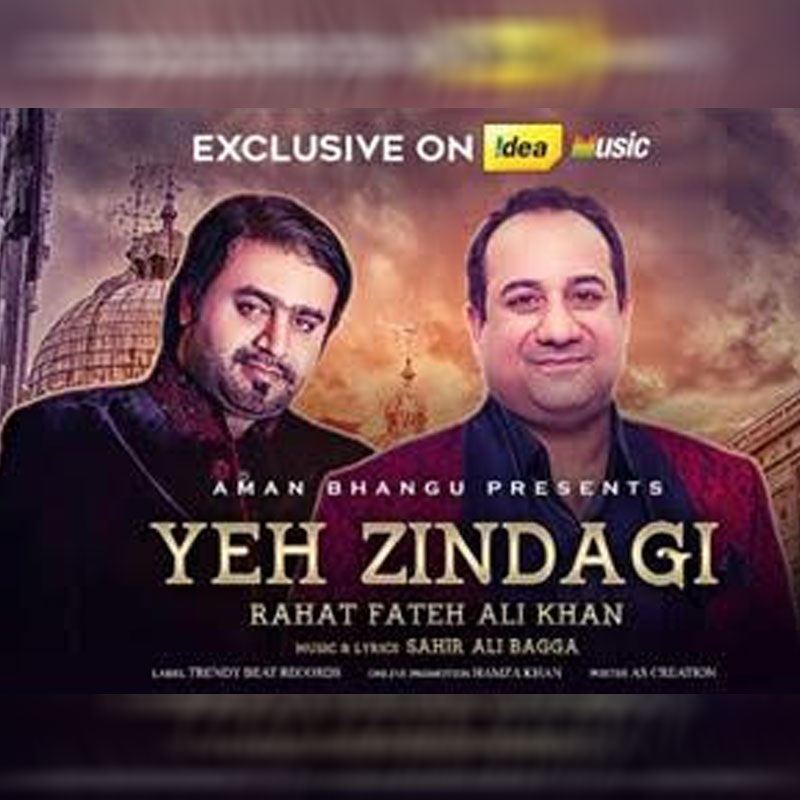
    Idea Music has got exclusive rights to release, the latest sensational song ‘Ye Zindagi’ sung by none other than the legendary award winning Rahat Fateh Ali Khan on its platform. The song will initially be available only on Idea Music and no other music streaming platform in India, starting 16th February; courtesy- Trendy Beat Records. Continuing with the string of hits by Rahat Fateh Ali Khan, this love ballad ‘Ye Zindagi’ will truly strike a chord with the listeners.

    Moreover, talking about regional hits, Idea Music has also added the latest internet sensation, Priya Prakash Varrier’s viral hit song ‘Manikya Malaraya Poovi’ from the upcoming Malyalam movie Oru Adaar Love by Muzik 247. The song is with “Sing Along lyrics” on the app, so listeners can now sing the song with ease. The song which depicts the eventual state of being in love, will surely remind the listeners of their first love and take them down the memory lane.

    The song is sung by the versatile singer Vineeth Sreenivasan, actor and playback singer of Entammede Jimikki Kammal fame while the music is revisited by Shaan Rahman. Idea Music is home to millions of regional hit songs across 14 languages, apart from Bollywood and International music.

    Idea Music is a destination for customers to entertain and refresh themselves with an extensive library of more than 3.5 million songs across all genres, moods and occasions. The app allows users to create their own playlists, set musical alarms, experience the DJ effect, and sing along features. Idea is currently offering free subscription of Idea Music app to all Idea 4G/3G customers. With over 5 million downloads Idea Music app ranks amongst top music/entertainment apps on Playstore and is also available on iOS.

  • News18 exposes ‘Namak Haraam’ Pakistani artistes

    News18 exposes ‘Namak Haraam’ Pakistani artistes

    MUMBAI: News18 India has carried out an exposé that revealed top Pakistani film actors and singers in India are involved in large-scale black money transactions. The channel, under its sting operation Namak Haraam, exposed top Pakistani personalities such as Fawad Khan, Rahat Fateh Ali Khan, Shafaqat Amanat Ali, Mawara Hocane and Imran Abbas.

    In line with its motto of ‘Danke Ki Chot Par’, News18 India conducted the sting operation over a fortnight in Mumbai and Delhi. The channel’s undercover reporters caught on camera the agents of the Pakistani artistes demanding a majority of their fee in black money. The fee was for appearance in wedding ceremonies. While a few demanded a part of the fee in cash, others wanted it transferred to their bank accounts in Australia or Dubai. The formal contract reflected a paltry sum as compared to the amount agreed upon.

    Renowned actor Khan’s manager demanded Rs 50 lakh for a two-hour appearance. He demanded the payment should be made in black and white. The black money component was to be 25 per cent of the deal amount and rest was to be transferred to Khan’s UAE (United Arab Emirates) based bank account.

    While singers Amanat Ali and Fateh Ali Khan’s managers demanded Rs 35 lakh and Rs 65 lakh, respectively, the former’s contract showed just Rs. 8 lakh and the latter’s 23 lakh including taxes. It is notable that Rahat Fateh Ali Khan was detained at IGI airport in February 2011 by the Directorate of Revenue Intelligence. He was carrying around Rs 60 lakh at the time. He was released only after paying a penalty. Abbas’s manager demanded Rs 35 lakh for a performance with Rs. 32 lakh to be paid in black while the contract was to reflect a fee of just Rs 3 lakh.

    Similarly, Hocance’s Pakistan-based manager demanded Rs 50 lakh for a two-hour appearance and asked for Rs 25 lakh in cash to be paid to her contact in Mumbai. The rest of the amount was to be transferred to Hocane’s Australian bank account.

    Since all the Pakistani artistes come to India on a work permit obtained through the Ministry of External Affairs (MEA) for professional engagement, these activities violate statutory laws. The insistence for payment in black money also violates service tax and income tax laws. This conduct of the agents and managers of the Pakistani artistrs violate work permits rules and clearly go against the laws of the land

  • News18 exposes ‘Namak Haraam’ Pakistani artistes

    News18 exposes ‘Namak Haraam’ Pakistani artistes

    MUMBAI: News18 India has carried out an exposé that revealed top Pakistani film actors and singers in India are involved in large-scale black money transactions. The channel, under its sting operation Namak Haraam, exposed top Pakistani personalities such as Fawad Khan, Rahat Fateh Ali Khan, Shafaqat Amanat Ali, Mawara Hocane and Imran Abbas.

    In line with its motto of ‘Danke Ki Chot Par’, News18 India conducted the sting operation over a fortnight in Mumbai and Delhi. The channel’s undercover reporters caught on camera the agents of the Pakistani artistes demanding a majority of their fee in black money. The fee was for appearance in wedding ceremonies. While a few demanded a part of the fee in cash, others wanted it transferred to their bank accounts in Australia or Dubai. The formal contract reflected a paltry sum as compared to the amount agreed upon.

    Renowned actor Khan’s manager demanded Rs 50 lakh for a two-hour appearance. He demanded the payment should be made in black and white. The black money component was to be 25 per cent of the deal amount and rest was to be transferred to Khan’s UAE (United Arab Emirates) based bank account.

    While singers Amanat Ali and Fateh Ali Khan’s managers demanded Rs 35 lakh and Rs 65 lakh, respectively, the former’s contract showed just Rs. 8 lakh and the latter’s 23 lakh including taxes. It is notable that Rahat Fateh Ali Khan was detained at IGI airport in February 2011 by the Directorate of Revenue Intelligence. He was carrying around Rs 60 lakh at the time. He was released only after paying a penalty. Abbas’s manager demanded Rs 35 lakh for a performance with Rs. 32 lakh to be paid in black while the contract was to reflect a fee of just Rs 3 lakh.

    Similarly, Hocance’s Pakistan-based manager demanded Rs 50 lakh for a two-hour appearance and asked for Rs 25 lakh in cash to be paid to her contact in Mumbai. The rest of the amount was to be transferred to Hocane’s Australian bank account.

    Since all the Pakistani artistes come to India on a work permit obtained through the Ministry of External Affairs (MEA) for professional engagement, these activities violate statutory laws. The insistence for payment in black money also violates service tax and income tax laws. This conduct of the agents and managers of the Pakistani artistrs violate work permits rules and clearly go against the laws of the land

  • “Let India open its market, we will open ours” – PEMRA chairman Absar Alam

    “Let India open its market, we will open ours” – PEMRA chairman Absar Alam

    Pakistan’s TV watchdog – the Pakistan Electronic Media Regulatory Authority (PEMRA) – charimanAbsarAlam was in the line of Pakistan’s Geo News anchor Shahzaib Khanzada’s fire last week. In his Monday to Thrusday current affairs talk show Aaj ShahzaibKhanzada Kay Sath – the anchor grilled him time and time again on PEMRA’s one-sided decision to ban Indian content.

    Alam, a former journalist, answered as best as he could, but not to Shahzaib’s satisfaction.The interview on Geo News was hard hitting and no-holds barred. Shahzaibwas clear that while he was in favour of blocking Indian content which could cause unrest in Pakistan, PEMRA’s decision to take away choice from the Pakistan consumer was unwelcome.

    We, at indiantelevision.com, believe that the interview could help throw some light on what transpired from Pakistan’s viewpoint that forced the watchdog to pull the plug. Read on for the excerpts from the interview:

    Why have you taken a decision to blanket ban Indian content?

    Pakistan industry was being hit courtesy the Indian TV shows, films and music. But the reason is not only because all Indian dramas are popular; there are others too. Probably one or two are popular. The problem is low quality Indian dramas are made in India and are made available to Pakistani channels at low prices who then air them in prime time. The lay Pakistan viewer then watches them as he has to watch something or the other when he sits in front of the TV, especially during prime time. The thing is if cheap Indian dramas are airing during prime time, expensive Pakistani dramas and series will not  get space.

    Indian dramas want to enter Pakistan, they will have to open on a reciprocal basis to Pakistani dramas. I don’t think Indian dramas are so popular that Pakistan viewers will come down to breaking windows. I am not talking about films I am talking about TV dramas.

    How are you going to stop Indian DTH?

    These days illegal Indian DTH is not flocking in to Pakistan.  If it is anywhere, please let me know, I will crack down on it. Indian DTH is running in rich households in Pakistan. Cantonments, DH (defence housing).

    Islamabad’s E7, Karachi has Clifton, Lahore’s Gulburg are the places where Indian DTH has popped up. We will go there also. We have written to the defence ministry to stop Indian DTH in their cantonment and DH houses.  The second line we are taking is on their subscription payment methods. We will start working on their money trail of the monthly renewal from next week. I hope to block this totally so that Pakistan can have its own DTH too.

    Will you raid people’s homes, which have DTH dishes?

    Why would we want to do that? We will not be raiding houses, we don’t want to intrude on people’s privacy. In most societies, there are laws that prevent you from hanging your clothes on the railing, then how are they allowing illegal Indian DTH services to run? The housing societies will have to cooperate. And people will themselves cooperate with us and remove the dishes that are already installed.  

    In the past, Pakistan banned Indian films. That did not help, it encouraged the parallel economy or piracy, which did not allow tax to come Pakistan’s way. Yet it also enriched the pockets of a few. Won’t this current ban result in the same what with the internetand DTH proliferating now?

    We have studied and tracked that at least 36 arab rupees are going India’s way courtesy its DTH services. When we tackle this through the banking sector, you will see results. People will not swing towards Indian DTH.

    In India, Zee Zindagi dropped Pakistani shows without any government interference. Almost 73 per cent of Pakistan’s revenue is coming courtesy Indian films. Ever since Indian films were shown, Pakistan films also got an audience. It is the choice of Pakistani viewers to watch what they want to watch. Aren’t you doing away with that freedom by regulating what comes on the screen. Why is the government intervening?

    We have our own drama industry. It is our duty to protect their rights. We have our artistes. In India, there are some forces which are not allowing a film starring Pakistani artistes not to be released. In Pakistan, there are media houses insisting which want Indian dramas to be shown. Is it not ironical?

    Be that as it may. India’s foreign minister has said he has not banned any film. There are right wing fundamentalists who are taking that stance. The Indian government is not imposing anything. Why are you?

    The government there is resorting to double speak. It is saying we are not compelling anyone. But tell me: is everything happening there without the government’s consent? You have an entertainment channel, try playing your entertainment dramas there now? Try getting an entertainment licence for GEO Entertainment from India.  Can you get it? I will give Zee a licence for the landing rights. I am giving you that assurance (if a Pakistani channel gets one)

    Once again, I am reiterating, it is about restricting choice. And it’s about the government being unable to reverse a legislation in future about banning Indian content.

    Who told you it is going to be difficult to reverse any decisions. You have a misunderstanding that PEMRA takes its decision under someone’s pressure. It takes its own decisions.

    Remember YouTube. You could not open it up after you restricted it.

    YouTube has opened up.

    For two and a half years it was shut.  Yes, but you were constrained from making any announcements. And are you reacting now to India’s position on Pakistan?

    Comparing YouTube and this is not proper. The reason why we banned Youtube was a sensitive issue. It did not shut down because of Indian content. It is open now. Should not there be parity between India and Pakistan? Should there not be reciprocity? Let India open its market, we will open ours.

    No1. Anything that is happening in Pakistan which is illegal under PEMRA’s framework, we will act on it – whether it is Pakistan’s news channels. Or entertainment channels. Or FM Radio channels. Or cable operators. Or excessive Indian contentWhoever is violating laws, we will go after them from time to time with increasing frequency.

    And it was part of our campaign, our schedule to do away with Indian DTH. Which we have now done.

    The third reason is that our local drama industry is getting destroyed. We have to protect their rights. Like Indian cars that cannot be sold in Pakistan though they are cheaper to make there. Or you allow free trade with India on all goods. Why should only drama come, why not others? Why should not our goods go there? This one way traffic cannot go on. We are not being reactive.

    On the music front, will you allow Hindi songs sung by Pakistani singers in Indian films to be played on Pakistan FM radio?

    The songs sung by Pakistani singers are our songs sung by our artistes. They are ok if they have sung the songs here. And on radio you will not come to know what is the background of the songs, whether it is a film or not. Even on TV if Rahat Fateh Ali Khan or Atif Aslam have made videos of the film songs they have sung, they can play those.

    It was six per cent earlier of Indian content on FM radio. One hour 15 minutes Indian content. You mean to say that Pakistan’s stations can’t fill that up with Pakistan songs?

    But you could have been firm on the six per cent rule. You could have enforced it. Why did you go for a ban?

    We did. We did. We are under tremendous public pressure and we have done it in the public interest. People did not want Indian music to come on Pakistan radio. I don’t want to provoke people, there was a lot of anti-India sentiment. People were asking why are Pakistani songs playing on Indian radio?

    You are becoming a victim of populist speak.  Indian right-wingers are doing the same. If someone does not like content on a Pakistan a channel, he can change it? Why do away with choice of Pakistani people?

    I agree if someone does not like Pakistani content, he can switch it off.

    So if someone does not want to watch Indian content, can’t he switch it off?

    This will not happen. It is damaging our economy – our dramas are suffering. There was so much of Indian content being shown there was very little space for Pakistani shows.

  • “Let India open its market, we will open ours” – PEMRA chairman Absar Alam

    “Let India open its market, we will open ours” – PEMRA chairman Absar Alam

    Pakistan’s TV watchdog – the Pakistan Electronic Media Regulatory Authority (PEMRA) – charimanAbsarAlam was in the line of Pakistan’s Geo News anchor Shahzaib Khanzada’s fire last week. In his Monday to Thrusday current affairs talk show Aaj ShahzaibKhanzada Kay Sath – the anchor grilled him time and time again on PEMRA’s one-sided decision to ban Indian content.

    Alam, a former journalist, answered as best as he could, but not to Shahzaib’s satisfaction.The interview on Geo News was hard hitting and no-holds barred. Shahzaibwas clear that while he was in favour of blocking Indian content which could cause unrest in Pakistan, PEMRA’s decision to take away choice from the Pakistan consumer was unwelcome.

    We, at indiantelevision.com, believe that the interview could help throw some light on what transpired from Pakistan’s viewpoint that forced the watchdog to pull the plug. Read on for the excerpts from the interview:

    Why have you taken a decision to blanket ban Indian content?

    Pakistan industry was being hit courtesy the Indian TV shows, films and music. But the reason is not only because all Indian dramas are popular; there are others too. Probably one or two are popular. The problem is low quality Indian dramas are made in India and are made available to Pakistani channels at low prices who then air them in prime time. The lay Pakistan viewer then watches them as he has to watch something or the other when he sits in front of the TV, especially during prime time. The thing is if cheap Indian dramas are airing during prime time, expensive Pakistani dramas and series will not  get space.

    Indian dramas want to enter Pakistan, they will have to open on a reciprocal basis to Pakistani dramas. I don’t think Indian dramas are so popular that Pakistan viewers will come down to breaking windows. I am not talking about films I am talking about TV dramas.

    How are you going to stop Indian DTH?

    These days illegal Indian DTH is not flocking in to Pakistan.  If it is anywhere, please let me know, I will crack down on it. Indian DTH is running in rich households in Pakistan. Cantonments, DH (defence housing).

    Islamabad’s E7, Karachi has Clifton, Lahore’s Gulburg are the places where Indian DTH has popped up. We will go there also. We have written to the defence ministry to stop Indian DTH in their cantonment and DH houses.  The second line we are taking is on their subscription payment methods. We will start working on their money trail of the monthly renewal from next week. I hope to block this totally so that Pakistan can have its own DTH too.

    Will you raid people’s homes, which have DTH dishes?

    Why would we want to do that? We will not be raiding houses, we don’t want to intrude on people’s privacy. In most societies, there are laws that prevent you from hanging your clothes on the railing, then how are they allowing illegal Indian DTH services to run? The housing societies will have to cooperate. And people will themselves cooperate with us and remove the dishes that are already installed.  

    In the past, Pakistan banned Indian films. That did not help, it encouraged the parallel economy or piracy, which did not allow tax to come Pakistan’s way. Yet it also enriched the pockets of a few. Won’t this current ban result in the same what with the internetand DTH proliferating now?

    We have studied and tracked that at least 36 arab rupees are going India’s way courtesy its DTH services. When we tackle this through the banking sector, you will see results. People will not swing towards Indian DTH.

    In India, Zee Zindagi dropped Pakistani shows without any government interference. Almost 73 per cent of Pakistan’s revenue is coming courtesy Indian films. Ever since Indian films were shown, Pakistan films also got an audience. It is the choice of Pakistani viewers to watch what they want to watch. Aren’t you doing away with that freedom by regulating what comes on the screen. Why is the government intervening?

    We have our own drama industry. It is our duty to protect their rights. We have our artistes. In India, there are some forces which are not allowing a film starring Pakistani artistes not to be released. In Pakistan, there are media houses insisting which want Indian dramas to be shown. Is it not ironical?

    Be that as it may. India’s foreign minister has said he has not banned any film. There are right wing fundamentalists who are taking that stance. The Indian government is not imposing anything. Why are you?

    The government there is resorting to double speak. It is saying we are not compelling anyone. But tell me: is everything happening there without the government’s consent? You have an entertainment channel, try playing your entertainment dramas there now? Try getting an entertainment licence for GEO Entertainment from India.  Can you get it? I will give Zee a licence for the landing rights. I am giving you that assurance (if a Pakistani channel gets one)

    Once again, I am reiterating, it is about restricting choice. And it’s about the government being unable to reverse a legislation in future about banning Indian content.

    Who told you it is going to be difficult to reverse any decisions. You have a misunderstanding that PEMRA takes its decision under someone’s pressure. It takes its own decisions.

    Remember YouTube. You could not open it up after you restricted it.

    YouTube has opened up.

    For two and a half years it was shut.  Yes, but you were constrained from making any announcements. And are you reacting now to India’s position on Pakistan?

    Comparing YouTube and this is not proper. The reason why we banned Youtube was a sensitive issue. It did not shut down because of Indian content. It is open now. Should not there be parity between India and Pakistan? Should there not be reciprocity? Let India open its market, we will open ours.

    No1. Anything that is happening in Pakistan which is illegal under PEMRA’s framework, we will act on it – whether it is Pakistan’s news channels. Or entertainment channels. Or FM Radio channels. Or cable operators. Or excessive Indian contentWhoever is violating laws, we will go after them from time to time with increasing frequency.

    And it was part of our campaign, our schedule to do away with Indian DTH. Which we have now done.

    The third reason is that our local drama industry is getting destroyed. We have to protect their rights. Like Indian cars that cannot be sold in Pakistan though they are cheaper to make there. Or you allow free trade with India on all goods. Why should only drama come, why not others? Why should not our goods go there? This one way traffic cannot go on. We are not being reactive.

    On the music front, will you allow Hindi songs sung by Pakistani singers in Indian films to be played on Pakistan FM radio?

    The songs sung by Pakistani singers are our songs sung by our artistes. They are ok if they have sung the songs here. And on radio you will not come to know what is the background of the songs, whether it is a film or not. Even on TV if Rahat Fateh Ali Khan or Atif Aslam have made videos of the film songs they have sung, they can play those.

    It was six per cent earlier of Indian content on FM radio. One hour 15 minutes Indian content. You mean to say that Pakistan’s stations can’t fill that up with Pakistan songs?

    But you could have been firm on the six per cent rule. You could have enforced it. Why did you go for a ban?

    We did. We did. We are under tremendous public pressure and we have done it in the public interest. People did not want Indian music to come on Pakistan radio. I don’t want to provoke people, there was a lot of anti-India sentiment. People were asking why are Pakistani songs playing on Indian radio?

    You are becoming a victim of populist speak.  Indian right-wingers are doing the same. If someone does not like content on a Pakistan a channel, he can change it? Why do away with choice of Pakistani people?

    I agree if someone does not like Pakistani content, he can switch it off.

    So if someone does not want to watch Indian content, can’t he switch it off?

    This will not happen. It is damaging our economy – our dramas are suffering. There was so much of Indian content being shown there was very little space for Pakistani shows.
  • MTV to air season 5 of ‘Unplugged’

    MTV to air season 5 of ‘Unplugged’

    MUMBAI: The fifth season of MTV Unplugged is all set to go on air from 2 January, 2016.

    The show will be aired every Saturday at 8 pm.

    The show showcases India’s biggest musical maestros performing their chart topping numbers that have swayed the nation in their most natural forms with acoustic arrangement of music and a live studio performance sans any post production.

    The audience this season will see musicians such as Pritam, Hariharan, Rahat Fateh Ali Khan, Sukhwinder, Jeet Gannguli and Swarathma performing unplugged music for legions of fans. These are the musical geniuses, who have proven their mettle in the Indian music industry with songs that refuse to fade into oblivion.

    Viacom18 EVP and business head – Youth and English Entertainment Ferzad Palia said, “MTV is the cultural home of the youth of today. And music is what drives them. Royal Stag Barrel Select MTV Unplugged is a show that brings together the biggest music stars of today, musicians and artists whose songs have shaped the youth of today with lyrics and music that appeal to them and define them. This year, the musicians we have on board are people who have in some way rebooted the Indian music industry by infusing certain freshness into the way things are done. And the unplugged versions of their songs are something you’ll want to witness and listen to again and again.”

    On the advent of the new season, Pernod Ricard India assistant vice president Raja Banerji added, “Royal Stag Barrel Select MTV Unplugged has already touched millions of hearts across the nation. Keeping up with the brand philosophy of “Make it Perfect,” Royal Stag Barrel Select, has made an endeavour to encapsulate the brand experience and has stepped up a notch higher, with every season, to ‘make it perfect’ through a series of Unplugged concerts. There is no better place to enjoy powerful, uninhibited music than here.”

    Season 4 was graced by some of the biggest names from the world of music such as AR Rahman, Kailash Kher, Mohit Chauhan and Sonu Nigam whose beautiful compositions and unplugged renditions of popular songs have captured the hearts of audiences all over.

  • First global edition of EEMAX Awards ropes in 19 sponsors

    First global edition of EEMAX Awards ropes in 19 sponsors

    MUMBAI: Indian event industry’s apex body – Event and Entertainment Management Association (EEMA), which will be taking its annual awards global this year, has roped in as many as 19 sponsors. 


    Some of the brands that have come on board are Renault (Automobile partner), Colors (Conclave partner), Maharashtra Unlimited (State partner), CNBC TV18 (Official broadcast partner), Videocon (Support partner), Pepsi (Beverage partner) and Bacardi (Beverage partner) amongst others.


    The EEMAX Global Awards are scheduled for 20 September, 2015 in Mumbai and will be preceded by the EEMAX Global Conclave on 19 and 20 September. The awards aims to identify, celebrate and honour the best events and experiential marketing projects from India and around the world.

    EEMA received a huge number of entries for the EEMAX Global Awards. Agencies across India, Asia, Middle East, Africa, Europe, Australia, New Zealand and the US have send in their entries and registered for the event.


    Speaking to Indiantelevision.com EEMA president Sabbas Joseph said, “The number of entries has been over whelming. It is certainly beyond expectation. We will give away 30 awards and I am looking forward to the awards night.”


    The three level selection process, involves taking the award entries through a screening jury, a global jury and peer voting by members of EEMA to choose the winners in 29 categories that span entertainment events, social events, sporting events, weddings, exhibitions, digital events, government events, education programs and CSR.


    “Indian event companies, which run operations globally is what triggered us to take the awards global. For the first year, we will be honouring a chosen few international icons,” informed Joseph.


     The EEMAX Global Awards are a clear sign of India’s event industry going global. Indian event companies are being retained by international clients and brands for development of activation programs as well as corporate events, mega public events and also sporting galas.


    The event industry in India has grown exponentially over the last two decades with multiple entities operating in this space, in various segments and levels across 100+ cities in India. “Not long back companies used to spend only two per cent of their marketing budget in experiential marketing, but now they spend 15 to 20 per cent and that shows the progress of the sector,” added Joseph.


    Adding entertainment to the awards night will be performers like All India Backchod (AIB), Shaan, Ustaad Rahat Fateh Ali Khan and Shillong Choir.


    “The positive side of the event sector will be discussed and portrayed throughout the conclave, and taking India international will be the theme this year,” Joseph summed up.


    Interestingly, the international jury for EEMAX Awards includes the likes of Parineeti Chopra, Dia Mirza, Vikas Bahl, Vivek Oberoi, Prasoon Joshi, Neha Dhupia and others.

  • Nokia MixRadio broadens the horizon for music lovers in India

    Nokia MixRadio broadens the horizon for music lovers in India

    MUMBAI: Nokia MixRadio, the popular global music streaming service today announced its collaboration with talented musician and popular artiste, Ustad Rahat Fateh Ali Khan. Ustad Khan joins a long list of celebrated artistes such as Lady Gaga and India’s very own Priyanka Chopra to collaborate with the popular music app – Nokia MixRadio.


    Ustad Rahat Fateh Ali Khan will also be exclusively curating playlists for Nokia MixRadio giving music lovers across 31 countries exclusive access and insight to the singer’s renditions and musical tastes. This service will be available across popular ranges such as the Nokia Lumia and the Nokia X family.


    Mr. Viral Oza, Director Marketing, Nokia India Sales, a subsidiary of Microsoft Mobile Oy says, “As Nokia MixRadio expands into the emerging market of digital global music streaming in developing markets, it is slated to see an upswing of growth resulting in one in every fifteen users coming from India. To cater to this rising user demographic we are slated to position Nokia MixRadio as the ultimate gateway to not only offer diversely curated domestic music but also the best of international music. Through our collaboration with an iconic artiste like Ustad Rahat Fateh Ali Khan we look to give our consumers across different platforms the best music experience at their fingertips”


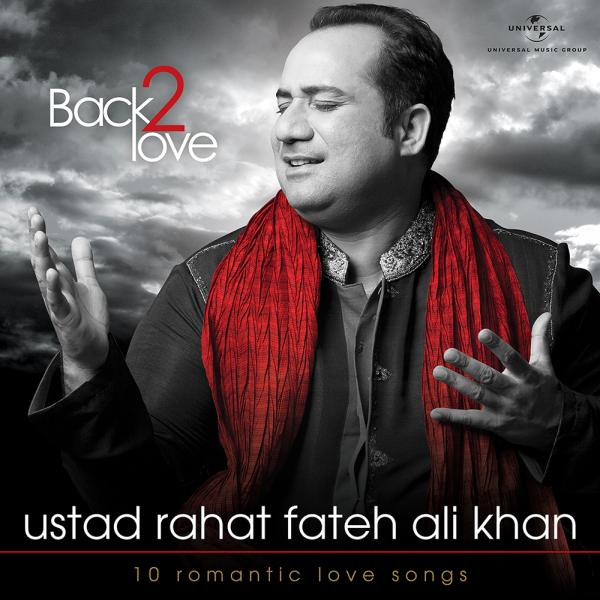
    Speaking ahead of the occasion, Ustad Rahat Fateh Ali Khan said, “It is great to experience what Mix Radio is all about and being part of such a project is overwhelming. I want my album “Back 2 Love” to reach out to the masses and global audience. Mix Radio is surely the best way forward for this. The producer of this album, Salman Ahmed and MD of UMI, Devraj Sanyal both have been instrumental in making this happen. There are two amazing videos as well which I am sure will be loved by all my music lovers”.


    Devraj  Sanyal, Managing Director, Universal Music/EMI Music, South Asia said; “The long awaited new album ‘Back 2 Love’ from the legend Ustad Rahat Fateh Ali Khan is a collection of ten stunning new soulful songs and is easily his best work to date. Being his first new album in seven years, it needed a launch platform that will do justice on a global scale and we believe that there is no better place than to launch on MixRadio.”


    “Nokia has been and continues to be one of our most valued partners. After just launching Priyanka Chopra’s new International single globally on MixRadio, we are now ready to take our partnership with MixRadio further with the launch of Ustad Rahat Fateh Ali Khan’s new album ‘Back 2 Love’ to a worldwide audience”, concluded Sanyal.


    MixRadio is also equipped with a unique PlayMe feature allowing users to discover 30 million tracks and at the touch of a button, taking playlists offline. When data connection is not available, the feature offers users the opportunity to enjoy music anytime anywhere, by taking hours of music and mixes offline, perfect for commuting and avoiding data costs.


    As digital revenues show an increase of 43% in 2013 globally and are set to top $5.9 billion in 2014, MixRadio will deliver its personalized, unique listening experience, allowing listeners across the globe to access the most popular playlists created by musical experts and celebrities that are free of adverts, sign ups or subscriptions.

  • Sports can only be promoted if the govt and corporate houses step in, say filmmakers

    Sports can only be promoted if the govt and corporate houses step in, say filmmakers

    NEW DELHI: Even as films on sports remain a sprinkle despite announcements by the government for promoting sports, actor Nafisa Ali has said the corporate houses and the union and state governments have to join the effort to promote sports.

    She said she was saddened that corporate houses were concentrating only on a few sports like cricket, football, tennis or badminton, and no efforts were being made to explore the talent available in smaller towns in the country.

    Nafisa was talking to indiantelevision.com after the screening of the film ‘Khwaabb’ which marks the directorial debut of Zaid Ali Khan, son of renowned shooter and Arjuna Award winner Moraad Ali Khan who has produced the film. Nafisa stars in the film along with newcomers Navdip Singh and Simer Motiani.

    Interestingly, this week marked the limited release of two films on sports: Zaid Ali Khan’s ‘Khwaabb’ which is being released in just a few cities, and Amole Gupte’s ‘Hawaa Hawwai’ about roller skating which has been released nationally.

    So far, very few films have been made on sports, and names that immediately come to mind are those of Nagesh Kukunoor’s ‘Iqbal’ about cricket, Shimit Amin’s 2007 ‘Chak De! India’ about hockey, Rakeysh Omprakash Mehra’s real-life drama ‘Bhag Milkha Bhag’ about athlete Milkha Singh, children’s film ‘Goal’ by Gulbahar Singh about football, and Aamir Khan’s ‘Lagaan’ which touched on cricket only as part of the drama.

    ‘Khwaabb’ is about athletics and swimming, but also sends out a strong message on behalf of those sports aspirants who are unable to make it to international tournaments despite proving their talent at the local or even the district level.

    Stressing the need for promoting such films, Zaid said that the film had got tax exemption only in Delhi. It was also being released in Mumbai, Meerut in Uttar Pradesh, Pune, and Dubai with a total of 60 to 70 prints but may be released later in the rest of the country.

    He said the main aim of the film was to inspire aspirants, and therefore even the music of the film including the title song by Sonu Nigam had an inspirational quality.

    “It was a real challenge to shoot some underwater sporting action in India but we could capture some scintillating action scenes with the experience of Aharon Rothschild, our cinematographer from the United States.”

    He was confident that film will work well with young children and the main subject will click with the audiences.

    He said that the film was shot at seven different locations including Jamshedpur, Morna in Uttar Pradesh, Jalandhar, Ludhiana, Delhi, Faridabad and Dubai.

    Both he and his father Moraar said publicity had been done both on television channels as well as on digital media and social websites. “It is important to bring awareness amongst the masses about the condition of Olympic sports in India; ‘Khwaabb’ is a step in that direction. Everyone rejoices in winning, but it is the journey towards winning a medal which needs the real support”, said Moraad.

    Asked about what he planned to do in future, he said he would now like to attempt something for television as he felt the future of entertainment was on the small screen, but would come back to filmmaking.

    He said in an answer to a question about his comment that ‘Conventional Bollywood is very calculative’ that there was no film culture for independent filmmakers and even the government did not give much encouragement unless some big names were involved. He said he had preferred making a debut as an independent filmmaker because of lack of support from the studios, but had got good support from Salma Khan who had released his music, and shooter Abhinav Bindra.

    Under the banner of Bullseye productions, “Khwaabb” is a realistic depiction of the Indian sporting scenario focusing on swimming and athletics. It captures the dream and emotions of aspiring sportsmen. ‘Khwaabb’ is a story about the birth of a dream, of ambition and the fierce passion to achieve that dream amidst unceasing tribulations.

    It is also about the way sheer, raw talent gets wasted or destroyed by corrupt and power hungry sports administrators of our country.

    Releasing the music of the film, Salman said: “I have played almost all kinds of sports. I have done swimming, played football. I even used to play cricket, and I strongly feel that sports should be encouraged in the nation, and if there are no facilities for training, how will our sportspersons perform?”

    The title track is sung by Sonu Nigam, composed by acclaimed musician Sandeep Chowta. The album has a rustic fun track “TV ki Jai Ho” sung by Kailash Kher and a soft love ballad “Shamein” sung by Rahat Fateh Ali Khan and Shreya Ghoshal. Both songs are composed by Sajjad Ali Chandwani. Young and extremely talented Amal Mallik has scored the soundtrack of the film. Top international drummer Virgil Donati has played for the title track, the lyrics for which have been penned by Sameer.

    Gupte told indiantelevision.com that his film was not only motivational and inspirational, but even showed how those who failed to get any help could attempt to reach their goals on their own.

    He hoped the film would inspire others to make films on sports and encourage worthy aspirants. His main cast including son Partho Gupte, Saqib Saleem and Pragya demonstrated their skating skills at I-Skate in Gurgaon to promote the film. The film also stars Makrand Deshpande among others.

    Answering a question, Amole said it is easy to work with children. “You just need to understand them and let them be comfortable with you”. He had got inspired to make this film while escorting Parth for skating classes, he added. He said it was a film about people who dare to dream and then work to fulfill that dream.

    Partho said, “My dad, the director, never scolds me on the sets and it is very interesting to work with him”. Performing the role of coach in the movie, Saqib Saleem said, “Sharing the sets with Partho was fun, and working under the captainship of Amole Gupte helps you learn a lot”.

    The song ‘Kuch Sapne Sone Nahin Dete’ summarises the theme of the film, produced by Fox Star Studios.

    Amole had earlier co-directed ‘Taare Zameen Par’ with Aamir Khan, and directed ‘Stanley Ka Dabba’ starring his son Partho.