Tag: Raghu Rai

  • Photography has always been a very key form of storytelling for National Geographic: Devika Prabhu

    Photography has always been a very key form of storytelling for National Geographic: Devika Prabhu

    Mumbai: For 136 years, National Geographic has stood at the forefront of photography, capturing the world through lenses that reveal the beauty and complexity of our planet. Its legacy of authentic visual storytelling has inspired millions, turning images into compelling narratives that change the way we perceive the world around us.

    The channel is back with the second season of #nofilter by IndiGo. Judged by visual storyteller & award-winning filmmaker, Imtiaz Ali and eminent photographer, Raghu Rai, #nofilter by IndiGo is a community of photographers who wear their passion with pride when it comes to showing the world through their lens. The success of season 1 set the stage for an even greater response in season 2, with over 107,000 entries pouring in. As the short-listing process nears its conclusion, the finalists will be announced today, coinciding with World Photography Day and promising another season of creativity, passion, and storytelling.

    In 2021, National Geographic India launched “Your Lens,” a platform designed for photography enthusiasts to showcase their passion and join the brand they admire. The response was overwhelming, with over 114,000 entries from 72,000 participants. This initiative, coupled with National Geographic India’s thriving Instagram community of nearly two million followers, has fostered a space where photographers and fans alike can engage in meaningful discussions, sharing their unique perspectives of the world. Through the National Geographic Creative Works, the production arm of the brand, the team crafts compelling narratives for partners, using incredible storytelling to bring visions to life.

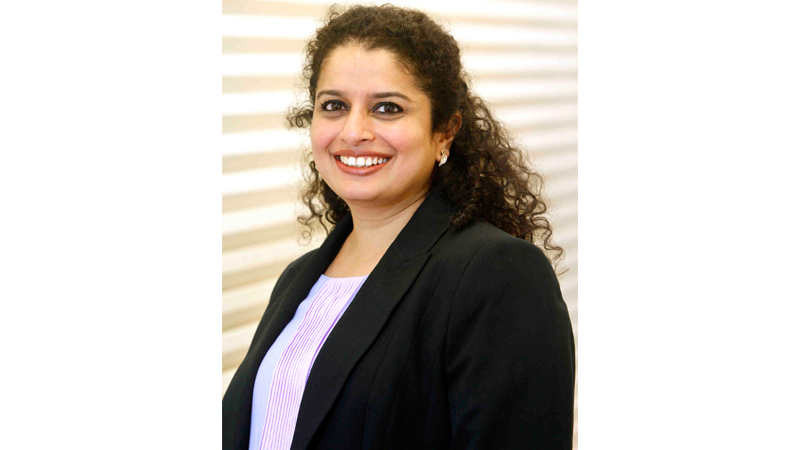
    Indiantelevision.com in a video interview with Disney & Star India busines head- Infotainment and Kids, Devika Prabhu, where she explained more on their approach towards visual storytelling through photography, concept behind the creation of #nofilter and a lot more.

    Edited excerpts

    As we know National Geographic is known for its compelling photography, how do you see their communication approach contributing to the broader conversation about visual storytelling?

    Photography has always been a very key form of storytelling for National Geographic. Our journey began in 1889 with our first published photograph, marking the start of a 135-year legacy of using photography as a powerful storytelling medium. When we think of iconic photography, National Geographic often comes to mind first. Photography is integral to everything we do—across social media, our channels, and all communications. We showcase not only different photographs but also the stories of the photographers and their efforts.  

    What was the concept behind the #nofilter and how does it align with National Geographic’s vision for storytelling?

    At the core, we believe that understanding the world fosters a deeper emotional connection, which in turn inspires people to care for it more profoundly and take responsibility. This belief drives our storytelling efforts across various formats. For instance, our “Your Lens” initiative in 2021, featuring Karan Johar as our brand ambassador, aimed to inspire individuals over 18 to tell their own stories through photography and share them with us. The success of this initiative inspired similar narratives, leading to the creation of #nofilter. It also inspired some of our partners who want to engage with us on a similar narrative or a similar format. So thats how #nofilter also kind of developed.

    What makes #nofilter by IndiGo, a unique and one-of-a-kind reality TV show?

    What makes this initiative unique is its focus on photography as a foundational element, celebrating both the passion and skill of the photographer. It also highlights the story within each frame, capturing remarkable moments that define the essence of photography. Initiatives like “Your Lens” and #nofilter creates opportunities for photo enthusiasts to explore new approaches and inspire them to capture authentic, unfiltered images. In an era where numerous filters and editing tools often alter the original photograph, our goal is to provide a platform that emphasises genuine photographs and the true emotions behind them.

    How has National Geographic become the preferred platform for brands to communicate empowering stories, offering a unique blend of visual storytelling that resonates with the audience

    National Geographic’s storytelling prowess, honed over 136 years, is widely recognized. Over the years, our partners have sought our expertise to help tell their own stories, understanding that our unique narrative approach adds a distinctive lens to their messages. This led to the creation of “National Geographic Creative Works,” which enhances our storytelling beyond mere promotion. It enables brands to connect more deeply with their audiences, building meaningful relationships and fostering closer connections with their consumers. National Geographic Creative Works has become a sought-after resource for brands looking to leverage our storytelling expertise.

    How do initiatives like Your Lens and #nofilter by IndiGo support and nurture budding photographers?

    Let me highlight our collaboration with Indigo on #nofilter. This is actually the second season of the initiative. Last year, in Season 1, we received over 90,000 responses. This year, Season 2 has seen over 100,000 submissions, demonstrating a growing excitement and engagement within the community. Building on the success of last year’s short-form series, where we showcased the photographers and finalists in four episodes, this year we plan to expand to a longer 22-minute format. This extension will allow us to delve deeper into the photographers’ stories and passions. Our esteemed judges, Raghu Rai and Imtiaz Ali, renowned veterans in filmmaking and storytelling through photography, play a crucial role in bringing this initiative to life. Their expert curation enhances the collaboration between photographers and their images, keeping our viewers and community continually engaged.

    How do you view photography as tool for storytelling and why do you believe its such a powerful medium

    In my view, photography is a profoundly authentic form of storytelling because it revolves around capturing a moment and is inherently an art form. Often, we say that we “take” a photograph, but in reality, we “create” it. This creation involves selecting the medium through which you wish to tell the story, choosing the equipment—whether it’s a specialized lens or a phone—deciding on the subject, and shaping the story you want to portray. Composition, framing, and lighting all play critical roles in this storytelling process.

    A powerful photograph establishes a connection with its subject and encourages viewers to pause and reflect on the photographer’s message. Take, for example, the iconic image of the Afghan Girl on the National Geographic cover from the 1980s. This photograph has endured for decades because it resonates deeply with people. National Geographic boasts one of the largest non-celebrity Instagram followings worldwide, nearing two million in India alone. Our community grows continuously, with someone tagging or reposting our content every two minutes. This reflects the strong association between exceptional photography and our brand. Many see National Geographic as the pinnacle of photographic achievement, and being tagged by a National Geographic photographer is a coveted aspiration for many.

  • IndiGo’s #nofilter crafts a close-knit photography community with National Geographic

    IndiGo’s #nofilter crafts a close-knit photography community with National Geographic

    Mumbai: IndiGo, India’s preferred airline, recently collaborated with National Geographic India to bring forth #nofilter by IndiGo, an inspiring platform that seamlessly blends the realms of travel and photography. The culmination of this initiative witnessed a staggering success, leaving an unforgettable mark on the nation’s creative landscape.

    In a country bursting with photographic talent, the response to #nofilter was nothing short of extraordinary. Over 90,000 impassioned photographers, hailing from diverse backgrounds and corners of the country, participated in this unique community-building venture. This surge of creativity set the stage for an exciting reality TV showdown, where the lens met reality in a four-episode showcase. This platform helped passionate photographers across the category to showcase their talent.

    Amidst the sea of talent, 27-year-old Harsh Kharwar emerged as the winner, capturing the hearts of judges Imtiaz Ali and the renowned photographer Raghu Rai. The impact, however, extended beyond the competition, resonating with a wider audience through its reach on National Geographic and Hotstar.

    Unveiling the impact:

    •    The reality TV show gathered over 600K views on National Geographic and Hotstar.
    •    The campaign reached an impressive 11.8 million people on Meta, showcasing its widespread influence.
    •    Meta impressions soared to 37 million, with a noteworthy click-through rate of 0.18 per cent.
    •    YouTube witnessed the visual spectacle, with an impressive view rate of 21.14 per cent.

    Being part of the #nofilter community isn’t just about winning a competition; it’s a gateway to becoming the next photography luminary. IndiGo’s commitment to fostering talent and providing opportunities for aspiring photographers is evident in the success of #nofilter.

    IndiGo chief digital, and information officer Neetan Chopra expressed his enthusiasm, stating, “We are thrilled with the success of #nofilter by IndiGo. This remarkable initiative has not only celebrated the unbridled beauty of India, seen through the unique lenses of talented photographers hailing from every nook and cranny of our vibrant nation, but it has also been an exhilarating journey. Our heartfelt gratitude goes out to all those who participated and supported this extraordinary campaign. It goes beyond simply showcasing India’s diversity and opulence; it has harnessed the captivating power of photography to inspire, educate, and forge connections across the tapestry of life. Our hope is that this incredible voyage will continue to shine a spotlight on India, a land of unparalleled depth and allure, beckoning both domestic and international travellers to explore its wonders.”

    Disney+ Hotstar head – content & Disney Star HSM entertainment network Gaurav Banerjee emphasized the importance of this collaboration, saying, “National Geographic has always held a very distinctive and revered position in photography, inspiring audiences with iconic imagery since 1888. Through #nofilter, IndiGo and National Geographic have not only captured the breathtaking beauty of India but have also harnessed the transformative power of photography to create a visual narrative that transcends boundaries. The nine finalists have brought forth stories that resonate with the heart of India. This journey chronicled across the National Geographic platforms, is a celebration of the unfiltered essence of our culture, landscapes, wildlife, and people. As we close this chapter, we congratulate all participants for contributing to this extraordinary journey, inviting the world to witness India’s boundless allure through the unfiltered lens of passion and creativity.”  

    Renowned filmmaker Imtiaz Ali shared his thoughts saying, “As a filmmaker, I share a deep passion for the camera, and I believe that photography is a powerful means of storytelling. I’m thrilled to witness these talented photographers come together and compete with unfiltered creativity. Serving as a judge alongside the prolific Raghu Rai, we shoulder the responsibility of handpicking the most exceptional shots. My gratitude goes out to National Geographic and IndiGo for providing a platform that not only celebrates the art of photography but also fosters the growth of emerging talent.”

    IndiGo’s #nofilter initiative broke records in terms of participation while also casting a spotlight on the countless stories captured by photographers from every corner of India. The campaign’s far-reaching influence in the photography community and beyond speaks volumes about its success.

  • Imtiaz Ali and Raghu Rai to Judge #nofilter Photography Show

    Imtiaz Ali and Raghu Rai to Judge #nofilter Photography Show

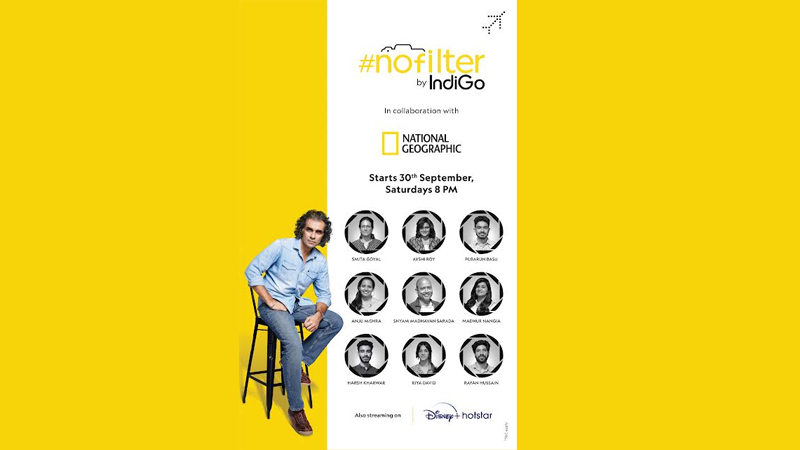
    Mumbai: The world belongs to those who can capture its beauty. All one needs is a camera. With an aim to empower the photography community and display their talent on a grand scale, IndiGo, in collaboration with National Geographic India, announces nine finalists out of 90,000+ participants for a photography reality show, #nofilter by IndiGo. Fronted by judges Imtiaz Ali, an acclaimed film director, and Raghu Rai, a celebrated photographer, nine participants will capture the essence of India through their lenses, evoking emotions, and weaving captivating stories with each unfiltered shot. The show will premiere on 30 September at 8 p.m. on National Geographic platforms, including television and YouTube.  

    Set against the backdrop of Delhi’s vibrant streets, the participants will face various challenges that showcase the city’s rich tapestry of life. In their quest to claim the coveted title of the show’s best photographer, judges Imtiaz Ali and Raghu Rai will challenge each one of them to explore the iconic locations of Delhi under specific themes, capturing the most powerful, unfiltered photo essays. In each episode, the participants will immerse themselves in the city’s true emotions, turning their lenses towards Old Delhi’s bustling streets, traditional kitchens, women in uniform after work, and the captivating charm and chaos of the bazaars that offer a window into the spirit of the city itself. As the judges determine the fate of each participant, they will be seen engaging in an in-depth discussion about every entry and will reveal the episodic winner.

    “National Geographic has always held a distinctive and revered position in the world of photography. Our innovative visual storytelling with iconic imagery has been a source of inspiration for our audience for 135 years. Through #nofilterbyIndiGo, we are excited to empower the photographers’ community to share their unadulterated, inspiring, yet beautiful stories. In addition to that, having two renowned personalities from the realms of photography and filmmaking as judges, we anticipate this show will raise the bar for photography excellence,” said a National Geographic spokesperson.

    “As a filmmaker, I share a deep passion for the camera, and I believe that photography is a powerful means of storytelling. I’m thrilled to witness these talented photographers come together and compete with unfiltered creativity. Serving as a judge alongside the prolific Raghu Rai, we shoulder the responsibility of handpicking the most exceptional shots. My gratitude goes out to National Geographic and IndiGo for providing a platform that not only celebrates the art of photography but also fosters the growth of emerging talent,” said Imtiaz Ali.

    “India is a country of diverse cultures and landscapes, and photography is perhaps the best way to share the beauty of the country with everyone. As part of our #IndiaByIndiGo initiative, the #nofilter partnership between IndiGo and Nat Geo celebrates the diversity of India and the passion of the photographers who bring it to life. We look forward to the episodes with our 9 finalists and wish them great success.” said  IndiGo CDIO Neetan Chopra.

    A community-building initiative for passionate photographers, #nofilter by IndiGo began in May 2023. Below are the nine entrants who have been shortlisted for the four-part series.

    Riya David, Fashion Photographer

    Madhur Nangia, Landscape & Travel Photographer

    Pubarun Basu, Documentary Photographer

    Anju Mishra, Engineer & Photography Enthusiast

    Smita Goyal, IT Professional & Photography Enthusiast

    Harsh Kharwar, Wedding Photographer

    Ayshi Roy, Street & Documentary Photographer

    Rayan Hussain, Tour Guide & Travel Photographer

    Shyam Madhavan, Businessman, Content Creator & Photographer

    #nofilter by IndiGo will premiere on National Geographic in India at 8 PM on 30 September 2023 and the episodes will air every Saturday thereafter.

  • Press regulation not called for, says Modi

    Press regulation not called for, says Modi

    NEW DELHI: Prime Minister Narendra Modi has expressed concern over the recent killings of journalists in some parts of the country. He said journalists were losing their lives in the quest for telling the truth was an extremely serious development.

    Modi emphasised the importance of freedom of press, and said press should self-regulate, adding that any external interference or regulation on the press was not called for. Modi was speaking at a function organised by the Press Council of India yesterday on the occasion of National Press Day. The occasion also marks the golden jubilee of the Press Council of India.

    Speaking earlier, information and broadcasting minister M Venkaiah Naidu has said that self-regulation in the media space was the best practice which would uphold journalistic ethics and democratic ideals of the Nation.

    The government does not believe in imposing ban on any medium of communication, but necessary restraint has to be exercised keeping in mind the protection of sovereignty and integrity of India, security of the nation, and law & order situation in the country, he added.

    Naidu recalled that the electronic media coverage of Mumbai terrorist attacks had received a backlash from the Supreme Court, which said “any attempt to justify the conduct of the TV channels by citing the right to freedom of speech and expression would be totally wrong and unacceptable in such a terrorist situation.” He also mentioned the recent case of Pathankot coverage also highlighted how electronic media coverage while reporting could put civilians, armed personnel lives in danger.

    Speaking about the role of the regional media, the minister said the media assumed importance at the regional level due to its proximity with local communities and local language which enhances the participatory potential of citizens. The regional media played an important role in building participatory democracy by reaching out to all the sections of the society and also created an informed citizenry. In a federal polity, regional media with its reach could help align the interests of states with that of the nation thereby enabling the prime minister’s vision of cooperative federalism.

    Regarding the government’s new print media advertisement policy, Naidu said it promoted equity-based regional outreach by providing relaxation in empanelment procedure to provide special encouragement for regional language/dialects small and medium newspapers.

    On the opportunities offered by social media, the minister said that it was a new tool of communication which was spontaneous and interactive. Such a medium was both an opportunity and a challenge. This mode of communication should be used judiciously for larger national and individual good.

    Naidu said the media had a larger role to play in developmental agenda of the nation by proactively projecting flagship programmes of the government such as Swachh Bharat, Digital India, Jan Dhan Yojana, Skill India and Make in India as national programmes which have the potential to bring about change. The media needed to adorn the role of a stakeholder in the developmental process.

    Minister of state Rajyavardhan Rathore and Press Council of India chairman Justice C. K Prasad were also present.

    Eminent journalists and photo- journalists including Surendra Nihal Singh, Mrinal Pande, Raghu Rai, Renjith John, Arvind Kumar Singh, and Xavier Selva Kumar were awarded for excellence in Journalism.

  • Press regulation not called for, says Modi

    Press regulation not called for, says Modi

    NEW DELHI: Prime Minister Narendra Modi has expressed concern over the recent killings of journalists in some parts of the country. He said journalists were losing their lives in the quest for telling the truth was an extremely serious development.

    Modi emphasised the importance of freedom of press, and said press should self-regulate, adding that any external interference or regulation on the press was not called for. Modi was speaking at a function organised by the Press Council of India yesterday on the occasion of National Press Day. The occasion also marks the golden jubilee of the Press Council of India.

    Speaking earlier, information and broadcasting minister M Venkaiah Naidu has said that self-regulation in the media space was the best practice which would uphold journalistic ethics and democratic ideals of the Nation.

    The government does not believe in imposing ban on any medium of communication, but necessary restraint has to be exercised keeping in mind the protection of sovereignty and integrity of India, security of the nation, and law & order situation in the country, he added.

    Naidu recalled that the electronic media coverage of Mumbai terrorist attacks had received a backlash from the Supreme Court, which said “any attempt to justify the conduct of the TV channels by citing the right to freedom of speech and expression would be totally wrong and unacceptable in such a terrorist situation.” He also mentioned the recent case of Pathankot coverage also highlighted how electronic media coverage while reporting could put civilians, armed personnel lives in danger.

    Speaking about the role of the regional media, the minister said the media assumed importance at the regional level due to its proximity with local communities and local language which enhances the participatory potential of citizens. The regional media played an important role in building participatory democracy by reaching out to all the sections of the society and also created an informed citizenry. In a federal polity, regional media with its reach could help align the interests of states with that of the nation thereby enabling the prime minister’s vision of cooperative federalism.

    Regarding the government’s new print media advertisement policy, Naidu said it promoted equity-based regional outreach by providing relaxation in empanelment procedure to provide special encouragement for regional language/dialects small and medium newspapers.

    On the opportunities offered by social media, the minister said that it was a new tool of communication which was spontaneous and interactive. Such a medium was both an opportunity and a challenge. This mode of communication should be used judiciously for larger national and individual good.

    Naidu said the media had a larger role to play in developmental agenda of the nation by proactively projecting flagship programmes of the government such as Swachh Bharat, Digital India, Jan Dhan Yojana, Skill India and Make in India as national programmes which have the potential to bring about change. The media needed to adorn the role of a stakeholder in the developmental process.

    Minister of state Rajyavardhan Rathore and Press Council of India chairman Justice C. K Prasad were also present.

    Eminent journalists and photo- journalists including Surendra Nihal Singh, Mrinal Pande, Raghu Rai, Renjith John, Arvind Kumar Singh, and Xavier Selva Kumar were awarded for excellence in Journalism.

  • Nikon India attempts evangelising bloggers, promotes photography as a culture

    Nikon India attempts evangelising bloggers, promotes photography as a culture

    BENGALURU: Nikon India, a 100 per cent subsidiary of Nikon Corporation has been organising ‘Through the lens‘ photography seminars in major cities in India. The company invites bloggers, especially photo-bloggers to such events to understand the nuances of photography and to gain in-depth knowledge of different technologies and advanced photographic techniques.

    Nikon as a brand is looking forward for creating brand evangelists by reaching out to the potential customers, D-SLR enthusiasts, early adopters, advanced D-SLR users by conducting photography workshops across different genres like wildlife, fashion, portrait, nature, product, street and much more. These are not just workshops for mere transfer of information but a broader platform to exchange the ideas, gauge the customer insight and carve out an offering in line with the expectation from the brand.

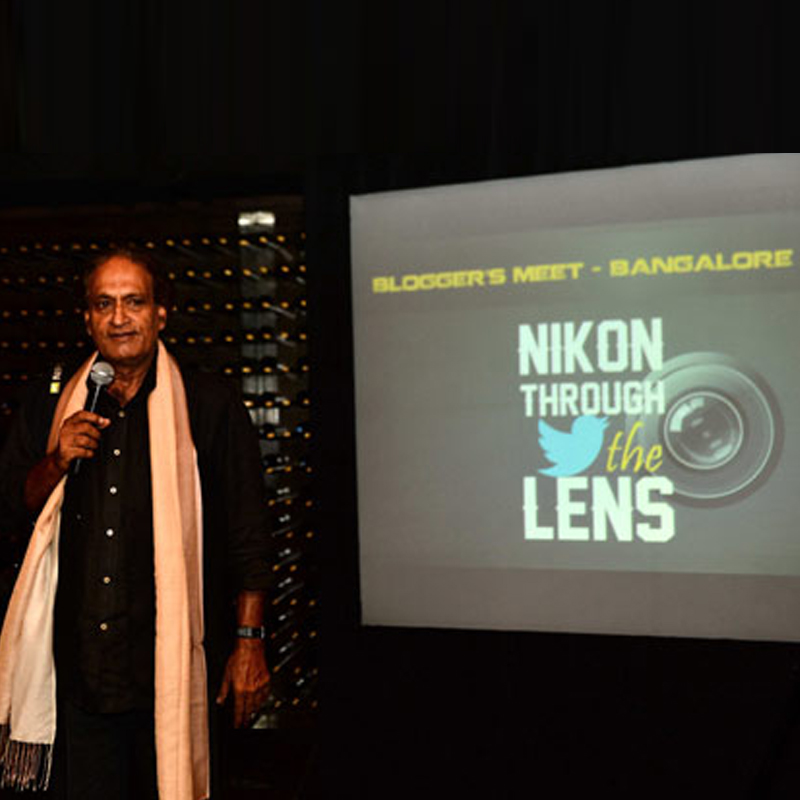
    A recent event in Bengaluru witnessed photo-enthusiasts from different walks of life – be it bloggers, media personnel or social media influencers. It held a photo competition, wherein the invitees were asked to upload their best photographs on twitter and the winning entry was awarded a Nikon Coolpix camera by ace photographer Raghu Rai.

    With another initiative with a view to promote photography as a culture in India, Nikon started the Nikon School in India in September, 2010. Through the Nikon School, the company has offered paid specialised services and expert guidance to both amateurs as well as photography enthusiasts by providing tips, expert guidance and insights on photography. The first outdoor workshop was held at Jim Corbett National Park followed by workshops on various genres of nature, studio, and wildlife and was a big hit with the participants.

    Going by the speed at which every Photo School seat is booked within a matter of hours of its announcement, the Nikon School initiative seems to be a huge success.