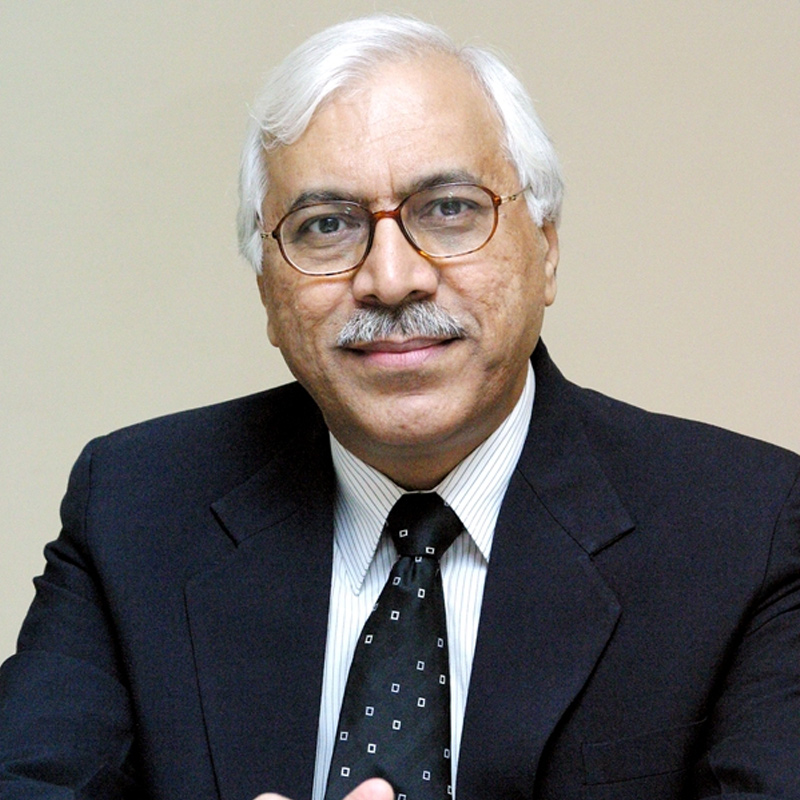
Tag: Raghu Menon

  • Saeed Mirza, Raghu Menon appointed CBFC members

    Saeed Mirza, Raghu Menon appointed CBFC members

    MUMBAI: Veteran filmmaker Saeed Mirza and former secretary of the Information and Broadcasting ministry Raghu Menon have been appointed as new members of the Central Board of Film Certification (CBFC).

    With these appointments, the Censor Board now has 20 members along with Leela Samson who heads it as its chairperson.

    Mirza is known for memorable films like Albert Pinto Ko Gussa Kyon Ata Hai, Mohan Joshi Hazir Ho! and Salim Langde Pe Mat Ro, apart from helming the popular TV serial Nukkad.

    Menon, an IAS officer of 1974 batch, was Information and Broadcasting Secretary from July 2009 and retired in 2011. He is also a member of the Film and Television Institute of India (FTII) board.

    A notification of the new appointments has already been issued by the I & B ministry and some more appointments are expected to be made in the coming days. In the current make up, the Censor Board can at the most have 25 members along with a chairperson.

  • Paid news: Election Commission for banning govt ads in media 6 months before polls

    Paid news: Election Commission for banning govt ads in media 6 months before polls

    NEW DELHI: Chief Election Commissioner S Y Quraishi said the Commission was in favour of banning all government advertisements in the media at least six months before any general elections to check the scourge of paid news.

    The Commission has also recommended that opinion polls should be banned, since at present only exit polls have been banned.Furthermore, he said that the regulation for stopping campaigning 48 hours before the polls should also apply to the advertisements that still appear in the print media even on the day of the polls.

    He said it was much more than a cliché that media is one of the important pillars of democracy. Media is not only a watchdog of the welfare of the citizens but it also plays a vital role to educate them, make them more aware about what is happening around the country and the world, and also to motivate them to become informed and better citizens.

    Quraishi, who was giving the Convocation Address at the 43rd Convocation of the Indian Institute of Mass Communications here, said the stories about paid news had proved embarrassing as the role of the media during polls should be honest and transparent.

    He said the Commission continued to receive complaints from politicians who said mediapersons were wanting money for covering campaigns, and threatened to write negative news if no money was paid.

    Noting that 95 per cent of the media was still against such malpractices, he said the media was the eyes and ears of a democracy. In fact, television reports had often helped the Election Commission in checking malpractices.

    Efforts had to be made to ensure that the Fourth Estate did not become the Fifth Column of democracy, he added.

    He said the media can help educate the people and, therefore, the Commission had created a separate division for this purpose. Media had, in fact, brought about an attitudinal change and people were now informing the Commission about the use of money power.

    Information and Broadcasting Ministry Secretary Raghu Menon, who is Chairman of the IIMC, said the Government was working on a bill to upgrade IIMC to ensure it is recognised as an institution of national importance and starts awarding Degrees instead of diplomas.

    He said that apart from Dhenkanal in Orissa, temporary campuses of IIMC had already commenced in Aizawl and Amravati, and two other centres would be shortly started in Kottayam and Jammu.

    The Indian media and entertainment industry will grow at a cumulative rate of 12.4 per cent reaching to Rs 1040 billion in 2014. He said, in order to achieve and sustain this growth rate, the industry requires a large number of trained media professionals.

    Menon said, IIMC can play a greater role in providing quality trained professionals to the industry in adequate numbers.

    He added that the dissemination of news should not merely be a corporate function but also serve a larger social good.

    IIMC Director General Sunit Tandon said a total of 324 students had been given diplomas for 2010 and 75 per cent of them had already been absorbed in various organisations. The IIMC today boasted of having former students in 113 countries.

    A total of 318 students were conferred PG Diplomas at the Convocation. 23 students of PG Diploma courses 2010-11 in Hindi, English, Oriya, Radio & TV Journalism and Advertisement & Public Relations were also given awards on the occasion.

  • United Nations adopts plan of action to improve safety of journalists

    United Nations adopts plan of action to improve safety of journalists

    NEW DELHI: More than 500 professionals have been killed in the course of their duties over the past decade. Many more have been assaulted, abducted, sexually violated, intimidated, harassed, arrested or illegally detained. The vast majority of these crimes did not concern international war correspondents but journalists working in their home countries, often in times of peace, and covering local stories. The instigators for the most part, remain unpunished.

    Concerned with this data, a coordinated inter-agency mechanism is in the process of being established to handle issues connected to the safety of journalists and impunity which will involve monitoring of progress at both national and international levels.

    Safety and impunity are also to be incorporated into United Nations contributions to national strategy, notably development assistance programmes and the possible inclusion of media stake holders in some of the preparatory processes of the UN’s development projects.

    The decision was taken at a meeting of representatives of UN agencies, programmes and funds meeting at UNESCO in Paris which drafted an Action Plan to improve the safety of journalists and combat impunity of crimes against them.

    The Draft Action Plan was prepared at the meeting held on 13 and 14 September under the chairmanship of Information and Broadcasting Ministry Secretary Raghu Menon, who is Chairperson of the Impunity to Programme for the Development of Communication (IPDC).

    UNESCO Director-General Irina Bokova; UN Under-Secretary General for Communications and Public Information Kiyo Akasaka; UN Special Rapporteur on the promotion and protection of the right to freedom of opinion and expression Frank la Rue, and representatives of leading freedom of expression and press freedom organisations also attended the two-day meeting.

    The meeting was endorsed by UN Secretary-General Ban Ki-moon and High Commissioner for Human Rights Navi Pillay, who addressed the participants at the start of session.

    The Draft also foresees the extension of work already conducted by UNESCO to prevent crimes against media workers. This notably includes assisting countries to develop legislation and mechanisms favourable to freedom of expression and information, and by supporting their efforts to implement existing international rules and principles, especially the 1997 UNESCO General Conference Resolution concerning violence against journalists. This stipulates that there should be no statute of limitations on crimes against freedom of expression.

    To further reinforce prevention, awareness raising campaigns will also be conducted with member states, civil society, non-governmental organisations and concerned bodies about issues of freedom of expression, journalists’ safety and the danger of Impunity to Programme for the Development of Communication (IPDC) at its next session in March 2012 and will then be submitted to the bodies in charge of UN-wide coordination.

    UNESCO is the UN agency mandated to “promote the free flow of ideas by word and image”, with the aim of establishing a coordinated, UN system-wide approach to preventing and combating these crimes.