Tag: Raghav Verma

  • Zomato felicitates winners of the Plastic-Free Orders Packathon

    Zomato felicitates winners of the Plastic-Free Orders Packathon

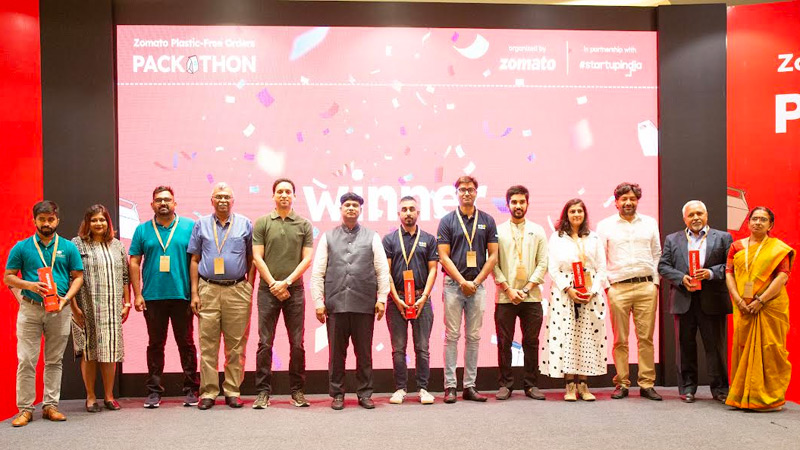
    Mumbai: Zomato, India’s food ordering and delivery platform, today announced the winners of its ‘Plastic-Free Orders Packathon’, at an event held in New Delhi. Launched in partnership with Startup India, the ‘Plastic-Free Orders Packathon’ was aimed at encouraging innovation in sustainable packaging for food delivery orders. At the event, the 10 shortlisted startups pitched their pioneering solutions to the jury and an audience of over 100 people, including Zomato’s restaurant partners, 14 plus startups, technical experts and sustainability students and enthusiasts. Bambrew, Go Do Good Studio and Frenvi were selected as the top three winners for their solutions and have been awarded prizes worth Rs 10 lakhs, five lakhs, and three lakhs, respectively.

    Over 85 startups from 18 states across the country shared their sustainable packaging solutions that ranged from innovative plastic-free barrier coatings made of materials like seaweed and plant-based gums, compostable carry bags to edible cutlery. 34 of these startups were partially or fully led by women entrepreneurs. The pitches made by the 10 shortlisted startups were judged on the innovative nature of the materials used, their functionality, cost efficiency, design and aesthetics, among others. These startups also got an opportunity to display their sustainable packaging solutions to the audience at a simultaneous exhibition at the event.

    Speaking on the initiative, Zomato chief sustainability officer Anjalli Ravi Kumar said, “We are overwhelmed with the response received on the ‘Plastic-Free Orders Packathon’, an initiative that stemmed as a response to the growing concern over environmental sustainability in the food ordering and delivery industry. Acknowledging start-ups’ pivotal role in catalyzing innovation, we partnered with the Government of India’s flagship initiative Startup India to address this critical requirement. It is inspiring to see startups across the country stepping up with groundbreaking solutions for eco-friendly packaging solutions in the food ordering and delivery industry. The enthusiastic participation of women entrepreneurs underscores the inclusive nature of this initiative, highlighting their pivotal role in shaping a sustainable tomorrow. The ideas showcased by all the startups participating in the event have the power to revolutionise the overall packaging practices, thereby setting a new standard for the industry. We look forward to witnessing the impact of their initiatives in driving a positive change towards a greener future.”

    The jury for the event was composed of Zomato CEO, food delivery Rakesh Ranjan; Hasirudala Innovations co-founder & CEO Shekar Prabhakar; Chaayos co-founderRaghav Verma; Biryani By Kilo founder and CEO Vishal Jindal, and Indian Institute of Packaging director Dr. Tanweer Alam.

    In line with its objective to reduce the carbon footprint of food deliveries, Zomato has implemented multiple initiatives by employing its ‘reduce, recycle, and reward’ approach. The company recently announced its 2030 sustainability goals, committing to 100 per cent plastic-neutral food deliveries every year and 100 million plastic-free orders by 2025. Through initiatives such as defaulting to ‘Do not send cutlery’ on its app, which was introduced in 2021, the company reduced cutlery waste by 1,000 MT within two years of its inception.

    Since FY 23, Zomato has recycled 30,000 MT of plastic waste, 1.5X of the weight used by restaurant partners for Zomato food order deliveries. Zomato has also launched a program to recognize restaurants shifting to plastic-free alternatives, further reinforcing their commitment to sustainability.

  • Chaayos and its brand of tea fly high with Spice Jet

    Chaayos and its brand of tea fly high with Spice Jet

    MUMBAI: Brand integration and partnerships are key to the startup world and often lead to innovative co-ops. SpiceJet, for example, has joined hands with the hip and upscale tea shop franchise Chaayos to serve hot steaming cup of masala chai to its passengers on-board.

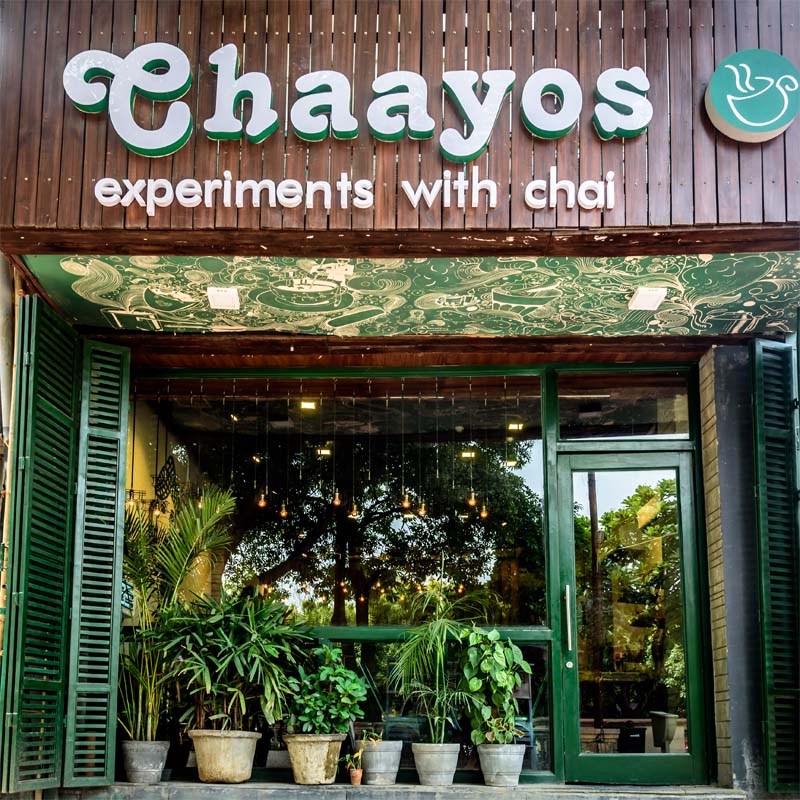
    For those who don’t know, Chaayos is a kiosk style tea startup that kick-started in Gurgaon and has gained popularity among the chai lovers in cities.

    “Spice Jet is a people’s brand and our sustained efforts are always towards nurturing the ‘experience’ that our customers have with us. Chaayos is an expert in customised tea and with this partnership, we look forward to our customers savouring the chai drinking experience with us even while being on-board.” said SpiceJet spokesperson Ajay Jasra.

    To highlight this partnership, Chaayos has launched a customized instant Masala Chai mix, exclusively for SpiceJet travellers and customers who can either pre-book or buy their favourite cup of chai on-board.

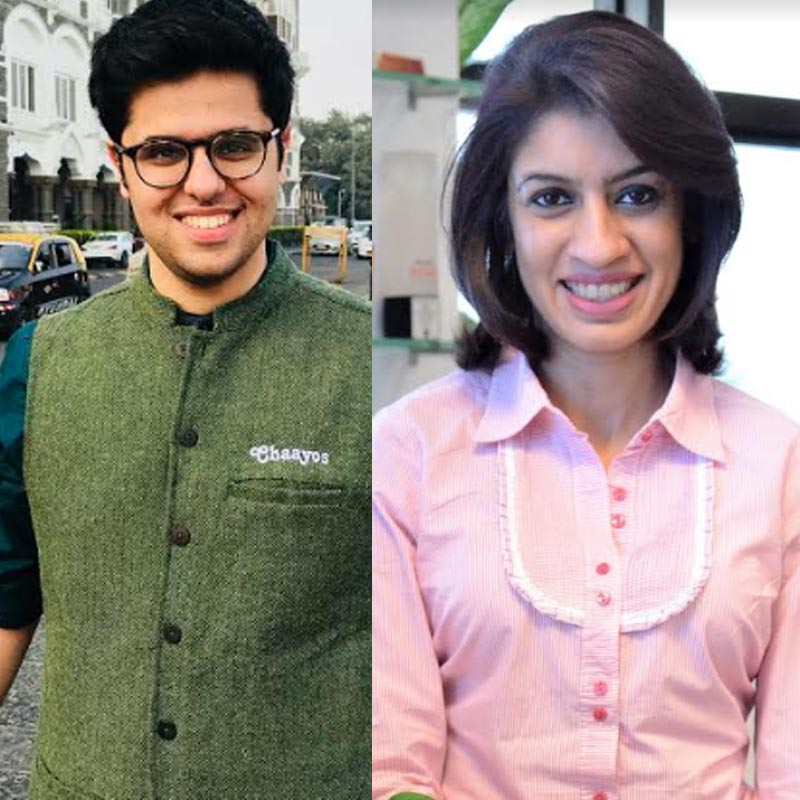
    While co-founder Nitin Saluja was always proud of the cup of chai he made, he never thought this subconscious demand for a great chai outlet would lead him to actually establish a chai kiosk with fellow IITian Raghav Verma in 2012. Right now, between, Gurgaon, Chaayos has 25 stores to the franchise’s name and has broken even with the initial investments, said Saluja.

    The sole purpose behind Chaayos, as Saluja puts it, was to give people their ‘meri wali chai’ that would go on to compete with the CCDs and the Starbucks of the world. Co-founder Raghav Verma feels the partnership with Spice Jet as a step forward in that direction.

    While reliving the street side chai shop memories from college or the home made tea blend that one enjoyed every morning is a great way to reminisce, how viable is setting up a tea shop as a business?

    Establishing ‘what coffee is to the west, Chai is to India’ Saluja emphasised “how coffee is embedded in the cultural fabric of the west, tea or chai is embedded in our cultural fabric.” Saluja also goes on to say that it would be wrong to assume that the coffee shops in India are running in profit, just because they are backed by big brands. “I don’t think there are many coffee companies in India which are making a reasonable amount of money. This is because people don’t walk in for coffee, but the nice ambience and the space they offer. Whereas, when it comes to tea, it’s the product which is the USP,” Saluja opined. Chaayos clearly aims at the natural demand for chai in India as opposed to coffee.

    While the blend remains a familiar, tried and tested one, Chaayos plans to experiment and come up with three to four new products each year.

    Unlike similar food and beverage start-ups, instead of marketing Chaayos is banking on its product strength, smart pricing and retail visibility. “I think more than marketing, being present on more and right locations is what will do the trick for a store like us. Currently we are focusing on being present on as many locations as we can, and giving the right experience to the customers inside the store. By design the overall proposition is such that the customer should come back,” Saluja explained.

    Great customised blends of tea isn’t the only weapon Chaayos uses for customer retention. “A regular cup of 200 ml chai costs Rs 59 at Chaayos. At face value that might sound more if compared to the roadside tapri, but a 60 ml tea at such a stall costs around Rs 10. So we aren’t charging a whole lot for the ambiance we offer along with the tea,” Saluja runs the numbers through. With a strong digital presence, Chaayos does a lot of social media and digital marketing to stay relevant to its customers.

    Apart from Spicejet, the brand has also partnered with digital brands like Ola and Uber, as well as American Express, which also serves the purpose of driving the right customer base at the outlets.

  • Chaayos and its brand of tea fly high with Spice Jet

    Chaayos and its brand of tea fly high with Spice Jet

    MUMBAI: Brand integration and partnerships are key to the startup world and often lead to innovative co-ops. SpiceJet, for example, has joined hands with the hip and upscale tea shop franchise Chaayos to serve hot steaming cup of masala chai to its passengers on-board.

    For those who don’t know, Chaayos is a kiosk style tea startup that kick-started in Gurgaon and has gained popularity among the chai lovers in cities.

    “Spice Jet is a people’s brand and our sustained efforts are always towards nurturing the ‘experience’ that our customers have with us. Chaayos is an expert in customised tea and with this partnership, we look forward to our customers savouring the chai drinking experience with us even while being on-board.” said SpiceJet spokesperson Ajay Jasra.

    To highlight this partnership, Chaayos has launched a customized instant Masala Chai mix, exclusively for SpiceJet travellers and customers who can either pre-book or buy their favourite cup of chai on-board.

    While co-founder Nitin Saluja was always proud of the cup of chai he made, he never thought this subconscious demand for a great chai outlet would lead him to actually establish a chai kiosk with fellow IITian Raghav Verma in 2012. Right now, between, Gurgaon, Chaayos has 25 stores to the franchise’s name and has broken even with the initial investments, said Saluja.

    The sole purpose behind Chaayos, as Saluja puts it, was to give people their ‘meri wali chai’ that would go on to compete with the CCDs and the Starbucks of the world. Co-founder Raghav Verma feels the partnership with Spice Jet as a step forward in that direction.

    While reliving the street side chai shop memories from college or the home made tea blend that one enjoyed every morning is a great way to reminisce, how viable is setting up a tea shop as a business?

    Establishing ‘what coffee is to the west, Chai is to India’ Saluja emphasised “how coffee is embedded in the cultural fabric of the west, tea or chai is embedded in our cultural fabric.” Saluja also goes on to say that it would be wrong to assume that the coffee shops in India are running in profit, just because they are backed by big brands. “I don’t think there are many coffee companies in India which are making a reasonable amount of money. This is because people don’t walk in for coffee, but the nice ambience and the space they offer. Whereas, when it comes to tea, it’s the product which is the USP,” Saluja opined. Chaayos clearly aims at the natural demand for chai in India as opposed to coffee.

    While the blend remains a familiar, tried and tested one, Chaayos plans to experiment and come up with three to four new products each year.

    Unlike similar food and beverage start-ups, instead of marketing Chaayos is banking on its product strength, smart pricing and retail visibility. “I think more than marketing, being present on more and right locations is what will do the trick for a store like us. Currently we are focusing on being present on as many locations as we can, and giving the right experience to the customers inside the store. By design the overall proposition is such that the customer should come back,” Saluja explained.

    Great customised blends of tea isn’t the only weapon Chaayos uses for customer retention. “A regular cup of 200 ml chai costs Rs 59 at Chaayos. At face value that might sound more if compared to the roadside tapri, but a 60 ml tea at such a stall costs around Rs 10. So we aren’t charging a whole lot for the ambiance we offer along with the tea,” Saluja runs the numbers through. With a strong digital presence, Chaayos does a lot of social media and digital marketing to stay relevant to its customers.

    Apart from Spicejet, the brand has also partnered with digital brands like Ola and Uber, as well as American Express, which also serves the purpose of driving the right customer base at the outlets.