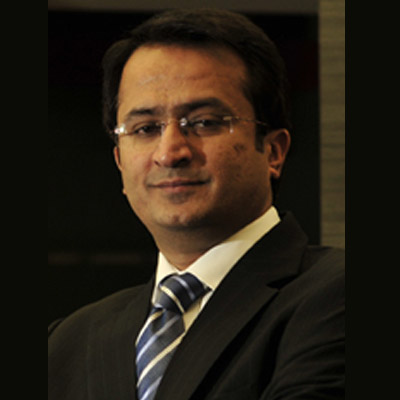
Tag: Raghav Bahl

  • TV18 Broadcast returns to profitability in Q3

    TV18 Broadcast returns to profitability in Q3

    MUMBAI: TV18 Broadcast turned profitable in the third quarter ended 31 December on fall in operating expenditure and a small rise in operational income from a year earlier.


    TV18 Broadcast, which owns news channels CNBC TV18, CNB Awaaz, CNN IBN and IBN7, reported a net profit of Rs 223 million in the third quarter against a loss of Rs 138 million a year earlier. In the second quarter of this financial year, it had reported a loss of Rs 252 million.


    The company’s operating revenue rose 5 per cent to Rs 1.47 billion in the third quarter from Rs 1.40 billion a year earlier.


    The news broadcaster was able to report a profit in the third quarter as its operating expenses fell 16 per cent to Rs 1.09 billion from Rs 1.30 billion a year earlier, on lower staff costs, marketing and distribution expenses and flat production expenses.


    The company’s interest cost in the third quarter was Rs 216 million, flat compared to a year earlier but down by a sharp 51 per cent from a quarter earlier (Rs 365 million).


    The fall in interest cost was a result of part repayment of debt from the large flow of funds into the company through a rights issue in the previous quarter.


    Raghav Bahl, managing director, Network18, the holding company of TV18, said, “I am delighted …. that TV18 has returned to profitability this quarter. Our recast balance sheet has helped us rationalise our interest payouts.”


    “We are now entering an exciting phase in our journey as we strengthen our existing operations and consolidate our regional acquisition,” Bahl added.


    The rights issue was largely meant for the acquisition of ETV non-Telugu news and entertainment channels from Reliance Industries Ltd (RIL).

        
    B Saikumar, Group CEO at Network18, said, “We are extremely pleased that all our broadcast operations grew their margins despite softness in the advertising environment. The News Network will further consolidate its leadership position with the addition of ETV News to the stable.”


    Business News operations had a strong quarter with margins expanding almost three-fold from a year earlier.


    In the third quarter, revenues from business news channels were up nearly 10 per cent at Rs 780 million. Operating profit from business news was Rs 307 million, nearly three times a year earlier and two times a quarter earlier.


    The significant improvement in margins in business news operations came on the back of expansion of net distribution income, the company said.


    TV18’s general news operations broke into positive territory with 10 per cent margins. In the third quarter, revenues from general news operations were Rs 723 million, nearly flat compared with a year earlier. Operating profit from general news was Rs 69 million in the third quarter against a loss of Rs 16 million a year earlier and loss of Rs 33 million a year earlier.

  • ‘The news terminal biz is dominated by global players and we got a good price for NewsWire18’ : Network18 head of investments Sarbvir Singh

    ‘The news terminal biz is dominated by global players and we got a good price for NewsWire18’ : Network18 head of investments Sarbvir Singh

    Founder-promoter Raghav Bahl has started shaving Network18 Group‘s non-core businesses to stay focussed on the company‘s core strengths of television, digital assets and e-commerce.


    As part of the haircut, Bahl has found a buyer for NewsWire18, the home-grown real-time financial news and information provider, which competes in India with global giants like Bloomberg and Reuters.


    Private equity firm Samara Capital is buying Network18’s 77.50 per cent stake in NewsWire18 for Rs 900 million and has drawn up plans to expand the company‘s business, including an ambitious plan to spread out to other countries.


    For Network18, it is a profitable monetisation of its stake in the company it helped grow and stabilise since 2006. NewsWire made an operational profit of Rs 70 million on revenue of Rs 445 million for the fiscal ended 31 March 2012.


    Network18 has so far raised Rs 2 billion from stake sales in non-core businesses this year and expects to raise another Rs 3 billion over the next 12 months.


    It is also in discussions with new as well as existing investors (SAIF Partners and GS Shopping) to invest in its teleshopping and e-commerce arm HomeShop18 as it needs capital to grow. It intends to continue to hold a sizeable
    stake in HomeShop18, though not a controlling one.


    The other companies which Network18 will ultimately exit are travel portal yatra.com and Infomedia’s printing business.


    In an interview with Indiantelevision.com‘s Sibabrata Das, Network18 head of investments Sarbvir Singh talks about the Group‘s focus on profitability, cautious approach towards big-budgeted television channel launches, and strong digital and e-commerce assets.


    Excerpts:

    Q. Why is Network18 exiting from NewsWiire18 when it had turned into an operating profitable company?
    The news terminal business is dominated by global players (like Reuters and Bloomberg) and doesn’t fit into our scheme of things. We are getting a good price (Rs 900 million) for selling our stake (77.5 per cent) in NewsWire18.


    Q. Why didn’t the deal with Reuters consummate? Was it because it made sense for Reuters to have Network18 as an equity partner so that NewsWire18 would continue to benefit from the television news channels of the Group?
    I can’t comment on who the other interested parties were, but that (total exit) wasn’t an issue at all. We obviously sold to private equity firm Samara Capital because we got the best deal from them.


    Q. Wasn’t there a synergistic value as Network18 Group holds interests in television news channels?
    The news terminal business does not fall into our core focus areas; it also does not fit into our core business strength. It is a standalone business by itself and requires specific focus.


    We have decided to get out of our non core businesses. Our focus will be on three core areas: television, digital and e-commerce.


    Network18 is no longer the same company as it was in 2007. Our television business has grown exponentially, be it in the areas of news or entertainment. We have strong web properties and our e-commerce play is large.


    Q. Does this mean that the Group will launch more television channels through TV18?
    We may launch smaller channels, but there is no rush as such. We have too much on our plate. In addition to the existing channels, we have made a big acquisition (Rs 21 billion for acquiring assets of ETV Network) and will have to integrate operations.


    ‘Our focus will be on three core areas: TV, digital and e-commerce. Network18 is no longer the same company as it was in 2007. Our TV has grown exponentially. We have strong web properties and our e-commerce play is large‘
     

    Q. Is there a plan to revive the launch of a Hindi movie channel?
    We are not sure whether we would need a Hindi movie channel at this stage. The Hindi general entertainment channels have become like movie channels on weekends.


    Our focus will be on profitability and getting the distribution equation right. Distribution is a very important part of the evolution process and we have to set it right. We are unlikely to do big channel launches at this stage.


    Q. Sources say there is plan to launch a Gujarati business news channel along the lines of CNBC TV18. How far has this progressed?
    In media companies a lot takes shape at the planning stage. Everybody looks at opportunities. But as I said earlier, we are in no tearing hurry to do anything.


    Q. What are the other non-core businesses that Network18 is looking to sell?
    We are looking at getting about Rs 5 billion from our asset sales. We have already done Rs 2 billion this year and expect to generate another Rs 3 billion over the next 12 months.


    Q. Network18 has sold partial stake in bookmyshow.com. Will it exit from this as well?
    We will hold on to our remaining stake in bookmyshow.com and build that business. We want to be in digital commerce. We see ourselves as being one of the largest players in e-commerce through our presence in online and television through HomeShop18.


    Q. Which means the stake in HomeShop18 will be retained?
    We are looking at a similar model like bookmyshow.com. We may not remain as a shareholder with controlling stake but have a sizeable equity in HomeShop18.

    ‘We may launch smaller channels, but there is no rush as such. We are not sure whether we would need a Hindi movie channel at this stage. We have too much on our plate. Our focus will be on profitability and getting the distribution equation right‘
     

    Q. Isn’t there a plan to raise $50 million as pre-IPO funding for HomeShop18?
    We are looking at an external investor as the teleshopping and e-commerce firm needs capital to grow. We are in discussion with existing (SAIF Partners and GS Shopping) and new investors as well. There are many who come and talk to us. In the long term, we may look at raising capital through an initial public offering (IPO).


    Q. But isn’t the mandate given to an investment bank to scout for an investor in HomeShop18?
    I can’t comment on that.


    Q. Will Network18 exit from yatra.com before or after the IPO?
    We have expressed our intent to offload stake from yatra.com. But it is difficult to say whether it will be a pre-IPO exit or after it. We will see how it goes and what is the market situation then.


    Q. How many asset sales are we looking at for getting to the target of Rs 3 billion in the next one year?
    There will be a couple of companies which will fetch us Rs 400-500 million from each transaction. And then there is yatra.com.


    Q. Will Infomedia’s printing business form a part of this?
    Yes, it is on the block. But it won’t be a major part of this.


    Q. What about your sports marketing company Sport18?
    We are not bidding aggressively for the rights. We have certain rights (Professional Golf Tour of India, India Cyclothon, Hyderabad 10K and the Chandigarh Marathon) and this fits into our TV news business.

  • ‘We are net positive in our deals with cable TV networks in the metros’ : IndiaCast Group CEO Anuj Gandhi

    ‘We are net positive in our deals with cable TV networks in the metros’ : IndiaCast Group CEO Anuj Gandhi

    IndiaCast Group CEO Anuj Gandhi is spearheading an effort to extract bigger pay-TV revenues from broadcast-carriage platforms as TV18 founder-promoter Raghav Bahl searches for growth engines that would propel his media empire to the top league of broadcasters like Star India, Zee Entertainment and Multi-Screen Media.

    Known both in the broadcasting as well as the cable TV world as CEO of Den Networks, Gandhi has already turned around TV18’s distribution business in the four digitised markets of Delhi, Mumbai, Kolkata and Chennai. “We will be net positive in our deals with the cable TV networks in the metros,” he says, after sewing the new commercial deals with the multi-system operators (MSOs).

    Gandhi is ready to reap richer harvests for TV18 as India moves towards digital cable TV. “We will be doubling our subscription earnings within three years,” says the man Bahl has spotted to shepherd the growth of IndiaCast.

    Correcting that is no mean achievement. For the full-fiscal ended 31 March 2012, TV18 Group paid carriage fee of Rs 3.5 billion against Rs 3 billion earned as subscription income from TV viewers through broadcast-carriage platforms.

    Hard bargaining over legacy issues including payment of carriage fees have held up agreements between broadcasters and MSOs with just nine days left for the shift to digital delivery of television channels in the four metros of Mumbai, Delhi, Chennai and Kolkata. But Gandhi is confident that there will be no shift in the deadline of 1 November for digitisation in the four metros.

    “We are entering a new era of television history in India,” he insists, with a smile and a twinkle in his eyes.

    In an interview with Indiantelevision.com’s Sibabrata Das, Gandhi talks about broadcasters‘ different nature of commercial deals with direct-to-home (DTH) and cable TV service providers, a drop in carriage fees, the need to correct “legacy loads” and the growth prospects for all the stakeholders in a digitised regime.

    Excerpts:

    Q. How can you say so firmly that there will be no shift in the deadline of 1 November for digitisation in the four metros?
    We are entering a new era of television history in India. The bad news staring at all of us today is losses, distorted business models and bandwidth constraints. If that is going to halt, the turnaround story for all of us will have to evolve around the digitisation script. The good thing is that all the stakeholders realise that hidden value will unlock only if we end the analogue cable regime. The government is also backing digitisation and has taken all the tough decisions. While Mumbai and Delhi are in full gear, we will know about the ground reality in Chennai and Kolkata as we hit the digitisation date.

    Q. But aren’t we just nine days away and all the commercial deals between broadcasters and MSOs are yet to be in place?
    While all of us are sighting a new dawn, we have a lot of legacy issues to correct. And this takes time. But it is only a few deals that are pending, a few knots that have to be tied. I don’t think this by itself will be a strong force to push digitisation behind. We have gone too much ahead to retreat.

    Even DTH had this dark cloud hovering around it in the initial days; Dish TV did not have Star channels when it launched and Tata Sky (a joint venture of Tata Sons and Star India) had to go without Zee channels in the beginning. We will have digitisation by the set date, with or without a few deals.

    Q. Is IndiaCast unable to lock the deal with Den Networks because of historic high carriage fees?
    I can’t comment on any specific deal. But in some cases there is a revenue mismatch between carriage payouts and the subscription earnings of a broadcaster. This may be due to legacy and involves a lot of negotiations to correct. We have done deals with all the other MSOs except Den (Anuj was earlier CEO of Den Networks). We are confident of sewing a deal with them in the next few days.

    Q. What kind of deals are being stitched? Has IndiaCast done more of cost per subscriber (CPS) or fixed fee deals?
    After rounds of negotiations, we have been able to work out most of our deals with MSOs on a CPS basis. But we are not stuck on any single formula. We are also signing fixed fee deals in certain cases.

    ‘There will be no drastic fall in carriage fees. While the TAM towns are rising, the number of channels are also shooting up. But in the digitised markets, we will see a good drop in carriage fees‘
     
    Q. Are CPS deals in IndiaCast’s case easier to ink because subscription revenues have been comparatively lower than the peer networks while carriage payouts have been higher?

    It has been easier to strike CPS deals because we have been late entrants. We are also at an advantage because we are the only major distribution company to have subscription and carriage under one roof. And as we inducted a new team (Anuj Gandhi joined in March 2012) in IndiaCast, the industry knew that we would seek a revenue-carriage correction.

    Q. Are DTH service providers able to do fixed fee deals while cable is moving more towards CPS arrangements?
    We are seeing an interesting trend emerge. DTH has been able to negotiate more fixed fee deals with broadcasters as they have a national satellite footprint. They can bet on their future subscriber growth numbers with some authority. And they benefit from this kind of commercial arrangement as the yield per box comes down in a fixed fee deal.

    Cable networks, on the other hand, are moving towards CPS deals as they address a finite market (city-specific like Delhi or Mumbai or Lucknow) and there is less chance of them growing horizontally (unless acquisitions happen or they compete amongst themselves to grab more territories). Though MSOs want to do fixed fee deals, broadcasters are not comfortable in forecasting the swelling in future cable TV subscriber numbers.

    As we move towards smaller markets involving small-sized cable networks in the second and third phase of digitisation, we would definitely see more CPS deals. These could later evolve into fixed fee deals as cable networks get a fix on what subscriber growth they would be able to register in future.

    Q. TV18 and Network18 on a consolidated basis earned about Rs 3 billion of subscription income while carriage payout was Rs 3.5 billion in FY‘12. Has IndiaCast been able to do net positive deals in these four metros?
    I can’t comment on the financials but we have corrected that legacy and are in a growth phase. We will be net positive in our deals with cable TV networks in the metros.

    Q. How much of the carriage fees the four metros account for?
    For the industry, these four metros would be accounting for about 45 per cent of the total carriage payouts. We would be in line with this trend.

    Q. How much of a carriage fee drop are we seeing in the four digitised markets?
    There will be no drastic fall in carriage fees. There are twin reasons for this. While the TAM (TV ratings agency) towns are rising, the number of channels are also shooting up. And in the digitised markets, we will see a good drop in carriage fees.

    Q. Raghav Bahl had earlier stated that TV18 would have to catch up on the subscription revenue front while the advertising income had reached a level comparable with the competing networks. What sort of pay revenue growth do you forecast?
    The industry will be able to post 20-25 per cent growth in a digitised environment as revenue leakages stop and the pay-TV market gets corrected. IndiaCast would definitely do better than that. We will be doubling our existing subscription revenues within three years. And when we say this, we are not factoring in any new channel that would be added to our distribution bouquet.

    ‘While DTH has been able to negotiate more fixed fee deals with broadcasters, cable networks are moving towards arrangements on a cost per subscriber basis as they address a finite market and there is less chance of them growing horizontally‘
     
    Q. Why TV18 group could capture a comparable advertising revenue after the launch of Colors while the distribution income stayed far behind competing networks?
    Advertising revenues are broadly reflective of the ratings that the shows get. The distribution business, on the other hand, is much more complex and a late entrant will take time to catch up. The challenge is to keep a fine line of balance between subscription and carriage. Growth is also heavily influenced by the ‘legacy numbers’. Digitisation, however, will help correct some of this ‘legacy load’ much faster than what would have been achievable in an analogue cable regime.
     

    Q. The company earns around Rs 300 million from its international content syndication business. What sort of a growth are you forecasting from this segment?

    We will double our revenues from this segment in three years. We will achieve this by expanding our reach and launching in more international markets. Colors already reaches out to 68 countries and we are looking at entering the South African market where we are in talks with the leading DTH operator there.

    We have just launched MTV India in the Middle East. We are planning to take that channel to other markets including the UK (the channel is already there in the US).

    We have also launched a new channel called Rishtey in the UK. The aim is to dig into the fast-growing free-to-air (FTA) market in the UK at a time when the pay-TV growth is shrinking.

    Q. With ETV clocking about Rs 1.1 billion of subscription income in FY‘12, how much of an advantage will the acquisition of these regional-language channels have in multiplying TV18’s consolidated pay revenues?
    ETV will give us a regional footprint, add depth to our distribution strength, help us penetrate the interior markets, and provide negotiating power to ensure that our network channels get carried in the smaller places.

    Q. Has the reworking of the joint venture distribution arrangement with Sun TV Network Ltd helped? Didn‘t TV18 taken the decision of directly handling the distribution of its network channels in the southern states (except Tamil Nadu where Sun distributes) because of the low pay revenues that it used to get despite the JV with Sun?
    Even now we share a good relationship with Sun TV. We distribute the Sun network channels in the Hindi Speaking Market (HSM) while the TV18 channels in Tamil Nadu are distributed by them.

    For the other southern states, we felt that we needed to take direct control of distribution. The fresh deal with Sun has indeed worked well for us.

    Q. Will IndiaCast want to add more channels or follow the OneAlliance model where size doesn’t matter?
    We don’t want to add channels just to get volume growth. We want to have the right mix of channels.

  • TV18’s general news biz posts maiden operating profit in Q1

    TV18’s general news biz posts maiden operating profit in Q1

    MUMBAI: TV18 Broadcast’s general news business, comprising CNN IBN and IBN7, has swung into operating profit for the first time as fiscal-first quarter revenue grew at a healthy 11 per cent under a tough economic climate.

    The segment‘s operating profit stood at Rs 22 million for the three months ended 30 June 2012 against a loss of Rs 5 million a year earlier.

    The segment’s revenues climbed to Rs 679 million from Rs 614 million.

    TV18 Broadcast said operating margin of the general news business improved to 3 per cent in the first quarter from a negative of one per cent a year ago.

    English news channel CNN IBN was launched in December 2005, while Hindi news channel IBN7 is the rebranded version of Channel 7, which was acquired by Network18 in 2006 from Jagran group.

    The business news operations – CNBC 18 and CNBC Awaaz – continued to be TV18 Broadcast’s crown jewel with revenues of Rs 718 million in the first quarter of 2012-13, up from Rs 681 million a year earlier. Operating profit from business news operations increased to Rs 208 million in the first quarter from Rs 175 million in the earlier year.

    The operating margin for business news improved to 29 per cent from 26 per cent. TV18 Broadcast’s operating profit for the overall news business in the first quarter rose 27 per cent to Rs 232 million.

    Network18 MD Raghav Bahl said, “After a strong phase of investment in building our portfolio of channels, TV18 has now entered a consolidation phase and we are focused on creating value for all our stakeholders. Even though the broader macroeconomic environment remains challenging and uncertain, the Indian broadcasting industry is enthused by the enormous opportunity that digitisation presents.”

    “At TV18, we are confident that with our distribution venture – IndiaCast, we are well poised to claim our rightful share of the opportunity. After we complete our proposed strategic stake acquisition in ETV and the proposed twin rights issues (subject to regulatory approvals), we believe that our strong television footprint will propel us to the next phase of our growth.”

    Even though its general news business reported an operating profit, TV18 Broadcast reported a net loss of Rs 78 million in the first quarter against a net profit of Rs 235 million a year earlier, as its interest cost rose to Rs 291 million (from Rs 210 million). TV18 Broadcast was helped in reporting net profit in the first quarter of the previous fiscal by high other income of Rs 337 million compared to Rs 41 million in the quarter ended 30 June 2012.

    In the exit quarter of the previous fiscal, TV18 Broadcast had reported a net loss of Rs 83 million.

    TV18 Broadcast’s revenue from news business rose 7.20 per cent to Rs 1.36 billion in the first quarter from Rs 1.27 billion a year earlier. The company’s income from operations stood at 1.22 billion, up 5.17 per cent.

    Operating expenses for the news business saw a minor jump to Rs 1.14 billion from Rs 1.09 billion a year earlier due to rise in staff costs to Rs 380 million from Rs 320 million. Marketing, distribution and promotional expenses, however, fell to Rs 333 million from Rs 373 million a year ago.

  • ‘We aim to be among the top 3 studios in the country within 3 years’ : Viacom18 Motion Pictures chief operating officer Vikram Malhotra

    ‘We aim to be among the top 3 studios in the country within 3 years’ : Viacom18 Motion Pictures chief operating officer Vikram Malhotra

    Knocked down by a model that relied heavily on acquisitions, Network18 founder-promoter Raghav Bahl has reworked on the movie production business that he has moved to a joint venture company with Viacom as a partner.


    Having snapped up The Indian Film Company that was listed on London‘s Alternative Investment Market (AIM), Bahl will now have movies rolled out from Viacom18, the company that also houses Hindi general entertainment channel Colors, MTV India, Nick and Vh1.


    A cautious spender this time, Bahl has earmarked Rs 1.20 billion for a seven-movie slate that will run through early 2012. The peak funding requirement in a three-year horizon will be Rs 2.50 billion


    In an interview with Indiantelevision.com‘s Sibabrata Das, Viacom18 Motion Pictures chief operating officer Vikram Malhotra talks about the mistakes learnt from Studio18, the focus on building a sustainable capability and the company‘s revival plans.


    Excerpts:
     
     
    The Indian Film Company churned out several hits like Ghajini, Singh is Kinng, Jab We Met, Welcome and Golmaal Returns in the initial years. Why it suddenly collapsed and couldn‘t survive the downturn?
    TIFC had a great run in the first two years. Then came the downturn in the industry. The business model of acquisition was fraught with risks and it lost more value share than the others.


    One year of stupidity wiped out the hard work that TIFC had initially done. What did it do fundamentally wrong for this to happen?
    In 2006 and 2007 capital was easily available to the industry and the acquisition model suited the business environment at that time. But the risks are much higher than the market and the operating margins much thinner. In the changed climate, the model needed to be revisited.


    Was the team not capable to change in the changing times?
    Clearly, the team at that time chose to stick to the then existing model and could not read fully into where the market was heading. The motion pictures business is a dynamic and competitive one and your eye needs to be constantly on the ball. A large part of the focus at that time was on distribution and not on building capabilities to create and produce films. This industry needs a model that is fundamentally sound but agile enough to suit the operating environment.


    How is the business model more protected now?
    We have moved away from the old business model of trading and acquisitions. We won‘t be making first copy ready made acquisitions. We are de-risking by building IP and our own creation. Even in co-productions, we will be involved at every stage. We will be a streamlined organisation that is nimble footed and is focused on profitability, sustainability and capability. We are, in short, rebooting the business.


    Why was the movie business shifted to Viacom18 before working on a revival plan?
    I can‘t comment extensively on this as it happened before my time here. But for Viacom18 which is in the entertainment broadcasting space, the movie production business is only a logical extension – particularly when the business was being revisited. Movies are a fundamental part of the entertainment space in India.


    Studio18 is now rebranded as Viacom18 Motion Pictures. A linked advantage to this realignment of the business is the immense synergies that we will draw from the multiple media platforms that Viacom18 has.

     
    ‘We are 20-25% de-risked before entering into a movie project because of our integrated model. We have a good non-theatrical revenue opportunity with Colors, the upcoming movie channel, MTV and Nick‘   


    How much of the movie business is led by the need to feed content into Hindi general entertainment channel Colors, the upcoming Hindi movie channel, MTV and Nick?
    We are, in fact, 20-25 per cent de-risked before entering into a movie project because of our integrated model. We have a good non-theatrical revenue opportunity with Colors, the movie channel, MTV and Nick. Incidentally, Colors currently happens to be the leading acquirer of motion pictures content.


    Sources say the revival plan includes an investment of Rs 1.20 billion for the first line up of movies and a peak funding requirement of Rs 2.50 billion over three years. Why is Viacom18 taking such a cautious approach?
    I can‘t comment on the financials. But fundamentally, we are going to be prudent in capital spending. We have lined up a slate of seven movies through early 2012, with Players being the most expensive (sources say Rs 400 million upwards). We are doing four films with first time directors.


    We will kick off our slate with a rom-com titled ‘Tanu Weds Manu‘ that will hit the screens on 25 February. This will be followed by two films that are co-productions with Anurag Kashyap – Michael (Working Title) & Shaitan. These films are set for release in the first quarter of the next fiscal year.


    The roster also includes Gang of Waseeypur (2 Series), Buddah (starring Amitabh Bachchan) by Puri Jaganathan, and David Dhawan‘s Chashme Baddoor.


    We will weigh the financial success of each movie. The first two years will be a crucial build-up. In the third year, we will review the business and change track accordingly.


    Is this the best time to stage a comeback with the inflationary costs correcting to a great extent?
    Irrationality has definitely been thrown out of the window. There is a need for further correction in star costs but we will spend our pennies very carefully. Besides, our marketing costs will be 10-15 per cent lower due to the wide reach of our channels like Colors, MTV, Vh1 and Nick.


    How wide will the movie slate be?
    We are going to have a minimum threshold of six movie releases a year. We are in no hurry to deploy capital. We are in no hurry to produce the costliest movie. We are in a hurry to get it right. We are building our business brick-by-brick.


    Will you be producing smaller movies under a different brand name?
    An important part of the gameplan is to produce movies in the urban-youth genre under the brand of ‘Tipping Point Films‘. This kind of targeted movies will also be content for MTV. We have projects in the urban-youth genre in co-production with Irock Media.


    As for animation movies, we are evaluating them along with our partnership with Nick. But there is nothing concrete on this front.


    Is regional language movies on the agenda?
    We are very keenly watching the regional space, particularly Marathi and Bengali. The cultural and economic dynamics are different. We will spend the next few months understanding that market.


    Viacom18 has plans to launch Marathi and Bengali language entertainment channels. Will you wait till then before you decide on movie projects in these languages?
    The movie projects are not linked to the launch of the regional channels. While we will share a relationship with the channels if and when they come, we are not inter-dependent for the launch of regional language movies.


    What is the distribution gameplan?
    We will distribute our own movies. We have our outfits in Mumbai, Delhi and UP territories. The distribution network is being expanded to the South markets, Rajasthan and the North. We will also handle overseas distribution. We will continue to build on our backbone and take up other movies for distribution if the costs are rational. 

     
    Will you get into the home video segment as well?
    We are not entering this segment. The way consumption is happening is changing very fast – you have satellite release windows shortening, new media is growing and 3G is coming. Besides, one has to tackle piracy.

     
    How do you plan to scale up?
    The scale-up plan will involve creating franchise properties that will have a sliding cost model while upping box office revenues. Players is positioned as a franchise property. We plan to have 2-3 properties by 2012. We aim to be among the top three studios in the country within three years – at least in terms of profitability.

  • IBN Lokmat revenue stagnates, net loss widens

    IBN Lokmat revenue stagnates, net loss widens

    MUMBAI: Raghav Bahl is finding the regional language news space a tough nut to crack. Even after spending more than two years in the market, IBN Lokmat is in operating losses while revenue is showing signs of stagnating.

    Set up as the joint venture of IBN18 and Lokmat Group, the Marathi news channel has posted a net loss of Rs 60 million for the three-month period ended September 2010. IBN Lokmat had reported a net loss of Rs 50 million in the year-ago period and Rs 40 million in the trailing quarter.   
         
      Revenue has stagnated at Rs 30 million compared to the year-ago period. In the trailing quarter, the company reported a revenue of Rs 40 million.

    IBN Lokmat has not been able to limit quarter expenses, which are at Rs 70 million in the quarter (from Rs 60 million in earlier year).

    IBN Lokmat incurred an Ebitda loss of Rs 40 million in the fiscal‘s second quarter, higher than the earlier year period and trailing quarter (Rs 30 million).

    IBN Lokmat was launched in March 2008 and faces tough competition from both Zee 24 Taas and Star Majha.

  • TV18 eases financial pain in Q3, eyes turnaround

    TV18 eases financial pain in Q3, eyes turnaround

    MUMBAI: Television18 has eased its financial pain in the fiscal third-quarter due to some upswing in revenues while costs are kept under strict control.

    For the three months ended December, TV18 has posted a standalone net loss (after tax and minority interest, before ESOP charge out) of Rs 146.64 million, narrowing it from Rs 246.95 million in the previous quarter.

    The company, which operates leading business news channels CNBC TV18 and CNBC Awaaz, had posted a net profit of Rs 72.71 million in the earlier year.

    Revenue from news operations at Rs 674.02 million stands 9.69 per cent higher than the year-ago period. For the trailing quarter, TV18’s standalone revenue was at Rs 647.43 million.

    “The fourth quarter revenue should be higher than the trailing quarter due to the Budget. When the market fully recovers, TV18 should be in a position to grab the lion’s share of the growth as it has managed to protect its ratings share even after the launch of ET Now,” says a media analyst who tracks the news broadcasting business.

    Operating expenses for the quarter stood at Rs 469.59 million (from Rs 469.09 million a year ago). We have brought down the operating cost to Rs 450-460 million. “We do not expect that to increase. We are watching that number like a hawk,” TV18 managing director Raghav Bahl told analysts.

    TV18 also improved its operating margins to 30.33 per cent from prior year’s 23.66 per cent. The company said that the “high operating margins” are likely to be maintained.

    During the quarter, TV18 cut 12 per cent of its permanent staff and merged the broadcast operations of its two business news channels in a bid to take corrective measures at a time when the ad market was going through a slump. The company has taken a one time restructuring charge Of Rs 45 million on account of rationalisation of its workforce.

    On a consolidated basis, TV18, which also includes financials of Web18, Infomedia18 and Newswire18, has posted a net loss (after tax and minority interest, before ESOP charge out) of Rs 373.03 million. For the same quarter of the previous year, the net loss stood at Rs 306.03 million.

    Revenue from consolidated operations fell marginally to Rs 1.29 billion compared to Rs 1.30 billion a year ago. Expenses stood at Rs 1.16 billion, from Rs 1.39 billion in the earlier year.

    “We are happy to share that we continue to build on the turnaround in operations that started a couple of quarters back. Business news channels have returned to healthy operating margins along with drastically reducing net losses. Web18 revenues are showing strong traction as we endeavour to keep costs under control. EBITDA break-even should be achieved shortly. Newswire18 continues to strengthen revenues and operating margins. Informedia18 revenues should start growing in forthcoming quarters as new launches are being well received by customers,” says Bahl.

    Web18, the subsidiary that houses all the websites of the group, has curtailed its net loss to Rs 123.25 million, as against Rs 214.08 million a year ago. Revenue from operations grew 12.56 per cent to Rs 196.93 million, while expenses dropped 35.62 per cent to Rs 224.90 million in the quarter.

    In Infomedia18, the net loss for the quarter stood at Rs 92.32 million, down from Rs 103.75 million in the corresponding quarter of FY ’09. Revenue, however, decreased to Rs 334.35 million from Rs 450.86 million, while expenses were at Rs 384.37 million, down from Rs 493.71 million a year ago.

    In Newswire18, revenue rose to Rs 83.77 million, from Rs 64.63 million a year ago. Net loss has narrowed to Rs 9.82 million compared to Rs 31.91 million in the third quarter of FY’09.

    TV18 expects to return to black soon as the market recovers. The company plans to bring down its high interest payout by reducing the net debt from Rs 6 billion to Rs 2 billion in FY’11.

  • TV18 posts Q2 losses, signals early recovery

    TV18 posts Q2 losses, signals early recovery

    MUMBAI: Television18, the company which operates leading business news channels CNBC TV18 and CNBC Awaaz, has suffered losses for the second consecutive quarter.

    On a standalone basis, TV18 has posted a net loss (after tax and minority interest, before ESOP charge out) of Rs 246.95 million for the quarter ended 30 September, as compared to a net profit of Rs 103.49 million a year ago.

    Amid slowdown, revenue from news operations fell 20 per cent to Rs 647.50 million, as against Rs 808.23 in the same quarter of FY’09.

    However, on the sequential basis, the company’s revenue has increased 14 per cent as compared to Rs 568.57 million in Q1.

    Operating expenses went up by 12.07 per cent to Rs 547.11 million in the quarter under review on Y-o-Y basis.

    TV18 is expecting revenues to grow YoY from next quarter onwards, ending four quarters of de-growth.

    Meanwhile, the operating margin of the company decreased to 15.50 per cent in the quarter under review, compared to 39.60 per cent in the prior-year period.

    On a consolidated basis, TV18, which also includes financials of Web18, Infomedia18 and Newswire18, has posted a net loss of Rs 563.74 million. For the same quarter of the previous year, net loss stood at Rs 402.19 million.

    Total revenue from consolidated operations jumped 12.19 per cent to Rs 1.2 billion, as compared to Rs 1.07 billion a year ago. Expenses stood at Rs 1.25 billion, up 20.72 per cent.

    The company announced that all its business units have reported sequential growth in revenues and all are set to turn Ebitda positive on consolidated basis. Also successful completion of rights issue will “substantially de-leverage the balance sheet.”

    “A successful completion of our rights issue will give the necessary dose of equity to the balance sheet, deleveraging it from the current debt levels,” TV18 MD Raghav Bahl said in a statement.

    Web18, the subsidiary that houses all the websites of the group, has curtailed its net loss to Rs 100.33 million, as compared to Rs 238.04 million a year ago. Revenue from the operations grew marginally by 4.85 per cent to Rs 160.08 million, while expenses dropped 38.26 per cent to Rs 211.45 million in the quarter.

    In Infomedia18, however, the net loss has increased to Rs 37.90 million, from Rs 1.11 million in the corresponding quarter of FY ’09. Revenue has increased to Rs 353.72 million, from Rs 290.48 million, while expenses climbed to Rs 415.10 million, from Rs 299.62 million a year ago.

    In Newswire18, revenue has grown 54 per cent and the company has turned Ebitda positive. Though it has posted a net loss of Rs 13.28 million, as against Rs 39.93 million, revenue rose to Rs 78.88 million (from Rs 51.20 million), while expenses were at Rs 76.87 million.

    Bahl added, “We are happy to share that all our businesses have started showing revenue growth on a QoQ basis and we have reasons to believe that we shall soon be witnessing YoY growth as well. While the business news channels continue to have a positive Ebitda, Newswire18 has turned Ebitda positive as well. We are confident that the operating margins of other businesses, especially Web18 and Infomedia18, will start recovering from the next quarter.”

  • IBN18 gets board nod to raise Rs 5.1 billion via rights issue

    IBN18 gets board nod to raise Rs 5.1 billion via rights issue

    MUMBAI: Raghav Bahl-promoted Network18 group companies are on a fund-raising spree. IBN18 Broadcast said Thursday it would raise up to Rs 5.10 billion through a rights issue, much in line with TV18 which has taken an enabling resolution to mop up a similar amount.

    The board has approved the rights issue of equity shares aggregating to Rs 5.10 billion, IBN18 Broadcast said in a filing to the BSE.

    “The pricing, ratio, timings and other terms of the rights issue shall be decided by the issue committee of the board of directors, in consultation with the lead managers,” the company added.

    The company has also got the board nod to increase its authorised capital from Rs 400 million to Rs 550 million. This is subject to necessary approvals from the shareholders of the company.

    IBN18 houses English news channel CNN IBN, Hindi news channel IBN7, Marathi news channel IBN Lokmat and is a joint venture partner with media conglomerate Viacom in Viacom18.

    Earlier, TV18 had announced its plans of a rights issue, primarily to repay debt. The company houses the business news channels CNBC TV18 and CNBC Awaaz and financial and news terminal Newswire18.

  • ‘It is better to play in the tier 1 GEC game and go out with full ammunition’ : Rajesh Kamat – Colors CEO

    ‘It is better to play in the tier 1 GEC game and go out with full ammunition’ : Rajesh Kamat – Colors CEO

    Viacom and Raghav Bahl-promoted Network18 are furiously working together to create an entertainment conglomerate in India. The central piece in their build-up plan is a Hindi general entertainment channel (GEC) that would support other blocks like a Hindi movie channel and a clutch of regional entertainment channels.


    Colors has had a dream nine-month run, ending Star Plus’ nine-year rule to become the No. 1 GEC for two consecutive weeks. Puffed with big reality format shows and movies, the channel has made a mark with “disruptive” and “differentiated” content. Family dramas like Balika Vadhu, which are contrarian to Balaji Telefilms’ “K” soaps, have been lapped up by audiences.


    Driving Colors’ growth is Rajesh Kamat, the strategist behind the big bang theory who loves to fire at his enemies from all sides. Crafting a plan built on costly but calculated bets, Kamat has shown that a direct play in the tier I GEC space is safer than a cautious, cost-conserving approach. Playing in the tier II game can extend the channel’s break even by four more years while the revenue upside for the tier I GEC is huge, he says.


    No wonder Colors is eyeing a revenue of Rs 5 billion and a fourth-quarter break even this fiscal as the channel sits on a stable GRP (gross rating points) base of over 250.


    Timing has been key to Kamat’s success as has been the ability to take risks. When Colors launched last year, TV audiences were already showing fatigue symptoms with an overdose of look alike, urban soaps. The movie syndication business had also caught on, allowing Colors to line up a formidable “second run” movie strategy within reasonable costs. Studio18, a sister company engaged in the movie production and distribution business, also churned out hits during the year.


    Having spent his previous years at Rupert Murdoch’s Star India, Kamat has learnt the art of scaling up. He is ready to stitch advertising deals that would place Colors in the big league with revenues of over Rs 5 billion, kick in pay income, and take it to the international markets.


    The distribution deal with TheOneAlliance, which has Indian Premier League (IPL) content through Max channel, will help Colors in making a smooth transition to pay. Besides, the deal guarantees the Viacom18 channels of Colors, MTV, Nick and VH1 a subscription revenue of Rs 3 billion over three years.

    In an interview with Indiantelevision.com’s Sibabrata Das, Colors CEO Kamat talks about the challenges that Hindi GECs face in a ring that has three close competitors.

    Excerpts:

    How significant a feeling is it to end Star Plus’ nine-year rule as the No. 1 Hindi GEC and yet continue to fight weekly for the top slot?
    For a challenger brand like Colors, it was important to breach the psychological barrier and feel life at the top. But we realise we are entering into a bloodbath as there would be no undisputed leader in the Hindi GEC space. From now on, it will be a weekly battle as Star Plus will not give up its nine-year rule so easily. Zee TV is also in the race. Like in the US, we are headed for a confused leadership status with dependence on spikes and seasonality.

    So you are still in an uncomfortable position?
    Not really. We have reached a stable base of 250 GRPs (gross rating points) from our programming. And we are not banking only on Balika Vadhu, which is the biggest perception driver show for us, for our ratings. We have a basket of shows that rate over 3 TVR. With movies, we are stable in the 280-300 GRP band.

    There are other healthy indicators. Our reach at 73 per cent is higher than that of Star Plus. Our prime time GRPs are also higher.

    Movies seem to be a divider between Star Plus and Colors at this stage. But isn’t this a fickle GRP base?
    Even if we fall by half, we will have around 25 GRPs from movies. And then there will be spikes. We have created a stable base for us. The idea is to grow from this.

    Are you in a position now to play first run movies on your channel?
    Absolutely. After establishing a base of over 250 GRPs, we are in a position to upgrade to a first run of movies on Colors as we can monetise our investments on such big premieres. Our plan is to have at least eight premieres in a year. Ghajani and Jaane Tu…Ya Jaane Na are steps in this direction.

    There is also the flexibility of launching the afternoon band. When will you be playing this card?
    We do 22-23 hours of weekly programming as against 33-38 hours done by Star Plus and Zee TV. Our weekends are not full blown and we have the afternoon band to create. So when the need arises, we can increase original content on our channel to drive in more GRPs.


    We were actually tempted a couple of months back to firm up our afternoon strategy. But we decided instead to replace our weaker prime time content at 9.30 pm and 10.30 pm as they were not delivering to the potential. The rejig strategy worked for us as Naa Ana Is Desh Ladoo started delivering. Since the afternoon slots are also doing well with repeats, we can launch an assault with original shows when the need arises. That part of the arsenal we are yet to use.

    After establishing a base of over 250 GRPs, we are in a position to upgrade to a first run of movies as we can monetise our investments. Our plan is to have at least eight premieres in a year

    Stable GRPs, movies, afernoon band yet to launch – are these the selling points to advertisers?
    When we launched last year, we were clear in the head that we would only do short term ad deals and at rates we were comfortable with. The channel, in any case, was growing and we believed our product offering was worth much more. We did not want a hangover of the old deals. Come 1 April and we are operating on effective rates which is clearly off old deals. It’s a free run this year and we have stitched new deals at rates which have come from a position of over 250 GRPs. Yes, we tell advertisers that we are stable on GRPs, we have 14 hours to launch, and we have these rockets in form of reality shows which are to come up each quarter.

    Is Colors targeting a revenue of Rs 5 billion and a fourth-quarter break even this fiscal?
    I can’t comment on the financials, but monetising of GRPs is our primary task now. This year will become the base and benchmark for us. For our big properties, we have already signed with Idea as title sponsor for Khataron Ke Khiladi (Fear Factor) and Maruti Suzuki for India’s Got Talent.

    Is it true that Colors’ programming budget this fiscal is Rs 4.25 billion and the running cost is at 20 per cent above rival GECs?
    When I was at Coca-Cola, I learnt how they used to pump in 70 per cent of their ad budgets in seasons. That is what we did; our annual budget is like the other big GECs while the perception we have built in the market is that we spend big monies on content. You either pump in the money upfront or spread it out. When we launched, we had Khataron Ke Khiladi and backed it with Bigg Boss 2. We fired two missiles, hoping at least one would hit. As it turned out, both became hits. And we used Akshay Kumar for our content, which also helped in marketing our channel. Obviously, non-fiction can’t sustain on weekdays. But we used Bigg Boss to build Uttaran.

    Also, our concept of cost control is reducing the number of hours of original content. Unlike conventional media thinking, we provided alternative time slots for our prime time content and introduced repeats in the afternoon band. At a time when there is so much of audience fragmentation, this worked and maximised our reach. The afternoon repeats got us good ratings.

    Considering the Hindi GEC ecosystem, is it not strategically imperative to go for a big bang theory than fiddle in the mid-rung space with low costs?
    It is better to play in the tier 1 game and go out with full ammunition than take a cost-conserving approach and prepare for gradual growth. The revenue upside is much higher if you have touched 250 GRPs. By playing in the tier II race, you are effectively pushing back your break even by four more years. You would probably save in programming costs, but distribution expenses would be the same for both the players. And if you haven’t quickly moved from a consumer push to a pull situation, you would continue to pay high on distribution. In case of Colors, we will be actually reducing our payout to cable operators in the second year. On top of that, we could turn into a pay channel.

    Were you not fortunate in that viewers were looking for a change from the ‘K’ soaps (Kyunki…, Kasauti… and Kahani…) and nobody was willing to take a risk in providing differentiated content?
    The time was favourable in that there was a fatigue built in for the kind of soaps that were running on Indian television. We made disruptive and differentiated content our main plank. We were willing to take a calculated risk; our concepts were different and on the riskier side. But they worked.

    Even the movie syndication business caught on at the time of your launch. How helpful was this?
    The strategy was to go second run on movies. We could play on that gameplan because the syndication market opened up. This made it feasible for new players like us to keep our movie slot alive within reasonable costs.

    How was the content strategy drawn?
    Broadly, between 7 to 9 pm, we placed shows that had strong appeal among non-metro masses as that is the time zone which attracts viewers from smaller towns. The 9-10 pm slot had content tailored for smaller towns as well as metros as there is an overlap of viewership. The more urban shows like Fear Factor and Sajid’s Superstars were placed at 10 pm.


    More specifically, we knew there was a vacuum, particularly among the Gujarati viewers, in the 8.30 pm slot after the exit of Kasauti. We placed Jai Shri Krishna (JSK) in that time slot. we worked out such micro details while planning our programming grid.

    When Star Plus launched Kaun Banega Crorepati, it built lead-in slots. Wasn’t your strategy different in that your showpiece programme Khataron Ka Khiladi was at 10 pm while the other main shows were before that?
    We couldn’t have launched Khataron Ke Khiladi at 9 pm; it had to be 10 pm. It was our differentiator show and Akshay Kumar gave it the scale.


    Our first task was to get noticed, invade into single TV households in prime time, and shake up the house. Outside this, we built slots through a different kind of programming slant. Balika Vadhu, for instance, was a family drama based on child marriage and carried a social message. What followed was the lead-in concept. We now own 8-9 pm and 10-10.30 pm.

    Any specific strategy for timing the launch of Colors on 21 July?
    Since IPL (Indian Premier League) was in April-May, we knew it would disrupt GEC viewership. We saw that as an opportunity to launch Colors post-IPL. It was also 2-3 months before the Diwali season, a hot time for advertisers. That gave us a window to settle in.
    The market talks of Rs 800 million as your distribution cost for the first year?
    Without getting into figures, let me tell you that we took a conscious decision to take space on cable networks next to Star Plus and Zee TV. That outlet was reasonably expensive, but it gave us strategic reach.
    Why did you decide on TheOneAlliance to distribute Colors when it turned pay?
    Besides the monetary offer (rumoured to be Rs 3 billion over three years for the Viacom18 channels of Colors, MTV, Nick and VH1), it was the IPL that swung the deal in favour of TheOneAlliance. Since we turned pay on 1 April and the IPL kicked off on 18 April, it was a good window to make the transition and yet not see impact on the ratings.
    Will there be any revenue inflow from subscription this fiscal or will it be offset against carriage fees?
    We may not see any net gain from pay revenues this fiscal, but we have a step up plan and the second and third years would be crucial. For the first six months, in fact, what we payout will be more than what we collect. If the cable operator switches us off, he will stand to lose more. This will act as a disincentive for him to switch us off. Importantly, we have done almost 80 per cent of the cable deals.
    Is Colors planning to spread its wings outside India?
    We will be launching in the US within 3-6 months. We then plan to reach Dubai before we land in the UK. International revenues fall straight into the bottomline.
    Colors has also opened up syndication revenues with JSK being licensed to Raj TV. How aggressive will you be on this?
    We are looking at syndicating our other shows like Balika Vadhu. We are getting queries from Doordarshan and other networks for some of our content. We are also eyeing the global syndication market. But we have to be careful and conscious that this doesn’t jeopardise our beam syndication plans.
    Will Viacom18 launch a Hindi movie channel and enter into regional language channels?
    Before diversifying into new products, we want to build on Colors. We want the international distribution and market to stabilise before we launch anything. We will prioritise then, based on which is the most growing pocket – a Hindi movie channel or regional channels. That is a call we will take at that stage.