Tag: Raghav Bahl

  • IAA Debate: Will mobile take over TV as primary screen three years from now?

    IAA Debate: Will mobile take over TV as primary screen three years from now?

    MUMBAI: With mobile proliferation in the country and the advent of 4G, the big question remains whether mobile will be the primary screen for news and entertainment in India in three to four years from now?


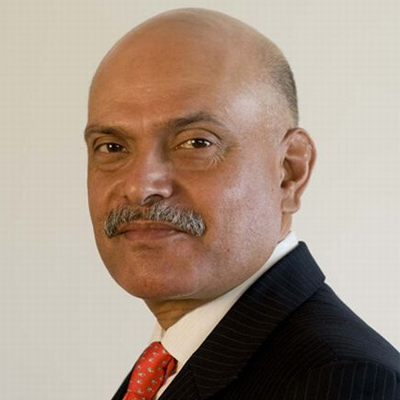
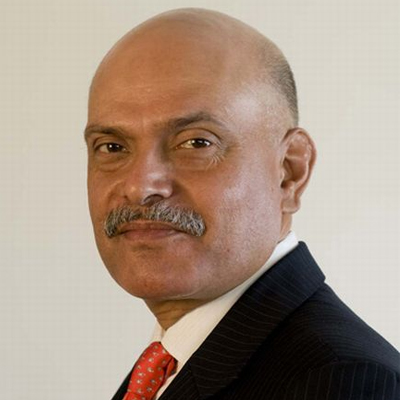
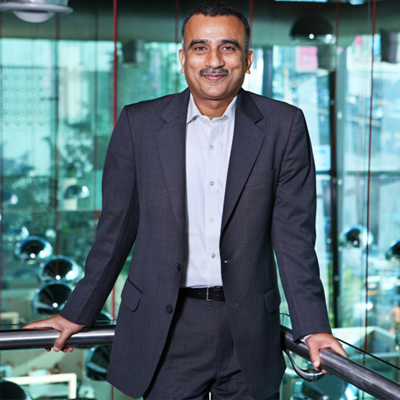
    At Melt 2015, the Indian Advertising Association (IAA) organised a riveting debate on the same with a panel comprising Times Now editor in chief Arnab Goswami and The Hindu MD and CEO Rajiv Lochan, who teamed up to debate against the motion, whereas Madison Media group CEO Vikram Sakhuja and The Quint.com founder and seasoned entrepreneur Raghav Bahl argued for the motion.


    ET Now journalist Sonali Krishna moderated the debate. The audience, which comprised the who’s who of the media, advertising and marketing industry, was the ultimate judge of the debate.


    All four participating members were given seven minutes to put forth their argument. Sakhuja kick started the debate by basing his argument on the power and features of a smart phone and also the connection that the device has built with consumers in recent years. He was of the opinion that the mobile is something that a person picks up the first thing in the morning and puts down the last at night. The prime connect of Sakhuja’s piece was when he asked people in the audience who had a mobile to raise their hand. Of course, it came as no surprise that the entire hall put their hand up.


    However, that aside, his opponents also made sensible rebuttals to portray counter arguments. The prime base of Sakhuja’s argument was the ability of mobile phones and how it enables consumer to consume content while in motion.


    Goswami, who in his inimitable style kept putting counter facts and figures in between Sakhuja’s speech initially, took to the floor by basing his piece on the reach and accessibility of television as opposed to the limitations of the mobile phone. Goswami said that the hands that went up when asked if they had a mobile phone, do not represent the entire country and there are people beyond them too who have limited access to smartphones and high speed internet.


    Goswami also focused on the affordability quotient and how by paying certain sum of money, an entire house consisting multiple members can enjoy action on television while the investment is way more when it comes to consumption of content on mobile phones, which is less mass and hence gets lesser reach or viewership as compared to television.


    Though Goswami’s opponents made numerous attempts to break him by interrupting and putting forth questions, as always he was least deflected and managed to put way more in justifying his stand.


    Giving a pass to the mumbo jumbo of statistics, Bahl justified his stand by speaking about consumer behavior and how it can change drastically within a short span of time. He stated the example of mobile phone and the high initial rates associated with it, which in turn placed it as a product for the elite class and totally irrelevant to the middleclass or lower middle class. However, in a short span during 2001 to 2005 everything changed drastically and now a vegetable vendor sits with his cart and sends the vegetable price to consumers over mobile phone using Whatsapp. Many in the audience appreciated Bahl’s arguments and examples as the foundation of his argument was that statistics are derived from past occurrences and hence predicting the duration required to bring a change in consumer behavior on the basis of available statistics cannot be justified.


    Not missing the chance even once, Goswami and Lochan interrupted him at numerous occasions. However, one such instance turned into a light banter between Goswami and Bahl, which got the audience on the edge of their seats. Bahl, during his speech, mentioned, “News is consumed in bits and bytes,” to which Goswami countered by saying, “I run a two hour long news show, which cannot be called as bits and bytes and is widely watched.” Bahl immediately launched the direct war by saying, “The show you run is not news but opinion.” Not letting Bahl continue with his point, Goswami retaliated by saying, “Raghav, you launched a news channel, which never managed to get half my ratings.”


    However, before things could go out of control, Krishna interjected and called for the debate to go on smoothly.


    Adding more substance to the few points already made by Goswami, Lochan also touched upon the qualitative aspect and his major issues were poor available infrastructure, which is in a buffering mode. He also made a point on the basis of health issues and stated mobile phones are a hazard to health and hence there are possibilities of people refraining from using the device.


    Once the four speakers had put forth their points, in the concluding statements they acknowledged all the arguments put forward.


    A message that Goswami repeatedly tried to convey through his comments, which were directed towards Sakhuja – a media planning and buying representative, was that Sakhuja was standing on the wrong side and should make a shift. The message was not only directed at Sakhuja but was an indirect attempt to convey that television is still the primary screen and advertisers should rate them undisputedly.


    After rounds of arguments and counter arguments there was no clear winner that was depicted through audience reaction. However, IAA president Srinivasan Swamy declared Goswami and Lochan as the winners of the debate, which was considered as the official verdict.
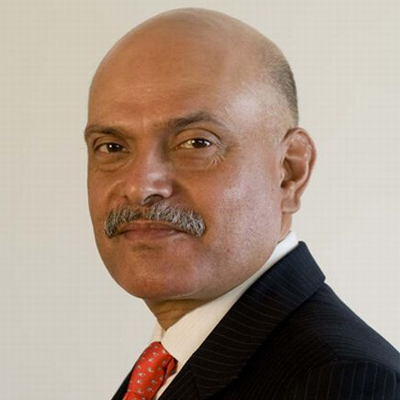
  • Digital is the next big medium for news telling & selling: Raghav Bahl

    Digital is the next big medium for news telling & selling: Raghav Bahl

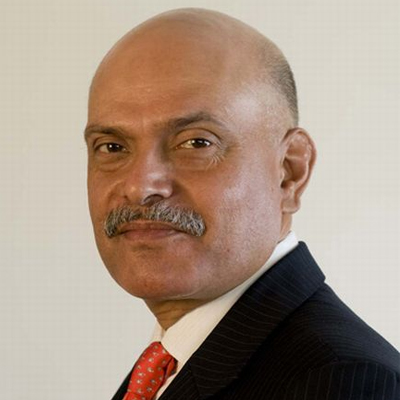
    MUMBAI: The media and entertainment sector is one of the most dynamic sectors prone to rapid change. In order to survive, one must simply re-invent and adapt to the landscape. Raghav Bahl is unarguably one such man, who knows how to build himself from scratch, as he moved from the television space to the digital environment.


    After selling the Network 18 Group for a tidy sum to Mukesh Ambani owned Reliance Industries, Bahl did not stop there. Through his digital venture The Quint, he has now launched a mobile focussed digital news website. Speaking at an interactive session at the ongoing FICCI Frames 2015, Bahl touched upon the key points as an entrepreneur in the digital domain.


    “The smartphone has revolutionised the media ecosystem,” Bahl’s voice booms in the packed auditorium as he begins sharing his thoughts.


    Consumer Habits

    Bahl says that consumers today are increasingly looking out for content that is personalised, “I, Me, Mine” as he called it. Consumers are always looking for content that leads to instant gratification as audiences resort to uploading, sharing, finding and following data points on their smartphones. Increasingly, users also want data sans baggage.


    Content

    Content in the digital space, according to the media baron, is moving from exclusive and breaking news to news pieces that are re-purposed with stronger in-depth analysis. “Now it’s also about the creation of content versus the packaging of content,” he adds. There is also an emerging section in the digital news media segment called the “Light-Fun-Weird,” which is the new news category where news is narrated far different from the traditional form. People increasingly are also looking out for ‘nearby’ content where local information, news and content is being sought. In the social media space, content is also about discovering news, as people used various platforms like Twitter, Facebook and Instagram. “Close to 1.8 billion photos are uploaded and shared everyday on Instagram, while around 50 billion messages are sent via Whatsapp each day,” Bahl informs.


    Impact on the Landscape

    As massive content is bombarded on the cyberspace, Bahl says that “except for community news and large scale entertainment format on the static screen, it will completely change the landscape. Language will now have to become edgier and it will have to become the language of the young because the audience today has a point of view. Quicker, shorter and strong opinions,” Bahl sums up.


    Content in the next three years will move more exclusively to hand held devices.


    Quint’s Approach to News Telling

    As a digital product, Bahl informs that he doesn’t need to send a reporter on field. Providing an example on how he would approach a plane crash story, he informs that he would prepare “multiple smaller packets” of news than one lengthy story that will not buy the audience’s attention. He would come up with stories like the age of the aircraft, the mindset of the airplane pilot and so on. “I am investing more in the technology than a TV channel network spends on ground reporting,” he stated.


    Financing and Costs

    When he started with his news channel CNBC TV18, it drew in a revenue of Rs 2 crore. However, today the channel draws in revenue to the tune of Rs 300 crore. “As audiences come in, buyers will come in too. If the content is receiving traction, advertisers would come in too.”


    According to Bahl, three kinds of advertising models will be hot selling properties in the digital domain: 1) Complete programmatic advertising, 2) Native advertising and 3) Display ads. “However, display ads will have to be modified for mobile screens,” he said.


    Assessment of Indian media and leaving Network 18

    I am an optimist and I believe the sheer plurality of the Indian media would ensure cards are not stacked in one direction,” Bahl assessed. He went on to reveal that he was in no way ready to become a paid employee. “Today the Network 18 group is in strong competitive hands. If I was not a majority stakeholder anymore, I would have to re-invent myself,” he said.


    Conclusion

    In his concluding remarks, Bahl highlighted a few points. For instance, he said that primetime is dead as audiences today are always connected via their multiple screens to receive content. The very short lifespan of news was taken over by “curated explainers,” who would summarise a story with in-depth analysis. “Journalists today will have to be expert in their field. You cannot cover financial markets or terrorism,” he remarked.

  • Raghav Bahl’s new venture The Quint makes its debut

    Raghav Bahl’s new venture The Quint makes its debut

    MUMBAI: Months ago he introduced his digital baby The Quint on Facebook. Since January after publishing stories on the social media platform, Indian media mogul turned entrepreneur Raghav Bahl’s latest venture The Quint has finally made its online debut.


    After their stint with television, Bahl along with his wife Ritu Kapur, co-founded a digital company called Quintillion Media. The mobile focussed digital platform covers a wide array of news sections. These include politics, opinion, technology, world, entertainment, life, India, business and sports. A photo section dedicated to mostly Hollywood and Bollywood content, besides a video and podcast section is also a part of the new-born website. To lend a lighter tone to the content, a WaterQooler section features humourous and interesting anecdotes that are popular from around the world. The website is currently running in its BETA version.


    The content for the website is being created by the in-house content team of editorial writers as well as wire stories. A separate section on the website called “QuintEssential” has stories that are exclusive and personal posts that have been written by the founder duo, including the making of The Quint. Another section featuring on the home page, “Trending” includes stories and videos that are have been going viral in the cyber domain.


    The website is seeing a growing traction on its social media platforms. For example, its Twitter handle currently has more than 3,000 followers and more than 7,000 Facebook likes. Access to these two media is available above on the top right hand corner of the webpage.


    As reported earlier by Indiantelevision.com, the company was registered on 23 August, 2014 with an authorised capital of Rs 130 crore. It invested in a start up venture known as Quintype, based in the San Francisco Bay Area with entrepreneur Amit Rathore as CEO and chief product officer. The website has been powered by Quintype offers cloud based solutions for editorial assignments as well publishing formats for mobile phones, tablets, desktop etc.


    Most of those in the news team include former staffers of Network 18, Bahl’s former company that was sold to Reliance Industries for Rs 700 crores. Former Web18 VP Roshan Tamang is the digital media consultant for the venture.

  • CASBAA India Forum 2015: New Era, New Opportunities

    CASBAA India Forum 2015: New Era, New Opportunities

    Mumbai: CASBAA’s annual stop in the South Asian sub-continent will bring together a host of local and international speakers at the India Forum 2015 on Monday, March 23 at Shangri-La’s Eros Hotel in New Delhi.


    “Reflecting India’s continued importance and influence in the Asia Pacific region, CASBAA’s annual overview of this vibrant broadcasting market attracts the very best speakers from within the country and around the world,” said CASBAA CEO Christopher Slaughter.  “As the television industry continues to evolve not only in India but across the globe, it truly feels as if we have entered into a new era of broadcasting and this forum is dedicated to the exploration of the vast opportunities now available to industry stakeholders.”


    “New Era, New Opportunities,” this year’s theme for the CASBAA India Forum 2015, captures the essence of television in the country. Spurred by the plan to digitize the cable television sector, the Indian TV industry has been invigorated with the promise of increased transparency, pay revenues and access to content.


    However, after the first two phases of digitisation, digital rollout seems to have plateaued. Has over-regulation taken the sheen off digitisation or are there other activities taking place that are not plainly evident? And, are stakeholders finally ready to iron out their differences for the greater common good?


     CASBAA has assembled a diverse roster of expert speakers to debate this issue along with a variety of other important topics paving the way for India’s continued growth such as audience measurement, media regulations, advertising, new technology, satellite spectrum and much more.


     Among the industry experts expected to attend this year are Raghav Bahl (MD, Quintillion Media), Paul Brown-Kenyon (CEO, MEASAT), Prashant Butani (Senior Analyst, NSR), Nicholas Daly (MD, Eutelsat), Partho Dasgupta (CEO, BARC), Tony D’silva (CEO & MD, Media, Hinduja Group), Vynsley Fernandes (CEO, Castle Media), Smita Jha (Leader, Entertainment and Media, PwC India), Rajiv Khattar (President – South Asia, ABS), L.V. Krishnan (CEO, TAM Media Research (India)), Deepak Mathur (SVP Commercial, Asia-Pacific and Middle East, SES), Harit Nagpal (CEO & MD, Tata Sky), Sushruta Samanta (Business Head, Asia Pacific, International Business, Zee Entertainment), Adil Zainulbhai (Chairman, Nerwork18 & Board Member, RIL) and many others. This year, corporate partners for the CASBAA India Forum 2015 include Supporting Sponsor SES and Sponsors Eutelsat, MEASAT and TMT Law Practice.


    For more information about the CASBAA India Forum 2015 and to register for tickets,


    please visit http://www.casbaa.com/events/events-calendar/details/505-casbaa-india-forum-2015.

  • Raghav Bahl on why digital is the next big medium for journalists

    Raghav Bahl on why digital is the next big medium for journalists

    MUMBAI: Raghav Bahl, who recently launched his venture The Quint, is quite bullish about the booming digital ecosystem in India. In a self written note published on social media, the media mogul lists the various opportunities offered by social media platforms.


    According to Bahl, first and foremost there is immediate threat to the editor but in order to survive, he must adapt to evolving needs in the digital environment. For starters, he will have to ensure that content is not text heavy but crisper and sharper and focused towards the consumption patterns of “millennials”. For the uninitiated the term stands for those individuals reaching young adulthood by the year 2000 or simply known as ‘Generation X’.


    In his second point, Bahl explains how in the current day “journalistic scoops,” which give an exclusive edge and add the “I broke it First” feeling to a journalist, will be over time replaced by scoops that are released first online and distributed to the public. He provides examples of how infamous outfits like the Boko Haram have been releasing detrimental videos online.


    Moving further Bahl is of the opinion that social media and its blue eyed platforms namely Facebook and Google, will be an independent journalist’s best friend instead of a newspaper and TV, which have limited reach. He compares the strength of the digital medium a force that offers ‘viral velocity’ to a newsman’s work.


    In his fourth point, Bahl elaborates about the two way communication model involved in the cyber space, which allows content creators, journalists and opinion leader to receive real time feedback. Thanks to the algorithmic trend sheets and tools a journalist can very well be equipped to know exactly how to spark argumentative conversations that can help fuel fruitful debates.


    In conclusion, Bahl says that the new team at Quint has taught him to learn valuable lessons at daily edit meets as he grasps the new lingo of Generation X.


    The full article can be read here: https://www.linkedin.com/pulse/quint-six-months-flat-raghav-bahl?trk=mp-reader-card


  • Raghav Bahl launches The Quint

    Raghav Bahl launches The Quint

    MUMBAI: “It’s actually a no brainer. If you have to reinvent, you have to simply start from scratch,” said Raghav Bahl as he introduced the team behind his latest venture- The Quint. 


    The man is gearing for his newest venture. After their stint with television, Bahl along with Ritu Kapur has, co founded their digital company called Quintillion Media. The name has been derived from the Quintillion (Kwin-til-yuh-n), which means the numerical one followed by 18 zeroes. 


    The company was registered on 23 August, last year, bearing the registration number 270795 with an authorised capital of Rs 130 crore. It invested in a start up called Quintype, based in the San Francisco Bay Area with entrepreneur Amit Rathore as CEO and chief product officer. At Quintype, Bahl is the chief strategist and board member while Kapur is the chief customer looking after the product and also a board member.


    In a video released on Facebook, the media mogul is seen introducing Quintillion’s first digital baby, which will be a mobile-first, algorithmic digital hand held news service named www.thequint.com


    The office is based at Noida’s Film City just a few buildings away from that of Network18.  


    Going by Indian tradition, not surprisingly an auspicious ‘pooja’ was performed in November, last year, as the startup is gearing to soar high. The content will be high on visual and imagery and crisper with the text. It will not be limited to news but also cover genres like technology, health among others. The aim of the platform is to ‘be the signal over the noise’. The current logo is that of the alphabet ‘Q’ in white and purple over a canary yellow background. On Facebook, it currently has 579 likes since its launch on 9 January.


    Giving his views on social media, Bahl wrote on Facebook, “Social media, especially Google and Facebook, are an independent journalist’s best friends, giving his piece a viral velocity impossible within the linear confines of newspapers and TV”


    All in all, it remains to be seen how this reinvention takes form as it gears to take over competitors like Scroll, Buzzfeed and The Huffington Post India.


  • 2014: The year of big movements in the news channel space

    2014: The year of big movements in the news channel space

    MUMBAI: The year 2014 was an important year for the news channel industry, monetarily and otherwise. The bonus for the industry was the national election which not only kept them busy for the first half of the year, but also sent all the networks into profits for the first financial quarter. However, several changes took place on the people front with numerous big names moving out from their associated companies.

    The biggest shocker that hit the industry was the acquisition of Network18 by Reliance Industries’ subsidiary Independent Media Trust, putting the entire TV18 (news channels) section under the Mukesh Ambani conglomerate. Network18 founder and chairman Raghav Bahl, this year sold his baby to Ambani for a whopping Rs 4000 crore. Bahl has now set up his own new venture in the mobile space called Quintillion Media.


    What followed this was an upheaval of sorts, as one by one, the main pillars of the company began to fall. As soon as the meeting concluded between Bahl and the management of Network18, departures began which included group CEO B Sai Kumar, COO Ajay Chacko, CNN-IBN deputy editor Sagarika Ghose, IBN Network editor in chief Rajdeep Sardesai, Network18 Media CEO Sanjay Dua, Network18 digital CEO Durga Raghunath, Network 18 CFO RDS Binni Bawa and deputy foreign affairs editor Suhasini Haidar.

    Soon after, the discussion circled the possibilities of news manipulation by the conglomerate as well as editorial interference started cropping up. In order to assuage the racing thoughts of the employees, the newly formed management took a town hall meeting. A new set of executives joined the company including former Zee Media CEO Alok Agrawal who took charge as Network18 group COO, Umesh Upadhyay as news director, Rohit Bansal as non executive director, Hariharan Mahadevan as CFO and Deepak Parekh and Adil Zainulbhai as independent directors.

    The year also saw several people shifting loyalties due to various reasons. The biggest of them were Rajdeep Sardesai joining India Today as consulting editor and primetime anchor, Dilip Venkatraman and Savvy Venkatraman joining ITV Network as group COO of strategy and business development and group chief marketing officer respectively, former Indian Express editor in chief Shekhar Gupta moving to India Today as the vice chairman and editor in chief of news properties but within two months relinquishing his positions and becoming editorial advisor to the group and Sanjay Dua joining ITV Network as NewsX CEO and ITV network chief revenue officer.

    Months after Times Television Network MD and CEO Sunil Lulla was elevated to BCCL Group president of corporate development, he quit the company to join Grey group India as chairman and managing director.  Meanwhile, Times Now, ET Now and Zoom CEO Avinash Kaul went to IBN18 Network as CEO. ITV Network elevated CEO RK Arora to group CEO and soon after Arora quit to join News Nation as its CEO, which had been vacated by Shailesh Kumar, the former CEO and editor in chief of the channel. Kumar recently joined Focus Group as the managing editor for regional channels. Neeraj Sanan who headed distribution and marketing for MCCS that operates ABP news channels, quit and went to Focus Group as group CEO.

    News Xpress CEO and editor in chief Vinod Kapri decided to step down as well and was replaced by Prasoon Shukla. Early in the year, CNN-IBN managing editor Ashutosh quit to join the Aam Aadmi Party (AAP) and was replaced by Vinay Tewari who after several months shifted to Headlines Today as managing editor, a place left vacant by Nalin Mehta. Radhakrishnan Nair was appointed in place of Tewari.

    On the business side, Bloomberg TV India editor in chief Vivek Law quit to pursue entrepreneurial activities and the position was filled by Siddharth Zarabi. Zee News resident editor Sumit Awasthi joined IBN7 as deputy managing editor. News24 managing editor Ajit Anjum joined India TV in the same capacity. QW Naqvi who joined India TV as editorial director, left after a few months’ stint.

    On the international channels side, Naveen Jhunjhunwala replaced Preet Dhupar as BBC Global India COO while Ravi Agrawal was appointed as CNN International bureau chief for India. Bhupendra Chaubey who became executive editor of CNN-IBN, post takeover by Reliance, decided to shift his role to consulting editor. The year also saw the demise of veteran journalist Jehangir Pocha.

    The News Broadcasters Association (NBA) has been fighting tooth and nail for keeping news broadcasters out of the 12 minute ad cap. The case is still being heard in the High Court for more than a year. NDTV executive vice chairperson KVL Narayan Rao, after four years of heading the NBA as president was succeeded by India TV chairman and editor in chief Rajat Sharma. A new entity called the All India News Broadcasters Association (AINBA) was formed for the regional news channels with Azad News chairman MS Walia as its chairman.

    The other big takeover rumour that was making rounds was about the Adani group trying to stake claim in NDTV (which completed 25 years) which the company vehemently stated as a false one.

    The year also saw a few channel launches such as CNBC Bajar, News Nation UP/Uttarakhand, several regional news channels under the ETV group (now under Network18), Zee Purvaiya and Zee Kalinga which have now been converted into fully entertainment as against the earlier format of 50 per cent news and 50 per cent entertainment.

    2014 was also the year of revamps, with India TV, IBN7, NewsX, News Xpress and Zee News changing the look and feel of the channel. NDTV Profit converted into a dual channel NDTV Profit/Prime, with Prime operating as a fully sponsored channel, aimed at easing out the losses being made by Profit over the years.

    The 16th Lok Sabha general election added the much needed boost to the balance sheets of news channels that have been cribbing about high carriage fees, low subscription fees and advertising rates. CNN-IBN and Times Now came up with their election apps. The latter also tied up with north east channel News Live for poll coverage. Network18 tied up with Microsoft to set up an analytics centre for the elections while BBC used WhatsApp and WeChat for getting more traction from Indian audiences. This election season saw a new trend: that of editors moving out of the comfort zone of their studio and reporting from ground zero.

    As we approach the new year, burning issues are yet to be resolved such as the ad cap, carriage fees, paid news as well as foreign direct investment in news channels which is still stuck at 26 per cent and does not seem to have a better future any time soon.

  • Network18 appoints new directors and a CFO

    Network18 appoints new directors and a CFO

    MUMBAI: New appointments have been made at the Reliance Industries’ controlled Network18.


    Rajiv Luthra and Dhruv Kaji have been appointed as independent directors of the company. Additionally, Hariharan Mahadevan has been appointed as the chief financial officer (CFO) and Kshipra Jatana as manager.


    The appointments are effective from 27 November. Earlier this year when Reliance Industries’ took over Network18, CFO RDS Bawa quit along with a host of other executives including CEO B Sai Kumar, COO Ajay Chacko, editor in chief Rajdeep Sardesai etc.


    As of now, founder Raghav Bahl, Rohit Bansal, Vinay Chhajlani, Deepak Parekh and Adil Zainulbhai are the directors of Network18.

  • Reliance brings with it the zest to win, says Sudhanshu Vats

    Reliance brings with it the zest to win, says Sudhanshu Vats

    MUMBAI: On 29 May 2014, Reliance Industries Limited (RIL) had announced that it would spend Rs 4,000 crore to take complete control of Network18, the company which Raghav Bahl founded in 1993.


    The takeover labeled as the biggest takeovers in India’s media industry, followed the announcement with an open offer to the public.


    Since then, not much has been spoken about the management changes, cultural changes in the companies or the working.


    So, when indiantelevision.com met Viacom18 group CEO Sudhanshu Vats, we couldn’t help but ask.


    Answering the obvious question of has there been any management changes post the takeover of Network 18 by Reliance, Vats says, “No, there have been no changes at Viacom18. The same management team continues to drive Viacom18.”


    Vats goes on to add that Reliance is a very large and successful company. It believes in scale and has strong leading position in all the business segments in which it operates. “The good news from our point of view is that we now have two industry giants – Reliance and Viacom as partners. Reliance brings with it scale, resources and the zest to win. Those are good traits for us to gain new heights in the media sector,” he emphasises


    For the record, Network18 owns news TV channels (including CNBC-TV18, CNN-IBN, CNBC Awaaz etc), websites (firstpost.com, moneycontrol.com), magazines (including the license for Forbes India), entertainment channels (including Colors, MTV and Homeshop18) among other businesses. And Viacom18 founded in November 2007 is a 50:50 joint venture operation in India between Viacom and the Network 18’s subsidiary TV18, based in Mumbai.

  • Network 18 gets shareholder approval to borrow up to Rs 1800 cr

    Network 18 gets shareholder approval to borrow up to Rs 1800 cr

    MUMBAI: The board of directors (BOD) of Network 18, at its annual general meeting (AGM) seeked shareholder approval for allowing borrowing power up to Rs 1800 crore. At the same time the BOD of TV18 also requested the same for Rs 1500 crore.


    Both the resolutions were passed giving the BOD rights to borrow till the limit over and above the paid-up capital, free reserves and securities premium account.


    Another special resolution was to get an approval to offer or invite to subscribe to non-convertible debentures on private placement basis for both the companies.


    ‘Private placement’ means any offer of securities or invitation to subscribe securities (equity or securities that convert to equity) to a select group of persons by a company, other than by way of public offer, through issue of a private placement offer letter.


    Bothe the special resolutions were passed at the AGM with 100 per cent votes.


    The ordinary resolution passed at the meeting included, re-appointment of Raghav Bahl as a director who retires by rotation, appointment of Rohit Bansal and Vinay Chhajlani as directors and appointment of Deepak Parekh and Adil  Zainulbhai  as independent directors.


    Other resolutions include appointment of auditors and fixing their remuneration (ordinary resolution), approval of the remuneration of the cost auditor (ordinary resolution) and adoption of new articles of association of the company (special resolution).


    It has been four months since the Bahl-founded company was taken over by petrochemical conglomerate Reliance Industries’ chairman Mukesh Ambani.