Tag: Raghav Anand

  • The future of original content

    The future of original content

    MUMBAI: The 9th edition of the Content Hub Summit 2025 came roaring into Mumbai this week, promising answers to a question plaguing the media world: how do you stay original when the world’s drowning in content?

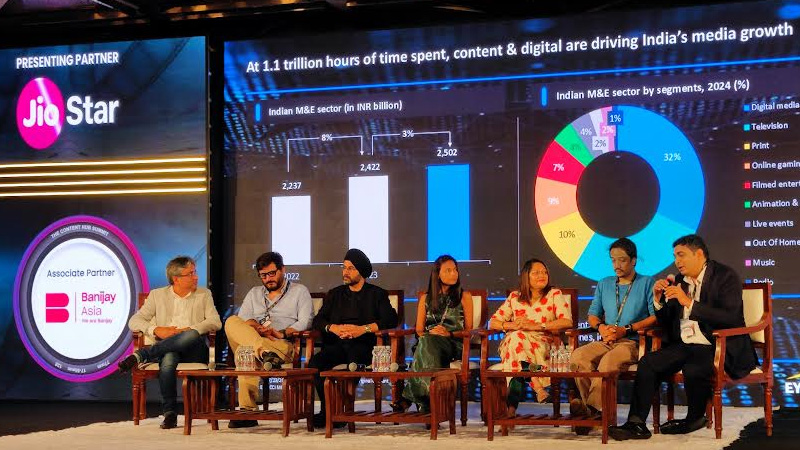
    Raghav Anand, partner at Ernst & Young LLP, kicked things off with some eye-watering numbers: the Indian media and entertainment (M&E) sector is now worth Rs 2.5bn, fuelled by 1.1trn hours of content consumption. “That’s a massive amount of attention,” said Anand. But with time spent on platforms now plateauing, he warned the next battleground will be retention, not reach.

    And yet, India’s churning out a gobsmacking 200,000 hours of original content a year—leading globally in volume. TV still dominates, but OTT, film and music are closing in fast. What’s changing is how and why content is made and the growing shadow of generative AI has everyone both curious and cautious.

    Goldie Behl, founder of Rose Audio Visuals, dismissed the obsession with “originality” as misplaced. “There’s nothing truly original. Everything’s borrowed, lived, or inspired. What matters is conviction,” he said, adding that content made with honesty and emotional depth is what ultimately cuts through.

    Aditi Shrivastava, co-founder and CEO of Pocket Aces, echoed the point, emphasising that her studio’s approach is to test stories at micro-scale before scaling up. “We find communities not demographics on social platforms. We create short, relatable pieces and build from there,” she said, adding that this modular testing lets them co-create with audiences in real time.

    Saugata Mukherjee, head of content at SonyLIV, was clear-eyed about what makes content stick: identity and consistency. “We built the platform on shows rooted in Indian culture. Our audience knows what we stand for, and that’s why they return.” Originals, he said, drive both customer acquisition and retention, with long-running franchises offering a steady heartbeat.

    Tejkarran Singh Bajaj, SVP and head of originals at Jio Studios, admitted times are “exciting but very difficult”. His team resists trend-chasing and instead banks on instinct: “We don’t make franchises. We find stories worth telling, ones that feel truly Indian.” That means even adaptations are reworked with a cultural lens, not just scene-by-scene lifts.

    Anuj Gosalia, founder of Terribly Tiny Tales, described today’s attention economy as “weaponised dopamine”, calling short-form ‘TV minus minus’—and still wildly effective. “People used to mock reels and TikToks. Now every A-lister’s on them. Micro-dramas will be the same,” he predicted.

    Swati Patnaik, creative director at Applause Entertainment, argued that the secret sauce of global success is local flavour. “The more rooted the story, the more it travels,” she said. “It’s not about the plot; it’s the point of view. That’s what cuts across borders.”

    As for AI, the mood was one of cautious intrigue rather than full-blown enthusiasm. Behl questioned whether AI can ever replicate emotional depth. “When an actor cries on screen, can AI make us feel that? I’ve yet to see it,” he said.

    Still, Anand noted that GenAI is already driving 20–25 per cent cost savings and slashing production time. The challenge, then, is less whether AI will be used and more how ethically and meaningfully it will be integrated.

    India’s original content scene is at a thrilling and slightly terrifying crossroads. The audience is fragmented, hungry, and overloaded. AI is knocking. Attention spans are plummeting. But as this year’s Content Hub Summit showed, the real winners will be those who tell deeply human stories with cultural authenticity, creative courage, and a sharp eye on what viewers really want.


  • Vidnet Summit 2024: The streaming commerce: Where is this heading?

    Vidnet Summit 2024: The streaming commerce: Where is this heading?

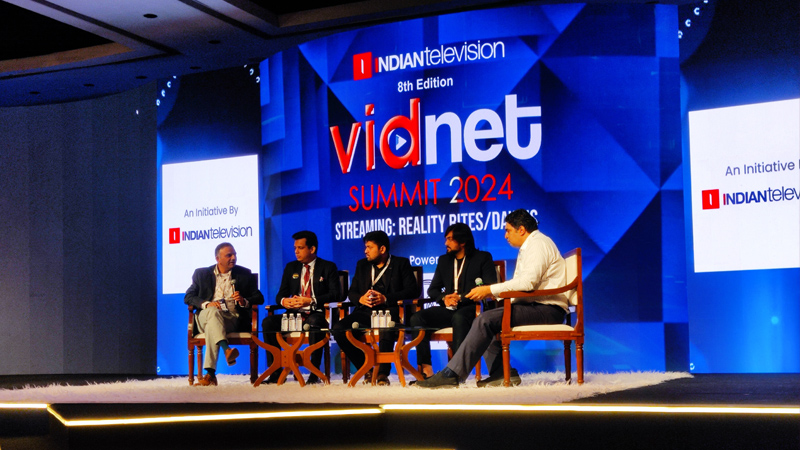
    Mumbai: The OTT business in India is buzzing with new streamers, niche, and language offerings. However, early players are struggling as heavy content spending isn’t matching revenues, and India-specific low pricing hasn’t spurred subscriptions. Growth has plateaued as consumers return to post-COVID normalcy, preferring to binge occasionally.

    Adding to the churn is the shift towards AVOD by giants like JioCinema, offering premium events like cricket for free, with Disney+Hotstar following suit. This has strained streaming bottom lines. The rise of FAST channels is also causing industry jitters. Vidnet explored the future of the streaming ecosystem.

    The panel for this session was moderated by Ernst and Young LLP (Session Chair) partner Raghav Anand along with other panelists like Arha Media & Broadcasting CEO, Ravikant Sabnavis, Chaupal co-founder Ujjwal Mahajan, JOJO App co-founder Meet Kariya, PlayboxTV founder & CEO Aamir Mulani.

    Anand set the tone by highlighting the rapid evolution of streaming commerce and its profound impact on brands and OTT platforms. He posed a question to the panelists about how they foresee the evolving landscape of streaming commerce influencing both brands and OTT platforms, and what strategies they deem crucial for effectively leveraging this trend in the coming years.

    Mulani shared his perspective, telling the goal of achieving parity with television distribution to enhance cache and development capabilities, “‘The idea is the day we match, 50% of distribution of television, we all be able to have a better cache. We always able to have a better dev. Everything will be smooth.”

    Mahajan stressed the importance of engaging content across multiple languages, aligning with theatrical markets, and boosting marketing efforts for major movies, “The power of content lies in its ability to engage audiences. If our platform operates in multiple languages from the start, it aligns well with theatrical markets and boosts existing marketing efforts for major tentpole movies. However, long-term success hinges on digital content.”

    Sabnavis said their content strategy’s evolution to resonate strongly with cultural preferences, initially focusing on a direct subscription model to build brand loyalty, “Over the last four years, we have honed our content strategy to ensure a strong cultural affinity, making it compelling and unique. Initially, we opted for a subscription model, avoiding partnerships with telecom operators to create a direct brand pull.”

    Lastly, Kariya reflected on their app journey from producers to launching a free platform, driven by a desire to support content creators facing challenges.

  • TCH 2024: One Nation: Diverse Voices

    TCH 2024: One Nation: Diverse Voices

    Mumbai: Exploring the shift from regional to national content, this synopsis delves into the trends and challenges. It navigates the transformation, analyzing industry dynamics, emerging trends, and the hurdles faced. From preserving regional variation to adapting to a broader audience, it examines the multifaceted journey of regional content evolving into a national narrative. In what ways do the emerging trends and challenges influence the dynamics of the entertainment industry during this transition? How can creators navigate these changes effectively? What strategic approaches can content creators adopt to strike a balance between maintaining regional identity and fostering a cohesive national narrative in their work? How can the transition from ‘regional’ to ‘national content’ impact cultural diversity within the entertainment industry, and what measures can be taken to ensure the preservation of regional variation?

    In a rapidly evolving media landscape, seasoned industry professionals have offered valuable insights into the transformation of content consumption and production. The session was chaired by Ernst and Young partner Raghav Anand, MMTV chief executive officer P.R. Satheesh, Sony Marathi business head Ajay Bhalwankar, PTC Network chairman & MD Rabindra Narayan, Shemaroo Entertainment COO, Digital, Saurabh Srivastava esteemed voices in the field, have articulated their perspectives on the burgeoning shift towards globalised content.

    Rabindra Narayan emphasised the dissolution of regional boundaries in content consumption, attributing it to the accessibility facilitated by global platforms and connectivity options. He predicts a future where language barriers will fade, citing the potential of technology to clone and adapt voices, thus enabling seamless localization across languages.

    Saurabh highlighted the democratisation of content creation in the digital era, underscoring its empowerment and revenue potential, particularly in linguistically diverse markets like India. He emphasizes the value of culturally rooted storytelling in filling gaps in content supply, with technology enabling effective monetization, especially through OTT platforms.

    Ajay Bhalwan sheds light on the evolving landscape of Hindi and regional language content, noting a significant shift where a substantial portion of content on Hindi film channels originates from regional languages. He accentuates the importance of language in enhancing authenticity and audience engagement, exemplified by the strong resonance of Marathi content in Maharashtra.

    PR Satheesh underscored the paramount importance of content quality in driving viewership and transcending language barriers. Drawing parallels with the global popularity of Korean dramas, he advocates for leveraging technology, including AI and real-time translations, to enhance content creation and distribution.

    These insightful perspectives collectively echoed the industry’s adaptation to a globalised content landscape, where technology catalyzes innovation and accessibility. As content continues to evolve, these experts offered valuable guidance on navigating the dynamic media landscape and maximizing the impact of storytelling in diverse markets worldwide.