Tag: Radio

  • Day 26: Jodhpur joins Rs 10 crore club, cumulative price crosses Rs 1150 crore in FM Phase III

    Day 26: Jodhpur joins Rs 10 crore club, cumulative price crosses Rs 1150 crore in FM Phase III

    NEW DELHI: With Jodhpur joining Varanasi in the Rs 10 core+ cities and the attention zeroing in on other cities racing to this mark, the cumulative winning price at the end of the 104th round on the 26th day raced up to Rs 1151.6 crore in the e-auction for the first batch of FM Phase III cities.


    One channel in Guwahati fetched a price of Rs 4.11 crore as against its reserve price of Rs 37 lakh, registering a rise of almost 980 per cent. A few days earlier, Bhubaneswar had also set a record with a single channel getting the most competitive bidding increment-wise by going up nine times the reserve price.  


    However, there is no increase for almost a week in the number of provisional winning channels and cities – 94 channels in 56 cities – though the total bids surpassed the cumulative reserve price by Rs 692.7 crore or 150.9 per cent against the aggregate reserve price of about Rs 459 crore.


    The cumulative provisional winning price has thus risen over the total reserve price of the first batch of 135 FM channels in 69 existing cities – Rs 550.18 crore – by Rs 601.4 crore or 109.3 per cent.  


    While Varanasi marched higher to Rs 14.94 crore and Jodhpur showed an increase to Rs 10.79 crore, Kohlapur was static with Rs 9.44 crore. Others in the waiting for entry to the Rs 10 crore club appear to be Kanpur, Rajkot, Amritsar and Aurangabad, all of which have got above Rs 6 crore each. 


    The Auction Activity Requirement rose to 100 per cent after the 59th round on 14 August, after being 90 per cent after the 37th round on 7 August.


    However, there were still no bids for 13 cities namely Asansol, Gulbarga, Mangalore, Mysore, Puducherry, Rajahmundry, Siliguri, Tiruchy, Tirunveli, Tirupati, Tuticorin, Vijaywada and Warangal.


    The demand in most cities fell by up to three per cent and by four per cent below the excess demand at the price in the 100th round in Hyderabad.


    The Percentage Price Increment applicable for the Next Clock Round rose to five each in Shillong and Varanasi but was just one in Ahmednagar and Jodhpur. There was no change in the other cities.


    The winning price has risen by more than 100 per cent above their respective reserve prices in Ahmedabad, Amritsar, Aurangabad, Bengaluru, Bhubaneshwar, Chennai, Delhi, Guwahati, Jaipur, Jodhpur, Kolhapur, Mumbai, Nasik, Patna, Pune, Rourkela and Varanasi, all of which got provisional winning bidders at prices more than double the respective reserve prices.


    The provisional winning price in the top three cities reflected no change: Delhi at Rs 169.16 crore (for just one channel); Mumbai at Rs 122.81 crore (for two channels); and Bengaluru at Rs 109.25 crore.

  • Day 22: Hope for more FM Phase III bids lie with under-Rs 10 crore cities

    Day 22: Hope for more FM Phase III bids lie with under-Rs 10 crore cities

    NEW DELHI: With no takers for thirteen cities, the hope for more bids shifted to cities, which have so far managed less than Rs 10 crore on the twenty-second day in the e-auction for the first batch of FM Phase III cities even as the cumulative provisional winning price showed a marginal rise to Rs 1136.6 crore at the end of the 88th round.


    The number of provisional winning channels and cities remained the same as yesterday: 94 channels in 56 cities, but the total bids surpassed the cumulative reserve price by Rs 677.7 crore or 147.7 per cent against the aggregate reserve price of about Rs 459 crore.


    The cumulative provisional winning price has thus risen over the total reserve price of the first batch of 135 FM channels in 69 existing cities – Rs 550.18 crore – by Rs 586.4 crore or 106.5 per cent. Information and Broadcasting Ministry sources told Indiantelevision.com today that the cumulative winning price is exclusive of the migration fee, which will take the total revenue even higher.


    The Auction Activity Requirement rose to 100 per cent after the 59th round on 14 August, after being 90 per cent after the 37th round on 7 August.


    Sources said that in the notice inviting auction, it was clear that the e-auction will continue as long as bids are received for any of the 135 channels. This included the 13 cities for which no bids have come namely Asansol, Gulbarga, Mangalore, Mysore, Puducherry, Rajahmundry, Siliguri, Tiruchy, Tirunveli, Tirupati, Tuticorin, Vijaywada and Warangal.


    The winning price has gone up by more than 100 per cent above their respective reserve prices: Ahmedabad, Amritsar, Aurangabad, Bengaluru, Bhubaneshwar, Chennai, Delhi, Guwahati, Jaipur, Jodhpur, Kolhapur, Mumbai, Nasik, Patna, Pune, Rourkela and Varanasi, which got provisional winning bidders at prices more than double the respective reserve prices. A single channel in Bhubaneshwar created a new record by getting the most competitive bidding increment-wise by going up nine times the reserve price.


    The demand in most cities fell by up to three per cent and by four per cent below the excess demand at the price in the 88th round in Hyderabad.


    The Percentage Price Increment applicable for the Next Clock Round rose to five each in Jodhpur and Varanasi but was just one in Gauhati. There was no change in the other cities.


    The provisional winning price in the top three cities reflected no change: Delhi at Rs 169.16 crore (for just one channel); Mumbai at Rs 122.81 crore (for two channels); and Bengaluru at Rs 109.25 crore.


    Kohlapur, which appeared to be the next to enter the Rs 10-crore club remained static for the third day with Rs 9.44 crore though cities like Kanpur, Rajkot, Amritsar and Aurangabad do not seem to be far behind. 


    Chennai at Rs 53.38 crore, Ahmedabad at Rs 42.68 crore, Pune at Rs 42.03 crore, Jaipur at Rs 28.34 crore, Chandigarh at Rs 19.04 crore, Hyderabad at Rs 18 crore, Patna at Rs 17.89 crore, Cochin at Rs 15.04 crore and Lucknow at Rs 14 crore remained static.

  • Day 21: Bidders elude 13 cities in FM Phase III; winning price up marginally

    Day 21: Bidders elude 13 cities in FM Phase III; winning price up marginally

    NEW DELHI: With no takers for as many as 13 cities and bidding slowing down on the 21st day in the e-auction for the first batch of FM Phase III cities, the cumulative provisional winning price showed a marginal rise to touch Rs 1134 crore at the end of the 84th round.


    Bids continued to elude 13 cities for the 21st day today with no takers for channels in Asansol, Gulbarga, Mangalore, Mysore, Puducherry, Rajahmundry, Siliguri, Tiruchy, Tirunveli, Tirupati, Tuticorin, Vijaywada and Warangal.


    The number of provisional winning channels and cities remained the same as Friday (21 August), i.e.: 94 channels in 56 cities, with the total bids surpassing the cumulative reserve price by Rs 675.22 crore or 147.1 per cent against the aggregate reserve price of about Rs 459 crore.


    The cumulative provisional winning price has thus risen over the total reserve price of the first batch of 135 FM channels in 69 existing cities – Rs 550.18 crore – by Rs 583.90 crore or 106.1 per cent.


    The Auction Activity Requirement rose to 100 per cent after the 59th round on 14 August, after being 90 per cent after the 37th round on 7 August.


    So far, 17 cities have got provisional winning price for their channels more than 100 per cent above their respective reserve prices: Ahmedabad, Amritsar, Aurangabad, Bengaluru, Bhubaneshwar, Chennai, Delhi, Guwahati, Jaipur, Jodhpur, Kolhapur, Mumbai, Nasik, Patna, Pune, Rourkela and Varanasi, which got provisional winning bidders at prices more than double the respective reserve prices.


    With the provisional winning price more than nine times the reserve price, a single channel in Bhubaneshwar has undergone the most competitive bidding increment-wise.


    The demand in most cities fell by up to three per cent and by four per cent below the excess demand at the price in the 80th round in Hyderabad.


    Price Increment Algorithm for the e-Auction is based on the increment logic used by Department of Telecommunications in its auctions. As per this logic, there should be no increment for negative excess demand, some increment for zero excess demand and a fixed increment above a certain excess demand. Some increment for zero excess demand means that when demand is equal to supply, seller has right to increase price to see whether purchasers are there at increased price.


    The Percentage Price Increment applicable for the Next Clock Round rose to five each in Guwahati, Jodhpur and Varanasi but was just one in Allahabad. There was no change in the other cities.


    The provisional winning price in the top three cities reflected no change: Delhi at Rs 1.69.16 crore (for just one channel); Mumbai at Rs 122.81 crore (for two channels); and Bengaluru at Rs 109.25 crore.


    Kohlapur, which appeared to be the next to enter the Rs 10 crore club, remained static for the second day with Rs 9.44 crore though cities like Kanpur, Rajkot, Amritsar and Aurangabad do not seem to be far behind. 


    Chennai at Rs 53.38 crore, Ahmedabad at Rs 42.68 crore, Pune at Rs 42.03 crore, Jaipur at Rs 28.34 crore, Chandigarh at Rs 19.04 crore, Hyderabad at Rs 18 crore, Patna at Rs 17.89 crore, Cochin at Rs 15.04 crore and Lucknow at Rs 14 crore remained static.

  • Day 18: FM Phase III bids price rises marginally to Rs 1123 crore

    Day 18: FM Phase III bids price rises marginally to Rs 1123 crore

    NEW DELHI: The eighteenth day of the bidding in the e-auction for the first batch of FM Phase III cities appeared to slump as the cumulative provisional winning price touched about Rs 1123 crore at the end of the 72nd round.


    With this, a total of 94 channels in 56 cities became provisional winning channels against their aggregate reserve price of about Rs 459 crore.


    Thus the total bids of the provisional winning prices surpassed the cumulative reserve price of the corresponding 94 channels by Rs 664 crore or 144.7 per cent.


    The cumulative provisional winning price has thus risen over the total reserve price of the first batch of 135 FM channels in 69 existing cities – Rs 550.18 crore – by 572.68 crore (104 per cent).


    The Auction Activity Requirement rose to 100 per cent since 14 August, after being 90 per cent after the 37th round on 7 August.


    Information and Broadcasting Ministry sources said the channel allocation stage will continue as long as bids are received for any of the 135 channels.


    Bids continued to elude 13 cities for the 19th day today with no takers for channels in Asansol, Gulbarga, Mangalore, Mysore, Puducherry, Rajahmundry, Siliguri, Tiruchy, Tirunveli, Tirupati, Tuticorin, Vijaywada and Warangal.


    The demand in most cities fell by up to three per cent and by four per cent below the excess demand at the price in the 72nd round in Hyderabad.


    The Percentage Price Increment (in INR) applicable for the Next Clock Round rose to five each in Allahabad, Guwahati, Nasik and Varanasi but was just one in Jodhpur and Srinagar.


    The provisional winning price in the top three cities remained the same: Delhi at Rs 1.69.16 crore (for just one channel); Mumbai at Rs 122.81 crore (for two channels); and Bengaluru at Rs 109.25 crore.


    Among cities recording more than Rs 10 crore, it rose marginally only in Nasik to Rs 13.29 crore.


    Chennai at Rs 53.38 crore, Ahmedabad at Rs 42.68 crore, Pune at Rs 42.03 crore, Jaipur at Rs 28.34 crore, Chandigarh at Rs 19.04 crore, Hyderabad at Rs 18 crore, Patna at Rs 17.89 crore, Cochin at Rs 15.04 crore and Lucknow at Rs 14 crore remained static.

  • Day 14: Mumbai joins Rs 100 crore club for FM Phase III channels

    Day 14: Mumbai joins Rs 100 crore club for FM Phase III channels

    NEW DELHI: Mumbai finally became the third city to join the Rs 100 crore club on the fourteenth day of the e-auction for the first batch of FM Phase III cities. The cumulative provisional winning price touched around Rs 1022 crore on day 14, though the overall progress showed only mild signs of rise at the end of the 56th round.


    With this, a total of 88 channels in 56 cities became provisional winning channels whose aggregate reserve price was about Rs 425 crore. Thus the summation of provisional winning prices surpassed the cumulative reserve price of the 88 channels by Rs 596.61 crore or 140.1 per cent. 


    Overall, cumulative provisional winning price exceeded the total reserve price of the first batch of 135 FM channels in 69 existing cities – Rs 550.18 crore – by Rs 472.08 crore or 85.8 per cent – around three per cent above yesterday. 


    While Delhi continued to show a rise, Bengaluru remained static though it was still above Mumbai where two channels were allocated to provisional winning bidders for Rs 100.94 crore each.


    The Auction Activity Requirement continued to remain at 90 per cent, raised after the 37th round on 7 August. 


    The thirteen cities for which bids have still not come are Asansol, Gulbarga, Mangalore, Mysore, Puducherry, Rajahmundry, Siliguri, Tiruchy, Tirunveli, Tirupati, Tuticorin, Vijaywada and Warangal.


    The demand over the price in most cities fell by up to three per cent and four per cent below the excess demand at the price in 56th round in Hyderabad. 


    The Percentage Price Increment (in INR) applicable for the Next Clock Round rose to five in Chennai and Mumbai but was just one in Amritsar, Chandigarh, Cochin,  Jaipur and Pune.


    The highest Provisional winning price was in Delhi at Rs 167.49 crore (for just one channel), followed by Mumbai at Rs 100.94 crore, both showing marginal increase compared to yesterday. Bengaluru with Rs 106.04 crore remained static.


    Among cities recording more than Rs 10 crore, it rose sizeably in Chennai at Rs 49.84 crore and Pune at Rs 41.20 crore and marginally in Jaipur at Rs 28.06 crore, Chandigarh at Rs 18.67 crore and Cochin at Rs 13.36 crore.


    Besides, Bengaluru, Ahmedabad at Rs 42.68 crore, Hyderabad at Rs 18 crore, Patna at Rs 17.89 crore, Lucknow at Rs 14 crore and Nasik at Rs 10.30 crore remained static.

  • FM Phase III Day 10: Bengaluru provisional price crosses Rs 100 crore

    FM Phase III Day 10: Bengaluru provisional price crosses Rs 100 crore

    NEW DELHI: On the tenth day of FM Phase III bidding, Bengaluru became the second city along with Delhi to cross the Rs 100 crore figure even as the cumulative provisional winning price touched Rs 946 crore against their aggregate reserve price of about Rs 425 crore at the end of 40 rounds.


    A total of 86 channels in 56 cities became provisionally winning channels with cumulative provisional winning price. Thus the summation of provisional winning prices surpassed the cumulative reserve price of the corresponding 86 channels by Rs 521.45 crore or 122.7 per cent.


    Overall, the cumulative provisional winning price exceeded the total reserve price of the first batch of 135 FM channels in 69 existing cities is Rs 550.18 crore by Rs 396.15 crore or 72 per cent.


    The Auction Activity Requirement was raised to 90 per cent after the 37th round after being at 80 per cent from the beginning of the auction. 


    The 13 cities for which no bids have come in are Asansol, Gulbarga, Mangalore, Mysore, Puducherry, Rajahmundry, Siliguri, Tiruchy, Tirunveli, Tirupati, Tuticorin, Vijaywada and Warangal.


    The demand over the price in many cities fell by up to three per cent below the aggregate demand.


    The Percentage Price Increment (in INR) applicable for the Next Clock Round was five per cent in Jaipur and Nasik and just one in Amritsar, Bengaluru, Chandigarh, Chennai, Cochin, Delhi, Hisar, Mumbai, Patiala and Pune.


    The highest Provisional winning price – the same as the Clock round price at the start of the twenty-eighth round – was in Delhi at Rs 144.27 crore (for just one channel), followed by Bengaluru at Rs 104.99 crore, which had a quantum jump and Mumbai at Rs 93.21 crore showing marginal increase compared to yesterday.


    Among cities recording more than Rs 10 crore, it rose sizeably in Jaipur at Rs 23.27 crore and marginally in Chennai at Rs 42.50 crore, Pune at Rs 35.14 crore, Patna at Rs 17.89 crore, Chandigarh at Rs 17.24 crore and Cochin at Rs 11.40 crore.


    Thus Mumbai is the only city, which may soon cross the Rs 100 crore figure, besides Delhi and Bengaluru.


    On the other hand, Ahmedabad at Rs 42.68 crore, Hyderabad at Rs 18 crore and Lucknow – Rs 14 crore remained static.


    The next round of auctions will now take place on Monday, 10 August. 

  • Infrastructure status for b’cast industry, reduce customs duty on STBs: FICCI budget wish-list

    Infrastructure status for b’cast industry, reduce customs duty on STBs: FICCI budget wish-list

    NEW DELHI: The Broadcasting industry should be granted infrastructure status to push the digitisation agenda of the government. 


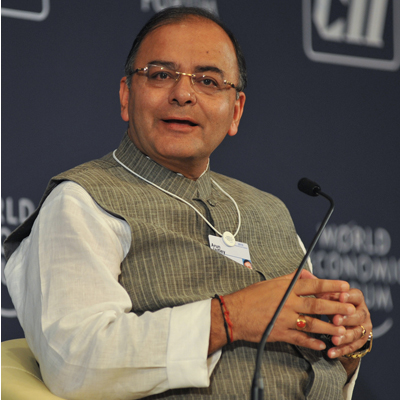
    In its wish-list submitted to Finance Minister Arun Jaitley – who also holds the Information and Broadcasting portfolio – the entertainment wing of the Federation of Indian Chambers of Commerce and Industry (FICCI) said that in the present era of convergence, the distinction between Telecom, IT and Broadcasting sectors is getting blurred. 


    The Telecom sector is already treated as “infrastructure service” and so giving the infrastructure service status to broadcasting will provide a level playing field to the sector.


    Broadcasters and distributors will be aided with better and affordable financing options in the very capital intensive growth phase. 


    The FICCI wish-list covers television and radio broadcasting, cinema and animation and gaming, apart from suggestions relating to advertising in the media. 


    At the outset, FICCI says the Indian media and entertainment industry grew from Rs 821 billion in 2012 to Rs 918 billion in 2013, registering an overall growth of 11.8 per cent. Given the impetus introduced by digitisation, continued growth of regional media, new government formation, strength in the film sector and fast increasing new media businesses, the industry is estimated to achieve a growth rate of 15.3 per cent in 2014 to touch Rs 1059 billion. The sector is projected to grow at a healthy CAGR of 14.2 per cent to reach Rs 1786 billion by 2018. 


    Television clearly continues to be the dominant segment, but strong growth has been posted by new media sectors, whereas gaming and digital advertising recorded a strong growth of 25.5 per cent and 38.7 per cent compared to the previous year. The music sector has shown a decreasing growth (-9.9 per cent growth in 2013 over 2012 compared to 18 per cent growth in 2012 over 2011) despite strong content and digitisation.


    Radio is anticipated to see a spurt in growth after the roll-out of Phase III licensing. The benefits of Phase I cable digital access system (DAS) rollout, and continued Phase II rollout are expected to contribute significantly to strong continued growth in the TV sector revenues and its ability to invest in and monetize content. 


    The sector is expected to grow at a compounded annual growth rate (CAGR) of 18.1 per cent over the period 2013 to 2018.


    Set Top Boxes 


    It said the expected investment in set top boxes alone is around Rs 20,000 to Rs 25,000 crore and therefore wants the customs duty levied on STBs to be on the transactional value and not the maximum retail price. Basic customs duty should be reduced to five per cent if not zero per cent as this will help push digitisation faster, which would lead to transparency which will result in manifold increase in the tax revenues from Service Tax, Entertainment tax and Income-Tax. 


    Television Sector


    Referring to tax withholding on Transponder hire charges (Section 9(1)(vi) Explanation 6 of Income Tax Act, 1961), FICCI pointed out that the Finance Act 2012 amended the section to retrospectively include payment for transponder hire and other charges as royalty. However FICCI wanted a clarification to be issued that Transponder hire charges are not “royalty” as Courts in India have held that such charges are not ‘royalty’ or ‘Fee for Technical Service’ (FTS). The law was retrospectively amended to nullify the effect of the judicial decisions. This is an artificial deeming provision hurting industry. These are standard services and no transfer of technology. OECD commentary also does not treat such payments as “royalty” or “FTS”. 


    On tax withholding rate on Royalty (Section 115A (1) (A) & (B) of Income Tax Act, 1961), FICCI said the Finance Act 2013 increased withholding rate from 10 per cent to 25 per cent. However, it wanted that the 10 per cent withholding rate should be restored as most of the Tax Treaties have 10 per cent or 15 per cent rate and most of the contracts are on ‘grossed up’ basis leading to 37 per cent tax burden on Indian payer. This assumes almost 100 per cent profit on the payment at current corporate tax rate and is absurd, says FICCI. The change will also reduce the cost to Indian business/consumer and would benefit Broadcasting, DTH and HITS sectors. 


    Section 72A of the Income Tax Act 1961 allows carrying forward of losses in case of amalgamation or merger for service industry. Currently, all industrial undertakings in the Manufacturing, Software, Electricity, Telecom, etc. sectors are allowed carry forward of losses in case of merger /amalgamation, but the services industry undertaking in general is not allowed such carry forward. Section 72A(7)(aa) should be amended to include Broadcasting, Media and Entertainment sector if not all services sector undertakings to ensure a level playing field with other services industry like Telecom, Software etc. as this will encourage consolidation for rapid growth.


    Credit under the ‘Served From India Scheme’ under the Foreign Trade Policy is currently available as set off against excise and customs duty liability and the period of utilisation of SFIS credit is two year and is not transferable. Therefore, the SFIS credit should be allowed as set off against Service Tax liability in addition to Excise and Customs Duty liability. SFIS credit should be made transferable or tradable outside the group entities similar to DEPB scheme. The period of utilization of SFIS credit should be increased from two to five years. FICCI says that for the purpose of CENVAT credit, there is no distinction between Service Tax and Excise duty and not all companies have import requirement and thus the benefit of the scheme is not really received by such company. Making SFIS credit transferable will give level playing field with DEPB and other incentives schemes.


    Doordarshan 


    FICCI wants Doordarshan to launch DD Kids, a channel dedicated to kids’ content in “digital terrestrial” space as it would promote intellectual property creation in India in the field of animation and other content for children. 


    Radio 


    Referring to radio, the industry body said it wanted reduction of customs duty on radio broadcasting equipment to four per cent especially on transmitters, consoles etc which are not produced in India. It said there is no justification for the high CVD and additional CVD being charged and India has one of the highest import duty rates for transistors. 


    It wanted a removal of the service tax on advertisement in radio since it competes with newspapers at local level even though there is no service tax on advertisement on newspapers. This will also provide a level playing field to radio. 


    Referring to FM Radio Phase III, FICCI wanted assistance to raise money, provide priority Provide tax holiday for five years for new capital investment in Phase III and provide a fiscal sector lending sector status so that radio industry is able to access easier availability of finance at with lower interest rates. This was because a large amount of capital is required for the roll out of phase III of FM radio privatization.
  • Young Indians prefer mobile for news & entertainment over TV, radio

    Young Indians prefer mobile for news & entertainment over TV, radio

    KOLKATA: Young Indian consumers do prefer mobile devices over traditional media like television and radio for information, current affairs as well as source of entertainment. Going forward this trend is poised to surge in the coming years, said telecom operator Tata Docomo.


    According to mobile service provider Tata Docomo, which recently conducted a research on mobility trends, the Internet represented the preferred mode for both news and entertainment accounting for around 40 per cent and 45 per cent of the space respectively.


    This is dominated by mobile access, however, with 33 per cent of millennials (new generation consumers) consulting mobile in the first instance for news (compared to just seven per cent through a fixed connection), and 36 per cent using the same platform to source entertainment and leisure information (just nine per cent for fixed connections).


    “This study reveals the declining relevance of traditional information platforms as primary information sources, particularly with respect to entertainment and leisure subjects where nearly a third of respondents turn directly to social media (Facebook, Twitter etc.) in the first instance,” said Tata Docomo digital business head Praveen Gupta.


    The study further said the shift towards mobile content is already underway in India.


    “Around 63 per cent of millennial mobile users are as comfortable with mobile advertising as they are with TV or online advertising; in fact only 3.1 per cent of Indian millennials consider brands that advertise on TV as being modern, compared to more than twice that number who associate smartphone advertisers with the same quality,” the study said.

  • Q3-2015: HT Media Radio segment reports 42.2% higher operating result

    Q3-2015: HT Media Radio segment reports 42.2% higher operating result

    BENGALURU: HT Media Limited’s (HT Media) radio segment reported a 42.2 per cent q-o-q growth in operating result for Q3-2015 at Rs 9.44 crore versus the Q2-2015 operating profit of Rs 6.64 crore and was 21.2 per cent more than the Rs 7.79 crore in the corresponding quarter of 2014. The segment’s 9M-2015 operating result at Rs 20.65 crore was 27.9 per cent more than the Rs 16.15 crore in 9M-2014.


    Note: (1) 100,00,000 = 100 Lakhs = 10 million = 1 crore

    (2) The figures mentioned in this report are consolidated figures unless stated otherwise.


    HT Media’s radio segment reported revenue of Rs 25.81 crore, six per cent more than the Rs 24.35 crore in Q2-2014 but 3.2 per cent lower than the Rs 26.67 crore in Q3-2014. The company operates four radio stations in the country under the brand Fever 104 FM.


    Let us look at the other Q3-2015 and 9M-2015 figures reported by HT Media:


    HT Media reported eight per cent higher total income from operations (TIO) at Rs 605.50 crore as compared to the Rs 560.88 crore in Q2-2015 and 4.2 per cent more than the Rs 533.53 crore in Q3-2014. For 9M-2015, HT Media reported TIO of Rs 1712.79 crore, which was 3.4 per cent more than the Rs 1656.86 crore in 9M-2014.


    The company’s PAT for Q3-2015 at Rs 63.97 crore (10.6 per cent of TIO) was 45.8 per cent more than the Q2-2015 PAT of Rs 43.89 crore (7.8 per cent of TIO) but 4.6 per cent lower than the Rs 67.02 crore (11.5 per cent of TIO) in Q3-2014. For 9M-2015, HT Media reported PAT of Rs 140.53 crore (8.2 per cent of TIO), which was 18.6 per cent lower than the Rs 172.69 crore (10.4 per cent of TIO) in 9M-2014.


    Three segments contribute to HT Media’s revenue – (1) Printing and publishing of newspapers and periodicals (Publishing), (2) Radio and (3) Digital.


    HT Media’s publishing segment reported revenue of Rs 553.2 crore (91.4 per cent of TIO) for the current quarter, which was eight per cent more than the Rs 510.75 crore (91.1 per cent of TIO) in Q2-2015, and 3.7 per cent more than the Rs 533.53 crore (91.8 per cent of TIO) in Q3-2014. In 9M-2015, the publishing segment reported revenue of Rs 1565.49 crore (91.4 per cent of TIO), which was 2.1 per cent more than the Rs 1533.96 crore (92.6 per cent of TIO) in 9M-2014.


    HT Media’s publishing segment reported an increase in operating profit of 17.1 per cent to Rs 78.49 crore in Q3-2015 as compared to the Rs 67.04 in Q2-2015, but was 8.7 per cent lower than the Rs 85.93 crore in the corresponding year ago quarter. The segment reported a 7.4 per cent fall in operating profit to Rs 210.08 crore in 9M-2015 versus Rs 226.97 crore in 9M-2014.


    The company’s digital segment reported 6.9 per cent higher revenue at Rs 26.65 crore in Q3-2015 as compared to the Rs 24.93 crore in Q2-2015 and 36.4 per cent more than the Rs 19.54 crore in Q3-2014. For 9M-2015, HT Media’s digital segment reported a 38.4 per cent growth in revenue to Rs 74.13 crore versus the Rs 54.40 crore in 9M-2014. This segment has been regularly reporting operating loss (loss). Its loss in Q3-2015 was Rs 14.42 crore; Q2-2015 was Rs 14.7 crore; for Q3-2014 loss was Rs 7.6 crore. For 9M-2015, HT Media’s digital segment reported loss of Rs 41.31 crore versus Rs 34.73 crore in 9M-2014.


    The company, in its investor presentation, says that advertising revenue in the current quarter grew 12 per cent to Rs 496.7 crore from Rs 444.4 crore in the immediate trailing quarter and grew four per cent as compared to the Rs 478.3 crore in the corresponding year ago quarter.


    Circulation revenues in Q3-2015 at Rs 73.4 crore grew two per cent q-o-q from Rs 71.7 crore in Q2-2015 and grew 10 per cent from Rs 66.5 crore in Q3-2014.


    Other revenue increased one per cent in Q3-2015 to Rs 79.8 crore from Rs 78.7 crore in Q2-2015 and was 10 per cent more than the Rs 72.3 crore in Q3-2014 further informs HT Media.


    HT Media chairperson and editorial director Shobhana Bhartia said, “We are happy to report revenue growth across all our core businesses on the back of higher advertising in the festive season. We increased our circulation in the Hindi belt, strengthening our position in Uttar Pradesh and Bihar; Mumbai is growing steadily; and we remain the most read English daily in Delhi and the national capital region. Our digital businesses continue to show traction and radio remains highly profitable.”


    “Raw material costs show a downward trend and we will benefit from the same in coming quarters. The announcement of Phase III expansion in FM Radio is a positive development and we believe we will be able to add to our portfolio of stations. We expect to close the year on a strong note and carry the momentum into the next year. The company is well positioned to seize any opportunity that comes its way,” she added.