Tag: Radhika Apte

  • Bollywood stars go OTT

    Bollywood stars go OTT

    MUMBAI: Circa 1990: When a big Bollywood star like Amitabh Bachchan descended on the small screen to host a quiz show featuring the common man, it raised a few eyebrows as well as caught the nation’s fancy! The until then inaccessible and elusive star soon became a fixture in every home with a television set as he won fans and admirers with his trademark baritone voice.

    Since then, Bollywood stars like Shah Rukh Khan, Salman Khan, Aamir Khan, Akshay Kumar, Hrithik Roshan, Priyanka Chopra and Sonakshi Sinha amongst others have tried their hand at television hosting various non-fiction shows. What’s more, the likes of Bachchan and Anil Kapoor have even gone a step further by featuring in fiction TV series like Yudh and 24 respectively. One of the major reasons for this was that each realised the power and reach of the television medium, which beamed into millions of Indian homes as opposed to the exposure they received via the limited number of theatre screens in India during their sporadic movie releases.

    Cut to 2016: With the rise of the digital medium and the growing over-the-top (OTT) platforms, a handful of forward-thinking Bollywood stars now have their digital strategy chalked out in order to get even more closer to their fans not just in India but across the globe. With OTT’s unprecedented reach coupled with their fan following across various social media platforms, the world is literally their oyster!

    Stars now want a bite out of the digital pie either by promoting themselves on various social media platforms or by appearing in digital-only content. Internationally, Netflix’s path-breaking original series House of Cards featuring a mainstream Hollywood actor like Kevin Spacey created waves when the first season was launched in 2013. What’s more, actors like Brad Pitt and Angelina Jolie-Pitt have also partnered with the streaming giant for exclusive original movies.

    Closer home, Priyanka Chopra, who took a leap into American television last year with the ABC show Quantico, has now trained her eyes on the digital landscape. The avant-garde actress has partnered with OTT platform nexGTV, Fluence and Endemol-Shine India to co-produce and create an original 14-part mobi-series called It’s My City.

    What’s more, last year Eros International’s OTT platform ErosNow unveiled ambitious plans to develop six original digital series namely The Clients, Khel, Legacy, Lost, Showtime and Fairytale featuring mainstream Bollywood stars like Ayushmann Khurrana, Anil Kapoor, Bipasha Basu, Chitrangda Singh, Radhika Apte and Nana Patekar.

    And it won’t be long before the rest of the brood follows suit.

    Speaking on the factors driving the trend of Bollywood stars taking this leap into the bottomless digital landscape in order to expand their visibility, #Fame CEO Saket Saurabh says, “Two things; firstly, stars have woken up to the importance of social media in engaging fans be it through their various social media profiles or through content present on web. The other crucial game changer is the rapid rate at which video content is growing in the digital space. Over the last three to four years, social media has evolved from being text based to video based. What’s more, live video is seeing a huge surge this year.”

    However, Saurabh observes that this surge is mostly on Video on Demand (VOD) platforms as the OTT platforms are still feeding off television. “There is a dearth of original content when it comes to the OTTs, who are still showcasing content from movies and television,” he says.

    nexGTV COO Abhesh Verma adds, “Digital platforms enable stars to engage and get up close and personal with their fans, followers, and influencers alike, via an alternate, personal, preferred, widely adopted and rapidly growing platform. This also allows them to complement their other update-led social media handles such as Facebook, Twitter, and Instagram etc. Together with its global pervasiveness and with 300 million+ active internet users of which a significant number is via mobiles, stars cannot afford to ignore digital anymore. While most of them are already exploring the medium in one way or another, it is time for them to start creating deeper engagements with not just their communities but the public at large.”

    A major reason why stars are now drawn to this medium is also because of the way content is treated on this platform. Several creators are experimenting with different new formats now that they are not restricted by the limitations that the television medium brings. Producers are dabbling with short-form content to test the waters with edgy narrative. This also works in favour of the stars who want to showcase their talent in ways that movies and television don’t let them.

    “In television and movies, celebrities are ‘cast’ in a role, while in digital there is scope for partnership,” points out Saurabh. “Digital content creators are partners not clients who have ‘hired’ the artists. Stars own the work they are doing digitally, which can also be weaved around them keeping their image in mind. Since it is a new medium there is a huge scope for artists to make the most of it. This will only increase the number of celebrities coming on the medium, as the audience base keeps increasing,” he adds.

    Be it producers, content creators, advertisers, media planners or the OTT players, all unanimously agree that the current trend is a direct result of the sudden opening up of bandwidth in India for internet consumption, with the rollout of 3G and 4G being a key factor.

    “If statistics shared by several data aggregators are to be believed, India has a mind blowing 320 internet connections through smart phones and another 160 million will be added by the end of 2016,” shares Rishi Negi from Fluence, who has co-produced the web series It’s My City with Chopra for nexGTV. “The way people are adapting to the second screen is amazing,” he adds.

    Concurring with him is Madhouse COO and mobile marketing expert Milind Pathak. “Mobile is already taking upwards of 60 per cent of video consumption in the digital space. Looking at these numbers, it’s a logical move for Bollywood stars to come on to the mobile video platform to increase visibility and create more followers. Apart from YouTube, with apps like Hotstar, Sony Liv, Netflix, Hungama and VuClip, we have large active user base, which will easily reach over 50 million in 2016. So it’s imperative that Bollywood stars follow this platform.”

    ErosNow COO Karan Bedi adds, “3G and 4G rollouts are picking up speed and the next 12 – 18 months will see a huge change in how people access content, especially video on their devices. You will see a huge pickup as more and more stars, production companies and producers migrate to OTT platforms. At ErosNow, for example, we are commissioning a whole series of original shows, some with stars, for the platform. It is still very early right now but all the stars will be present in the space.”

    What’s interesting is ErosNow’s revenue model for the shows, which is layered between advertising, subscription and viewership based models that comes into play as one spends more and more time with the platform – ‘Pay As You Go.’ This points at how, even with the rapidly growing digital content and video consumption in India, monetisation is still a challenge and has to be carefully strategised. “Monetisation does work in a bit of a lag. Right now, monetised digital content is probably one-seventh or one-eighth of television, and one-sixth of the digital usage,” Saurabh guesstimates. “But that only means it is bound to get better from here on. It’s bound to correct itself, if we go by how businesses work,” he adds.

    If one were to go by return on investment (ROI), then do celebrities entering the market increase production cost and thereby also affect the returns for a medium, which is still in its nascent stage? “Celebrities aren’t always looking to be highly compensated for these projects; at least not right now. Often it’s a partnership for them where they look at the outcome as a way to engage with the audience. Plus, their presence makes the discovery of the series easier in the million other videos circulating on the Internet,” says Negi.

    Looking at it from an advertiser’s perspective as well, having celebrities onboard only make the IP more credible or preferable to invest in, Negi adds. “Brands are excited with the digital space. The industry is at a time when the platforms are just setting their viewership right. Right now, visibility and peaking the interest of various advertisers is more important than ROI. That will follow,” he states.

    “OTT platforms will obviously increase prices if they have a Bollywood star on-board. However, having a star on-board doesn’t mean good viewership, which is more dependent on good and quality content. If premium quality content is available on the VOD, then these platform will attract premium rates from advertisers,” explains Pathak.

    This can be a double-edged sword for independent content creators waiting to be discovered because as competition increases, the over all value in the medium will also increase.

    What Netflix’s strategy will be in the Indian market in terms of original content featuring celebrated actors will definitely be worth watching. What’s more, with the impending launch of Balaji Telefilms’ OTT platform ALT Digital, it is likely that Ekta Kapoor’s production powerhouse, which has a galaxy of Bollywood stars within an arm’s reach, will also have some original digital aces up its sleeves when it launches.

    For now, Bollywood stars are definitely going OTT on digital and by that we don’t mean over the top in the literal sense… at least not as yet!

  • Bollywood stars go OTT

    Bollywood stars go OTT

    MUMBAI: Circa 1990: When a big Bollywood star like Amitabh Bachchan descended on the small screen to host a quiz show featuring the common man, it raised a few eyebrows as well as caught the nation’s fancy! The until then inaccessible and elusive star soon became a fixture in every home with a television set as he won fans and admirers with his trademark baritone voice.

    Since then, Bollywood stars like Shah Rukh Khan, Salman Khan, Aamir Khan, Akshay Kumar, Hrithik Roshan, Priyanka Chopra and Sonakshi Sinha amongst others have tried their hand at television hosting various non-fiction shows. What’s more, the likes of Bachchan and Anil Kapoor have even gone a step further by featuring in fiction TV series like Yudh and 24 respectively. One of the major reasons for this was that each realised the power and reach of the television medium, which beamed into millions of Indian homes as opposed to the exposure they received via the limited number of theatre screens in India during their sporadic movie releases.

    Cut to 2016: With the rise of the digital medium and the growing over-the-top (OTT) platforms, a handful of forward-thinking Bollywood stars now have their digital strategy chalked out in order to get even more closer to their fans not just in India but across the globe. With OTT’s unprecedented reach coupled with their fan following across various social media platforms, the world is literally their oyster!

    Stars now want a bite out of the digital pie either by promoting themselves on various social media platforms or by appearing in digital-only content. Internationally, Netflix’s path-breaking original series House of Cards featuring a mainstream Hollywood actor like Kevin Spacey created waves when the first season was launched in 2013. What’s more, actors like Brad Pitt and Angelina Jolie-Pitt have also partnered with the streaming giant for exclusive original movies.

    Closer home, Priyanka Chopra, who took a leap into American television last year with the ABC show Quantico, has now trained her eyes on the digital landscape. The avant-garde actress has partnered with OTT platform nexGTV, Fluence and Endemol-Shine India to co-produce and create an original 14-part mobi-series called It’s My City.

    What’s more, last year Eros International’s OTT platform ErosNow unveiled ambitious plans to develop six original digital series namely The Clients, Khel, Legacy, Lost, Showtime and Fairytale featuring mainstream Bollywood stars like Ayushmann Khurrana, Anil Kapoor, Bipasha Basu, Chitrangda Singh, Radhika Apte and Nana Patekar.

    And it won’t be long before the rest of the brood follows suit.

    Speaking on the factors driving the trend of Bollywood stars taking this leap into the bottomless digital landscape in order to expand their visibility, #Fame CEO Saket Saurabh says, “Two things; firstly, stars have woken up to the importance of social media in engaging fans be it through their various social media profiles or through content present on web. The other crucial game changer is the rapid rate at which video content is growing in the digital space. Over the last three to four years, social media has evolved from being text based to video based. What’s more, live video is seeing a huge surge this year.”

    However, Saurabh observes that this surge is mostly on Video on Demand (VOD) platforms as the OTT platforms are still feeding off television. “There is a dearth of original content when it comes to the OTTs, who are still showcasing content from movies and television,” he says.

    nexGTV COO Abhesh Verma adds, “Digital platforms enable stars to engage and get up close and personal with their fans, followers, and influencers alike, via an alternate, personal, preferred, widely adopted and rapidly growing platform. This also allows them to complement their other update-led social media handles such as Facebook, Twitter, and Instagram etc. Together with its global pervasiveness and with 300 million+ active internet users of which a significant number is via mobiles, stars cannot afford to ignore digital anymore. While most of them are already exploring the medium in one way or another, it is time for them to start creating deeper engagements with not just their communities but the public at large.”

    A major reason why stars are now drawn to this medium is also because of the way content is treated on this platform. Several creators are experimenting with different new formats now that they are not restricted by the limitations that the television medium brings. Producers are dabbling with short-form content to test the waters with edgy narrative. This also works in favour of the stars who want to showcase their talent in ways that movies and television don’t let them.

    “In television and movies, celebrities are ‘cast’ in a role, while in digital there is scope for partnership,” points out Saurabh. “Digital content creators are partners not clients who have ‘hired’ the artists. Stars own the work they are doing digitally, which can also be weaved around them keeping their image in mind. Since it is a new medium there is a huge scope for artists to make the most of it. This will only increase the number of celebrities coming on the medium, as the audience base keeps increasing,” he adds.

    Be it producers, content creators, advertisers, media planners or the OTT players, all unanimously agree that the current trend is a direct result of the sudden opening up of bandwidth in India for internet consumption, with the rollout of 3G and 4G being a key factor.

    “If statistics shared by several data aggregators are to be believed, India has a mind blowing 320 internet connections through smart phones and another 160 million will be added by the end of 2016,” shares Rishi Negi from Fluence, who has co-produced the web series It’s My City with Chopra for nexGTV. “The way people are adapting to the second screen is amazing,” he adds.

    Concurring with him is Madhouse COO and mobile marketing expert Milind Pathak. “Mobile is already taking upwards of 60 per cent of video consumption in the digital space. Looking at these numbers, it’s a logical move for Bollywood stars to come on to the mobile video platform to increase visibility and create more followers. Apart from YouTube, with apps like Hotstar, Sony Liv, Netflix, Hungama and VuClip, we have large active user base, which will easily reach over 50 million in 2016. So it’s imperative that Bollywood stars follow this platform.”

    ErosNow COO Karan Bedi adds, “3G and 4G rollouts are picking up speed and the next 12 – 18 months will see a huge change in how people access content, especially video on their devices. You will see a huge pickup as more and more stars, production companies and producers migrate to OTT platforms. At ErosNow, for example, we are commissioning a whole series of original shows, some with stars, for the platform. It is still very early right now but all the stars will be present in the space.”

    What’s interesting is ErosNow’s revenue model for the shows, which is layered between advertising, subscription and viewership based models that comes into play as one spends more and more time with the platform – ‘Pay As You Go.’ This points at how, even with the rapidly growing digital content and video consumption in India, monetisation is still a challenge and has to be carefully strategised. “Monetisation does work in a bit of a lag. Right now, monetised digital content is probably one-seventh or one-eighth of television, and one-sixth of the digital usage,” Saurabh guesstimates. “But that only means it is bound to get better from here on. It’s bound to correct itself, if we go by how businesses work,” he adds.

    If one were to go by return on investment (ROI), then do celebrities entering the market increase production cost and thereby also affect the returns for a medium, which is still in its nascent stage? “Celebrities aren’t always looking to be highly compensated for these projects; at least not right now. Often it’s a partnership for them where they look at the outcome as a way to engage with the audience. Plus, their presence makes the discovery of the series easier in the million other videos circulating on the Internet,” says Negi.

    Looking at it from an advertiser’s perspective as well, having celebrities onboard only make the IP more credible or preferable to invest in, Negi adds. “Brands are excited with the digital space. The industry is at a time when the platforms are just setting their viewership right. Right now, visibility and peaking the interest of various advertisers is more important than ROI. That will follow,” he states.

    “OTT platforms will obviously increase prices if they have a Bollywood star on-board. However, having a star on-board doesn’t mean good viewership, which is more dependent on good and quality content. If premium quality content is available on the VOD, then these platform will attract premium rates from advertisers,” explains Pathak.

    This can be a double-edged sword for independent content creators waiting to be discovered because as competition increases, the over all value in the medium will also increase.

    What Netflix’s strategy will be in the Indian market in terms of original content featuring celebrated actors will definitely be worth watching. What’s more, with the impending launch of Balaji Telefilms’ OTT platform ALT Digital, it is likely that Ekta Kapoor’s production powerhouse, which has a galaxy of Bollywood stars within an arm’s reach, will also have some original digital aces up its sleeves when it launches.

    For now, Bollywood stars are definitely going OTT on digital and by that we don’t mean over the top in the literal sense… at least not as yet!

  • 10 ads that broke stereotypes

    10 ads that broke stereotypes

    MUMBAI: Even as Gen Z with its short attention span skips through advertisements, jumping from channel to channel between breaks, there are some ads that are hard to ignore — be it for their peppy jingles, catchy tag lines or cool visuals.


    And then there are those, which not only touch us but leave us rattled and questioning. The recently released campaign by Anouk starring Radhika Apte is of the latter kind. Conceptualised by Ogilvy & Mather, the TVC talks about an issue we hardly hear ourselves addressing, even though it affects us pretty much uniformly throughout the country. That being the discrimination in workplace against expecting women.


    The ad showcases Radhika Apte as an independent woman working as a senior architect who misses her chance of being promoted in a well known architectural firm, by virtue of her pregnancy. In spite of being reassured that her performance isn’t being questioned, Apte is met with strong views on how pregnancy can be a disadvantage at the workplace. The ad concludes with Apte raising a voice against the discrimination and moving on to start her own thing.


    Anouk’s third chapter in ‘Bold Is Beautiful’ definitely treads away from the convention, into uncharted territories.


    This isn’t the first time that advertising fraternity has tried its hand at a non cliche plot line for a campaign concept and broken stereotypes. Off late there has been a  steep raise in campaigns with embedded social messages. Be it edgy and progressive storytelling that talk of non binary relationships, modern take on marriages and womanhood, or openly discussing Taboo subjects like sexual health and freedom.


    Needless to mention, every time an unconventional ad is released, it not only sparks conversations over the internet, it also leaves a viral trail of debates. Something Sideways co-founder Abhijit Avasthi finds smart but easy way of advertising.


    Though courting controversy for the sake of it doesn’t fit well with BBH India CEO Subhash Kamath either, he is all in for talking about issues that take us out of comfort zone if  “the content of the ad should be strategically relevant to the brand it is talking about. If it’s relevant and connects with people, even though it may piss off a few, it’s totally worth it to take up the challenge,” he shares.


    Given the buzz around the latest Anouk ad, Indiantelevision.com compiled a list of ten advertisements that broke stereotypes in recent times after speaking to several creatives in the industry. Here’s the list, though not in any particular order:


    Anouk: Bold is Beautiful : Radhika Apte

    The latest Anouk ad is simple and handles the issue directly instead of going for the ‘hinted’ approach. Not going deeper into the dos and don’ts of handling an issue like pregnant working women, and if the advertisement has done justice to it, it definitely starts a conversation on a topic we seldom shed light upon, even though there are many who are directly or indirectly affected by it,


    Airtel, Boss

    This Airtel ad that came out in 2014 sparked quite a controversy and left a trail of subsequent online debates amongst netizen. The advertisement showcased a modern day couple who work in the same company, with the wife being the husband’s boss. In office she asks him to work late and finish his pending work, while at home she reaches early to cook up a storm for her husband in the kitchen. While breaking a stereotype of work pay imbalance in India, the advertisement no doubt sent a confusing message. Going beyond the debate of the ‘right kind of message,’ this ad is still remembered for being different and addressing a non ‘black and white’ situation on gender equality.


    Remarriage: Tanishq

    Perhaps the most celebrated of them all when it comes to path breaking ideas, is the Tanishq jewellery advertisement that came out in 2013.


    While the setting of a wedding with the bride donning shiny jewellery doesn’t seem anything original for a jewellery brand, the narrative throws viewers a googly as we see the would be bride addressed as ‘mama’ by a little girl. Captioning it as ‘a wedding to remember’ this ad film conceived by Lowe Lintas and Partners not only opened up conversation on remarriage. It also changed its perception from being a social stigma to a glamorous affair.


    The Seatbelt Crew:

    Sometimes a simple message needs to be delivered with a powerful impact, and that’s exactly what Ogilvy and Mather did for VithU’s public service initiative on road safety norms. This two-minute video shot at a traffic light in Mumbai went viral, garnering more than 3.4 million views on YouTube.


    What makes the advertisement even more unique is that unlike most advertisements featuring transgenders, this one doesn’t ridicule them or weep over their pathos of everyday survival. Here, the transgender women we see on camera are means to an end, just like several celebrities or good looking models who are cast in advertisements to draw attention from a relevant target group.


    Do The Rex:

    At a time when condom ads are heavily layered with sexual innuendos, and cryptic ways of depicting sexual tension, Durex’s ‘Do the Rex’ campaign came as a breath of fresh air. It’s in your face and honest. And starts  a much needed conversation amongst the youth, which directly affects their sexual health. And who better to spearhead the youth campaign than Bollywood actor and youth icon Ranvir Singh, known for his unapologetic attitude.


    Add some catchy music and groovy visuals to the mix and you have the perfect concoction to sell condoms to the youth and 40 plus alike. Directed by Karan Kapadia, no sooner did the video release than it went viral across multiple digital platform, and giving rise to a long sustaining campaign.


    Meglow: Fairness cream for men

    If you are one of those who are tired of watching advertisements that put being fair as an essential for succeeding in life, be it women or men, you probably cheered Emraan Hashmi for delivering the punch line in this ad film. Shot like any other typical male fairness cream ad, the story follows your typical underdog, trying for a job and losing his ‘glow’ as he stresses over it.


    Enter Emraan Hashmi with the solution to all his troubles: a fairness cream that will return his lost glow and lead him at the path of success… or not. The ad film ends with the anti-climatic disclaimer that fairness creams don’t land you job, but credentials do, even if you are dark.


    Sofy #Iamnotdown

    Sometimes we fail to realise that age old customs and habits that come to us naturally, might actually be a projection of social stigma. Such is the case with using phrases like ‘I am down,’ ‘I have got my chums’ etc, instead of directly addressing the topic of menstrual period. Sanitary napkin brand Sofy almost waged a war with their #SofyConversations campaign that went viral earlier this year. The campaign showcased young women from different walks of life urging women to start using the word ‘Periods’ instead of cryptic aliases, and accept what is natural to them with dignity.


    FastTrack: Come Out Of The Closet

    Recently the advertising world has made a huge progress when it comes to addressing non-binary relationships and same sex couples. While some approach it in a hilarious or heavier tone, Fast Track’s ‘Come Out Of The Closet’ campaign gave it a witty and humourous touch. Without being loud mouth about it, the ad showcases two young women with edgy fashion sense come out a closet, literally! It doesn’t take a scientist to figure out what the metaphorical reference is made with the closet.


    Shaadi.com: My Conditions Apply

    When it comes to breaking stereotypes there is an endless scope to deliver in the wedding scene in India, which, though went digital ages ago with matrimonial sites like Shaadi.com and BharatMatromony, it hardly shed away the conservative notions attached to it. Naturally it falls behind the rapidly progressing lifestyle of millennials who respects a woman’s choice and preferences when it comes to marriage. Shaadi.com’s latest ad campaign shows its attempt to transition from being just a marriage consultancy portal to reflection of the wants and aspirations of the country’s youth.


    Whisper: Touch The Pickle

    Yet another campaign about breaking taboos surrounding women’s menstrual cycle, this one deals with the dozens of Dos and Don’ts that are imposed upon women by society restricting them during periods. Starting from restrictions on what to wear, to superstitions on touching pickle, there are a whole stack of baseless superstitions and restrictions that make the experience harder for women in our society. Whisper’s #TouchThePickle campaign shouts out to all women who are fed up of these taboos, to break away and break taboos. Developed by P&G India and BBDO India this campaign was not only struck a chord with millions of women within the country, was also lauded internationally by winning the Glass Lion Grand Prix at Cannes International Festival of Creativity.


    While these advertisements grabbed our attention, there are plenty others that have strayed from the tried and tested formula and attempted something out of the box. The list goes on…

  • ErosNow user base jumps 58% in six months to cross 30 million

    ErosNow user base jumps 58% in six months to cross 30 million

    MUMBAI: Eros International’s over-the-top (OTT) service ErosNow has now crossed 30 million registered users worldwide as of 30 September, 2015, which is a jump of almost 58 per cent from the figure of 19 million six months back on 31 March, 2015.


    The platform’s user base has been steadily increasing over the months. As of 31 December, 2015, ErosNow’s subscribers were at 14 million and touched 23.8 million as of 30 June, 2015, a growth of 25 per cent as compared to 31 March, 2015. 


    At last count on 31 July 2015, ErosNow had 26.5 million users. The 30 million registered users for ErosNow represents an approximately 26 per cent increase as compared to 30 June, 2015.


    As was previously reported by Indiantelevision.com, the company is eyeing over 100 million registered users with its aggressive content and marketing strategies


    The OTT platform’s strategy is to upsell premium subscriptions to the large base. In the future, the services also plans to expand to gaming, e-commerce and other synergistic domains to monetise the large base beyond entertainment.


    As was previously reported by this website, ErosNow is planning to launch as many as six new original shows in the near future starring actors like Bipasha Basu, Chitrangda Singh, Radhika Apte, Anil Kapoor, Nana Patekar and Ayushmann Khurrana amongst others.


    The company has also introduced its pricing plans for the Indian as well as international markets, which will be rolled out in the coming months.

  • Eros to co-produce Radhika Apte starrer ‘Phobia’ with NextGen Films

    Eros to co-produce Radhika Apte starrer ‘Phobia’ with NextGen Films

    MUMBAI: Eros International have joined hands with NextGen Films to co-produce the psychological thriller Phobia starring Radhika Apte.


    The movie will be directed by Pawan Kriplani, who directed Ragini MMS in 2011.


    NextGen Films’ producer Viki Rajani said, “Radhika has proven her acting prowess time and again with her previous films. I am sure she will be able to deliver another enthralling performance in this genre, which is also a first for me. Pawan has earlier directed this genre expertly and audiences can look forward to a taut edgy thriller.”


    Apte added, “I absolutely love thrillers and horrors, so I’m very happy to be doing my first film in this genre. I am particularly excited to collaborate with Eros, Next Gen and Pavan on our project together.”


    Phobia is slated to go on floors on 10 October, 2015.

  • Shemaroo obtains John Doe order from HC to protect ‘Hunterrr’ from piracy

    Shemaroo obtains John Doe order from HC to protect ‘Hunterrr’ from piracy

    MUMBAI: Shemaroo Entertainment has obtained a John Doe order from the Mumbai High Court to protect its latest release Hunterrr from the menace of piracy. The order, not only restricts piracy on cable, digital and physical medium but action can also be taken against a person watching the film from an illegal source.


    Shemaroo Entertainment has sent a copy of the order to various MSOs, LCOs and ISPs. Further, the court has directed all police authorities to act on the order.


    The order restrains any person from “downloading from internet, telecasting, broadcasting and distributing or putting on the cable TV network, disseminating, reproducing or otherwise making available to the public, the film Hunterrr or “from (i) making a copy of the said film, (ii) to sell or give on hire, or offer for sale or hire, any copy of the said film (iii) to communicate the film to the public in any manner whatsoever including by way of but not limited to telecasting and/or re telecasting the said film, or even otherwise dealing with the rights in the said film which vest exclusively in the Plaintiff, in any manner whatsoever.” The order also restrains others “from communicating or making available or distributing, or duplicating, or displaying, or releasing, or showing, or uploading, or downloading or exhibiting, or playing, and/or defraying the movie Hunterrr in any manner from the Plaintiff or in any other manner, which would violate/infringe the Plaintiff’s copyright in the said film Hunterrr.”


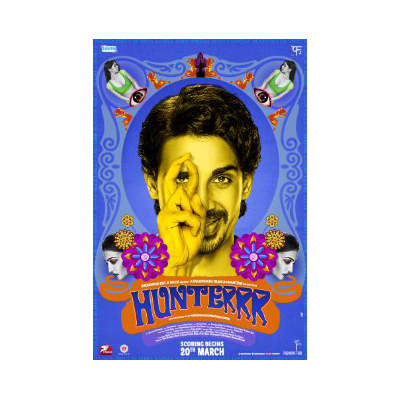
    Hunterrr stars Gulshan Devaiah, Radhika Apte and Sai Tamhankar and is produced by Anurag Kashyap’s Phantom Films.


    A John Doe order is defined as an action instituted by a party who seeks the aid of the Court in fear of some future probable injury to his rights or interest and the action is brought to prevent a wrong that is apprehended.


  • ‘Hunterrr’: Aimless

    ‘Hunterrr’: Aimless

    MUMBAI: The kind of films one comes across nowadays is puzzling, that too in the era of Rs 200+ admission rates at multiplexes while there is very little property left in the name of single screens across the country and what is worse, that too has a negligible audience.

    Hunterrr is a misnomer in all sense as the hero of the film, Gulshan Devaiya, describes himself as a Vasu. Now, Vasu is a typical Marathi slang describing a man akin to a dog chasing and sniffing a bitch! Wonder where our filmmakers are heading. Also, the film has a lot of Marathi flavour; all of the toilet humour kind. What is worse, all the slangs used in the trailors of the film find no place in the film.

    Devaiya is some kind of sex fiend, who is against the institution of marriage. He is happy scoring with unattached or unattended women comparing need for sex with a perfect bowel movement every morning. He makes his moves on girls and women and, at times, also gets beaten for his adventures. But, his pursuit continues come what may. The film goes on to show a couple of his affairs once where he lures a young college girl while other is with a married woman staying across his PG accommodation.

    This part about the married woman takes most of the first half and is stretched beyond need of the story just because it is the most titillating part of the film and, as the actress in this case, Sai Tamhankar, is willing to expose as demanded. But, in a predictable turn of events, Sai’s husband finds out what is going on behind his back and Devaiya is on the run again. He is always on the run: sometimes from a restaurant or a hostel or a PG flat when his ‘Vasugiri’ backfires.

    Producers: Kirti Nakhwa, Rohit Chugani, Ketan Maru, Vikas Bahl, Vikramaditya Motwane, Anurag Kashyap.

    Director: Harshwardhan Kulkarni.

    Cast: Gulshan Devaiya, Radhika Apte, Sai Tamhankar, Sagar Deshmukh, Veera Saxena

    Come interval, Devaiya is now ready for an arranged marriage as his parents think it is time he settled down. He is made to meet Radhika Apte. Both meet a couple of times as in ‘getting to know each other’ exercise. Devaiya has now learnt to say he never dated any woman thanks to his friend’s advice. Earlier, whenever he confessed to his true nature, the girls walked out on him.

    Radhika has one giant sized skeleton in her own closet. Just when she is getting close to Devaiya, that skeleton comes out of the closet. But, then, this is a different era. Not because such films are made or such relationships are accepted. These themes were made even in 1960; only now the intentions are to sell sex rather than a story.

    Hunterrr starts on a lighter note but, thereafter, it goes on unendingly to reach a conclusion. It keeps jumping from present to past and vice versa and from Pune to Mumbai and vice versa and you don’t know which of it you are watching.

    The film was a fair idea, the script is a mess and the length unbearable. Direction is missing. Songs sans lip-sync pass unnoticed. Editor could have done wonders by chopping off about 30 minutes off. As for performances, Devaiya, to his credit, does look like a typical Vasu. Sai is good since she is forthcoming though her character is ill-defined as is her need to indulge. Radhika just fits the mould of a modern uncertain woman. Sagar Deshmukh does well.

    The idea in Hunterrr is to titillate the youth but the film is tagged with an A certificate; while it loses a chunk of the youth because of A certificate, it loses out on family patronage thanks to its theme.

    ‘Dozakh In Search Of Heaven’: Festival fare

    Dozakh In Search of Heaven is a different kind of movie experience in that it tries to juxtapose two religious beliefs, Hinduism and Islam. While elders stay rooted steadfastly to their beliefs and rituals, a young boy of 12 sees things from his own logic and eventually finds his own solution to the differences between the two.

    Producers: Zaigham Imam, Pawan Tiwari.

    Director: Zaigham Imam

    Cast: Lalit Mohan Tiwar, Nazim Khan, Garrick Chaudhary, Pawan Tiwari, Ruby Saini.

    Garrick Chaudhary studies at the local school in a small village close to the holy city of Varanasi. While he also always wears his skullcap and learns to read Quran from a maulvi, the major influence in his life comes from his school where some lessons deal with Hindu beliefs. The village is peaceful, without any demarcations between the communities, and Garrick is part of everything that his friends do, from studying to playing cricket to playing a role in Ram Leela.

    It is not the same with elders though. The two sides are represented by a muazzin, Lalit Mohan Tiwari and, a Panditji, the local temple pujari, Nazim Khan (the casting seems symbolic). They are both zealous about their religion while at the same time making sure to irritate their counterparts. The morning aarti and calling of azaan times are in conflict. As the azaan is being called from a mike, the Pandit’s temple bells toll more vigorously and vice versa.

    Garrick’s Quran teacher maulvi is dead and Tiwari is on his way to the burial, it being an act of sajda to give shoulder to a dead body and then to help fill his tomb with a symbolic handful of dirt. Garrick decides to join his father, Tiwari, in the ritual but his small mind is shocked to see how deep the pit is to bury the body. His question to his father is, if the dead are meant to go to heaven, why bury them so deep in to ground; how would they make their way there?

    Panditji, on his part, is very fond of Garrick, notwithstanding the fact that he is a Muslim boy. He tends to him, and tells him stories about river Ganga, which definitely holds interest for people who live near Varanasi. While the Pandit invites Garrick to share the Prasad from the offerings made in his temple, he also explains to the boy how pious the river Ganga is and why Hindus prefer to cremate dead people on the Ganga ghat and later immerse the ashes in the Holy River. Garrick gets an opportunity to visit Varanasi to buy some supplies for the small stall his father runs. He includes a boat ride on Ganga in his itinerary and is fascinated by his experience.

    But then, the woman he loves most, his mother, Ruby Saini, dies in an accident while out to buy chicken for her son. But, this time Garrick revolts against burying his mother deep down in the ground. He even tries one night to dig up the grave and free his mother to facilitate her journey to heaven.

    Now Garrick is missing and later found dead. His body is found in a morgue in Varanasi. Tiwari gets help from a rickshaw driver, Pawan Tiwari, and goes ahead and does the unthinkable for a man of his beliefs and status in his community. He honours his son’s wishes and gives him a cremation at the Ganga ghat, finally immersing some of his ashes in Ganga and taking some back home to merge them with the dirt on the tomb of his wife.

    Based on a novel, the film takes a bold stand. It is too slow and takes a toll on its viewer but is sure to get a reaction from those who watch it. Commercial possibilities seem to be the last thing on makers’ minds.

  • Badlapur: Don’t Miss The Beginning….Noir has its limits

    Badlapur: Don’t Miss The Beginning….Noir has its limits

    MUMBAI: If the title of the film makes you wonder why the tagline is part of the name, it could be because similar titles are not allowed by the producers’ associations and their title registration committee (Badlapur Boys was a recent release). Or, it could be just a smart move because if you miss the beginning, Badalpur will make no sense to you. The cause of what follows relates to the events right at the start.

    Badlapur is a noir film where the hero is the anti-hero taking same route as the criminals who destroyed him. He blurs the line between good and bad. The story has a touch of James Hadley Chase and films like Ittefaq (1969) or the recent one, Ek Villain. 

    Varun Dhawan is a well settled ad agency executive. Having married his college beau, he has a cute son. His family is everything to him. He is just getting over a presentation for a campaign for a bra when shattering news reaches him. His son and his wife, Yami Gautam, were taken as shields by a bank robber duo, Nawazuddin Siddiqui and Vinay Pathak. This robbers had not planned on an escape vehicle and have taken Yami’s car along with her and their son. 

    As a traffic cop is an eyewitness, soon the police posse follows the duo. In the process, the child falls out of the car and not being able to control Yami, Nawazuddin shoots her. While Pathak makes a run for it with the money and gun, Nawazuddin is nabbed. Even while he keeps saying he is just a driver and the other guy killed Yami, he is read a sentence of 20 years in jail. Neither the police nor a private detective engaged by Varun can find out who his partner was. 

    Producers: Dinesh Vijan, Sunil Lulla.

    Director: Sriram Raghvan.

    Cast: Varun Dhawan, Nawazuddin Siddiqui, Yami Gautam, Vinay Pathak, Huma Quereshi, Radhika Apte, Pratima Kazmi

    Varun now has no cause more important than to get the culprits. A one-minute scene with his family and in-laws fails to convince him to start anew. He shifts bag and baggage to Badlapur where Nawazuddin is jailed for twenty years. Also, he has to find the other culprit. This is a long-winded process which you traverse together with the narration. Nawazuddin is right in front of him but there is nothing Varun can do to get his hands on him; Pathak’s whereabouts are not known.

    Varun goes about it clinically, approaching Nawazuddin’s mother and prostitute girlfriend, Huma Qureshi, to glean any information he can. Nobody seems to know anything about the second criminal until a situation is created in the script when Varun helps Pathak’s wife, stranded on a deserted road one night with a flat tyre. The same liberty with the script could have been taken a bit sooner to keep the narration pacey. Varun is now on Pathak’s trail.

    As for Nawazuddin, Divya Dutta comes out of the blue to sort things out for Varun. She is a social worker who helps to resettle criminals. Nawazuddin has been in the cell for 15 years now, making futile attempts to escape time and again. He is now ailing with cancer with a year to live at best. Divya wants Varun to issue a pardon note in his favour so he is freed and can live a year the way he wants. 

    Nawazuddin’s mother also comes to Varun with same plea. He agrees in exchange for the name of the other culprit which happens to be the husband of the woman with a flat tyre he helped one night.

    Sriram Raghvan has based his film on a crime story by Italian writer, Massimo Carlotto, and he is in his element with his favourite kind of cinema. However, Nawazuddin seeking redemption rather than revenge in the climax may disappoint lovers of commercial entertainment. The film has excellent cinematography and the background score complements the proceedings. Music as far as songs go, does not work; the film could very well have done without them. Editing needed to be brisker.   

    As for the performances, Nawazuddin is outstanding and at his most natural. Varun shows he can deliver even while not playing a song and dance role. The girls, Yami Gautam, Huma Qureshi, Radhika Apte and Pratima Kazmi, though having little to do justify their apt casting. Vinay Pathak is fair.

    Badlapur: Don’t Miss The Beginning, being the genre it is, has limited its prospective audience. The film has opened to tepid response, too.

    Qissa: The Tale Of A Lonely Ghost – One for the festivals

    Qissa: The Tale Of A Lonely Ghost (Punjabi) is a film made to earn accolades from the world audience as well as the discerning audience and the student of cinema in India. The film’s genre can’t be easily defined as it moves from India’s partition to male desire for a boy child to supernatural to a story of two star-crossed girls. Since the story revolves around a Sikh family, the language used is Punjabi to keep the flavour of the narration natural.

    Producers: Heimatfilm, Augustus Film, Ciné-Sud Promotion, National Film Development Corporation of India (NFDC).

    Director: Anup Singh.

    Cast: Irrfan Khan, Tisca Chopra, Tillotama Shome, Rasika Duggal.

    Irrfan Khan is a de-stabilised Sikh who migrates safely to Punjab on the Indian side with his wife and daughters during the partition. He is an MCP who craves for a son this time when wife, Tisca Chopra, becomes pregnant again. He already has three daughters. 

    It has been four years since the partition but now Khan is a very successful timber contractor with a lavish mansion for his residence. The fourth child is born but an attempt has been made to keep the gender a secret from the viewer though it’s not tough to fathom this is a girl again. For a moment you are made to believe Khan will kill her. Not so. He decides to believe and pretend this is a boy and rears her as such. The girl, Tillotama Shome, is the apple of his eye as he enrols her for physical training as well as wrestling practice. He also takes her on hunting expeditions. His wife, Tisca goes along with the charade.

    The girl is now 12 and puberty knocks she spots blood on her bed. Khan wants her to keep mum about it! The pretence goes on till Shome and another girl, Rasika Duggal, get entwined. Duggal, a gypsy girls falls for Shome and so does Shome forgetting in her pretence that she too is a girl. Shome has molested Duggal and both their parents are witness. Khan suggests a marriage between the two. This is where the plot gets complicated. Shome is left to fend for herself in this situation. 

    But, Khan has an obsession with a male name bearer for the family and one night, he tries to force himself on Duggal to give her a male child, which Shome can’t. Shome adores her father but not enough to tolerate him forcing himself on Duggal; she shoots her father with the very double barrel he gifted her and taught her to use.

    The film enters a new chapter, it goes on to become a supernatural saga. Khan’s desire for a male heir does not let his soul rest; he is now a ghost haunting his old house. He somehow wants his ‘son’ Shome’s wife, Duggal to bear a son!

    Meanwhile, Shome suffers a lot as the woman in her wants to surface and she can’t keep up with the pretence anymore. She exhibits her femininity for the whole village to see. When the villagers want to hunt her down, Khan enters her body with a purpose to indulge Duggal and, finally, produce a male child. 

    The thing about Qissa is that, after a while, it may look bizarre and morbid. Good of the makers not to indulge in same sex scenes while there was ample scope or, at least, not in the Indian version (after all, NFDC is involved). 

    The film is excellent technically with international names in its credits. Director is gutsy to take up this subject but then such a film is all about making a name, not money. The technical aspects sure are a lesson for a student of cinema.