Tag: Rabindranath Tagore

  • Sweet notes as Mother Dairy stirs Puja nostalgia

    Sweet notes as Mother Dairy stirs Puja nostalgia

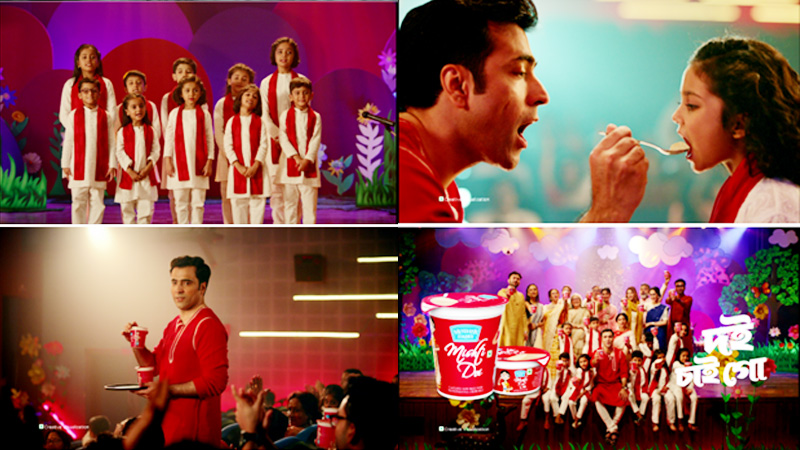
    MUMBAI: When it comes to Durga Puja, some cravings are simply set in stone, and Mishti doi tops the list. Mother Dairy has launched a heartwarming new campaign, Doi chai go, doi chai, bringing its beloved Mishti Doi to centre stage this festive season. Featuring popular Bengali actor Abir Chatterjee, the month-long campaign spans TV, print and digital, celebrating the joy of family traditions and sweet memories across West Bengal.

    Inspired by Rabindranath Tagore’s lyric Doi chai go, doi chai,  the film shows a school choir breaking into the famous refrain when a girl spots her father carrying in packs of Mishti Doi. The moment, wrapped in innocence and nostalgia, becomes a chorus that fills the hall, and hearts.

    The campaign highlights how fathers in Bengal often affectionately call their daughters Maa, a tender cultural detail that echoes in the brand’s sign-off, Aamar Maa’er moto Mishti.

    For Mother Dairy, Mishti Doi isn’t just dessert: it’s tradition, tenderness, and the sweetest part of Puja.

  • Grey Group India’s Epic@10 wins two gold at Pro Max awards

    Grey Group India’s Epic@10 wins two gold at Pro Max awards

    MUMBAI: Grey Group’s campaign ‘Epic@10’ for Epic TV has been honoured at Promax award held on 12 May with two golds under catergories — Best launch campaign Out of house and  Best integrated marketing campaign.

    Last year, Grey group India had kicked off the campaign for India’s first genre-specific Hindi entertainment channel, Epic, and launched the 360 degree branding positioning for the winning campaign- ‘Maaf Kijiye Abhi Dus Nahin Baje that aimed to claim public attention to the 10pm TV viewing time on Epic channel and become the new prime time on television.

    Combining insight with some of the biggest of Bollywood, the Epic channel intended to launch three new television shows to strike an emotional connect with the audience. The shows titled as ‘Jaane Pehchaane’ by Javed Akhtar explores the journey and evolution of Bollywood over the decades.‘Mid-Wicket Tales’ by Naseeruddin Shah unearths some of the best-kept secrets in the history of Indian cricket. Lastly, stories by Rabindranath Tagore is a modern outlook to some of the best-written tales, narrated in Anurag Basu’s signature style.

    The campaign created a buzz of curiosity amongst this quintessential Bollywood/cricket fan with them wanting to know more.

  • Grey Group India’s Epic@10 wins two gold at Pro Max awards

    Grey Group India’s Epic@10 wins two gold at Pro Max awards

    MUMBAI: Grey Group’s campaign ‘Epic@10’ for Epic TV has been honoured at Promax award held on 12 May with two golds under catergories — Best launch campaign Out of house and  Best integrated marketing campaign.

    Last year, Grey group India had kicked off the campaign for India’s first genre-specific Hindi entertainment channel, Epic, and launched the 360 degree branding positioning for the winning campaign- ‘Maaf Kijiye Abhi Dus Nahin Baje that aimed to claim public attention to the 10pm TV viewing time on Epic channel and become the new prime time on television.

    Combining insight with some of the biggest of Bollywood, the Epic channel intended to launch three new television shows to strike an emotional connect with the audience. The shows titled as ‘Jaane Pehchaane’ by Javed Akhtar explores the journey and evolution of Bollywood over the decades.‘Mid-Wicket Tales’ by Naseeruddin Shah unearths some of the best-kept secrets in the history of Indian cricket. Lastly, stories by Rabindranath Tagore is a modern outlook to some of the best-written tales, narrated in Anurag Basu’s signature style.

    The campaign created a buzz of curiosity amongst this quintessential Bollywood/cricket fan with them wanting to know more.

  • Epic to celebrate one year mark with better programming

    Epic to celebrate one year mark with better programming

    MUMBAI: In the entertainment world abound with clutter, niche television channels have to fight an uphill battle in order to get the necessary traction from viewers. As the Indian cable and satellite industry slowly but surely moves towards digital addressable systems (DAS), more and more niche channels will be viable with digitisation cutting distribution costs.


    One such niche channel that’s in it for the long haul, is The Epic Channel, which is on the brink of completing a year on air. Launched on 19 November, 2014, The Epic Channel will be celebrating its first anniversary by offering two news shows to its viewers. What’s more the channel also went High Definition (HD) on the Tata Sky DTH platform recently.


    The first new finite show, which will go on air from 19 October is titled Khwaabon Ka Safar with Mahesh Bhatt and will be aired on Mondays at 10 pm. 


    The second show is titled Devlok by popular Indian author Devdutt Pattanaik and will be an exploration of gods, demons, curses. Set to premiere on 21 October, this will be aired on Wednesdays and Thursdays at 10 pm.


    Speaking exclusively to Indiantelevision.com, The Epic Channel founder and MD Mahesh Samat said, “We have a rich film history and with Khwaabon Ka Safar, we are looking at the big film studios in the industry, which have some history attached to it. And I think Mahesh Bhatt is the best person to narrate these stories. He has been in the industry for a long time now and knows the industry inside out. Another show that we have in the pipeline is Devdutt Pattanaik’s show Devlok in which he will talk about mythology.”


    Claiming its hold over the 10 pm slot is the channel’s campaign with the tagline – ‘Maaf Kijiye Abhi Dus Nahin Baje.’ “The campaign is doing quite well to claim the 10 pm TV viewing time to establish the association between the Epic Channel and the time slot,” Samat says.


    In a span of one year, the channel has enthralled audiences with epic mythological and historical series. Showcasing the mythology and history in a contemporary form has been the channel’s agenda.


    Stories by Rabindranath Tagore showcasing ‘epic’ tales like Choker Bali, Charulata, Atithi andKabuliwala amongst others brought etched characters created by Tagore to the small screen. Also the channel was seen recollecting old Bollywood stars in a nostalgic show set up with Javed Akhtar.


    With increasing penetration of HD television sets, more and more channels are now adding the HD feed to offer better consumer experience. Talking about the same, Samat says, “We have always been an HD channel. The idea was to launch the stories around Indian history and mythology in HD. All our shows have been produced and shot in HD. Our channel is uplinked and downlinked in HD. For various technical reasons, some MSOs transfer the channel differently, but from our end the strategy is to be one feed HD channel. The HD experience is necessary for the kind of shows we produce.”


    Stressing on how HD shows will change the way television is viewed in the country, Samat says, “The technology has evolved to meet consumers’ expectations. HD is definitely a better viewing experience and HD shows will change the way we watch television in India. We are likely to see an upsurge of HD in the coming year. From a consumer stand point, it is a far better experience so there is really no reason not to have HD.” 


    With The Epic Channel HD feed, Samat is also hoping that the channel will see an increase in the number of viewers due to the addressability factor.


    “I think the experience of mythological and all the great fiction and non-fiction viewing would be much better, which will result into more and more viewers coming in. I believe we are going to see increase in numbers of viewers as Epic is assessable in HD. A hike in advertising rates will eventually follow with a rise in viewership,” he informs.


    The Epic Channel has seen a lot of advertising interest from the automobiles sector amongst others. “More than viewership, we are a channel that reaches across the country and hence we have that reach. With HD, we are moving one step ahead in our target group, so we expect to see ad rates following the same,” asserts Samat.


    On the eve of the channel’s one year of operations, Samat shares the journey so far as well as the company’s future vision. “The overall journey has been pretty good. It’s a channel that delivered all the promises that were made in the beginning of the year in terms of stories and content. There is a new range of programming coming up from 19 October. We are pretty optimistic that in the next few months, higher viewership and ad sales will follow,” he says.


    The value of niche television channels is derived from the quality of viewers and not the size. Phase I & II of DAS is what enabled a niche like The Epic Channel to launch in the country. “The success of the first two phases of digitisation is what enabled a large number of channels to pull in viewers. Without it we would not have been able to launch Epic. So digitisation has played a vital role in the launch of the channel. Also, as digitisation continues, consumers will become more and more demanding and we will see a lot more content differentiation,” he says.


    Samat is of the opinion that with Phase III & IV of DAS, the industry is looking for transparency as well as having a better understanding of revenue stream and visibility. “All the good things associated with digitisation are exciting for the entire industry and not only for the broadcaster,” he adds.


    Not wanting to comment on the specifics of ratings and viewership, Samat says that overall The Epic Channel has received a good response from the industry as well as from viewers. “The channel has established a position in the mind of the consumers and eventually we have added a brand to the television ecosystem in India,” he signs off.

  • Film on Tagore’s sister-in-law wins top award at Washington S. Asian Fillmfest

    Film on Tagore’s sister-in-law wins top award at Washington S. Asian Fillmfest

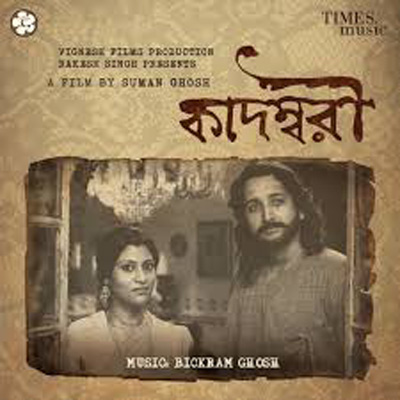
    NEW DELHI: Bengali film Kadambari by Suman Ghosh about Kadambari Devi, sister-in-law of Rabindranath Tagore with whom he is supposed to have had a close personal relationship and who eventually committed suicide, won the Best Film award at the Fourth Washington South Asian Film Festival.


    Chaitanya Tamhane won the Best Director award for Court, a Hindi and Marathi film, which is India’s official entry for the Academy Awards.


    Aparna Sen received the Special Achievement Award, while Huma Beg from Pakistan (Veils and Walls) got the Special Appreciation Award Documentary. Sarmad Khoosat received the Special Award for Contribution to Pakistan TV and Films.


    The Festival of independent alternate cinema on the theme of “Art and culture transcend boundaries” had 14 features, 10 shorts and one documentary from India, Pakistan, the United States and Canada.


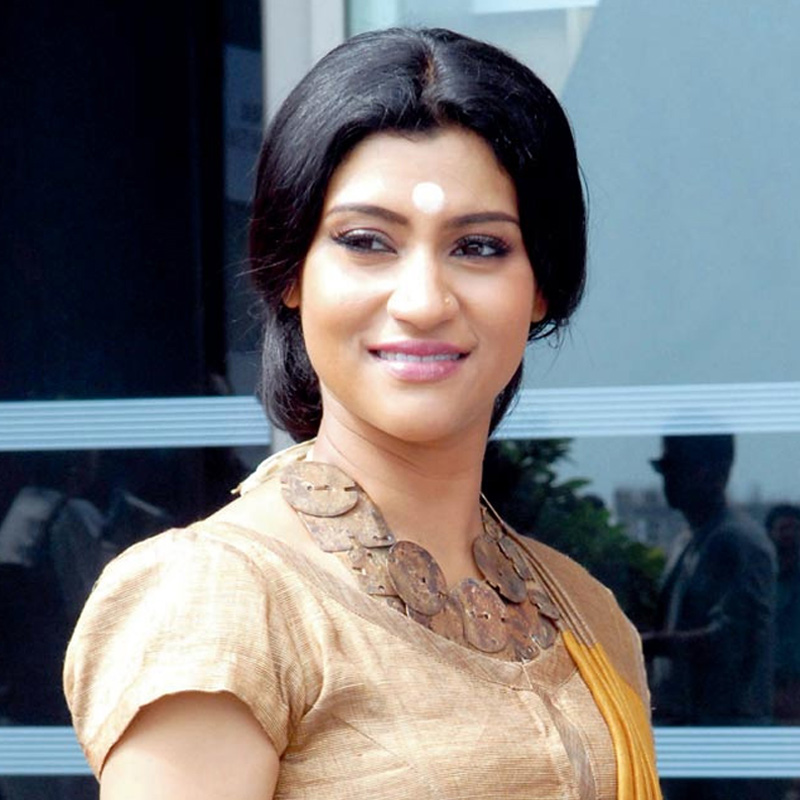
    Rough Book by Anant Mahadevan won the best story award, while the actor awards went to Kishor Kadam (Partu) and Konkona Sen Sharma (Kadambari). Bonjour ji by Satinder Kassona was adjudged the best short film.


    The audience rated Partu by Indian-American Nitin Adsul as the Best Film and Billu’s Flight by India’s Mayank Tripathi as the Best Short Film.


    Indian-American entrepreneur and philanthropist Frank Islam, who inaugurated the festival said the theme of the Festival reflected a reality. “This is so even though we live in a deeply divided world. These are unsettling times-wars, refugees, terrorism, hate crimes of all types, and boundary disputes. Events such as these dominate the headlines daily,” he said.


    He said marketing was a big challenge for independent films, which had to compete with extravagant, studio-backed and star-studded films from Bollywood.


    In order to succeed, independent films from India must overcome this stereotype and sea of noise, Islam said.


    “This year there was more awareness about the film festival here in the US and in South Asian countries,” said DCSAFF executive director Manoj Singh.


    Saari Raat, Aparna Sen’s film adaptation of Bengali playwright Badal Sircar’s drama, was the opening film. There were three films from South Asian Americans: PartuMiss India America by Ravi Kapoor and For Here or To Go by Rucha Humnabadkar.


    The festival also featured two Pakistani films, Manto by actor-director Sarmad Sultan Khoosat on the life of short-story writer Sadat Hassan Manto, and Shah by actor-director on Pakistani boxer Hussain Shah who won the bronze medal at 1988 Summer Olympics. 

  • The Epic Channel partners social networking app QuizUp

    The Epic Channel partners social networking app QuizUp

    MUMBAI: The Epic Channel has joined hands with the social networking app, QuizUp to provide a common ground for the channel’s audience as well as the app users to create an entertaining experience.  


    The Epic Channel collection on the app allows for innovative engagement with shows such as Stories by Rabindranath TagoreJaane Pehchaane and Mid-Wicket Tales. These three shows are currently featured in this section as independent topics. Each of the topics has innovative questions based on the show content besides other relevant aspects.


    The Epic Channel founder and managing director Mahesh Samat said, “We are excited about our new collaboration with the popular trivia app, QuizUp. We are the first Indian brand to have its own collection on the app. The channel is always looking for innovative ways to engage audiences. QuizUp is a leading platform to provide engagement and we could not be happier to be associated with them.”


    QuizUp CEO Thor Fridriksson added, “We are delighted to be partnering with Epic, which has a unique bouquet of offerings. Our collaboration around custom made topics for their leading shows would surely be loved by their viewers and our loyal fan base. QuizUp has been on a mission to connect users globally through common interests, and the channel’s offerings around unique interests create a great synergy.”

  • Shreya Ghoshal: Today Bollywood is compromising a lot on good content

    Shreya Ghoshal: Today Bollywood is compromising a lot on good content

    Her fans address her by various names like ‘Selfie Queen,’ ‘Princess,’ ‘Songstress’ but the most common is ‘Queen of Melody.’ Shreya Ghoshal’s single post on social networking websites creates a hullabaloo. Fans flood her with praises and the songstress at times even replies to a few messages.


    In this exclusive interview with Dhairya Ingle of Indiantelevision.com the singer talks about various aspects of her life including Rabindranath Tagore’s project, which is collaboration between her, Shaan, Shantanu Moitra and Gulzar.


    Excerpts:


    How has your journey as a musician been so far?


    Quite exciting! Every day brings me something new and I think that is the beauty of being a musician. Especially in a country like ours where we are most of the time working for films. There is so much happening in this industry with so many languages, where different types of music comes together and co-exists. So it is wonderful being in the field of music, working with the seniors and new comers, learning new things everyday.


    You have crooned a few songs for ‘Jaanisaar.’ How was it working with Muzaffar Ali? And how different is it to sing a classical song as compared to a regular Bollywood number?


    I think there is a lot more freedom in this genre because if you hear the songs of ‘Jaanisar,’ each is a performance and there’s a constant need of improvisation. It is not something that can one can learn by heart and sing. Every line is different and there is a new expression that is required. Hailing from the era of mujra, every word has to be expressed, with the essence of pure classical music i.e. thumri, dadra, kajre.


    So I had an amalgamation of ghazals and classical music, which gave me more freedom. I don’t get to do that in any of the other songs, though I still have scope to improvise but not as much. It is not a commercial song. The songs of ‘Jaanisar’ are for people who understand and follow Indian classical music. One of the biggest reasons I did my album ‘Humnasheen’ was pretty much to feel that experience.


    Muzaffar sahab is a very revered man and I respect him a lot. His presence in the studio itself was very supportive and you know that he is there to appreciate the song and the art you possess. I give equal credits to Ustad Shafqat Ali Khan, who is the son of Salamat Ali Khan sahab. He is more of a singer composer and once he starts singing, you definitely get mesmerised and often get tongue tied.


    Which veteran musician did you always dream of working with?


    I cannot work with people who are no longer with us and so it will always remain a dream. Artists from earlier eras like Madan Mohan sahab was gifted with putting a soul into the music he composed. Same was with Anand Bakishiji, Gulzar sahab and Sahir Ludhianvi sahab, wherein the first word and the first sentence itself is poetry as it came naturally to them. These are gifted people, who possess power and sensitivity. I feel that there is still a lot of talent around and we have the audiences to appreciate the same. However, what lacks is a platform to do express freely.


    Previously a lyricist, singer or composer did not have the pressure of creating a hit song. All that a person required to do was to create a song, but now the pressure is to make a blockbuster money-making track. Hence it becomes very hard for talented people to portray their art. Today Bollywood is compromising a lot on good content.


    Tell us about your riyaaz schedule.


    I will be very honest with you. I was a very disciplined student of music in my early days and I would thank my parents for making me do so. I would travel long distances for learning music and my parents made sure that after coming from there, I would do my riyaaz. Even before going to school, my mother would wake me up at 6.30 am and I would do my riyaaz on a tanpura.


    No child would actually like doing their riyaaz so early, but that’s what built a strong foundation for me. Now I don’t give that many hours for my riyaaz but I do light vocal exercises to warm up my voice. There are thing that I cannot do very well and I keep practicing them so as to improve.


    I don’t devote hours and hours for praticising ragas as I’m in the studio the whole day and I end up singing too much. All I need to do is keep my voice intact and get better at my execution than tiring my voice. I think that is how every professional singer functions when they get to a very hectic lifestyle.


    Any non-film projects that you are currently working on?


    Yes. I just got the mixes for Gulzar sahab’s project on Rabindranath Tagore. Shaan and I have sung songs for the project and the music is composed by Shantanu Moitra. The project is very special and will be releasing under Saregama. Tagore’s style of writing has been adapted by Gulzar sahab. It takes you to an era of Tagore but completely in a new fashion. It will release in a couple of months.


    Which non-film song sung by you is your favorite?


    It would be ‘Yeh Kya Hua Tere Mere Pyaar Ki Baatein,’ from the album ‘Chandni Raatein’ in 2004, which I did very long ago. This was the first time I was doing a Hindi album song and it was really loved by people then.


    You sung Kishore Kumar’s old melody ‘Mere Mehboob.’ Do you wish to re-render any of the olden melodies? If yes, which one?


    Actually the song ‘Mere Mehboob’ got stuck in my head and I was recording a new song but ‘Mere Mehboob’ did not go off. So I got back home, sat on my piano and recorded it on my phone. I put it up on my social media and people loved it. I keep my social media very private and have never given it to any agency like many others. I personally read each and every tweet that comes to me and I was so overwhelmed with the love.


    When it comes to re-rendering any other tracks, I would say there are many. I love all Madan Mohan sahab and Lataji’s tracks. I would love to do the song ‘Jalte Hain Jiske Liye’ from the film ‘Sujata’ crooned by Talat Mehmood sahab.


    Basically I love re-rendering tracks, which are sung by male voices because when you sing a female version of the same track, you reinterpret the whole track.


    How does your partner Shiladitya react to the fame and love that you get as a singer? Is he your best critic?


    He is my best friend and likes everything I do, which is why he cannot criticise me. I feel my best critics are my parents. My dad will only point put crucial problems in what I do. 


    When it comes to Shiladitya, he has been my bestest buddy for ten years so we are each others’ confidant and now that we are married, there is an additional level of responsibility for each other. However, he is exactly the kind of spirit that I would want to be. He is the one who will push me to do all the good things even when I doubt myself. He will just ask me to follow my heart and do what I wish to do and makes me believe in me. Even my parents make me believe in myself, I feel a little responsible in front of my parents. But with Shiladitya around I can do anything I want to.

  • Anurag Basu to helm ‘Stories by Rabindranath Tagore’ for Epic

    Anurag Basu to helm ‘Stories by Rabindranath Tagore’ for Epic

    MUMBAI: In order to connect better with the audiences, segmented Hindi entertainment channel Epic is gearing up to launch a series that masterfully recreates the magic of old Bengal through some of Rabindranath Tagore’s short stories and novels.


    ‘Stories by Rabindranath Tagore’ showcasing ‘epic’ tales like Choker Bali, Charulata, Atithi and Kabuliwala amongst others will bring intricately etched characters created by Tagore to the small screen. The series will be directed by filmmaker Anurag Basu, who has to his credit movies like Barfi and Life in a Metro


    Through this series, the characters of Tagore’s stories will spring into life through Basu’s imagination and vision.


    Set in a politically volatile period, the stories are constantly shifting in the social world of the early 20th century in undivided Bengal. The hub of new India, Calcutta is the melting pot where the protagonists are pouring in from their rural, social and cultural spaces to encourage this upcoming new world.


    Talking about the show, Epic founder and managing director Mahesh Samat says that he has always been a big admirer of Tagore and his work. “Many of Tagore’s stories are perfect for television and after discussing the thought with Basu, I felt that it would be a great fit for Epic. With Basu, we found the perfect synergy in vision and passion for recreating Tagore’s stories for television. In fact, he wanted to do this for the past 10 years. The show looks great. Let’s hope the viewers enjoy watching it as much as we enjoyed making it for them,” said Samat.


    Basu retains Tagore’s style of narrative even in the visual medium and enhances words of his pages by bringing in talent that truly captures the essence of each his beloved characters. Unlike ordinary characters, these personalities pack a rebellious punch.


    The filmmaker delves deeper into this society in transition, with songs, music, cultural references and its newfound political and social manifestations, a little more than the actual described world within Tagore’s narratives.


    Keeping in line with the channel strategy, Stories by Rabindranath Tagore is a finite series with 26 episodes and is slated to hit the television screens in July this year.


    The channel has been in active conversation with its viewers since its launch in November last year. “A feedback we received was to recreate stories of iconic authors and this lead us to develop Stories by Rabindranath Tagore. As we go forward, we are going to explore many other authors.”


    Epic is leaving no stones unturned to market the big-budget property. The channel released the show’s first look recently on Rabindranath Tagore’s birthday (9 May). The first look has already grabbed eyeballs of close to 78,000 views on YouTube at the time of writing the article.


    “Since 9 May was the Bengali birthday of Tagore and Basu, it was the ideal day to release the first look of the show. We’ve got people talking about the show and it’s going strong. We will maintain the momentum till the show launches. There’s a lot more coming up but I wouldn’t want to kill the surprise so early. Needless to say, this show is an important part of our overall plans,” informs Samat.


    Stories by Rabindranath Tagore has talented actors like Amrita Puri and Radhika Apte on board, who have played key roles in the self-titled stories, Charulata and Chokher Bali respectively. Epic will be working closely with the actors to keep the buzz going.


    Media planners are gung-ho about the show. Maxus managing partner Navin Khemka believes that it is a great concept and Tagore’s stories are popular. “If produced well, the show could drive eyeballs to the channel. It will click with the mature audiences. The buzz on the channel is positive. A lot of sampling is happening. If this program drives stickiness for them it will be good,” Khemka opines.

  • Zee Bangla brings Tagore’s passion play ‘Chokher Bali’ on screen

    Zee Bangla brings Tagore’s passion play ‘Chokher Bali’ on screen

    MUMBAI: Zee Bangla’s latest fiction Chokher Bali will bring to life Rabindranath Tagore’s masterpiece on the silver screen for the very first time. Inspired by Tagore’s famous novel, Zee Bangla’s Chokher Bali delves into the intricacies of human emotions like love, passion and desire.


    Set in the early twentieth century, the story revolves around the lives of Mahendra, Ashalata, Binodini and Behari. Binodini, a beautiful young widow happened to stay with a newlywed couple, Mahendra and Ashalata. The beauty and charm of Binodini soon enchants Mahendra towards her. But as time progresses, Binodini gets drawn towards Mahendra’s friend, the idealist Behari. How Binodini becomes the ‘Chokher Bali’ for Ashalata forms the trajectory of the story. The story, carved beautifully by Tagore, is a reflection of man-woman relationship and much more.


    Earlier, Zee Bangla has adapted novels like Subarnalata and Keya Patar Nouko, into shows.


    Chokher Bali, which launches on 30 March, will air from Monday to Saturday at 9:30 pm on Zee Bangla.

  • Sydney Filmfest to screen two Indian films on lonely housewives

    Sydney Filmfest to screen two Indian films on lonely housewives

    NEW DELHI: Two Indian films being screened at the ongoing 61st Sydney Film Festival are on a common theme – lonely housewives in different eras who are forced to find interests elsewhere. 


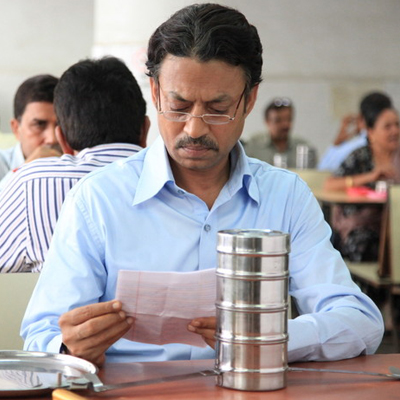
    Even as Ritesh Batra’s highly-lauded The Lunchbox is among the four Indian films being screened at Festival, the other film is Charulata, made by cine craftsman Satyajit Ray and being screened almost 50 years after it was last exhibited at the same festival.


    This movie is one of Ray’s women-centric films that was well ahead of its times when made in 1964 with Madhabi Mukherjee in the lead. The film is based on a story by Rabindranath Tagore and set in the late nineteenth century and tells the tale of the lonely housewife whose busy husband has no time for her.


    Coincidentally, The Lunchbox is also the story of a loney housewife and how she begins to correspond with someone through letters sent inside a lunchbox. 


    The Festival which commenced on 4 June, will also show Pan Nalin’s Faith Connections and Richie Mehta’s Siddharth in different sections.


    Richie Mehta’s film Siddharth is about the search by a father for his lost son despite his own poverty.


    Pan Nalin’s documentary Faith Connections is primarily on the Kumbh Mela, which takes place every three years at selected places along India’s river banks and is attended by about 100 million people.