Tag: RAAAH

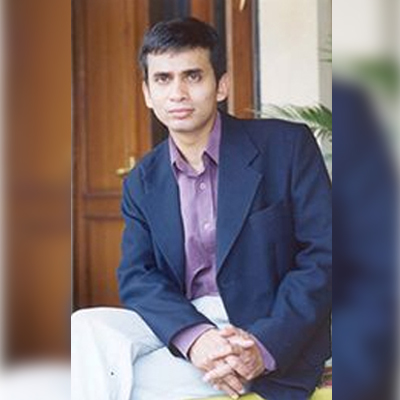
  • “With ‘Saara Akaash’ we want to prove that we are capable of delivering mega scale fiction too”: Nikhil Alva Television software producer

    “With ‘Saara Akaash’ we want to prove that we are capable of delivering mega scale fiction too”: Nikhil Alva Television software producer

    Nikhil and Niret Alva are a long way from just being known as celebrity offspring. Nikhil started off in the early 1990s composing music for ad jingles in Delhi, while Niret was a known print and TV journalist. Initially identified as former cabinet minister Margaret Alva’s sons, the brothers soon grew out of the shadow when they found their calling in creating television software that was a pioneer in its genre.

    This was around 1992-93, when the duo, aided by a couple of friends, got together for making a series of 18 short films on the girl child for UNICEF. The series, expected to take up a couple of months, wound up consuming over a year.

    Then came Living on the Edge for Doordarshan, meant to be a 13-part series, but which acquired a life of its own and ran on for a mammoth 250 episodes and went on to bag several awards, including the Green Oscar, and got picked up by Star Plus for retelecast in 1997. By then, the company had left music behind and moved full time into software production.

    In 1992, Miditech also produced India’s first film based game show for DD Metro Take 2. By 1994, the company began to be identified as a travel, infotainment and research based production house. BBC entrusted it with its auto show Wheels in 1997-98, a show that will enter its 10th season this September.

    The projects the company does for international production houses, programmes that air in over 25 countries, contribute over 50 per cent of the firm’s revenues today. Miditech today has its own 100-strong team in Delhi, complete with cameramen, editors and researchers and its post production facility – a three-storey building with a basement devoted to edit suites.

    In an interview to the media after a long while, CEO Nikhil Alva chatted with indiantelevision.com’s Aparna Joshi about Miditech’s achievements, his take on the current television scene and his hopes for the company, apart of course, from Miditech’s latest offering on Star Plus, Saara Akaash.

    ‘Saara Akaash’ marks Miditech’s shift to fiction in a major way. Why did you have to move away from your core competency?
    After Kaun Banega Crorepati, there has been a perceptible shift towards pure entertainment on television in India. Our association with Star goes back a long way, since 1997, when Living on the Edge was telecast along with our travel show The Great Escape. But now, there are few opportunities for infotainment programming. In fact, in the last three years, the market for these has definitely shrunk, although at one point, it was expected to grow. Doordarshan, for whom we made a lot of shows, didn’t commission any programmes for this period, and the BBC, which planned to increase the quantum of locally produced software, didn’t go ahead with the plans.

    It was then we decided that we had to explore fresh genres, to increase our presence in Mumbai, which had become the hub of satellite television. This we did by making Kabhi Biwi Kabhi Jasoosfor Sony, which ran for an estimated 20 – 26 episodes but didn’t really click.

    But now there is a lot riding on Saara Akaash. We are already established as capable of delivering mega scale non fiction, with Saara Akaash we want to prove that we are capable of delivering mega scale fiction too.

    ‘Saara Akaash’ was envisaged to launch sometime late last year. What took the series this long?
    The series was initially envisaged as a half hour show and we had even canned eight episodes. But when Star saw it, they felt it had the potential to be scaled up to become an hour long weekly. So it was back to the drawing board for us – it meant redoing several things, changing the cast to suit the changed look and feel. It did create a certain amount of depression within the team – there were 70 people here working on it, and there were several practical difficulties in the actual shooting – getting the access to the air force base for shooting, dealing with the restrictions and changed schedules brought about by border tensions. All this did delay the series, but it helped us to perfect the look of Saara Akaash.
     
    Does this mean that if ‘Saara Akaash’ clicks, Miditech will shift in a major way towards fiction?
    We are here to stay in this genre because that’s where the future of Indian television is. As forSaara Akaash, I believe it has the potential of being a winner. Regarding more fiction in the pipeline, we are in talks with a couple of channels, but nothing that we would like to announce before Saara Akaash takes off.
     
    “Zee was definitely bold enough to launch a show like RAAAH, but it could not match it with equally strong packaging”
     

    ‘RAAAH’ was another big ticket show from the Miditech workshop last year. Why didn’t it work?
    RAAAH was a brilliant concept and it was executed just as brilliantly. Besides, it was an indigenously developed concept, not a borrowed foreign format. It had great potential, but unfortunately for us, it turned out to be show number 25 on Zee TV, the channel that had already launched 24 new shows in a row without any of them really making a mark. As a result, there wasn’t much enthusiasm in the channel when they promoted that show – it had no marketing push, no real publicity and no hype created around it.

    The time slot we had – Sunday noon, was probably the worst that genre could have expected. While we had excellent sponsors for the show – we were giving away apartments, cruises and motorbikes for the winners on each episode, the show could not attract the right audience.

    If the show had been put on prime time, say 9 pm on Fridays, it would have been a trendsetter in its genre with all other channels vying for a similar show. Zee was definitely bold enough to launch a show like RAAAH, but it could not match it with equally strong packaging.

    If you get the opportunity, would you consider making another ‘RAAAH’ for some other channel?
    Yes, of course. We are already talking to two channels about a similar show and something should be finalised by the end of this year.

    As for reality shows, we are making a mega reality show Roadies for MTV that’s kicking off on 15 August.

    You also have another reality show on MTV – ‘Bum Mein Dum’, which has been rated as the second most popular show across all music channels. How do you see this trend of different genres doing well on music channels?
    That’s the route most music channels will take in this country. For example, in the US, MTV plays very little music, as there are several other channels supplying that. The idea is to cater to the youth TG in every way possible, which is what we have done with Bum Mein Dum, which has been done with the channel profile in mind.

    Reality shows in fact can work very well as they are seasonal, short runs that help to break through the clutter of regular shows. Reality, in fact, I think is a weapon in your arsenal that you can use to break through the clutter at regular intervals.

    Which is easier to produce – a reality show or fiction?
    Reality is not controlled, because you are at the mercy of the elements and changing circumstances all the time. As against that, fiction has a bound script and happens in controlled circumstances. But both are challenges in their own right…I would not say either is easier or more difficult…

    Does the impending implementation of conditional access in the country worry you in any way?
    It’s still early days to comment on how it will all eventually work out. But if the truth that niche channels will thrive in a post CAS era holds out, then we will be ready to capitalise on the advantage with our decade long experience in providing niche content.

    Yes, production budgets may suffer in the process, but then it is all part of the game.

    “Content such as we provide, even though it may not fetch mass ratings, can still draw a large enough audience to be commercially viable”

    Where do you see the trend on television going – last year was supposed to belong to the reality genre but that did not happen.
    We are still in the soap era. Though of course there has been one change – last year, dailies were the in thing, while now it is the weekly soap that has pride of place. Of course, another hot space is the news channel genre and we are also getting into the news content sphere. We are in talks to supply news features to Sahara Samay Rashtriya, Star News as well as the revamped DD News that’s scheduled to be on air soon.

    Are you still doing shows for Doordarshan?
    Doordarshan continues to be an important platform for us. After all, we started with Living on the Edge on DD. We have a new weekly show, Science of India, coming up soon, which will deal with the various branches of Indian science through the ages. We are also toying with the idea of making health and travel slots for DD Bharati.

    Is it easy to secure talent of the kind you need to produce slick, well researched documentaries and factual programming?
    Mumbai has that advantage. Here, there is a huge pool of technical and creative talent. While it is relatively easy to get good editors, cameramen and technical people, it is the writers and researchers who are hard to come by. At times, for international projects, we have had to even bring in writers from abroad!
    Any expansion plans for the company?
    By the year end, we plan to set up a base in Singapore, because that’s the place which is becoming the documentary hub for Asia. In fact, the Singapore government aids in funding of documentaries too – one of our own documentaries for the National Geographic has been co-funded by the Singapore government. We are now pitching ourselves as an Asian production house rather than focus only on Indian themes, which will anyway run out after a point.
    How are you funded ? Is there an IPO on the cards?
    We have ploughed back funds into expansions thus far. Besides, ICICI has a 25 per cent stake in Miditech. Yes, as we expand, we will definitely look at fresh avenues for funding, whether it is an IPO or some other source.
    How about starting a channel of your own some time in the future?
    Though it is a temptation, our core competence is content. Broadcasting is a totally different ball game. If, in the future, we do think of a channel of our own, it would be in partnership with an existing and established broadcaster, not alone. Of course, there is space for good factual programming, although we should not forget that television primarily is an entertainment medium, which people switch on to get entertained, not necessarily educated. But content such as we provide, even though it may not fetch mass ratings, can still draw a large enough audience to be commercially viable.

    Where do you then see Miditech a decade from now?
    I see it as an international production house working with international producers across the globe.

  • Zee Telefilms net down 26 % in DQ

    Zee Telefilms net down 26 % in DQ

    Zee Telefilms Ltd today announced its third quarter results (ended December 31, 2001). The Income from sales and services has gone down by 18 per cent from Rs 1031.2 million to Rs 853.3 million in Q3. Other Income (Interest) has gone up from Rs 101.6 million to Rs 165 million. Net profit has taken a hit. It has gone down by 25.64 % to Rs 239 million from 321.4 million in last corresponding quarter.

    Sales declined to Rs 853.3 million from Rs 1031.2 million last year, probably because advertising revenues were hit badly as none of the Zee shows made any impact on the ratings charts.

    NO RATINGS LINKED AD DEALS: On the issue of ratings, Sandeep Goyal, Zee Group Broadcast CEO Sandeep Goyal, has gone on record to say that as of 1 January 2002, all advertising deals would be delinked from ratings. Goyal’s argument is that the ratings do not adequately reflect the performance of Zee’s shows. He further stated that this would help in reducing spot bonuses. This is a complete turnaround in ad sales strategy from the deals that were entered into at the time of Zee TV’s grand relaunch of 27 August 2001, when a lot of inventory was sold with a commitment to deliver a minimum TRP level.

    PROGRAMMING COSTS: On the programming front costs for Zee TV have gone down by a huge 42 per cent from Rs 490.9 million in DQ 2000 to Rs 284.5 million in DQ 2001. This is certainly surprising because though the only launches of note during the quarter were the mythological Mahabharat and Jai Santoshi Maa, these are high cost productions. And servicing programmes like Aap Jo Bolein…, Sarhadein and Chotti Maa to name just three of the shows on air would appear to require substantial monies.

    The channel’s explanation is that during the quarter, the overall programming cost of the network remained under control with a better mix of cost effective programmes under the various genres like soaps, sitcoms, talk shows, game shows, interactive shows and musicals.

    Odd though because the average per quarter programming cost for the last six quarters has been around RS 450 million so how this massive cost cut was achieved remains a mystery.

    INTEREST: The interest burden, meanwhile, has gone up from Rs 28.7 million to Rs 160.5 million, a whopping 550 per cent increase. It may be recalled that after the Q2 results were declared, Rajesh Jain, president, corporate finance & strategy, Zee Telefilms, when asked how far the Ketan Parekh factor worked towards increasing the interest burden, had admitted it was a factor. He had however pointed out that the major cost increase was because of capital costs incurred for purchasing set top boxes and other equipment for the company’s DTO project. The amount was between RS 700 to RS 800 million, Jain had said then.

    ZEE NETWORK’S RESULTS: The Zee Network’s consolidated results are also not too attractive. Even though the total income has gone up by 11 per cent to Rs 2957.6 million from Rs 2654.8 million in the last corresponding quarter, it is largely because of the healthy growth in subscription revenues. Revenues went up 72 per cent from Rs 523.1 million to Rs 901.9 million.

    Sales and services were up by 16 per cent from Rs 143.8 million to Rs 167.4 million.

    Ad revenues are the most worrisome part of the results though. It has gone down by 8 per cent from Rs 1871.6 million to Rs 1721.4 million.

    On the expenses front they have gone down marginally by 3 per cent from Rs 1902.3 million to Rs 1843.2 million. Profit after tax however has gone up 10 per cent to Rs 521.1 million from Rs 473.8 million.

    In today’s trading on the Bombay Stock Exchange, the Zee Telefilms scrip was steady with volumes of just over 4 million shares. The share opened at Rs 127 and moved between a narrow band of Rs 129 and Rs 121 and closed at Rs 125.15. The BSE’s Sensitive index was down by .01 per cent at the end of the day’s trading at 3348.

    LOOKING AHEAD: While the the company remains cautiously optimistic on the advertising revenue front, there doesn’t seem to be any great prospects of the current situation changing dramatically. Aside from the mythos, only action reality show Romance Adventure Aap Aur Hum (Raaah) is new on the Zee plate. And these certainly do not look like providing the viewership turnaround that Zee is looking for.

    The plus is that Zee has undertaken an internal organisational restructuring for better business and revenue mix, which it expects will positively reflect through improved efficiency and delivery.

    The company has also undertaken corporate restructuring of its business under various holding and operating subsidiaries and aims to reduce the number of subsidiaries. This will also bring better operational efficiency and better corporate governance compliance. During the quarter, the company also initiated steps for starting a separate encrypted broadcast beam for Zee TV in the Middle East, Pakistan, Bangladesh and Nepal, which will open up these markets for advertising and for enhanced pay revenues. The separate beam allows Zee TV to tailor content to coincide with the prime time in different markets, while concurrently valuating air-time inventory at locally relevant and competitively attractive rates.

    Domestic up-linking is expected to have a positive impact, both by lowering costs and improving efficiency as well as by higher revenues through a larger client base.

  • DD’s ‘Pillar of the Nation’ trains its guns on the army today

    DD’s ‘Pillar of the Nation’ trains its guns on the army today

    Border tensions are calling for some hasty programming changes in the subcontinent.

    The Beeb has voluntarily put on hold its reality series Commando on the Indian army, bowing to geo political pressures in the region. Doordarshan, on the other hand, will air a special programme today that delves deep into the trying conditions the Indian defence forces operate under. Both programmes, incidentally, have been produced by Miditech, which also makes the adventure reality series Romance Adventure Aaap Aur Hum (Raaah) that premiered on Zee TV on Sunday. Sahara TV is also looking at a series Fateh (victory) which trains its guns on war heroes. However, this is not expected to go on air before February-March. 

    While Commando, earlier scheduled to premiere in the first week of January, is now likely to take off on 22 January, DD is going ahead with its Pillar of the Nation on Army Day, 15 January. The 30-minute programme to be telecast at 9 pm will expose viewers to the human angle of the army, including the way army doctors operate in Kashmir, tank commanders work in tough terrain in Rajasthan; even Bofors unit commanders in Kargil. Footage of Siachen, Jammu, Poonch, Leh and Jaisalmer will also be shown, while terms like ‘firing along the line of control’ will be explained in terms understandable to the layman. The idea, say the programme producers, is to acquaint the citizen with the life of armymen. Army Day is observed on 15 January every year since 1948, when Lt Gen K M Cariappa was appointed the first Indian Commander in Chief of the forces. 

    The BBC meanwhile, has to wait some more to air the 13-part docudrama that covers the six-week training course at the Commando Training School in Belgaum, Karnataka, considered one of the toughest in the world. The show was to have given viewers a unique access to the Indian army, although some details of the training have been deleted due to security reasons.

  • Zee launches reality show ‘Raaah’ tomorrow

    Zee launches reality show ‘Raaah’ tomorrow

    It’s no Prisoner Of War but India’s first homegrown reality show in the action genre is finally launching on the Zee Network. 

    Last year Zee TV had announced with much fanfare that it was launching a reality show Prisoners Of War loosely modelled on the successful UK show Jailbreak. Those plans however were shelved but the channel is all set to unleash Romance, Adventure Aap Aur Hum (Raaah). Launching tomorrow at noon it will air on Sundays.

    Miditech (promoted by Nikhil and Niret Alva) has produced the show which has been billed as India’s first adventure-reality game show. Game shows are not a new phenomenon to Indian television but what makes this one different from the likes of Star’s Kaun Banega Crorepati and Kamzor Kadii Kaun is that the contest incorporates adventure. 

    Raaah tests the physical, mental and emotional endurance of its participants. The participants consist of five married couples who have to confront an extreme environment. They compete against each other. Each couple operates as a team in the show which is shot over four hectic days. 

    Miditech CEO Nikhil Alva made these remarks: ” Its going to be the first reality show on Indian television. We have produced a totally new format and not an Indian version of any Western reality shows. With such a show there is always a great degree of unpredictability, since there is no telling how real people will react in a given situation. We will transmit real excitement, adventure and romance onto the screen.”

    The teams have to play different types of sports which will test their dexterity and stamina. They include yak riding & shepherding, mountain biking, four-wheel drive rallies, rappelling, trekking, white-water rafting and camping in the wilderness. Every day performances are evaluated and one couple is eliminated. Two couples battle it out on the fourth and final day for the grand prize. 

    Apartments, the latest cars, luxury cruises, adventure gear are some of the goodies on offer. Vrajesh Hirjee will anchor Raaah. 

    A release states that the first few episodes of Raaah have already been shot on location in the gruelling locales of the Spiti Valley in Himachal Pradesh. Elaborating further on the new initiative Niret Alva says: “We conducted an extensive location search and decided upon the Spiti Valley as the perfect backdrop for the first show. Raaah in Hindi stands for The Way and we firmly believe that Raaah is the way forward for Indian Television.” 

    Miditech had previously done Hospital but Raaah has proved to be far more logistically challenging. The production called for a crew as large as 70 people including seven camera units, as well as adventure and safety instructors, given the complex technical requirements. The challenge is that the areas are remote and are difficult to enter into. There are no communication systems in place. Both in front of the camera and behind, teamwork is often the deciding factor. 

    Miditech was founded in 1993. Its other reality based shows and programmes also include Kahani Jurm Ki on Star Plus and “Kuch Yaadein Kuch Baatein which will shortly be telecast on Star Gold. Other shows the company has made include Living On The Edge the first and longest running environment series. Then there was The Great Escape a travel show; and Hospital. 

    Miditech has also produced film-based programmes, talk and game shows by the Entertainment division. The films division has also come out with path breaking natural history, exploration shows, historical and social documentaries. The Infotainment division covers lifestyle, travel and information technology shows. The fiction division makes real life drama and soap operas. The current affairs division news handles analysis, political talk shows, reality and environment programmes.