Tag: R S Sharma

  • Local language content a major challenge, says Prasar CEO Vempati

    NEW DELHI: Prasar Bharati chief executive officer Shashi Shekhar Vempati has stressed that India was very rich in content and with so many platforms it is important to capitalise on this.

    Vempati said: “While native technology and artificial intelligence effectively guarantees impact, it is imperative to supplement it with creative minds, which exist in India and gives it an edge over the others. India possess a demographic uniqueness which places us ahead on the global map. What is lacking is an ecosystem to incentivise creators and insulate consumer experience.”

    Thus the situation is right for good and meaningful content. But, unfortunately, he felt that more funds were being put into automation and distribution than on content.

    Addressing the Create4India meet organised by Digital India Foundation, he said India had a major advantage in not only being the youngest but the largest democracy, and had an advantage over China as it had freedom of speech. The country was also a rich source of content with its ancient heritage.

    Referring to Doordarshan, he said even BARC had shown that DD had a larger reach than any other channel, particularly taking rural viewers into account.

    Describing Its DTH platform FreeDish as a “democratic tool”, he said it reached the far corners of the country. But, he said the time had come when DD makes programmes not just for India, but the world. He stressed the need for more content in local languages to reach out to the people.

    Vempati also referred to outsourcing and in this context he said the new DD logo contest had brought back many new viewers to DD. But, marketing was as important and FreeDish was doing that for DD.

    With convergence coming in, the emphasis on variety in content had become even more relevant.

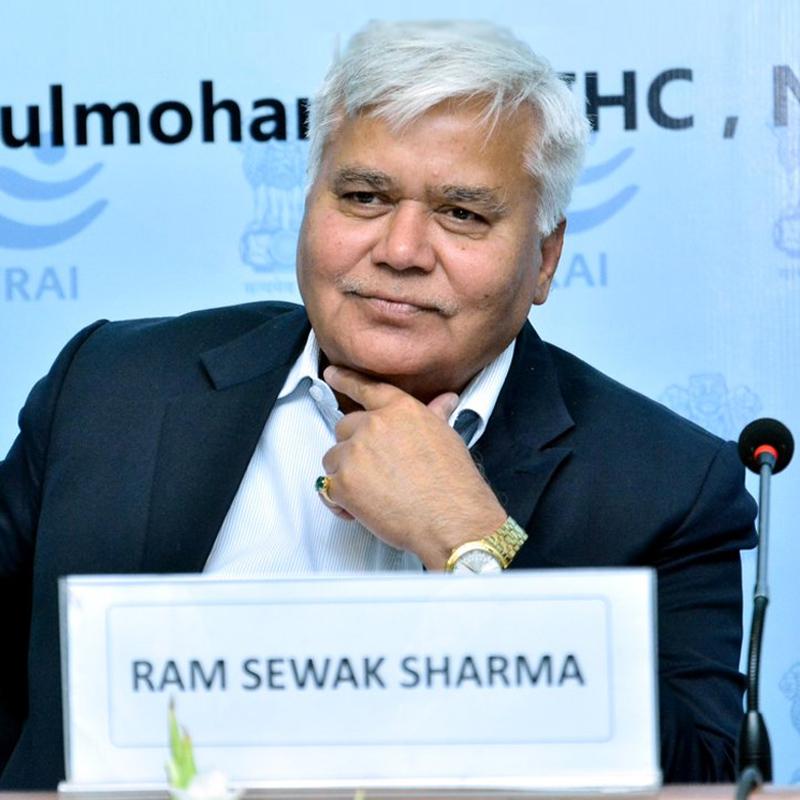
    Telecom Regulatory Authority of India chairman R S Sharma brought the regulators perspective, sharing his belief in a transparent mechanism of open consultation with the industry and the stakeholders, with accountability to the people at large.

    He said the basic layer of connectivity is ‘robust’ but the layer of software has to be built. He complimented the start-ups which were producing rich content.

    Foundation founder Arvind Gupta said though there were around 400 million viewers in the country, 86 per cent were watching content which was not in their local language.

    He said the country had a net addition of 25 million smartphones per year and that emphasized the need for more content. There are around 30 GB of downloads per month.

    Content creation was a very small portion of the $100 billion industry, he regretted. Gupta said, “The current digital disruption and technological change has redefined the limits of human ingenuity and innovation, a phenomenon accelerated with ‘convergence’ in technologies and modes of content delivery. This convergence necessitates an ecosystem approach towards the creative economy’s growth and future regulation.”

    Bringing perspective to the content consumption trends in India, he reiterated the need for creating new content that is, affordable, understandable and socially relevant for the India market.

    The panel discussions featuring industry stalwarts as Arun Thapar (EVP & Head of Content, AETN18 Media) and Vijay Nair (CEO, Only Much Louder) focussed on building a qualitative content driven framework, backed by digital disruption. Creating significant digital presence in today’s era is not a luxury of choice, but a ‘must have’, to unleash the creative potential. Addressing the key ingredients of a robust creative economy, the panel necessitated the need for ‘humanising’ content, to make consumption more compelling and generation defining.

    The second panel, led by Pushpendra Rai (former director World Intellectual Property Organization), felt progressive policies backed by the right legislative intent is quintessential to contribute to the success of this sector, not just to foster creativity, but to help in sustenance and growth of the creative economy.

    Author and entrepreneur Barkha Dutt brought forth the content creator’s perspective stating that advertising dependence in media will always play to the lowest common denominator – the masses. What needs to be addressed is, how India’s creative class will emerge with a revenue model and an audience willing to pay for content.

    She wondered why Indians did not want to pay for news which enabled creative disruption without monetisation. She said she was open to the tyranny of the market if she was given a level-playing field. She also wondered why Indians were shy of personalising and marketing individual brands.

    In 2016, the National IPR Policy brought the administration of copyright under the Department of Industrial Policy and Promotion (DIPP) and highlighted the intrinsic linkages between commercialization, consumer choice and creativity. The relative contribution of India’s creative economy to the GDP (0.9%), is less than most emerging market counterparts, she said.
  • TRAI urges govt. to use digital TV networks for b’band growth

    NEW DELHI: The digitised TV framework, which has come up in the country in a big way, should be upgraded to provide broadband to 100 million homes, the Telecom Regulatory Authority of India has recommended.

    TRAI chairman R S Sharma said that it had also recommended tweaking the licensing framework to enable Wi-Fi hotspots as almost 800,000 such Wi-Fi hotspots were needed to connect India digitally.

    Speaking on ‘India’s Regulatory Priorities for 2017’ on the second day of India Internet Conference (IIC) 2017 here yesterday, he said TRAI had recommended that broadband can become a core utility to citizens if BharatNet is implemented in the PPP mode to connect 250,000 gram panchayats across the country.

    The theme of the conference was ‘Digital India 4 Sustainable Development’ organised by FICCI in association with the Electronics & IT Ministry (MeitY).

    Speaking about the overarching principles, Sharma said TRAI was regulating the sector to ensure consumer protection, quality of service, transparency, growth of the sector and a level playing field for stakeholders. He added that TRAI was regulating the sector to ensure its healthy growth. He also mentioned that TRAI was working towards enhancing ease of doing business and was seeking recommendations from the stakeholders to identify the tricky areas.

    Sharma said there were regulations that have lost their relevance over time and therefore TRAI had formed a committee comprising stakeholders to remove obsolete regulations. He added that TRAI was working towards identifying the important issues while dealing with urgent matters to bring out appropriate consultation papers.

    Broadband proliferation in the country was a priority, he said adding that the focus was on creating infrastructure, governance and services on demand and digital empowerment of citizens digitally connect the country.

    Also Read

    TRAI chief pushes for b’band over cable TV, BharatNet for upping penetration

    TRAI wants reduction of import duty on Wi-fi equipment to help growth

  • TRAI rejects complaint against free promos, says consumer comes first

    NEW DELHI: The Telecom Commission’s contention that free promotional offers are responsible for the industry’s falling financial health and lower licence fee payments to the government has been rejected by the regulator Telecom Regulatory Authority of India.

    TRAI’s response is expected to be sent to the Commission next week.

    The response to the Commission’s letter dated 23 February 2017 on the lines that tariff and tariff orders, solely under the regulator’s purview, need to be seen in the broader context of consumer interest.

    TRAI feels it is responsible for tariffs and anyone having an objection is free to approach the telecom tribunal TDSAT, TRAI sources said.

    In any event, TRAI feels that the government’s objective cannot be revenue maximisation. Higher tariffs can lead to greater accruals for the government from licence fee, but there is social obligation. So, revenue reduction should not been seen with a myopic view, but in the context of larger policy objectives and long—term interest of consumers, the sources said.

    Stressing that competition in the telecom sector had resulted in better tariffs and services for consumers, the source said, “competition may be disruptive, but it also leads to cheaper tariffs for consumers“.

    Defending its stance on allowing Reliance Jio to extend the promotional offers, the source said, “TRAI had sought the Attorney General’s opinion on the matter, and the latter has also opined that TRAI was correct in not blocking the offers“.

    Last month, the inter—ministerial body Telecom Commission in a letter to TRAI had warned of a loan default by operators and asked the regulator to revisit its tariff orders and free promotional offers of firms like Reliance Jio.

    The then Telecom Secretary J S Deepak, who headed the Telecom Commission, had written to Telecom Regulatory Authority of India Chairman R S Sharma about the “serious impact” of promotional offers on the financial health of the sector and the capability of the companies to meet their contractual commitments, including payment of instalments for spectrum purchased, and repayment of loans.

    Reliance Jio rolled out free voice and data under two promotional offers — Jio Welcome Offer and the Happy New Year offer.

    The Telecom Commission’s letter had noted that licence fee collections for the current fiscal have been showing “alarming” downward trend on a quarter—to—quarter basis.

    “These collections have fallen from Rs 39.75 billion in Q1 to Rs 35.84 billion in Q2 to Rs Rs 31.86 billion in Q3. It is expected that this revenue will further decline in Q4 by about 8 to10 per cent. The annual spectrum usage charge revenues are also likely to face a similar decline,” the TC letter had said.

  • TRAI & FCC sign LoI on accelerating broadband deployment & aligning spectrum policy

    MUMBAI: The Federal Communications Commission (FCC, U.S.) has taken an important step to strengthen its relationship with one of its foreign regulatory counterparts, the Telecom Regulatory Authority of India (TRAI).

    During a meeting on the sidelines of the GSMA Mobile World Congress in Barcelona, Spain, FCC chairman Pai and TRAI chairman R.S. Sharma signed a Letter of Intent (LoI) for cooperation between the two agencies. The non-binding agreement sets out a framework for the mutually beneficial exchange of ideas through activities such as best practices sharing, bilateral workshops, and digital video conferences.

    To guide these efforts, the FCC and TRAI have determined topics of shared interest, including accelerating broadband deployment and aligning spectrum policy to meet increasing mobile broadband demand.

    FCC chairman Pai said, “I look forward to working with Chairman Sharma and his staff as both of our agencies strive to promote innovation, investment, and growth in communications technologies in order to bring digital opportunity to all of our people.”

    Given the broader bilateral partnership between the United States and India, the FCC has long engaged with Indian counterparts on issues of telecommunication regulatory policy. The new agreement reinforces the ongoing positive working relationship between the FCC and TRAI and identifies opportunities for further collaboration in an increasingly interconnected world.

    Earlier, in a report from the MIB (India), the government admitted that digital cable TV networks were vital infrastructure for penetration of broadband through which e-government services could be deployed.

    According to the latest telecom subscription up to 31 December 2016 released by TRAI, Indian consumers quickly got over the demonetisation hiccup – at least as far as subscribing to mobile broadband, and dongles are concerned. Growth at 8.89 per cent has come back in the December month with the total number of mobile broadband subscribers rising to 217.36 million from 199.61 million subs earlier.

    This increase has come about primarily due to Reliance Jio’s relentless drive to build a user base: it had 72.16 million mobile broadband users, whereas Bharti Airtel (43.56 million), Vodafone (35.02 million), Idea Cellular (27.04 million), and BSNL (20.36 million) followed. The top five Indian service providers constituted 83.93 percent market share of the total broadband subscribers at the end of Dec-16.

    Also Read:

    MIB report: 50% digital STBs seeded during DAS’ first three phases

    TRAI data: Mobile b’band subs get over DeMon in December 2016

    Jio juggernaut rolls on, wired segment wobbles

  • Idea petitions TDSAT against TRAI; price war set to escalate

    Idea petitions TDSAT against TRAI; price war set to escalate

    MUMBAI: Idea Cellular has petitioned TDSAT seeking to stop Reliance Jio from continuing free services till 31 March. In December 2016, India’s largest telco Bharti Airtel had moved the tribunal over the same issue.

    TDSAT had, in its last hearing, directed TRAI to come to a conclusion in “reasonable time”.

    Jio’s free services have set off a price war. After Reliance proposing investment of Rs 30,000 crore by end of this fiscal, the war is set to escalate. The recent cut-down — by approximately 66 per cent — in data rates impacted Idea’s stock prices. Airtel’s stock too was in the list of the losers on Nifty.

    India’s third largest wireless operator Idea Cellular, run by the multi-billion dollar conglomerate Aditya Birla Group, has now filed a petition in the appellate telecom tribunal (TDSAT) against the telecom regulator TRAI. According to an unidentified TRAI official, the authority has sought opinion of attorney-general Mukul Rohatgi on the matter related to Jio’s extension of free services.

    TRAI chairman R.S. Sharma said that everybody in India was free to move court. The Constitution provided them the right. TRA was looking into the matter of Jio’s promotional services and the presentations / arguments made by other operators, and would decide the issue very soon.

    Airtel had said that TRAI was allowing Jio to continue with its free internet services beyond the stipulated 90-days time period. It had accused TRAI of acting as a “mute spectator” and killing competition in the sector by allowing Jio to offer free services. Rival telcos had said the free services were predatory in nature.

    Also Read:

    Jio may use US$4.4bn to lay OFC, expand network to stifle competition

    Rs 30k cr to enhance Jio coverage; A-G clears DoT’s power to penalise telcos

    Q3-17: Reliance: Jio busts records, organized retail op profit grows 55 percent

    BSNL launches FMT & Ditto TV; 4G planned this year


  • Idea petitions TDSAT against TRAI; price war set to escalate

    Idea petitions TDSAT against TRAI; price war set to escalate

    MUMBAI: Idea Cellular has petitioned TDSAT seeking to stop Reliance Jio from continuing free services till 31 March. In December 2016, India’s largest telco Bharti Airtel had moved the tribunal over the same issue.

    TDSAT had, in its last hearing, directed TRAI to come to a conclusion in “reasonable time”.

    Jio’s free services have set off a price war. After Reliance proposing investment of Rs 30,000 crore by end of this fiscal, the war is set to escalate. The recent cut-down — by approximately 66 per cent — in data rates impacted Idea’s stock prices. Airtel’s stock too was in the list of the losers on Nifty.

    India’s third largest wireless operator Idea Cellular, run by the multi-billion dollar conglomerate Aditya Birla Group, has now filed a petition in the appellate telecom tribunal (TDSAT) against the telecom regulator TRAI. According to an unidentified TRAI official, the authority has sought opinion of attorney-general Mukul Rohatgi on the matter related to Jio’s extension of free services.

    TRAI chairman R.S. Sharma said that everybody in India was free to move court. The Constitution provided them the right. TRA was looking into the matter of Jio’s promotional services and the presentations / arguments made by other operators, and would decide the issue very soon.

    Airtel had said that TRAI was allowing Jio to continue with its free internet services beyond the stipulated 90-days time period. It had accused TRAI of acting as a “mute spectator” and killing competition in the sector by allowing Jio to offer free services. Rival telcos had said the free services were predatory in nature.

    Also Read:

    Jio may use US$4.4bn to lay OFC, expand network to stifle competition

    Rs 30k cr to enhance Jio coverage; A-G clears DoT’s power to penalise telcos

    Q3-17: Reliance: Jio busts records, organized retail op profit grows 55 percent

    BSNL launches FMT & Ditto TV; 4G planned this year


  • TRAI ideas on public WiFi in three weeks; Mumbai gets 500 hotspots

    TRAI ideas on public WiFi in three weeks; Mumbai gets 500 hotspots

    MUMBAI: Telecom regulator TRAI has said it will finalise in 20-25 days its views on ‘public WiFi networks’ terming the affordability and availability of broadband as a “prerequisite” for growth of digital transactions. Public WiFi networks would offer data connectivity at 10 per cent of the prevailing rates.

    TRAI chairman R S Sharma said their recommendations would come in in 20-25 days. The basic objective of Digital India was to encourage digital transactions of all kinds, he said, adding that the broadband access needed to be ubiquitous, reliable and robust.

    In its consultation paper floated in July last year, TRAI had said that it is estimated that cost per MB in Wi-Fi Network could be less than 2 paise per MB while consumers on an average are paying around 23 paise per MB for the data usage in the cellular network like 2G, 3G and 4G.

    The broadband shortage with regard to wired infrastructure will also be addressed through the growth of community WiFI hotspots. Digital payment channels have seen major rise in transactions after demonetisation.

    Meanwhile, Maharashtra chief minister Devendra Fadnavis announced the rollout of the largest public WiFi service in Mumbai by launching 500 live hotspots across Mumbai. The hotspots in the metro will go up to 1,200 by 1 May (Maharashtra Day), Fadnavis assured.

    The state’s mega-project to turn Mumbai into a “WiFi city” was announced in August 2015. For its free internet, the government has been using the state-run MTNL network. The free network is good for either 1GB of data (offered at 20Mbps) or 30 minutes, whichever is reached first.

    Also Read:

    Wi-fi proliferation: Discussion postponed to 28 Dec

    “There would be a lot on TRAI’s plate in 2017” – RS Sharma

    Wi-fi proliferation, Net Telephony discussion in January


  • TRAI ideas on public WiFi in three weeks; Mumbai gets 500 hotspots

    TRAI ideas on public WiFi in three weeks; Mumbai gets 500 hotspots

    MUMBAI: Telecom regulator TRAI has said it will finalise in 20-25 days its views on ‘public WiFi networks’ terming the affordability and availability of broadband as a “prerequisite” for growth of digital transactions. Public WiFi networks would offer data connectivity at 10 per cent of the prevailing rates.

    TRAI chairman R S Sharma said their recommendations would come in in 20-25 days. The basic objective of Digital India was to encourage digital transactions of all kinds, he said, adding that the broadband access needed to be ubiquitous, reliable and robust.

    In its consultation paper floated in July last year, TRAI had said that it is estimated that cost per MB in Wi-Fi Network could be less than 2 paise per MB while consumers on an average are paying around 23 paise per MB for the data usage in the cellular network like 2G, 3G and 4G.

    The broadband shortage with regard to wired infrastructure will also be addressed through the growth of community WiFI hotspots. Digital payment channels have seen major rise in transactions after demonetisation.

    Meanwhile, Maharashtra chief minister Devendra Fadnavis announced the rollout of the largest public WiFi service in Mumbai by launching 500 live hotspots across Mumbai. The hotspots in the metro will go up to 1,200 by 1 May (Maharashtra Day), Fadnavis assured.

    The state’s mega-project to turn Mumbai into a “WiFi city” was announced in August 2015. For its free internet, the government has been using the state-run MTNL network. The free network is good for either 1GB of data (offered at 20Mbps) or 30 minutes, whichever is reached first.

    Also Read:

    Wi-fi proliferation: Discussion postponed to 28 Dec

    “There would be a lot on TRAI’s plate in 2017” – RS Sharma

    Wi-fi proliferation, Net Telephony discussion in January


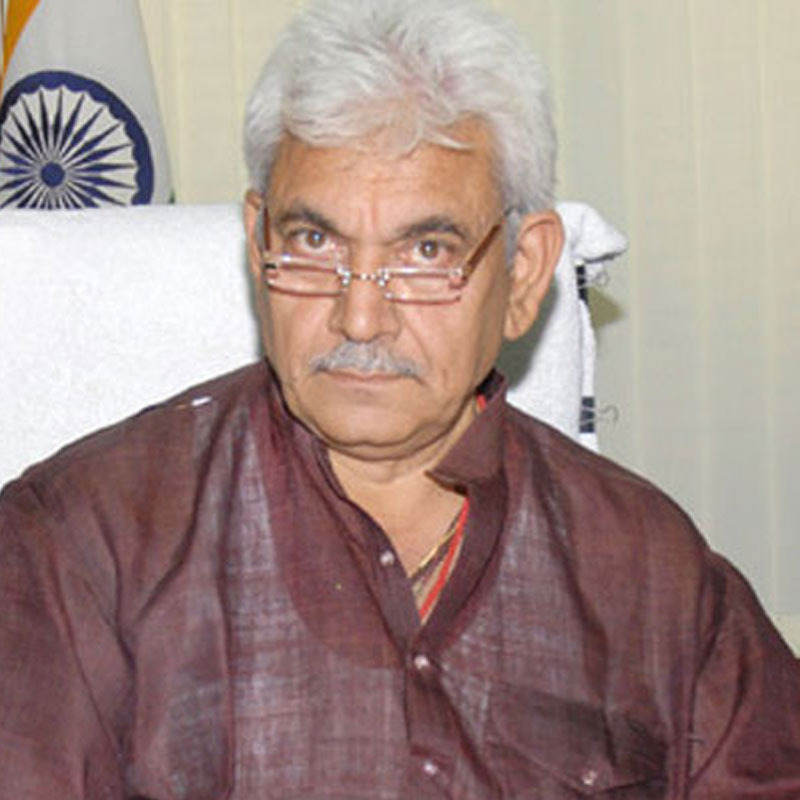
  • Around 100,000 gram panchayats to be connected through Optic Fibre by March: Sinha

    Around 100,000 gram panchayats to be connected through Optic Fibre by March: Sinha

    NEW DELHI: Around 100,000 Gram Panchayats (GPs) will be connected through Optical Fibre Cable (OFC) to set up a network infrastructure to serve the rural masses by March next year, Communications Minister Manoj Sinha said today.

    He called for holistic planning rather than piecemeal approach to achieve the vision of Digital India.

    Inaugurating a seminar organized by National Institute of Communication Finance on “ICT emerging technologies & USOF for Digital India” here, the Minister said there was need for innovation in this sector as India cannot afford to emulate the Developed economies due to limited resources.

    He said if India will lag in catching up with emerging technologies in the coming 15 to 20 years, the very existence of the country will be at stake. He exhorted officials and other stakeholders to “Walk the Talk” for achieving the Prime Minister’s vision of Transforming India through Digital Revolution. He said it is a bounden duty to digitally empower the huge chunk of population particularly in rural areas who are still deprived of the IT revolution and said the Government alone cannot do this.

    He said there is need for finding appropriate technologies for the deprived sections of society, whether it is by way network infrastructure or digital highway.

    Telecom Secretary J S Deepak said the Finance Ministry is very conservative in allocation of funds under USOF (Universal Service Obligation Fund). He said despite Rs 70,000 crore being available under USOF, allocation of work is less than 40 per cent.

    However, he admitted that the execution of digital infrastructure projects particularly in rural areas needs to be speeded up. Deepak also announced that Rs 10,000 Crore will be spent in 2016-17, which is the highest in the history of USOF.

    Telecom Regulatory Authority of India Chairman R S Sharma said Public-Private Partnership is definitely the best mode for transforming India into Digitally Empowered Society and Knowledge Economy.

    He said when mobile telephony made its foray into India, there were twenty million fixed telephone lines and the number remains the same even today even though the mobile subscribers have crossed the 1000 million mark.

    He cautioned that the era of voice has been replaced by data and if India will lag behind in building the Digital Highway in a time bound manner, there will be problems of traffic Jam.

    The two-day long seminar will deliberate on the topics like changing role of USOF, regulatory issues and its future perspective, challenges of consolidation in digital Indian initiatives, Bharat Net and road ahead, broadband proliferation by telecom service providers, unlicensed spectrum for Wi-Fi etc.

  • Around 100,000 gram panchayats to be connected through Optic Fibre by March: Sinha

    Around 100,000 gram panchayats to be connected through Optic Fibre by March: Sinha

    NEW DELHI: Around 100,000 Gram Panchayats (GPs) will be connected through Optical Fibre Cable (OFC) to set up a network infrastructure to serve the rural masses by March next year, Communications Minister Manoj Sinha said today.

    He called for holistic planning rather than piecemeal approach to achieve the vision of Digital India.

    Inaugurating a seminar organized by National Institute of Communication Finance on “ICT emerging technologies & USOF for Digital India” here, the Minister said there was need for innovation in this sector as India cannot afford to emulate the Developed economies due to limited resources.

    He said if India will lag in catching up with emerging technologies in the coming 15 to 20 years, the very existence of the country will be at stake. He exhorted officials and other stakeholders to “Walk the Talk” for achieving the Prime Minister’s vision of Transforming India through Digital Revolution. He said it is a bounden duty to digitally empower the huge chunk of population particularly in rural areas who are still deprived of the IT revolution and said the Government alone cannot do this.

    He said there is need for finding appropriate technologies for the deprived sections of society, whether it is by way network infrastructure or digital highway.

    Telecom Secretary J S Deepak said the Finance Ministry is very conservative in allocation of funds under USOF (Universal Service Obligation Fund). He said despite Rs 70,000 crore being available under USOF, allocation of work is less than 40 per cent.

    However, he admitted that the execution of digital infrastructure projects particularly in rural areas needs to be speeded up. Deepak also announced that Rs 10,000 Crore will be spent in 2016-17, which is the highest in the history of USOF.

    Telecom Regulatory Authority of India Chairman R S Sharma said Public-Private Partnership is definitely the best mode for transforming India into Digitally Empowered Society and Knowledge Economy.

    He said when mobile telephony made its foray into India, there were twenty million fixed telephone lines and the number remains the same even today even though the mobile subscribers have crossed the 1000 million mark.

    He cautioned that the era of voice has been replaced by data and if India will lag behind in building the Digital Highway in a time bound manner, there will be problems of traffic Jam.

    The two-day long seminar will deliberate on the topics like changing role of USOF, regulatory issues and its future perspective, challenges of consolidation in digital Indian initiatives, Bharat Net and road ahead, broadband proliferation by telecom service providers, unlicensed spectrum for Wi-Fi etc.