Tag: R S Prasad

  • Bombay HC to take up Mirchi case

    Bombay HC to take up Mirchi case

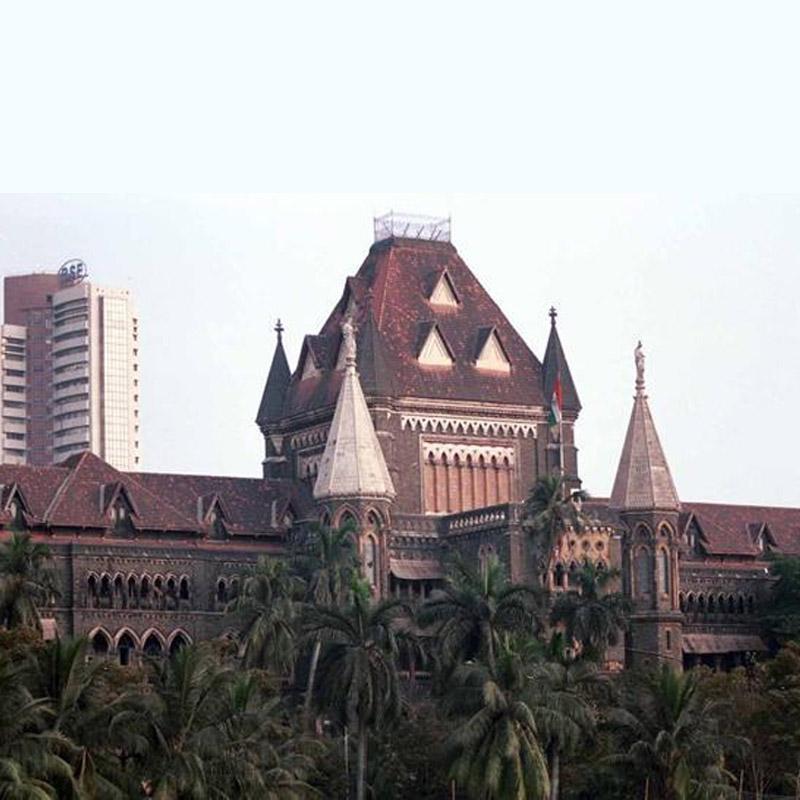
    MUMBAI: The Bombay High Court is scheduled to hear Entertainment Network India Ltd (Radio Mirchi)’s petition seeking an injunction against the government from encashing its bank guarantee.

    The petition, which was listed for hearing at 2:30 pm, did not come up till 6 pm, information available with indiantelevision.com indicates.

    At the time of posting this report, inquiries with FM industry sources could not conclusively ascertain when and if the case was to finally be heard.

    ENIL, which runs FM radio station Radio Mirchi, had petitioned the court last week, attempting to get legal cover, while getting the government to accede to its request to get the deadline for payment of license fees postponed. ENIL, which runs FM stations in seven cities in India including Mumbai, Pune, Delhi, Kolkata, Chennai, Indore and Ahmedabad, is scheduled to pay up license fees of over Rs 110 million for Mumbai itself for the third year of broadcast by 29 April.

    The legal route is being tried out by Mirchi, as well as other players who contemplate taking the same road, in an attempt to stall payments in the current government’s reign, in the belief that the next government that comes to power after the ongoing Lok Sabha (Lower House) elections, will take a more lenient view of the radio licensing regime.

    But government officials say that at this time, it would not be prudent for the government to defer the license fee payment as it would need a cabinet okay, which could be questioned by opposition political parties as the election process is on and the present government is just a caretaker one.

    More importantly, officials point out, that if a deferment of the license fee happens, then it may result in financial loss for the government as the total license fee of various players put together amounts to almost Rs 1000 million.

    FM broadcasters have been trying to get the government to rationalise the sector by getting a revenue sharing model in place of the license structure. Information and broadcasting minister R S Prasad had hinted in favour of the proposed model during Frames 2004 held in Mumbai in March. The Telecom Regulatory Authority of India, earlier this month, issued its interim recommendations on private FM broadcast. According to the recommendations, FM licensees were given the option of deferring payments, which could fall due till a final decision is taken.

    The final recommendations of Trai would address the issue of license fee payable as well as the relevant interest rate. The I&B ministry however, has not taken a decision on the recommendations thus far.


  • Indo Pak cooperation to extend to films, TV software

    Indo Pak cooperation to extend to films, TV software

    MUMBAI: A first ever joint venture in the arena of film production is the first most likely outcome of the visit of the Pakistani delegation to Frames 2004.

    The delegation, however, is also keenly following up with production houses and broadcasters in India for joint productions in television software. “Thus far, Indian artistes have been crossing the border to act in Pakistani serials. It would be a better idea to tie up with production houses here to produce serials jointly,” says Evernew Entertainment executive director Mohammed Jerjees Seja, a member of the delegation. 

    The decision to go in for joint productions is not merely sentimental. Despite the fact that the Star channels are not available uniformly in Pakistan, Star Plus’ Kyunki Saas Bhi Kabhi Bahu Thi tops the ratings charts in that country, although the predominant channel Geo TV rules the roost otherwise, he says. Seven private satellite channels arecurrently operational in the country, including Geo, ARY and Indus. 

    Three channels have started recently, including a regional Sindhi channel. Seja estimates that five new channels, including a business channel and a regional channel in the Pushto language would commence operations this year. The joint film project, due to be announced at Frames 2004, will take technology from India and talent from Pakistan, says Evernew Entertainment chief executive Sajjad Gul. 

    With the information and broadcasting minister R S Prasad offering a handshake with the neighbours in the arena of film production, the delegation from across the border should return with some tangible projects in its kitty. According to Seja, there is no official ban on Indian satellite channels and that 85 per cent of cable connected homes in Karachi receive Indian channels. The Pakistan government too has thrown open the DTH segment. Two private players, ARY and Geo are already in the fray while the government too intends to get into the arena, a la Prasar Bharati in this country.


  • Prasad lures entertainment sector with promised incentives

    Prasad lures entertainment sector with promised incentives

    MUMBAI: A memorandum of understanding with Pakistan, ‘not just on commerce, but also on creativity’ may turn out to be the most positive outcome of the three day Ficci Frames convention that kicked off in Mumbai this morning.

    “I extend my hand of friendship and appeal for a MoU of love to the delegation from Pakistan,” information and broadcasting minister R S Prasad declared to rousing approval from an audience, which had otherwise slipped into a mood of near ennui at the bland inaugural session of the convention on the entertainment industry in India. Rajya Sabha MP Hema Malini and film star Preity Zinta were the only glamour faces on the podium, among a series of speeches where the ‘India Shining’ factor figured intermittently in references to the growing and glowing Hindi film industry. 

    Prasad, however, also cryptically hinted at a major policy change in the radio broadcast sector, when he said that “we are going to be the facilitator in the fast growing segment,” and that “we are moving in the right direction” (possibly towards a more feasible revenue sharing model).

    UK secretary of state, department of culture, media and sports Tessa Jowell stressed on cooperation between the two countries, not just in the areas of film production, but also distribution and decried the growing invasion of piracy that is eating into legitimate revenues for the entertainment sector. While Prasad pointed out that most of the pirated content is one that originates from the sub continent, Jowell invited Indian companies to take advantage of the liberalised policy on broadcast licenses in the UK.

    Prasad also hinted at more incentives for the entertainment sector if the NDA government returns to power, saying that since the procedures for film shooting were liberalised in India last year, the number of applications from overseas productions has shot up from 15 every year to 10 applications in just two and half months from the beginning of 2004. 

    Both Ashok Amritraj, tennis ace turned Hollywood film producer and Prasad stressed on the need for developing better screenplays as on the importance of high technology in films and TV software.

    Walt Disney International exploring possibility of a channel in India

    Walt Disney International president Andy Bird met Prasad here today and expessed a keen interest in investing in the entertainment sector in India. Prasad was told that the Walt Disney company was exploring the possibility of a channel and would be meeting the key players in the animation sector during the three day Frames 2004 conference in Mumbai.

    Bird told Prasad that his company saw clarity on policy issues, especially during the last two years, and that he saw good promise for investment in this sector. The possibility of a collaborative arrangement in programming with the Akashvani was also discussed. The two men also discussed the several policy initiatives taken by the government to liberalise the entertainment sector and attract foreign investment.

  • Panel moots 26 per cent FDI in radio sector

    Panel moots 26 per cent FDI in radio sector

    NEW DELHI: There’s good news for private FM radio players in the country.
     

    The Radio Broadcast Policy Committee led by Ficci general secretary Amit Mitra, which submitted its recommendations to information and broadcasting minister R S Prasad today, has mooted 26 per cent FDI in the sector as well as a lift from the current ban on news and current affairs on private radio.

    The panel, set up in September, has also asked the government to come out with a policy on satellite radio channel uplink, lacking thus far. The long pending demand of the FM players, that of a tender system instead of the auctioning of licenses for private FM also finds mention in the recommendations. The recommendations, if approved, would be applicable when the government decides to go in for the second phase of FM radio implementation in the country.

    The panel has also suggested that the government get the existing FM projects vetted by financial institutions for their commercial viability. The panel has also mooted the formation of an independed broadcast regulator, which would bring the broadcast sector under its purview.

  • Industry stresses on creation of good content

    Industry stresses on creation of good content

    MUMBAI: Content was the buzzword at the inaugural session of FRAMES 2003 as film luminaries as well as government bigwigs stressed on the need for good content creation in the film as well as television industry.

    FICCI entertainment committee chairperson Yash Chopra set the ball rolling by admitting that in the year gone by, the industry neglected content in a struggle for productivity. Infrastructure constraints however need to be eased if the industry is to flourish in the days ahead, he said.


    Filmmaker Bobby Bedi, who doubles up as FRAMES convenor, said that although it has been a good year for television in India, the ‘aesthetic of content is narrowing down’. Increased exposure to films, domestic and international have resulted in audiences being more aware of better camerawork, technology, and scripts. “They are no longer ready to accept inferior work”, he said, ending his speech with an appeal to ‘try and make great content’.

    Information and broadcasting ministry’s secretary Pawan Chopra who followed him also stressed on the content aspect, but wondered why software makers had to be dependent on foreign investment for content creation when domestic financial institutions and corporates could be interested in investment.

    UK secretary of state, department of culture, media and sports Tessa Jowell who could not be present at the convention, mentioned in a speech that was read out on the occasion that Britain was game for a co-production treaty with India that would give a fillip to shooting of Indian films on UK soil.

    I&B minister R S Prasad in his address also said that a friendlier regime was being put into place for increasing the possibilities of shooting foreign films in India, and that a single window system would be put into place.

    Regarding piracy, an issue that has gained prominence in the last one year, Prasad said that a comprehensive policy needed to be worked out. The government was willing to lend the airwaves for educating people about the menace of piracy, but the initiative has to come from the industry.

    Prasad said later in his press conference that addressability is designed to bring in transparency in the cable trade and that it has to be enforced as the industry left on its own failed to do it on its own.