Tag: R. Jeswant

  • Funskool India appoints old-timer K.A. Shabir as new CEO

    Funskool India appoints old-timer K.A. Shabir as new CEO

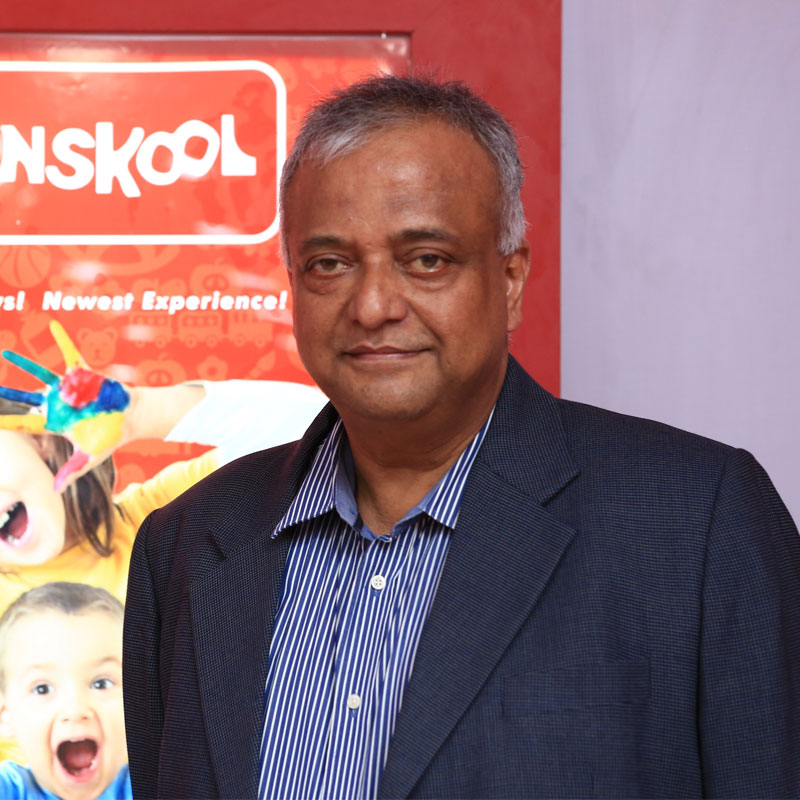
    MUMBAI: Being in the toys business is no child’s play. But KA Shabir is willing to take on the challenge. From 1 January 2025, he has taken on the mantle of leading the leading Indian toymaker Funksool India Ltd , part of the MRF group,  as its CEO.. He replaces the very affable R. Jeswant  who was appointed in CEO  in 2020 and  retired year-end 2024. 

    Shabir has been with Funskool for over 33 years and is an accomplished techno commercial expert who has led many departments in Funskool such as international business, manufacturing, factory operations and new product development while also driving organisational growth. 

    “Funskool pioneered the concept of quality and safety in toys and has been instrumental in raising the standards of toys in India. To lead this 39-year-old organisation which has many firsts to its credit at a time when it is expanding rapidly, is an honour. As a team, we will bring out interesting and innovative creations to make playtime a delight for children,”  said Shabir.  

    Amongst the firsts to its credit is the BIS certification for the electric toys it manufactures  in its Goa plant as well for its non-electric toys it makes in its Ranipet  manufacturing facility. It received both the certifications in October 2020, much before the government set deadline of 1 January 2021. 

    For over a decade, Shabir has been the face of Funskool in the international fora within the toy industry.  He is hailed as one of the expert voices in the Indian toy industry. Shabir’s acumen for identifying market opportunities and devising tailor made strategies for new customers has expanded Funskool’s global footprints and its exports revenue. 

    Having excelled in his earlier role as vice president – international division and manufacturing, Shabir’s transition to the new role of CEO marks a new chapter in Funskool’s growth journey.  Under his leadership, Funskool is poised to drive innovation in product development, explore new markets, win more marquee customers from across the globe, use the best of technologies to improve toy manufacturing, further the sustainability initiatives and redefine toy industry standards, says a company press release..

  • R Jeswant joins Funskool India as CEO

    R Jeswant joins Funskool India as CEO

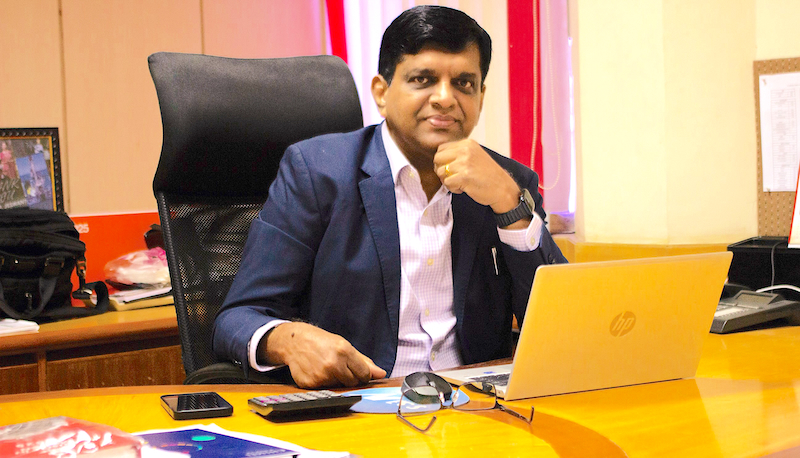
    MUMBAI: Funskool (India) Ltd, recently welcomed R Jeswant as its chief executive officer on board, following the retirement of John Baby.

    Baby, who was the CEO of the company from 2006-2020, was responsible for boosting exports by setting up the company’s third manufacturing facility in Ranipet from where the factory caters entirely to the export market.

    Jeswant succeeded Baby as the new CEO with effect from 1 April 2020.

    Prior to Jeswant’s appointment as CEO, he was the company’s senior vice president (sales and marketing) and has been associated with Funskool (India) for over 20 years. Prior to joining Funskool in 2000, Jeswant had worked with TI Cycles of India as senior product manager and with Blue Star Ltd as general manager (sales).

    Jeswant said, “At Funskool, we will continue pursuing our plans actively with utmost optimism to build a global toy brand from India, while strengthening our product lines in every category in India.”

  • High mall rentals holding back toy sales in India: R Jeswant, Funskool

    High mall rentals holding back toy sales in India: R Jeswant, Funskool

    MUMBAI: The Indian toy market is currently estimated at Rs 3000 crore at retail, which makes it only around 0.5 per cent of the world toy market. It is however expected to be one of the fastest growing markets over the next 10 years. Since the rate of growth is 15 per cent, the industry promises to rise rapidly, especially when there is an entry of popular games and characters at regular intervals, which in turn ensures that retailers do not miss on licensing the particular product.

    According to LIMA (International Licensing Industry Merchandisers’ Association) Global Licensing Industry Survey, 2018, the market size is $271.6 billion with a 3.3 per cent growth since 2017, making it more competitive because of limited shelf space for toys, reasonable price range and a large number of retailers.

    Funskool is India’s largest domestic manufacturer of children’s’ toys that started operations in 1987. The company is a licensed distributor of famous international toy brands including Disney, Warner Bros, LeapFrog, LEGO, Rubik Cube, TOMY, Hasbro, Beyblade, Engino among others.

    Additionally, Funskool is focusing on expanding its footprint to tier 2 city to start own brand stores.

    Licensing also helps the toy business to grow, since consumers recognise toys based on fictional movie characters, TV shows and are sold easily. In addition, the company feels that brand licensing is a stable marketing endeavour in addition to its own home brands such as Giggles, Fun Dough, and Play & Learn, etc.

    Indiantelevision.com spoke to Funskool India SVP of sales and marketing R Jeswant about the toy industry in India, what’s holding it back and growth opportunities.

    We just got over summer time which is the peak season for your category. But since we are in the midst of the rainy season, are your toy sales hit during this season?
    Toy sales tend to peak during the summer vacations in April and May. The festival season from October to December is also a peak selling period for toys. December is probably the biggest month for toy sales. The winter vacation along with Christmas and New Year fuels demand for toys. Rains impact the category as much as other discretionary categories on a typical rainy day but over the full rainy season, the impact is not very significant.

    What has been your year-on-year growth been in India?
    We have been growing steadily over the last five years and are quite happy with the way the business is moving currently.  Our company has been growing at a CAGR of 18-20 per cent over the last few years.

    What was the revenue from 2017 and what is your expectation from this fiscal year?
    We closed the financial year 2017-18 with a turnover around Rs 240 crore and are optimistic about this year as well. Although we can’t really project the number that we will close at, it will definitely be better than the previous year’s closing.

    What’s your marketing strategy for Funskool products? How much do you invest on television?
    For products where the decision maker is a kid, we advertise on kids television channels including Nickelodeon, Cartoon Network, Sonic, Disney among others. For our Infant & Pre School toy category, where the decision to buy is mostly taken by the mother, we advertise on general entertainment channels and on movie channels. We also advertise these products in women’s magazines. We have a network of Funskool retail stores and if we are advertising for these stores we use more of print advertising. Increasingly we are using the digital media and our spends in digital are seeing an increase every year.

    Do you conduct any on-ground activations in malls or in schools to connect with your target consumer, i.e., kids?
    We conduct several events and competitions in malls and also in individual retail points. With our on ground activations, we encourage children to try out our games and puzzles. We also work with teachers and students in schools for products like Fundough that helps in the development of children and are educational in nature.

    What’s your organisational structure like? How many manufacturing units do you have and expansion plans?
    We have two manufacturing units in Goa and Ranipet and a third unit will come up soon in Ranipet. We have six regional offices and 85 members in our sales and marketing team. So, it is a pretty huge team.

    What’s your distribution strength and how do you plan on penetrating in rural India?
    Our distribution network is our biggest strength with 16 warehouses across the country and a network of over 5000 retail points. We think the next wave of revenue will come from tier 2 towns. To strengthen the distribution in smaller segments, we are in the process of expanding to more small towns.

    What is your plan for the retail expansion?
    We are always looking at expanding our Funskool Stores network. Currently, we have 16 stores and we are planning to double the store count over the next two years.

    With growing popularity of digital, games on mobile and internet, do you think physical toys, puzzles and games are still relevant to the new generation of kids?
    The Indian toy market is very small for toys as of now and is estimated to be no more than 0.5 per cent of the world toy market. The market will surely grow at a double digit CAGR for at least the next 10 years. Digital gaming has surely caught the imagination of children but considering that the market is so small, we expect the future of the Indian toy industry to be very bright in the medium term, even for traditional toys.

    Today, there are several international brands present in the market. Do you see competition and challenge to create distinguished products?
    Almost all major toy brands are present in the Indian toy market today. All toy majors see India as the market for the future and are investing here. However, the very high mall rentals are a major factor for toy sales not growing faster. There is not enough shelf space for toys due to the category not delivering enough sales to justify the high rentals.

    Do you see this changing with young parents increasingly understanding the importance of educational toys and puzzles for the physical and mental growth of their child?
    Over the next few years, we can expect the toy industry to really blossom. More awareness among young parents about toys being important for the development of children and increasing purchasing power coupled with the availability of all the leading brands of toys will result in exponential growth of the toy market over the next few years.