Tag: R. Jaya

  • K. Sanjay Murthy new MIB jt secy broadcasting

    K. Sanjay Murthy new MIB jt secy broadcasting

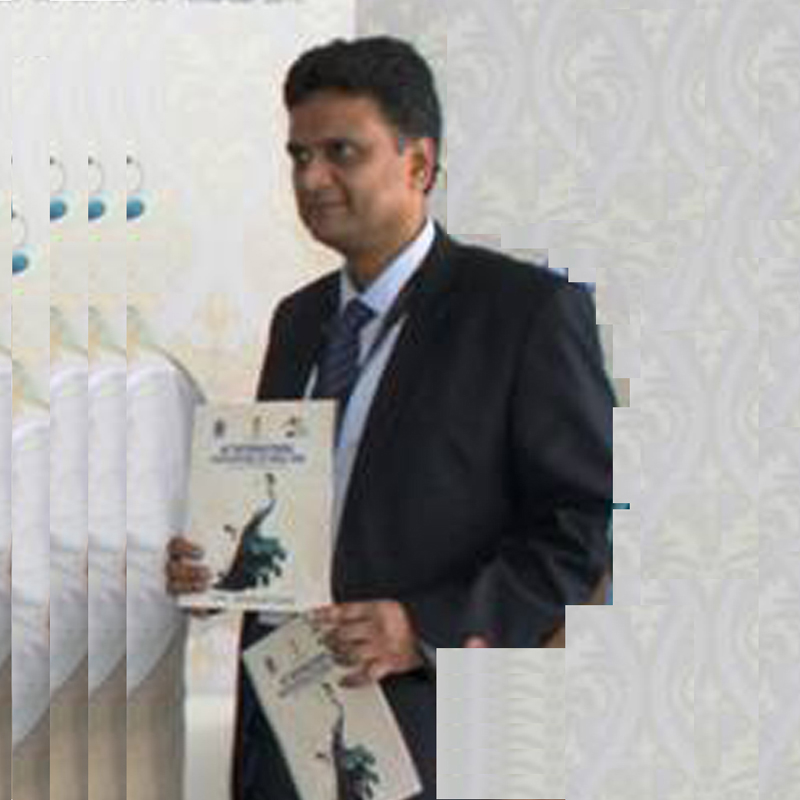
    NEW DELHI: There’s change at the top at India’s ministry of information & broadcasting (MIB) in Shastri Bhawan. Joint secretary (films) K. Sanjay Murthy – who was holding additional charge of the broadcasting section along with another joint secretary Mihir Kumar Singh – was officially given complete charge of broadcasting on 29 August. He has taken over the work that was being handled by R. Jaya.

    As joint secretary films and he had made his mark with the initiatives he had taken which had benefited the Indian film community.

    Additionally, director (films) Anshu Sinha has been promoted as joint secretary (films). Earlier reports were that she would be replacing R. Jaya in the broadcasting section.

    Finally, Jayashree Mukherjee – from the Maharashtra IAS cadre – who was appointed as additional secretary mid-July has moved into her Shastri Bhawan office 20 days ago. A mild spoken lady, she replaced special secretary JS Mathur who was promoted as secretary Panchayati Raj.

    Both Mukherjee and Murthy have been given charge during challenging times. The countdown for the fourth phase of DAS has begun with the sunset date being 31 December 2016. Additionally, even phase III is stuck in the analogue mode courtesy a flurry of cases which have been filed in various courts.

  • K. Sanjay Murthy new MIB jt secy broadcasting

    K. Sanjay Murthy new MIB jt secy broadcasting

    NEW DELHI: There’s change at the top at India’s ministry of information & broadcasting (MIB) in Shastri Bhawan. Joint secretary (films) K. Sanjay Murthy – who was holding additional charge of the broadcasting section along with another joint secretary Mihir Kumar Singh – was officially given complete charge of broadcasting on 29 August. He has taken over the work that was being handled by R. Jaya.

    As joint secretary films and he had made his mark with the initiatives he had taken which had benefited the Indian film community.

    Additionally, director (films) Anshu Sinha has been promoted as joint secretary (films). Earlier reports were that she would be replacing R. Jaya in the broadcasting section.

    Finally, Jayashree Mukherjee – from the Maharashtra IAS cadre – who was appointed as additional secretary mid-July has moved into her Shastri Bhawan office 20 days ago. A mild spoken lady, she replaced special secretary JS Mathur who was promoted as secretary Panchayati Raj.

    Both Mukherjee and Murthy have been given charge during challenging times. The countdown for the fourth phase of DAS has begun with the sunset date being 31 December 2016. Additionally, even phase III is stuck in the analogue mode courtesy a flurry of cases which have been filed in various courts.

  • Govt claims almost 100 percent STB seeding in DAS III areas despite cases

    Govt claims almost 100 percent STB seeding in DAS III areas despite cases

    NEW DELHI: Despite the challenge to digital addressable systems in many courts in the country, the government has claimed almost 100 per cent achievement in phase III areas with seeding of about 41 million (4.1 crore) set top boxes.   

    The claim was made by Information and Broadcasting joint secretary R Jaya in the 15th meeting of the Task Force on implementation of phases III and IV of DAS of cable television networks on 30 May 2016 under the chairpersonship of l&B secretary Ajay Mittal.

    In the last meeting on 16 February 2016, it had been disclosed that around 90.44 percent success had been achieved in DAS phase III. During the meeting it was informed that the seeding of STBs by multi system operators increased from 6.91 million to 12.43 million between 31 December 2015 and 15 February 2016.

    But she admitted that seeding had slowed down due to court cases. She also said the figure given by her may include some reporting of seeding in phase lV

    A total of 42 court cases have been filed for extension in the deadline of phase lll in various courts in the country with the 2-month extension by the Telangana and Andhra Pradesh High Court. Other courts followed suit on the grounds that this order was extendable to other areas. This led to the centre moving the Supreme Court which passed an order of transfer of all cases for extension filed in various courts and any new cases on similar prayer to the Delhi High Court for adjudication.

    Seventeen cases have so far been transferred by various courts to the Delhi High Court out of which the High Court had dismissed three cases and another three cases were being heard that same day. A case filed by one Headend-in-the-sky player on the same matter was also being heard in the Delhi High Court on that day (30 May 2016).

    Jaya said more MSOs’ had been given registration since the last meeting of the Task Force taking the total to 870. She said that MSOs’ and broadcasters should now concentrate on phase lV areas and prioritize signing of interconnect agreements for these areas.

    She also asked stakeholders to plan and start launching of publicity awareness campaigns for mandatory digitisation in phase lV areas which is to be completed by 31 December 2016.

    Earlier, Mittal said DAS was a win-win situation for all and so all sectors should cooperate. He said the meeting of the Task Force could not be held since February 2016 due to various administrative reasons.

    He said the consumers deserve better quality reception and other benefits from digitisation. He hoped that all stakeholders would make concerted efforts to digitise the remaining areas under the fourth and last phase of digitisation.

    He said the ministry had planned to hold a fresh round of several regional workshops at various places in the country in the coming months as had been done for the last phase. .

    Advisor (DAS) Yogendra Pal said the ministry has asked all registered MSOs’, DTH & HITS operators’ to enter the seeding data in the MIS system developed by the ministry for collection of data for all the four phases instead of phase lll which they had been doing until now, and update it once in a week. He added that MIS system has suitably been modified for this purpose and 35 operators have already entered seeding data for Phase lV.

    He said that only about 1,000 applications had been received till date in the ministry for MSO registration against the expected number of about 6,000 applications. He requested the members to advise those MSOs’ who are yet to apply for DAS registration to do the same. He mentioned that the ministry had requested the broadcasters to check up with all MSOs’ with whom they have interconnect agreements if they have taken MSO registration for phase lV areas and advise them to do so immediately.

    The members were told that the TV household requirements as per census 2011 data would be provided though this would be district wise and not rural area wise.

    A representative of a Consumer Forum said though digitisation has not adversely affected anybody, much that was expected from the consumer point of view is still awaited.

    A local cable operator from Maharashtra regretted that before implementation of DAS, LCOs’ were entrepreneurs and after its implementation they have become employees of MSOs’. He also said that LCOs’ have been voicing their concerns from the time of the first phase but without being heard.

    The Telecom Regulatory Authority of India regulation on revenue sharing between MSOs’ and LCOs’ is an issue that is still unresolved. He added that MSOs’ are not entering into proper interconnect agreements with LCOs’. He remarked that digitisation under phase lV may not be easy as all national MSOs’ may not be able to cover all areas.

    But a representative of GTPL mentioned that MSOs’ and LCOs’ are separate entities. They sign agreements with each other as principals. Each entity has its defined role in providing the service. He said the government should consider giving some incentives for digitization in phase lV areas. He added that TRAI had also recommended some incentives in its recommendations which were not accepted by the government.

    At this, Mittal said any incentives sought for by any group or sector should get passed on to the people.

    A representative of Hathway said LCOs’ can also become MSOs’. He said MSOs’ have no issues with regard to interconnect agreements with LCOs’. He said on the directive of Bombay High Court, TRAI had prescribed a standard interconnect agreement form after due process of consultations. This form serves as a template for all such agreements.

    He suggested that broadcasters should offer special rates for phase lll and phase lV markets.

    A Siti Cable representative said digitisation had benefitted people as they get greater channel choice and better signal quality. He said extension of deadline granted by various courts for phase lll of digitisation had badly affected the pace of digitization. He added that the MSOs’ are losing out on huge inventory of set top boxes which they are not able to deploy in the field. With regard to phase lV of digitisation, he said the headends installed by them for phase lll will cater to phase lV areas as well.

    A DTH representative said as a result of the extension in deadline granted by various courts, they had to retrench some of their employees whom they had deployed in the field.

    An LCO from Assam complained that one MSO in Assam had served a legal notice to LCOs’ for migrating to another MSO, and consumers had also been served with legal notice for return of set top box bought by them from the MSO through outright purchase. He said the authorized officers in the state of Assam do not take action against MSOs’ who are violating the cable network rules and regulations.

    The TRAI representative admitted that while regulations prescribe three modes of purchase for STBs – outright purchase, hire purchase, and rental mode, standard plans have been prescribed under rental mode only and no price for outright purchase has been prescribed by TRAI.

    Referring to the Assam LCO, he said this would not have arisen if the interconnect agreements entered by MSOs’ with LCOs’ had been clear on every issue.

    He said TRAI had recently started a fresh review of all regulations and consultation process on the same is on. He added that TDSAT earlier used to pass interim orders but had of late it passed orders that were final.

    Mittal hoped that the review of the DAS Regulations undertaken by TRAI is completed quickly and the various grievances of the stakeholders regarding the extant regulations are addressed. He also remarked that there appeared to be lack of trust between the MSOs’ and LCOs’ and TRAI should look at this.

    An LCO from Maharashtra complained that the state government entertainment officers are sealing the control rooms of MSOs’ for non-payment of Entertainment Tax.

    But he was told that only the authorized officers, as defined in the Cable TV Act and Rules framed thereunder, are authorized to take any action for violations of the various provisions of the Act.

    The Advisor said one state government had complained to the ministry that MSOs’ are not giving them access to their SMS system to verify the lists of subscribers. He said that MSOs’ should provide the SMS report to the state governments as and when asked by them.

    An Odisha government representative said the state government has set up coordination committees at state and district level to implement cable TV digitisation in the state. He added that the nodal officers in the state are also checking the MIS data on regular basis. The state nodal officer from the state of Telengana mentioned that 20 MSOs’ operating in the state had not so far entered data in the MIS system. Jaya said that it was heartening to know that state governments are also monitoring the seeding of data by MSOs’ in their states. She mentioned that the MIS system deployed by ministry sends an alert to an MSO in case he does not update his data.

    She said that the regional units set up by the ministry for remain in touch with MSOs’ to ensure that MSOs’ follow the rules.

    A point was raised that LCOs’ are asked by the Head Post Offices to obtain NOC certificate from the state government for issue as well as renewal of their LCO registration. It was suggested that LCO registration be granted for 5 years instead of period of one year as per existing rules. Mittal agreed to consider this.

  • Govt claims almost 100 percent STB seeding in DAS III areas despite cases

    Govt claims almost 100 percent STB seeding in DAS III areas despite cases

    NEW DELHI: Despite the challenge to digital addressable systems in many courts in the country, the government has claimed almost 100 per cent achievement in phase III areas with seeding of about 41 million (4.1 crore) set top boxes.   

    The claim was made by Information and Broadcasting joint secretary R Jaya in the 15th meeting of the Task Force on implementation of phases III and IV of DAS of cable television networks on 30 May 2016 under the chairpersonship of l&B secretary Ajay Mittal.

    In the last meeting on 16 February 2016, it had been disclosed that around 90.44 percent success had been achieved in DAS phase III. During the meeting it was informed that the seeding of STBs by multi system operators increased from 6.91 million to 12.43 million between 31 December 2015 and 15 February 2016.

    But she admitted that seeding had slowed down due to court cases. She also said the figure given by her may include some reporting of seeding in phase lV

    A total of 42 court cases have been filed for extension in the deadline of phase lll in various courts in the country with the 2-month extension by the Telangana and Andhra Pradesh High Court. Other courts followed suit on the grounds that this order was extendable to other areas. This led to the centre moving the Supreme Court which passed an order of transfer of all cases for extension filed in various courts and any new cases on similar prayer to the Delhi High Court for adjudication.

    Seventeen cases have so far been transferred by various courts to the Delhi High Court out of which the High Court had dismissed three cases and another three cases were being heard that same day. A case filed by one Headend-in-the-sky player on the same matter was also being heard in the Delhi High Court on that day (30 May 2016).

    Jaya said more MSOs’ had been given registration since the last meeting of the Task Force taking the total to 870. She said that MSOs’ and broadcasters should now concentrate on phase lV areas and prioritize signing of interconnect agreements for these areas.

    She also asked stakeholders to plan and start launching of publicity awareness campaigns for mandatory digitisation in phase lV areas which is to be completed by 31 December 2016.

    Earlier, Mittal said DAS was a win-win situation for all and so all sectors should cooperate. He said the meeting of the Task Force could not be held since February 2016 due to various administrative reasons.

    He said the consumers deserve better quality reception and other benefits from digitisation. He hoped that all stakeholders would make concerted efforts to digitise the remaining areas under the fourth and last phase of digitisation.

    He said the ministry had planned to hold a fresh round of several regional workshops at various places in the country in the coming months as had been done for the last phase. .

    Advisor (DAS) Yogendra Pal said the ministry has asked all registered MSOs’, DTH & HITS operators’ to enter the seeding data in the MIS system developed by the ministry for collection of data for all the four phases instead of phase lll which they had been doing until now, and update it once in a week. He added that MIS system has suitably been modified for this purpose and 35 operators have already entered seeding data for Phase lV.

    He said that only about 1,000 applications had been received till date in the ministry for MSO registration against the expected number of about 6,000 applications. He requested the members to advise those MSOs’ who are yet to apply for DAS registration to do the same. He mentioned that the ministry had requested the broadcasters to check up with all MSOs’ with whom they have interconnect agreements if they have taken MSO registration for phase lV areas and advise them to do so immediately.

    The members were told that the TV household requirements as per census 2011 data would be provided though this would be district wise and not rural area wise.

    A representative of a Consumer Forum said though digitisation has not adversely affected anybody, much that was expected from the consumer point of view is still awaited.

    A local cable operator from Maharashtra regretted that before implementation of DAS, LCOs’ were entrepreneurs and after its implementation they have become employees of MSOs’. He also said that LCOs’ have been voicing their concerns from the time of the first phase but without being heard.

    The Telecom Regulatory Authority of India regulation on revenue sharing between MSOs’ and LCOs’ is an issue that is still unresolved. He added that MSOs’ are not entering into proper interconnect agreements with LCOs’. He remarked that digitisation under phase lV may not be easy as all national MSOs’ may not be able to cover all areas.

    But a representative of GTPL mentioned that MSOs’ and LCOs’ are separate entities. They sign agreements with each other as principals. Each entity has its defined role in providing the service. He said the government should consider giving some incentives for digitization in phase lV areas. He added that TRAI had also recommended some incentives in its recommendations which were not accepted by the government.

    At this, Mittal said any incentives sought for by any group or sector should get passed on to the people.

    A representative of Hathway said LCOs’ can also become MSOs’. He said MSOs’ have no issues with regard to interconnect agreements with LCOs’. He said on the directive of Bombay High Court, TRAI had prescribed a standard interconnect agreement form after due process of consultations. This form serves as a template for all such agreements.

    He suggested that broadcasters should offer special rates for phase lll and phase lV markets.

    A Siti Cable representative said digitisation had benefitted people as they get greater channel choice and better signal quality. He said extension of deadline granted by various courts for phase lll of digitisation had badly affected the pace of digitization. He added that the MSOs’ are losing out on huge inventory of set top boxes which they are not able to deploy in the field. With regard to phase lV of digitisation, he said the headends installed by them for phase lll will cater to phase lV areas as well.

    A DTH representative said as a result of the extension in deadline granted by various courts, they had to retrench some of their employees whom they had deployed in the field.

    An LCO from Assam complained that one MSO in Assam had served a legal notice to LCOs’ for migrating to another MSO, and consumers had also been served with legal notice for return of set top box bought by them from the MSO through outright purchase. He said the authorized officers in the state of Assam do not take action against MSOs’ who are violating the cable network rules and regulations.

    The TRAI representative admitted that while regulations prescribe three modes of purchase for STBs – outright purchase, hire purchase, and rental mode, standard plans have been prescribed under rental mode only and no price for outright purchase has been prescribed by TRAI.

    Referring to the Assam LCO, he said this would not have arisen if the interconnect agreements entered by MSOs’ with LCOs’ had been clear on every issue.

    He said TRAI had recently started a fresh review of all regulations and consultation process on the same is on. He added that TDSAT earlier used to pass interim orders but had of late it passed orders that were final.

    Mittal hoped that the review of the DAS Regulations undertaken by TRAI is completed quickly and the various grievances of the stakeholders regarding the extant regulations are addressed. He also remarked that there appeared to be lack of trust between the MSOs’ and LCOs’ and TRAI should look at this.

    An LCO from Maharashtra complained that the state government entertainment officers are sealing the control rooms of MSOs’ for non-payment of Entertainment Tax.

    But he was told that only the authorized officers, as defined in the Cable TV Act and Rules framed thereunder, are authorized to take any action for violations of the various provisions of the Act.

    The Advisor said one state government had complained to the ministry that MSOs’ are not giving them access to their SMS system to verify the lists of subscribers. He said that MSOs’ should provide the SMS report to the state governments as and when asked by them.

    An Odisha government representative said the state government has set up coordination committees at state and district level to implement cable TV digitisation in the state. He added that the nodal officers in the state are also checking the MIS data on regular basis. The state nodal officer from the state of Telengana mentioned that 20 MSOs’ operating in the state had not so far entered data in the MIS system. Jaya said that it was heartening to know that state governments are also monitoring the seeding of data by MSOs’ in their states. She mentioned that the MIS system deployed by ministry sends an alert to an MSO in case he does not update his data.

    She said that the regional units set up by the ministry for remain in touch with MSOs’ to ensure that MSOs’ follow the rules.

    A point was raised that LCOs’ are asked by the Head Post Offices to obtain NOC certificate from the state government for issue as well as renewal of their LCO registration. It was suggested that LCO registration be granted for 5 years instead of period of one year as per existing rules. Mittal agreed to consider this.

  • MIB tells broadcasters to pay heed to hearing impaired  & visually challenged viewers

    MIB tells broadcasters to pay heed to hearing impaired & visually challenged viewers

    NEW DELHI: All television channels have been requested by the government to assign greater emphasis to programmes for disabled persons and to include the facility of providing captions in their programmes for the hearing disabled and audio support for programs for the visually disabled.

    In a notice put up on its website late in the evening, the Information and Broadcasting Ministry also requested the Indian Broadcasting Foundation (lBF), the News Broadcasters Association (NBA),the  Association of Regional Television Broadcasters of India (ARTBI), and the Advertising Standards Council of India (ASCI) to take steps in this direction.

    The notice, which was put up under directions of joint secretary (Broadcasting) R Jaya, said the request was being made as immense public interest is involved.

    The notice follows a meeting held between I and B secretary Sunil Arora and the secretary in the department of Empowerment of Persons with Disability (DoEPwD) to discuss advocacy and dissemination requirements for ‘Accessible India Campaign’ and other related issues .

    Certain areas were highlighted in the meeting where support of MIB was solicited, such as awareness generation about the Accessible India Initiative, increased frequency of programmes for disabled persons in TV channels, showcasing films on achievements of disabled persons through public and private TV channels, and working towards captioning for the hearing impaired and audio facility for the sight impaired in programmes on TV channels in a time frame.

    The note also said that the electronic media has played a crucial role in ensuring inclusiveness of all cilizens of the country in sharing information and entertainment.

    The concerned bodies and channels have asked to give details of the achievements of such actions taken to the ministry.


  • MIB tells broadcasters to pay heed to hearing impaired  & visually challenged viewers

    MIB tells broadcasters to pay heed to hearing impaired & visually challenged viewers

    NEW DELHI: All television channels have been requested by the government to assign greater emphasis to programmes for disabled persons and to include the facility of providing captions in their programmes for the hearing disabled and audio support for programs for the visually disabled.

    In a notice put up on its website late in the evening, the Information and Broadcasting Ministry also requested the Indian Broadcasting Foundation (lBF), the News Broadcasters Association (NBA),the  Association of Regional Television Broadcasters of India (ARTBI), and the Advertising Standards Council of India (ASCI) to take steps in this direction.

    The notice, which was put up under directions of joint secretary (Broadcasting) R Jaya, said the request was being made as immense public interest is involved.

    The notice follows a meeting held between I and B secretary Sunil Arora and the secretary in the department of Empowerment of Persons with Disability (DoEPwD) to discuss advocacy and dissemination requirements for ‘Accessible India Campaign’ and other related issues .

    Certain areas were highlighted in the meeting where support of MIB was solicited, such as awareness generation about the Accessible India Initiative, increased frequency of programmes for disabled persons in TV channels, showcasing films on achievements of disabled persons through public and private TV channels, and working towards captioning for the hearing impaired and audio facility for the sight impaired in programmes on TV channels in a time frame.

    The note also said that the electronic media has played a crucial role in ensuring inclusiveness of all cilizens of the country in sharing information and entertainment.

    The concerned bodies and channels have asked to give details of the achievements of such actions taken to the ministry.


  • MIB claims 90.44% DAS success; MSOs tell Task Force no shortage of STBs

    MIB claims 90.44% DAS success; MSOs tell Task Force no shortage of STBs

    NEW DELHI: The first meeting of the Task Force held after implementation of Phase III of Digital Addressable System (DAS) covering all urban areas was informed that the percentage achievement had increased from 76.45 per cent as on 30 December.2015 to 90.44 per cent as on 15 February. 2016.

    It was also claimed that the seeding of set top boxes (STBs) by multi system operators (MSOs) increased from 6.91 mIIIion to 12.43 mIIIion for the same period.

    An Indian Conditional Access System (iCAS) developed by Department of Electronics and Information Technology wIII be initially available to indigenous STB manufacturers for three years at a nominal fee of $0.5 per STB. Twelve MSOs are reported to have deployed it in their headends.

    Bharat Sanchar Nigam Limited (BSNL) had been asked by the Department of Telecom to provide required connectivity links to MSOs for taking TV signals in Phase III and Phase IV areas. This follows complaints in the last meeting held at the end of December by MSOs about the problems of connectivity links in some Phase III areas.

    Addressing the 14th meeting of the Task Force on implementation of Phases III & IV of DAS in cable TV networks on 16 February, Information and Broadcasting Ministry Special Secretary J S Mathur claimed that the progress achieved was very good in spite of several court cases filed in various courts for extension of the cut-off date.

    Mathur remarked that from the stay granted in some court cases it should not be construed that the digitisation would be put on hold. He emphasised that digitisation is a reality now and cannot be stopped. He said broadcasters and MSOs should spread this message. He said according to a report, the number of MSO dark areas have decreased considerably. He said there was need to find out whether the MSOs who have been granted registration recently have placed orders for STBs.

    Joint Secretary (Broadcasting) R Jaya in an overview of progress of DAS Phase III & IV said a total of 19 cases had been filed in various courts in the country for extension of cut-off date for Phase III. The Ministry was contesting all cases for immediate vacation of stay granted in these cases. The Ministry had filed a petition in the Supreme Court for transfer of these cases for immediate hearing in the Apex court.

    She said 695 MSOs had been granted DAS registration and 164 applications were under process while 240 applications have been received with incomplete information.

    She said the Regional Units (RUs) set up for implementing digitisation in Phases III & IV were fully functional. All RUs are in regular correspondence with MSOs in their regions.

    She claimed that about 300 to 500 calls were received daily on the toll free help line for cable TV digitisation for Phases III & IV.

    Jaya also said that 340 MSOs headends for Phase III & IV have been inspected by Prasar Bharati so far and 109 MSOs head ends of these have been reported to be non-operational.

    The Ministry had requested State Governments to furnish a list of Phase IV areas in their states. Except from Himachal Pradesh and Jammu and Kashmir (which has furnished list of one division only), lists are awaited from other States.

    A representative of J&K Government said some areas in Phase III in the State have still not been covered due to non-availability of STBs with MSOs. It was not known whether and when these MSOs have placed orders for STBs.

    A representative of the Telengana Government said only 30 to 35 per cent Phase III areas had been covered in the State so far and MSOs may require some time to complete their targets.

    Several representatives of MSOs claimed they had sufficient boxes but referred to other problems. The Hathway representative said local cable operators were resisting taking STBs from them for installation due to extension granted by various courts. Another representative of an MSO, the Indusind Media, said in view of the extension granted by courts and analogue transmission still running in some Phase III areas, the broadcasters should charge them on analogue rates according to earlier agreements. The Siticable representative also claimed the problem of stocking the boxes. He added that the MSO had about one million STBs in stock. He remarked that MSOs were required to plan the procurement of STBs in advance which the newly registered MSOs appear to have not done. A representative of GTPL Hathway said some orders of STBs were in transit but it had sufficient stocks.

    An Andhra Pradesh Government representative said there had been no complaint of non-availability of STBs in the State. But the representative of Uttarakhand said there have been reports of STB non-¬availability in some areas. He added that they are holding district level meetings to implement digitisation in the State.

    During discussions it emerged that some MSOs who have not even applied for registration had filed cases for extension in courts. Cases had also been filed by some MSOs who are not technically ready.

    The Telecom Regulatory Authority of India (TRAI) representative said in one court case, local cable operators had been directed by the court to send requests for STBs to MSOs. He suggested that State Governments should seek data from MSOs regarding availability of STBs. He informed that TRAI has recently written to the Chief Secretaries of State / Governments on the benefits accruable from digitisation to State Governments.

    A representative of LCOs from Maharashtra said some DAS Phase IV areas, which had been getting feed from control room in Phase III areas were switched off by MSOs. He added that digitisation is not looking at the consumer and whether he can afford to buy a set top box – particularly in Phase IV areas. 

    Mathur said the entire digitisation is in the interest of consumers and it has to take place as per the timelines. He advised that the stakeholders should encourage people to go for digital.

    A point was made that MSOs should be given freedom to fix the rates of STBs. A representative of TRAI mentioned that TRAI has not fixed any price for STBs and emphasised that the conditions given in tariff orders issued by TRAI on supply and installation of STBs by MSOs to consumers have to be complied and there can be no compromise on the rights of the consumers.

    A representative of CEAMA claimed that the number of companies manufacturing STBs had doubled in last one year; STB production has increased 100  per cent in last one year; one Chinese company is likely to start manufacturing STBs in India; and STB orders are being received from small MSOs. MSOs should place orders in time keeping into view that about two months time is required for integration of CAS in STBs. CEAMA is a member of iCAS.

    Jaya said CEAMA should reach out to MSOs to inform them about iCAS and STBs manufactured by them. The CEAMA representative said it would very soon have a meeting on iCAS in which it will also invite DeitY, iCAS developer and MSOs. Mathur said indigenous manufacturing of STBs should be a priority keeping in view the Make in India programme of the Government.

    The Indian Broadcasting Foundation (IBF) representative, who referred to its appeal in the Supreme Court, said broadcasters are running scrolls on channels that Ministry has not extended deadline for phase III.

    Mathur said the Ministry has requested State Governments to furnish list of Phase IV areas in the State so that progress of digitisation in these areas is monitored. It was mentioned that the information is available with State Governments at various levels viz. hamlets, panchayats and blocks. It was decided that the information at block level would suffice.

    Jaya impressed on stakeholders to start publicity campaigns for Phase IV areas to gain the momentum of digitisation in these areas. It was also noted that though Phase IV covers the entire country, a list of areas was required for knowing the progress of seeding as well as MSO dark areas.

    Mathur asked MSOs and broadcasters to commence work without waiting for the cut-off date for Phase IV. He said those who are yet to apply for MSO registration should apply now keeping into view that about four months are required for processing of applications. He asked the members to inform the MSOs to apply for DAS registration immediately. He added that an advertisement in newspapers is also being issued for registration of MSOs for phase IV areas. In addition, MSOs must also prepare themselves on the STB front. He also stressed upon the issue of MSOs continuing with their seeding activity as the Ministry has already moved the courts; for transfer of all petitions in State High Courts, for vacation of stays granted. It was imperative that the remaining areas of phase III be covered early.

  • MIB claims 90.44% DAS success; MSOs tell Task Force no shortage of STBs

    MIB claims 90.44% DAS success; MSOs tell Task Force no shortage of STBs

    NEW DELHI: The first meeting of the Task Force held after implementation of Phase III of Digital Addressable System (DAS) covering all urban areas was informed that the percentage achievement had increased from 76.45 per cent as on 30 December.2015 to 90.44 per cent as on 15 February. 2016.

    It was also claimed that the seeding of set top boxes (STBs) by multi system operators (MSOs) increased from 6.91 mIIIion to 12.43 mIIIion for the same period.

    An Indian Conditional Access System (iCAS) developed by Department of Electronics and Information Technology wIII be initially available to indigenous STB manufacturers for three years at a nominal fee of $0.5 per STB. Twelve MSOs are reported to have deployed it in their headends.

    Bharat Sanchar Nigam Limited (BSNL) had been asked by the Department of Telecom to provide required connectivity links to MSOs for taking TV signals in Phase III and Phase IV areas. This follows complaints in the last meeting held at the end of December by MSOs about the problems of connectivity links in some Phase III areas.

    Addressing the 14th meeting of the Task Force on implementation of Phases III & IV of DAS in cable TV networks on 16 February, Information and Broadcasting Ministry Special Secretary J S Mathur claimed that the progress achieved was very good in spite of several court cases filed in various courts for extension of the cut-off date.

    Mathur remarked that from the stay granted in some court cases it should not be construed that the digitisation would be put on hold. He emphasised that digitisation is a reality now and cannot be stopped. He said broadcasters and MSOs should spread this message. He said according to a report, the number of MSO dark areas have decreased considerably. He said there was need to find out whether the MSOs who have been granted registration recently have placed orders for STBs.

    Joint Secretary (Broadcasting) R Jaya in an overview of progress of DAS Phase III & IV said a total of 19 cases had been filed in various courts in the country for extension of cut-off date for Phase III. The Ministry was contesting all cases for immediate vacation of stay granted in these cases. The Ministry had filed a petition in the Supreme Court for transfer of these cases for immediate hearing in the Apex court.

    She said 695 MSOs had been granted DAS registration and 164 applications were under process while 240 applications have been received with incomplete information.

    She said the Regional Units (RUs) set up for implementing digitisation in Phases III & IV were fully functional. All RUs are in regular correspondence with MSOs in their regions.

    She claimed that about 300 to 500 calls were received daily on the toll free help line for cable TV digitisation for Phases III & IV.

    Jaya also said that 340 MSOs headends for Phase III & IV have been inspected by Prasar Bharati so far and 109 MSOs head ends of these have been reported to be non-operational.

    The Ministry had requested State Governments to furnish a list of Phase IV areas in their states. Except from Himachal Pradesh and Jammu and Kashmir (which has furnished list of one division only), lists are awaited from other States.

    A representative of J&K Government said some areas in Phase III in the State have still not been covered due to non-availability of STBs with MSOs. It was not known whether and when these MSOs have placed orders for STBs.

    A representative of the Telengana Government said only 30 to 35 per cent Phase III areas had been covered in the State so far and MSOs may require some time to complete their targets.

    Several representatives of MSOs claimed they had sufficient boxes but referred to other problems. The Hathway representative said local cable operators were resisting taking STBs from them for installation due to extension granted by various courts. Another representative of an MSO, the Indusind Media, said in view of the extension granted by courts and analogue transmission still running in some Phase III areas, the broadcasters should charge them on analogue rates according to earlier agreements. The Siticable representative also claimed the problem of stocking the boxes. He added that the MSO had about one million STBs in stock. He remarked that MSOs were required to plan the procurement of STBs in advance which the newly registered MSOs appear to have not done. A representative of GTPL Hathway said some orders of STBs were in transit but it had sufficient stocks.

    An Andhra Pradesh Government representative said there had been no complaint of non-availability of STBs in the State. But the representative of Uttarakhand said there have been reports of STB non-¬availability in some areas. He added that they are holding district level meetings to implement digitisation in the State.

    During discussions it emerged that some MSOs who have not even applied for registration had filed cases for extension in courts. Cases had also been filed by some MSOs who are not technically ready.

    The Telecom Regulatory Authority of India (TRAI) representative said in one court case, local cable operators had been directed by the court to send requests for STBs to MSOs. He suggested that State Governments should seek data from MSOs regarding availability of STBs. He informed that TRAI has recently written to the Chief Secretaries of State / Governments on the benefits accruable from digitisation to State Governments.

    A representative of LCOs from Maharashtra said some DAS Phase IV areas, which had been getting feed from control room in Phase III areas were switched off by MSOs. He added that digitisation is not looking at the consumer and whether he can afford to buy a set top box – particularly in Phase IV areas. 

    Mathur said the entire digitisation is in the interest of consumers and it has to take place as per the timelines. He advised that the stakeholders should encourage people to go for digital.

    A point was made that MSOs should be given freedom to fix the rates of STBs. A representative of TRAI mentioned that TRAI has not fixed any price for STBs and emphasised that the conditions given in tariff orders issued by TRAI on supply and installation of STBs by MSOs to consumers have to be complied and there can be no compromise on the rights of the consumers.

    A representative of CEAMA claimed that the number of companies manufacturing STBs had doubled in last one year; STB production has increased 100  per cent in last one year; one Chinese company is likely to start manufacturing STBs in India; and STB orders are being received from small MSOs. MSOs should place orders in time keeping into view that about two months time is required for integration of CAS in STBs. CEAMA is a member of iCAS.

    Jaya said CEAMA should reach out to MSOs to inform them about iCAS and STBs manufactured by them. The CEAMA representative said it would very soon have a meeting on iCAS in which it will also invite DeitY, iCAS developer and MSOs. Mathur said indigenous manufacturing of STBs should be a priority keeping in view the Make in India programme of the Government.

    The Indian Broadcasting Foundation (IBF) representative, who referred to its appeal in the Supreme Court, said broadcasters are running scrolls on channels that Ministry has not extended deadline for phase III.

    Mathur said the Ministry has requested State Governments to furnish list of Phase IV areas in the State so that progress of digitisation in these areas is monitored. It was mentioned that the information is available with State Governments at various levels viz. hamlets, panchayats and blocks. It was decided that the information at block level would suffice.

    Jaya impressed on stakeholders to start publicity campaigns for Phase IV areas to gain the momentum of digitisation in these areas. It was also noted that though Phase IV covers the entire country, a list of areas was required for knowing the progress of seeding as well as MSO dark areas.

    Mathur asked MSOs and broadcasters to commence work without waiting for the cut-off date for Phase IV. He said those who are yet to apply for MSO registration should apply now keeping into view that about four months are required for processing of applications. He asked the members to inform the MSOs to apply for DAS registration immediately. He added that an advertisement in newspapers is also being issued for registration of MSOs for phase IV areas. In addition, MSOs must also prepare themselves on the STB front. He also stressed upon the issue of MSOs continuing with their seeding activity as the Ministry has already moved the courts; for transfer of all petitions in State High Courts, for vacation of stays granted. It was imperative that the remaining areas of phase III be covered early.

  • AIR/DD engineers to inspect MSO set-ups for DAS; b’casters asked to stop signals to unlicensed MSOs

    AIR/DD engineers to inspect MSO set-ups for DAS; b’casters asked to stop signals to unlicensed MSOs

    NEW DELHI: Broadcasters have been asked to ensure that signals should not be made available to those multi-system operators (MSOs), who have not received registration from the Ministry of Information and Broadcasting (MIB) and who do not provide digital encrypted signals in Digital Addressable System (DAS) Phase III areas from the cut off date of 31 December.


    This was conveyed at a meeting convened by the MIB with over 120 MSOs, which was held prior to a meeting of the Task Force over the weekend for the third phase of DAS.


    The Ministry has deployed engineers from All India Radio and Doordarshan to inspect the technical set ups of MSOs.


    The status of digitisation and stock & supply position of set top boxes (STBs) was also reviewed and all stakeholders were requested to ensure that seeding of STBs is completed in Phase III areas by 31 December so that consumers do not face any difficulty due to stoppage of analogue signals.


    In the 12th Task Force meeting held over the weekend presided over by its chairman and Ministry Special Secretary J S Mathur and Joint Secretary (Broadcasting) R Jaya, broadcasters were advised to increase the frequency of publicity on cable TV digitisation and to ensure that it is carried by all the approved TV channels. 


    While a public awareness campaign is being carried by all stakeholders; the meeting was told that the multilingual Toll Free Helpline and 12 Regional Units are operational.


    The government has updated the list of urban areas to be covered in Phase III for 24 States & Union Territories after comments from State/UT Governments.


    In response to the concerns raised by some of the stakeholders about delay in signing of interconnection agreements between Broadcasters and some MSOs, it was decided that these MSOs may furnish the details of pending cases to the Telecom Regulatory Authority of India (TRAI) by the middle of this month for holding immediate meeting with Broadcasters.


    As was earlier reported by Indiantelevision.com, TRAI will hold a meeting with stakeholders on 18 December to iron out any problems in this regard.


    In the meeting with MSOs, it was emphasised that MSOs must carry public awareness campaign on cable TV digitisation on their local channels and by distribution of leaflets, holding meetings and putting kiosks etc.


    A demo of the MIS system, which has been deployed to collect seeding data of STBs online from all operators, was also made.


    MSOs who have not started feeding the seeding data in MIS were advised to start immediately and update it regularly.


    It was informed that multilingual Toll Free Telephone Number 1-800-180-4343 to answer queries of stakeholders, including consumers, for seamless transition to digitisation is already operational and they were advised to publicise it.


    As was reported earlier, all stakeholders were told categorically that there would be no extension of the deadline for Phase III and analogue signals should be switched off from 1 January, 2016 in all urban areas of the country. The final phase covering the rest of India will be completed by 31 December, 2016.


    TRAI had earlier asked all stakeholders to apprise it by 28 October of any problems arising out of finalising agreements amongst various stakeholders.

  • TRAI to meet stakeholders to discuss DAS issues on 18 December

    TRAI to meet stakeholders to discuss DAS issues on 18 December

    NEW DELHI: The Telecom Regulatory Authority of India (TRAI) has called a meeting of stakeholders – primarily broadcasters and multi system operators (MSOs) – on 18 December to sort out any problems relating to agreements in order to ensure a smooth transition to Phase III of Digital Addressable System (DAS) by 31 December, 2015.
     
    This information was given to the 12th DAS Task Force meeting presided over by its chairman and Information and Broadcasting Ministry special secretary J S Mathur this week. Joint Secretary (Broadcasting) R Jaya was also present.
     
    Broadcasters and MSOs were told categorically that there would be no extension of the deadline for Phase III and analogue signals should be switched off from 1 January, 2016 in all urban areas of the country. The final phase covering the rest of India will be completed by 31 December, 2016.
     
    TRAI had earlier asked all stakeholders to apprise it of any problems arising out of finalising agreements amongst various stakeholders.
     
    While Jaya referred to public awareness campaigns carried out by the Ministry, the broadcasters presented a report about the publicity campaigns that they have been carrying on both television and radio.
     
    TRAI also informed the Ministry about the meetings held with stakeholders since the last Task Force meeting on 22 September.