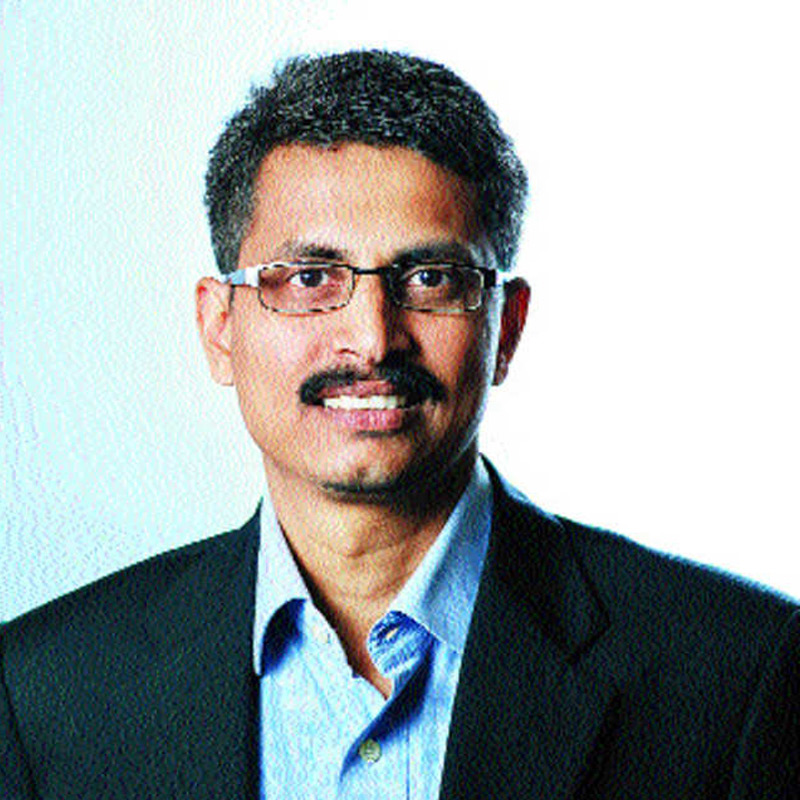
Tag: R Gowthaman

  • Mindshare launches The Loop, makes adaptive marketing a reality

    Mindshare launches The Loop, makes adaptive marketing a reality

    MUMBAI: Mindshare, the global media agency network, has launched The Loop – a data infused ‘war room’ aimed at helping the agency’s clients to make collaborative and adaptive decisions and across their paid, owned and earned marketing in real-time.


    The Loop, a physical room and also a cultural change in working practice, is already operational across five offices in the US. India is the first market outside the US to have a fully functional Loop Room in Gurgaon. A second Loop Room will be up and running in Singapore next week followed closely by Mumbai in June. By the end of June 2014, The Loop will be active in close to 15 markets globally.


    Mindshare Asia-Pacific chief operating officer R Gowthaman said, “The Loop Room is not just another technological interface, but a way of life for all of us in Mindshare. As our client’s lead business partner, we take pride in being their marketing spine and The Loop Room effectively breaks down all silos and brings all the key stakeholders into one single room – creative, media, social, digital, content and production. The Loop enables real time tracking of the impact of paid media online; how the paid media works with other marketing assets of the brand thereby seamlessly linking Paid, Owned and Earned media on a single canvas. We have been extremely fortunate to have Pepsico’s support in making the Loop a reality. And as we expand the presence of The Loop Room in more offices, we believe we will be positively influencing the industry to look at Marketing Communications in a whole new way”


    The Loop includes multiple screens monitoring data from over 100 sources in real-time. Data partners are defined on a market by market, and on a client-by-client basis. The first tool of its kind to impact not only earned and owned, but importantly paid media, The Loop enables clients not only to plan more adaptively and to benefit from more collaborative and adaptive decision making powered by data, but it also enables the shift of media spend quickly to leverage opportunities uncovered by real time data during campaigns – a holistic process Mindshare calls Adaptive Marketing.


    By focusing on paid media, which drives owned and earned media, and by bringing together every discipline and stakeholder into a collaborative decision making process, The Loop delivers a core part of the modern marketing arsenal, without which clients can be out of step with today’s fast paced consumer lifestyle.


    The Loop has two modes – ‘strategy’ and ‘campaign’. In ‘strategy mode’, The Loop enables collaborative and adaptive decision making through the mixing of fast and slow data across a spectrum of different disciplines, including business planning, strategy, creative and communications planning, and across client agency networks.  In ‘campaign mode’, Mindshare takes third party data feeds and tools and combines them with industry leading proprietary media spend, performance tracking and intelligence systems, to provide instantly actionable insight that can be executed in real time across paid media.

  • Mindshare elevates R Gowthaman and Sudipto Roy

    Mindshare elevates R Gowthaman and Sudipto Roy

    MUMBAI: In a move to strengthen its hold in market and understanding the ever-changing, technology- driven time, Mindshare has appointed R Gowthaman as chief operating officer and Sudipto Roy as regional chief client officer for Asia Pacific.


    Gowthaman will take on the role of COO Asia Pacific after spending a year as chief client officer, APAC and CEO south and south-east Asia. During this time, he was responsible for Mindshare’s key clients across the region and expanding the agency’s services, including the launch of an emerging market activation unit across ASEAN in partnership with Geometry Global.


    In his new role as COO, Gowthaman will focus on continued development and delivery of Mindshare’s services to marketers across the marketing value chain – from emerging consumer activation at one end to big data management on the other, and a more effective business model for working with clients.


    Gowthaman said, “I am extremely delighted to take on this role. I am especially looking forward to designing and rolling out new work streams that provide Mindshare’s clients with great new opportunities and accelerate sustainable growth of our business. Despite our scale and size, we are increasingly behaving more and more like a start-up – provocative, hungry, adaptive, full of energy all underpinned by a promise to be the agency of the future.”


    Roy takes over from Gowthaman as chief client officer Asia Pacific following a two-and-a-half-year stint as managing partner of Client Leadership and Partnerships. During this time, his primary responsibility was to run some of Mindshare’s key accounts including Unilever, Kimberly Clark, Lenovo and others.


    In his role as CCO, Roy will focus on growing Mindshare’s relationship with its key clients across Asia Pacific, by creating faster, more agile and adaptive marketing services for them.  Roy will also spearhead creation of a stronger open source collaboration model around Mindshare’s key clients, with relevant partners from WPP as well as other independent companies. Roy will report to Gowthaman in this role.


    Mindshare is forging a number of partnership programmes with ‘hot’ companies coming up in emerging economies, in analytics, media technology, e-commerce, B2B, social media, mobile and more, to complement the current global partnerships already in place with Google, Facebook, Twitter, Microsoft, Yahoo and many others. Roy’s new role focuses on leveraging some of these partnerships to help its clients’ brands be more adaptive to near real time consumer response, and continuously improve the way they use various media platforms to grow their brands.


    Commenting on his appointment, Roy said, “I am passionate about our clients’ businesses and how we think about them, so this move is exciting as it enables me to focus on what I really love. I believe we have a great opportunity to drive cutting-edge thinking for Mindshare and our clients, and fundamentally re-imagine how we think about media services while continually raising the standards for how media agencies can drive ROI. I really look forward to this part of the journey.”


    Mindshare chairman & CEO for APAC and growth market Ashutosh Srivastava said, “We are privileged to have highly talented people like Gowthaman and Roy stepping into these roles. Over the years, they have developed trusted relationships with our clients, by focusing on what they value most. These roles are incredibly crucial for us at this stage and will help Mindshare continue to lead the industry thinking, and shape its development and growth at an exciting time, where understanding of media, technology and effective data usage are becoming more and more central to brand success.”


    Both Roy and Gowthaman’s roles are effective immediately and will be based in Singapore.

  • Mindshare ups Gowthaman to chief client officer for Asia Pacific

    Mindshare ups Gowthaman to chief client officer for Asia Pacific

    MUMBAI: Mindshare have appointed R. Gowthaman as Chief Client Officer for the Asia Pacific region, effective 1 January 2012.

    In his previous role, Gowthaman was leading Mindshare for South Asia.

    Gowthaman will be based in Singapore and report to Mindshare APac CEO Ashutosh Srivastava. He will lead a team of regional client leaders who provide strategic direction and coordination for Mindshare’s work on key regional and global accounts across all Asia Pacific countries.

    His appointment to this new role comes at a time when Mindshare has expanded the scope of services it provides to its existing clients – especially in Marketing RoI management, research and insights, communications strategy, performance marketing, digital media, branded content creation and distribution, and newer and more innovative media trading approaches.

    Unlike the industry trend towards launching new specialist companies and silos, Mindshare has placed its strategic bets on integrated client teams featuring talent from all these streams, customised to each client’s needs. There have been a string of appointments across the region in the specialist skills areas reflecting this trend over the past few years.

    Srivastava said, “with the fusion of technology with media and the accompanying deluge of data, marketers are seeing more specialist talent and agencies involved in their business than ever before. They have to manage a far more complex ecosystem to get value from all their partners. So they see huge value in strong agency client leaders – people with sound understanding of their brands and of media & technology, who can help them facilitate more impactful and integrated marketing solutions working with various specialists. We are attracting new talent and developing broader skills amongst our key client leaders so we can do this on bigger scale. Gowthaman’s appointment is a reflection of the importance Mindshare has placed on this breed of talent.”

    GroupM CEO for South Asia Vikram Sakhuja said, “Gowthaman has done a fine job of laying the architecture of the new MindShare in India, by re-shaping the organization into one capable of delivering business planning, integrated communication solutions and robust media implementation for its Clients via highly customized offerings. In the process he has re-enforced Mindshare’s supremacy in India as being not only India’s largest Media Agency, but also the best.”

    Mindshare’s Ravi Rao will succeed Gowthaman in the position of Leader, South Asia effective 1 January 2012. In his previous role, Rao was leading the South Asian operation for Team Unilever since 2009.

    Sakhuja said, “In the last two years Ravi has run the Team Unilever operation successfully on the back of securing the business in 2010 across South Asia. Since then Team Unilever has won various awards in Content, Digital, Communication Planning across local, regional and global making it one of the crown jewels in the media world. In his new role as Leader South Asia, Ravi Rao will bring in his wealth of experience in Strategic Planning, Research, Content, Digital and forming Strategic Alliances to position Mindshare as their clients’ lead business partner in South Asia.“

  • Champions Trophy propels Max into Top 10

    Champions Trophy propels Max into Top 10

    MUMBAI: If there is one truism about television in India, it is that the only sure way to break Star Plus’ monopoly on the ratings is to have India cricket. Such is the case with India cricket.
    Tam data for the period 15/10/06 to 21/10/06 shows that India playing England on 15 October 2006 came in seventh in the Tam Top 100 C&S 4+.

    It managed to get a rating of 5.8. It also appears at positions 21 and 22 with ratings of 4.8 and 4.5.

    Starcom’s Manish Porwal says that whenever India plays in a multi team tournament the round robin matches not featuring India get a ratings that are 1.5 times higher compared to events that do not feature India at all. This explains why the Australia versus West Indies match got a rating of 3.6 and is at number 33. The England versus Australia match got a rating of 2.5. The Sri Lanka versus Pakistan match got a rating of 3.1. Extraaa Innings, which is Max’s wrap around show, also finds a mention twice.

    However, the theory of 1.5 times more for a non India match in the league stage only applies for as long as India is in contention in the tournament. Therefore, from an advertising standpoint, it is fortunate that India versus Australia was the last league match. India’s awful performance and hence elimination would have had a much bigger impact on viewership if it had been held before other league matches. As it is only three matches (the two semi finals and final) are now affected.

    How do advertisers view India’s exit? Porwal says that cricket friendly brands would have taken into account the scenario of India not qualifying for the semi finals. He is satisfied with the ROI achieved thus far. “It has been what we have expected. I will say that there has been a loss of profit with India not getting through into the last four. There has not been a loss per se.

    “That is because brands like Western Union would have done internal costing looking at different scenarios before putting their money on the tournament. Having said that, there will definitely be a backlash on the ratings that the semi finals and final get.”

    Sony executive VP Rohit Gupta concurs on this point saying that if India had been there in the semi finals and final you might well have seen a rating of 7-8. Now one could see a rating of around 3 for the semi finals. It could go up for the final depending on which teams qualify. He adds that when you include Sab, which had a simulcast of India’s matches with Hindi commentary, the match between India and England gets a rating of nearly seven.

    The International Cricket Council (ICC) CEO Malcolm Speed’s stand as far as a potential situation of India not making the last four has been that Indians care for quality cricket. As long as people care sport will not die. The ICC’s hope therefore is that the television ratings as well as on ground attendance will not be affected too badly as Indians would want to see quality international cricket. The coverage being given in the newspapers and television indicates that.

    Gupta, meanwhile, is most satisfied on how the non India matches have fared pointing out that it was a big improvement over the ratings that the non India matches got for the Champions Trophy in 2004. In that tournament as well India was eliminated early in that case by Pakistan.

    R Gowthaman, Mindshare MD South & West and Unilever South Asia, which handles media buying for Pepsi and Hero Honda, two of the ICC’s global partners, was not so positive however. He says that the Champions Trophy has disappointed in the cost per ratings point (CPRP) area. A lot of the matches finished early. For instance the match between West Indies and Sri Lanka finished in 50 overs.

    “This means that by 6:30 pm when viewing should be on the up the match is over. So you cannot air spots in the most impactful time. Then the ratings were not as high as had been hoped. The ratings should have been more even for the non India matches given the fact that Extraaa Innings is meant to build up momentum. Cricket is a hyped up property. You hope that it will do well in the ratings area but its performance has been below par just like the Indian teams. If you look at it, cricket’s ratings have been on the decline over the past couple of years.”

    Another problem for Pepsi is that it used a very specific cricket centric campaign (the Blue Billion). The aim was to express support for the Indian team which then failed to perform. This raises the question of whether or not it should continue with that campaign which has now become irrelevant with India exiting the event.

    LG marketing head Sandeep Tiwari on the other hand is satisfied at the response to the event. He points out that since LG is a global brand there will be a benefit no matter which teams win the event or makes the final. So if Australia wins then LG’s visibility down under will increase, he says.

    That of course is not the case with an Indian brand. Also LG did not use cricketers in its campaign. It used Tom and Jerry to celebrate the Diwali festival. So it is not unduly concerned about India going out early as it has not used cricket in the campaign to build an emotional connect. He adds that if you look at the Champions Trophy and the World Cup together, then while the former delivers a 30 per cent impact the latter delivers a 70 per cent push for the brand. That big push of course will come next year in March when the World Cup takes place in the West Indies.

    Interestingly despite reports about stadiums not being full for the ongoing Champions Trophy Tiwari is satisfied at the turnout. He points out that the England Australia encounter had 50 per cent occupancy which he as a marketer feels is adequate to get the brand message across. On television too the delivery is what was projected prior to the start of the tournament for him.