Tag: QW Naqvi

  • Editors give thumbs up to branded content, if it doesn’t interfere with quality

    Editors give thumbs up to branded content, if it doesn’t interfere with quality

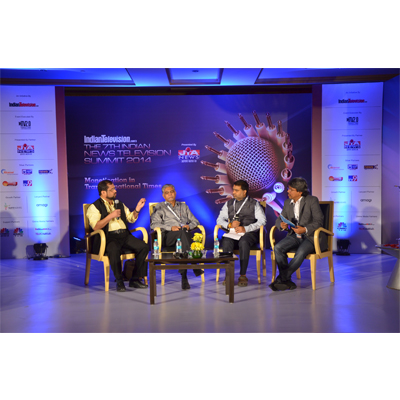
    MUMBAI: While the business heads and sales heads are worried about how to keep revenues growing, the editors are concerned about keeping them away from getting into their editorial decisions. Discussing exactly this was a panel at the 7th Indian News Television Summit that saw ITV Network editor in chief Deepak Chaurasia, senior columnist and veteran journalist QW Naqvi and Mi Marathi consultant and former IBN Lokmat chief editor Nikhil Wagle that was moderated by indiantelevision.com group founder, CEO and editor in chief Anil Wanvari.


    The discussion started off with Wanvari asking them how much would allow business heads to interfere with the editorial. Naqvi said that a business target should not influence editorial decision. Wagle said that he is aware that business is needed to run a channel but ‘without interference the channel can be profitable.’


    Chaurasiya was of the opinion that both need to be together for the business model to survive. “The company will go into loss if the model is wrong. The editorial should know the company’s profit and loss because it can’t be a loss  making business. However, sales and editorial should not have the authority to decide whether or not a story should be shown or the angle of the story be taken. If the marketing team will tell me that a particular party is giving money if we do this story and in this angle, then I would say I have surrendered myself to them,” he said.


    Wanvari said that political parties were different from brands, to which Wagle said that he isn’t against sponsored programmes, if they are disclosed. “If I was an editor, either I will stop such content or resign,” he said. Naqvi said that he is fine with integration where the quality, judgment and quantity isn’t compromised. “A programme shouldn’t be made just to make a brand happy despite not having any value,” he pointed out.


    Chaurasia however said that even a half an hour show with bad ratings will ruin his day’s average, so he hesitates while taking advertorial, despite the money. “Rather than think short term, I think its long term impact on my ad rates. 90 per cent advertisers want to make the show in their perspective,” he said. He was however worried about how with too many ads the time spent on the channel is decreasing.


    Times Now editor in chief Arnab Goswami is a brand in himself, which is being used by the channel, said Wanvari asking whether the three of them would allow that to happen to them. “TAM ratings only give numbers, not reactions. When that can be analysed, the real worth of a brand will be known,” he said.


    According to Chaurasia, with emergence of new channels and people shifting channels, it isn’t easy to keep brand loyalty. “Now-a-days people think that in four months, people will start asking for autographs while the first generation journalists have taken many years to prove their worth. They feel marketing will help them become this sooner,” he said.


    Moving on to the digital play in the future, Naqvi said that there is no doubt about digital being the priority for all. But when Wanvari asked if the editor would go with the marketing to an advertiser, Chaurasia said, “My work is to do content and make them understand the meaning. I have to get them ratings, revenue is a different department.”


    The regional space will see proliferation of digital in five years, according to Wagle, and long format journalism will be replaced by short form.


    Responding to Wanvari’s question about syndicating shows like how Al Jazeera or BBC does, Naqvi said that when the format will turn to digital, they could think of creating content that could sell because then the audience becomes global. “For this, we will need good internet connectivity till the remotest corner of the country,” he said. However, he also pointed out that not too many channels will survive digitally because people will not want to clutter their phones, but won’t mind seeing a long list of channels on TV.

  • Nalin Mehta quits Headlines Today

    Nalin Mehta quits Headlines Today

    MUMBAI: Within weeks of India TV editorial director QW Naqvi and Sahara Samay group editor BV Rao quitting the respective channels, Headlines Today managing editor Nalin Mehta has also put in his papers and has left the channel.


    Mehta had joined Headlines Today in September 2013 when Rahul Kanwal was elevated to editor at large of both Headlines Today and Aaj Tak. He has worked with news organizations such as Zee News, NDTV and Times Now.


    Apart from this, Mehta has published books such as ‘India on Television’ and ‘Television in India’.

  • QW Naqvi quits as India TV editorial director

    QW Naqvi quits as India TV editorial director

    MUMBAI: Just six months after he took office with India TV as the editorial director after a year long sabbatical, well known journalist Qamar Waheed Naqvi has resigned from the company.


    Through an official statement, India TV confirmed that he had indeed taken the decision to leave the channel. Said India TV MD and CEO Ritu Dhawan, “We have accepted his resignation and asked Naqvi to serve his notice period.”


    “We are surprised at the reasons being attributed to it in the social media. Any such reasons are baseless, and we condemn the effort being made to use it for political gains,” said Dhawan.


    Sharma said, “There is a continuous attempt by some people to defame electronic media which has been officially condemned by broadcasters. We in the news media have covered several elections in the past and will cover many more, we cannot allow our industry to become a tool in the hands of interested parties during elections.”


    Naqvi joined India TV in October last year prior to which he was a known name at Aaj Tak.

  • Q W Naqvi joins as India TV editorial director

    Q W Naqvi joins as India TV editorial director

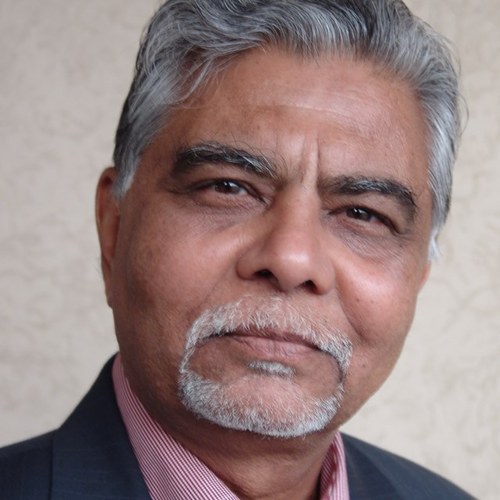
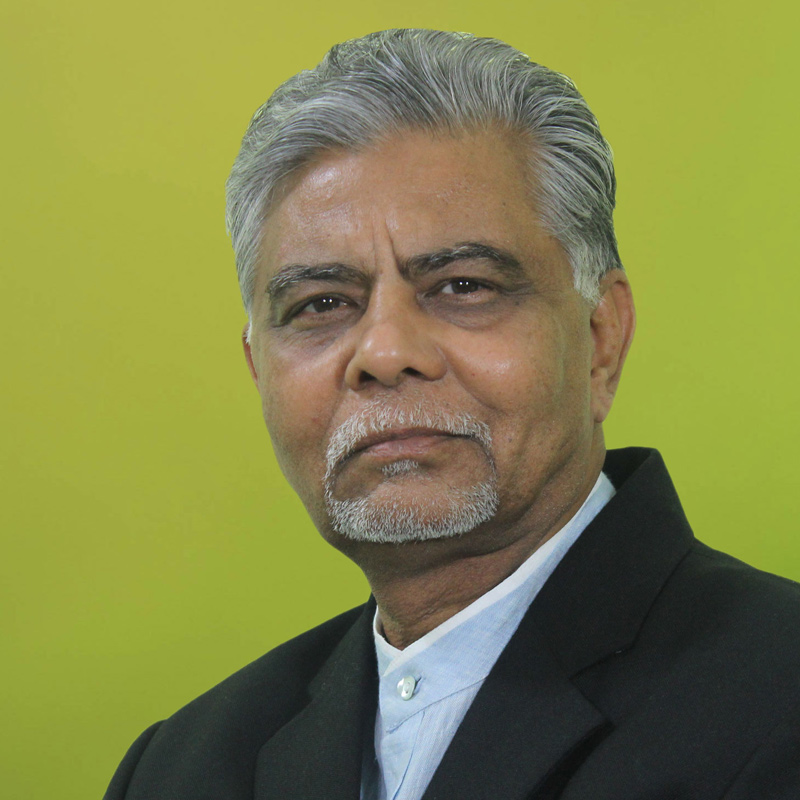
    MUMBAI: India TV today confirmed the appointment of QW Naqvi as its editorial director. QW Naqvi has been a known face for a long time on Aaj Tak where he put in his papers last year.


    A professional with a 360 degree view of the industry, Naqvi as part of the top management at TV Today created editorial workflow templates for optimal resource utilisation. Naqvi will be responsible to take India TV to the next level. He will be reporting to chairman and editor-in-chief Rajat Sharma.


    Starting his career in 1980 as trainee journalist (Hindi) with The Times of India Group, he has served at Navbharat Times, and later “Ravivar”, where he served as chief reporter. Before moving to Aaj Tak, he was part of the team that started Hindi daily – Chauthi Duniya. At “Chauthi Duniya,” the first Hindi weekly broadsheet, his innovations with layout design gained him the reputation as the man with defining ideas.


    Welcoming Naqvi on board, Sharma said, “Naqvi  is a hugely respected professional, with his experience, knowledge and enigma we definitely see India TV growing faster than ever in its quest to reign supreme in the Hindi News Genre and beyond.”


    “With elections round the corner, I think we are on the way, to create a right mix for our viewers and advertisers alike,” he added.


    Commenting on his appointment, Naqvi said, “This opportunity comes as a huge prospect for me to contribute towards furthering India TV’s charge for cementing its leadership position in the news genre.”

  • QW Naqvi bids adieu to TV Today

    QW Naqvi bids adieu to TV Today

    MUMBAI: Veteran journalist has decided to bid adieu to TV Today Network where he was working as news director.

    Naqvi, 58, had rejoined TV Today Network in 2004 February and was responsible for successfully launching Tez and Dilli Aaj Tak.

    “I have decided to take retirement from the company, my last day at TV Today is 31 May,” Naqvi told Indiantelevision.com.

    Queried about his future plans, Naqvi said he hasn’t decided anything yet.

    Naqvi has straddled the world of print and television media for the last 30 years bringing a wealth of experience and expertise to bear through his grasp and understanding of news. Starting as a trainee journalist with the Nav Bharat Times Mumbai, he later moved to Nav Bharat Times Lucknow.

    By the mid-eighties, he had moved to Kolkata as the Chief Reporter in the Hindi weekly Ravivaar, covering the north-east extensively. A year later he was part of the core team that launched a new product Chauthi Duniya.

    In the late eighties, he returned to Nav Bharat Times in Lucknow and by 1993, he joined Nav Bharat Times Jaipur as Editorial Head. In June 1995, he joined TV Today Network as Associate Editor and he was the one who proposed the name Aaj Tak which has since become a generic name for news television in India.

    As a reporter, he has done several landmark stories, widely travelling across the country and working in different and diverse socio-economic and geographical landscapes, such as Kolkata, Lucknow, Delhi, Mumbai and Jaipur. He has worked with three of the largest media houses of the country – Bennett Coleman, Anand Bazar Patrika and Living Media Group.

  • News Channels: Sensation-fatigue, government’s attitude and regional channels will decide future content

    Why has phenomenon of unrestrained inputs developed is one question that if answered well, will rid us of taking moralistic positions. In this the points made by QW Naqvi, News Director at TV Today are pertinent.

    Naqvi says that first there was none, and then there was clutter of private news channels and the clutter will increase as days go by. To cut the clutter, channels did what has been seen in Bollywood in terms of genres of films. Some channel did something, which clicked and all channels started doing the same thing, which became a wave.

    Successive waves of formulae came and went, first family tension-based stories, then crime, then violence and sex and then bhoot-pret and the seemingly ridiculous, as this year the channels bent over backwards to snatch the ephemeral eyeballs from each other.

    Part of the phenomenon is because Indian news channels spend relatively much less money and try to break even fast and run the shortest course, cutting at the corners, but that is only part of the story.

    The other part is that over the past year, lifestyles have vastly changed and worries have shifted in the urban middle class areas from roti-kapda-makaan to a restless quest about how to best entertain themselves. The news channels have been trying to answer that quest for the viewers by experimenting with their own formulae, from serious to sensatonal.

    In this process Aaj Tak itself became a victim, in the sense that it did go over to the sensational, though it did not banish serious news or socially relevant stings that shook the country.

    And here comes the third point: Aaj Tak is – despite the veering away from serious news – doing the best in terms of turnover. What does that show? That advertisers are flocking for the raw hide?

    Quite contrarily, Narayan Rao says that despite sticking to the hard news path, they are today not number three in ratings, but firmly sticking to the number two position in terms of revenue, so what does that show?

    Perhaps the picture will become clearer if we see that despite drawbacks, IBN 7 did reach a point where it had a 14 per cent market share this year, from a lowly six a year ago, and though it could not retain that share that for too long, according to Ashutosh, “this shows that there is scope for serious news”.

    Also, according to industry sources, India TV is far more disadvantaged in revenue terms than its ideological opponent IBN 7, which though it has not broken even is doing better business.

    But the ethical debate in 2007 was really being driven by the fact that there has been a consistent fear in the minds of the CEOs that the vanilla channels with soaring and consistent ratings, would sooner or later bag the big brands, who could shift greater proportions of their spendings to higher rated channels.

    Rating itself has been debated widely this year, especially in the captains in the news channel space, and barring India TV, which says that only those gripe about rating who get the wrong end of the stick, all major channels are today questioning various aspects of rating system of TAM, even while agreeing that it is as of date the industry standard.

    The sample size has been questioned, so has been the possibility of tampering with people metre homes, and also the issue that it is a Western system that does not take into consideration the plurality of Indian society, and even the highest rated channel’s news head, Naqvi too feels that there is need for vast improvements in the system.

    This year, TAM has ruled the market, creating what Sardesai has termed the ‘tyranny of the eyeball-driven marketplace’.

    But then going by the above discussion, where we saw Aaj Tak stay at No. 1 with its mix of the sensational and serious in equal measure, and yet NDTV stay at No. 2 with its insistent on serious journalism, it seems that TRP is not driving revenue flows: it is after all, perceptions, and here is why.

    Let us not forget that Aaj Tak had started out a decade ago as the private sector’s perfect answer to sterilised government reporting on Doordarshan and had been marked by three specific attractions: accuracy and speed and courage. The perception of Aaj Tak as a credible channel that talked a lot more things than the PMs and the CMs had made it a darling of the masses as well as the classes.

    When advertisers today decide on apportioning monies from their budget, their perception of NDTV and Aaj Tak have remained the same, though one changed and the other did not.