Tag: quick commerce

  • Airtel and Blinkit team up for 10-minute SIM delivery, KYC in your home

    Airtel and Blinkit team up for 10-minute SIM delivery, KYC in your home

    MUMBAI: Bharti Airtel and Blinkit have cooked up a speedy new service, delivering SIM cards to customers’ doorsteps in a mere 10 minutes. This ground breaking partnership, a first for any Indian telco, is now live in 16 cities, promising to get customers  connected quicker than a rabbit out of a hat.

    “Simplifying customer lives is central to everything we do at Airtel.Today we are thrilled to partner with Blinkit for 10-minute SIM card delivery to customers’ homes across 16 cities and in due course of time we plan to expand this partnership to additional cities.” declared Airtel CEO Siddharth Sharma, CEO – connected homes and director of marketing, Airtel.

    For a paltry Rs 49 convenience fee, customers can choose between prepaid or post paid plans, or even port their existing number to Airtel. Once the SIM arrives, a quick Aadhaar-based KYC process gets them up and running, all from the comfort of their own homes.

    “To save customers time and hassle, we’ve collaborated with Airtel to deliver SIM cards directly to customers in select cities, with delivery in just 10 minutes. Blinkit takes care of the delivery, while Airtel makes it easy for customers to complete self-KYC, activate their SIM, and choose between prepaid or post paid plans. Customers can also opt for number portability, all at their convenience,” said Blinkit founder & CEO Albinder Dhindsa.”No more queuing in shops, no more waiting around. We deliver the SIM, and Airtel handles the self-KYC. It’s a win-win.”

    The service is currently available in major cities like Delhi, Mumbai, and Bangalore, with plans to expand further. And if customers get stuck, Airtel’s help centre is just a tap away on the Airtel Thanks App, or a quick call to the support line. But, they better be quick, the SIM needs to be activated within 15 days.

  • VIP Clothing zips into quick commerce with Zepto

    VIP Clothing zips into quick commerce with Zepto

    MUMBAI:  VIP Clothing, one of India’s top innerwear brands, is getting snug in the quick-commerce space by launching its premium range on Zepto. Shoppers can now snap up Frenchie, Feelings, and VIP with just a few taps, enjoying rapid doorstep delivery.

    Zepto chief business officer Devendra Meel called it a perfect fit. “We’re thrilled to have VIP Clothing on board. Our Sellers goal has always been to provide users with fast and reliable access to daily essentials,
    and this partnership enhances that mission. Thanks to our sellers for enabling this. With VIP’s premium
    innerwear now available on Zepto, we are confident that users will enjoy the ease of shopping for their
    favourite products with just a few clicks.”

    VIP Clothing chairman & managing director Sunil J. Pathare said, “We are looking forward to our partnership with Zepto, as it represents a significant step towards enhancing the shopping experience. This collaboration aligns perfectly with our vision of making high?quality innerwear easily accessible—whenever and wherever our customers need it. As we expand into quick commerce, we look forward to reaching more consumers and providing them with the efficiency and convenience they need for their everyday purchases.”

    After a successful launch on Swiggy Instamart, VIP Clothing is doubling down on digital, adapting to modern shopping habits. With Zepto’s lightning-fast network, the brand is set to reach consumers across Mumbai, Delhi NCR, Bengaluru, and Chennai.

    As VIP Clothing rethreads its retail strategy, blending digital and physical stores, the message is clear: convenience is king, and getting premium innerwear is now faster than ever.

  • Zomato hits fast-forward, counts to ten and your food’s already arrived!

    Zomato hits fast-forward, counts to ten and your food’s already arrived!

    MUMBAI: When hunger strikes, patience isn’t exactly a virtue—it’s a myth. Zomato gets this, and they’re serving up a delicious solution quicker than you can say your favourite Indian cinema countdown. With their snappy new ‘Ek, Do, Teen…Dus!’ campaign, Zomato promises to deliver steaming hot meals in just 10 minutes, giving hangry customers a reason to ditch those stale crackers.

    Launching nationwide on 21 March 2025, the campaign uses four humorous short films, remixing the iconic Hindi song Ek Do Teen, creatively stopping at Dus, perfectly highlighting the lightning-fast 10-minute delivery promise of Zomato Quick.

    Relatable? Absolutely.

    Entertaining? Unquestionably.

    Now, your midnight cravings have officially met their match.

    “At Zomato, we recognize that our consumers today expect instant solutions, and with Zomato Quick, we’re delivering just that—hot and fresh food in only 10 minutes,” explained Zomato marketing head Sahibjeet Singh Sawhney. “In our films, we’ve used a fun, nostalgic approach to drive home the message of convenience and speed. We have used the iconic Hindi song Ek, Do, Teen, Char,… Our aim is that ads should not feel like ads; they should always entertain and bring a smile.”

    How does Zomato Quick manage this supersonic feat, you wonder? By curating menus with dishes that are quick to whip up, partnering with nearby restaurants, and leaving no room for hunger-induced despair.

    The multi-channel campaign blitz covers all bases, featuring digital and social media promotions, OTT platforms, out-of-home advertising, influencer tie-ups, and even innovative packaging—ensuring no one misses the memo.

    Currently, Zomato Quick is already operational across 15 cities, making ‘fast food’ faster than ever. Forget 30-minute pizza deliveries; that’s practically snail mail compared to Zomato’s Quick!

    So, next time you’re hit by those stomach grumbles, remember: Zomato Quick counts just to ten, and voilà—your meal is at the door. 

  • Urban Company offers domestic help in 15 minutes

    Urban Company offers domestic help in 15 minutes

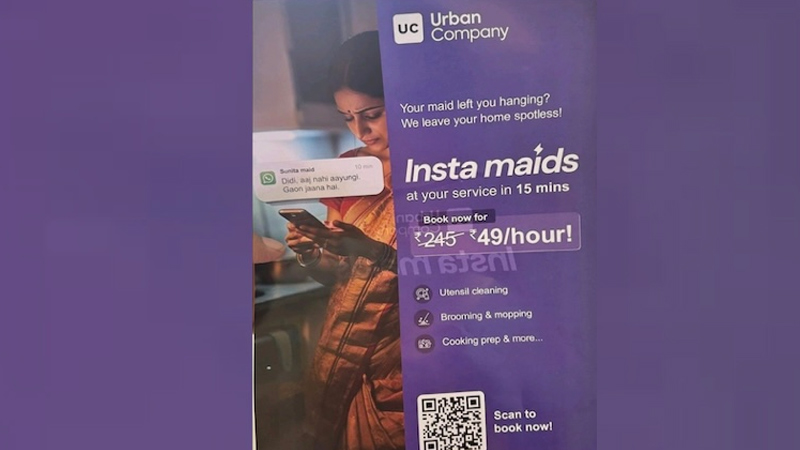
    MUMBAI: Home services giant Urban Company has muscled its way into the quick commerce arena with a service that promises to deliver maids to your doorstep faster than a pizza. The cheekily named “Insta Maids” service, currently being trialled in Mumbai, offers desperate homeowners salvation when their regular help does the bunk —all for the bargain basement price of Rs 49 per hour.

    “Your maid left you hanging? We leave your home spotless!” proclaims the company’s rather saucy advertisement, which depicts a flustered woman receiving the dreaded text from “Sunita maid” announcing her sudden departure to the village—a scenario all too familiar to India’s middle classes.

    The 15-minute booking service offers everything from utensil scrubbing and floor mopping to chopping vegetables, effectively turning domestic labour into an on-demand commodity that can be summoned with the tap of a finger.

    Urban Company’s foray into what might be dubbed “maid commerce” has sparked a right proper row on social media, with critics accusing the platform of exploiting workers and trivialising domestic labour. The advert’s tone, which some have labelled “bloody tone-deaf,” hasn’t helped matters.

    Responding to the backlash with the corporate equivalent of “keep your knickers on,” Urban Company has trumpeted the “overwhelmingly positive response” to the service. In a bid to counter the criticism,  the company insisted its service partners earn Rs 150-180 per hour—substantially more than the customer pays—alongside perks like health insurance and accident cover.

    “Partners working for 132 hours per month are assured earnings of at least Rs 20,000,” the firm claimed, adding that the current pricing is merely an “introductory offer” designed to hoover up customers before inevitable price hikes restore “viable economics.”

    Industry watchers note that Urban Company’s venture represents the latest frontier in India’s booming gig economy, where everything from food delivery to taxi services has been disrupted by tech platforms offering convenience at rock-bottom prices.

    Whether “Insta Maids” will clean up or find itself in hot water remains to be seen, but one thing’s certain—for Mumbai’s harried homeowners, the days of being held hostage to their domestic help’s village calendar might be numbered.

  • Dailyobjects joins forces with Zepto for lightning-fast tech deliveries

    Dailyobjects joins forces with Zepto for lightning-fast tech deliveries

    MUMBAI: Dailyobjects has teamed up with Zepto to make its premium tech accessories available for ultra-fast deliveries. To mark this milestone, Dailyobjects has launched a witty campaign film created by Propaganda, a creative agency led by founder & creative director Mohamed Rizwan.

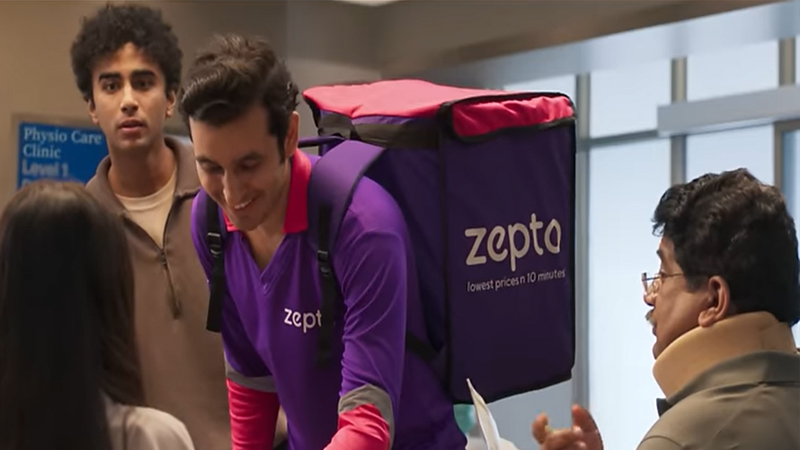
    The film playfully depicts a ‘meet-cute’ moment ruined by Zepto’s unmatched delivery speed. The story unfolds in a clinic’s waiting room, where a girl, accompanied by her overprotective father, struggles with a dying phone battery. She locks eyes with a boy, and just as the sparks of young romance begin to fly, her father, seeing the danger, stealthily orders a power bank via Zepto. As the boy gears up to save the day with a charger from his bag, Zepto’s delivery rider arrives in record time, handing over the power bank and shutting down the romance before it even begins. The voiceover cheekily informs viewers that Dailyobjects’ power banks and chargers are now available on Zepto, delivered in just 10 minutes.

    Dailyobjects founder & CEO Pankaj Garg highlighted the brand’s vision, “At Dailyobjects, we’re committed to making everyday carry #LessOrdinary. Partnering with Zepto is a natural extension of this mission. By ensuring that our products are now accessible within 10 minutes, we’re addressing the immediate needs of today’s on-the-go consumers. This campaign perfectly captures the essence of why this partnership makes sense—fast, reliable, and just what you need at the right time.”

    Rizwan explained the concept behind the film, “The film was based on the idea that looking for a charger is one of those rare instances we talk to people we wouldn’t otherwise talk to. The film conveys this in a classic boy-meets-girl story, and we loved the idea of a Zepto rider coming in and sabotaging this love story before it goes any further, thanks to Zepto’s super quick delivery. Hopefully, our audience will find it funny as well.”

    This collaboration is a strategic step in addressing the fast-paced lifestyle of modern consumers. With Zepto’s ultra-fast delivery model, Dailyobjects ensures that users no longer have to wait for essential tech accessories, whether it’s a last-minute necessity or a quick upgrade.

    Zepto chief brand & culture officer Chandan Mendiratta emphasised the synergy, “At Zepto, we’re all about speed and convenience, and our partnership with Dailyobjects is a natural extension of that mission. Tech accessories are daily essentials, and now, users won’t have to wait for a charger, power bank, or cable when they need it most. Thanks to our Sellers, Dailyobjects’ innovative products are now instantly accessible through Zepto’s rapid delivery model. Whether it’s a last-minute necessity or a quick upgrade, we’re redefining convenience—solving everyday tech needs in just 10 minutes.”

    As this partnership unfolds, consumers can expect their everyday carry to become even more seamless, stylish, and surprisingly convenient. Dailyobjects, known for its modern-day essentials like tech accessories, wireless chargers, bags, and desk gear, have seen over three times growth in the past four years—fueled by its unique blend of design, functionality, and affordability.

  • “AI-powered influencers are reshaping brand engagement” – Vinit Karnik

    “AI-powered influencers are reshaping brand engagement” – Vinit Karnik

    MUMBAI: The advertising landscape in India is on the brink of its most transformative year yet. With AI taking over marketing workflows, quick commerce redefining e-commerce, and connected TV (CTV) gaining an unprecedented foothold, brands are scrambling to stay ahead. The latest forecast from GroupM’s TYNY report outlines the trends that will shape 2025, and let’s just say, if you’re not innovating, you’re falling behind.

    AI agents take the wheel

    The machines are here, and they’re not just running ads—they’re planning, activating, and measuring entire campaigns. The rise of sophisticated AI agents will automate scheduling, reporting, and even basic content creation, freeing up human marketers to focus on strategy. By late 2025, expect AI-powered agents to handle customer service, hyper-personalised advertising, real-time campaign optimisation, and even vernacular content creation at scale.

    GroupM south Asia CSO Parthasarathy Mandayam (Maps) stated, “As consumer behaviour grows more complex, marketing measurement is rapidly evolving. With data privacy driving change, traditional analytical models are integrating AI and real-time analytics for better accuracy. Brands are adopting unified measurement frameworks to make smarter decisions. In 2025 we also see a rapid adoption of AI agents, going beyond automation and productivity enhancement to transform areas like customer service, vernacular engagement and real-time campaign optimisation.”

    GroupM south Asia CSO Parthasarathy Mandayam

    Quick commerce rewrites the e-commerce playbook

    E-commerce in India is growing at breakneck speed, and quick commerce (Q-commerce) is its turbocharged engine. The online digital commerce market is projected to touch Rs 167,000 crore by 2028, making up 9-11 per cent of total retail GMV. India’s advertising industry is keeping up, with ad revenue expected to reach Rs 1,64,137 crore in 2025, growing by 7 per cent. Digital media alone will account for 60 per cent of all advertising, an 11.5 per cent jump from last year.

    GroupM India president – data, performance, and digital products, Atique Kazi explained, “The convergence of brand and retail media is rapidly shaping a unified ‘One Commerce’ ecosystem. Marketers are quickly pivoting to connected commerce outlook bridging multi-channel commerce approach and how media investments in one channel influence or cannibalise the other. As quick commerce promises instant delivery and purchase gratification, it has also pushed the marketers and agencies to be quicker, agile, nimble, and war-footed.”

    GroupM India president – data, performance, and digital products, Atique Kazi

    Q-commerce brands are also experimenting with time-based advertising. Morning ads for dairy, late-night campaigns for desserts, and weekend promotions for snacks are becoming the new norm. As for marketing costs? “CPMs on Q-commerce can rival IPL rates,” the report notes, urging brands to negotiate smarter and automate their ad buys.

    CTV’s big leap

    India’s CTV (Connected TV) market is exploding. By 2025, over 65 million households—or 30 per cent of India’s TV viewers—will be watching content via CTV, making it a goldmine for hyper-personalised and programmatic advertising.

    “CTV has got the eyeballs; however, advertising spends haven’t matched the viewership in comparison to the audience reach it holds. Live sports have been an exception. The unlock for 2025 is not to get caught in measurement; blending strategies that are device-agnostic is key,” said Kazi.

    Advertisers are also getting smarter with CTV ads. From leveraging advanced ACR (automatic content recognition) data to hyper-target users based on past viewing habits, to innovating with interactive ad formats, CTV is redefining TV advertising. However, measurement remains a pain point. “A dual measurement approach is necessary until we get a unified industry standard,” experts suggest.

    Data privacy

    With India’s Digital Personal Data Protection Act coming into play, data clean rooms are becoming indispensable. These secure environments allow brands to collaborate on audience insights without directly sharing data. By integrating tools like Google’s audience data hub and Amazon marketing cloud, brands can now measure campaign effectiveness while keeping consumer privacy intact. Digital is expected to drive 60 per cent of India’s ad growth in 2025, accounting for Rs 10,225 crore of incremental advertising.

    GroupM Nexus president Priti Murthy highlighted, “With the rise of data clean rooms, marketers are now unlocking deeper audience insights while maintaining consumer trust—transforming data collaboration in a way we’ve never seen before. From enriched audience data and targeting to advanced analytics opportunities, we see DCR transforming marketing.”

    GroupM Nexus president Priti Murthy

    AI disrupts search

    Google searches as we know them are changing, thanks to generative AI. Instead of clicking through multiple links, users are getting AI-generated answers directly in search results. This is a game-changer for SEO, forcing brands to focus on structured content, semantic SEO, and featured snippets to stay visible.

    “Performance marketing will no longer be about driving clicks but about owning conversations, influencing AI-driven content discovery, and ensuring brands remain top of mind in a world where traditional SEO is being rewritten,” added Murthy.

    Influencers, but make them AI

    The influencer marketing game is getting a digital facelift. AI-powered influencers are gaining traction, offering consistent brand messaging, 24/7 availability, and endless scalability. Unlike human influencers, they don’t age, don’t demand higher pay, and don’t get involved in scandals (at least not yet).

    GroupM south Asia head of sports, esports, and live entertainment, Vinit Karnik noted, “The rise of AI-powered influencers is revolutionising how brands engage with audiences, blending technology and creativity to drive authentic, scalable interactions. As India’s 750 million smartphone users consume more immersive content, AR-driven campaigns are already delivering up to three times higher conversions for brands.”

    GroupM south Asia head of sports, esports, and live entertainment, Vinit Karnik

    With these seismic shifts in advertising, brands must embrace AI, double down on data privacy, and rethink their media strategies. The future belongs to those who can balance automation with creativity, scale personalisation without breaching privacy, and engage consumers across multiple channels.  

  • Blinkit-The Local Talk partner for an expansive OOH campaign in Mysuru

    Blinkit-The Local Talk partner for an expansive OOH campaign in Mysuru

    MUMBAI: Life in a tier-2 city often feels like a nostalgic slow waltz, doesn’t it?

    Gone are the days of instant deliveries, where tier-1 living spoiled you with groceries at your doorstep in minutes and your midnight cravings met with a mere tap on your screen.

    Frustrating, right?

    But just as you’re coming to terms with the snail pace of tier-2 convenience, Blinkit has a surprise in store.

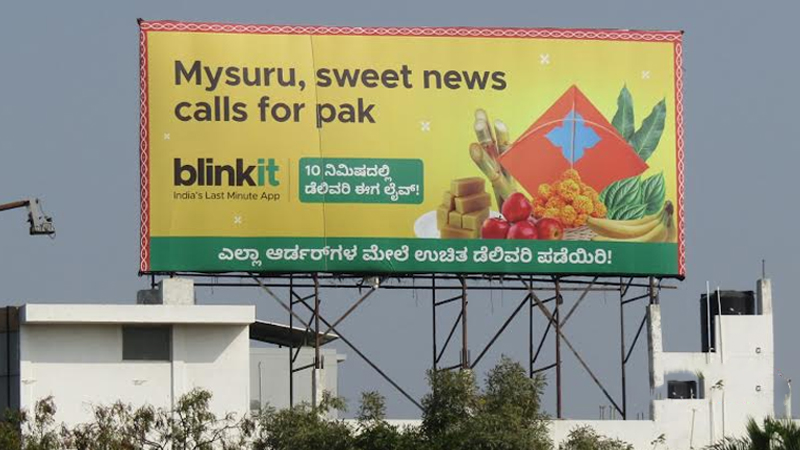
    In a bold, colourful splash across Mysuru’s streets, Blinkit, India’s leading quick-commerce trailblazer, has launched a striking out-of-home (OOH) advertising campaign in partnership with The Local Talk.

    With this vibrant initiative, Blinkit isn’t just delivering groceries—it’s delivering a message: tier-2 cities are no longer left behind in the quick-commerce revolution.

    The campaign highlights Blinkit’s dedication to creating a lasting connection with Mysuru’s audience while addressing the rising demand for quick-commerce services. Designed and executed by The Local Talk, the campaign features high-impact visuals and strategic placements across Mysuru, aiming to embed Blinkit’s brand deeply within the local consciousness.

    The Local Talk director Anil Soni expressed optimism about the collaboration, “Mysuru is a market brimming with potential, and Blinkit’s innovative approach resonates well with the city’s audience. Through this campaign, we’ve ensured Blinkit’s brand presence is impactful and widespread. The initial response has been excellent, and we’re excited about the possibilities this collaboration brings.”

    This campaign leverages Mysuru’s unique consumer landscape to foster engagement and drive Blinkit’s penetration into tier-2 markets.

    As the demand for quick-commerce solutions grows in tier-2 cities, Blinkit continues to position itself as a reliable and forward-thinking service provider. With The Local Talk’s creative execution and a tailored approach to Mysuru’s audience, Blinkit aims to become a household name in the region.

  • iPhone 16 Now Available on Blinkit, Delivered to Your Doorstep in Minutes

    iPhone 16 Now Available on Blinkit, Delivered to Your Doorstep in Minutes

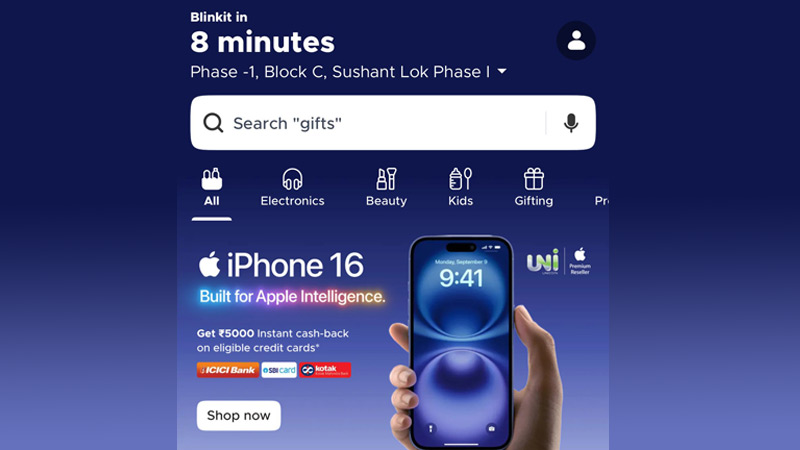
    Mumbai: Blinkit partners with Apple Premium Reseller Unicorn Infosolutions Pvt. Ltd. to deliver the all-new iPhone 16 and iPhone 16 Plus directly to customers’ doorsteps within minutes of their official release. This innovative collaboration allows customers in Delhi NCR, Mumbai, Pune, and Bengaluru to access the latest iPhone models almost instantly, revolutionising how new technology reaches users.

    Through Blinkit, customers in these cities can order their iPhone 16 and have it delivered in record time. Moreover, Blinkit is offering up to Rs 5,000 off on select credit cards, along with EMI options, making it easier for consumers to get their hands on the newest iPhone.

    Blinkit’s founder and CEO Albinder Dhindsa shared his excitement stating, “We are partnering with Unicorn Infosolutions (the largest Apple Premium Partner in India) for the third year in a row to make the latest iPhone available. Customers in Delhi NCR, Mumbai, Pune, and Lucknow can get an iPhone 16 delivered within minutes. While Blinkit will handle the delivery, Unicorn provides discounts on select cards and offers EMI options, too.”

    This partnership builds on the success of Blinkit’s collaboration with Unicorn Infosolutions last year, when they delivered the ‘Make-in-India’ iPhone 15, iPhone 15 Pro, and iPhone 15 Plus to customers’ homes. The quick commerce model not only meets the growing demand for instant gratification but also ensures seamless service for tech enthusiasts eager to own the latest iPhone.


  • Zomato to acquire Blinkit, board approves the deal for Rs 4,447 crore

    Zomato to acquire Blinkit, board approves the deal for Rs 4,447 crore

    Mumbai: The board of online food delivery firm Zomato has approved the purchase of quick commerce company Blinkit, which was earlier known as Grofers. This deal has been done for Rs 4,447.48 crore.

    In the information sent to the stock market, Zomato said that this deal will be done under the exchange of shares. The board of directors of the company in a meeting held on Friday approved the acquisition of 33,018 shares from the shareholders of Blinkit Commerce at a price of Rs 13.45 lakh per equity share.  

    After the acquisition by Zomato, the Blinkit team and CEO Albinder Dhindsa will continue to run the company as an independent entity and app.

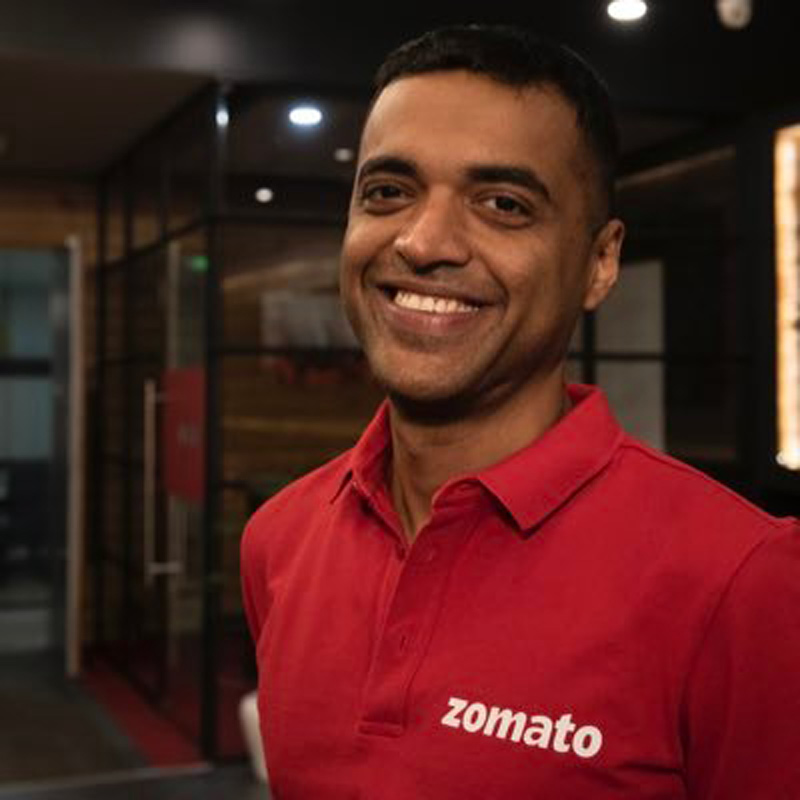
    Zomato CEO Deepinder Goyal said, “We will explore ways in which Blinkit can benefit from Zomato’s large customer base (and vice versa in the long term). Post the deal closure, we are going to start experimenting with various ideas that we have and see which all bear fruit, including having the Blinkit tab on the Zomato app. As they say, experiment a lot and keep what works. This remains our guiding motto.”

    The quick commerce segment in India is estimated to grow to $5 billion over the next three years, which is a 16x jump from the current size of $0.3 billion. Thus, the deal can be a game changer for quick commerce space!  

    Let’s have a look at what, according to the industry experts, works in the favour after this deal and what works against!  

    What works in favour?

    Experts believe that the deal will lead to better utilisation of the delivery fleet for Zomato and also propel multiple orders per transit, which is a global norm for driving efficiency and bringing the delivery costs down. With this, the valuations of Zomato may inch up backed by this, as one can provide a separate valuation to this segment for now, given its strong growth prospects.

    It may also help Zomato to be better placed versus peers who are only into Q commerce, as they have a ready delivery fleet and will also help them compete with players like Swiggy who have made a very serious foray into this segment via Instamart.

    What works against?

    AOV (average order value) for this segment may be extremely low, which in turn will limit margins and capability to charge a higher delivery fee as delivery charge is linked to AOV.

    At the same time, AOV in this segment is low as this segment caters to buyers who would want products on an urgent basis; a customer may order 5-10 per cent of their monthly grocery requirements via this segment.

    India as a market is still predominantly driven by local Kiraana outlets (general grocery stores), within the vicinity, which would generally drive more than 90 per cent of grocery requirements.

    Moreover, industry experts think that Zomato will need to offer something very different in terms of user experience for Blinkit in order to compete with peers and scale up in this business segment. Further, this business model may not have a big potential in the smaller markets such as tier 2 and 3, as the demand for gourmet food is much lesser vs metros.

    Meanwhile, the closing of the transaction is expected to happen in early August. The transaction is subject to shareholders’ and stock exchange approval.

  • Zomato-Blinkit deal: all one needs to know

    Zomato-Blinkit deal: all one needs to know

    Mumbai: Restaurant aggregator and food delivery company Zomato’s proposal to acquire quick commerce player Blinkit (formerly Grofers) will come up for board approval on 17 June 2022, when the company’s board meets to sign-off on the acquisition.

    The deal estimated at $700 million has likely dropped in valuation, stripping the online grocery firm of its prized unicorn status earned last year.

    The development emerged two months after reports on the merger deal via share-swap appeared. While the outlines of the deal are still being worked out, Zomato will acquire the shares of the quick commerce startup in an all-stock deal. As per the proposal, Blinkit investors will gain proportionate shares in the listed entity that amounts to a little less than 10 per cent stake in Zomato.  

    Softbank Vision Fund, the largest investor in Blinkit, is expected to come away with nearly four per cent stake in the food-tech company if the deal is closed.

    Once the board gives its approval, Zomato may not need the Competition Commission of India’s (CCI) nod to acquire the Softbank-backed startup, as it plans to make use of an exemption called ‘de-minimis’, which applies to companies of a certain size.

    In August 2021, Zomato received CCI’s go ahead for a $100 million investment in Blinkit for little over nine per cent stake.

    In its third quarter earnings call earlier in February, Zomato management said that it is aggressively growing in the quick commerce segment and will invest $400 million over the next two years in the category.

    Later in March, Blinkit signed a merger agreement with the food aggregator company. Speculations of the deal were doing the rounds in the news since Zomato first invested in the startup. The latest developments coincide with reports of Blinkit laying off staff and delaying vendor payments due to a cash crunch.

    The 10-minute grocery delivery market is expected to grow 15 times to reach $5.5 billion by 2025, as per consultancy firm RedSeer. Zomato has attempted to enter this space twice, dropping its plans due to the uncertainty caused by the pandemic. This latest move helps it gain ground over its arch-rival Swiggy.

    Both food aggregators – Zomato and Swiggy – had diversified into grocery delivery as a natural extension of food delivery, by launching the service on their existing apps. While Swiggy continues to offer its Instamart service, Zomato withdrew from grocery deliveries in September 2021 after burning cash to the tune of several millions. Its investment in Blinkit helps it reach scale in the quick commerce sector.

    There is no shortage of startups trying to be associated with the promise of quick delivery with players like Dunzo and Zepto in the mix. However, it was Blinkit (Grofers) that pioneered the 10-minute grocery delivery model.