Tag: Quality of Service

  • TRAI chief: Pending DAS tariff, interconnect, QoS norms by year-end

    TRAI chief: Pending DAS tariff, interconnect, QoS norms by year-end

    NEW DELHI: India’s telecoms and broadcast carriage regulator Telecom Regulatory Authority of India (TRAI) has said it would issue final guidelines relating to broadcast tariff, interconnect and quality of service issues by this month-end and reiterated its overall aim is to “harmonise” norms so as to facilitate growth of the industry in an ambiguity-free regulatory environment.

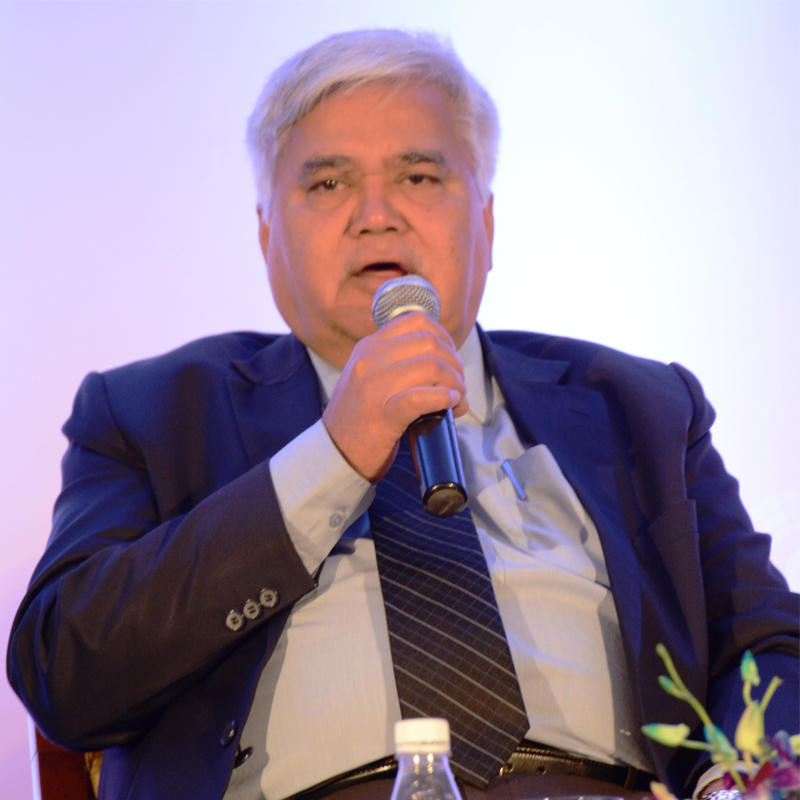
    “We are bringing out a comprehensive and common framework for all platforms relating to quality of service (QoS), tariff and interconnect. We have been working on it for many months now,” TRAI chairman RS Sharma told indiantelevision.com in an exclusive interview, adding that criticism of draft guidelines were part of a democratic consultation process.

    According to Sharma, the final recommendations of the regulator, which are being framed after a lengthy process of consultation with all stakeholders spread over several months, will be “issued by the end of this month (2016 end).”

    Sharma, who spoke on a whole range of issues on telecoms and broadcast sectors that it oversees, said the overall effort of TRAI was to create a framework for industry players that will boost digitization making the dream of Digital India come true. “We are working towards an environment that will reduce ambiguity in regulations and help all stakeholders, including the consumer,” he added.  

    Last week, the Delhi High Court removed almost all legal hurdles to complete digital rollout of TV services in the country by vacating all interim court orders that had been passed by other courts in the country extending the deadline for implementation of Phase III of digital addressable system (DAS).

    Though Sharma pointed out that the legal cases (taken care by Delhi HC on direction from Supreme Court) had no direct bearing on TRAI’s efforts to bring about a comprehensive regulatory framework for digital TV services in India, Sharma said, “It is the Ministry of Information and Broadcasting (MIB) that will have to enforce the (digitization) schedule, but we are ready to provide any assistance to MIB if needed.”

    On the entry of new technologies in India, which give window to innovations, the TRAI chief opined new technologies should be actively promoted without an attempt to throttle them through regulations.

    “We should not try to throttle them (new technologies) just because there are legacy business models. Business models must adapt to technology rather that technology being stifled in order to protect business models,” Sharma said.

    Quizzed, on the issue of Net Neutrality and new techs like OTT, Sharma explained, “We have already dealt with the issue of Net Neutrality from the tariff perspective (TRAI banned zero-tariff plans by telcos earlier this year). But as the government has asked us to provide it with comprehensive recommendations on the issue, we are in the final stages… (but) it may take a couple of months more.”

    While agreeing with the broad idea that time has arrived for India to have a comprehensive convergence law and regulator, Sharma made it clear that TRAI was not a competent authority to take a call on such policy matters and it was the government’s prerogative. “What should be the methods of regulatory structure (for a convergence law)? How will it be governed? Who will do it? I am not the competent person (on such issues) as it’s for the government to decide. But I certainly agree that because of technological developments, lot of convergence is happening in various sectors.”

    Asked to comment on a common criticism that India is an over-regulated market, Sharma disagreed and said, “We don’t believe in unnecessary regulations. However, at the same time, some regulation is necessary for an orderly growth of the industry; especially so consumers don’t suffer because of ambiguities in rules.”   

    Keep tuned in to read the full interview of TRAI chief, which is coming soon.

    ALSO READ:

    Delhi HC removes legal hurdles to implement DAS IV by 1 Jan 2017


  • TRAI chief: Pending DAS tariff, interconnect, QoS norms by year-end

    TRAI chief: Pending DAS tariff, interconnect, QoS norms by year-end

    NEW DELHI: India’s telecoms and broadcast carriage regulator Telecom Regulatory Authority of India (TRAI) has said it would issue final guidelines relating to broadcast tariff, interconnect and quality of service issues by this month-end and reiterated its overall aim is to “harmonise” norms so as to facilitate growth of the industry in an ambiguity-free regulatory environment.

    “We are bringing out a comprehensive and common framework for all platforms relating to quality of service (QoS), tariff and interconnect. We have been working on it for many months now,” TRAI chairman RS Sharma told indiantelevision.com in an exclusive interview, adding that criticism of draft guidelines were part of a democratic consultation process.

    According to Sharma, the final recommendations of the regulator, which are being framed after a lengthy process of consultation with all stakeholders spread over several months, will be “issued by the end of this month (2016 end).”

    Sharma, who spoke on a whole range of issues on telecoms and broadcast sectors that it oversees, said the overall effort of TRAI was to create a framework for industry players that will boost digitization making the dream of Digital India come true. “We are working towards an environment that will reduce ambiguity in regulations and help all stakeholders, including the consumer,” he added.  

    Last week, the Delhi High Court removed almost all legal hurdles to complete digital rollout of TV services in the country by vacating all interim court orders that had been passed by other courts in the country extending the deadline for implementation of Phase III of digital addressable system (DAS).

    Though Sharma pointed out that the legal cases (taken care by Delhi HC on direction from Supreme Court) had no direct bearing on TRAI’s efforts to bring about a comprehensive regulatory framework for digital TV services in India, Sharma said, “It is the Ministry of Information and Broadcasting (MIB) that will have to enforce the (digitization) schedule, but we are ready to provide any assistance to MIB if needed.”

    On the entry of new technologies in India, which give window to innovations, the TRAI chief opined new technologies should be actively promoted without an attempt to throttle them through regulations.

    “We should not try to throttle them (new technologies) just because there are legacy business models. Business models must adapt to technology rather that technology being stifled in order to protect business models,” Sharma said.

    Quizzed, on the issue of Net Neutrality and new techs like OTT, Sharma explained, “We have already dealt with the issue of Net Neutrality from the tariff perspective (TRAI banned zero-tariff plans by telcos earlier this year). But as the government has asked us to provide it with comprehensive recommendations on the issue, we are in the final stages… (but) it may take a couple of months more.”

    While agreeing with the broad idea that time has arrived for India to have a comprehensive convergence law and regulator, Sharma made it clear that TRAI was not a competent authority to take a call on such policy matters and it was the government’s prerogative. “What should be the methods of regulatory structure (for a convergence law)? How will it be governed? Who will do it? I am not the competent person (on such issues) as it’s for the government to decide. But I certainly agree that because of technological developments, lot of convergence is happening in various sectors.”

    Asked to comment on a common criticism that India is an over-regulated market, Sharma disagreed and said, “We don’t believe in unnecessary regulations. However, at the same time, some regulation is necessary for an orderly growth of the industry; especially so consumers don’t suffer because of ambiguities in rules.”   

    Keep tuned in to read the full interview of TRAI chief, which is coming soon.

    ALSO READ:

    Delhi HC removes legal hurdles to implement DAS IV by 1 Jan 2017


  • TRAI tariff order, interconnect regulations; date for responses extended

    TRAI tariff order, interconnect regulations; date for responses extended

    NEW DELHI: Stakeholders wanting to give in their reactions to the latest draft Tariff order for Digital Addressable Systems, the Quality of Service and Consumer Protection Regulations, and the draft interconnect regulations have been given time till 15 November 2016 to respond.

    The Telecom Regulatory Authority of India, which had issued these three documents, had earlier given other dates but has given a final extension to give an opportunity to the stakeholders to offer their comments but has made it clear that there will be no further extensions.

    The documents have been issued after considering the views expressed by the stakeholders during the consultation process and internal analysis of TRAI.

    Clearly, this is because the final phase of DAS comes into effect from 1 January 2017.  

    The Draft “Telecommunication (Broadcasting and Cable Services (Eighth) (Addressable Systems) Tariff Order 2016 and the Draft “The Standards of Quality of Service and Consumer Protection (Digital Addressable Systems) Regulations 2016 had been issued on 10 October 2016.

    Later, TRAI had issued the Draft Interconnection Regulation for TV Broadcasting Services provided through Addressable Systems on 14 October 2016.

    In a note on its website, TRAI said the whole process had begun when it issued a Consultation Paper on “Tariff  Issues related to TV Services” on 29 January 2016 in order to holistically review the existing regulatory framework for TV broadcasting services delivered through addressable systems. TRAI had also issued a Consultation Paper on “Interconnection framework for Broadcasting TV Services distributed through Addressable Systems” on 4 May 2016 inviting comments. Subsequently, a Consultation Paper on “Issues related to Quality of Services in Digital Addressable Systems and Consumer Protection for TV Broadcasting Services” was issued on 18 May 2016.

    In order to further discuss with the stakeholders, the issues involved in the said consultation papers, Open House Discussions (OHDs) were also conducted on all the three consultation papers.

    Also read

    http://www.indiantelevision.com/regulators/trai/trai-releases-draft-tariff-consumer-das-regulations-161010

    http://www.indiantelevision.com/regulators/trai/offer-premium-channels-as-a-la-carte-dont-bundle-trai-161010

    http://www.indiantelevision.com/regulators/trai/trai-may-check-broadcasters-distributors-monopolistic-behaviour-161012

    and

    http://www.indiantelevision.com/regulators/trai/trai-issues-comprehensive-interconnect-draft-guidelines-161014

  • TRAI tariff order, interconnect regulations; date for responses extended

    TRAI tariff order, interconnect regulations; date for responses extended

    NEW DELHI: Stakeholders wanting to give in their reactions to the latest draft Tariff order for Digital Addressable Systems, the Quality of Service and Consumer Protection Regulations, and the draft interconnect regulations have been given time till 15 November 2016 to respond.

    The Telecom Regulatory Authority of India, which had issued these three documents, had earlier given other dates but has given a final extension to give an opportunity to the stakeholders to offer their comments but has made it clear that there will be no further extensions.

    The documents have been issued after considering the views expressed by the stakeholders during the consultation process and internal analysis of TRAI.

    Clearly, this is because the final phase of DAS comes into effect from 1 January 2017.  

    The Draft “Telecommunication (Broadcasting and Cable Services (Eighth) (Addressable Systems) Tariff Order 2016 and the Draft “The Standards of Quality of Service and Consumer Protection (Digital Addressable Systems) Regulations 2016 had been issued on 10 October 2016.

    Later, TRAI had issued the Draft Interconnection Regulation for TV Broadcasting Services provided through Addressable Systems on 14 October 2016.

    In a note on its website, TRAI said the whole process had begun when it issued a Consultation Paper on “Tariff  Issues related to TV Services” on 29 January 2016 in order to holistically review the existing regulatory framework for TV broadcasting services delivered through addressable systems. TRAI had also issued a Consultation Paper on “Interconnection framework for Broadcasting TV Services distributed through Addressable Systems” on 4 May 2016 inviting comments. Subsequently, a Consultation Paper on “Issues related to Quality of Services in Digital Addressable Systems and Consumer Protection for TV Broadcasting Services” was issued on 18 May 2016.

    In order to further discuss with the stakeholders, the issues involved in the said consultation papers, Open House Discussions (OHDs) were also conducted on all the three consultation papers.

    Also read

    http://www.indiantelevision.com/regulators/trai/trai-releases-draft-tariff-consumer-das-regulations-161010

    http://www.indiantelevision.com/regulators/trai/offer-premium-channels-as-a-la-carte-dont-bundle-trai-161010

    http://www.indiantelevision.com/regulators/trai/trai-may-check-broadcasters-distributors-monopolistic-behaviour-161012

    and

    http://www.indiantelevision.com/regulators/trai/trai-issues-comprehensive-interconnect-draft-guidelines-161014

  • TRAI to levy financial disincentives for violating QoS norms for DAS

    TRAI to levy financial disincentives for violating QoS norms for DAS

    NEW DELHI: The Telecom Authority of India (TRAI) plans to levy financial incentives on non-compliant multi-system operators and local cable operators by amending the Standards of Quality of Service (Digital Addressable Cable TV Systems) Regulations.

    Information and Broadcasting Ministry sources told indiantelevision.com that the aim was to ensure transparent business practices and promote efficiency in order to help the consumer.

     TRAI had released a consultation paper in August for amending the QoS Regulations of 2012, and the replies received by stakeholders and consumers is currently under examination.

     The sources said that the government’s decision to digitise the cable TV network is an enabler to protect the interests of the consumers and for the government to realise designated revenue from the sector.   

     The QoS Regulations lay down quality of norms to be adhered to by the service providers, which include the norms for billing of subscribers of DAS Cable TV systems, issue of receipt for every payment made by a subscriber etc.


  • TRAI is working on amending QoS regulation: N Parameswaran

    TRAI is working on amending QoS regulation: N Parameswaran

    MUMBAI: It has been nearly three months since the Telecom Regulatory Authority of India (TRAI) came up with its consultation paper on levying financial disincentives on multi system operators (MSOs) and local cable operators (LCOs) who are delaying the process of billing in the digital addressable system (DAS) areas of the country.

    Although it has been long since the deadlines for commencement of billing in DAS areas got over, there is no clue on how the whip will be cracked on those who haven’t gone beyond installing set top boxes in phase I and II.

    TRAI principal advisor N Parameswaran says, “We are in the process of working on the amendment to the Quality of Service (QoS) regulation. The comments have come and we are yet to take a final decision on the same.”

    Meanwhile, the MSOs that indiantelevision.com spoke to have said that billing has happened only in few areas of New Delhi and Kolkata while the remaining cities in DAS phase III and IV don’t even have proper consumer application forms (CAFs).

    TRAI earlier had said that it is seeking to implement financial penalties on those MSOs and LCOs who defy the law. Comments had been asked from stakeholders on the same. The regulator had also said that for non-compliance of issuing bills, a disincentive of not exceeding Rs 20 per subscriber will be levied on the MSO and/or its linked cable operator and for the second time, penalty would be Rs 50. “For non-compliance of regulations, Rs 100 will be levied on each MSO for each contravention. If the MSO and LCO have entered into an agreement, both of them will be penalised for faults while in the case of no deal being signed, only the MSO is liable to pay,” TRAI had said.

    As per the consultation paper, the amendment, when approved, will come into effect 30 days from the date of publication.


  • TRAI extends deadline for pre-consultation paper on standards of QoS amendments

    TRAI extends deadline for pre-consultation paper on standards of QoS amendments

    MUMBAI: Nearly a week after issuing the notification that the Telecom Regulatory Authority of India (TRAI) is looking at making amendments to the Standards of Quality of Service (digital addressable cable TV systems) (amendment) regulation 2012 (12 of 2012) for ensuring better billing practices by MSOs and LCOs, it has decided to extend the date for receiving comments from stakeholders.


    The earlier deadline of 8 September 2014 has been extended to 12 September 2014 on the request of stakeholders. However it states that no further extensions will be entertained.


    The amendment, when approved, will come into effect 30 days from the date of publication and will be called Standards of Quality of Service  (digital addressable cable TV systems) (amendment) Regulations 2014.


    TRAI says that the main purpose of issuing this new amendment was because it kept receiving complaints from subscribers about not getting proper bill and receipt. The regulator feels that financial disincentives should be levied on non-compliant MSOs and LCOS, similar to how it happens in the telecom field where this action has yielded result.

  • MIB warns MSOs against disconnection signals to LCOs

    MIB warns MSOs against disconnection signals to LCOs

    MUMBAI: The Government today warned multi-system operators against disconnecting signals of local cable operators without due notice specifying reasons and said any violation of this would viewed seriously and action against erring MSOs.


    The directive comes even as more than twenty cases are pending before the Telecom Disputes Settlement and Appellate Tribunal (TDSAT) relating to disconnection of signals by distributors to MSOs or MSOs to LCOs.


    The Information and Broadcasting Ministry said Chapter V of Standards of Quality of Service (Digital Addressable Cable Systems) Regulations 2012 issued by Telecom Regulatory Authority of India (TRAI) is clear that ‘no multi system operator (MSO) shall disconnect the signals of a TV channel of a linked local cable operator, without giving three weeks’ notice to such local cable operator, clearly specifying the reasons for the proposed disconnection.’


    The Regulation further says notice of disconnection of signals of TV channels is also required to be published in two leading local newspapers of the State in which the service provider is providing the services, out of which one notice shall be published in the newspaper in the local language of the area.


    The Ministry said it had been brought to its notice that some MSOs are disconnecting signals to cable subscribers without giving any notice in violation of the Regulation.


    The Ministry said this is also in violation of the undertaking given by MSOs in form 2 of their application which states: ‘We shall ensure that my/our cable television network shall be run in accordance with the provisions of the Cable Television Network (Regulations) Act 1995 and the rules made thereunder, regulations, orders, guidelines or the directions issued by the Central Government or the Authority from time to time.’