Tag: Qualcomm

  • Monaco’s Grimaldi Forum turns into a high-stakes sports-tech power play as Sportel 2025 starts

    Monaco’s Grimaldi Forum turns into a high-stakes sports-tech power play as Sportel 2025 starts

    MONACO: The sports industry’s deal-makers have flooded into Monaco this week, and the energy is electric. Nearly 70 countries have sent their sharpest minds to Sportel 2025, a three-day collision between legacy sports titans and maverick tech disruptors that kicks off today and runs through 22 October. This is where real money gets moved and genuine innovation gets showcased.

    The Grimaldi Forum is heaving with some of sport’s biggest names exhibiting: Fifa, La Liga, the World Cup of Hockey 2028, alongside a glittering roster of tech firms like Qualcomm, AWS, and Wasabi. But Sportel is no mere trade show—it’s a strategic summit where the next generation of sports media gets hammered out.

    The conference programme cuts straight to the chase. Javier Tebas, La Liga’s president, will deliver a keynote spelling out how the world’s most compelling league is monetising itself. But the real fireworks come in a masterly panel on investment: “Where is the next $1bn coming from?” features the CEOs of Surj Sports Investment, Kings League, and the Professional Fighters League, all circling the same question—which markets are still hungry, and where will private equity and sovereign wealth funds actually deploy capital?

    There’s more. A panel on Formula 1’s storytelling prowess asks whether authentic sport crossed with entertainment star power can turbocharge sponsorship and rights values. Then comes the tech avalanche: sessions on generative AI reshaping everything from content creation to the fan experience; on new live-streaming tools that personalise what viewers see; on how Liverpool FC is harnessing AI and cloud infrastructure to deepen loyalty across the globe.

    The Ligue 1+ case study is particularly clever—a league building its own direct-to-consumer platform, hoarding first-party data, and cutting out the middleman to capture fresh revenue. That model is spreading. So too is the adoption of ad-supported streaming as the default for OTT platforms. World Rugby, via the platform WURL, is showcasing exactly how.

    The conference even has a competition worth caring about: “Pitch Perfect Innovation Contest” will see start-ups including Pendular, FalconHQ, and Camb.ai each get three minutes to convince industry heavyweights that their solution deserves backing. And a Women’s Lunch (by invitation) will celebrate female leaders redefining the sport-media nexus—expect Alexis Ohanian from Seven Seven Six, Lauren Pedersen from SportAI, Fiona Wong from the NBA, and marathon world record holder Paula Radcliffe to set the room ablaze.

    The message from all sides is unambiguous: artificial intelligence, cloud technology, and direct fan relationships aren’t the future anymore. They’re the present—and if you’re not moving now, you’re already behind.

  • Intel chips in with TSMC for US fab fix amid foundry fatigue

    Intel chips in with TSMC for US fab fix amid foundry fatigue

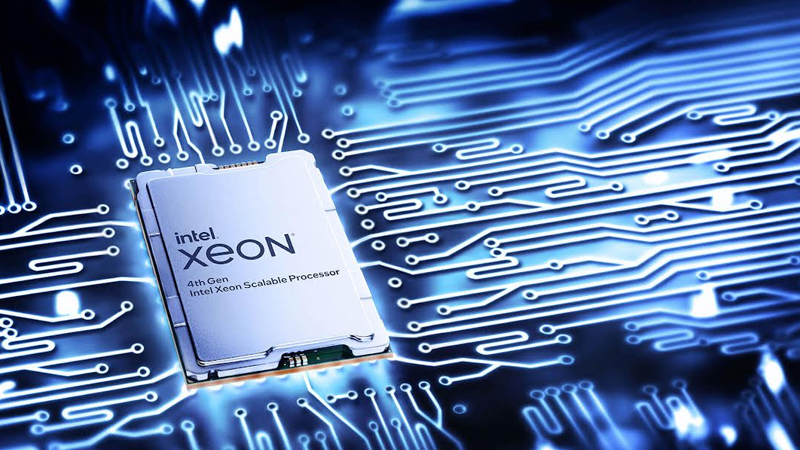
    MUMBAI: Fab mates in the making? In a twist worthy of Silicon Valley drama, Intel and Taiwan’s TSMC are reportedly close to a blockbuster chip deal with Washington pulling a few strings from the wings.

    According to The Information, via Reuters, the two semiconductor giants have reached a preliminary agreement to form a joint venture that would see TSMC operate a 20 per cent stake in Intel’s U.S.-based fabs. The rest of the ownership remains under wraps, though whispers of potential investor pitches to AMD, Nvidia, Broadcom, and Qualcomm have swirled since early 2024, despite public denials by some of the players involved.

    Behind the scenes, the Biden administration and the U.S. Department of Commerce are said to be stage-directing the high-stakes collaboration. With Intel’s IDM 2.0 strategy stalling and its fabs failing to fire on all cylinders, this venture appears designed to stabilise an American chip titan without handing over control to foreign ownership, something the U.S. government has firmly resisted.

    The stakes are silicon-sharp. Intel has spent tens of billions of dollars on its domestic fabs, but only a select few are equipped for advanced 18A process technologies, the bedrock for Intel’s next-gen processors. The challenge? Many of these fabs are tailored for Intel’s own chips, not contract manufacturing, a space where TSMC reigns supreme.

    TSMC’s planned 20 per cent stake also raises eyebrows given its existing 165 million dollars investment in Arizona’s Fab 21, which already serves top-tier clients like Apple. How the Taiwanese foundry plans to juggle its own fab expansion with the new Intel tie-up remains unclear.

    Chip watchers say this uneasy alliance may be less about synergies and more about survival, with the White House acting as the matchmaker. As part of a broader push to keep chipmaking competitive and domestic, Washington seems determined to bring Intel back into the game, even if it means nudging rivals into bed together.

    Adding to the plot, Intel recently brought in industry veteran Lip-Bu Tan as CEO to guide its comeback after it fumbled the AI-driven semiconductor surge. While Intel and TSMC have stayed silent on the matter so far, industry insiders suggest that this deal, if sealed, could redefine global chip geopolitics.

  • How Semiconductor Stocks Are Driving India’s Digital Future

    How Semiconductor Stocks Are Driving India’s Digital Future

    India’s digital future is being shaped by a range of industries, with the semiconductor sector playing a crucial role in driving technological advancements. As the backbone of the digital economy, semiconductor chips are at the heart of all modern electronic devices, from smartphones to computers, IoT devices, and automobiles. Semiconductor stocks have become a major focus for investors, offering both growth opportunities and stability, particularly in the context of India’s rapidly expanding tech landscape.

    The Growing Role of Semiconductor Stocks

    Semiconductors are integral to the digital infrastructure of any nation. In India, semiconductor stocks are poised to benefit from the accelerating demand for technology in both the public and private sectors. From 5G networks to AI, data centres, and smart manufacturing, the reliance on semiconductors is expected to soar in the coming years. As India becomes a global technology hub, the demand for semiconductor chips is expected to grow exponentially, driving growth in semiconductor stocks.

    The Indian government’s push towards becoming a global manufacturing leader has made semiconductor manufacturing and development a priority. In December 2021, the Indian government approved a ₹76,000 crore ($10 billion) incentive package to boost domestic semiconductor production. This package aims to establish semiconductor fabs (fabrication plants) and display manufacturing units in the country, ensuring that India can meet its own demand for chips and reduce reliance on imports.

    The semiconductor market in India is expected to be worth $100 billion by 2025, up from $27 billion in 2022. With such rapid growth projected, semiconductor stocks are attracting attention from investors looking to capitalise on the sector’s potential. Several companies in the semiconductor space, such as India’s own Sutlej Textiles & Industries and Bharat Electronics, as well as multinational players with operations in India, stand to benefit from the demand surge.

    How Semiconductor Stocks Are Driving India’s Digital Future

    1.  5G Network Expansion India’s 5G rollout is a game changer in terms of digital transformation. The technology promises to revolutionise industries, including healthcare, education, and entertainment, by enabling faster internet speeds and more efficient data transmission. Semiconductor chips are critical to powering 5G infrastructure, from base stations to consumer devices. Companies like Qualcomm and MediaTek have established a significant presence in India, supplying chips crucial for 5G devices and infrastructure.  
    As 5G adoption accelerates, the demand for semiconductors in both telecom and consumer devices is expected to skyrocket. This boost in demand provides semiconductor stocks with a significant growth opportunity, which will contribute to India’s digital future. For investors, this means increased interest in semiconductor companies that supply the necessary technology to build and support 5G networks.

    2.  Smart Manufacturing and Industry 4.0 The Indian manufacturing sector is also undergoing a digital transformation. With the advent of Industry 4.0, India is embracing smart factories, automation, robotics, and AI-driven production systems. Semiconductor chips are the lifeblood of this transformation. Whether it’s the sensors used in automation or the processors that power robotics and AI systems, semiconductor stocks are seeing a surge in demand.  
    India’s push towards making the country a manufacturing powerhouse means that the role of semiconductors in driving productivity improvements is becoming more important. Companies in India involved in the semiconductor ecosystem are now integral to the future of smart manufacturing, giving semiconductor stocks a significant role in shaping the future of the Indian economy.

    3.  The Rise of Electric Vehicles (EVs) Another area where semiconductor stocks are expected to play a pivotal role is in the rapidly growing electric vehicle (EV) sector. India is aiming to become a major player in the EV market, with companies like Tata Motors and Mahindra Electric leading the way. EVs rely on a wide range of semiconductor components for power management, battery systems, and motor control.  
    As the Indian government continues to push for greener transportation and stricter emission norms, the demand for electric vehicles will continue to grow. This, in turn, will drive demand for the semiconductors that power these vehicles. Semiconductor stocks tied to the EV supply chain are poised to benefit from this transition.

    4.  Internet of Things (IoT) and Smart Devices India’s growing middle class and increasing internet penetration have fueled the adoption of IoT devices and smart home technologies. From wearable health devices to smart refrigerators, thermostats, and security systems, semiconductors are at the heart of these innovations. Semiconductor stocks of companies that manufacture chips for IoT devices are thus well-positioned for growth in India’s expanding digital landscape.

    As more industries, from agriculture to healthcare, begin to integrate IoT solutions, semiconductor companies will continue to see rising demand. This trend further cements the role of semiconductor stocks in driving India’s digital future.

    Defensive Stocks: A Key Component of Investment Strategy

    While semiconductor stocks are viewed as high-growth investments due to their association with cutting-edge technology, they also come with a level of risk. However, some investors view semiconductor stocks as defensive stocks due to the essential nature of semiconductors in various industries. A defensive stock is typically one that is expected to perform well even during economic downturns, as the products or services it provides are always in demand.

    Semiconductors, as a critical component of modern technology, fall into this category. Regardless of economic cycles, the need for semiconductors in everything from smartphones to healthcare devices and electric vehicles remains high. For this reason, semiconductor stocks can act as a stabiliser in an investment portfolio, offering steady returns even in times of uncertainty. With India’s increasing focus on technology, the semiconductor industry has been recognised as a strategic sector, making semiconductor stocks a long-term investment opportunity.

    Conclusion

    Semiconductor stocks are undeniably one of the driving forces behind India’s digital future. From powering 5G networks and smart manufacturing to fuelling the growth of electric vehicles and IoT devices, semiconductors are the foundation of modern technological progress. As India continues to embrace the digital revolution, semiconductor stocks will remain central to the nation’s economic growth and digital ambitions. Investors who align their portfolios with this growing sector stand to benefit from both the current and future potential of semiconductor stocks, making them a wise choice for those looking to tap into the digital future of India.

    In conclusion, semiconductor stocks are not just a key component of India’s digital transformation but also a stable and essential part of the global technology ecosystem. With continued investment and technological advancements, these stocks will help propel India into the future, offering growth and security for both the economy and investors.

    Disclaimer: This article does not have journalistic/ editorial involvement of indiantelevision.com. indiantelevision.com group or its websites does not endorse/ subscribe to the contents of the article/advertisement and/or views expressed herein.

    The reader is further advised that Online Casino, Betting, Online Gaming , Crypto products, Financial Investments/Engagement , NFTs, Products associated with health, wellness, and food are unregulated and can be highly risky. There may be no regulatory recourse for any loss from such transactions or risk associated with health conditions.

    Indiantelevision.com group shall not in any manner, be responsible and/or liable in any manner whatsoever for all that is stated in the article and/or also with regard to the views, opinions, announcements, declarations, affirmations etc., stated/featured in the same. The decision to read hereinafter is purely a matter of choice and shall be construed as an express undertaking/guarantee in favour of indiantelevision.com (indiantelevision.com group) of being absolved from any/ all potential legal action, or enforceable claims. The content may be for information and awareness purposes and does not constitute financial advice.  
     

  • Accedo, Qualcomm, HBS launch XR Sports Alliance

    Accedo, Qualcomm, HBS launch XR Sports Alliance

    MUMBAI: XR in Sports is about to receive a shot in the arm. Three large global players have joined hands for a strategic alliance which seeks to bridge the sports and XR industry. These are global video solutions provider Accedo, leading hardware and software enabler Qualcomm Technologies and HBS, a specialist sports broadcast organization.

    The three founding members aim to bring together market-leading stakeholders, drawing on Accedo’s expertise in video user experience, distribution and monetization, Qualcomm Technologies’ Snapdragon-powered XR technology and expertise, and HBS’ strong sports ecosystem.

    The program aims to accelerate knowledge gathering, technological advancement and time-to-market for XR sports services, as well as gather and share industry knowledge.

    The XR Sports Alliance aims to drive the development and deployment of XR Sports products and services by providing an end-to-end solution framework to help key stakeholders deploy state-of-the-art XR services efficiently and at scale. The framework encompasses immersive video production and distribution, system architecture definition, data and monetization frameworks, user testing and technology and business model advisory elements. Moreover, the program will be open to third parties to join, including XR OEMs, to drive the development of purpose-built XR hardware for the sports and video entertainment use case.

    At its core, the program aims to connect leading companies from the sports, video, telco, infrastructure, and hardware industries to collaborate in innovation projects, collectively contribute to each other’s roadmaps, and exchange knowledge and feedback, to support and accelerate industry growth and innovation.

    Accedo CEO Michael Lantz said: “We believe XR will become an important content distribution and user engagement platform and we want to connect industry stakeholders to collaborate and innovate. The Alliance network will enable industries to uncover industry demand in different geographical regions and shine light on the pipeline of upcoming XR solutions, allowing sports rights owners and holders to make data-driven decisions.”

    Qualcomm, Technologies senior director product management Patrick Costello added: “We are entering a new era of spatial computing. We firmly believe that XR experiences will revolutionize how fans engage with sports and we are already seeing a rise in adoption of immersive entertainment experiences thanks to the emergence of new XR devices and increased investment by OEMs for sports content rights. The XR Sports Alliance will bring together key players in the sports entertainment value-chain, collectively fostering the ecosystem to deliver game-changing immersive sports experiences.”

    HBS head of digital services Sylvain Lebreton commented: “This program aims to be a game-changer for the sports industry, helping to drive innovation. We are engaging with industry leaders across every part of the XR and sports broadcast ecosystem, which we are sure will ultimately accelerate the development and deployment of commercial XR sports services.”

  • Akash Palkhiwala elevated as CFO, COO of the Qualcomm

    Akash Palkhiwala elevated as CFO, COO of the Qualcomm

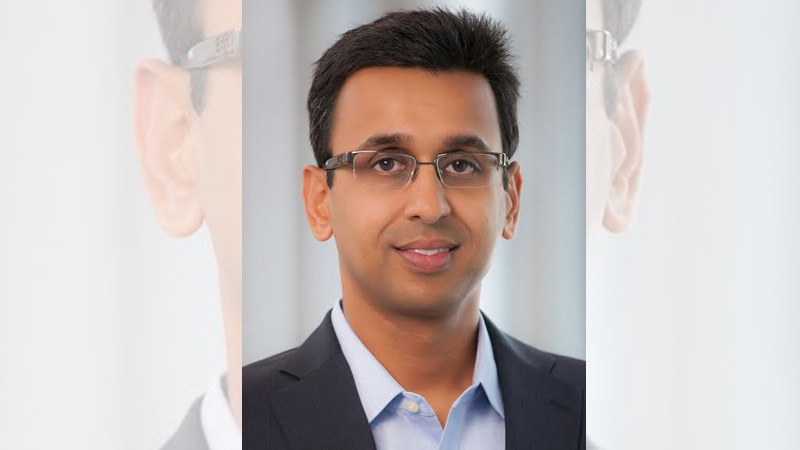
    Mumbai : Qualcomm recently created the position of COO, Akash Palkhiwala elevated as the new CFO, COO of the Qualcomm.made by CEO and president of the Qualcomm Cristiano Amon. Earlier he worked as SVP and finance lead at Qualcomm semiconductor business.

    He has more than 23 years of experience across various industries in leadership roles. He will serve his expertise in financial operations and expansion for the company.He will also handle operations and information technology across the globe for the company.

  • India gaming market poised to reach $6-7 billion by 2025: Report

    India gaming market poised to reach $6-7 billion by 2025: Report

    Mumbai: The Indian gaming market is poised to reach $6-7 billion in value by 2025, according to a report by the Internet and Mobile Association of India (IAMAI) with OnePlus and RedSeer. India is currently home to over 400 million mobile gamers and the number of gamers is estimated to grow to 650 million by 2025. Currently, mobile gaming dominates the Indian gaming industry, contributing more than 90 per cent to the $1.8 billion gaming market, and is expected to further grow to generate $6-7 billion value by 2025, the report said.

    Mobile gaming dominates the Indian gaming industry, contributing more than 90 per cent to the $1.6 billion gaming market. As per the report, it is expected to grow further to generate a $3.9 billion value by 2025.  The number of mobile users is also estimated to grow from 430 million to 650 million by 2025, it added.

    “We are at the cusp of a gaming revolution and the gaming ecosystem is working towards user-friendly smartphones and leveraging 5G technologies,” said the principal secretary of the Telangana government’s department of industries and commerce and information technology Jayesh Ranjan. The report was released by Ranjan, along with the joint secretary of the ministry of electronics and information technology Saurabh Gaur.

    “The gaming sector has underlined the significance of affordable smartphones with capable hardware. I am happy that, parallelly, work is going on to make phones more user-friendly for gaming by leveraging 5G technology, developments in AI/ML, and hardware manufacturing,” he added.

    According to the report, 40 per cent of hardcore gamers pay for their games with an average spend of Rs 230 per month. The Covid-19 pandemic has accelerated the organic growth of digital games as mobile app downloads grew by 50 per cent and user engagement went up by 20 per cent, the study says. The increased gaming time has spurred the growth of hardcore gamers in India, even as casual games remain the most popular genre in India.

    Gaur voiced support for creating games for the Indian audience, based on Indian culture. “The [global] gaming industry can be matched with electronics, and consoles could be manufactured in India,” he said.

    Indian gaming has leapfrogged into the mobile gaming era due to the rapid increase in smartphone penetration in the country, with large console and PC games now being curated for mobile platforms. The industry is also attracting huge investment interest, with nearly $1 billion being invested in the sector in the last six months.

    Smartphones have become more affordable and pack strong hardware that is equipped to run games which may require medium to high specifications. This has opened accessibility to more immersive gaming for the masses, with smartphone OEMs also increasingly focusing on incorporating dedicated gaming features on their newest devices and launching gaming-specific phones.

    “Over the past few years, the e-gaming industry in India has grown tremendously, driven by the rising avenues for digitization promoted by the flagship initiative of the government, the Digital India program, and improved accessibility centered around innovation and affordability by OEMs,” said OnePlus India vice president, chief strategy officer and head of India sales, Navnit Nakra who was also present on the occasion. 

    Speaking on the occasion, Qualcomm vice president and president Rajen Vagadia Rajen Vagadia highlighted how efforts are being undertaken to nurture esports and ensure that it is seen as a field that can be taken up professionally as well.

  • 5G stole the limelight at IMC 2018 Day 1, with Live Demonstrations

    5G stole the limelight at IMC 2018 Day 1, with Live Demonstrations

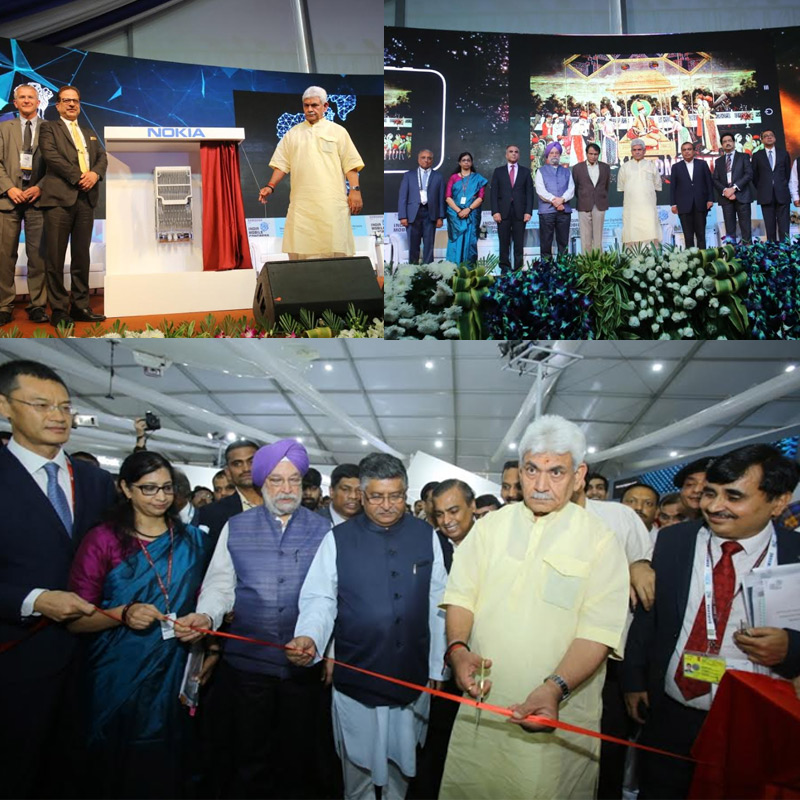
    New Delhi : India Mobile Congress 2018 (IMC 2018), South Asia’s biggest Mobile, Internet and Technology event, kicked-off today amidst much fan-fare at Aerocity, New Delhi. Chief Guest, Shri Manoj Sinha, Hon’ble Minister of State (Independent Charge) for Communications and Minister of State for Railways, inaugurated the event, which is jointly organised by the Department of Telecommunications and COAI. The event witnessed the presence of more than 15,000 people including international exhibitors, media, global speakers and other notable delegates, including several established and budding entrepreneurs.

    While addressing the gathering, Hon’ble Minister Shri Manoj Sinha, stated that the Government would leave no stone unturned in extending its support to India’s ICT and TMT sectors. Apart from showcasing India’s rich technology heritage and the road ahead, the three day event highlighted India’s massive ICT innovation potential and brought to light, several game-changing technologies that will shape India’s digital future in the coming times. The event, themed “New Digital Horizons: Connect, Create, Innovate”, witnessed exemplary participation and support from global information and communications technology companies. The platform saw an impressive international presence with over 300 exhibitors, 2000 CXOs and 190 global speakers.

    Key Highlights of the Day-1

    On Day 1, a number of exhibitors including Reliance Jio Infocomm, Intel, Nokia and Qualcomm participated in 5G trials. This was the first time people could get a glimpse of what is to be expected from 5G in the years to come and how it can affect the scope and development of futuristic technologies. A number of discussions were pivoted around how such technologies will shape India’s digital future. The sessions showcased India’s 5G potential and the numerous unique use cases 5G will have in India. There were live 5G demonstrations by companies such as Nokia, Ericsson, Qualcomm, Reliance Jio infocomm and the like.

    The introductory panel discussion, around the theme – The India Story (Stack 3.0) – Connect, Create, Innovate, was the pick of the conference sessions. The second-half of the day saw a number of interesting and vital discussions on The Evolving Regulatory Landscape in the New Digital Ecosystem-Regulatory Brief, Enabling Futuristic Networks – Reducing complexity to Redefine connectivity, Digital Identity – A revolution or a threat, Connecting the Unconnected – Building Next-Gen ICT Infrastructure for the Masses, Gadgets of Tomorrow – Connected Intelligence, graced by speakers such as Mr. Ajit Pai, Chairman, U.S. Federal Communications Commission, Mr. David Hammarwall, Head of Product Line 5G RAN, Product Area Networks, Ericsson, Mr. Vinayak Godse, Senior Director, Data Security Council of India, Mr. Bimal Dayal, CEO, Indus Towers and Mr. Jonathan Wood, Senior Director, Intel Next Generation and Standards, Intel.

    IMC 2018 also hosted the ASEAN & BIMSTEC Conclave which was addressed by delegates including Shri Manoj Sinha, Hon’ble Minister of State (Independent Charge) for Communications and Minister of State for Railways and 16 other Ministers from ASEAN & BIMSTEC Countries, H.E. Mr. Pichet Durongkaveroj, Hon’ble Minister of Digital Economy and Society, Govt. of Thailand, H.E. Khennavong Bounsaleumsay, Vice Minister, Ministry of Posts and Telecommunications (MPT), Lao PDR, H.E. Thant Sin Maung, Hon'ble, Union Minister of Transport and Communications, Govt. of Myanmar, H.E. Chea Manit, Under Secretary of State, Ministry of Posts & Telecommunications (MPTC), H.E. Tram Iv Tek, Minister of Posts and Telecommunication, H.E. M Shahidul Islam, Secretary General, BIMSTEC. A number of topics curated for consumer interest garnered excitement and enthusiastic participation from the delegates. One such session involved a discussion on “Smart Cities: Automating the way we live”.

    Key highlights of the day:

    Nokia

    Nokia’s state-of-the-art manufacturing unit in Chennai has started manufacturing 5G New Radio (NR) based on the 3GPP 5G New Radio Release 15 standard. It is the factory to start manufacturing 5G radio equipment in India. The Chennai plant is one of the largest telecom equipment manufacturing plant in the country, recently reaching the 4 million units annual production milestone of 2G, 3G and 4G units. It serves both domestic as well as global customers, shipping to over 100 countries.  As part of an on-going program, known as the ‘Conscious** factory’, the Nokia Chennai plant recently implemented the first 'real-world' Smart Manufacturing application of Industry 4.0 in India leveraging solutions such as Augmented and Virtual Reality (AR/VR), connected Robotics, Artificial Intelligence, Big Data Analytics, and Internet of Things to enhance operations and increase productivity.  The plant is equipped with cutting-edge manufacturing technologies, such as the state-of-the-art surface mounting technology, with a capacity of 12.8 billion components every year, 3D automated optical inspection and X-Ray inspection capability.

    Huawei

    Huawei Reiterates Commitment to Bringing 5G to India with Full Range End-to-End Technology Showcase at IMC 2018 – Conducting industry’s first 5G use case demos in partnership with Airtel, Huawei paves ROADS to a fully connected and intelligent world.

    Mr. Randeep Sekhon, Chief Technology Officer, Bharti Airtel said, “Ubiquitous high speed networks will open doors to a digital world that will be full of exciting digital innovations. Having conducted India’s first in-lab 5G test with Huawei, we are delighted to extend our partnership to demonstrate cutting edge AR and VR based use cases for 5G.”

    Follow updates on #IMC2018

    For more information please visit us at www.indiamobilecongress.com

    For more updates please visit:

    Twitter: @exploreIMC

    Instagram: @exploreIMC

    Facebook: http://www.facebook.com/IndiaMobileCongress

    YouTube: https://goo.gl/UcZhCP

  • Irrfan Khan named brand ambassador for Xolo

    Irrfan Khan named brand ambassador for Xolo

    NEW DELHI: Actor Irrfan Khan has been named as the new brand ambassador of LAVA International’s Xolo brand.


    Xolo has forged industry-leading partnerships including Intel, NVIDIA and Qualcomm amongst others, in order to provide differentiated technology to the new-age, discerning consumers.


    In 2013, Xolo also partnered with the iconic Liverpool FC, which signifies the company’s long-term intent to promote football across the sub-continent, to strengthen the engagement with younger, new-age consumer.


    Xolo business head Sunil Raina said, “We are pleased to announce Irrfan Khan as brand ambassador and the face of Xolo brand. Irrfan Khan is an internationally acclaimed actor who has made his mark in both Indian and Hollywood cinema. He makes a perfect fit with our brand values of passion, curiosity and honesty and will be instrumental in communicating the benefits of Xolo to consumers across India.”


    Khan is equally popular among the urban as well as the semi-urban audience, which will distinctly bring forth shared synergies, values and beliefs and help Xolo further expand its reach.


    Khan said, “I am excited to represent a forward-looking innovator like Xolo. To me, Xolo spells technology, innovation and evolves with the usage patterns of the consumers. I am looking forward to this association and the next line up of innovative products from Xolo.”

  • Modi effect: Qualcomm to invest $150 million in Indian mobile startups

    Modi effect: Qualcomm to invest $150 million in Indian mobile startups

    MUMBAI: Indian Prime Minister Narendra Modi is making waves in the United States. And the effects of his power packed visit have already started trickling in.


    US based Qualcomm Incorporated, which operates in 3G, 4G and next-generation wireless technologies, plans to invest up to $150 million in Indian startup companies across all stages. This is a part of its commitment to India during a meeting with Modi at the Digital Economy event in San Jose.


    Qualcomm Ventures will advise and direct Qualcomm’s activities with respect to these strategic investments.


    Qualcomm has been investing in promising Indian startups since 2007 and there are more than 20 Indian companies as part of its global portfolio. Sectors of investment vary across the mobile ecosystem and include hardware, software platforms, e-commerce, healthcare, location based services and retail technology. Initiatives such as the QPrize competition, a global seed investment competition, as well as an early stage fund, are part of the team’s efforts in encouraging early stage entrepreneurs.


    Qualcomm directly invests in Indian mobile and internet start-up companies to keenly foster the local ecosystem. Portfolio companies include Yourstory, a media tech platform for entrepreneurs; Portea Medical, an in-home healthcare provider; and MapMyIndia, a provider of digital map, navigation, and tracking products and services. Indian companies receiving funding can benefit from Qualcomm’s insights on mobile technologies and utilize Qualcomm’s relationships throughout the industry.


    Qualcomm Ventures’ India team also provides unique support through its comprehensive knowledge and understanding of the region.


    “We share Prime Minister Narendra Modi’s vision to transform India into a digitally empowered society and knowledge economy. India is at the cusp of a technology revolution and mobile technologies will lay the foundation for Digital India. We are committed to providing local innovative start-ups with the support needed to help India’s IOE ecosystem grow, increasing consumer choice and availability,” said Qualcomm Incorporated executive chairman Dr. Paul E. Jacobs.


    “Since Qualcomm’s first India investment in 2007 and with full-fledged presence starting in early 2008, we continue to invest broadly to strengthen India’s overall economy. We are committed to providing these companies with the support needed to help propel them forward in the competitive Indian region. We’re excited about the new prospects in India and look forward to growing our portfolio,” said Qualcomm Incorporated senior vice president Nagraj Kashyap.


    Qualcomm also plays a key role driving India’s wireless revolution by making mobile communications increasingly accessible and affordable. For over two decades, Qualcomm has been helping the country’s mobile ecosystem achieve ongoing success and growth through its work with operators, OEM/ODMs, software developers, sales/distribution partners, governmental entities, academic institutions and standards organizations, among others. Qualcomm believes that its initiatives in India will help support the Indian government’s Digital India vision.

  • Facebook is working extensively in rural India to enhance connectivity, says Mark Zuckerberg

    Facebook is working extensively in rural India to enhance connectivity, says Mark Zuckerberg

    MUMBAI: Stressing on the importance of enhancing internet connectivity in India, Facebook  founder and CEO Mark Zuckerberg today said, “Connectivity can’t be restricted to just the rich and powerful. Cost of internet access has to be made affordable.”


    The Facebook CEO is in India on a two-day visit and was speaking at the first summit for Internet.org, an organisation led by Facebook.


    Mark Zuckerberg has said that he would meet PM Narendra Modi on 10 October to discuss connecting Indian villages to the internet, and Facebook’s role in doing so.


    Pitching for free ‘basic net access’, Zuckerberg reckoned that it should be like dialing 911 in the US or 100 here in India. “There needs to be a 911 for the internet. We’ve been working with operators to offer free basic Internet for everyone, to break down the social barriers. With this model, we’ve already helped people connect 3 million people.”


    “Connectivity is a human right. We want to build an internet that works for all,” he added.


    The 30-year old also announced that Facebook will fund apps and services in local Indian languages for women, students and farmers.


    He pointed out that only about a third of people in the world had access to the Internet – 243 million in India and a recent survey showed that 69 percent of people in India said they didn’t know why it would be useful for them.


    The biggest barrier, he said, was that “lots of people who have never experienced the internet don’t know why they need it.”


    He also added that lack of relevant local language content is why most Indians don’t use internet and Facebook is working extensively in rural India to enhance connectivity.


    “Facebook is focusing on content in local languages. It is crucial to internet penetration in Asia, especially India,” said the 30-year-old billionaire. “80 per cent of content on the internet is just in 10 languages, while there are 22 official languages in India; 65 per cent of people use Facebook in a language other than English, including 10 Indian languages.”


    Zuckerberg stated that the next generation has the opportunity to bring the world to India and India to the world. The whole world being robbed of creativity and ideas because so many people in India are not online yet, he further said.


    He further revealed that Facebook has launched a new contest to develop local apps for farmers and social services in local languages with a $1 million fund dedicated for it.


    “We’re also going to extend a program called FB Start,” he added, “which provides $40,000 (Rs 25 lakh approximately) to developers who build and develop apps in these categories,” he added.


    Praising India, Zuckerberg credited it for ‘making leaps in revolutions that changed the world’. “Inventions have changed the world throughout history. ’Mangalyaan’ is a huge achievement for India,” he said.


    The CEO is of the opinion that lowering data costs by operators is not a sustainable solution. “Mobile operators invest a lot of money, lowering costs is not easy,” he said. “Infrastructure is the biggest barrier to internet, then technical issues. Language barriers are huge impediments to the internet,” he added.


    “Connected people have better access to technology, education and jobs. When people are connected, accomplishments are easy,” Zuckerberg said.


    Internet.org aims to make internet access affordable for people acrossthe globe. Focused on enabling the next five billion people without internet access to come online, the founding members of the project include Facebook, Ericsson, MediaTek, Nokia, Opera, Qualcomm and Samsung.


    The partners are collaborating on developing lower-cost, higher-quality smartphones and deploying internet access in under-served communities.


    Zuckerberg’s visit comes three months after Sheryl Sandberg, COO of the social networking giant, visited India which is Facebook’s second biggest market. She also met Modi, who has effectively used social networking during his election campaign and later even in governance.


    Zuckerberg is the third high profile CEO of a US-based corporation, after Amazon’s Jeff Bezos and Microsoft’s Satya Nadella, to visit India in last few days.