Tag: Q3 FY25

  • Uno Minda accelerates growth with Rs 254.37 crore uptick in PAT

    Uno Minda accelerates growth with Rs 254.37 crore uptick in PAT

    MUMBAI: Uno Minda, a manufacturer of automotive solutions and systems for OEMs has revved up its financial performance, posting impressive numbers in Q3 FY25 while laying the groundwork for aggressive expansion. The company reported consolidated revenue from operations of Rs 4,183.99 crore for the quarter ending 31 December 2024, reflecting a significant year-on-year (Y/Y) growth from Rs 3,522.91 crore in the same quarter last year.

    Profit after tax (PAT) surged to Rs 254.37 crore, marking a strong increase from Rs 205.11 crore in Q3 FY24. The company’s operating profit before tax stood at Rs 300.99 crore, showcasing its continued financial strength. Earnings per share (EPS) also saw an uptick, rising to Rs 4.05 from Rs3.38 Y/Y.

    Profit after tax (PAT) surged to Rs 254.37 crore from Rs 205.11 crore Y/Y, while earnings per share (EPS) increased to Rs 4.05 from Rs 3.38 in the previous year. The company also declared an interim dividend of Rs 0.75 per share. Gross margin and operating profit experienced a robust boost, driven by rising demand in the automotive sector.

    The Board approved an in-principle issuance of Non-Convertible Debentures (NCDs) up to Rs 500 crore to support its capital expenditure plans, investments in subsidiaries, joint ventures, and associate companies. This move signals the company’s commitment to sustained growth and market leadership.

    Additionally, Uno Minda is expanding its Hosur Plant in Tamil Nadu, increasing its overall production capacity from 11,000 tonnes to 15,000 tonnes per annum. The Rs 65.59 crore investment, including a new paint shop facility, underscores the company’s focus on scaling up production to meet growing market demand.

    Uno Minda has been actively strengthening its portfolio with acquisitions. In 2024, it acquired a 26 per cent stake in Minda Westport Technologies ltd, a 49 per cent stake in Minda Nabtesco Automotive pvt ltd, and completed the first phase of acquiring Minda Onkyo India pvt ltd, further solidifying its market presence.

    With record-high revenue, strong profitability, and strategic investments, Uno Minda is steering toward a high-growth trajectory. The company is focused on enhancing operational efficiencies, expanding market reach, and leveraging its strong balance sheet to drive innovation in the auto components sector.

    The road ahead looks promising as Uno Minda gears up for sustained profitability, further acquisitions, and aggressive capacity expansions. Investors and stakeholders can expect continued momentum as the company strengthens its position in the evolving automotive landscape.

  • Colgate-Palmolive (India) Q3 brushes off rivals with Rs 1,452 crore sales

    Colgate-Palmolive (India) Q3 brushes off rivals with Rs 1,452 crore sales

    MUMBAI: Colgate-Palmolive (India) Ltd has reported a steady yet somewhat subdued financial performance for the third quarter and nine months ending 31 December 2024. In a world where Pepsodent, Sensodyne, and a slew of herbal toothpaste brands are fighting tooth and nail (quite literally) for consumer preference, Colgate remains the unshaken champion of oral care.

    While macroeconomic headwinds and intensifying competition have made the landscape tougher than biting into a frozen chocolate bar, the company has managed to keep its shine by leveraging premiumisation and technology-driven consumer engagement strategies.

    Can Colgate continue to outshine its rivals, or will Sensodyne’s sensitivity play and Pepsodent’s cavity-fighting pitch take a bite out of its market share? For now, Colgate is brushing aside the competition and keeping its growth streak minty fresh.

    Headline figures

    In Q3 FY25, net sales stood at Rs 1,45,221 lakh (Rs 1,452.21 crore), reflecting a 4.7 per cent year-on-year growth. Not the kind of jaw-dropping leap that makes investors do a double take, but hey, steady growth is better than a cavity-inducing decline! The domestic business, a key driver of performance, saw a 3.2 per cent growth in Q3 and an 8.8 per cent increase over the nine-month period—a testament to India’s undying love for minty-fresh breath and cavity-free smiles.

    For the nine-month period, net sales reached Rs 4,54,718 lakh (Rs 4,547.18 crore), an increase of 9.2 per cent compared to Rs 4,16,352 lakh (Rs 4,163.52 crore) during the same period last year. That’s a growth curve any dentist would approve of! It also suggests Colgate still holds its ground in an ever-growing battlefield of oral care brands trying to take a bite out of its market share.

    Gross margin and EBITDA margin improved sequentially compared to the last quarter, though they remain under pressure when measured against last year’s higher base. Net profit after tax (PAT) for Q3 FY25 stood at Rs 32,278 lakh (Rs 322.78 crore), a slight decline from Rs 33,011 lakh (Rs 330.11 crore) reported in Q3 FY24. Perhaps inflation took a bite out of those numbers?

    However, the nine-month period gave Colgate something to grin about, with PAT increasing 14.6 per cent YoY to Rs 1,08,181 lakh (Rs 1,081.81 crore), up from Rs 94,384 lakh (Rs 943.84 crore) in the previous fiscal period. Looks like strategic premiumisation and efficiency initiatives are keeping things sparkling.

    Profit before tax (PBT) for Q3 stood at Rs 39,505 lakh (Rs 395.05 crore), showing that operational efficiencies are still paying off. Meanwhile, basic and diluted earnings per share (EPS) stood at Rs 11.87 for Q3 and Rs 39.77 for the nine-month period—numbers solid enough to keep shareholders smiling all the way to the bank!

    Colgate-Palmolive’s MD & CEO Prabha Narasimhan acknowledged that the quarter was marked by soft urban demand and heightened competition. Despite these challenges, the company exhibited resilience, with mid-single-digit volume growth in its core toothpaste category and competitive gains in the toothbrush segment.

    “While the near-term macro environment remains challenging, we are committed to driving growth through a strategy that works,” remarked Narasimhan, reiterating Colgate’s focus on premiumisation, digital engagement, and category expansion.

    A highlight of the quarter was the launch of India’s largest oral health movement, a digital-first, AI-driven initiative that offers personalised AI-generated dental screening reports and free dental check-ups in partnership with the Indian Dental Association (IDA). Available in nine regional languages, this initiative aims to enhance oral health awareness at scale.

    Furthermore, Colgate expanded its product portfolio with the “MaxFresh Sensorial” range, building on the success of the “Visible White Purple” series.

    But let’s be honest—can even the best toothpaste keep everyone grinning when inflation is chomping away at disposable incomes? While the recent numbers show resilience, the question remains: can Colgate continue to take a big bite out of market share, or will rival brands leave it with a mere nibble?

    For now, Colgate is holding its ground, refusing to be rinsed away by competition. With strong brand equity, a tech-savvy approach, and a strategy sharper than the bristles on a new toothbrush, Colgate is setting itself up to flash an even brighter smile in the quarters to come. Stick around—the next quarter’s numbers will tell the real story!


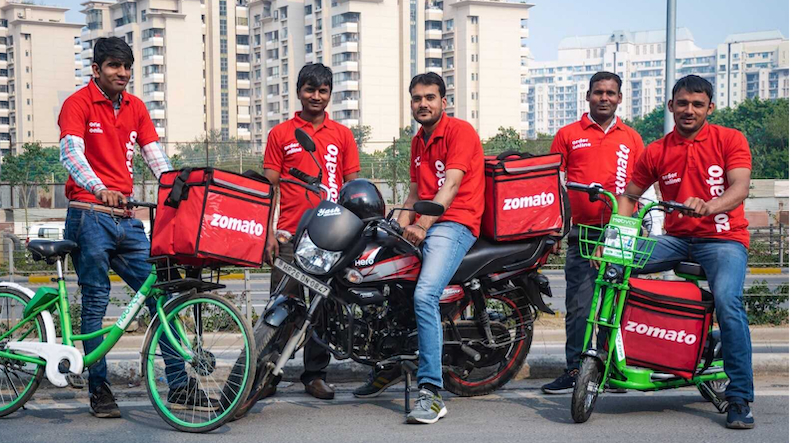
  • Zomato revenue hits Rs 5,657 million in Q3 while PAT shrinks to Rs 59 million

    Zomato revenue hits Rs 5,657 million in Q3 while PAT shrinks to Rs 59 million

    MUMBAI: Zomato, the poster child of India’s food-tech revolution, has released its Q3 FY25 results, revealing a fascinating mix of growth and persistent challenges. Founded by Deepinder Goyal, a man who turned his restaurant review dream into a billion-dollar reality, Zomato’s journey from a niche startup to a household name is nothing short of inspiring. Today, the company boasts a market valuation of over Rs 50,000 crore, but the path has been far from smooth.

    In a bid to outpace competitors like Swiggy and Zepto, Zomato has aggressively expanded its portfolio. From acquiring Blinkit, which revolutionised its quick commerce game, to launching ‘Zomato District,’ an experimental dining experience platform, the company is firing on all cylinders. However, this rapid growth hasn’t come without its challenges. The acquisition spree and investments in new verticals have added significant strain to its financials. And let’s not forget the Rs 803.4 crore GST-related setback from Maharashtra —talk about an unexpected delivery charge!

    With consolidated revenue hitting Rs 5,657 million, up from Rs 3,507 million a year ago, the numbers tell a story of resilience and reinvention. But as profitability continues to slip through its grasp, the burning question remains: can Zomato strike the elusive balance between growth and financial sustainability? Or is it simply running faster on a treadmill of rising costs? Buckle up, because this food-tech giant’s journey is far from over.

    Consolidated Results

    In Q3 FY25, Zomato’s consolidated revenue from operations surged by 54 per cent year-over-year to Rs 5,405 million, with additional income of Rs 252 million pushing total income to Rs 5,657 million. While these numbers showcase growth, they come with a hefty price tag—rising costs that seem as persistent as your favourite food app’s notifications.

    Employee benefits expenses climbed to Rs 689 million, which makes one wonder: are delivery executives being given gold-plated scooters? Advertising and sales promotion costs held steady at Rs 421 million, showing Zomato’s relentless pursuit of eyeballs and appetites. Meanwhile, delivery-related charges hit a whopping Rs 1,450 million—proof that staying ahead in the food-tech race isn’t a cheap sport.

    But here’s where the humour fades. Despite revenue growth, Zomato’s profit before tax tumbled to Rs 124 million, a notable dip from Rs 237 million in the previous quarter. The consolidated profit after tax (PAT) followed suit, shrinking to Rs 59 million, down from Rs 176 million last quarter. Even EBITDA, the trusty metric of operational health, showed only marginal improvement. Is this growth, or are we just running on a treadmill of expenses?

    Adding spice to the financial mix, Zomato’s segment performance revealed contrasting flavours: Hyperpure, its B2B vertical, grew a sizzling 94.5 per cent YoY, while Quick Commerce revenue rocketed 117 per cent YoY, contributing Rs 1,399 million to the top line. But profitability? It’s still playing hard to get—a romance worthy of a Netflix drama.

    So, what’s the takeaway here? Is Zomato on a path to future dominance, or is it stuck in a never-ending balancing act between growth and margin woes? Investors, grab your popcorn, because this plot just keeps thickening!

    Standalone Results

    The standalone results painted a slightly brighter picture—a rare dessert in a financial menu filled with rising costs. Revenue from operations for Q3 FY25 climbed to Rs 2,226 crore, up from Rs 1,782 crore in the same period last year. Including Rs 311 crore in other income, total income reached Rs 2,537 crore, offering some much-needed cheer to investors. Who doesn’t love a surprise topping?

    But let’s not pop the champagne just yet. Employee benefits expenses rose to Rs 333 crore—are we paying delivery riders in Bitcoin now? Meanwhile, delivery-related costs surged to Rs 941 crore, showing that keeping up with a booming market comes at a steep price. Despite these headwinds, Zomato managed to serve up a standalone profit before tax of Rs 574 crore, a healthy increase from Rs 385 crore in Q3 FY24. The standalone PAT came in at Rs 494 crore, proving that even amidst turbulence, there’s room for optimism.

    So, can Zomato keep delivering these sweet surprises, or are rising costs about to steal dessert off the table? Investors, stay tuned!

    Operational Highlights

    1.  Segment Growth:

    Food delivery revenue grew by 21.6 per cent YoY to Rs 2,072 million.

    Hyperpure, Zomato’s B2B vertical, surged by 94.5 per cent YoY to Rs 1,671 million.

    Quick commerce, a new darling, contributed Rs 1,399 million, up from Rs 644 million last year.

    2. Acquisitions: Zomato’s acquisition spree continues to bear fruit. The recent addition of Wasteland Entertainment Private Limited (WEPL) and Orbgen Technologies Private Limited (OTPL) underscores its focus on diversification.

    3. Regulatory Challenges: The company faced a GST-related setback, with demands totalling Rs 420 crore from Maharashtra and West Bengal authorities. While management remains optimistic, these disputes add another layer of complexity to its financial landscape.

    Zomato’s results reflect the growing pains of a company caught between scaling operations and achieving profitability. While the rapid growth in Hyperpure and Quick Commerce shows plenty of promise, the company’s ballooning costs and pesky regulatory hurdles resemble hurdles in a marathon where the finish line keeps moving.

    So, what’s the final verdict? Is Zomato writing the next big food-tech success story, or is it cooking up a recipe for endless spending? As India’s food-tech landscape becomes more cutthroat, the stakes for Zomato couldn’t be higher. The question isn’t just whether they can deliver food on time but whether they can finally deliver profits to investors. One thing’s for sure: this is a journey worth watching—and it’s bound to be as spicy as a midnight biryani craving!

    Key Financial Highlights

    . Consolidated Revenue: Rs 5,405 million for Q3 FY25; Rs 14,410 million for nine months.

    Standalone Revenue: Rs 2,226 million for Q3 FY25; Rs 6,425 million for nine months.

    PAT (Consolidated): Rs 59 million for Q3 FY25; Rs 488 million for nine months.

    EBITDA Margin: Improved slightly but remains constrained by rising costs.

    Segment Growth: Hyperpure surged by 94.5 per cent YoY, Quick Commerce up by 117 per cent YoY.

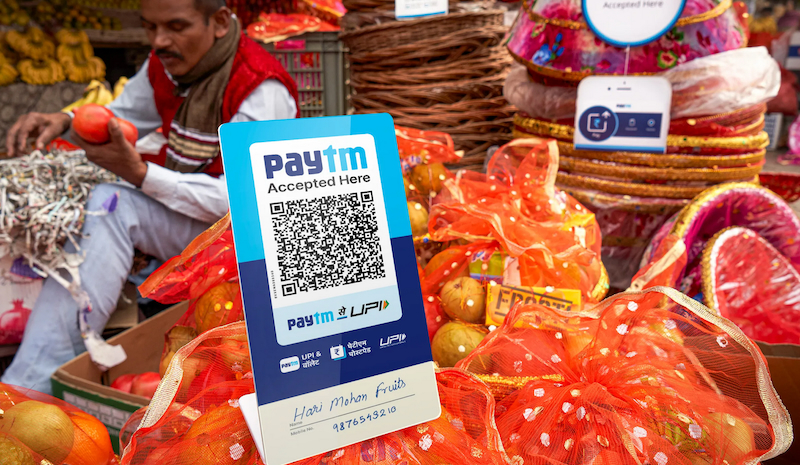
  • Paytm Q3 shows revenue at Rs 18,278 million, but net loss looms

    Paytm Q3 shows revenue at Rs 18,278 million, but net loss looms

    MUMBAI: Digital payments powerhouse, Paytm, has rolled out its Q3 FY25 financial report, revealing both triumphs and trials. But before we get into the nitty-gritty, let’s rewind a bit.

    Founded by Vijay Shekhar Sharma, a man whose billion-dollar smile once symbolised the fintech boom, Paytm’s journey has been nothing short of a Nolan blockbuster—full of twists, drama, and cliffhangers.

    Valued at a staggering $16 billion during its 2021 IPO, Paytm was riding high on the wave of digital transformation. Fast forward to today, and that valuation has taken a reality check. Then there’s the infamous Paytm Payments Bank fiasco—a debacle where the Reserve Bank of India (RBI) froze new customer onboarding in 2022, leaving users stranded like passengers at a cancelled train station. Trust took a nosedive, and so did Paytm’s goodwill.

    Add to this the rising competition in a thriving fintech ecosystem, and you’ve got yourself a classic ‘hero vs. villains’ plot. But here’s the big question: can Paytm channel its inner phoenix and rise from these ashes, or are these missteps just the beginning of a longer slide? Let’s dive into the numbers—and the drama—to decode where Paytm truly stands today.

    Consolidated Results

    Paytm’s consolidated revenue from operations for Q3 FY25 stood at Rs 18,278 million, which, while a 10 per cent rise from the previous quarter, still missed the dazzling Rs 21,379 million achieved in the same period last year. Add Rs 1,887 million in other income, and the total income stood at Rs 20,165 million—a decent climb, but far from scaling Everest.

    Payment processing charges surged to Rs 9,910 million over nine months—a stark reminder that in the fintech world, expansion doesn’t come cheap. Meanwhile, employee benefit expenses slimmed down to Rs 21,186 million from last year’s Rs 30,640 million, showing that cost-cutting is very much in fashion at Paytm HQ. Despite this, profitability remains more elusive than your favourite radio station’s caller contest jackpot.

    Now, let’s talk about profits… or their absence. Paytm posted a net loss of Rs 2,035 million for Q3, contributing to a cumulative nine-month consolidated loss of Rs 14,486 million. While the EBITDA margin did show some improvement, suggesting baby steps towards sustainability, one can’t help but ask: Is Paytm attempting to juggle too many flaming fintech ambitions at once? Will it ever strike the perfect balance, or is this the fintech equivalent of chasing unicorns?

    Standalone Results

    In standalone terms, Paytm reported Rs 14,916 million in revenue from operations for Q3, marking a steep drop from Rs 21,379 million a year ago. Total income for the quarter stood at Rs 16,603 million, supported by Rs 1,687 million in other income—a much-needed silver lining in an otherwise cloudy quarter.

    On the cost front, payment processing charges reached a hefty Rs 9,910 million over nine months. Meanwhile, marketing and promotional expenses in Q3 hit Rs 1,383 million. These figures tell us one thing loud and clear: Paytm is playing hard to stay visible in a crowded market. But here’s the catch: at what cost? The standalone net loss for Q3 stood at Rs 2,053 million, bringing the nine-month tally to Rs 2,085 million. Ouch!

    The EBITDA, meant to showcase operational efficiency, seemed to be waving a white flag, coming in at Rs (14,666 million) for the nine months. However, the loss per share for the same period narrowed to Rs 3.28 from a jaw-dropping Rs 14.35 last year. Could this be a sign of recovery, or just a smaller storm brewing? Either way, Paytm’s ambitious growth strategy will need more than just cost-cutting to turn this ship around.

    Despite financial headwinds, Paytm’s focus on strengthening its core offerings is clear.

    Key operational highlights include:

    International expansion: Subsidiary Paytm Cloud Technologies plans to establish entities in the UAE, Saudi Arabia, and Singapore. Is Paytm gearing up to become the global leader in digital payments?

    GIFT City initiatives: A move to incorporate subsidiaries in Gujarat signals a deeper commitment to domestic fintech innovation.

    Default Loss Guarantee: The DLG limit for merchant lending has been raised from Rs 225 crore to Rs 350 crore, enhancing support for SME growth.

    Yet, regulatory uncertainties loom. The Reserve Bank of India’s restrictions on Paytm Payments Bank remain unresolved, and the company’s investments in its associate have been impaired by Rs 2,096 million.

    Paytm’s financials reflect a company in transition, balancing the costs of aggressive growth with the harsh realities of an unforgiving market. It’s the classic tale of ambition meeting its archnemesis: practicality. As the digital payments sector surges ahead, Paytm is busy laying tracks to new horizons—geographies, services, and market opportunities. But is this the innovation express, or a high-speed derailment waiting to happen?

    Let’s not forget the backdrop: a thriving fintech economy, where competitors are sprinting ahead while Paytm retools its strategy. Investments in new geographies, like its UAE and Singapore expansions, could be the ticket to redemption. Or will these plans go the way of the once-famous “Paytm ka ATM” campaign—promising, but ultimately short-lived?

    Here’s the kicker: Will these grand strategic pivots deliver the profitability Paytm desperately needs, or will the costs of expansion continue to weigh like a proverbial albatross? For now, stakeholders can do little but watch this financial drama unfold.

    Key Financial Highlights

    . Consolidated Revenue: Rs 18,278 million for Q3; Rs 49,889 million for nine months.

    Standalone Revenue: Rs 14,916 million for Q3; Rs 39,055 million for nine months.

    Net Loss: Rs 2,035 million for Q3 consolidated; Rs 14,486 million for nine months consolidated.

    EBITDA Margin: Improved due to cost controls.

    DLG Expansion: Raised to Rs 350 crore for merchant lending.


  • Decoding Next Mediaworks Q3 and nine month results

    Decoding Next Mediaworks Q3 and nine month results

    MUMBAI: Next Mediaworks Limited is a holding company with a colourful portfolio in multimedia—think of it as the Swiss Army knife of the entertainment world. Helmed by HT Media and with deep roots in Indian broadcasting, the company has evolved into a jack-of-all-trades, dabbling in everything from FM radio to online news.

    Let’s start with its bread and butter: FM radio broadcasting. Through its Radio One FM stations, Next Mediaworks has become a household name in seven cities, including the media powerhouses of Mumbai, Delhi, and Chennai. Feeling nostalgic for some old-school TV magic? The company also markets television programmes, films, and software—the behind-the-scenes wizardry that keeps your screens alive.

    And it doesn’t stop there. Acting as an advertising agent, providing online music and news, and even diving into internet commerce, Next Mediaworks spreads its wings wide. But how does one juggle all these pies while staying profitable? That’s the million-dollar question as we dig deeper into its financials.

    When you’re in the business of radio, every quarter brings a new tune. For Next Mediaworks Limited, this time, the notes were both harmonious and dissonant. The financial results for the quarter and nine months ending 31 December 2024, paint a picture of a company striving to balance its operational challenges with strategic resilience.

    Standalone Results

    The standalone results for Next Mediaworks in Q3 present a smaller slice of the financial pie—or should we say crumbs? Total income for the quarter was Rs 43 lakh, bolstered entirely by other income, as revenue from operations took a vacation. For the nine months, the total income barely inched up to Rs 44 lakh. The real story, however, is the expenses—and it’s a thriller.

    Employee benefit expenses for the nine months amounted to Rs 24 lakh—impressive if you’re running a lemonade stand, but less so for a media company. Meanwhile, finance costs gobbled up Rs 323 lakh, a jump from Rs 271 lakh last year, making one wonder: Are they financing or fine dining? Other expenses, at Rs 56 lakh, added more salt to the wound. This cocktail of costs stirred up a quarterly standalone loss of Rs 97 lakh and a nine-month loss of Rs 359 lakh.

    EBITDA, the trusty metric of financial health, barely registered a pulse, with Rs 15 lakh in Q3 and a cumulative Rs (36 lakh) for the nine months. Exceptional items stayed out of the picture, leaving the losses to hog the spotlight. The loss per share for Q3 was Rs 0.15, and for the nine months, Rs 0.54.

    Can this standalone operation hit the reset button and find its groove, or is it destined to stay on mute?

    Consolidated Results

    The consolidated revenue for Q3 stood at Rs 1,124 lakh, reflecting a decline from the Rs 1,172 lakh posted in the same quarter last year. However, the nine-month revenue was nearly flat at Rs 3,090 lakh, compared to Rs 3,077 lakh in 2023. Despite these figures, the company faces mounting challenges, as total expenses for the nine-month period surged to Rs 5,233 lakh, up from Rs 5,065 lakh.

    Now, let’s spice things up with the consolidated results—the section where the numbers get all the attention. EBITDA, the shining knight in an otherwise troubled kingdom, stood at Rs 143 lakh for Q3 and Rs 680.76 lakh for the nine months. However, profitability has been elusive, with the company posting a consolidated loss of Rs 632 lakh in Q3 and a whopping Rs 2,143 lakh over the nine months. Talk about a steep hill to climb!

    Let’s not sugarcoat it: the losses weren’t small. Employee expenses totalled Rs 597 lakh for the nine months, and radio license fees alone devoured Rs 1,048 lakh. Meanwhile, finance costs ballooned to Rs 1,739 lakh, up from Rs 1,539 lakh in 2023.

    As Next Mediaworks faces these towering costs, one has to ask: can they trim the fat without losing muscle?

    In a world where Spotify dominates playlists and podcasts grab ears globally, where does traditional radio fit? The consolidated losses may seem like a dirge, but Next Mediaworks is no stranger to finding harmony in chaos. Can it pull off a comeback and compose a more profitable tune?

    Next Mediaworks, through its flagship subsidiary Next Radio, is a prominent player in the radio broadcasting space. Yet, operating in an era dominated by streaming platforms has amplified the pressure to innovate. Radio license fees for Q3 were Rs 351 lakh, while employee benefits expenses climbed to Rs 597 lakh for the nine months, compared to Rs 634 lakh the previous year. Finance costs were another thorn, growing to Rs 1,739 lakh for the nine months, compared to Rs 1,539 lakh in 2023.

    Despite these hurdles, the company maintains a “going concern” assumption, bolstered by support from its holding company, HT Media. How long will this financial backing shield the group from market headwinds?

    While the overall narrative appears grim, there are glimmers of hope. The company has avoided external borrowings and maintains a favourable current assets-to-liabilities ratio. Its strategic focus on maintaining operational liquidity could provide the breathing room needed to recalibrate its business model.

    Moreover, the appointment of Sameer Singh as a non-executive non-independent director introduces a seasoned hand with global experience. His prior leadership roles at GroupM, Google, and ByteDance could inject a fresh perspective into the company’s strategic planning.

    The radio industry may no longer be the dominant force in entertainment, but its relevance endures. The challenge for Next Mediaworks is to harmonise traditional broadcasting with the demands of a tech-savvy audience. Will the company invest in digital transformation, or will it double down on its current model?

    As the financial results highlight, the road ahead is far from smooth. Yet, with strategic backing and seasoned leadership, Next Mediaworks has the potential to rewrite its tune. Investors and stakeholders will be keen to see whether the company’s next quarter hums a more uplifting melody.

    Key financial highlights

    . Consolidated Revenue: Rs 1,124 lakh for Q3; Rs 3,090 lakh for nine months.

    . EBITDA: Rs 143 lakh for Q3; Rs 680.76 lakh for nine months.

    . Consolidated Loss: Rs 632 lakh for Q3; Rs 2,143 lakh for nine months.

    . Standalone Loss: Rs 97 lakh for Q3; Rs 359 lakh for nine months.

    .  Finance Costs: Rs 1,739 lakh for nine months, up from Rs 1,539 lakh in 2023.

  • Shemaroo’s Q3 revenue: Adapting to digital and facing legacy trials

    Shemaroo’s Q3 revenue: Adapting to digital and facing legacy trials

    MUMBAI: Shemaroo Entertainment Limited has rolled out its financial results for Q3 FY25 and the nine-month period ending 31 December 2024. Founded by the ever-visionary Raman Maroo in 1962 as a humble book library, Shemaroo has since performed an Indian cinema-style transformation into one of India’s foremost entertainment companies. With a current market valuation of approximately Rs 10,000 crore and a legacy spanning six decades, the company is proof that a great plot (and some brilliant foresight) can weather any twist. Maroo’s genius for spotting trends early—like assembling one of India’s largest content libraries—has cemented Shemaroo’s reputation as a box-office favourite in both traditional and digital media.

    Now, who says legacy brands can’t dance to a new tune?

    In today’s fiercely competitive market, where giants like Netflix, Amazon Prime Video, Sony and Zee vie for consumer attention, Shemaroo’s strategy is anything but passive. The company’s ability to repurpose its extensive Indian cinema and regional film library for streaming platforms, coupled with its focus on regional and niche content, is its secret sauce for staying relevant. Can a legacy brand like Shemaroo thrive in a world dominated by binge-worthy web series and blockbuster originals?

    Let’s dive deeper into the numbers and uncover the plot twists behind the balance sheet.

    Consolidated Performance

    For Q3 FY25, Shemaroo Entertainment reported consolidated revenue from operations at Rs 16,437.42 lakhs. Think of it as a steady performance—better than Rs 15,592.64 lakhs in the previous quarter but just a tad shy of Rs 16,206.08 lakhs in Q3 FY24. Adding Rs 296.45 lakhs in other income, the total income reached Rs 16,733.87 lakhs for the quarter. It’s not quite a standing ovation, but at least the audience has not walked out.

    Now, let’s talk about EBITDA (Earnings Before Interest, Taxes, Depreciation, and Amortisation)—the backstage crew of financial performance. For Q3 FY25, EBITDA stood at Rs 1,539.47 lakhs. Rising operational costs and tight advertising budgets played the villain here, but the show must go on! Meanwhile, Profit After Tax (PAT) took a dramatic dive, with a loss of Rs 3,652.75 lakhs, compared to a profit of Rs 1,228.94 lakhs in Q3 FY24. If this were a movie, we would call it a tragic second act.

    For the nine months ended 31 December 2024, consolidated revenue totalled Rs 48,082.93 lakhs. That’s down from Rs 50,834.08 lakhs in the previous year—not the kind of sequel numbers anyone hopes for. EBITDA came in at Rs 4,210.69 lakhs, while PAT posted a net loss of Rs 10,937.90 lakhs, compared to a loss of Rs 2,041.57 lakhs in FY24. It’s safe to say, the financial script could use a few rewrites.

    Despite these challenges, Shemaroo’s numbers reveal a company determined to stay in the game. With rising operational costs and shifting consumer preferences, the Q3 results underline the importance of resilience and adaptability in today’s cutthroat entertainment landscape. After all, every blockbuster needs a bit of suspense, doesn’t it?

    Standalone Results

    On a standalone basis, Shemaroo’s revenue from operations for Q3 FY25 was Rs 15,542.52 lakhs, edging up from Rs 15,226.01 lakhs in the previous quarter and Rs 14,773.76 lakhs in Q3 FY24. Total income, including Rs 253.41 lakhs from other sources, hit Rs 15,795.93 lakhs for the quarter. While it’s not quite a red-carpet moment, it’s certainly not a straight-to-DVD release either.

    EBITDA for Q3 FY25 clocked in at Rs 1,419.05 lakhs. Operational costs, which soared to Rs 14,792.44 lakhs, weren’t shy about stealing the spotlight. Meanwhile, PAT took a dramatic dive, delivering a loss of Rs 3,739.99 lakhs compared to Rs 2,732.39 lakhs in Q3 FY24. Let’s call this twist in the tale Shemaroo’s “Bollywood tragedy” phase.

    For the nine months ended 31 December 2024, standalone revenue reached Rs 45,506.20 lakhs, falling short of Rs 48,541.42 lakhs reported in the same period last year. Total income tallied up to Rs 46,058.52 lakhs, while EBITDA for the period stood at Rs 4,153.34 lakhs. PAT for the nine months delivered a loss of Rs 8,176.58 lakhs, more than doubling last year’s Rs 4,035.48 lakhs. These numbers suggest Shemaroo’s script might need some serious rewrites to avoid becoming a “box-office bomb.”

    Still, Shemaroo’s knack for juggling its legacy operations with a burgeoning digital portfolio shows promise. After all, every epic needs its moment of redemption—here’s hoping Shemaroo’s next act delivers the blockbuster twist we’ve all been waiting for!

    Shemaroo’s dual focus on traditional media and digital growth has been a defining aspect of its strategy. While revenue from legacy operations faces mounting challenges, the company’s investments in digital platforms are yielding promising results. Shemaroo’s partnerships with OTT players and its direct-to-consumer initiatives are driving audience engagement and revenue growth. The question remains: can Shemaroo go viral in the digital world while keeping its classic charm?

    The digital segment has shown significant traction, with increasing subscriber counts and higher engagement metrics. However, the competition in the OTT space is fierce, with new entrants vying for market share. Will Shemaroo’s robust content library and its reputation for delivering quality entertainment be enough to sustain long-term growth? Or will the digital world prove to be a tougher audience than expected?

    Shemaroo has long been a pioneer in India’s entertainment sector, leveraging its extensive content library to cater to diverse audience preferences. The company’s innovative marketing initiatives, such as regional-language content expansions and festival-centric campaigns, have strengthened its brand equity. However, the slight decline in revenue indicates that the path forward will require even greater innovation to compete in a market increasingly dominated by digital platforms.

    Can Shemaroo continue to build on its legacy while charting a new course in the digital age? The coming quarters will reveal whether this stalwart of Indian entertainment can transform challenges into opportunities and emerge stronger in a competitive landscape. For now, Shemaroo is writing its next chapter—and it promises to be an interesting read.

    After all, even legends need to adapt—no one wants to be a rerun.

  • RIL delivers 3.7 per cent growth; solid Q3 gains amid mixed sector trends

    RIL delivers 3.7 per cent growth; solid Q3 gains amid mixed sector trends

    MUMBAI: Step aside, Indian cinema blockbusters—India’s corporate juggernaut, Reliance Industries Limited (RIL), has dropped its Q3 FY25 and nine-month financial results, and the plot twists are as gripping as any thriller.

    Mukesh Ambani, Asia’s richest man with a jaw-dropping net worth of $101.9 billion, continues to steer this mammoth conglomerate with a flair that makes even the Ambani family’s $600 million wedding bash look like just another weekend splurge.

    But the numbers game is where the real drama unfolds.

    A behemoth company straddling sectors as diverse as petrochemicals, retail, telecom, and renewable energy, all while navigating rising costs, shifting consumer behaviours, and the ever-demanding shareholders. It’s a delicate high-wire act, with every quarter bringing a mix of triumphs and challenges that could put even the savviest financial analysts on edge.

    RIL has once again delivered a performance that is equal parts spectacle and strategy. With Q3 FY25 results showcasing both sharp gains and a few headwinds, the company continues to prove why it remains the unshakable titan of India’s corporate skyline.

    Will Reliance’s growing retail and telecom arms counterbalance the fluctuating fortunes of its oil-to-chemicals business? Are rising costs pinching the profits, or is this a strategic pause before another leap forward? Stay tuned as we break down the twists and turns of Reliance’s financial performance.

    Spoiler alert: it’s as gripping as a weekend binge-watch session—except this one comes with billions riding on the final scene.

    For the quarter ended 31 December 2024, RIL clocked consolidated revenue from operations of Rs 235,481 crore, a decent 3.7 per cent growth from Q3 FY24. Total income stood at Rs 240,357 crore, marking a steady rise. Net profit for the quarter came in at Rs 19,323 crore, slightly down from Rs 19,641 crore in Q3 FY24. Resilient? Yes. Spectacular? Maybe not. Is the glass half-full, or is it just heavy with operational costs?

    For the nine-month period, revenue from operations hit Rs 783,036 crore, a hair’s breadth below last year’s Rs 785,650 crore. But here’s the kicker: net profit surged to Rs 60,666 crore, riding high on stellar performances in retail and digital services. Looks like RIL’s strategy of diversification is paying dividends.

    The standalone core remains strong. RIL’s standalone revenue from operations for Q3 FY25 was Rs 134,054 crore, up from Rs 130,579 crore last year. Standalone net profit, however, dipped to Rs 7,713 crore from Rs 9,924 crore in Q3 FY24. For the nine months, standalone revenue reached Rs 405,559 crore, with net profit at Rs 30,351 crore. Steady as she goes, but where’s the spark? Does the core business need a shot of adrenaline?

    Segment Performance

    ●    Oil-to-Chemicals (O2C): RIL’s O2C business pulled in Rs 155,580 crore for Q3 FY25, contributing significantly to the topline. But wait, here’s the rub: EBITDA for the segment dropped 5.4 per cent  year-on-year to Rs 12,413 crore, thanks to higher feedstock prices. Can RIL recalibrate this cornerstone of its empire, or is it time to rethink its O2C game?

    ●    Retail: The retail arm—the show-stealer yet again—raked in Rs 83,040 crore, up 8.8 per cent  year-on-year. Segment EBITDA climbed to Rs 6,251 crore, driven by aggressive expansions and innovative consumer offerings. But the million-dollar question is: Can this momentum continue in an increasingly competitive retail arena?

    ●    Digital Services: Reliance Jio, the crown jewel of RIL’s digital portfolio, dazzled with revenues of Rs 38,055 crore and EBITDA of Rs 14,256 crore. Rising data consumption and subscriber additions fuelled the growth, but as competition heats up, will Jio’s dominance hold steady?

    ●    Oil and Gas: A surprising hero this quarter, the oil and gas segment posted revenue growth of 12 per cent  year-on-year to Rs 6,222 crore. EBITDA surged to Rs 5,290 crore, thanks to improved realisations and higher production. Is this a sign of sustained recovery for a segment once relegated to the shadows?

    This quarter saw RIL’s ambitious demerger of Viacom18’s media and cinema businesses into Star India, backed by a hefty Rs 11,500 crore investment. Bold? Absolutely. But will this manoeuvre bring blockbuster results or leave the balance sheet bruised?

    The company’s continued push into green energy and retail expansion highlights its long-term vision. Renewable energy projects underscore RIL’s commitment to sustainability, though the hefty upfront costs may weigh on short-term results. Meanwhile, its retail arm’s logistics and operational costs are rising—is it time for some belt-tightening?

    And let’s not forget O2C’s margins. With feedstock prices acting like an unruly stock ticker, RIL’s ability to navigate these headwinds will be crucial. Will precise execution and bold strategies be enough to keep this segment buoyant?

    What lies ahead?

    Reliance Industries’ Q3 FY25 results showcase a company balancing on the edge of consolidation and expansion. With robust performances in retail and digital services, RIL’s adaptability shines through. Yet, rising costs and narrowing margins in its flagship O2C segment call for sharp focus.

    Will the investments in green energy and entertainment usher in the next wave of growth, or will rising costs hold the company back? And as India’s digital transformation accelerates, can Jio keep its throne?

    For now, RIL’s saga of bold bets and calculated moves makes for an unmissable watch. Stay tuned as this corporate behemoth’s next chapter unfolds.