Tag: Q-commerce

  • Polycab plugs into Zepto for a breezy 10-minute delivery

    Polycab plugs into Zepto for a breezy 10-minute delivery

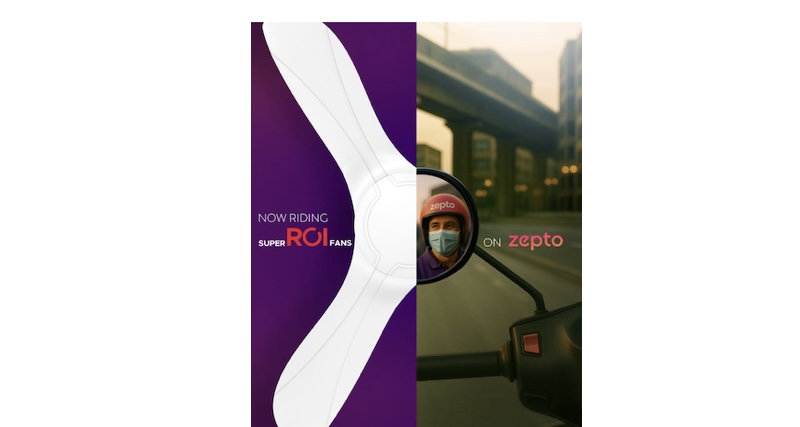
    MUMBAI: Polycab India has flicked the switch on a zippy new distribution channel—Zepto. The electricals heavyweight is now delivering its energy-efficient ceiling fans straight to urban doorsteps in just 10 minutes, making sure no household has to sweat it out this summer.

    As the mercury rises, so do expectations—and consumers are no longer willing to wait. Spotting this shift, Polycab has entered the quick commerce (Q-commerce) race, listing its Super ROI fans on Zepto across 14 major cities, from Mumbai and Bengaluru to Kolkata and Jaipur.

    “We’re not just selling fans, we’re delivering instant comfort,” said Polycab India executive president and chief business officer – B2C Ishwinder Khurana. “Today’s consumers want speed, quality, and ease. Zepto is helping us tick all three.”

    The ceiling fans, priced between Rs 1,800 and Rs 3,500, and exhaust fans starting at Rs 1,000, are now just a tap away for urban India’s sweat-weary. While buyers will need to handle installation for now, Polycab backs its products with robust after-sales service.

    Already a staple on Amazon and Flipkart, Polycab’s latest Q-commerce pivot reflects its ambition to dominate not just the wires and cables segment—but the entire FMEG landscape. With Rs 224+ billion in FY25 turnover and presence in 84 countries, the company is going full throttle on modern retail.

    For India’s heat-stricken metros, this tie-up brings a gust of good news

  • Trailytics supercharges FMCG brand’s Blinkit sales with Ad-Auto Tool

    Trailytics supercharges FMCG brand’s Blinkit sales with Ad-Auto Tool

    MUMBAI: In the breakneck world of Q-commerce, where every click counts, one leading FMCG brand in India found itself on the fast track to success with Blinkit—thanks to Trailytics’ Ad-Auto Tool. Navigating a new advertising ecosystem can feel like steering a Formula 1 car through rush-hour traffic, but this case study proves that the right tech can put brands in the fast lane.

    With Q-commerce still in its early days, brands faced an uphill battle. Limited historical data, rising competition, and skyrocketing CPMs meant that scaling paid sales while maintaining a strong ROI was no easy feat. The FMCG brand needed a strategy that could drive consistent growth, optimise ad spend, and increase its share of voice (SOV) without breaking the bank.

    Trailytics’ Ad-Auto Tool brought much-needed automation and analytics to Blinkit’s evolving ad space. Designed for efficiency, this tool streamlined ad deployment, optimised bidding, and automated campaign management. Features like buybox automation, bulk actions, and keyword optimisation gave the brand a cutting-edge advantage.

    Trailytics approached the challenge with a structured, data-first strategy:

    . SKU & traffic experimentation: The team tested different SKUs, optimised bidding strategies, and analysed traffic patterns to identify the highest-performing products.

    .  Real-time campaign adjustments: Using automated insights, the brand dynamically adjusted its bidding and placement strategies to maximise visibility while maintaining cost efficiency.

    .  Balancing awareness & conversions: A blend of brand awareness campaigns and direct conversion ads ensured sustained long-term growth and immediate revenue impact.

    Phased approach for maximum impact

    1.  Phase 1 – Testing & learning (First three quarters)

    .    Identified winning SKUs through experimentation.

    .     Evaluated ad placements and optimised CPM bids.

    2.   Phase 2 – Scaling up (December 2023 – January 2024)

    .    Increased ad spends on high-performing SKUs.

    .     Launched time-sensitive campaigns to capture peak shopping hours.

    .    Balanced cost efficiency with aggressive scaling.

    The Results

    .  Consistent MoM sales growth: Sales surged steadily, peaking in December 2023 and January 2024.

    .   ROI optimisation: Despite rising CPMs, refined ad strategies boosted return on investment.

    .   Expanded brand visibility: Share of Voice on Blinkit saw a significant rise.

    .   Smart budget allocation: Data-backed decision-making ensured a balanced investment in awareness and conversion campaigns.

    Building on this success, Trailytics aims to refine its AI-driven targeting, expand into other Q-commerce platforms, and introduce predictive analytics for smarter ad spend optimisation. Continuous monitoring and agile adaptation will remain key as digital commerce continues to evolve.

    Through automation, data-driven decision-making, and strategic ad placement, Trailytics helped the FMCG brand crack the Blinkit code. In an industry where timing and targeting are everything, the ability to pivot, optimise, and scale is the secret sauce to sustained growth. And with AI-driven tools like Ad-Auto, brands are no longer just keeping up—they’re leading the charge.

     

  • Flipkart Minutes makes Diwali lit with special glasses

    Flipkart Minutes makes Diwali lit with special glasses

    Mumbai: As India gears up for the dazzling celebration of Diwali, Flipkart Minutes is reminding everyone that the sparkle of the festival is everywhere, if only you look at it through the right lens. This Diwali, Flipkart Minutes is bringing the magic of the festival to life with their unique ‘DiwaLIT glasses,’ a special pair of glasses that transform any light into a dazzling display.

    The DiwaLIT glasses are a fun and innovative way for the quick-commerce brand to remind people that, just as it delivers everything within ten minutes, these glasses can instantly ignite the festive sparkle the moment they’re worn.

    These festive glasses, which were a surprise addition to select orders during the Diwali season, have captured the imagination of customers, who have taken to social media to share their experiences with the dazzling spectacle.

  • Flipkart promotes ‘Minutes’ with its ‘Thank You’ campaign

    Flipkart promotes ‘Minutes’ with its ‘Thank You’ campaign

    Mumbai: Flipkart Minutes discovered an amusing coincidence in its competitors’ marketing strategies. Many quick commerce giants have been promoting their delivery services with phrases like “Get groceries in minutes” or “Get pet supplies in minutes,” which inadvertently aligns with Flipkart’s new quick commerce app, ‘Minutes.’

    Flipkart seized this funny coincidence and turned it into a clever ‘Thank You’ campaign. Starring chess legend Vishwanathan Anand, the ad humorously shows Anand, the grandmaster himself, coming to the realization that every time competitors say “in minutes,” they’re indirectly referencing Flipkart Minutes.

    The ad wraps up with a playful tone, as Flipkart warmly thanks its competitors for unintentionally promoting their new app. It’s a tongue-in-cheek campaign that adds humor to the Q-commerce game while positioning Flipkart Minutes in the spotlight.

  • Zomato to acquire Blinkit, board approves the deal for Rs 4,447 crore

    Zomato to acquire Blinkit, board approves the deal for Rs 4,447 crore

    Mumbai: The board of online food delivery firm Zomato has approved the purchase of quick commerce company Blinkit, which was earlier known as Grofers. This deal has been done for Rs 4,447.48 crore.

    In the information sent to the stock market, Zomato said that this deal will be done under the exchange of shares. The board of directors of the company in a meeting held on Friday approved the acquisition of 33,018 shares from the shareholders of Blinkit Commerce at a price of Rs 13.45 lakh per equity share.  

    After the acquisition by Zomato, the Blinkit team and CEO Albinder Dhindsa will continue to run the company as an independent entity and app.

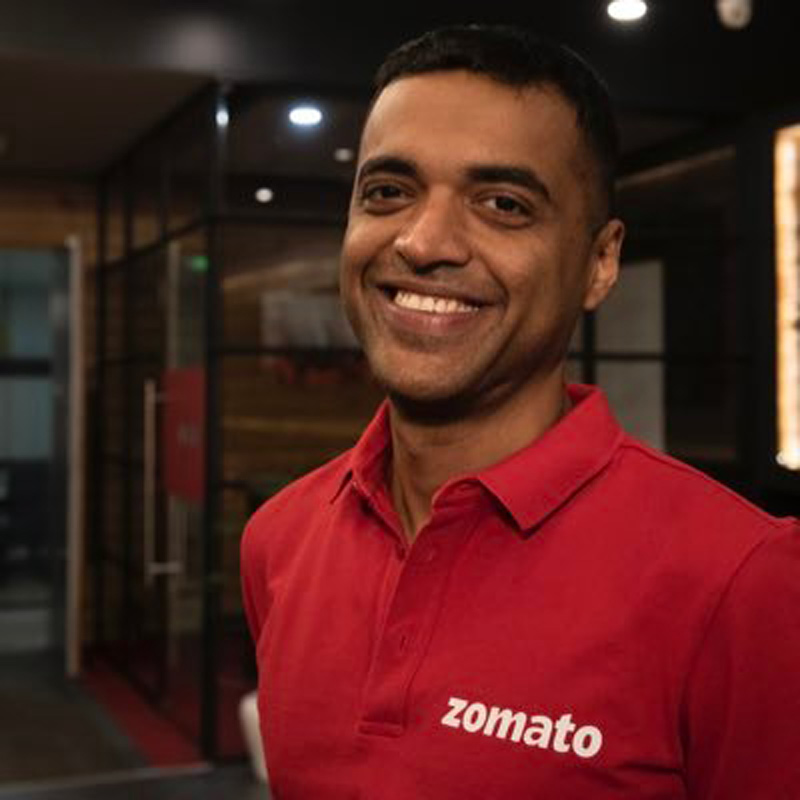
    Zomato CEO Deepinder Goyal said, “We will explore ways in which Blinkit can benefit from Zomato’s large customer base (and vice versa in the long term). Post the deal closure, we are going to start experimenting with various ideas that we have and see which all bear fruit, including having the Blinkit tab on the Zomato app. As they say, experiment a lot and keep what works. This remains our guiding motto.”

    The quick commerce segment in India is estimated to grow to $5 billion over the next three years, which is a 16x jump from the current size of $0.3 billion. Thus, the deal can be a game changer for quick commerce space!  

    Let’s have a look at what, according to the industry experts, works in the favour after this deal and what works against!  

    What works in favour?

    Experts believe that the deal will lead to better utilisation of the delivery fleet for Zomato and also propel multiple orders per transit, which is a global norm for driving efficiency and bringing the delivery costs down. With this, the valuations of Zomato may inch up backed by this, as one can provide a separate valuation to this segment for now, given its strong growth prospects.

    It may also help Zomato to be better placed versus peers who are only into Q commerce, as they have a ready delivery fleet and will also help them compete with players like Swiggy who have made a very serious foray into this segment via Instamart.

    What works against?

    AOV (average order value) for this segment may be extremely low, which in turn will limit margins and capability to charge a higher delivery fee as delivery charge is linked to AOV.

    At the same time, AOV in this segment is low as this segment caters to buyers who would want products on an urgent basis; a customer may order 5-10 per cent of their monthly grocery requirements via this segment.

    India as a market is still predominantly driven by local Kiraana outlets (general grocery stores), within the vicinity, which would generally drive more than 90 per cent of grocery requirements.

    Moreover, industry experts think that Zomato will need to offer something very different in terms of user experience for Blinkit in order to compete with peers and scale up in this business segment. Further, this business model may not have a big potential in the smaller markets such as tier 2 and 3, as the demand for gourmet food is much lesser vs metros.

    Meanwhile, the closing of the transaction is expected to happen in early August. The transaction is subject to shareholders’ and stock exchange approval.