Tag: PwC

  • 84 per cent Indians seek healthier food choices: Pwc report

    84 per cent Indians seek healthier food choices: Pwc report

    MUMBAI: A new Pwc India report reveals that for Indian consumers, it’s no longer just about what’s on the plate, it’s about how it’s made, how safe it is, and how it supports their health goals.

    Released on 11 September, the ‘Voice of the consumer 2025: India perspective’ surveyed over 1,000 Indian consumers and uncovered a clear appetite for healthier, tech-integrated, and eco-friendly food choices.

    Among the standout stats: 84 per cent of respondents said food safety is a top priority; 29 per cent would switch brands for health benefits; 80 per cent now use health apps or wearables to manage wellness; nearly half prefer eco-friendly packaging, while 73 per cent would even pay more to support sustainable farming.

    “Nutrition, affordability and sustainability are shaping today’s food choices,” said Pwc India, partner and leader- retail and consumer sector, Ravi Kapoor.“Consumers are embracing tech-led, personalised wellness, local produce and digital shopping experiences offering huge opportunities for forward-looking brands.”

    The report also highlights a shift towards cost-conscious shopping, with 63 per cent of consumers citing food prices as a key concern. They’re mixing it up buying from supermarkets, local kirana shops, and digital delivery platforms to get the best value.

    Interestingly, tradition still holds its ground: 74 per cent of consumers said their food habits are rooted in cultural heritage, proving that while innovation matters, nostalgia isn’t going anywhere.

    As supply chains tighten and consumer expectations climb, the food industry is feeling the heat but it’s also getting a recipe for reinvention. Clean labelling, tech-savvy wellness solutions, and genuine sustainability practices could be the key ingredients for future growth.

  • Anuja Trivedi named chief strategy and marketing officer as Shemaroo eyes next phase

    Anuja Trivedi named chief strategy and marketing officer as Shemaroo eyes next phase

    MUMBAI: Shemaroo Entertainment has expanded the remit of Anuja Trivedi, elevating her to chief strategy and marketing officer (CSMO). In addition to leading marketing, she will now head the central strategy team, cementing the company’s sharper focus on long-term growth, integrated brand positioning and closer consumer alignment.

    Since joining as chief marketing officer in 2023, Trivedi has driven brand growth and boosted visibility for Shemaroo’s TV, OTT and digital platforms. In her expanded role, she will spearhead strategic initiatives and work with cross-functional leaders to unlock synergies across the group’s diverse business verticals.

    She brings broad experience spanning strategy, revenue and content, with stints at Disney Star, World Gold Council (WGC), McKinsey & Company, Morgan Stanley and PwC. At Disney Star, she shaped content strategy for TV and digital, driving Disney+ Hotstar subscriptions and improving TV market share in key genres.

    “Anuja’s role expansion comes at a time when we are sharpening our strategic priorities to stay ahead in an evolving media and entertainment ecosystem,” said chief executive of Shemaroo, Hiren Gada. “Her deep understanding of consumer behavior, market dynamics, and business transformation will be instrumental as we move into our next phase of growth.”

    Chief operating officer of Shemaroo, Arghya Chakravarty added, “Over the last two years, Anuja has been instrumental in shaping Shemaroo’s brand story. Her expanded role reflects our belief in her ability to bridge strategy with execution, drive cross-functional alignment, and keep the consumer at the center of all decisions.”

    With Trivedi’s new mandate, the brand is amplifying its bet on strategy-led brand building and future-ready planning as it caters to the changing tastes of Indian and global audiences.

  • Amazon elevates Milind Pande to spearhead India marketing push

    Amazon elevates Milind Pande to spearhead India marketing push

    MUMBAI: Amazon Web Services has promoted Milind Pande to head of marketing for India and South Asia, as the cloud computing giant seeks to strengthen its grip on the country’s $7.2 billion market.

    Pande, who has spent six years climbing AWS’s ranks, was previously head  of independent software vendor marketing, overseeing the company’s startup and software-as-a-service portfolio. His elevation comes as AWS faces mounting pressure from Microsoft Azure and Google Cloud in India’s notoriously price-conscious market.

    The appointment reflects AWS’s determination to maintain its lead in a region where it has pledged $12.7 billion in infrastructure investments through 2030. Industry insiders suggest Pande’s promotion signals the company’s shift towards a more aggressive, marketing-led growth strategy as artificial intelligence adoption accelerates across Indian enterprises.

    Pande brings 16 years of diverse experience spanning telecommunications at Vodafone, media at Viacom18, and consulting at PwC. His track record with Fortune 500 companies and deep enterprise exposure positions him to drive AWS’s next phase of expansion in the subcontinent.

    The move underscores the strategic importance of India to AWS’s global ambitions, as tech giants battle for dominance in one of the world’s fastest-growing cloud markets. With competition heating up, Pande’s challenge will be translating AWS’s technical advantages into sustained market leadership through sharper brand positioning and customer engagement.

  • Bata laces up for growth with Amit Aggarwal as CFO & whole-time director

    Bata laces up for growth with Amit Aggarwal as CFO & whole-time director

    MUMBAI: Bata India is tightening its financial game with the appointment of Amit Aggarwal as its Whole-Time director and chief financial officer. Armed with over two decades of experience in financial management, business strategy, and digital transformation, Aggarwal brings a wealth of expertise from leadership stints at Sugar Cosmetics, Marico, Nestlé India, and PwC.

    A chartered accountant with an advanced management certification from IIM Kolkata, Aggarwal has built a career on driving profitability, risk mitigation, and governance. His tenure as CFO at Sugar Cosmetics saw him navigating a fast-growing D2C brand, while his time at Marico and Nestlé honed his skills in financial strategy and process optimisation.

    Bata India, a household name in footwear, is expected to benefit from Aggarwal’s deep understanding of consumer-driven businesses. With a focus on accelerating growth, enhancing financial efficiencies, and leveraging digital innovation, his leadership marks a significant step in the company’s strategic evolution.

  • Parmi Doshi appointed as principal at Inflexor Ventures

    Parmi Doshi appointed as principal at Inflexor Ventures

    MUMBAI: Inflexor Ventures has announced the appointment of Parmi Doshi as principal, further strengthening its leadership team at the Mumbai-based venture capital firm. Doshi brings over six years of experience in finance and investments, having previously served as associate vice-president at the company and gaining significant expertise during her tenure at PwC India.

    Expressing her enthusiasm for the new role, Doshi stated, “I’m excited to step into this new position at Inflexor Ventures. The firm is committed to fostering innovation and supporting early-stage companies, and I look forward to contributing to its growth and success.”

    Inflexor Ventures is known for its sector-agnostic approach, investing in startups across a variety of fields including health-tech, fintech, consumer-tech, clean-tech, edu-tech, deep-tech, and agri-tech. The firm focuses on companies that leverage technological innovation and intellectual property, ensuring a robust portfolio that drives value in emerging markets.

    Before joining Inflexor, Doshi honed her skills at PwC India, where she worked for over six years, advancing to the position of assistant manager. Her prior experience also includes a significant role at Borkar & Muzumdar as an audit executive, which laid the groundwork for her expertise in finance.

    Doshi’s appointment comes at a pivotal time for Inflexor Ventures as it continues to identify and support startups at the seed to Series A+ stages. With her extensive background and commitment to driving innovation, Parmi Doshi is poised to play a crucial role in shaping the future of investments at Inflexor Ventures. 

  • PWC India & Indian entertainment & media growth projections for 2024-28

    PWC India & Indian entertainment & media growth projections for 2024-28

    MUMBAI: In July this year, PWC Global released its Global Entertainment & Media Outlook 2024-2028 which focused on global trends and growth. With the year coming to an end, PWC India decided to revisit Global Entertainment & Media Outlook 2024-2028  but from an India perspective. And here are  some of the data  points as sent out in a press release by PWC India. 

    PWC India believes that the Indian E&M industry is projected  to grow at a CAGR of 8.3 per cent to hit Rs 3,65,000 crore ($ 19.2 Billion) outpacing the 4.6 per cent global rate..

    Despite economic challenges and geopolitical tensions, global E&M revenues grew 5.5 per cent year-on-year, from Rs 13,891,000 crore in 2022 to Rs 17,359,000 crore in 2023. Currently, the US leads the global E&M market by revenue, with China in the second place and India at the ninth spot.

    PwC India chief digital officer & TMT leader Manpreet Singh Ahuja commented, “India’s entertainment & media sector is on the cusp of a major transformation. According to our report,  key growth drivers such as digital advertising, OTT platforms, online gaming, and generative AI are shaping the industry’s future. These rapidly expanding segments are positioning India as a global leader in innovation and growth. Businesses that adapt and innovate in these areas are poised to seize unparalleled opportunities in this dynamic landscape.”

    With India’s improved connectivity, rising ad revenues and favourable government policies around foreign direct investment (FDI), the country is predicted to see one of the highest growth rates in the next five years.

    The country’s large millennial and gen-Z population base of over 910 million has access to the world’s cheapest data costs. At present, India has 800 million broadband subscriptions, 550 million smartphone users and 780 million internet users. In fact, Indians are spending 78 per cent of their time on mobile phone apps related to E&M. Leveraging India’s strong growth trajectory in the E&M sector, the Indian government is set to host the inaugural Waves – a summit,  in the hope of boosting its E&M sector globally through stakeholder collaboration and innovation.

    With growing consumption and gross domestic product (GDP) growth in India, the ad market is projected to grow at a 9.4 per cent CAGR from Rs 1,01,000 crore in 2023 to Rs 1,58,000 crore in 2028, which is 1.4x the global average. Most of this growth will come from the digital front (internet advertising), which is expected to grow at a 15.6 per cent CAGR, rising from Rs 41,000 crore in 2023 to Rs 85,000 crore in 2028.

    Internet advertising’s year-on-year growth, which was 26 per cent in 2023, will remain in double digits throughout the forecast period (2024–28), and is expected to be 12.2 per cent in 2028.

    The shift towards cord-cutting is expected to accelerate. Traditional TV advertising will grow at a 4.2 per cent CAGR between 2023 to 2028, while global revenues are set to drop by -1.6 per cent. India is poised to become the fourth-largest TV advertising market by 2026.

    As per the 2024 outlook, other subsectors will also witness growth that surpasses global averages:

    * The total online gaming and esports revenue in India stood at Rs 16,480 crore in 2023 and is expected to reach Rs 39,583 crore by 2028, growing at a CAGR of 19.2 per cent. With the inclusion of real money gaming (as per PwC’s India Gaming Report ‘24) the total gaming and esports revenue would amount to Rs 33,000 crore ($ 4 billion) in 2023 and is expected to reach Rs 66,000 crore ($8 billion) by 2028 at a CAGR of 14.5 per cent. Globally, video games and esports revenue will increase at a CAGR of 8 per cent.

    * Over-the-top (OTT) will be the third-fastest growing segment with a CAGR of 14.9 per cent, putting the country in lead by 2028.

    * Infrastructure enhancements have supported massive growth in India’s out-of-home (OOH) advertising market which grew by 12.9 per cent in 2023. It is expected to continue to grow at a 7.6 per cent CAGR.

    * When it comes to print advertising revenues, despite a global decline at a CAGR of -2.6 per cent, India’s market is expected to grow at a rate of 3 per cent, making it the third  largest print market in the world by 2028

    * India’s cinema market continues to expand, growing at a 14.1 per cent CAGR.

    * The total music (live, recorded and digital) revenue grew from Rs 2,416 crore ($293 million) in 2019 to Rs 6,686 crore ($811 million) in 2023. It is expected to cross Rs 10,899 crore ($1.3 billion) by 2028, growing at a CAGR of 10.3 per cent.

    * At a 5.6 per cent CAGR, India will stand out as having the highest B2B revenue growth rate in the world over the next five years. In contrast, global B2B revenue growth is forecasted at a 1.9 per cent CAGR.
    The report highlights four key opportunities in the E&M sector.

    Internet advertising emerges as the fastest-growing market in Asia-Pacific and the second globally, with a projected 15.6 per cent CAGR (2023–2028). Companies can prioritise regulatory compliance and leverage data analytics to enhance trust and implement targeted advertising strategies.

    OTT platforms in India, the world’s fastest-growing, saw a 20.9 per cent rise in 2023, reaching Rs 17,496 crore ($2.1 billion), and are projected to double by 2028 (14.9 per cent CAGR). Focusing on advertising-supported tiers, market consolidation and regional narratives can boost engagement.

    Online gaming and esports are rapidly expanding, projected to represent nine per cent of the E&M sector by 2028. Promoting responsible gaming and investing in high-quality AAA games will position Indian studios on the global stage. Lastly, generative AI (GenAI) is set to transform content creation, personalisation and monetisation, with over 70 per cent of global companies expected to adopt it by 2025. Early adoption of GenAI in India can drive hyper-personalised content and dynamic advertising campaigns.

    The report also outlines strategic approaches for companies to enhance success. It recommends consolidation among regional or niche players through mergers and acquisitions to increase size and scale. It highlights the use of social media for marketing and distribution, as media companies leverage these platforms for content promotion.

    The report suggests innovation in content strategy, including esports, online gaming, and indigenous sports to meet changing consumer behaviours. It advises investment in cost optimisation through analytics, audits, and automation to lower operational and production costs. Finally, it points to the use of GenAI for creating hyper-personalised content discovery and improving user experiences, especially for regional players aiming to match the technological capabilities of global peers.
     

  • 600 plus attendees to attend Unstop’s Talent Meet 2024

    600 plus attendees to attend Unstop’s Talent Meet 2024

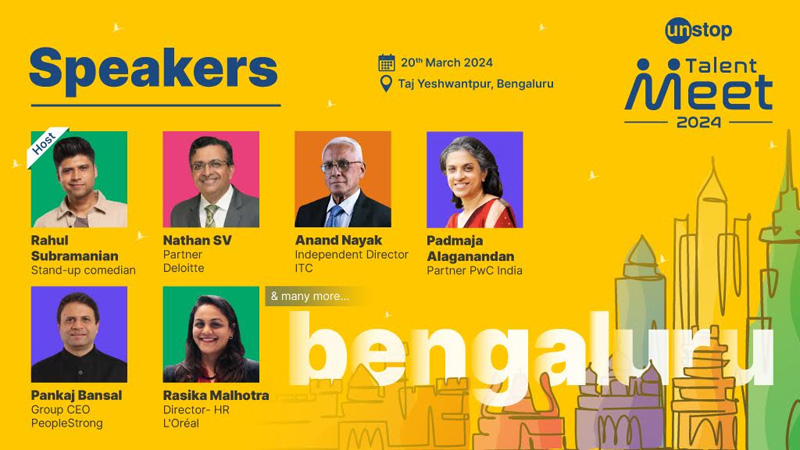
    Mumbai: Unstop, the talent discovery, engagement, and hiring platform for students and graduates, is conducting the Unstop Talent Meet 2024 on 20th March at Taj Yeshwantpur, Bengaluru. The event shall bring together HR leaders, university partners, and students to address the one thought driving the ever-evolving HR landscape – what’s the future of talent hiring?

    Unstop Talent Meet 2024 is expected to have 600 plus attendees, 300 plus organisations, 25 panel speakers, and seven plus speaker sessions. Rahul Subramanian is set to host the event in his unique engaging style. Industry leaders including Deloitte partner Nathan SV; People Strong group CEO Pankaj Bansal; PwC partner Padmaja Alaganandan; Adani Group global chief human resource officer Vikram Tandon will be present at the event. A unique series of discussions titled Talent Talks will provide insights into employer branding, talent assessment and share secrets to hire ‘right’. Speakers from brands such as Marico, Air India, ITC, Mondelēz, L’Oreal, Lenovo, Ather, and many more, shall participate in the Talent Talks.

    The event will see the release of the much awaited Unstop Talent Report 2024 based on the views shared by students, HR leaders and university partners. The report will reveal insights into Talent Discovery, Engagement and assessments. Burning questions such as who is hiring now and how to bridge the skill gap to help students land their dream jobs shall be answered in the report.

    The Unstop employer branding tracker will be released with the dream employers list in various categories as voted and curated by students. Alongside this, students will be recognized for their performance and participation in competitions all year long through the Unstop Talent Awards 2024.

    Unstop founder and CEO Ankit Aggarwal said, “We are pleased to announce Unstop Talent Meet 2024, formerly called the Unstop Campus Hiring Meet. It is the biggest platform of its kind for students, graduates, HR leaders, and industry experts to come together, share insights, and explore opportunities. We invite HR leaders, university partners and students to come together and unlock possibilities on the playground of opportunities.”

    The event saw 300 plus HR leaders, 180 plus organisations, 50 plus universities, 20 plus panellists last year.
     

  • India’s entertainment & media industry to grow 8.8% CAGR by 2026: PwC Report

    India’s entertainment & media industry to grow 8.8% CAGR by 2026: PwC Report

    Mumbai: By 2026, the Indian entertainment & media sector is anticipated to grow by 8.8 per cent compound annual growth rate (CAGR) to reach Rs 4,30,401 crore. These figures are taken from PwC’s Global Entertainment & Media (E&M) Outlook 2022–2026, which is the 23rd annual analysis and forecast of E&M expenditures by consumers and advertisers across 52 territories.

    ”The Indian media and entertainment outlook for the next few years is quite unique. There is an exciting pace of growth of digital media and advertising led by the deeper penetration of internet and mobile devices in our market,” said PwC India partner & leader – entertainment & media Rajib Basu. “At the same time, traditional media will maintain their steady growth rate over the next few years. We shall see a very different profile of media and entertainment related businesses & revenue models emerging in the digital space once we have the rollout of 5G.”

    Key findings for India in this year’s Outlook include:

    OTT Video: The elimination of public entertainment and more time spent at home helped the total OTT revenue more than double in 2020. Revenue nearly doubled once more in 2021 as a result of this pattern. The market would still increase at a remarkable 14.1 per cent CAGR to reach Rs 21,032 crore in 2026, despite slower growth rates. Subscription services, which accounted for 90.5 per cent of revenue in 2021 and are projected to account for 95 per cent of revenue in 2026, are fueling this rapid growth.

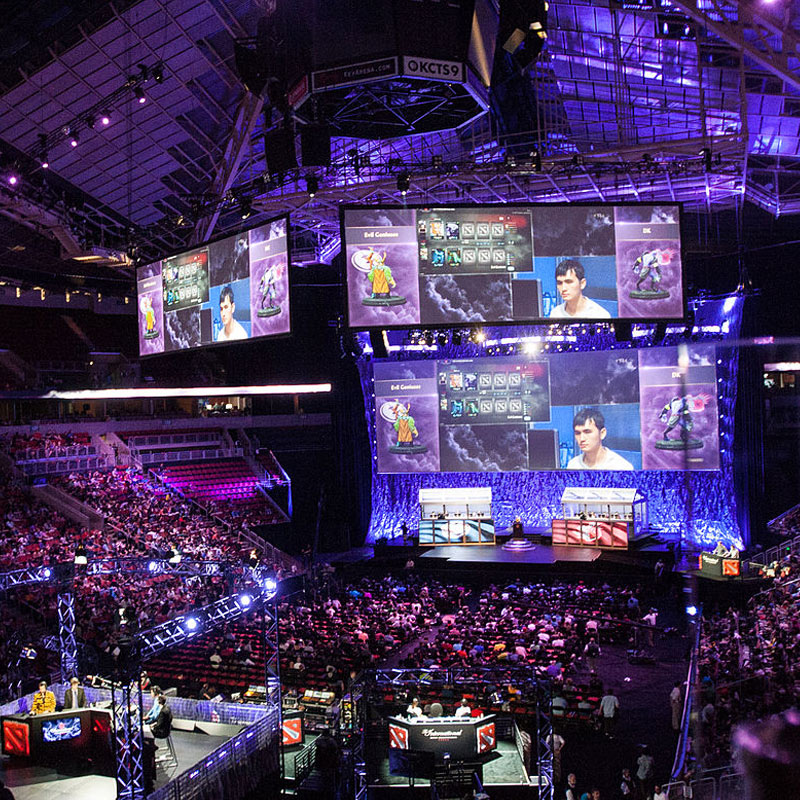
    Video games & esports: India’s overall revenue from video games and esports is expected to rise by 18.3 per cent CAGR to Rs 37,535 crore by 2026 from Rs 16,200 crore in 2021. India is the third-fastest-growing market for video games in the world, behind Pakistan and Turkey, although still being a relatively small market given the size and population of the nation. Social/casual gaming accounted for Rs 13,244 crore, or 83.9 per cent, of India’s overall video game and esports revenue in 2021. Revenue from social/casual gaming is anticipated to grow at a 20.6 per cent CAGR and reach Rs 34,581 crore by 2026. The introduction of 5G technology to the market will be a key enabler of this segment.

    TV advertising: India’s TV advertising market had a -10.8 per cent fall over 2019 levels in 2020 as a result of the Covid-19 recession, which struck after several years of rapid expansion. This turned out to be a brief setback. This sector increased by 16.9 per cent to Rs 32,374 crore in 2021 as the country’s economy  started to expand again. By 2026, the market would have grown by 6.3 per cent CAGR, reaching Rs 43,410 crore. After the US, Japan, China, and the UK, India will soon rank as the world’s fifth-largest TV advertising market.

    Cinema: India is projected to expand at the highest growth rate among all segments throughout the forecast period, with a startling 38.3 per cent CAGR, to reach Rs 16,198 crore by 2026. India is now the third-largest market globally in terms of admissions after China and the US. More than 379 million cinema tickets were sold in India in 2021, a respectable rise over the 278 million admissions in 2020 (and higher than the 226 million admissions in the US in 2020) but a significant decrease (-85.4 per cent) from the 1.9 billion tickets sold prior to the pre-pandemic.

    Internet advertising: The Indian Internet advertising market is anticipated to grow at a CAGR of 12.1 per cent to Rs 28,234 crore by 2026. The mobile sector dominates the country’s Internet advertising business, accounting for 60.1 per cent of total revenue in 2021 and rising to 69.3 per cent by 2026 due to India’s market for mobile-first internet access. The mobile sector is dominated by display advertising, which generated 90.7 per cent of total income in 2021 but will drop to 88.9 per cent of the total in 2026. India’s revenue from wired Internet access was Rs 6,379 crore in 2021, and it is expected to grow at a CAGR of 6.3 per cent to Rs 8,829 crore by 2026.

    Out-Of-Home Advertising: One of the strongest comebacks globally is being made by the out-of-home (OOH) advertising market in India, which is expected to rise at a 12.57 percent CAGR to reach Rs 5,562 crore in 2026. One of the sharpest market downturns and the largest revenue decline among the main economies of the world, total OOH revenue recovered by 63.4 per cent in 2021 over the levels of 2020. The total OOH revenue in 2021 reached Rs 3,076 crore. The momentum of this rebound will carry over into 2022, and by year-end the market will be at the value Rs 4,084 crore.

  • Global entertainment & media revenues surge to $2.3 trillion; OTT growth to moderate: PwC

    Global entertainment & media revenues surge to $2.3 trillion; OTT growth to moderate: PwC

    Mumbai: Last year, the global entertainment and media (E&M) industry grew significantly faster than the world economy as a whole. Following a 2.3 per cent dip in 2020 due to the pandemic, E&M sales increased by a solid 10.4 per cent in 2021, from $2.12 trillion to $2.34 trillion.

    Virtual reality (VR) and gaming are significant growth drivers for the industry as it becomes more digital, mobile, and youth-focused, and digital advertising permeates every aspect of the industry. These conclusions are drawn from PwC’s Global Entertainment & Media Outlook 2022–2026, which represents the 23rd annual research and forecast of E&M spending by consumers and advertisers across 52 countries & territories.

    Findings in this year’s Outlook include:

    – After growing by 35.4 per cent in 2020, OTT (over-the-top) video revenues increased by 22.8 per cent in 2021, to $79.1 billion. The rate of OTT revenue growth is anticipated to slow slightly; it will increase at a 7.6 per cent CAGR (compound annual growth rate) through 2026, pushing revenues to $114.1 billion.

    – Traditional TV still brings in a sizable amount of money, but it is facing intense competition from OTT streaming services. Global sales are expected to shrink at a CAGR of -0.8 per cent, from $231 billion in 2021 to $222.1 billion in 2026.

    – Revenue from video games and esports worldwide was $215.6 billion in 2021, and it is anticipated to increase by 8.5 per cent CAGR to $323.5 billion in 2026. With $109.4 billion, Asia Pacific produced the majority of the world’s revenues in 2021, more than double the second-highest region, North America. Gaming has overtaken video and communications as the third-largest data-consuming E&M content category.

    – Despite starting from a small base, VR continues to be the fastest-growing E&M segment. Following a strong 39 per cent growth in 2020, global VR spending increased by 36 per cent y-o-y to $2.6 billion in 2021. The segment is anticipated to grow at a CAGR of 24 per cent between 2021 and 2026, reaching $7.6 billion. With $1.9 billion in revenue in 2021, gaming content is the main source of VR revenue. By 2026, this should rise to $6.5 billion, or 85 per cent of all VR revenue.

    – Due to its widespread use in the digital sphere, advertising now dominates its own industry sector. After falling by almost seven per cent in 2020, advertising increased by an astonishing 22.6 per cent in 2021, reaching $747.2 billion. Advertising is expected to expand at a 6.6 per cent CAGR through 2026, driven nearly entirely by digital. The revenue from internet advertising is expected to increase even more quickly, increasing at a CAGR of 9.1 per cent. Advertising is anticipated to exceed consumer spending and internet access in 2026 to become a one trillion dollar business and the largest E&M revenue stream.

    – In 2023, global cinema revenue is anticipated to hit a new high of $46.4 billion after experiencing losses due to the pandemic. Box office revenue is anticipated to grow by 18.9 per cent CAGR from $20.8 billion in 2021 to $49.4 billion in 2026. In 2020, China surpassed the US to become the world’s biggest cinema market, and it is predicted that it will continue to hold this position through 2026.

    – In 2024, live music revenue is anticipated to surpass pre-pandemic levels. Recorded music sales are expected to increase from $36.1 billion in 2021 to $45.8 billion in 2026, driven by the development of digital music streaming subscriptions.

    – Massive data consumption is being fueled by the expansion of content. Data consumption was 2.6 million petabytes (PB) in 2021, and it is projected to increase by 26 per cent CAGR to 8.1 million PB by 2026. With a predicted CAGR of 29.6 per cent, gaming will consume data at the quickest rate during the projection period. The fastest-growing device category between 2021 and 2026 will be mobile handsets, growing at a CAGR of 28.8 per cent and predicted to increase mobile data usage from 1.1 PB to 3.8 PB.

    PwC Germany Global Entertainment And Media Industry Leader Werner Ballhaus said, “Industry press tends to focus on the companies that have dominated the E&M industry. But it is the choices that billions of consumers make about where they will invest their time, attention and money that are fueling the industry’s transformation and driving the trends.  We are seeing the emergence of a global E&M consumer base for the coming years that is younger, more digital and more into streaming and gaming than the current consumer population. This is shaping the future of the industry.”

    North America dominates per capita E&M, but faster growth resides elsewhere: Regionally, North America has by far the biggest E&M expenditures per capita at $2,229, nearly double that of Western Europe’s $1,158. In contrast, Asia Pacific, which had E&M sales of $844.7 billion in 2021, had a per-capita expenditure of $224. Of all regions in the world, the Middle East and Africa spend $82 less per capita on E&M.

    While OTT video and gaming account for the majority of revenue growth, esports and the cinema industry are also experiencing rapid expansion. Latin America, the Middle East, Africa, and Asia make up the top ten growth markets by CAGR. The countries with the best prospects for E&M consumer spend growth over the five-year forecast period are Turkey (estimated 14.2 per cent CAGR), Argentina (10.4 per cent), India (9.1 per cent), and Nigeria (8.8 per cent).

    The metaverse awaits: The metaverse may soon develop into a wonderfully realistic environment where people may access immersive virtual experiences using a VR headset or other connecting device. The potential financial and commercial worth of the metaverse extends far beyond VR because it is an evolution that might fundamentally alter how companies and customers engage with goods, services, and one another. Over time, a significant portion of the profits from video games, musical performances, advertisements, and even online shopping may move into the metaverse.

    How big is the E&M opportunity in the metaverse?  

    One place to start is the rapidly expanding VR sector. Although it is now one of the less significant areas studied, the 36 per cent increase in global spending over the previous year gives an indication of its long-term potential. The number of stand-alone and tethered VR headsets installed worldwide is expected to increase from 21.6 million in 2021 to 65.9 million in 2026.

    Ballhaus added, “With the impressive growth and potential of the E&M industry comes tremendous volatility and what we describe as fault lines and fractures opening up between companies, within sectors and across geographies and generations. For businesses, intense competition and continual disruption will remain the order of the day. Our data shows the mix of revenues and spending is changing rapidly. As fault lines proliferate and widen, every business in E&M stands to be disrupted. The challenge and goal must be to understand your consumer and end up on the right side of disruption.”

  • TV ad spend touched Rs 35, 015 crore in 2020 despite pandemic

    TV ad spend touched Rs 35, 015 crore in 2020 despite pandemic

    New Delhi: Despite the pandemic’s devastating blow to businesses worldwide, the Indian media and entertainment sector showed ‘remarkable resilience’, according to PwC’s Global Entertainment and Media Outlook 2021-2025.

    TV advertising continued to expand in 2020 as the country emerged from the onslaught of the first wave and reached Rs 35, 015 crore, making India the fourth-largest market globally after the US, China, and Japan. Further expansion at a 7.6 per cent CAGR is likely to take TV ad revenues to the level of Rs 50,660 crore in 2025, according to PwC.

    The outlook for India suggests, multichannel advertising will account for nearly 92 per cent of the total TV advertising market in 2025. Online TV advertising will make modest inroads in the forecast period, with broadband penetration likely to remain extremely low at 7.3 per cent of households.

    The pandemic hit the industry hard, and according to PwC, the total global M&E revenue fell 3.8 per cent year on year in 2020, by far the most significant drop in revenue ever. While sectors like cinema, live music, and trade shows suffered unprecedented setbacks, the persistent growth of digitisation softened the blow for the broader industry.

    Amid all this uncertainty, PwC’s outlook suggests that India’s M&E industry is likely to reach Rs 412656 crore by 2025 at 10.75 per cent CAGR. A significant part of this growth story will be written by demand for great, localised content, increased internet penetration, and the creation of new business models. Technology and internet access will continue to influence the way Indians consume content, says the report.

    The report also shed light on how India is emerging as the fastest-growing Internet advertising market in the world at a CAGR of 18.8 per cent during 2020-2025. Around the world, pandemic lockdowns made home entertainment effectively the only choice, with internet access an essential. Growth in mobile ad revenue overtook wired revenue in 2019 and is expected to be 74.4 per cent of the total internet advertising revenue of Rs 30471 crore by 2025. In 2020 revenue from mobile internet advertising in India was Rs 7331 crore and will rise to Rs 22350 crore in 2025 – increasing at a 25.4 per cent CAGR.

    “This makes India the fastest-growing mobile ad market in the world, reflecting the growth potential, with over half the population yet to take up a mobile Internet subscription in 2020,” says the report.

    One of the worst impacts was seen on the cinema industry, which saw a 70.4 per cent collapse in revenues. With theatres shut, and movies heading to the OTTs, the box-office revenues in India plunged by 75 per cent year-on-year in 2020 to Rs 2,653 crore. However, according to PwC, the box-office revenue is expected to recover and grow at a CAGR of 39.3 per cent grossing up Rs 13,857 crore by the end of 2025.

    “The overall segment comprising box-office and cinema advertising is predicted to grow back to pre-covid level by mid of 2023,” says the report, providing a glimmer of hope to the industry.

    Meanwhile, the gaming market in India continues to enjoy exceptional growth and shows enormous potential. Video games and esports revenue reached Rs 11250 crore in 2020 and is set to expand to Rs 24212 Cr in 2025, at 16.5 per cent CAGR. India’s gaming market is dominated by the social/casual category, which accounted for 77 per cent of all video games and esports revenue in 2020.

    “India’s esports market is small but as awareness grows and, crucially, the mobile esports offering becomes stronger, this sector will see rapid expansion, at a 31.6 per cent CAGR over the forecast period,” it says.