Tag: PVR

  • PVR records Q4 net loss of Rs 289.12 cr amid Covid blues

    PVR records Q4 net loss of Rs 289.12 cr amid Covid blues

    New Delhi : Multiplex major PVR Ltd continues to bear the brunt of the ongoing pandemic, as it recorded a consolidated net loss of Rs 289.12 crore in the quarter ended on March 31.

    The company reported a net loss of Rs 74.49 crore in the same quarter of the last fiscal. Total income during the period under review was Rs 263.26 crore against Rs 661.78 crore in the corresponding quarter a year ago, it said in a regulatory filing, on Wednesday.

    According to PVR, the results for the quarter and year ended March 31, 2021, are not comparable with results for the quarter and year ended March 31, 2020, as the operations were impacted due to the lockdowns restrictions, staggered re-openings, limited content flow and low consumer confidence.

    FY 2020-21 was one of the toughest years for the multiplex industry and the company was able to successfully navigate the challenges on account of Covid-19 through a continuous focus on reducing fixed costs and keeping adequate liquidity on the balance sheet, said the multiplex major on Wednesday.

    While there were no major Bollywood or Hollywood movie releases in Q4 FY’21, the Southern film industry witnessed strong recovery. But, that too, was marred by the resurgence of the second wave in April, compelling the company to take necessary measures to manage its costs and preserve liquidity.

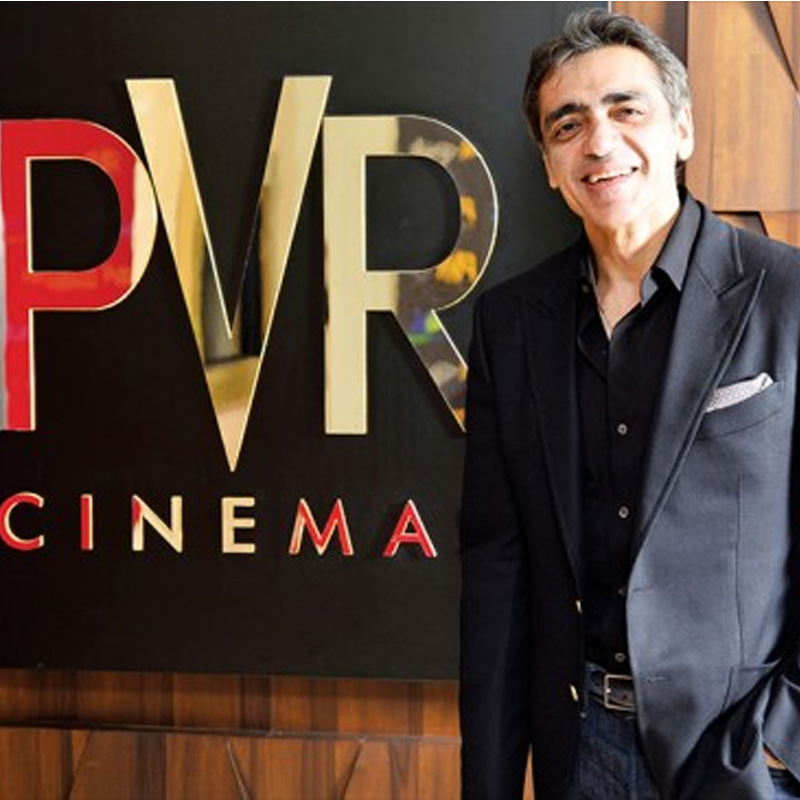
    However, PVR chairman-cum-managing director Ajay Bijli expressed confidence that the company will bounce back stronger than ever once things start to normalise after mass vaccination.

    As on date, none of its cinemas are operational due to lockdowns implemented by state governments, and even after cinemas are re-opened, its business will continue to be impacted, said PVR.

    “We may not be able to run our cinemas at normal capacity on account of social distancing measures that cinemas may be required to follow as well as health concerns that the patrons may have. On account of this, our revenue and cash flow generation may be impacted even when we fully resume operations,” the company said.

    The multiplex operator said it continues to incur committed cash outflows, including employee salary pay-outs, other overheads as well as payments. It has been able to achieve a reduction of 63 per cent in the fixed cost during the period of lockdown in FY21, which covered rent, personnel costs, electricity and water charges and other overheads.

  • Curtains for Cinemas?: Industry pins hopes on vaccine roll-out amid second wave

    Curtains for Cinemas?: Industry pins hopes on vaccine roll-out amid second wave

    KOLKATA: The film entertainment segment of the M&E industry was perhaps the worst hit due to a long-term closure induced by the outbreak of Covid2019. With phased opening and beginning of theatrical releases, the allied segment had been on the course of recovery, but the second wave of the pandemic has abruptly derailed hopes of revival.

    After fresh lockdown guidelines were enacted in Maharashtra, shares of major multiplex chains like Inox and PVR slipped for two consecutive days, given the fact that the state contributes to around 35 per cent of all India box office.

    “As a responsible organisation, we completely relate to the Covid situation in Maharashtra. The revival process of the cinema industry had begun, and the recent curbs are much like a speed-breaker in the journey, which we shall surpass soon in a month’s time,” said Inox Leisure Ltd Alok Tandon.

    He went on to add that the performance of movies like Roohi and Godzilla Vs Kong showed that audiences are willing to turn up in big numbers for new and good quality content, even after an elongated lockdown.

    However, more than cinema occupancy, what’s adding to the woes of cinema owners is that the skyrocketing caseloads have once again disrupted the release calendar. Akshay Kumar-starrer Sooryavanshi, originally scheduled for March 2020, has been postponed indefinitely from its 30 April 2021 release date. Eventually other big ticket releases like Radhe will follow the same path, Elara Capital VP research analyst (media) Karan Taurani surmised.

    Like a playback of last year, this lockdown too will be lifted in a phased manner based on the number of daily cases, opined Taurani. But this time around it may not be as troublesome as 2020, and unlock will happen more swiftly thanks to the vaccine roll out being ramped up. However, he pointed out that theatres may well be the last to open up even if cases come down.

    On the other hand, Inox’s Tandon has reposed faith in upcoming content and increased turnout in the markets dependent on movies in other Indian languages, especially in the southern and eastern parts of the country. Over the past few months, movies like Master, Roberrt and Uppena had brought out the southern audiences in droves. Yuvarathnaa, Sulthan and Wild Dog are also currently performing exceedingly well in the South Indian markets, he added.

    “With Covid cases rising again, there are two major factors which will determine the future of theatrical revenues. One is the fear factor which can lead to lower footfalls even if theatres are open. Secondly, the slate: some films have again started postponing their releases. Unless there is a mass vaccination drive properly rolled out and a solid film slate of releases, the situation is probably not going to improve meaningfully,” EY India partner and media & entertainment leader Ashish Pherwani remarked.

    He also noted that the uncertainty around recovery timelines could result in further direct-to-digital releases, but that may not be a permanent trend. In a similar vein, Taurani mentioned that there is already a big backlog of films and April-June was supposed to be a period where cinemas could go back to 17-20 per cent occupancy on the back of big Hindi releases. Now, many of the mid-small budget producers will again go for OTT premieres. 

    Moreover, in-cinema advertising, which went down almost 90 per cent in 2020, will also be keenly impacted even if the theatres are open in some states.

    “Artificial intelligence has actively taken over the cinema advertising space and this allows for delivering appropriate content depending on location of the cinema, ticket price, demographic and occupancy,” said Harkness Screens Asia EVP Preetham Daniel. “Though the occupancy levels in the auditoriums are not as high as pre-Covid, the value of the advertisement, I believe will be equally impacted. Having said this, the revenue from advertising will definitely take a hit. We had seen the occupancy numbers and box office rising but given the second wave, we may see it drop again as some large releases will now get pushed to June.”

    The advantage of AI is the decision to play a particular ad will now be more accurate based on the heaps of data available on people behavioural pattern, he explained. This allows for brands to sign on long term as opposed to a weekly or monthly run. While Covid2019 also has affected the on ground activation campaigns for the brands, Daniel remained optimistic that it will eventually pick up as and when hyped movies hit cinema screens.

    “Thanks to a huge pent-up demand and a stellar line up of movies, 2021 is destined to be a blockbuster year for us, and we are still certain about it. In the current situation, we have pinned our hopes on the rapid and widespread vaccination drive, which we hope would arrest the surge in cases,” Tandon said.

  • Covid2019 pushes PVR into the red in Q2

    Covid2019 pushes PVR into the red in Q2

    NEW DELHI: Multiplex chain PVR closed the quarter ended 30 September 2020 in the red with a net loss of Rs 184 crore, as compared to profit of Rs 48 crores during the corresponding period of last year. This comes as no surprise, considering that cinemas were shut all over the country for the better part of the year under government directives to check the spread of Covid2019.

    The consolidated revenues for the quarter were Rs 111 crore as compared to Rs 979 crore during the corresponding period of last year. Consolidated EBITDA loss for the quarter was Rs 14 crore as against a positive EBITDA of Rs 324 crore in the same period last year.

    The company clarified that results for Q2 are not comparable with last year’s results due to temporary closures of cinemas and suspension of operations impacting the business.

    The multiplex group has initiated a series of short-term and long-term measures to aggressively control costs as well as augment liquidity. It further strengthened its cost control measures resulting in 71 per cent savings YoY in total fixed costs excluding rent and CAM.

    Monthly fixed cost excluding rent and CAM dropped to Rs 24 crore in the quarter as against Rs 86 crore in Q2 FY20. PVR is in active engagement with its developer partners for discussions on rent and CAM and so far settlements have been reached for more than 60 per cent of cinemas offering PVR complete rent waiver for lockdown period and significant discounts on rent post reopening.

    Discussions with balance developers are in progress and are expected to close once cinemas are allowed to reopen in those states.

    MHA has, in its Unlock 5.0 guidelines, allowed cinemas to reopen from 15 October onwards with 50 per cent capacity. So far, 16 states and UTs, where PVR has presence, have permitted cinemas to restart operations. Out of total 831 screens of the company 575+ have received permission to reopen. PVR is welcoming back its patrons with several celebratory promotions and offers, opportunity for private screenings, film festivals and a fresh new menu to make the movie watching experience truly delightful.

    PVR MD & chairman Ajay Bijli said, “I am extremely pleased to report that most of our cinemas, which had shut down due to the pandemic in March have been allowed to reopen. We are eagerly waiting for re-opening of other states, specifically Maharashtra and Telangana, so that business can gradually get back to normal. We are taking all possible precautions so that both our customers and employees feel safe while visiting their favourite cinema. Many of our patrons have responded positively and we’re fully prepared to give them the same immersive movie viewing experience the way we had done before. We are hopeful that once the new content is released the business will gradually recover.”

  • PVR appoints former IMAX CEO Greg Foster as director

    PVR appoints former IMAX CEO Greg Foster as director

    NEW DELHI: Multiplex chain PVR has appointed Greg Foster, former CEO of IMAX Entertainment and senior EVP of IMAX Corporation, to its board of directors

    Foster is the first American to be inducted to the company’s board, which has now been expanded to nine members. He owns and operates Foster + Crew, Inc, an entertainment & media consulting firm based in Los Angeles. The firm's clients include Apple Corp and CJ. 

    “I’m delighted to welcome Greg to our board,” said PVR CMD Ajay Bijli. “Greg, a respected global entertainment executive and business adviser, has demonstrated a long-term commitment to PVR and I have valued his advice over the years. I am pleased that his expertise in identifying new opportunities for growth will be a resource for the board. His relationship with filmmakers, studios and exhibitors around the world will be a tremendous asset to developing our future strategies."

    Foster joined IMAX in 2001 and played a key role in building the company’s overall strategy, with a particular emphasis on all global entertainment activities.

    "I’ve long believed in PVR, an entertainment leader in one of the most dynamic markets in the world,” said Foster. "I look forward to contributing to PVR’s evolving strategy, especially during this unprecedented time of change in the entertainment landscape."

  • Industry remains cautiously optimistic with reopening of cinema halls

    Industry remains cautiously optimistic with reopening of cinema halls

    KOLKATA: For people across the film exhibition industry, the Unlock 5.0 guidelines have brought them a reason to smile. On Wednesday evening, the ministry of Home Affairs (MHA) allowed opening of cinema halls from 15 October with 50 per cent seating capacity. As the sector is back in business, the stakeholders rejoice the decision despite persisting challenges.

    The reopening of the cinema halls is a critical point for the industry that has been struggling in the face of the pandemic. Even before the nationwide lockdown started, cinema halls shut fearing the spread of Covid2019. Being out of the business for nearly seven months, the cinema owners have been asking for some respite for quite some time now. Last month, the Multiplex Association of India (MAI) appealed to the government to allow theatres to reopen “on an urgent basis”. The association has “wholeheartedly” welcomed the latest decision of the government. Back in June, a survey from Book My Show stated that 54 per cent of Indians want to catch their favourite films in cinemas within 15-90 days of opening up.

    “Millions of movie lovers, employees of the cinema exhibition sector, along with the entire film industry were eagerly awaiting this announcement. We would like to extend our heartfelt gratitude to the MHA and the ministry of Information and Broadcasting (MIB) for their support and guidance. We are committed to ensure a safe, secure and a hygienic cinema going experience for the movie lovers of our country, as always, we would continue to assign top-most priority to the health and well-being of our guests and employees,” MAI stated.

    The multiplex owners have expressed an equal amount of satisfaction around the announcement. Carnival Cinemas managing director PV Sunil said this is the right time to open up with Diwali around the corner. Sunil opined that 50 per cent capacity is better than what they had predicted would be allowed. The industry had been proposing a 50 per cent capacity. Most of the countries are also following the same norm. As of now, Carnival’s software is being modified in accordance with that so that the audience has a seamless experience while booking tickets online.

    “This is a welcome move by both the west Bengal government and the central government. So many people are associated with the industry, so much money is at stake, the industry was losing almost Rs 1,500 crore every month while it was shut. We are happy that we are able to restart and people will be able to go back to the practice of going to a movie theatre.” SVF Cinemas head Rudra Prosad Daw said, the movie chain which operates in east India.

    While a part of the industry has been worried about the seating capacity limits eating up their profits, Daw said that it is a good percentage in the initial phase. He added that average footfall over the year is on an average 32 per cent, although it is higher excluding the southern part. However, he noted that for big blockbuster releases, the footfall goes up to 80-90 per cent during the weekend which could be a cause of discomfort. Daw emphasised that safety would be put at highest priority, for both audience and staff members.

    Ambient director Deepak Kumar welcomed the move and said it would help cinema halls to be better prepared to welcome its consumers like most of the establishments have done that have resumed operations in a phased manner. According to him, cinema halls opening with 50 per cent seating capacity is a step in the right direction. Moreover, as the cinema halls are usually located within a mall, it would also add up to the footfall count. The decision will not just help the owners but also its ancillary.    

    The return of cinema halls to business came as a relief for the studios too which have halted many of their releases. Many of the OTT platforms may have opted for digital premiers giving some breather to the production houses but the number is too limited compared to overall pending movie slate.

    “The reopening of theatres is a relief for studios and theatre owners while once again offering audiences the unparalleled experience of watching movies on big screens. We are looking forward to entertaining audiences in this era of the “new normal”. The pandemic has led to a surge of content consumption across genres and platforms and this is a hugely encouraging indicator for content creators and providers. Cinema is and will always continue to remain an expression of creativity and imagination and we look forward to fostering a stronger bond with our audiences,” Eros Motion Pictures COO Shikha Kapur said.

    But now the eyes are at states like Maharashtra, which has decided to continue the shut down till 31 October. Elara Capital VP – research analyst (media) Karan Taurani said that pan India opening is expected around Diwali or latest by late November. Hence, he opined that large scale content or a big Hindi film is not to hit cinemas before December. SVF Cinema’s Daw also added that they have not heard from Bollywood yet while its parent company SVF and some other producers in west Bengal has already planned releases around Durga Puja.

    “We are cognisant of the prevalent environment and will monitor this on an ongoing basis to determine our release strategy. With regards to our content slate, Eros has an exciting line-up of films for which announcements will be made at an appropriate time,” Kapur added.

    Adding to concerns regarding the fresh releases, analysts believe impact on revenues coming from food and beverages (F&B) and advertising may last longer. “F&B will be under pressure as consumers may not be open to consuming food in cinemas; further, affordability levels too may negatively affect overall F&B spending vs pre-Covid times. Advertising revenue, which is too high margin in nature, will see a negative impact as occupancy in our view will remain restricted until active cases become negligible or a vaccine is launched,” Elara Capital said in a report.

    However, Ambient’s Kumar is optimistic. He stated brands would flock back to cinema halls as cinema is an efficient advertising medium which ensures 100 per cent captive audience. 

  • Will major studios go T-Vod in Bollywood?

    Will major studios go T-Vod in Bollywood?

    MUMBAI: Is this the shape of things to come? That’s a question most in the Indian film exhibition, production, distribution and streaming sectors are asking.

    The reference is to the deal that the world’s largest theatre chain AMC struck yesterday with Universal. It allows a crushing of the window of digital release of new films to at least three weekends (or 17 days) from the current 75-90 days following its rollout on cinema screens. 

    In March 2020, Universal pocketed $100 million from consumers who watched its film Trolls: World Tour when it released it on its premium video on demand (P-Vod) platform when theatres were shut in the US on account of the lockdowns courtesy the raging pandemic.

    That move had irked AMC to the extent that it had said it would not release any of Universal’s forthcoming releases in its 1000 theatres when they would reopen fully.  And the duo had been duelling ever since then.

    The agreement between the two now allows AMC to get a piece of the PVOD revenues that Universal will stand to earn from its releases on digital.  But the duo has agreed that films should first be released at a premium price point of around $20, and could be dropped to $3 to $5 only 90 days after their cinema debut.  

    For sure, going D2C on premium video on demand is better cash earning proposition for the studios as they get to keep 80 per cent of the collections as compared to theatres where the exhibitors retain 50 per cent.  But as everyone says going to the movies is an experience that cannot be replicated at home; hence the exhibition sector does have a long-term future.

    The breaking down of the 90-day bastion raises many questions:

    *Will other studios like Lionsgate, Warner Bros, Sony Pictures follow suit?
    * Will other theatrical chains and independent theatres too toe the line?

    * Will this change the business model that is prevalent in India as well as far cinema exhibition is concerned, way beyond the pandemic?

    So far, Indian film producers and distributors who don’t have the holding capacity have been taking to release their films on OTT platforms like Disney+ Hotstar, Netflix, Amazon or ZEE5 by selling them streaming rights as theatres have been shut for more than four months.  None of them has attempted to take the premium video on demand route. In fact, Disney+ Hotstar actually kept the premiere of the Sushant Singh Rajput-starrer Dil Bechara free for all in a bid to lure non-paying subscribers to sample the service.

    Theatre owners such as PVR and Carnival have been protesting these moves by producers and distributors and have been lobbying to get the governmental go-ahead to open the box office by August as four months of closure has weighed heavily on their financial viability. Of course, there will be severe restrictions – if and when the green flag is raised – in how many seats can be sold for every show.  Considering costs attached to every screening, opening might prove even more financially unviable for exhibitors as the movie-going audience may be loathe to go out, considering how the pandemic is spreading nationwide. Or maybe audiences might flock to the theatres only to have them shut down in case some of the screenings give rise to fresh infections.

    Ticketing company BookMyShow has launched its T-Vod platform and has already got a buy in from Shemaroo to release some of its unreleased film slate on it. None of them is an A-lister movie. Shemaroo says it will take the films onto SVOD later. At the time of writing, no other major had done so.

    However, Viacom18 Studios C0O Ajit Andhare's comments today about the Universal-AMC deal on Twitter gives a sense of the mood prevalent among producers and studios. “Important developments that will have implications for the future. T-VOD as I have been saying always is making the moves.”

    Applause Entertainment CEO Sameer Nair responded to Ajit with his view: “True that! But as long as we, as an industry, strive to keep multiple revenue streams alive, we will adapt and change with these shifting sands. The death knell will be monopolistic gatekeepers that dictate price and access to audiences.”

    The questions that the industry will have to find answers to are:

    * Will the big producers, studios and distributors take a leap of faith and release the big banner films which have been gathering dust?

    * Will they manage to get the streamers to agree to a premium transactional window independent of AVOD and SVOD?

    * Will they be able to market smartly and get enough consumers to watch the movies online to recover their investment  (if at least partly) to make the T-Vod effort – in terms of the lower price the streamers will give them for being a second window – worth it?

    * Will a mainline theatre chain like PVR, Inox or Carnival agree to partner with a major studio in the new windowing that the pandemic disruption has imposed on age-old business models?

    Movie watchers have shown they have the appetite to go digital: 95 million or so of them watched Dil Bechara within 24 hours of its release. An actor, whose untimely death the nation has been mourning, starred in the poignant tale. He was not even ranked in the same grade by the industry as other actors like Ranbir Kapoor, Ranveer Singh, Akshay Kumar, Shah Rukh Khan, Salman Khan and  Aamir Khan though he was supremely talented.

    Numerous big banner and big budget films have been awaiting a theatrical release. The pandemic looks un-stoppable currently with nearly 50,000 fresh Covid2019 cases being reported daily. There is no endgame in sight.

    Maybe it’s time some of the majors took the T-Vod plunge.  It’s over to the industry.

  • Lionsgate India acquires exclusive streaming rights for Hollywood Blockbusters from PVR Pictures

    Lionsgate India acquires exclusive streaming rights for Hollywood Blockbusters from PVR Pictures

    MUMBAI: Hollywood content leader Lionsgate has acquired streaming rights of multiple blockbuster movies from PVR Pictures for Lionsgate Play. Lionsgate Play is one of the leading Hollywood content curator platforms in the country with various critically and commercially acclaimed films in its database.

    The deal includes several titles that are premiers and some marquee library titles with huge box office behind them.  Lionsgate Play is constantly adding to its already-robust movie catalogue to bring the best of Hollywood to the Indian consumers. The Lionsgate Play portfolio already includes hit Hollywood films across genres such as action-thriller to comedy and drama and has seen very promising response from Indian consumers.

    The newly acquired cinema collection has films which have witnessed enormous global box office numbers. To name a few, Brad Pitt starrer Fury earned 200+ Million Dollars; Arnold Schwarzenegger, Sylvester Stallone-starrer The Tomb Aka Escape Plan which earned approximately 150 Million Dollars; and Vin Diesel, Karl Urban-starrer Riddick which earned about 100 million Dollars, among many others. The films will be released in batches; this June Lionsgate Play will release Bandidas, a Western action comedy film starring Salma Hayek and Penélope Cruz and Jet Li’s Kiss Of The Dragon as part of its Friday blockbusters series.

    The rollout will continue through 2020. Recognizing the growing demand for Hollywood films in local Indian languages the OTT player will be dubbing some of these films in Hindi, Tamil, Telegu and more in the near future.

    This partnership with PVR enables Lionsgate Play to offer world-wide quality content to their audiences. With the changing times and the country being under lockdown due to the global pandemic the demand for content has only gone up. This is the first of many such deals to be announced, Lionsgate is constantly investing into exclusive premiere titles for its platform.

  • How to bring audience back to cinema halls?

    How to bring audience back to cinema halls?

    MUMBAI: The Covid2019 pandemic has ravaged the film and exhibition sectors the most. With the aviation industry and restaurant services opening up soon it would be interesting to see how cinemas in India are prepping. Also, there’s nothing for this sector in the packages announced by prime minister Narendra Modi. There has been some ease in rental and electricity charges but it varies from state to state. These are the pertinent issues that need to be addressed. In a virtual conference hosted by UFO Moviez India Limited under the aegis of FICCI, industry stakeholders discussed the various issues that have been afflicting the film and exhibition segment, the way forward, the precautions to be taken at the cinema halls, etc.  

    The main area of concern is about the standard operating procedures that will be followed by cinema halls once things are back to normalcy.

    Due to panic created by the Covid2019 outbreak, people are not willing to come to theatres. At the same time, there is a severe OTT fatigue among viewers as well. So the question arises: What measures can be taken to regain the confidence of the audiences and restore the trust of the cinema-going audience?

    INOX Leisure Limited CEO Alok Tandon said: “Our first objective is to bring trust among audiences. At INOX, we have divided the entire thing in three buckets. Pre-resumption, post-resumption and lastly the visit of audiences. We are taking various processes and initiatives to ensure they feel safe once they go home. These are the aspects we are currently working on.”

    About the social distancing and hygiene measures, Tandon said that the company is looking at how guests don’t crowd the cinema halls and maintain specific distance. Another important thing is the allocation of seats. They are also working on movie schedules and timings to avoid gathering during entry, intermission, exit points, lobby and rest rooms. Where safety and hygiene measures are concerned Tandon said that a lot of man hours went into ensuring guests are safe; they are encouraging people to use paperless transactions at every counter. They are also using thermal guns to check temperature. There will be dedicated hand sanitiser stations installed at theatres. There are SOPs in place to disinfect counters and surfaces. PPE kits will also be introduced in case people are interested to buy them. As far as food supplies are concerned, multiplex chains will bring single-use disposal bags, to avoid reuse of cutlery and crockery.

    “Cinema halls have many similarities to the hospitality, aviation, restaurant and retail sectors. These are unseen times; nobody has a perfect formula for this. We all can learn a lot from each other in this crisis. In this pandemic we have been closely observing what other sectors are doing so that we can also implement that,” he added.

    The Covid2019 lockdown is choking all the production activities across the nation. UFO Moviez India Limited joint MD Kapil Agarwal raised a question if the film exhibition sector and producer’s guild can work together and learn from each other.

    Answering this question, film producer and president Film and Television Producers Guild of India Siddharth Roy Kapur said: “We are looking at exactly the same measures what other sectors are doing. Unfortunately, shoot resumption is in the same lines with cinema resumption. It is the last thing to be started. The biggest issue for us is if there is going to be some sort of curtailment on the number of people you can congregate at the sets. Especially when it comes to film units it is larger as compared to TV units. But the challenge is you need to have a bare minimum number of people on the set to make it productive.”

    Agarwal feels that the capacity issue is not entirely going to affect the film fraternity as the majority of the people are working from home. The concept of weekend shows faring better than weekdays will not make sense now. He thinks that because of this the negative impact will be neutralised.

    “I think a lot of producers and distributors will get signals from how these films are performing at box-offices. When the first lot of people come to cinemas, it is then important for cinema halls to give an impression that we have got our acts together,” said PVR Pictures Limited CEO and chief business planning & strategy PVR Pictures Kamal Gianchandani.

    There are very few movies ready in different languages. Answering whether there is a strong need of releasing movies in all different languages, Telugu film producer studio owner, exhibitor and distributor Daggubati Suresh Babu says, “This idea of dubbing films across languages from Telugu to Hindi or Hindi to Bengali should be done not only in Covid times but post-Covid era also. A few films like Bahubali or Robot have been working like that. There is a huge scope for a lot of regional movies to reach the Hindi market. Usually, the films that do well in dubbing are the ones that are not provided by local films. Now Vijay’s movie Master will have a very big release. Now, is he willing to wait till theatres open up? It is something we need to look at.”

    Daggubati also mentioned about his meeting with Andhra Pradesh chief minister Chandrababu Naidu. He said that the government is very positive about re-starting the shooting. He also pointed that within a week they will get intimation from the CM’s office about resuming the shoot with restrictions. After that, they will explore the possibility of cinema theatres opening up.

    Follow Tellychakkar for the consumer facing news & entertainment

  • PVR Ltd. launches brand film in the entertainment ecosystem

    PVR Ltd. launches brand film in the entertainment ecosystem

    MUMBAI:  PVR Ltd, India’s largest film exhibitor and a name synonymous to excellence in the entertainment ecosystem, has launched the brand film recently to celebrate its audience for over two decades. The film observes the patrons and the million experiences while stating “Every seat has a story.” Conceptualized around the significance of customer-centricity, PVR Ltd. with the newly launched film reiterates its focus on the customer and their experiences.

    PVR Ltd  chairman and managing director Ajay Kumar Bijli commented “It has been over two decades since we started and if there is one thing which has stayed constant; it is our focus on the customer and the experiences they yield in that 3 hours inside the cinema. We have evolved in every aspect but at the heart of our business lays the audience who drive us, guide us and encourage us to do better, push the envelope and explore new things.”

    “It has been an exceptional year on the business front, and I am grateful to our patrons and partners in supporting us in all our endeavors. Wishing all a very happy and entertaining year-end with family and friends.”

    The film celebrates the stories of the patrons, sharing a million emotions from inside the cinema theaters. It is launched across traditional, digital and social media platforms. 

  • PVR to launch first 12-screen property in Delhi

    PVR to launch first 12-screen property in Delhi

    MUMBAI: Banking on rising theatrical revenues, PVR, one of India’s biggest multiplex chain, will launch its first 12 – Screen Superplex at Vegas Mall, Dwarka, New Delhi, on Monday.

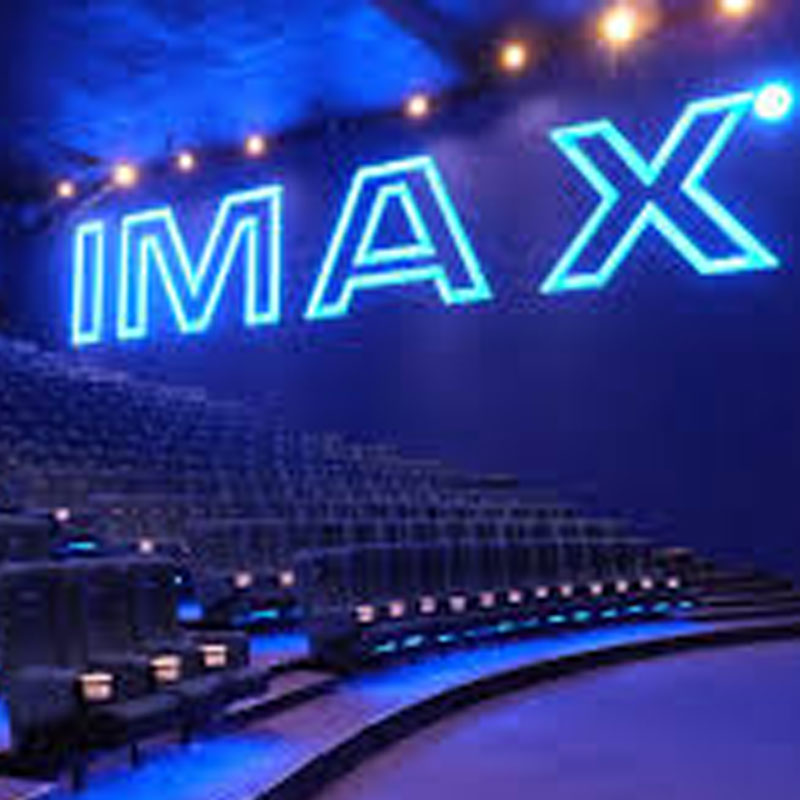
    The flagship property, biggest by PVR in India so far, will be launched in the presence of the starcast of the upcoming romantic action- Marjaavaan and Ajay Bijli, CMD, PVR Ltd, Sanjeev Kumar Bijli, JMD, PVR Ltd and Gautam Dutta, CEO, PVR Ltd. The multiplex will support all movie formats including IMAX and 4DX.

    The launch of 12 – Screen Superplex at Dwarka will also take PVR a tad closer to its aim of achieving the target of 1000 movie screens in India under its chain. Earlier in August, PVR has reached the milestone of 800 screens after it launched a new three-screen property in Sri Ganganagar, Rajasthan. Currently, PVR is present in 69 Indian cities.

    Multiplex business in India is booming despite the disruption caused by OTT in the M&E Industry. As per a recent report in ET, domestic theatrical revenues in India crossed the Rs 100 billion mark in 2018 and will continue to rise in the coming years.