Tag: PVR

  • Study ranks PVR as most trusted Indian entertainment brand

    Study ranks PVR as most trusted Indian entertainment brand

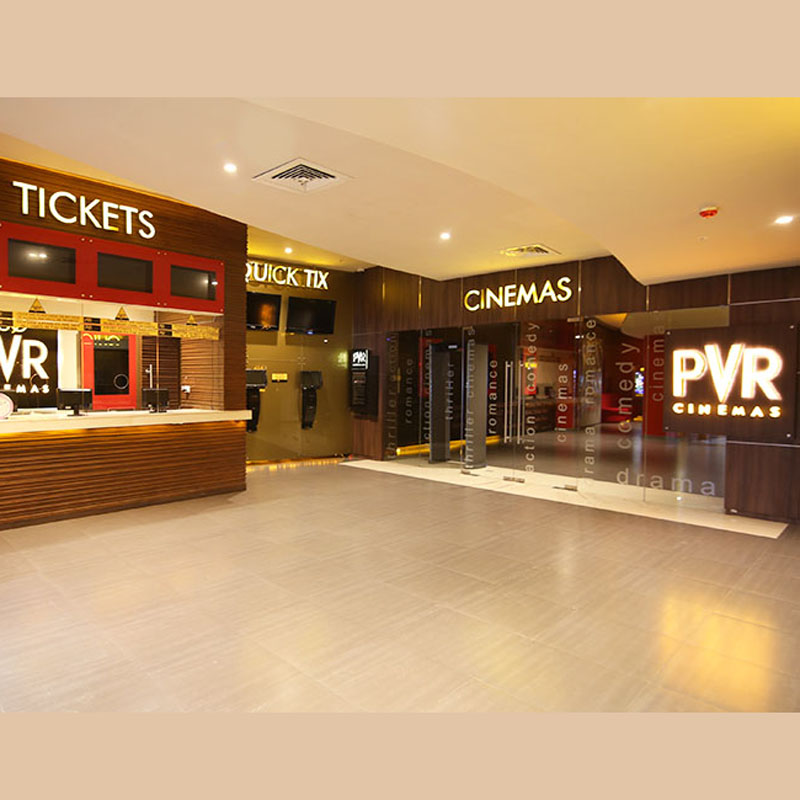
    MUMBAI: A study released by The Trust Research Advisory (TRA) has voted PVR Ltd as the most trusted brand in the entertainment category.

    PVR is the only brand in the entertainment category that made it in the 300 most trusted brands list. The report has ranked the country’s first multiplex at the 217th place.

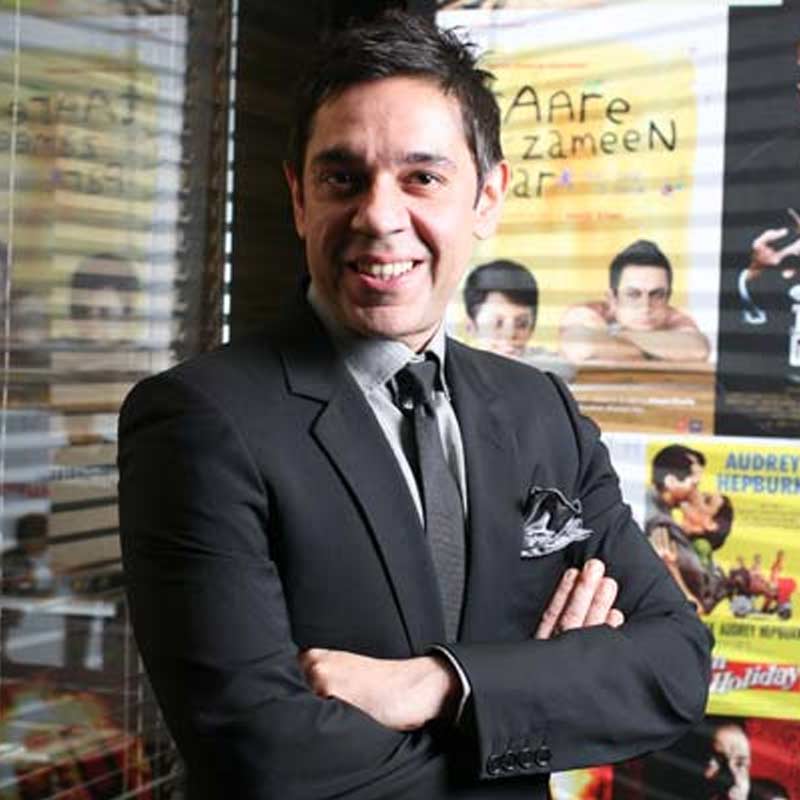
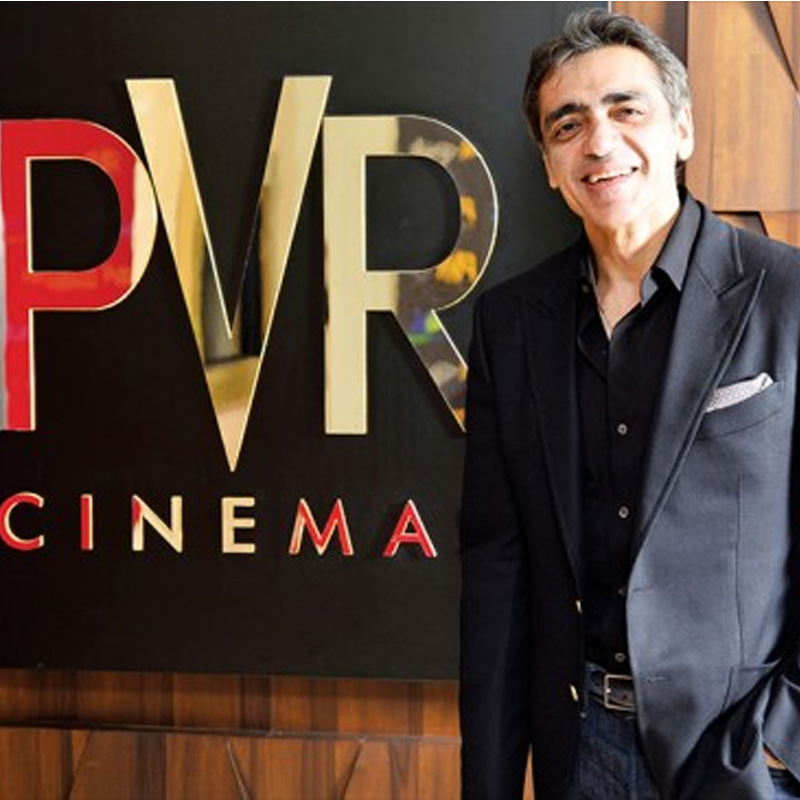
    Commented PVR Ltd chairman and managing director Ajay Bijli, “We are quite overwhelmed to make it to the list of most trusted brands in the country; it truly seems that our efforts have finally paid off. The company continues to push the frontiers of excellence and innovation; these are the qualities that have placed PVR as India’s leading lifestyle entertainment provider.”

    Over the past decade, Bijli has spearheaded PVR’s journey from being India’s first multiplex to being a brand synonymous with movies, quality exhibitions and youth-oriented promotions. From a single multiplex in 1997, the company now stands at 158 screens spread over 20 key cities in India and 36 cinemas.

    Trust Research Advisory (TRA) is a leading research organisation dedicated to understanding and simplifying concepts related to trust.

  • Zee TV conducts dance mobs to promote DID 3

    Zee TV conducts dance mobs to promote DID 3

    MUMBAI: Zee TV, the flagship channel from the Zee Entertainment Enterprises Ltd (Zeel) stable, conducted flash mobs across various parts of Mumbai and Delhi on the Christmas Eve to increase viewership and brand effectiveness of season 3 of its popular dance reality show, Dance India Dance.

    On 23 and 24 December, many parts of Mumbai and Delhi saw a mob of nearly 50/100 people all dressed as collegians, shopkeepers and local residents, shaking their legs on Bollywood numbers.

    The dancemob was an initiative that was a part of the 360 degree campaign that the channel has planned during the launch phase of the show.

    With an aim to create a buzz on Dance India Dance Season 3, the dancemobs were conducted in various locations like Rajouri Garden market, PVR Anupam (Saket) and PVR Satyam (Janakpuri) in Delhi while in Mumbai they were conducted at Cinemax Andheri and PVR Phoenix Mall, Lower Parel.

    A similar activity was conducted on 24 December at Chhatrapati Shivaji Terminus and Churchgate stations.

    The channel has started airing auditions episodes since 24 December at 8.30 pm weekend band.

  • Dev Anand’s funeral on Saturday

    Dev Anand’s funeral on Saturday

    MUMBAI: Dev Anand will be cremated at the Putney Vale Crematorium in London on 10 December at 11.40 am. Later, at about 2 pm, a condolence meeting has been organised at Bharatiya Vidya Bhavan in West Kensington.

    This was decided by the actor‘s wife Kalpana Kartik and daughter Devina. His ashes will later be brought to India, where a ceremony of remembrance will be held at the Mehboob Studios in Mumbai. Later the actor‘s son Suniel Anand will address the media there.

    Suniel Anand said in a statement, “In due course, Dev Anand‘s ashes will be taken back to India, where a major ceremony of remembrance will be held in Mumbai. The family of Dev Anand is moved and touched by the outpouring of public sympathy and love emanating from India, South Asia and the rest of the world following the sad news of his passing away.

    “Accordingly, we would like to express our sincere gratitude to everyone for their kind words and moral support. These have been of tremendous comfort and support to them throughout this very difficult period,” he said.

    Meanwhile, PVR Rare Film Club will pay tribute to Dev Anand by screening his evergreen classic Hum Dono at nine PVR cinemas across the country in its digitally restored colour print.

  • PVR Q2 net up 58% at Rs 142 mn

    PVR Q2 net up 58% at Rs 142 mn

    MUMBAI: Delhi-based multiplex major PVR has reported a second-quarter consolidated net profit of Rs 142 million (after minority interest), a 58 per cent jump from the year-ago period.

    Total income, however, saw a marginal (2.7 per cent) increase to Rs 1.39 billion, from Rs 1.35 billion.

    Meanwhile, total expenditure of the company stood at Rs 1.18 billon, same as the year-ago period. The cost on account of film distributor share went up from Rs 274.6 million to Rs 347.1 million.

    The movie exhibition segment saw a profit of Rs 212.5 million, from Rs 154.2 million a year ago. Revenue from the segment jumped 20.6 percent to Rs 1.28 billion, as against Rs 1.06 billion in thecorresponding quarter of the previous fiscal.

    PVR has deployed Rs 3.62 billion on the movie exhibition segment as of 30 September.

    From the movie production and distribution business, however, the revenue came down to Rs 83.8 million (from Rs 290.2 million), while PVR‘s profit from the segment was at Rs 11.3 million, compared to Rs 8.7 million a year ago. Capital deployed on the segment was Rs 1.1 billion.

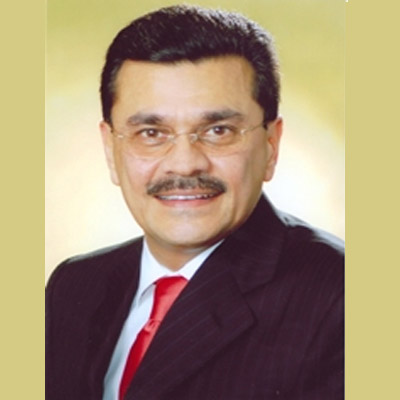
    PVR joint MD Sanjeev Kumar Bijli said, “The revenues and profitability in Q2, 2011-12 has shown a robust growth over the corresponding period of previous year. The good results is a function of company‘s long term location strategy to partner in best mall developments in the country, its unique design philosophy, strong customer focus and a unique brand positioning . This is demonstrated by the fact that PVR‘s average revenue per screen across its cinema circuit is almost 30 per cent higher than our competition. Infect, in area of advertising and sponsorship revenue our total revenues for 2010-11 were more than the revenues of next three operators put together.”

    “The company is on a strong growth trajectory and is adding 57 new screens this fiscal year. The company‘s subsidiary PVR bluO is also setting up bowling centres across the country with three new centres with 74 lanes slated to open in current financial year,” Bijli added.

    During the quarter under review, the company added three new multiplex
    properties with 16 screens at Udaipur, Surat and Delhi. It also opened its new flagship bowling centre with 26 lanes at Ambience Mall, Vasant Kunj.

  • PVR launches luxury entertainment multiplex in Delhi

    PVR launches luxury entertainment multiplex in Delhi

    MUMBAI: PVR, the Delhi-based cinema exhibition major, has introduced a luxury entertainment multiplex – Director’s Cut (DC), at the Ambience Mall, Vasant Kunj, New Delhi.

    Conceived by PVR CMD Ajay Bijli, DC further cements PVR’s stance in its core proposition-the film exhibition business.

    Director’s Cut includes four luxurious cinema halls, a café, a cutting-edge restaurant, one of the city’s best-stocked bars, a lounge, a patisserie and a book shop devoted to the movies.

    “The concept marries two thrilling ideas, that of luxury and cinema, bringing to connoisseurs, four screens made for cosseting viewers in the plushest surroundings that range from a fully recliner seating, 2K digital projection, finest surround sound and complete 3D capability. Director’s Cut has four ultra plush audis which can seat 282 people in all. The largest Audi can seat 108 people and the smallest one can accommodate 25 people.” PVR said.

    The interiors of Directors’ Cut are soaked in classic and contemporary film-based art, so as to underline the classic quality of the experience. Signatures of cinematic legends-Kurosawa, Ray, Godard and more are etched on the smoky glass panels of the restaurant. The cinemas themselves are an ode to elegance and pampering, ranging from interiors in rich burgundy, gold, carmine and a shimmering ochre. Chic individual lamps sit on a console besides each seat. A waiter is a button away with a hot towel, a blanket, an hors d’ouvre or a drink.

    Speaking on the launch, Bijli said: “I am happy to launch Director’s Cut today. DC brings an unmatched luxury cinema viewing experience, something which has never been seen in the country before. It will set a benchmark of excellence and offer value to a discerning audience. We bring in the most innovative concept of fine dining to cinemas, with cuisine brought together by renowned chefs from India and abroad, which will cater to every palate. We are positive that the property will be well received by discerning movie lovers of the capital.”

    PVR Ltd joint MD Sanjeev Kumar Bijli added, “This is a significant opening for us. Although Director’s Cut will screen popular current cinema, it will also under Director’s Cut Rare banner, showcase vintage and classic cinema and landmark television shows. Film festivals will be a vigorous and an on-going feature. DC will create a cultural space where cineastes, with a taste for an ambience that is refined, will look forward to spending time on a regular basis, simply because no content will be inaccessible at this scale anywhere else. The plan for DC is unique, and we seek to make it a cultural hub showcasing distinguished speakers, exhibitions, lectures and performances.”

    Director’s cut is an essential part of PVR’s assiduous strategy to scale up its exhibition business. PVR plans to further expand the concept to other metro cities. Once Directors’ Cut gains the requisite tipping point, it will also be offering memberships to a loyalty programme that has been already been put in place. The benefits will possibly outclass those offered by any upscale metropolitan club, the company said.
     

  • PVR prepones release of The Tree of Life

    PVR prepones release of The Tree of Life

    MUMBAI: Going back on its earlier announcement that it would release Terrence Malick‘s The Tree of Life in August, PVR has now confirmed that it will release the film on 29 July all over India.


    Starring Brad Pitt, Sean Penn and Jessica Chastain, the film deals with the questions of the origin and the meaning of life.


    The American film won the Palme d‘Or at the 64th Festival de Cannes this year where it received mixed reactions from the audience and the press at Cannes.


    The Tree of Life happens to be the fifth film of Terrence Malick in his filmmaking career that spanned four decades.
     

  • Khushi Advertising bags adfilm screening rights of Cinemax for 3 years

    Khushi Advertising bags adfilm screening rights of Cinemax for 3 years

    MUMBAI: Khushi Advertising, an ad agency which specialises in the medium of cinema, has bagged the exclusive rights of adfilm screening across the entire Cinemax multiplex chain.

    The rights have been given for all existing and upcoming Cinemax multiplex screens across India for three years.

    Said Cinemax CEO Sunil Punjabi, “Khushi and Cinemax have always worked closely and this on-screen association has only got us closer.Cinemax is growing aggressively in 18 cities and will now be able to give advertisers a Pan India reach through its network.”

    Cinemax has over 115 screens up and running across various locations in 18 cities and 300 screens are in the making.

    Since the last five years Khushi Advertising has been selling multiplex onscreen space pan India and is an active contributor in selling onscreen space of Cinemax, PVR, Big Cinemas, Inox and Fun.

  • Pix expands ‘Movie Club’ brand building initiative

    Pix expands ‘Movie Club’ brand building initiative

    MUMBAI: English movie channel Pix started its ‘Movie Club‘ brand building initiative eight months back. The aim was to build a connect with college students by offering them films to see theatrically at a low cost of Rs 30. Now the channel is looking to grow the initiative by offering free screenings.

    Pix marketing head Himmat Butalia said that membership has grown from 500 to 3000 members. “We received a great response from the student community for the Pix Movie Club. As a channel we have decided to take this association further by making all the screenings free. This initiative is our way of giving back to our young members who have supported the Pix Movie Club. The Pix Movie Club is a brand building initiative. Movie viewing habits on television are formed at this age. Our aim is to catch the movie viewing audience when they are young.”

    Pix screens one to two movies a month, with a focus on action oriented fare. Its partner is PVR and it does the initiative in Mumbai, Delhi and Bangalore.

    “We are looking to take the Movie Club initiative to more cities in the coming months. To create awareness about the Movie Club initiative, we use on-air promos as well as Facebook and SMS,” said Butalia.

    To be a member at Pix Movie Club college students can register online with www.pixtelevision.com. On applying, a unique membership number will be sent to the applicants via email which needs to shown at the multiplex.


  • ‘The price war has come at an early stage of the DTH game’ : Vikram Kaushik- Tata Sky MD & CEO

    ‘The price war has come at an early stage of the DTH game’ : Vikram Kaushik- Tata Sky MD & CEO

     Tata Sky, a direct-to-home joint venture company between Tata Group and Star, is betting big on value-added services such as PVR (personal video recorder) and is ready to pump in another Rs 20 billion as it eyes a subscriber base of eight million by 2012.


    The focus is on building a strong brand with heavy spending on advertising. While rival network Dish TV has used Bollywood star Shah Rukh Khan, Tata Sky has Aamir Khan as its brand ambassador. Occupying a premium position in the mindshare has been part of the strategy as the company has the technology support of News Corp. and the trusted name of the Tatas.


    The DTH game has got tougher with competitive entries from Sun Direct, Reliance’s Big TV and Bharti’s Airtel Digital TV. This has meant a rise in project expense from Rs 30 billion to Rs 40 billion, lower ARPUs and high customer acquisition costs.


    Cable TV, which has a strong footprint across the country, is also offering stiff competition to DTH operators.


    In an interview with Indiantelevision.com’s Sibabrata Das, Tata Sky MD & CEO Vikram Kaushik talks about the company’s decision to stay away from being a discounted brand while fighting at different price points to tap different consumer segments.


    Excerpts:

    Has Tata Sky revised upwards the project cost from Rs 30 billion to Rs 40 billion?
    When we first formalised our business plan, we were looking at an investment of Rs 12 billion. Then we came up with a realistic estimate of Rs 30 billion. We revisited that plan and now believe our funding requirement for the venture would be Rs 40 billion. We have already invested half of this amount.

    Has the project cost gone up because of the higher element of subsidy in the Indian DTH market?
    When we first did our business plan, we didn’t expect so many DTH operators to come in. There is a lot of activity in the category and the price war has come at an early stage of the game. Competitive entries and an explosive growth in volumes mean higher costs. Customer acquisition accounts for a significant percentage of the costs.

    Will this mean that the gestation period for profitability will go up?
    I wouldn’t like to comment on when we would reach the break even situation. DTH is an infrastructure business and requires high investments and long gestation periods. We have no illusions about that. Generally, the break even for this kind of business is in excess of five years.

    Industry estimates put Tata Sky’s losses at Rs 8.15 billion in FY’07 and a little more than that in FY’08. Do these losses fall in line with your business plan?
    I can’t talk on financials.

    Are you in line with the projected subscriber growth?
    We have already touched 2.7 million subscribers and are targeting at least eight million connections by 2012. When we were at the drawing board, our broad plan was to add a million subscribers every year. We are growing faster than that.

    ‘When we first formalised our business plan, we were looking at an investment of Rs 12 billion. We revisited that plan and now believe our funding requirement for the venture would be Rs 40 billion

    But are ARPUs (average revenue per user) in place?
    I can’t reveal to you where our ARPUs currently stand. But there are definite efforts to push ARPUs up with the launch of value-added services such as PVR (personal video recorder). This technology allows subscribers to watch a particular television show while recording another. Viewers can also pause and rewind live television programmes. We have priced the set-top boxes (STBs) for PVR, which will use MPEG-4 compression technology, at Rs 8,999. For our existing subscribers, we will be offering at discounted rates.

    Isn’t the pricing on the higher side?
    Being below Rs 10,000, it is very competitively priced. We are aggressively marketing Tata Plus. In just a couple of days since launch, we have already sold 2500 PVRs. It took BSkyB 3-4 years to convert 50 per cent of its eight million subscribers to Sky Plus.


    Our priority is to make this really big as the product is very powerful and also addresses the ARPU issue. We realise that people in India are investing in high quality entertainment at home as out-of-home is becoming expensive. The PVR is a recognisation of this trend and we want to capitalise on it.

    Are you looking at niche content for lifting your ARPUs?
    Unless we have a critical mass, we can’t slice the market that thin in India. The Indian DTH market is endemically short of satellite capacity. We have 12 Ku-band transponders on Insat 4A, but want more and nothing is available at this stage. We can address niche audiences and offer more channels to consumers if we have more transponders available.


    It is, however, possible to offer premium content like lifestyle within large segments. On our interactive service, we have NDTV Good Times offering specialised cookery.


    Segmentation in the marketplace is also possible. And we have interactive services like Actve Wizkids (for children and pre-schoolers), Actve Darshan (24-hour darshan of Sai Baba, SiddhiVinayak, Iskon and Kashi Vishwanath) and Actve Matrimony. But the problem with interactivity is that it is very bandwidth hungry.

    What is the premium content you are lining up?
    We are in talks with movie producers like Sony Pictures, UTV, Eros and Fox for sourcing their movie content. We are looking at recent Bollywood, international and Hollywood content for our pay-per-view service. The challenge is how to get into revenue share deals as we can’t pay high MGs (minimum guarantees) and it is not attractive for the content suppliers if there are not high volumes.

    How about getting premium content channels?
    For premium content channels, we are at an early stage of development. There is also the transponder capacity issue. One area we are looking at is HD channels.

    Are you planning to strengthen your regional content line-up?
    Regional markets are integrated into the overall content plan. We have national, regional, international and eclectic consumers.

    Sun Direct has mopped up over one million subscribers in a short span of time because of its aggressive pricing. How has that impacted you in the southern market?
    Our growth has not stopped in the South because of Sun. We have the right kind of share in the right kind of segment. Sun’s pricing is unviable and we are at 30 per cent premium over them. Their strategy seems to reflect the pressure of their cable TV business while pricing their DTH proposition. The danger is that you can attract the wrong kind of customers – and you are vulnerable to a high degree of churn. In DTH business, this is a recipe for disaster because of the high subsidies involved in customer acquisition.


    The South has been a high pay-TV penetration market because of pricing. In this blood bath situation, one has to be cautious and keep away from just adding subscriber numbers.

    Isn’t market leader Dish TV also involved in the price war?
    More than Dish TV, it is Sun Direct which is acting as a discounted brand. The DTH market in India is open to segmentations. We are also offering subscriptions at Rs 99. But the question is how much at the bottom of the market you can afford to go.
    Why hasn’t the Tata Sky brand been able to stop Dish TV from mopping up a high number of incremental subscribers?
    Dish TV has followed a discounted brand strategy. We have operated at a Rs 1000 premium over them from the moment we launched. Dish TV has also picked up the low hanging fruit in smaller markets. Besides, they continue to work as an integrated media company and have leveraged that advantage as a vertical player.
    Has regulation worked against the DTH players?
    Regulations relating to the broadcast industry have been largely progressive. The problem has been the lack of a level playing field across the different addressable platforms. Why should cable operators get channels capped at Rs 5 in the Cas (conditional access system) areas? There is a structural inconsistency in this. Besides, the tax burden on DTH is scandalous. Around 40 per cent of our revenue goes towards taxes and licence fee. When our national objective is to push digitalisation, let’s lower the barriers and incentivise the sector.
    Hasn’t the Telecom Regulatory Authority of India provided some relief to the DTH operators by way of directing broadcasters to offer their channels at 50 per cent of analogue cable TV rates besides making them available at a la carte pricing?
    When we started, there was no RIO (reference interconnect offer). In fact, it is amazing that most of the content deals were done in the court. New players like Reliance, Bharti and Sun would have found it tough if the RIO regulation hadn’t come about.
     

    But even now there is an anamoly. Why should we get content from broadcasters at 50 per cent of what they offer to analogue cable when the Trai and the Information & Broadcasting ministry have formally admitted that the cable sector operates on 20 per cent declaration of their subscriber base?


    Besides, DTH should get content from broadcasters at Cas rates since we are an addressable platform.

    But aren’t cable operators offering set-top boxes even below the regulated price because of competition in the marketplace?
    Pay TV in India is subverted by cable prices which are artificially depressed because of under-declarations. DTH operators have had to drop prices because they have to compete with cable. Today the gap is higher between the two because cable TV pricing is artifically suppressed. If some DTH operators decide to go as low as cable, then it becomes unviable.
    Don’t you think exclusivity of content will allow platform providers to raise ARPUs?
    The ARPUs in the UK, US and Australia vary between $60-80. In India, the ARPUs are a fraction of this. Exclusivity of content is there in all markets except India. But we hope the regulation on exclusive content will also wither away. This will allow us room for being more creative and innovative.
    Since cable already has a wide presence, do you see them winning the war against DTH in India as in the US?
    DTH has already tapped over six million subscribers and will see explosive growth from now on. In the US, cable companies have made massive investments to digitalise their networks. And even there, 40 per cent of the market is still with DTH. Indian cable companies have not made such investments. Besides, the cable TV market here is hugely fragmented. And the last mile challenge (multi-system operators do not own much of the last mile which is with the local cable operators) will not go away.
    Tata Sky and Dish TV are on MPEG-2 compression technology while the new players have MPEG-4. What is the status on the inter-operable issue?
    There is a regulation on DTH boxes being inter-operable. But why have a law when this is not being followed?
    But why was Tata Sky opposing the inter-operable clause then?
    The regulator can say that the inter-operability clause was a mistake and just do away with it. We are asking for more clarity on the issue. If we are to switch over, then we want some amount of subsidy which the government can give from the revenue share that we part with them.
    There has been a drive to reduce the revenue share with government. What is the status on this?
    The Telecom Disputes Settlement and Appellate Tribunal has ruled that the licence fee for DTH services should be based on adjusted gross revenue – and not on the basis of gross revenue. But the government has not yet issued any notification on this.
    After Temasek Holdings took a 10 per cent stake in Tata Sky for $55.5 million, have we seen a rise in DTH valuations?
    I can’t talk about valuations or the price at which we got Temasek to invest in. But Temasek has 10 per cent while Star’s holding is untouched at 20 per cent and the Tata Group’s stake has come down from 80 per cent to 70 per cent.
  • ‘The real push for digital cinema will come when biggies like Adlabs decide to ramp up’ : Senthil Kumar – Real Image Media Technologies director

    ‘The real push for digital cinema will come when biggies like Adlabs decide to ramp up’ : Senthil Kumar – Real Image Media Technologies director

    Already setting cash registers ringing across Hollywood, with movies like Beowulf, Hannah Montana and Meet the Robinsons, Digital Cinema has been touted as the next big thing in the entertainment industry. And Chennai-based Real Image Media Technologies (RIMT) is already geared up to herald a major resurgence of the film exhibition industry in India with the introduction of this new technology.


    In an interview with Indiantelevision.com’s Anindita Sarkar, Real Image Media Technologies director Senthil Kumar says that the future of cinema lies in digital and unveils the company’s growth plans.


    Excerpts:

    Do you see digital cinema growing faster from now on?
    Several things that were roadblocking the growth have got sorted out. Prices have fallen and the technology has settled down. Film producers, distributors and exhibitors have realised that digital makes better economics. There has been an improvement in sound, though we do not see the same jump in picture quality.

    What will fuel the growth?
    Digital cinema will grow on its own as it is an effective tool against piracy and saves on print costs. But what will further fuel this growth is the emergence of 3D. Across the world today, there are around 5000 digital screens of which at least 1000 are 3D – that is 20 per cent already. In India, we are already seeing a 15 per cent conversion of theatres (about 10,000) into digital. We haven’t seen a 3D wave as yet, but I am sure it will come. More and more people are finding that with plenty of 3D Hollywood ventures coming up in the next two years, 3D makes a lot of sense commercially. That realisation will come in India too.

    What will drive digital cinema growth in India?
    We are already seeing decent growth in India. We have installed 550 digital systems across the country. UFO Moviez has touched 1000 theatres. Reliance ADAG’s Adlabs is testing the technology.The real push will come when Reliance decides to ramp up.

    What is the model that you follow?
    We sell our equipment to various providers like E-City, Pyramid Saimira, and PVR. UFO Moviez, on the other hand, follows a rental model; they act like a technical service provider.

    So you are not looking at the rental model….?
    The rental model is not lucrative for us right now.

    Digital cinema will grow on its own as it is an effective tool against piracy and saves on print costs. But what will further fuel this growth is the emergence of 3D

    But doesn’t this model provide UFO the volumes?
    If you put out the money and you operate at the theatre saying pay me a rental, why would you not have takers? Theatre owners do not have any commitment. If the theatres want the digital systems for two weeks, UFO will give it for that period and then take back the services when they do not want it anymore. So it is an easy scheme. Therefore, it is quickly chosen. But these theatres do not always run on digital systems.

    Isn’t your system more costly?
    We charge Rs 3 million for installation of our system. But we have a cheaper option where theatre owners have to pay Rs 1-1.2 million; they can upgrade later on. Most of our customers are from this bracket. For the 3D system, theatre operators will have to further part with Rs 2 million. So it takes Rs 5 million to do digital plus 3D.

    Is the growth coming in from smaller cities?
    No.These 550 equipments are mainly with mainstream A and B theatres including multiplexes. E-City alone is using 150 systems, mainly in Gujarat. Pyramid Saimira has taken 100 while Sri Venkatesh Films in West Bengal has installed our systems in 40-50 theatres. PVR is also using our systems.

    Is an export market available?
    We have sold 150 systems in overseas markets. Our main clients overseas are in US, Canada, Korea and European countries.

    How effective has digital cinema been in tackling piracy?
    We have put in invisible water markings into our system to fight piracy. If a film has been shot from the screen directly, we can tell exactly from which theatre the copy came from. And the best thing about these water markings is that it cannot be edited. We also lock the projector and the server in such a way that the projector is unable to work with any other server.

    Do you see digital theatres tapping new streams of revenue?
    Advertising is a new revenue opportunity. We are going in for consolidated advertising. We have a technology wherein you can put in an ad at a particular time to get the best audience attention. You can also decide the number of times the ad could appear, thereby hitting at the target audience directly. Using this technique, You can also choose the theatres in which you would want your ad to get displayed. This leads to targeted advertising, next only to internet.

    How big an attraction is 3D?
    3D is definitely an attraction – like digital. Take for example the 3D Disney film Hannah Montana that is stated to have made $30 million during its opening weekend.


    3D is also lucrative for other programmes like live concerts and sports. Today, concerts are being covered in 3D and released; sports are being covered live on 3D and released.

    Is the cost of covering a live concert on 3D the same?
    Covering live concerts on 3D is much more cost effective when compared to films. When you are making a full movie, of course, the cost on the budget will go much higher; live event coverage is on the other end much cheaper.

    How is the installation done?
    The movie is placed on the server to a digital projector and we transmit the movie through satellite or by hard drive depending upon how many theatres are receiving it. Our system accecpts anything. There are two kinds of technology that can produce a 3D effect, the passive and the active.


    When it comes to the passive technology, we put them up along with the system in our servers. For example the external rotating polarizing filter that works with a single projector for the single screen. We have taken this technology from Master Image. The other technology is for the dual projector with fixed polarizing filters on each projector. It is for the silver screen. Here there is not active involvement of the eyewear.


    The active systems include the infrared emitter and shutter glasses technology from XpanD. It requires a single projector and has and active eyewear and is for the white screen.

    How cost effective is it in converting old movies into 3D?
    The cost varies between $5 million to $30 million, depending upon how lengthy and complex the movie is. There is only one company that is currently doing it. It’s called In3.

    How many movies have been converted till now?
    Nothing has been released yet. But yes, there are movies like Star Wars (1979) that have been converted.

    What are your 3D plans for India?
    We are trying to act as a catalyst to make 3D happen in India, in both production and exhibition.


    Satyam in Karnataka has already installed one screen with 3D and we assume that a few more will be coming up very quickly like Adlabs and PVR. Also, we will start helping Indian films shoot in 3D. And this we see will definitely bring in a huge boost to our technology.

    Since the digital market is growing, will you need to raise money to fund your expansion?
    We are looking at a third round of funding within 6-12 months and expect to raise Rs 600-800 million. The funds will be mainly used for rolling out digital cinema and development work. We are also looking at expanding in the area of 3D. We already have Intel Capital supporting us in the second round. Street Edge and Novastar have participated as initial investors.