Tag: PVR Pictures

  • As theatres reopen, PVR Pictures set to rekindle India’s romance with cinema

    As theatres reopen, PVR Pictures set to rekindle India’s romance with cinema

    Mumbai: The pandemic had rendered entertainment to become a largely indoor affair, with content consumption confined to household spaces. However, as the world begins to open up, cinema can be enjoyed on the big screen again and PVR Pictures is leaving no stone unturned to make sure audiences are spoiled for choice when they return to theatres.

    Celebrating cinema’s homecoming in grand style, PVR Pictures is slated to release big-ticket Hollywood flicks like “The Contractor,” “Spencer,” “Operation Fortune: Ruse de guerre,” “Moonfall,” “C’mon C’mon,” and “The 355” are also set to hit theatres via PVR Pictures.

    Amongst this list, some of the notable names are:

    The 355

    The edge of the seat spy saga features some of the best female talents from Hollywood with “Zero Dark Thirty” fame Jessica Chastain, Oscar winner Lupita Nyong’o, as well as Penélope Cruz and Diane Kruger headlining the star-studded cast.

    Operation Fortune: Ruse de guerre

    The action extravaganza sees Jason Statham play a daring and elite secret agent who is forced to recruit a Hollywood superstar (Josh Hartnett) in order to save the world. The film marks Jason’s fifth collaboration with Guy Ritchie. Known for his quirky and out-of-the-box directorial style, Richie might just reinvent the action genre with this adrenaline-filled ride.

    Moonfall

    Roland Emmerich is renowned for helming epic disaster spectacles right from “Independence Day” and “Godzilla” to 2012. The filmmaker turns to space for his next adventure, and if the buzz is anything to go by, this will be his biggest one yet.

    C’mon C’mon

    Mike Mills has brought together a brilliant cast of Joaquin Phoenix, Gaby Hoffman, and Woody Norman in a story of how a man and his young nephew forge a tenuous but transformational relationship when they are unexpectedly thrown together.

    “Our upcoming arrays of big-ticket films are targeted towards making sure the audiences fall in love with the magic of movies again,” stated PVR Ltd joint MD Sanjeev K Bijli. “As a brand, PVR is known to back content that is intriguing, and our latest releases imbibe the same philosophy. The importance of content that is impactful is greater now than ever to breathe back life into the cinemas.” 

    With their firm commitment to world cinema, PVR Pictures will also bring films from other parts of Asia to Indian shores. While “Blackpink: The Movie” chronicles the journey of South Korea’s most beloved musical girl band, Japanese productions like “My Hero Academia: Movie 3”, “Kimetsu Orchestra Concert” and “Fate/Grand Order – Final Singularity” shall serve as a unique treat for anime fans.

    “As a company, we always believe in giving audiences an exciting array of films to choose from. Our upcoming lineup of releases ensures that there is everything for someone and something for everyone when they return to the movies after a long wait,” said PVR Pictures Ltd CEO Kamal Gianchandani

  • PVR Pictures to release Mel Gibson’s Force of Nature

    PVR Pictures to release Mel Gibson’s Force of Nature

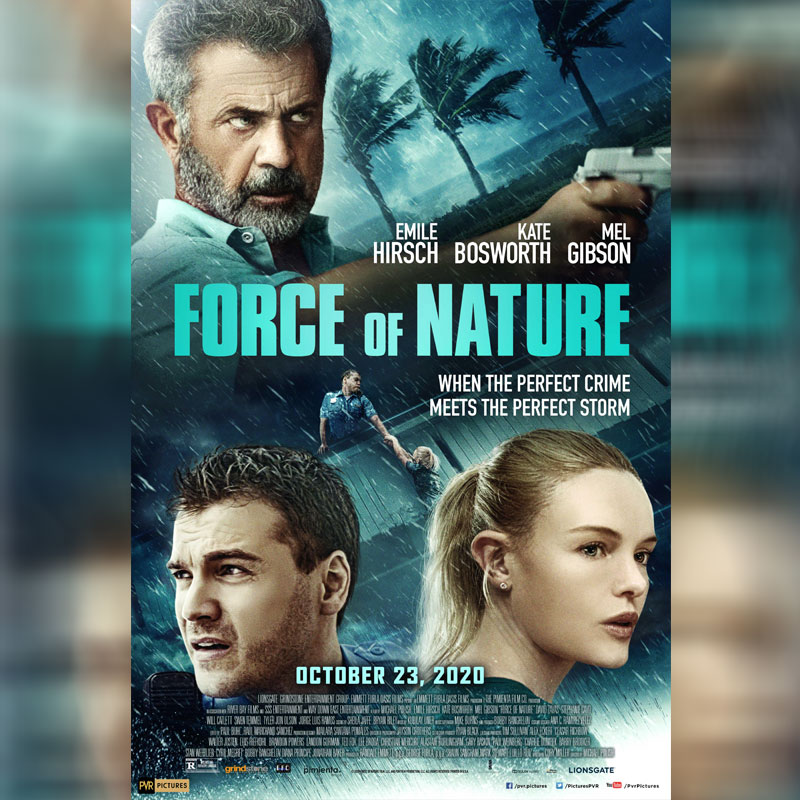
    Mumbai: Theatres are opening their doors again and PVR Pictures has geared up to ensure moviegoers have an exciting and safe viewing experience. The multiplex chain is all set to release Hollywood star Mel Gibson's action-thriller Force of Nature on 23 October.

    Force of Nature is PVR’s second release after the government gave the green light to reopen cinemas, after seven months of being closed for business due to the Covid2019 pandemic.

    The pandemic has affected each one of us in unimaginable ways; the reopening of cinemas offers much needed respite. Even as people settle into a “new normal”, PVR Pictures is inviting us to relive the good old days with this massive action blockbuster.

    Directed by Micheal Polish, the movie’s star-cast also features Emile Hirsch, Kate Bosworth and Gotham baddie David Zayas. 

    The story follows two policemen who are tasked to evacuate a building during a lethal hurricane. When one of the residents refuses to leave, all hell breaks loose as a dangerous heist takes place in the same location.

    The clock ticks faster, the storm gets darker. For the next 90 minutes, this mind boggling adventure keeps you hooked from start to end.

    Be sure to grab your masks, hand sanitizers, and keep social distancing when you head back to the theatres.

    Catch the trailer here.

  • PVR Pictures’ 9 movies at Toronto International Film Festival

    PVR Pictures’ 9 movies at Toronto International Film Festival

    NEW DELHI: PVR Pictures’ nine films will be among other critically acclaimed international films at the Toronto International Film Festival (TIFF) this year.


    The movies includes: SicarioLegendThe Program, Equals, DemolitionThe Idol, About Ray (Three Generations), Youth and Trumbo. These movies will be released in India over the next few months.


    The 40th edition of the festival will be held from 10 – 20 September.


    PVR joint managing director Sanjeev Kumar said, “The Toronto International Film Festival is definitely a great platform to showcase the success story of PVR Pictures to the world. We are honoured and delighted to unveil the best work of PVR Pictures at such a grand platform. We are hopeful that the movies would be appreciated by the audiences worldwide.”


    He added, “In the past couple of years, PVR Pictures has emerged as an extremely important business for PVR group. Today PVR Pictures is the largest independent studio for Hollywood films in India with partners like Lions Gate, Annapurna, Lotus, FilmNation, StudioCanal, IM Global, Weinstein, Sierra Affinity. TIFF is yet another platform, which will showcase the success story of PVR Pictures to the world.”

  • “The Rs 100 crore Bollywood film club is bullshit:” Mukesh Bhatt

    “The Rs 100 crore Bollywood film club is bullshit:” Mukesh Bhatt

    MUMBAI: The year 2014 will go down in history as one of the worst years for Indian cinema in recent times with poor box office collections. Movie economics were also adversely affected by dramatic reduction in demand for satellite rights by broadcasters.


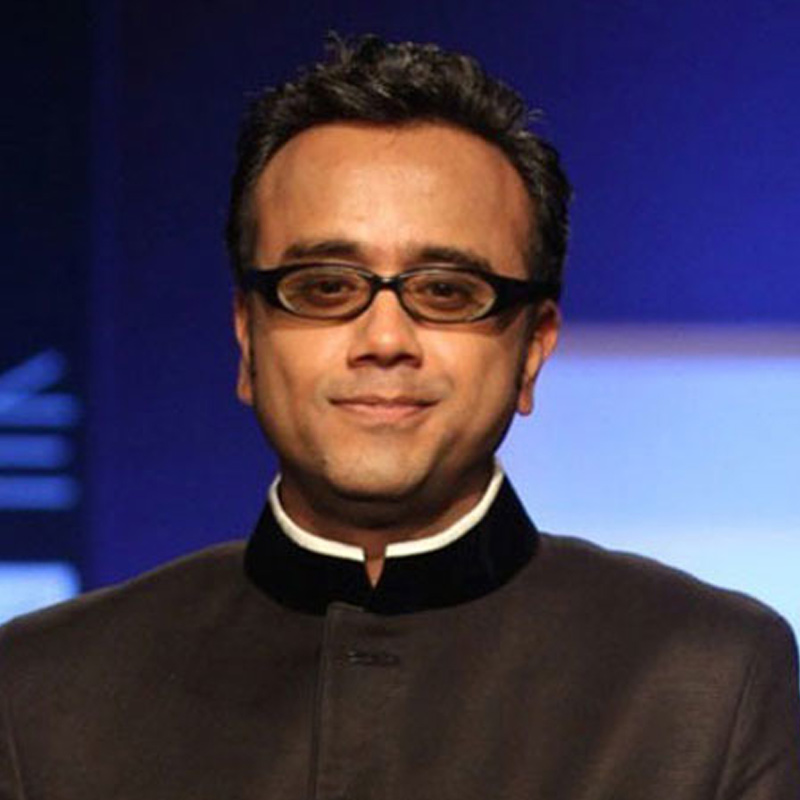
    In an endeavour to produce bigger and larger movies, is the emphasis on quality declining? Are studios misreading audience tastes? Are movie budgets bloated beyond control? These questions were raised in a session of FICCI Frames 2015 moderated by Sikhya Entertainment founder Guneet Mongia with Viacom 18 Motion Pictures CEO Ajit Andhare, Eros International MD and group CEO Jyoti Deshpande, film distributer Anil Thadani, PVR Pictures president Kamal Gianchandani, Fox Star CEO Vijay Singh and Film and TV Producer Guild president Mukesh Bhatt.


    With a mere growth of 0.9 per cent, the film industry has reached its abysmal low. The panelists citied the major reason behind that as filmmakers getting carried away by big names and not sticking to the budget drawn.


    Deshpande opened up the discussion by aggressively protesting over budgeting. “We should immediately stop chasing big names and stick to quality content in order to make the industry prosper. Before green lighting content, we need to tackle a number of issues and better research can help the industry grow. Simultaneously, we also need to ensure that the number of screens increases as more screens mean more money.”


    Speaking on the shrinking number of screens, Gianchandani said, “While we are growing in some parts of the country, the fact is that there is stagnancy in some areas. The growth of multiplex depends on numerous factors, government and content being the two vital ones. We need to ensure that we have content that rejuvenates consumers and they reach the theatres.”


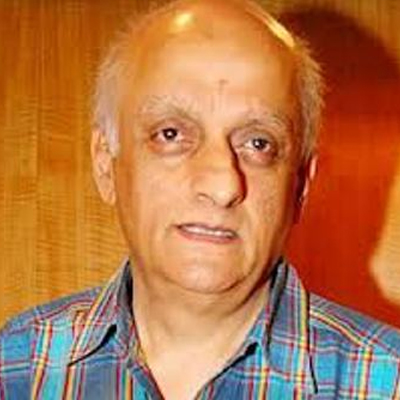
    It should be noted that in China a new screen starts in every three days and the industry is growing bigger and faster, whereas India is witnessing the exact opposite. Addressing the issue, veteran producer Mukesh Bhatt asserted, “In this business, if you don’t have the temperament to take a risk then you are on the wrong ship and you will certainly drown. Playing safe is not possible in the film industry and the perception that only the Khans can earn you money is ruining the industry. The Khans are good but they are 50 now and people won’t accept them singing romantic songs anymore. We have to discover new stars and new directors. All studios need to back raw and new talent. Moreover, multiplexes should have different pricing for movies that star newcomers. My father advised me that all my spending should reflect in the frame. However, nowadays our spends hardly reflects in the frame but satisfies the ego and arrogance of big names. The media given Rs 100 crore club is absolute bullshit and make no sense. I thank Viacom for green-lighting films like Mary Kom and Bhag Milkha Bhag and hope they keep it up.”


    Viacom CEO Ajit Andhare added, “I don’t recall when the film industry made profit or grew larger. The biggest challenge is to make people believe that spending more is not the key to success and one has to pay more attention to content and not green-light a movie going by the actor or director’s name.”


    Great content like Aankhon Dekhi, Dr Prakash Baba Amte and Chatuskone find it difficult to stay in theatres where glamour and big names keep knocking. Similarly, the scenario where a common man finds it difficult to afford a ticket needs to change in order to ensure growth of the film industry.

  • PVR Pictures acquires ‘Fox Catcher’

    PVR Pictures acquires ‘Fox Catcher’

    NEW DELHI: Acclaimed film Fox Catcher which won the best director award for Bennett Miller has been acquired for India by PVR Pictures, the distribution arm of the largest cinema exhibition company in India, at the Cannes Film Festival this year.


    Director Bennett Miller, whose previous film Moneyball starring Brad Pitt was nominated for six Academy Awards, has based Fox Catcher on the real-life murder of Olympic wrestler Dave Schultz.


    In addition to the Fox Catcher PVR Pictures acquired Alone in Berlin, Our Kind of Traitor, Equals, Untitled Lance Armstrong Biopic, Legend, Civilian, Inversion, American Express, Hologram for the King, London Fields and Visions among others.


    PVR joint managing director Sanjeev Kumar said, “PVR believes in not only providing a world class standard of cinema watching experience to the audiences but it equally emphasises on quality content that is acknowledged globally for its viewers. Indian patrons are opening up to recognise global cinema with quality subject matter. This is a very good time for the industry and the Indian audience has a lot to look forward to in the coming months.”


    PVR Pictures had earlier brought films like American Hustle, The Wolf of the Wall Street, 12 years a Slave, Her, Nebraska, Lone Survivor, Dallas Buyers Club to name a few; which were major nominations at the Oscars, being testament to, bringing to the new class of cine goers, content driven films.


    PVR has a decade long association with international film festivals like Oscars and now it is becoming a leading exhibitor of French Riviera through Cannes.

  • Our aim is to roll up all the taxes under one GST: Uday Singh

    Our aim is to roll up all the taxes under one GST: Uday Singh

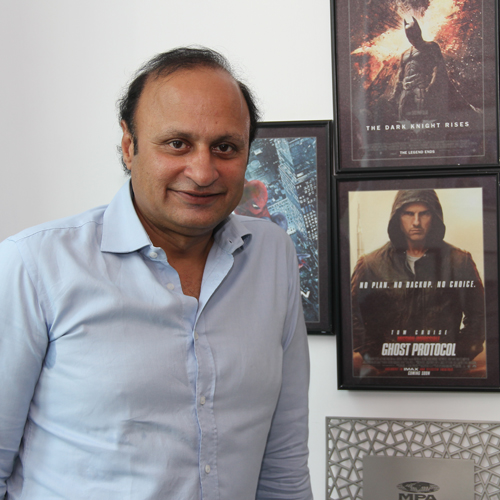
    The word piracy sends shivers down the spines of all content owners, but there is one man who has made it his mission to eradicate piracy from the media and entertainment space. That man is none other than Motion Picture Distribution Association (India) managing director Uday Singh.


    With over 28 years of sales, marketing and general management experience in scaling up operations and building business from start up for MNCs in India and attaining a leadership position in the market and business with significant turnaround and change management; Singh has done it all.


    He has key experience in media entertainment, consumer electronics, domestic appliances and multimedia industries. He has had stints at Philips, Sony Pictures Entertainment (India) and PVR Pictures earlier.


    Being a creative and result driven executive with expertise in setting up new markets developing and delivering strong results; Singh has been ensuring in getting the various industry stakeholders together to fight against piracy.


    Speaking to indiantelevision.com’s Sidharth Iyer, Singh dwells on various perennial issues like piracy, high taxation, specific copyright laws and the difficulties that MPDA faces in propagating anti-piracy in the country.     


    It’s been five years since MPDA India has been present in the industry, how has the journey been? Highlight your roles and responsibilities.


    There are three aspects: first there is the legislative side where we look into getting a specific legal framework into place which can protect copyright. Next we take care of the enforcement, which is basically keeping a check on people who steal content and monetise from the same by redistributing it across the globe and finally the outreach, how do we best reach out to our first line of defense – which is the cinema staff and theatre owners – educating them on piracy and how it works, so that they can recognise it and nip it at the bud.


    On the legislative side we have carried out a lot of initiatives. 90 per cent of all pirated copies are camcorded in cinema halls, and an Ernst & Young 2008 report claims that as much as Rs 16,000 crore is lost every year due to piracy and as many as 577,000 direct jobs are also lost as a result of theft and piracy, afflicting India’s entertainment industry.

    We have been working with local bodies and try and implement the global best practices out here. We have also observed that many jurisdictions like in US, Philippines and other regions in the Asia Pacific as well, specific camcording legislations have made a big difference in getting piracy down and we intend to bring that practice to India as well.


    Is there a set guideline for understanding the copyright laws in the country? Have you managed to reduce the taxation on films?


    We have been lobbying with the government to have provisions made for the same, and the cinematography bill does carry some provisions because only very specific provisions can make a difference, as our copyright laws tend to be very broad and its only best to have specifics in place to better understand and implement the copyright law in the country.


    The other major hurdle for films is the taxation levied on them, and being one of the highest taxed industries it does take a toll on the budget and revenue scale. We have been working with other industries and the government to rationalise those taxes and eliminate some of them if possible and hopefully roll them all into a single goods and services tax (GST).


    However there is a service tax on the input side, so some of the studios that are producing the movie domestically have to face it by increasing its production costs. Currently there are three levels of taxes; the service tax, the entertainment tax and the local body tax. Thus, our recommendation and appeal to the government and the authorities is to roll it all into one single GST to avoid any duplication.


    What are the challenges faced by MPDA and how do you overcome the same?


    There have been issues in the television side of things, where we have been talking to the government and making our submissions on issues such as, liberating the pricing, the must provide and must carry provisions, among others.


    It was also heartening to see that the foreign direct investment (FDI) in the television and broadcast sector also witnessed a hike. So, we look at very generic issues and how the government can better regulate the media and entertainment sector, primarily focused on where our studios feel where we should get involved on the legislative side.


    We also have the Los Angles Film Council, where we have been lobbying for the ease of shooting and working with the government for getting to a single window clearance, there are 70 clearances otherwise required before even shooting a single frame.


    Our efforts and initiatives will be again presented in an E&Y report, which talks about how to simplify, incentivize and further how to promote film tourism. The plan is to promote film tourism in a big way and we have some great examples of how it has been done in other places like Canada and Thailand. Keeping in mind that we have some great technicians and production crews here, India can become an important destination for films as well in the near future.


    On the enforcement side, we are no longer chasing the guys on the streets as it has all moved online and it’s now gotten into camcording. We have managed to eliminate quite a few significant release groups, who have been copying and redistributing a lot of the films. 


    MPDA has played a big role in ensuring that piracy is looked at as a serious offence, how do you intend to put an end to this evil?


    Our intention is not to catch a kid who’s taking a trophy shot in front of the screen, but the people who actually steal the content and make a living out of it. After 2012, there have been almost 67 incidents where we have apprehended pirates who used to capture the video and slap on a different audio and export it to other neighbouring countries.


    We also work with cinema staff and have educated nearly 1,400 of them on what are the best practices to propagate anti-piracy, by putting up signs in the surroundings of the theatre. They have also been educated on how best to deal with incidents of camcording. We have also tried to sensitise various law enforcement authorities on the various issues and problems due to piracy and how they can help in preventing such occurrences.


    I believe, unlike ever before, we have been able to work hand-in-hand with the local film industry and really come together as stakeholders of the industry and really put an end to this evil.


    In the recent past you have associated with the Anti-Video Piracy Cell of Andhra Pradesh, and also carried out various initiatives on the ground, your thoughts on the same…


    The Anti-Video Piracy Cell (AVPC) of Andhra Pradesh has been one of our brightest spots in the fight against piracy. It’s been a very proactive cell and very aware of the changing trends in the space of piracy. They have an in-house team for the mapping of sights, and we found a great ally in them for our fight against piracy.


    With AVPC, we only thought that the need is to contemporize the way we catch hold of the pirates and with the ‘Indian Movie Cop’ and other such applications we have tried to keep a check on digital piracy.


    The app really helps in educating everyone on piracy and the laws of the land, and to keep it interactive we also put up trailers of upcoming releases just to give the user that extra bit to help serve a larger cause among other reward schemes.


    It is a known fact that there have been leakages on the cable TV front, how do you plan to overcome the issue?


    Digitisation has really helped on this front and it has certainly not been an easy process, but a large step by the government to clearly make this decisive move to get to know who the subscribers are and get to know where they are.


    Over a period of time, the broadcast industry has taken interest to resolve the problems relating to cable leakages. It used to be very robust in the analogue world, and still continues to happen, but like the film industry, the broadcast industry too needs to come together to address this perennial issue.


    With a lot of Hollywood studios currently operating in the country, does it help in better promotion of their interests among local production houses?


    Largely, these are decisions taken by the individual studios and it’s for them to be able to decide with whom they want to tie-up. There have been instances in the past three to four years where a lot of studios have taken an active part in the local productions.


    But, again it’s their own strategy on how they best want to enter the market. And once we address larger issues like taxation, ease of operation or piracy, we would be able to provide a substantially better climate for them to come in here.


    Is the regulation in India strong enough to support your initiatives? If not, what is lacking?


    There is a combination of issues; the laws are very generic in nature – while they may have served their purpose – increasingly we have seen that when there are specific laws for specific issues there are better results.


    When we talk about the copyright amendment, we are talking about the technological protection measures. There is an access control and a copy control and barring of hacker tools. In our current legislature, we are talking about copy protection and not about the access; so with the evolving technology, it took almost 10 years to pass that bill.


    So legislation is always going to be a long time consuming process and what we have to do is ensure in bringing to the government’s notice how other jurisdictions have handled these issues and what have been some of the best practices.


    The second aspect of it is enforcement; in terms of the police force they are certainly overburdened and we all recongnise that, with copyright figuring in the lower priority offences. But wherever we have gone and educated them about the issues relating to piracy, they have responded well.


    There are cases where we find the judiciary more proactive in a particular area like Delhi, but in recent history we have had judgments from Mumbai, Chennai and Kolkata as well.  So almost all the high courts are getting up to speed on all the copyright issues.


    And with the piracy now moving online, there is a need for a lot of hand holding to make content distributers and owners aware of how rapidly the landscape is changing. And we can’t ignore the fact that a lot of these offenders are linked to other organised crimes too, thus becoming difficult to track them down.


    Can there be a stop to piracy globally? What preventive measures can be taken?


    There can’t be a total bullet proof plan for this; it’s very similar to other crimes. But, what we can clearly do is to create a favourable environment where if not eradicate then at least we can apprehend the criminals.


    Eventually you will find that there are only a few people who are causing most of the damage and they are part of much more organised syndicates. There also needs to be an updation of the loss due to piracy report as there has been a huge increase in the number of internet connections since 2008.


    The need of the hour is to also educate the film industry on how things work, with most films being made available online just hours after its release. There have been attempts made to resolve this issue, but to no avail.


    There are two ways by which this has been kept under check internationally, one to have an administrative relief and the other a judicial relief. We have noticed that these work in blocking content from getting leaked outside the authorised personals’ hands.    


    Recently there has been a rampant emergence of rogue sites like Torrentz, what is MPDA’s take on them? Also, your thoughts on user generated content sites like YouTube.


    These rogue sites are primarily designed to steal content and monetise by making it available online. Mostly they make money through advertising and in certain cases even through subscriptions. It’s surprising to find that a lot of advertisers who are associating their brands with these rogue sites are only creating a bad impression of themselves on people who then associate them with supporting piracy. They may be having subscriptions, because they may have a camcorded print and they put it up very quickly and start building a premium subscription revenue model.


    To counter these sites, what we have done is listed out the legitimate and licensed sites from where movies can either be streamed or downloaded with a cost attached to give the people the option of viewing legitimate content and also getting the content owner his rightful due.


    Coming to the user generated content sites commonly known as UGCs have brought in a lot of mechanisms to deal with piracy among other issues, but still it’s not been enough. Lot of them have their filters and they have been trying to work with the industry on how best it can work. But in many cases we find that without the permission of the user, any site that puts up that content is something that we are not comfortable about.


    Eventually what I believe is, with more and more filters coming in and more and more legitimate sites coming up the whole content distribution and exhibition will undergo an evolution.


    In the past, physical copies of pirated VCDs and DVDs were available on streets. You don’t find many of these pirates nowadays, what has MPDA done to eradicate this problem?


    Actually in the past few years, we have not really focused much on that front. In the 1990s we were really going after each and every pirate on sight and almost 5,000 to 6,000 cases were being registered, but without a single conviction.


    We realised that the source was through camcording and three major areas where it was taking place was Ahmedabad, Indore and Ghaziabad. As we started making inroads and worked with the police and the theatre owners to eradicate these rogues from the streets, they went deeper into the heartlands.  


    The DVD is practically dead… so what is the way forward for moviemakers to monetise their content?


    The consumption of movies has not gone down, but the way the movie is being consumed has evolved. And technology is allowing us to give legitimate content. For example with Apple TV the user can simply just click on the movie that he wants to watch and buy it or rent it.


    So the consumer is looking at all kind of content, for the big screen, mobile screen, content on the go, and something wherever he can watch. Thus, to cater to the user’s interests we too are changing our business models to accommodate the demands and supplement those demands with supplies.


    In India the video market never really took off like in other parts of the globe. The time when we were looking at buying VCDs, DVDs came into play and now Blu-Rays are in the market, so with constant evolution taking place, the best thing is to move along with the choice of the user and it also helps as we can directly skip to the digital era.


    What is MPDA’s plan for the year 2014?


    In FICCI Frames 2014 we launched a report with Deloitte on the economic contribution of the motion pictures business in India. We have seen that the media and entertainment sector contributed substantially, almost Rs 50,000 crore in 2013 and generates almost 1.8 million jobs.


    It is very important that when we talk to the government they realise the potential of this sector and given the right inputs, it has the potential of proving more employment and also contribute handsomely to the GDP growth of the country.


    Currently, it’s at a growth rate of 12 per cent, which is almost two and a half times our GDP growth and it can grow at a faster rate if given the proper impetus.


    During the year we will continue to simplify the process for films by getting in the single window clearance. So our next step will be to closely look at it and incentivising and finally promoting the initiative. And we would help the industry flourish and get to its optimum potential.

  • Johnny Depp and Christopher Nolan team up for ‘Transcendence’

    Johnny Depp and Christopher Nolan team up for ‘Transcendence’

    MUMBAI: This Summer, fans are in for a rare treat as Johnny Depp and Christopher Nolan join forces for the first time in Hollywood history for the upcoming sci-fi thriller Transcendence.


    Produced by Nolan and directed by his long time cinematographer Wally Pfister, the movie will see Johnny Depp undergo a terrifying transformation for the portrayal of Dr. Will Caster, an artificial intelligence researcher. MVP Entertainment India and PVR Pictures will jointly release Transcendence in Indian theaters on 18 April 2014.


    The directorial debut of Wally Pfister, follows the life of Dr. Will Caster (Depp), an artificial intelligence researcher who strives to create a machine that possesses sentience and collective intelligence. Extremists who oppose technological advancement target him, but their actions drive him toward his goal. Caster also wants to become part of the new technology, and his wife Evelyn and his best friend Max Waters, also researchers, question the wisdom of this drive. Caster’s goal to acquire knowledge becomes one to acquire power, and he seems to be unstoppable. Depp is seen undergoing a terrifying transformation for the role Caster attempts to transfer his knowledge, memories and emotions into an advanced computer programme to live on as artificial intelligence.


    Additionally the Nolan production will feature a stellar star cast in the form of Morgan Freeman (The Bucket List, Last Vegas), Rebecca Hall (Prestige), Kate Mara (Shooter) and Paul Bettany (The Da Vinci Code) who will be seen in supporting roles.

  • ’12 Years a Slave’ set to release in India on 31 January

    ’12 Years a Slave’ set to release in India on 31 January

    MUMBAI: PVR Pictures, one of the largest independent distributor of Hollywood movies in India, is all set to bring the much awaited drama 12 Years a slave to India. Based on the memoirs of Solomon Northup, the movie stars award winning actors Chiwetel Ejifor, Michael Fassbender, Benedict Cumberbatch, Paul Dano and features a special appearance by Brad Pitt. The historical drama is directed by Steve Mcqueen (Hunger) and brings on board Brad Pitt as producer.


    Set in the 1900’s. 12 Years a Slave is the poignant story of Solomon Northup, a free black man from upstate New York, who is abducted and sold into slavery. Facing cruelty at the hands of a malevolent slave owner, as well as unexpected kindnesses, Solomon struggles not only to stay alive, but to retain his dignity. In the twelfth year of his unforgettable odyssey, Solomon’s chance meeting with a Canadian abolitionist will forever alter his life.


    Commenting on the release of the movie, PVR Pictures president Kamal Gianchandani said, “12 Years a Slave is meaningful cinema and acting prowess at its best. The movie handles sensitive subjects of slavery and racial discrimination beautifully winning accolades at across film festivals and award ceremonies. We are proud to bring the movie for our Indian audiences who are certain to appreciate good cinema.” 


    12 Years a Slave has won Golden Globe award for the Best Picture Drama and has received nine Oscar nominations.


    Release Date in India – 31 January, 2013

    Director – Steve McQueen

    Writers – Matt Whitely

    Producer – Mark Hulme & Marcos A. Rodriguezs

    Starring – Chiwetel Ejifor, Lupita Nyong’o, Michael Fassbender, Benedict Cumberbatch, Paul Dano, Brad Pitt

  • Hriday responds to Woody Allen’s decision on Blue Jasmine India release

    Hriday responds to Woody Allen’s decision on Blue Jasmine India release

    MUMBAI: Woody Allen directed Blue Jasmine was set to be released in India two weeks ago but in the last moment was called off since the director did not want to comply with anti- smoking regulations of the country.


    Now NGO Hriday (Health Related Information Dissemination Amongst Youth) has responded to Allen’s claim that smoking messages in the movie distracts people. In the letter addressed to Allen, they said that many big movies have complied with the norms and have done well at the box office including The Hobbit, Django Unchained as well as Bollywood production houses like UTV motion pictures and Karan Johar productions also started complying with the rules as soon as they came into effect.


    They also said that a study conducted by them showed that youngsters exposed to smoking scenes in movies were twice as likely to try it. They also said that ‘several countries require censor of contents before screening films to confirm to their laws and cultural sensitivities globally’.


    Blue Jasmine was to be released by PVR Pictures. The movie has been critically acclaimed regarding Kate Blanchett’s performance. Let’s see whether Allen responds to the mail and consents to release the movie so that Indians don’t have to miss a good one.

  • Blue Jasmine release in India cancelled

    Blue Jasmine release in India cancelled

    MUMBAI: Blue Jasmine was to release last weekend in India but the hope was denied as director Woody Allen refused to comply with anti-tobacco norms in the country. According to the Indian government rule, anti-tobacco ads are displayed before movies are screened and a text message is inserted while a smoking  scene is taking place on screen, for all Indian as well as foreign movies.


    The movie was to be released by PVR cinemas. According to a statement made by PVR Pictures COO Deepak Sharma, Allen is said to have told that when the message is shown, the audience’s attention is diverted to it rather than to the scene.


    Blue Jasmine is a critically acclaimed movie that stars Cate Blanchett as a wealthy socialite who is struggling to fit into reality once her husband is caught for financial fraud.


    Previously, another movie faced release issues – The Girl with the Dragon Tattoo – due to censor board wanting to delete a few scenes from the movie.