Tag: PVR

  • Double act as Verma and Barjatya take charge in exhibition industry

    Double act as Verma and Barjatya take charge in exhibition industry

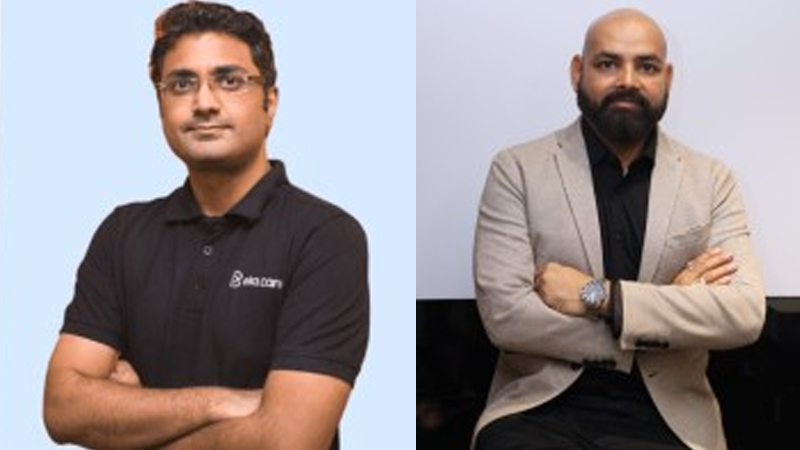
    MUMBAI: In a week that felt more like a blockbuster premiere than a boardroom shuffle, the exhibition industry welcomed two new leading men to its executive cast. Gautam Verma announced his new role as chief digital officer at a prominent exhibition firm, bringing with him a wealth of experience in digital transformation and strategic planning. Verma’s appointment signals a push towards integrating cutting-edge technology into exhibition experiences, aiming to enhance engagement and reach.

    Meanwhile, Sanjay Barjatya has been promoted to chief executive officer at Roongta Cinemas, a division of Roongta Entertainment Limited. With over 19 years in the entertainment sector, Barjatya’s ascent reflects his deep understanding of cinema operations and audience preferences. His leadership is expected to drive Roongta Cinemas into a new era of innovation and expansion.

    For Verma, who officially assumed his new role in May 2025, this marks a sharp pivot from healthtech to travel. Prior to joining Travelwings, he was a founding member and marketing lead at Eka.care, where he spent over four years building integrated marketing strategies in the healthcare space. Before that, he co-founded Adapts Media and held marketing roles at DAMAC Properties in the UAE, gaining strong experience in business strategy, SEO, and international campaigns.

    Meanwhile, Barjatya’s journey through the exhibition sector reads like a manual in operations mastery. Starting out at PVR in 2004, he steadily climbed the industry ladder with stints at M2K Cinemas, Cinemax India, OSR Cinemas, Miraj Entertainment, and now Roongta. From managing two-screen properties to overseeing regional operations and business development across India, his portfolio boasts multi-theatre P&L management, developer relations, and expansion strategy. He served as VP of Roongta before being named CEO in September 2024.

    In an industry where the spotlight is often on the show, it’s the strategic minds behind the scenes that set the stage for success.

  • Streaming strikes gold as India’s entertainment industry hits new highs

    Streaming strikes gold as India’s entertainment industry hits new highs

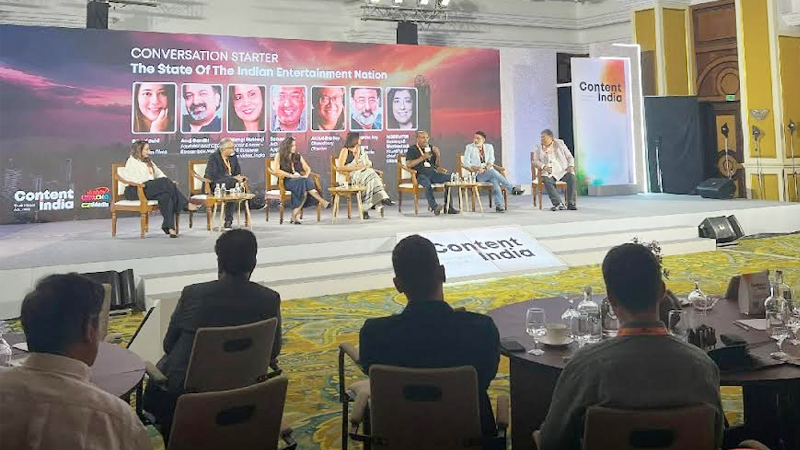
    MUMBAI: If content is king, India’s entertainment industry is the kingdom where multiple rulers are emerging. At Content India 2025, industry stalwarts dissected the evolving media landscape in The State of the Indian Entertainment Nation panel discussion. From the meteoric rise of streaming to the power of regional narratives, the session brought to light the shifting dynamics of how Indians consume entertainment today.

    India’s over-the-top (OTT) landscape is on an unstoppable growth trajectory, with over 500 million digital viewers making it one of the largest streaming markets globally. The paid subscription ecosystem grew 10 per cent in 2023, bringing in Rs 9,900 crore (1.2 billion dollars) in revenue, while the advertising-based video-on-demand (AVOD) model jumped 40 per cent to Rs 6,800 crore (850 million dollars).

    Prime Video India director & head of SVOD business Shilangi Mukherji captured the moment by saying, “Streaming has democratised content. It’s no longer about big cities versus small towns. Today, the same audience that enjoys an international thriller can also binge-watch a hyperlocal drama from a remote region. The lines have blurred.”

    Streambox Media founder and CEO Anuj Gandhi agreed, noting that AI-driven hyper-personalisation is further shaping the streaming experience. “The biggest challenge for any OTT platform is making sure that users find what they want before they get frustrated. AI is now solving that problem, ensuring people spend less time searching and more time watching.”

    Despite streaming’s dominance, the theatrical experience refuses to fade into the background. While the OTT boom has led to a dip in mid-budget theatrical releases, big-ticket films continue to dominate. “Theatres aren’t dying, they’re just evolving,” said Applause Entertainment MD Sameer Nair. “The magic of a collective viewing experience is irreplaceable. Streaming has changed consumption habits, but cinema will always be a cultural event in India.”

    The merger of PVR and INOX has strengthened multiplex chains, making them more resilient against digital competition. However, the industry has become more cautious with high-budget originals. Many OTT platforms are now focusing on regional acquisitions and dubbing successful content instead of creating big-budget originals from scratch.

     If there’s one undeniable trend, it’s the explosion of regional content. Data shows that 48 per cent of all content produced in India in 2024 was in regional languages. Streaming platforms are doubling down on dubbed and subtitled content to bridge linguistic barriers and tap into non-Hindi-speaking markets. The industry is no longer bound by language, hyperlocal content is travelling far beyond its native state.  

    Hungama Digital Media CEO Siddhartha Roy noted, “We are witnessing a content explosion beyond Hindi. Regional is the new national. A Telugu film dubbed in Hindi or a Malayalam film finding audiences in Tamil Nadu, this cross-pollination of audiences is proof that language is no longer a barrier.”

    Phantom Films CEOSrishti Behl added, “The best content is not necessarily being created in Mumbai. It’s coming from smaller production hubs in Chennai, Hyderabad, and even remote pockets of India. The industry is decentralising, and that’s exciting.”

    Artificial intelligence (AI) is emerging as a game-changer for both content creation and consumption. AI-driven personalisation ensures that platforms serve users exactly what they want, while interactive content formats are gaining traction from AI-powered interactive storytelling to immersive live-streaming experiences.

    Aniruddha Roy Chowdhury, an acclaimed director, shared his perspective on AI’s role in the creative process. “AI is not here to replace filmmakers, but to assist them. Whether it’s de-aging actors, enhancing visual effects, or even predicting audience preferences, AI is making storytelling smarter.”

    The future of Indian entertainment is a melting pot of theatrical spectacles, streaming supremacy, regional dominance, and AI-driven innovations. As India’s internet penetration deepens and smartphone usage skyrockets, the next chapter in the industry’s evolution is being written in real-time.

    “We’re in the business of storytelling,” said Shilangi Mukherji. “And in India, stories never run out. They only get better.”

  • Urgent: Protecting our kids from predators demands immediate awareness

    Urgent: Protecting our kids from predators demands immediate awareness

    Mumbai: In the digital age, the rapid expansion of technology has brought about both unprecedented opportunities and disturbing challenges. One such disconcerting challenge is the emergence of child predators, individuals who exploit the innocence and vulnerability of children for their own sinister motives. Child predators exploit various platforms, from social media networks to online gaming communities, to manipulate and groom young victims into engaging in harmful activities.

    As a society, it is imperative that we confront this grave issue head-on, understanding the methods predators employ and taking collective action to protect our most vulnerable members – our children. In this discussion, we will delve into the unsettling world of child predators, examining their tactics, the impacts on victims and families, and the measures that can be taken to prevent and combat their activities.

    Qissé Films in partnership with MISSING, an NGO working on child trafficking prevention, has released a PSA (Public Service Announcement) that aims to create awareness and drive conversations around child online safety.

    Conceptualized by Qissé Films and MISSING, the film features the narrative of two young children from different backgrounds and how they get exploited by strangers who pose as friends on social media. It showcases how easily they fall prey to online traffickers even from the perceived safety of their homes. The film ends with a cautionary message of introspecting who you are really talking to online. It shockingly reveals that these predators target children as young as nine years and shares a WhatsApp number that can be reached out for anyone seeking help.

    The PSA is supported by NCPCR (National Commission for Protection of Child Rights) and Cyber Peace. It is playing across PVR theatres in the country.

    Indira Aditi Rawat, the director of the film, says, “Having worked with non-profits focused on children for many years, I was clear that the film should avoid sensationalism or melodrama and maintain authenticity. The narrative journey should be simple and show how ordinary conversations can lead to distressing situations for children who are isolated from their parents when spending time on their devices.”

    Luv Kalla and Richa Maheshwari, Founders of Qisse Films, say, “We’ve all had worried conversations about our children spending more and more unsupervised time online. To make the online space safer for our kids, we need to get these conversations out of the living rooms and to the public forums. We at Qissé are glad to be able to create a film and aid MISSING, who are doggedly working to raise awareness, educate and push for policy initiatives to create a safe online environment for our children.”

    Leena Kejriwal, Founder Missing Link Trust and strident advocate for anti-child trafficking and child safety, says “Our children in India face the highest risk of online abuse in the world, with a child being either abused or going missing every 10 minutes. Films play a powerful role in building public awareness, which is the first step in prevention. Qissé’s impactful film will help us prevent online abuse by building awareness about the alarming statistics and beginning a dialogue about the issue with parents, children, schools and the community at large. There is an urgent need for the public to get involved and help build a safer online world for our children.”

    The helpline WhatsApp chat number is 60030 60040, and it aims to provide 24/7 information and assistance to parents and children grappling with this issue.

    Indiantelevision.com in conversation with Leena Kejriwal, Founder – Missing Link Trust on the research done by them, the messaging and much more…..

    On why this messaging is important now

    India unfortunately leads the world in child abuse statistics. Every 10 minutes an Indian child either goes missing or is abused. From 2017-2020, 24 lakh CSAM cases were reported from India. This number increased to 56 lakhs in 2022, registering a six per cent increase from 2021.

    The restrictions of movement and social distancing measures during COVID-19 pushed the whole world and their children online. The children came online way faster than we expected and there was no basic education or systems of digital hygiene and cyber civic sense in place.  A study conducted by McAfee reported that children in India are among the youngest to reach mobile maturity and report the highest exposure to online risks. Children in India aged 10 to 14 appear to adopt mobile more quickly than nearly all their peers worldwide.

    Sex abuse and exploitation have now been recognized as a social issue and then a criminal justice issue. The pandemic caused a further escalation by shifting the abuse from offline to online spaces and left our children vulnerable in their very homes. The need for awareness about the issue amongst the children, parents and society at large is becoming critical, to keep our children safe. MISSING is continuously working to raise awareness to address this alarming social issue of child sexual abuse & exploitation. We have taken up the mission of online child safety, through the public service announcement (PSA). The PSA aims to raise awareness about the perils of child trafficking and educate the public on its prevention. These PSA films will enable us to create a dialogue and to reach our target audience directly.

    The CTA of this film is our Online Child Safety Desk which is a WhatsApp chatbot available at 6003060040, which is created by us for children and parents.

    On Missing garnering info on missing children

    Our founder Leena Kejriwal was drawn to the issue as early as 2000 and for over a decade she worked with friends and NGOs in the red-light district like Urmi Basu of New Light in Kalighat, Srabani Roy of South Kolkata Humari Muskaan in Bowbazar and others. It was years of engagement that made her realize the importance of public engagement. The public which is the most important stakeholder in the issue, was far away from most of the anti-trafficking conversations. Since then, she has been working with experts- educationists, cyber security experts and child rights experts who understand the depth of the issue and its nuances.

    Since we started the Missing Awareness and Safety School program (MASSp) in 2018, we have had direct conversations with students, parents, teachers and caregivers and realized that we have garnered many insights from our interactions and research with them. Our M&E gives us deep insights into the choices children make and what drives them to risqué behaviour.

    On the PVR collaboration

    Missing started as a public art campaign and public advocacy has been a crucial agenda for all our work. We created our first PSA in 2016. We have an award-winning game and comics, and we are constantly looking at reaching our target audiences through our multiple assets. PVR collaboration is the next most natural direction for engaging the public because anybody from a 10-year-old to an 80-year-old is PVR INOX’s target audience, including children, young adults, parents, caregivers, guardians and every member of society. Hence a PVR cinema space is a powerful space for raising mass awareness. PVR INOX Cinemas with its 17000 halls and access to 20 million viewers will help in taking the PSA to its target beneficiaries – the public.

    On the film being screened on all PVR screens and the message reaching to larger audience

    Stop Online Stalkers (#SOS) needs all the help it can get to be prompted on every screen and in conversation. There is no issue more urgent as our children’s online safety needs to be prioritized. This cannot be done by just one section of the community. It has to be a collective effort of multiple stakeholders who have access to the public screen. Parents, schools, cyber safety officials, policymakers, the government and most important of all, the public. You and me. We need to join hands on child safety and the #SOS campaign.

    On Missing talking to schools and parents to educate them on how to ensure the safety of their children in cyberspace

    Our motto is why wait for a child to be trafficked to save them. We work on prevention. The first step to prevention is education and awareness. We have been conducting our Missing Awareness and Safety School program (MASSp) since 2017. We conduct it for adolescents from the age group of 13-18 and the entire program is one of its kind, audio visual, geography agnostic and all our assets are embedded within it. We talk about cybersafety within our program.

    Within our #SOS campaign too, we have the #SOS Forum which is ongoing right now in cities across the country, where students are engaging in dialogues with us, other issue experts, policy makers, cyber safety officials and government agencies. Concerned parents are invited to join #SOSMums and raise their awareness as well as their voices on this issue on social media.

  • Poor showing by Bollywood, Hollywood drags PVR to a Q2 loss of Rs 71.23 crore

    Poor showing by Bollywood, Hollywood drags PVR to a Q2 loss of Rs 71.23 crore

    Mumbai: The July-September quarter two 2023 fiscal for PVR was affected mainly because of the poor performance of Hindi movies. Making matters worse was the fact that Hollywood was also disappointed. As a result, it slipped back into a loss of Rs 71.23 crore compared with a consolidated net profit of Rs 53.38 crore in the first quarter of the fiscal ending June 2022. However, the loss was 53 per cent less than the Rs 153.13 crore for the second quarter of the previous fiscal, which had been affected by covid. Admissions and the average ticket price during the second 2023 fiscal quarter were impacted by the weak performance of Bollywood and Hollywood movies.

    Its revenue from operations has fallen from Rs 981.40 crore in the first quarter of the fiscal to Rs 686.72 crore in the second quarter. But it is a big improvement from the revenue of Rs 120.32 crore in the second quarter of the previous covid-impacted fiscal.

    The quarter, PVR noted, was marked by the continued underperformance of Bollywood movies. With the exception of ‘Brahmastra Part One : Shiva, most of the other big budget Bollywood movies performed below expectations, like Laal Singh Chaddha, Raksha Bandhan, and Liger. Brahmastra Part One : Shiva performed exceedingly well at the box office and emerged as the highest grossing Hindi film post-pandemic for PVR, with a net box office contribution of 19 per cent. The underperformance of Hindi films could be attributed to a number of factors, including films released prior to and during the pandemic that did not resonate well with current consumer tastes; content quality driving performance as opposed to star presence; and negative social media sentiments against certain Bollywood movies and stars.

    In Hollywood, the quarter ending September 2022 was the weakest globally in almost two decades, both in terms of the number of movies released and their box office collections. Box office collections for Hollywood movies for PVR dropped by a huge 47 per cent in Q2 FY’23 as compared to Q2 FY’20. Thor: Love and Thunder was the only big tentpole that performed well at the box office as compared to successful tentpoles like The Lion King, Spiderman : Far Away From Home, and Fast and Furious: Hobbs & Shaw in Q2 FY’20.

    If there was a silver lining, it was regional. For PVR, the box office contribution of regional movies increased nicely from 28 per cent in Q2 FY’20 to 44 per cent in Q2 FY’23. Movies like Sita Ramam, Kartikeya 2, Thiruchitrambalam, Rocketry, and Vikrant Rona performed well during the quarter ended September 2022.

    The multiplex exhibition industry on 23 September celebrated “National Cinema Day.” This was envisaged as an industry-wide initiative to welcome moviegoers back to theatres. More than 11 multiplex chains with 4,000+ screens across India participated in this initiative. Customers were offered movie tickets at Rs 75 and discounts on F&B products. PVR welcomed 6.5 lakh guests on this day, which proved to be the busiest day for it in 2022 and the second highest attended day till date with an occupancy of 80 per cent. PVR added that it is also implementing other initiatives to drive admissions back to cinemas.

    PVR added that the current third quarter has started off on a great note with strong responses received to new releases like Ponniyin Selvan – Part 1, Vikram Vedha and Kantara. The content pipeline over the next three months looks extremely promising. It has Bollywood movies that are up for release, like Ram Setu, Cirkus, Thank God, Drishyam 2, Bhediya, Kisi ka Bhai Kisi ki Jaan, Pathan, etc. From Hollywood, it is hoped for a better performance given the tentpoles like Black Adam, Black Panther: Wakanda Forever, and Avatar: The Way of Water. From the regional genre, there are Shaakuntalam, Vaathi, Kushi, Honeymoon, Padavettu, etc. lined up for release.

    PVR has opened 14 screens across three cinemas in the last quarter (24 screens across five cinemas in H1 FY’23) and is fast ramping up its capex plan to open a total of 110-125 new screens by the end of the current fiscal year.

    The announced merger with Inox Leisure, it said, is progressing well. Both the companies have received their respective shareholders and secured creditors’ approval for the proposed scheme of amalgamation. We expect that the NCLT process will be completed in 3–4 months.

    PVR chairman & MD Ajay Bijli said, “We remain focused on driving admissions back to our cinemas. India’s love for movies was well demonstrated by the massive success of the ‘National Cinema Day’. I am confident of a full recovery in the business, driven by the robust content lineup for this year and the various initiatives that we are implementing to rekindle the cinema-going habit amongst our loyal patrons. As we celebrate the silver jubilee for PVR this year, we are extremely optimistic that we will continue to set and exceed even greater benchmarks in the years to come.”

    PVR’s total income rose to Rs 703.13 crore, compared with Rs 275.21 crore in the same quarter of the previous fiscal. The Ebitda for the quarter was Rs 170 crore, almost double the Rs 86.8 crore for the same quarter in the 2022 fiscal. Its total expenses rose to Rs 813.33 crore, compared with Rs 460.68 crore in the same quarter in the previous fiscal.

  • PVR gets shareholders approval for Inox merger

    PVR gets shareholders approval for Inox merger

    Mumbai: Multiplex operator PVR has received shareholders’ approval for its proposed merger with Inox Leisure. 99.9986 per cent voted in favour of the merger. It was defeated by a margin of 0.0014 per cent.

    Inox, in a filing, said that a meeting with equity shareholders took place. The company sought approval for the proposed merger. The results of the vote are expected to be announced in the coming days.

    The Inox said, “A meeting of the equity shareholders of the company was held on 12 October 2022 at 12 p.m. through video conferencing (VC)/other audio visual means (OA VM) as per the directions issued by the National Company Law Tribunal, Mumbai Bench, vide its order dated 22 August, 2022 and in compliance with the applicable provisions of the Companies Act, 2013 read with rules made thereunder, circular(s) issued by the ministry of corporate affairs and the Securities and Exchange Board of India, for transacting the business mentioned in the notice dated 10 September 2022 convening the said meeting (NCLT Convened Meeting). “

    In March, the two companies announced plans for a merger. Inox had said the merger would bring together two of India’s best cinema brands to deliver an unparalleled consumer experience with a network of more than 1,500 screens.

    Following the merger, Inox promoters will join the existing PVR promoters as co-promoters of the merged entity. According to the regulatory filing on 27, once the scheme is implemented, the board of directors of the merged company will be reconstituted with a total board strength of 10 members and equal representation on the board for both promoter families with two board seats each.

    The company will be called PVR Inox, with the branding of existing screens to continue as PVR and Inox, respectively. Ajay Bijli will be the managing director and Sanjeev Kumar Bijli will be the executive director. Pavan Kumar Jain will be the non-executive chairman of the board.

    Shareholders of Inox will get PVR shares in a pre-approved “swap” ratio of 3:10. Three equity shares of PVR can be swapped for 10 of Inox. Inox will have a 16.66 per cent stake and PVR will have a 10.62 per cent stake in PVR Inox.

  • Zee and Sun TV likely to witness opportune times as ad revenue growth returns this festive season: Report

    Zee and Sun TV likely to witness opportune times as ad revenue growth returns this festive season: Report

    Mumbai: Despite facing an adverse impact in the wake of the covid pandemic last year, the media & entertainment industry witnessed some respite in ad revenues for the current quarter-on-quarter (QoQ). According to a report published by Elara Securities (India), in comparison to other traditional media, the television industry has reported healthy growth in the post-covid era. The report also indicated a positive outlook for ad revenues in the upcoming festive season.

    TV Segment: Some respite (QoQ) in ad revenue, led by festive season 

    Traditional advertisers such as fast-moving consumer goods (FMCG) continue to spend on ads, while new-age players such as edtech, fintech, and gaming have chosen to reduce their ad spending. The CPG and automobile industries, as stated in the report, continue to maintain their ad spending, the report highlighted.

    The report noted that Zee group and Sun TV are likely to expect better ad revenue of 3.5 per cent and 6.4 per cent, respectively, while ad revenue may be flat for TV Today. This growth will be driven by some stability in ad spending and the start of the festive season.

    Zee’s subscription revenue, as noted by the report, may decelerate by 1.2 per cent, whereas Sun TV is likely to expect a growth of 4.2 per cent.

    Sun TV reported a growth of 12 per cent as compared to the pre-covid period or FY2020, which also witnessed the absence of income generated from IPL and movies, and stood at 7.4 per cent year-on-year (YoY) of Rs 8,899 million.

    Meanwhile, Zee and TV Today reported 3.7 per cent and 1.1 per cent YoY revenue declines, respectively.

    Zee’s earnings before interest, taxes, depreciation, and amortisation (Ebitda) QoQ margin is expected to rise by 85 basis points (bps), while Sun TV and TV Today to fall by 100 and 535 bps, respectively.

    According to the report, expect margin to be under pressure on content investments for Zee and Sun TV, driven by programming initiatives in Tamil and other genres, and TV Today, on lower YoY revenue and digital segment development, which may also witness the same strain.

    Zee’s and TV Today’s YoY profit after tax (PAT) is estimated to decelerate by 46 per cent and 25 per cent, respectively. TV Today, as the report noted, is estimated to grow by nine per cent.

    Exhibitors – Subdued Q2 hit by weak content

    Multiplexes can experience a series of downgrades due to poor Bollywood content. Large-scale films with poor box office results like Laal Singh Chadha, Raksha Bandhan, Shamshera, and Ek Villain Returns were expected to drive strong Q2FY23 performance, but their failure hit revenue growth for mega-multiples operators PVR and Inox.

    According to the report, Hindi box office revenue has noted a decline of 47 per cent compared to pre-covid levels in Q2FY23, as no film performed except Brahamastra (which recorded Rs 256.25 crore in domestic ticket receipts).

    Domestic box office collections are expected to fall 41.5 per cent and 42 per cent sequentially, respectively, and 35 per cent and 34 per cent as compared to Q2FY20 for PVR and Inox.

    Average ticket price (ATP) and spend per head (SPH), driven by premium content traction, have already outperformed Q2FY20 by 22 per cent and 24 per cent, respectively, in Q1FY23. On low-quality content, ATP/SPH may start getting soft, the report said.

    It further highlighted that ad revenue recovery is delayed and may only revive to a pre-covid level in FY24 and added that this recovery is expected to recover to 60 per cent of pre-pandemic levels of Q2FY20.

    PVR and Inox (including INDAS) are expected to have Ebitda margins of 11.6 per cent and 11 per cent, respectively, in Q2FY23, as screen additions may pick up in H2FY23.

  • “We expect cinema advertising to reach close to 80% of its pre-pandemic level”: PVR CEO Gautam Dutta

    “We expect cinema advertising to reach close to 80% of its pre-pandemic level”: PVR CEO Gautam Dutta

    Mumbai: While the fiscal second quarter June-September has been subdued due to the underperformance of Bollywood (apart from “Brahmastra”), multiplex operator PVR is counting on a much better performance during the festive season. It is planning a slew of initiatives to cash in on the season, which will see a return to normalcy in this period after a gap of two years.

    Speaking to Indiantelevision.com PVR CEO Gautam Dutta said, “With an objective to encash on the blockbuster releases during the festive period, PVR will be running many promotions from 10–31 October across its products and services. This would entail special offers on ticket booking, PVR e-gift cards, Diwali gift hampers, and ‘V Pristine’ by PVR for its loyalty base of 1.46 crore privilege members. These will be announced on the PVR social media handle and in our cinemas.”

    Talking about the growth in revenue that PVR expects during the festive season compared to the same period last year, he says that after a rousing start of FY23 with Q1 doing amazing numbers and breaking all-time records in the history of cinemas, Q2 has become subdued, marked by the underperformance of some movies. “We are extremely optimistic about the festive season ahead, as this will be the first time in two years that cinemas will be operating without restrictions. Substantiating these expectations is a big line-up of movies that would hit the theatres, and the rolling back of the usual eight-week theatrical window that has been reintroduced since 1 August.”  

    When asked about inflation being a challenge, he said that in the first quarter of FY23, there has been a strong growth of 23 per cent in average ticket price (ATP which is Rs 250) and 32 per cent growth in average F&B spend per patron (which is Rs 134) as compared to the pre-pandemic period. He added that the spending ratio of F&B to ATP has also increased from 49 per cent to 54 per cent. “This shows that patrons have accepted the increase in ticket prices and there has been an increase in their spending on F&B. The contribution of recliner seats to overall footfalls and occupancy has also increased, indicating that patrons are willing to pay a premium for a more luxurious moviegoing experience. There was a strong bounce-back in theatrical admissions with 2.5 crore patrons visiting our cinemas during Q1 FY23.” 

    Festivals, Gautam explained, are a time when families bond with each other, while cinema is primarily a family entertainment medium, so they complement each other. What encourages him is the fact that there is a festive atmosphere and people are in a buoyant mood and like to eat out and watch movies with their families. Speaking about the big releases lined up across languages, he noted, “There is an exciting movie line up in the October to December period covering all languages and genres, released in multiple formats and appealing to all segments of the audience. These include “Vikram Vedha” (Hindi), “Kantara” (Kannada), Mani Rathnam’s “Ponniyin Selvan” (Tamil, Hindi, Telugu, Malayalam, Kannada), “The Woman King” (English), “Ticket to Paradise” (English), “Goodbye” (Hindi), “Doctor G” (Hindi), Warner Bros “Black Adam” (English), “Ram Setu” (Hindi), “Har Har Mahadev” (Marathi, Hindi, Tamil, Telugu, Kannada), “Prince” (Tamil, Telugu), “Thank God” (Hindi), “Phone Bhoot” (Hindi), Disney’s “Black Panther – Wakanda Forever” (English), “Uunchai” (Hindi), “Drishyam 2” (Hindi), “Bhediya” (Hindi), Disney’s “Avatar; The Way of Water” (English), “Cirkus” (Hindi).””

    When queried about the scene in terms of in-theatre advertising, he pointed out that there has been a gradual improvement in advertising revenue with a 68 per cent recovery in Q1 FY23 as compared to the pre-pandemic Q1 FY20. “Given the fact that we have some big films slated to release in the upcoming festive season, it will serve as an opportunity for us to revive advertiser interest and drive brand partnerships and retail opportunities. Q3, which includes the holiday season, is traditionally a good quarter for advertising surges, and we expect the same this year. We expect cinema advertising to reach close to 80 per cent of its pre-pandemic level and will bounce back and hit pre-Covid levels by the end of Q4.” 

    Offering further perspective, he said that PVR plays with fair equivalence vis-a-vis traditional media in terms of enjoying brand confidence and presence across various sectors of product categories. “Mostly all the relevant and sizable categories are on board with us. FMCG, telecom, e-commerce, ed-tech, BFSI (including fintech), consumer durables, automobiles, apparel, accessories, and jewellery, media entertainment, real estate, and so on are dominant categories. Some mainstream brands include Apple, Oppo, Cred, One Plus, Facebook, Whatsapp, Pepsico, Coke, Dyson, Kotak, Pepsi, Coke, Tata CliQ, Dettol, HDFC, Nippon , WOW etc.”

    On the ticket price front, he pointed out that the pandemic caused unprecedented damage to the film exhibition industry. It has practically remained shut or been allowed to operate partially for two years. In normal course, there would have been a marginal increase in ticket prices every year to match inflationary trends. There has been an increase in ticket prices since there was no increase in ticket prices for two full years. “Our average ticket price for FY 21-22 has been Rs 235, which is marginally more than Rs 204 in the pre-pandemic FY 19-20. Ticket prices are capped in three states, namely, AP, Karnataka, and Tamil Nadu, where we can’t do much. Moreover, they vary as per the category of the movie, show times during the day, weekdays and weekends.”

    In terms of where the growth is coming from, he reveals that over the last decade, the number of malls has increased dramatically. Previously, the development was happening in metros and tier I cities—they are now finding their way into tier II cities as well. “The expansion of multiplexes will also be aided by this deepening footprint. Moreover, there is a lack of out-of-home entertainment options in tier II and III as multiplexes continue to remain the cheapest form of similar leisure activity in India as compared to theme park visits, dining out, and vacations. With such indicators in place, our recent expansion to Narsipatnam, Rourkela, Patiala, and Nizamabad clearly shows our vision and commitment to strengthen our presence beyond metro cities.”

    He added that the company has revived its capex plans in a significant manner and is on track to open a total of 125 new screens during FY23. “We have opened 20 screens across four properties since the start of FY23. We recently opened our six-screen cinema at Hinjawadi, Pune, which includes a P[XL] auditorium that marks Pune’s first multiplex with an extra-large screen. About one-third of the new screen additions in this fiscal year will be in tier II and III cities. The company plans to enter nine new cities during the year.”

  • PVR to release ‘One Piece Film: Red’ in India on 7 October

    PVR to release ‘One Piece Film: Red’ in India on 7 October

    Mumbai: PVR Pictures, as part of their exclusive deal with a Japanese animation film distributor in Southeast Asia, Odex will release “One Piece Film:Red” in India on 7 October. It is the 15th feature film in the “One Piece” series.

    Gor Taniguchi’s 2022 Japanese animated fantasy action-adventure film “One Piece Film:Red,” produced by Toei Animation, premiered in Japan on 6 August and ranked first in the Japanese box office in its first weekend. The film sold 1.58 million tickets and earned 2.254 billion yen (about $16.7 million) in its first two days.

    The film is now the #41 film at the Japanese box office of all time. It has become the franchise’s highest-selling and highest-earning film instalment, in terms of both the number of tickets sold and yen earned at the box office.

    The story takes place on an island where Uta, the world’s most popular diva, performs for the first time in public. Uta’s voice, with which she sings while hiding her true identity, has been described as “otherworldly.” Now, for the first time, Uta will introduce herself to the world at a live concert. As the venue fills with all kinds of Uta fans, excited pirates, the Navy watching closely, and the Straw Hats led by Luffy, who simply came to enjoy her sonorous performance, the voice that the whole world has been waiting for is about to resound. The story begins with the shocking fact that she is Shanks’ daughter.

  • PVR celebrates 25 years with a variety of initiatives

    PVR celebrates 25 years with a variety of initiatives

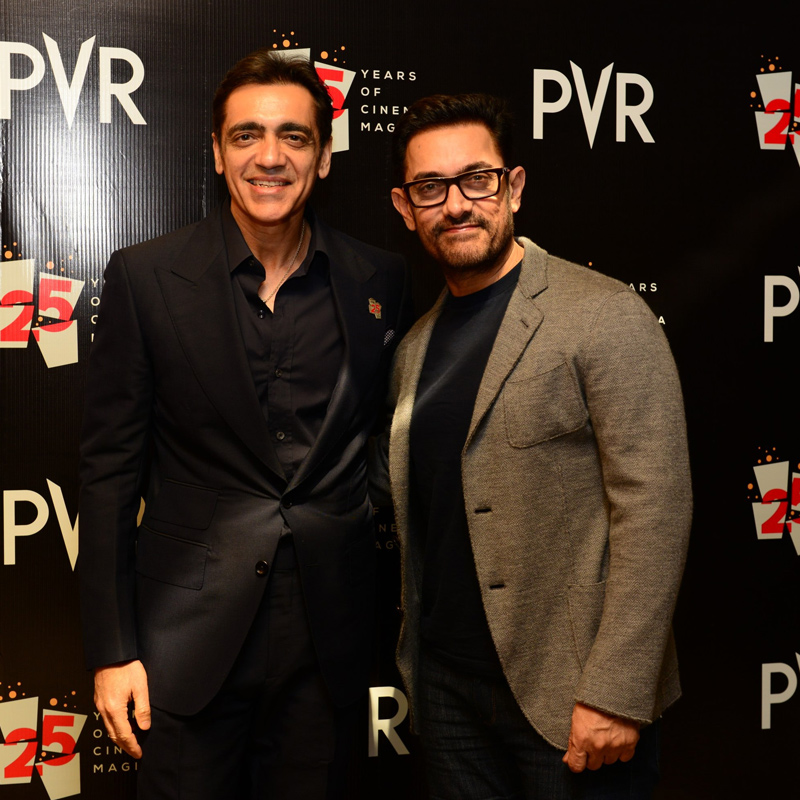
    Mumbai: Multiplex operator PVR has completed 25 years in the country. To commemorate this milestone, the brand has rolled out a multi-media campaign with a film “Iss Andhere mein bahut Roshni hai” (There is light in this darkness) featuring Bollywood actor Aamir Khan. It has unveiled PVR’s 25th anniversary logo, along with PVR’s first NFT coin and an iconic ticket. PVR is also celebrating the occasion with contests.

    The concept for the Khan film was derived from a consumer insight and the poem was written by Vineet KKN Panchhi, which was further evolved for the film. The film idea comes from the insight of all the emotions and experiences the audience goes through – the magic of movies, the bonding and escaping to a fantasy world when the lights go down. The film is a play of light and darkness, taking the viewer on a journey that is brought to life inside our cinemas, as that’s the only place where darkness plays that role. It reinforces the promise of “more magic,” “more memories,” “more adventures” and “more happiness” to moviegoers to remain relevant, both as a category as well as a brand.

    PVR chairman and managing director Ajay Bijli said, “We take immense pride and feel extremely joyous on completing the 25-year milestone in India. The entertainment industry, the viewership patterns, as well as the audience have evolved over the years, and PVR has been able to live up to their expectations. As we continue to meaningfully engage consumers as well as introduce them to newer cinematic experiences, our focus will remain on bringing winning stories to the screen and adding joy and comfort to the life of our stakeholders.’’

    PVR added that it was founded back in 1997 with one sole motive: to completely revolutionise the cinema experience for Indian audiences. Over the past 25 years, it has introduced the latest cinematic formats from across the world to the Indian audience. The brand has evolved with changing times with cutting edge technology through extra-large screens, Laser Projection Systems, and immersive sound to bring alive every little detail of the movie. Seats being pivotal to delivering the ultimate sensorial cinema experience, PVR has ensured an experience that befits a king. It has reimagined a cinema F&B offering curated by its chefs with concepts customised to cater to varied preferences and choices for its discerning customers. Through, PVR Privilege, India’s leading entertainment loyalty programme, it strives to deliver to its customers an experience which is specific to their consumption behavior.

    PVR CEO Gautam Dutta commented, ‘’It’s been an eventful and phenomenal journey for PVR over the last 25 years and we are extremely excited and humbled as we celebrate this milestone. We would like to extend our gratitude to all our associates, partners, and especially movie enthusiasts, who have continued to have faith in us over these years. The enduring customer loyalty as well as enhanced brand recall and perception associated with our brand is an outcome of our customer obsession. Innovation has been our cornerstone to building a more delightful, cinematic atmosphere and delivering an exceptional experience to our patrons.’

    “Of course, we couldn’t have achieved any of it without the hard work of our employees and the perseverance of our business partners, who are resolutely committed to building our brand and helping us redefine the entertainment experience all over the country.”

    To commemorate its 25-year journey in India, PVR Cinemas has introduced a series of contests and offers to entice audiences and movie lovers across the country:

    Short film contest: Participants need to make a two-minute film on the theme, “Iss Andhere mein bahut Roshni hai.” Content creators and independent film makers of the best entries judged by film critics will be able to showcase their creations on the big screens of PVR.

    Social media engagements ‘filmy wishes contest’: Participants can use their favourite movie dialogues or song lyrics to create reels or stories and post them, tagging our official Instagram handle. The lucky 25 will get a chance to win free movie tickets for the entire year, invites to premieres, star meet and greets, and more.

    #25yearsofPVR Instagram filter challenge: Every year of PVR’s existence, one iconic movie will appear as gibberish, and participants will have to guess which one it is. PVR will randomly gratify 25 participants who have answered correctly with exclusive merchandise.

    Guest and privilege member offers:  As a part of the 25th anniversary celebration, all guests who visit PVR in the celebration week get 25 per cent off on any of its food combos and unlimited Pepsi.

    Earn 25 per cent points: During the celebration week, PVR privilege members can earn 25 per cent points instead of the usual five per cent earnings.

    NFT collection: PVR also brings its heritage to life in the metaverse. Special edition NFT coins and tickets capture the story of its brand and its most iconic moment. To make it even more special, it is giving away movie vouchers and a chance to contribute towards its social cause.

  • PVR launches an in-cinema ad innovation

    PVR launches an in-cinema ad innovation

    Mumbai: Cinema exhibition company PVR Cinemas has announced its latest innovation in the in-cinema advertising space since its come-back after the pandemic. It has introduced 270-degree on-screen experiential in-cinema advertising for the first time in India to drive higher excitement for brands. Maruti Suzuki has become the first advertiser to use this platform to launch its all-new 2022 Maruti Suzuki Brezza in cinemas. The experiential view of the product is being showcased in select PVR locations in Delhi, Gurugram, Mumbai, and Bangalore for a week.

    This differentiated offering from PVR in collaboration with Xperia Group, an OOH media company, uses 3D Projection Mapping on the side walls, powered by hybrid technological integration. The company explains that projection mapping can actually convert ordinary commercials into highly attention-grabbing commercials and give the content a new life.

    PVR CEO Gautam Dutta said, “We are thrilled to partner with one of the finest carmakers in the country and have the chance to showcase their newly launched product in an immersive manner to visiting patrons inside the theatres. Innovation is at the core of PVR, and we are optimistic about offering our customers and advertisers something that is beyond their expectations. We are happy to expand the in-cinema advertising space. We are confident that this innovative method of advertising, which is ideal for product debuts, will help brands make a lasting impression on theatregoers’ emotions. PVR is really looking forward to collaborating with more brands and advertisers to revolutionise in-cinema advertising.”

    PVR added that after the pandemic, it has been distinctly unique to break the inertia of inaction in advertising and film promotions. Strong partnerships with movies and brands were forged in the process. After it’s reopening, PVR tied up with leading personal care brand Dettol as a hygiene partner for its customer care programme (PVR Cares). For the first time in the history of world cinema, PVR & SS Rajamouli came together with PVR reimagining its brand identity and logo as ‘PVRRR’ and launch “PVRRR NFT,” iconic digital collectibles of the movie. A shift in the aspirations of customers from value-buying to seeking experience led to the launch of the Kotak PVR Movie Debit Card, India’s first co-branded movie debit card.

    PVR has high affinity among young audiences, including a sizeable section of its loyal customers, and PVR chose this differentiated approach to create a youthful and exciting appeal for Brezza customers. Families bond over the shared experience of watching movies, and a utility vehicle purchase is mostly a family decision, hence the experiential advertising works well for the launch of the brand.

    Cinema advertising has proven to be an effective medium of advertisement, as it attracts undivided attention from the audience. However, with the impact of the lockdown, the share of in-cinema advertising has declined against traditional forms of media. Introducing what it says is the industry’s first experiential advertising in cinemas, PVR reinforces the fact that it is an uber-effective medium for active advertising and brand engagement. With experiential advertising, PVR is set to offer exposure to in-cinema advertisers and it aims to push the boundaries of on-screen cinema advertising for an immersive experience of the brand.

    On and off-screen media at the cinema offer advertisers a unique opportunity that no other medium can match, with cinemagoers spending an average of 15 minutes in and around the theatre. Cinema design and navigation, PVR explains, ensure that audiences enjoy a great experience at every touch point across their cinema journey, starting from the box office till the exit.