Tag: Punjab

  • JAINHITS reaches out to LCOs from HP, Punjab & Haryana

    JAINHITS reaches out to LCOs from HP, Punjab & Haryana

    NEW DELHI: More than 150 local cable operators (LCOs) from Himachal Pradesh, Haryana and Punjab attended a tri-state business meet organised by JAINHITS in Simla. The meeting aimed at explaining to the LCOs, the working of the satellite based solution for digitisation of cable services.


    Earlier this year, JAINHITS had also organised a similar meet in Andhra Pradesh which was attended by around 625 LCOs.


    At the meet, senior members of JAINHITS briefed cable operators about its services and offerings. The HITS player also provided cost effective solutions to LCOs for running fully DAS compliant digital cable TV services. During this interactive meet, the LCOs were interested to know more on the entire spectrum of consumer products and services that will be provided by JAINHITS such as high speed, cloud and hybrid broadband TV (HBB TV).


    While the number of channels being offered by the company stands at 250 including all major pay TV, JAINHITS will soon roll out its full HD and multi-screen services for consumers. The key proposition of the HITS platform is its cost-effective investment for cable operators which stands at a minimum of only Rs 25,000 per month. With this, they expect to do business with 400 plus partners and install over 3000 Mini Downlink Headend’s across 640 districts of India by the end of 2014.


    Cable Operators Federation of India (COFI) president Roop Sharma expressed surprise at the overwhelming response. She said JAINHITS provides instant digitisation solution to cable operators with minimal investments and thus stands to play a pivotal role in the digitisation of all analogue networks with its triple play offering of video, voice and data. “Not only do they possess the content but have managed to attain all necessary approvals required for supplying cable TV and broadband to consumers,” Sharma said. 


    JAINHITS national sales head Jeet Narayan Singh said, “We believe that conducting these joint meetings in key cities and states across the country is of great significance. It is these sub urban regions that need to be tapped and facilitated with superior TV products and services. In our business, we have always stressed upon converting these cable operators into a ‘Leader & Cable Owner’ and an independent service entity. We feel that this approach creates room for greater involvement thereby increasing their participation in the entire digitisation process. If we are able to maintain this kind of momentum, we would soon be looking at serving half million subscriber base each in Himachal Pradesh, Punjab and Haryana.”


    Gem Enterprises partner Surinder Surya said, “One of the key propositions that allows cable operators to retain business control and simultaneously magnify its growth, is the HITS players’ instant zero capital solution for digitisation. Not only this, JAINHITS stands apart from any competition as it is the only and ideal choice to experience uninterrupted services in regions with severe climatic conditions.”


    JAINHITS has partnered with some of the leading technology outfits such as Motorola (now ARRIS) and Intelsat – as its satellite partner. The key proposition of the JAINHITS platform is centered around the conversion of LCO to MSO with minimum cost while providing all end to end solutions for digital cable and broadband services.

  • ‘All parties need to come together to take home grown leagues to another level’

    ‘All parties need to come together to take home grown leagues to another level’

    Star Sports presented a unique series of Knowledge Sessions – the India Pro Leagues Forum 2013 in New Delhi. STAR India President – Sports Nitin Kukreja delivered an engaging and insightful keynote address at the inaugural session of the summit, elaborating on the growing appetite of the Indian sports fans and the enormous growth potential of sports in the country.

    Does ‘sport’ in India really begin and end with ‘Big Boys’ Cricket’? Or do we just see it that way? Across the length and breadth of India, there are strong communities and pockets of interest where people are passionately engaged with local sports and local players – football in Bengal, hockey in Punjab and Orissa, badminton in Hyderabad, basketball played in schools and table tennis played in clubs, colleges and offices across the country.

    But if a tourist landed in India and turned on the television or turned to the sports page of a newspaper, we could forgive him for thinking that India cares only about international cricket when Team India is playing.

    Why then, has this rich diversity of interest and talent not been harnessed? Why is it that in the media, on television and in the public mind-space, sport equals international cricket? How is it that the English Premier League enjoys such a phenomenal following within the UK when the English national football team has not won an international competition since 1966! Why is it that an average 18-year-old in South Delhi or Bandra is more emotionally connected to the fortunes of Manchester United or Chelsea than say the Mumbai Ranji side (40-time winner of Ranji trophy) or the Indian National Kabaddi team (winner of all 4 World Cups played so far)? You may argue that not many nations play Kabaddi other than India and Pakistan; well – you could say the same about Baseball! The US is the best example of a country that thrives on local sports and leagues – some of their sports are played in no other country – yet they call it “World Series Baseball” and Babe Ruth is an American hero and legend.

    When you watch a badminton match live, it is astounding to see the speed of the game and the agility of the players

    Americans follow their city and college teams with a passion – across baseball, American football, basketball and ice hockey; Italy, Spain, Turkey – all follow their local soccer teams with a fanaticism; tourists visiting Galatasaray are advised not to wear rival team colours while visiting! And note that all these nations consume their sport in their own respective languages.

    In the last 15 years in India, entertainment and movie channels have gone local with a vengeance; the number of regional channels has gone up from just a handful pre-2000 to over 300 today; while Hindi accounts for 55 per cent of TV viewership; regional language content accounts for 30 per cent of viewership share; and it’s not just about language; a Bengali, Marathi or Tamil show is rooted in the local culture and ethos with participation from the local creative fraternity.

    It is only the Sports genre in India that has remained aloof from localisation – until 2008 there was no IPL, and until 2012, telecast of cricket was limited to English, a language spoken by less than 10 per cent of India.

    In India then, how can we take local sports and leagues to the next level? Broadcasters have a big role to play in this but more importantly the entire ecosystem – the sports federations, the government and the news media and advertisers need to come together to ensure that our home grown leagues get the money, resources, infrastructure and coverage that they deserve.

    Look at the quality of television coverage for International Cricket over the years – the evolution has been amazing – the production quality, the camera work, the graphics, the slow-motion replays and the immensely talented people who narrate the action – all these elements really take the television viewer closer to the game; it is immersive, engaging and a pleasurable experience even for casual viewers who are not dyed-in-the-wool fans; television coverage has played a huge role in growing the fan base and support for Cricket; this is despite the fact that for all these years, all coverage was in English.

    But even in Cricket – the more local forms of the game – be it Ranji trophy, Irani Cup or university cricket have so far been treated as the poorer cousin – the benchmark for coverage that has been set for international cricket needs to be duplicated in the local forms of the game. The fact remains all the international heavy weights – from Tendulkar to Yuvraj Singh to Kohli – have cut their teeth on and emerged from these local level tournaments.

    The task is even greater for other sports – where even the national level game has not got the coverage it deserves. Consider the coverage that an average Hockey or Football match gets – you see some indifferently placed cameras and a disinterested narrative; there has been no attempt to make the viewer experience the thrills, the speed or the skill involved; when you watch a badminton match live, it is astounding to see the speed of the game and the agility of the players. The current standard of television coverage does not even begin to capture that excitement and skill.

    In a pre-digitised world with limited bandwidth, TV broadcasters were forced to follow a one-size-fits-all approach and therefore focused on only saleable national-level content at the expense of local content and language; but in a digital world the consumer has ability to access a variety of content in multiple languages and on multiple platforms; broadcasters would be doing a great disservice if they continued to use a cookie-cutter approach and did not use this opportunity to go deeper and serve the interest of all pockets of interests whether by sport, region or language.

    Great production values are not enough, the on-ground event also needs to be organised and mounted like a spectacle – this is where the sports federations have a key role to play. They must enable and nurture talent, and promote and market the game at least in the locales of affinity if not in the whole country. They must do their part to ensure that the Sports pagecarries interesting stories and coverage of the game and the players– and not only controversies! But most important, they need to partner with the other stakeholders in the ecosystem with the long term vision of growing the sport – without the spirit of partnership and the vision; the league or the sport will not grow.

    The government has a huge role to play – by allocating adequate monies, developing stadiums and infrastructure and putting in enabling policies in place. The government allocates around Rs 1000 crore to Sports (and Youth Affairs) which is the budget for the current year. That number is less than what we will be paying only for one tournament -the ICC T20 world cup – that number is less than the number that Star invests in sports each year. It means that Star is a bigger investor in sports in India than the government of India itself!

    It can be argued that Kabbadi is not popular because only few nations play the sport but the same can be said for Baseball as well

    The scale of magnitude of the government’s investment should be at least 10x of that number! Why do you ask? More than half of India’s population is below the age of 25 and 65 per cent below 35; Sports has a crucial role to play in youth development and can even be a huge generator of employment. IPL has opened up career options for 120 players; not just 15. Hockey players can now make up to 60 lakhs for one month of play in the HIL; Badminton players can make 50 lakhs for 3 weeks of work; not to mention the production, support and service staff that works on these leagues. When the hockey union went on strike in Canada a while ago, the prime minister of the country got involved because his fear was that a prolonged strike would have an adverse impact on the GDP of Canada! More than anything, it showed the power of sports and its ability to be a huge economic growth engine.

    Forget about investment, even simple hygiene factors such as easing procedures can go a long way – it cannot take 38 different permissions just to host a hockey match in a certain venue; increase venues and the number of permissions multiplies!

    It’s a vicious circle, since there is no investment, there is no growth and no popularity for local leagues and sports – therefore they attract no money! The common man (or woman) in India does not view “sport” as a viable career option or life choice; it remains a “hobby” to be pursued in free time;

    Star has thrown its weight behind building an enduring viewer proposition around local leagues and sports– and in the language of the people. Our tryst with these local sporting leagues has thrown up some interesting results: We partnered with Calcutta Football League, one of the oldest leagues in Asia and in the world with 157 Kolkata based clubs and units to air their league matches on our Bengali movie channel. In the core national male audience, the TV viewership is 4-5 times higher than your average EPL match! Even with the current quality of football and coverage, an East Bengal-Mohan Bagan match attracts crowds up to 70000 in the stadium!

    We also partnered with Hockey India League the first edition of which was held in January 2013. The excitement on grounds was to be seen to be believed. For e.g. grounds in Ranchi were completely packed to support their Ranchi Rhinos team which went on to win the league; there was a lathi-charge two days before the match when demand for tickets got out of hand and in fact when the match was on – even the neighbouring stadium that simply had a big screen projecting the match – was full! The excitement rivalled that seen in Wankhede stadium or Eden gardens during high-octane international cricket.

    University cricket is another great example – during the Jamia vs Bangalore’s Jain university match, stadium was so packed that it took 40 mins to enter; and the crowd was chanting – not “Sachin Sachin”, not “India India” but “Jamia Jamia”! The pockets of passion exist; it is on us collectively to harness and magnify them.

    There has been no attempt to make the viewer experience the thrills, the speed or the skill involved when you watch a Hockey match

    The IPL has shown the way in how to mount a successful local league; granted that it was built on an already popular sport – but all the stakeholders have done a great job in coming together to mount it like a spectacle – it is no longer a game but entertainment and a serious alternate to any other movie or television show. Clearly, a “manoranjan ka baap”.

    There is a lot more to be done and many challenges to overcome. It will take a spirit of partnership with federations and people with vision to get there – for the benefit of sports, for the benefit of the country and for a healthier and fitter society! I’ll leave you with a small snapshot of the passion of local sports; as I mentioned before, it is for us to build upon them.

     
  • Bhaji in problem receives record price from distributors in Punjab

    Bhaji in problem receives record price from distributors in Punjab

    NEW DELHI: With ten days to go for the release of the Punjabi comical relief, Bhaji in Problem from Akshay Kumar and Ashvini Yardi’s production house Grazing Goat Pictures, the company has been inundated with huge demands for the rights of the film from across cinemas in Punjab!


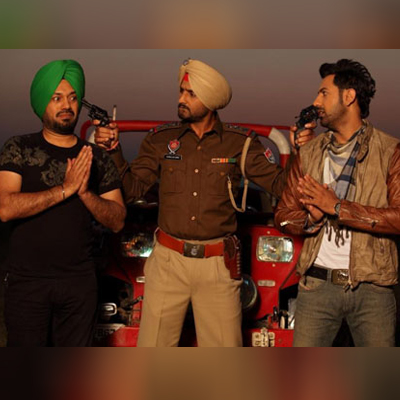
    Bhaji in Problem stars some of Punjab’s most reputed stars such as Gippy Grewal and Gurpreet Ghuggi who are joined by Sasural Ghenda Phool’s Ragini Khanna and veteran actor Om Puri as central characters.


    The film is directed by Smeep Kang who has delivered successful hits such as Carry on Jatta and Lucky Di Unlucky Story.


    The film also sees cricketer Harbajan Singh make a friendly appearance in the film. Akshay Kumar who is producing the film with Grazing Goat Pictures Co-producer Ashvini Yardi will feature in an extended role.


    Bhaji in Problem is Grazing Goat Picture’s second regional film production after the poignant Marathi film 72 Miles Ek Pravas. The film is being released on 15 November.

  • Empowered Committee recommends re-drafting of Cinematograph Act 1952

    Empowered Committee recommends re-drafting of Cinematograph Act 1952

    NEW DELHI: The empowered Committee under the chairmanship of retired Punjab and High Court Chief Justice Mukul Mudgal has submitted a fresh draft of the Cinematograph Act 1952 to incorporate its recommendations related to certification of films and piracy issues.


    In its report submitted to Information and Broadcasting Minister Manish Tewari today, the Committee has also dealt with issues such as advisory panels, guidelines for certification and issues such as portrayal of women, obscenity and communal disharmony, classification of Films and jurisdiction of the Film Certification Appellate Tribunal (FCAT).


    The Committee also gave its views on advisory panels in different parts of the country to the Central Board of Film Certification; apart from ways to deal with video piracy.


    A thorough review of the Cinematograph Act has also been undertaken in the light of developments over the last six decades.


    The Censorship Guidelines were last amended on 6 December 1991. The Board presently consists of non-official members and a chairman (all of whom are appointed by Central Government) and functions with headquarters at Mumbai. It has nine Regional offices/Advisory Panels, one each at Mumbai, Kolkata, Chennai, Bangalore, Thiruvananthapuram, Hyderabad, New Delhi, Cuttack and Guwahati. The Regional Offices are assisted in the examination of  films by Advisory Panels. The members of the panels are nominated by Central Government by drawing people from different walks of life for a period of two years.


    The committee was constituted by the Ministry on 4 February 2013 and held several meetings during its eight-month tenure with various stakeholders. These meetings were held in Chennai, Delhi, Mumbai and Kolkata. Eminent persons connected with the film sector were invited by the Committee to present their views. The Committee also held discussions with members and officials of CBFC, officials of the Animal Welfare Board of India, Chairperson of BCCC, representatives of the Film Federation of India, the Films and Television Producers Guild of India and the Multiplex Association of India.

    Other members of the Committee are former I and B Secretary Uday Kumar Varma; FCAT Chairman Lalit Bhasin; former CBFC Chairperson Sharmila Tagore; eminent film lyricist Javed Akhtar; CBFC Chairperson Leela Samson; South Indian Film Chamber of Commerce Secretary and former Film Federation of India President L Suresh; Supreme Court advocate Ms Rameeza Hakim, and I and B Joint Secretary (Films) Raghvendra Singh who was the member convener.

  • Fukrey received well up North, even as YJHD goes strong at the BO

    Fukrey received well up North, even as YJHD goes strong at the BO

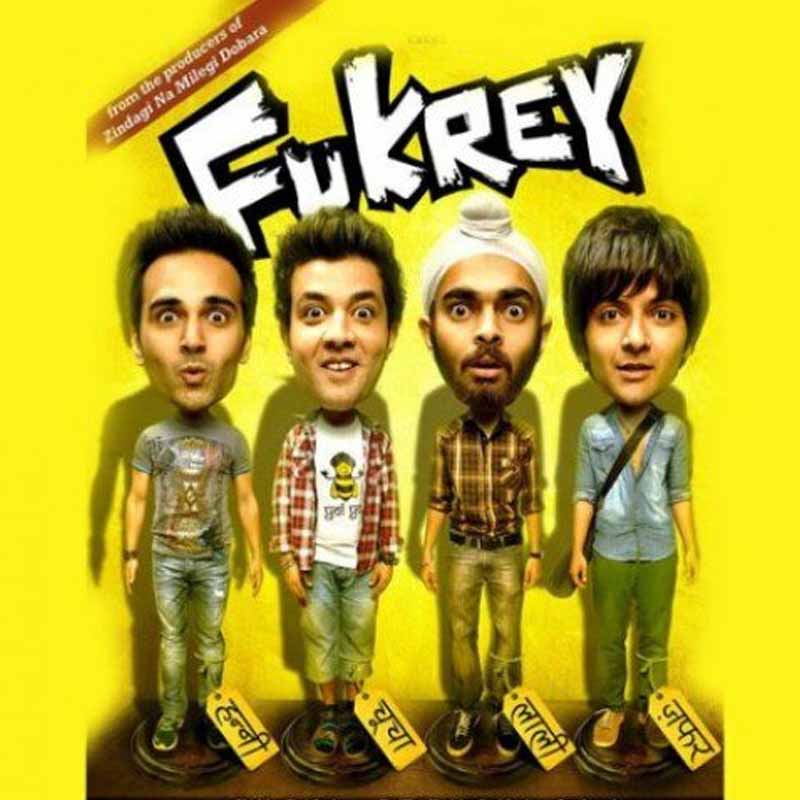
    MUMBAI: The Excel Entertainment production Fukrey had its best opening weekend in Delhi and Punjab as there is a genuine connect with the audience up North, where it collected a third (Rs 2.60 crore in Delhi; Rs 70 lakh in Punjab) of its total weekend collections of Rs 9.5 crore across India.

    Ankur Arora Murder Case which is based on true events, featuring Kay Kay Menon, Tisca Chopra, Paoli Dam and Arjun Mathur hasn‘t done much to rave the audiences and this reflects in its poor opening weekend collection of about a crore.

    Yamla Pagla Deewana 2 is only the third Sunny Sound Production after Indian (2001) and 23rd March 1931: Shaheed (2002). The Deol clan‘s second outing in the YPD franchise has been below average at the end of its first week. The film has managed to collect Rs 27.55 crore for it opening week; the indications for the second weekend do not seem encouraging.

    Ayan Mukherjee‘s second directorial venture Yeh Jawaani Hai Deewani starring the Kapoor scion and Deepika Padukone has followed up on its bumper first week with strong second week figures. The film collected Rs 49.3 crore in its second week taking its two week total to Rs 153.3 crore and adding a further Rs 13 core for the third weekend taking its 17 day tally to Rs 166.3 crore. Ranbir Kapoor has certainly established himself as a bankable star with back to back Rs 100 crore plus box office collections with last year‘s Barfi! and YJHDthis year.

    Aashiqui 2 starring Aditya Roy Kapoor and Shraddha Kapoor has gone on to add Rs 40 lakh for its seventh week to take its seven week tally to Rs 78.3 crore. This film has certainly exceeded everyone‘s expectations and the music has certainly connected well with the youth.

    The debut directorial venture of Atul Sabharwal under the YRF banner and Arjun Kapoor starrer Aurangzeb has collected Rs 20 lakh in its fourth week taking its four week tally to Rs 24.25 crore at the box office.

  • Digitisation penetration reaches 90 per cent, says Varma

    Digitisation penetration reaches 90 per cent, says Varma

    NEW DELHI: Three weeks after the switch-off of analogue signals in a majority of the 38 cities covered under Phase II, the level of digitisation has touched ninety per cent, according to information& broadcasting ministry secretary Uday Kumar Varma.

    The I&B ministry secretary told Indiantelevision.com that a total of fifteen cities have crossed 100 per cent digitisation, while one more city has crossed 98 per cent digitisation mark. Another three cities have crossed a level of 90 per cent, he added.

    He also asserted that there is no shortage of set top boxes (STBs) in the Phase II cities.

    The government, he said, was still in the process of collating all the figures from the nodal officers and would bring a detailed report after its review.

    He also clarified that while announcing the switch-off of analogue on 31 March, the government had said that it would watch the situation for around two weeks and was now reviewing the reports coming in on the achievement so far.

    The ministry had announced earlier this month that analogue signals has been completely switched-off in the five states of Maharashtra, Punjab, Rajasthan, West Bengal, Haryana, and the Union Territory of Chandigarh.

    Meanwhile stays continued to be in force in the cities of Bhopal, Indore, Jabalpur, Hyderabad, and Visakhapatnam. The Karnataka and Gujarat high courts had last week quashed petitions seeking extension of DAS thereby paving way for the analogue signals to be switched-off.

    Meanwhile, the Supreme Court is expected to hear tomorrow a special leave petition by the Indian Broadcasting Foundation seeking to quash all pending cases in various high courts and also ensure there is no postponement of the date of digitization.

  • RBNL expands reach in HSM with new carriage deals

    RBNL expands reach in HSM with new carriage deals

    MUMBAI: Reliance Broadcast Network Limited (RBNL) has expanded the reach of its multi-lingual international men‘s entertainment channel Big CBS Prime beyond the eight metros to 1 million+ towns across Hindi Speaking Markets (HSM).

    RBNL has inked deals with leading distribution platforms to extend its reach to 30 million households across the markets of Gujarat, Punjab, Maharashtra, Madhya Pradesh, Uttar Pradesh, Rajasthan and top 8 metros.

    BIG CBS Networks Business Head Anand Chakravarthy said, “With the launch of the Hindi language feed, BIG CBS PRIME now expands into 1mn+ HSMs in the country, expanding its audience base. The channel has seen very encouraging results over the last few weeks, since launch of the language feed in metros, and we expect to get an even better response in HSM‘s. We are sure that the channel will build a strong viewer base ensuring better ROI for marketers and advertisers.”

    The channel which is already available on all leading DTH platforms and national MSO‘s in metros has now inked deals with all the regional MSO‘s as well, making Big CBS Prime available to a larger cross-section of male audiences, showcasing the best international content in a dual feed.

  • 88 per cent digitisation achieved in Phase II, says Varma

    88 per cent digitisation achieved in Phase II, says Varma

    NEW DELHI: The level of digitisation has reached around 88 per cent in the 38 cities covered in fourteen states and one union territory for Phase II of Digital Addressable System (DAS), a top Information & Broadcasting ministry official tells Indiantelevision.com.

    This includes seeding of set top boxes (STBs) done by direct-to-home (DTH) operators.

    I&B ministry secretary Uday Kumar Varma reveals that fifteen to sixteen cities have achieved total digitisation.

    However, he cautions that the government was still in the process of collating all the figures and would bring a detailed report after its review. The Secretary said he is personally in constant touch with the Nodal Officers and MSOs to ensure that the cities in remaining states also speed up the process of digitisation.

    He clarified that while announcing the switch-off of analogue on 31 March, the Government said it would watch the situation for around two weeks and was now reviewing the reports coming being receiving on the achievement so far.

    The Ministry had announced last week that analogue signals had been completely switched-off in the five states of Maharashtra, Punjab, Rajasthan, West Bengal, Haryana, and the Union Territory of Chandigarh.

    Stay continues to be in force in the cities of Bhopal, Indore, Jabalpur, Hyderabad, and Visakhapatnam. The metropolis of Chennai which was part of Phase I also has a stay order in force.

    The Karnataka and Gujarat High Courts had yesterday quashed petitions seeking extension of DAS thereby paving way for the analogue signals to be switched-off.

  • DAS Phase II: Analogue signals switched-off in 5 states

    DAS Phase II: Analogue signals switched-off in 5 states

    NEW DELHI: Analogue signals have been completely switched-off in five states of Maharashtra, Punjab, Rajasthan, West Bengal, Haryana and the Union Territory of Chandigarh, according to information provided by nodal officers to the Information & Broadcasting (I&B) ministry.

    The ministry said it is in constant touch with the Nodal Officers and MSOs to ensure that the cities in remaining states also speed up the process of digitisation.

    However, analogue signal continues un-interrupted in the eight cities of Karnataka, Andhra Pradesh, and Gujarat that are covered under DAS Phase II as the respective High Courts have passed orders against switching off analogue signals.

    In addition, stay continues in Chennai which was part of the DAS Phase I covering four metros which also included Mumbai, Delhi and Kolkata.

    Sharing the latest figures about DAS implementation in 38 cities covered under Phase II, the ministry claims that over 85 per cent digitisation have been achieved so far.

    Out of the 38 cities, fifteen cities have achieved nearly 100 per cent digitisation, 24 cities in all have achieved more than 75 per cent digitisation, and 34 cities have achieved more than 50 per cent digitisation.

    The review by I&B ministry also reveals that as against a target of 16 million STBs, 13.6 million have already been installed by the MSOs and DTH operators.

    Of these, the total number of installed Cable TV STBs is 9.15 million while DTH operators have installed a total of 4.45 million STBs. In the last one month alone about four million STBs have been installed in the Phase II cities.

    The I&B ministry has meanwhile cautioned multi-system operators (MSOs) to implement digitisation in a ‘sensitive manner‘ so as to avoid causing inconvenience to consumers.

    The ministry stated that the objective of the entire exercise is to implement the process in a seamless, sustained yet sensitive manner that causes least amount of disruption to the consumer.

    Wherever necessary the process has been implemented in a circumspect way so as to ensure that consumers can get access to STBs, I&B ministry said.

    Separately, Telecom Regulatory Authority of India (Trai) has also been convening the meeting of broadcasters, MSOs and cable operators to sort out issues pertaining to agreements and service conditions.

    The ministry said that digitisation would usher in a new era in broadcasting sector reforms by bringing more transparency in the subscriber base and would lead to several benefits for stakeholders including government.

    It would bring in enhanced revenue by way of improved tax recovery for government, enhanced TV viewing experience due to digital picture quality and multiple choices of channels to subscribers and improved subscription revenue for broadcasters and cable industry.

    The ministry has also assured cable operators that digital addressable system (DAS) will provide them an opportunity to provide competitive services to their subscribers and help them retain their business in the wake of competition from DTH and other platforms.

  • Valmiki community want Tigmanshu Dhulia to change film title

    Valmiki community want Tigmanshu Dhulia to change film title

    MUMBAI: Looks like Paan Singh Tomar director Tigmanshu Dhulia is destined to land into controversies.

    Recently, Dhulia had a brush with the CBFC when the censoring authority passed Dhulia’s inherently violent story like Paan Singh Tomar with a ‘UA‘ certification that allows it to be a suitable watch under parental guidance.

    The director had to fight tooth and nail to prove that cleaning out the character‘s language would be tantamount to emasculating him. He waged a long battle and finally erased the expletives from the film.

    Now Dhulia‘s next titled Valmiki Ki Bandook has kicked off a new storm. The Jimmy Shergill starrer has offended the sentiments of the Valmiki community in Punjab. It is said that after reading an article on the film in a local paper, the community reacted very strongly and made calls to Jimmy Shergill and Tigmanshu Dhulia (the creative director) to change the title.

    A senior officer from Punjab police called up Shergill and cautioned him to change the title since the situation was very sensitive. He said that if they refrained from doing so, it could lead to riots in Punjab.

    Said Shergill, “The film has got nothing to do with Sant Valmiki or the community. Valmiki happens to be my surname in the film. The title could also be Shergill Ki Bandook. It‘s a coming-of-age story. My director has assured them that we have no intention to hurt anyone‘s sentiments.”