|
Punit Goenka is in control of the media empire that patriarch Subhash Chandra built assiduously over almost two decades. He is quick to take decisions, is unruffled by temporary ups and downs, and believes in continuity.
The elder son of Chandra digs deep into the Zee culture, has his own ways of finding solutions and does not hesitate to bet on sports as he takes up the responsibility of shaping Zee‘s broadcasting business.
“I have learnt a lot from my dad. He is no more hands-on. See, he has not called me for over an hour (during the interview). I have my own style,” says Goenka, a grin on his face.
Soft-spoken and shy, Goenka is a people‘s man. He backs his senior team, even when certain decisions do not work in the short run.
In an environment of raunchy reality TV shows, he believes in clean content and explains that Zee TV, the flagship channel, is designed for family viewing.
Goenka crafts strategies that focus on profitability; he hardly plays to the gallery.
Under his leadership, Zee ended its 12-year-old rivalry with Star to float a joint venture distribution company named Media Pro Enterprise India. The aim of the JV: to pave the path for consolidation and hasten the need for digitisation in the sector.
In an interview with Indiantelevision.com‘s Sibabrata Das, Zee Entertainment Enterprises Ltd managing director and CEO Goenka talks about the lack of opportunity in the marketplace to make the right purchase, the need to bet on sports broadcasting and to stick to profitability in a high-cost environment.
Excerpts: |
|
|
Zeel is sitting on a cash pile of Rs 14 billion (as of 30 June 2011). Are you looking at acquisition opportunities?
As a company philosophy, we have decided to keep aside a cash of Rs 10 billion at any stage for organic or inorganic growth opportunities. |
|
|
But isn‘t this the right time for consolidation in the industry?
However, for the benefit of the industry, consolidation is the answer. The sector is sized at Rs 300 billion and there are 500 television channels in the country earning an average ARPU (average revenue per user) of $3. That is why we have become an unprofitable industry. |
|
|
In a drive to consolidate and digitise the industry, Star India and Zee Group recently ended their 12-year divorce to create a distribution company. Has the joint venture been able to shake up the pay-TV market? |
|
|
How deep in terms of percentage growth?
A large part of the deal plays out in analogue cable. In case of DTH, both of us are in any case growing independently. |
|
|
|
|
How painful has been the integration process? |
|
|
Media analysts say Zeel’s share price will get a boost if the sports broadcasting business is hived off and capital raised by offloading equity. Has any investment bank got the mandate to hunt for an investor for the sports business? |
|
|
When do you expect the sports business to turn around? |
|
|
Zeel‘s sports losses for FY‘11 stood at Rs 2.08 billion on a revenue of Rs 4.4 billion (excluding a one-time revenue gain of Rs 700 million as one-time fee for the pre-mature termination of rights for AIFF). So what will drive this to profitability?
Ad revenue is heavily dependent on cricket. And within that segment, it is India cricket. While advertising revenue is cyclical, subscription income is consistent throughout the year. |
|
|
Zeel has bagged the eight-year Cricket South Africa (CSA) television rights for $180 million. Considering that the earlier five-year rights went for $75 million, isn’t the new price tag on the higher side? |
|
|
We get to learn from sources that the Zimbabwe board rights have been retained for $20 million (earlier it had gone for $6 million for four years). But Zeel will be able to give its sports business maximum firepower when it is able to retain the telecast rights for the other three boards – Sri Lanka, Pakistan and West Indies. So will you bid aggressively? |
|
| When is the golf channel getting launched ? We are awaiting government approval. We are ready to launch the golf channel within 60 days of obtaining the regulatory clearances. |
|
|
Will Comcast be a partner for the channel? |
|
|
When are you launching a full-fledged HD channel in sports? |
|
| Are there other HD launches planned? Zee TV, Zee Cinema and Zee Studio will be launched in HD format soon. |
|
|
Zeel has posted a measly 0.5 per cent ad growth in the fiscal first-quarter. Do you see the market improving?
Subscription revenues will continue to have a similar growth trajectory, both on analogue cable and DTH. Our international revenues should stay flat. |
|
|
International subscription income actually de-grew two per cent in FY’11. Do you have any plans to fix the international business?
In the other markets like the US, We are seeing growth. |
|
|
Is your localisation strategy working?
The other experiment we have carried out is in Russia. The audiences there love Bollywood, soaps and dramas. However, it is early days yet.
We are also planning to launch in 3-4 other markets. |
|
|
Zee TV has slipped to fourth position as Sony Entertainment Television rejuvenated on the back of its big-ticket game show Kaun Banega Crorepati (KBC). Will you change the programming strategy and bring in celebrity-backed reality shows?
A large part of a particular channel‘s growth still comes from one show. A reality show may bring in spikes but we will wait to see what happens after that concludes. We will not take to celebrity-based reality shows unless we feel that we have a concept that needs to engage them. We are happy with our homegrown formats.
Our prime competitor is Star. And as a network, we are in close competition. |
|
|
|
| Will you increase the programming hours of Zee TV as you fight back to regain market share? We will be increasing our original hours of content from 28 to 33 hours per week. There has been some delay in that because we have had a few bad launches and we want to first fix those slots. We have also had a slowdown in the advertising market. |
|
|
Zee has kept away from purchasing big movie titles. Will that affect Zee Cinema when Viacom18 launches its movie channel?
Big titles give rating spikes but they are first run on GECs rather than on movie channels. The Hindi movie channel genre has become cluttered and unprofitable due to high acquisition costs. But we have stayed profitable. |
|
| Star Gold has reduced ad inventory on the channel by 33 per cent and is showing six fresh movies a day. Will you follow suit? Such a move has to be compensated with an increase in ad rates. In the current market scenario, this may not be easy. But we are working on reducing the ad time on the channel. And don’t forget that Zee Cinema was the first channel to show five fresh movies a day. |
|
| Sun TV is under attack from the Jayalalithaa government. With the launch of the state-owned Arasu cable, will you make aggressive investments in the Tamil Nadu market? With Zee Tamizh, we have a foot in that market. Arasu has got presence in some pockets of the state. It is still early days and we have to wait and see how the market gets impacted. But if we get more distribution, we will get more aggressive. |
|
|
Isn’t Zee under attack from Star in the Bengali and Marathi regional language markets?
Regional news, on the other hand, is easily doable. |
|
|
Isn’t the news genre too cluttered?
There should be more stringent norms in this genre as entertainment is also passing as news. We have positioned ourselves as a serious news channel and are seeing decent growth. Unlike other players, we also have a strong pay revenue from our news business.
It is the regional markets that are getting cluttered. The Andhra market, for instance, has seen too many launches. Some national news broadcasters are also having issue over cost structures. |
|
| Will you launch an English general news and business news channel or you feel the balance sheet of Zee News Ltd has to further strengthen before you go in for these high-cost launches? The balance sheet can support these launches. But strategically, we will focus on Hindi and regional news channels. Yes, we have two critical genres left. But we will first fill up the regional space. |
|
| Are you looking at expanding through the franchise route? We will take the franchise route only if editorial content is with us. After all, that is what impacts our brand. |
|
| When you started, you were part of the Agrani satellite project. Do you still nurture the ambition of owning a satellite? Agrani was a good project but the policies were not supportive. Banks also had no clue how satellite funding works. Owning a satellite doesn’t make sense now; it is more feasible to lease transponder space on a satellite. |
Tag: Punit Goenka
-
‘We will keep aside Rs 10 bn for organic or inorganic growth opportunities’ : Zeel MD and CEO Punit Goenka
-

Zee sports new look in changing media landscape
MUMBAI: India’s biggest television media company, Zee Entertainment Enterprises Ltd (Zeel), is turning “cool”, in a major rebranding exercise that aims to reflect the progressive outlook of its channels.
The need for change has come after a gap of six years, a period in which the television landscape has changed dramatically and the reach has exploded.
Zeel has coined the tagline ‘Umeed Se Saje Zindagi‘’ for all its channels (barring the sports channels) and sported a new corporate brand identity.
Behind the new look is the company’s objective to take forward a progressive outlook.
Unveiling the new brand identity for flagship Hindi general entertainment channel Zee TV, Zeel MD and CEO Punit Goenka said he believes that the time is right to “infuse renewed freshness into the brand and reflect an identity that truly articulates our spirit.”
The essence is captured in the new tagline. “The new positioning is about a celebration and vindication of a woman’s emerging beliefs and a reflection of her changing hopes, dreams and optimism,” said Goenka.
The new logo is designed by the in-hose team at Zeel, based on the creative inputs from its agency Draft FCB-Ulka.
The aqua blue colour new logo features a stylish font. Zeel said that the new age design with its upward flourish signifies the upward movement of desires and wishes.
The abstract form of the ‘Z’ and vibrancy of aqua blue bring in modernity and freshness to the brand.
“The unshackling of the ‘Z’ from the box symbolises today’s woman’s zest for life and confidence to go out in the world beyond her home. The overall design has a progressive feel and reflects the idea of looking into the future with hope and depicts a more dynamic and spirited outlook. The rainbow of hope is a very important element of the new packaging. It is colourful, ethereal and symbolically emphasizes the promise of ‘Umeed Se Saje Zindagi’… celebrating hope and life,” said Goenka.
Draft FCB-Ulka has also developed the new corporate brand TVC. Produced by Equinox, the TVC captures “the sky” in “our canvas”. This was brought through by the protagonist in the TVC—the girl-child—and her desire to succeed. It’s a metaphor for the woman, echoing the emerging paradigms with fresh beliefs and a zest for life.
The film is directed by ad film-maker Ram Madhvani while the music is composed by Rajat Dholakia.
The new logo, packaging and positioning was unveiled in the event ‘Umeed ka Naya Chehra’ on 19 June at 9 pm.
Zeel is also kicking off a 360 degree advertising campaign to promote the new brand identity.
-
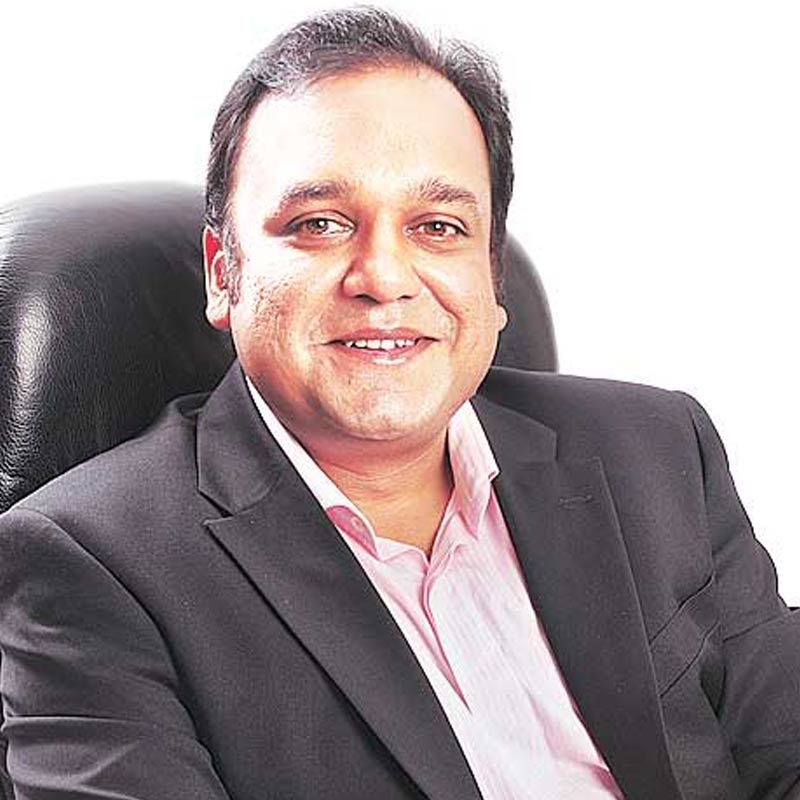
Punit Goenka named Zee News MD
MUMBAI: Zee News Ltd (ZNL) has appointed Punit Goenka as managing director of the company.
Goenka has replaced Laxmi N Goel, whose resignation was accepted by the ZNL board. Goel will, however, continue as a non-executive director on the board.
The change is effective 5 July. Goel will continue to drive Essel Group’s real estate business.
Goenka, the eldest son of Subhash Chandra, is also MD and CEO of Zee Entertainment Enterprises Ltd (Zeel). He was designated as MD of Zeel starting 1 January.
ZNL owns and operates the news channels of Zee network.
-
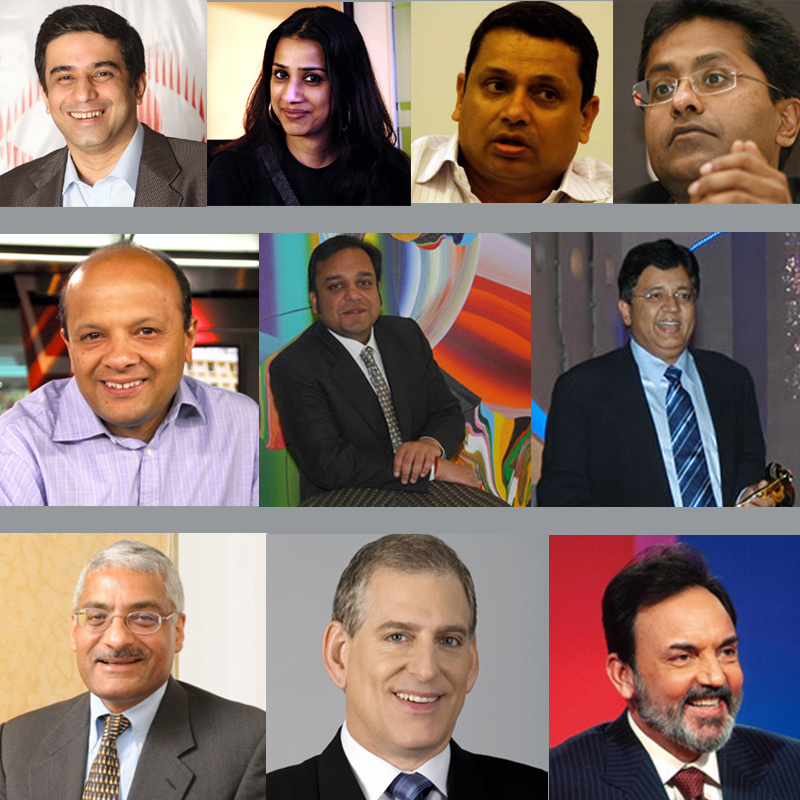
2009: Top 10 Executives
2009. A year when most of the television industry gasped as the Indian economy slowed down and advertising and distribution revenues dried up even as costs went up. Executives burnt the midnight oil grappling with the downturn. Most of them deserve a salute for coping with the tough times. But there were some who came out triumphant and did wonders for the companies they lead. Indiantelevision.com takes a look at those who made the cut in our 2009‘s Top 10 Executives listing.
Our list is by no means comprehensive, but these gents and ladies clearly stood above the rest. The executives have not been listed in order of importance or achievement, and sure there are many more who made a difference. We raise a toast to them.
In the meanwhile take a dekko at our Top 10 Executives of 2009.
Rajesh Kamat & Ashvini Yardi

Rajesh Kamat did what was considered nigh impossible in 2009. Under his leadership, Colors, one of the late entrants in the general entertainment television sweepstakes, toppled both the leader Star Plus and the second placed Zee TV from their perches. He did not stop at that. With the help of clever engaging and disruptive programming from his programming head Ashvini Yardi, he maintained that top slot for the rest of the year.
And Kamat achieved that in just a matter of 13 months – a feat which could well enter the Guinness Book of World Records.
For long, rivals Sony and Zee had taken a shot at the top spot, but Star Plus appeared to be unshakeable. Kamat and his band of merry programmers however made it look fairly easy with a mix of differentiated, disruptive programming and distribution (Kamat‘s 3 Ds) on the back of savvy marketing. As the year was ending, he had actually got his company close to profitability with revenues of close to Rs 6.5 billion.
Kamat‘s success has to be juxtaposed against what happened to other players who dared to challenge the leader: new entrants 9X (launched by former Star CEO Peter Mukerjea) and Real took a beating and almost wound up. The other player NDTV Imagine ended up at the No 5 spot, and finally found a new owner in Turner.
During his days at Star Kamat had seen the channel rise from obscurity to leader. And he had gained amazing consumer insights during his earlier stint at Coke. He brought all of that bear in his uphill battle against the leaders. He gambled with a young enthusiastic team and the gamble paid off.
Today, he is the most sought after TV executive in the country. And he was rewarded with additionally responsibility just as the year ended: he was given additional charge of strategy, legal distribution and finance of the Viacom 18 group bringing the channels MTV and Nickelodeon under his charge.
2009 also saw him take an extremely calculated risk. Nine months from launch, he took the channel pay putting it as part of the One Alliance bouquet, distributed by MSM Discovery. The timing would not have been better as IPL gave the channel a good mileage. Later he got Amitabh Bachchan to don the hat of Pop Philosopher for Bigg Boss and now Big B is taking the channel to US and UK as brand ambassador. Additionally, he got his son Abishekh to host Bingo, a popular international format. At the time of writing, Bingo has done it once again for Kamat: the show has generated higher ratings than other game shows.
 A large part of that credit goes to Yardi who has been the creative driving force behind Colors. A woman with a vision to create a channel so unique and distinguished from anything ever viewed by India, she has always given priority to innovation and creativity. Her focus on fresher concepts and disruptive programming is what elevated Colors to its leadership position so quickly.
From the word go, Yardi stressed that the shows on her channels have to have “meaningful entertainment”. The characters are not in black or white but have different shades. Yardi strongly believes that Colors offers ‘something for everyone‘ and ‘everything for some‘.
Known for incorporating audience insights in her search for the perfect television shows, be it fiction, reality, game show or any other format, Ashvini has been responsible for making entertainment bigger than ever and effectively changed the way Indians viewed television.
2009 saw shows with hard hitting messages such as Na Aana Is Des Laado and Uttaran climbing to the top positions on the charts while the Colors flagship show, Balika Vadhu, continued to reign over peoples‘ hearts and minds. And as far as reality shows go, 2009 was the year for the biggest ever changes in the reality television scene. With Fear Factor getting a lot more exciting and the Big B Amitabh Bachchan himself hosting the third season of Bigg Boss, reality in India touched new heights in 2009.
Genius clearly does not go unnoticed, and in Ashvini‘s case, her talent has been recognized from time to time by peers and various industry institutions. She has been the recipient of many an honour, amongst them being the Media Personality of the Year title at India Today Woman‘s Summit, apart from being hailed as one of the top 50 powerful people of 2009 in India by Business Week.
Perhaps defining Ashvini in one word may not be easy, but trendsetter comes rather close. And now, she is at it again, conquering newer peaks, bringing in fresher ideas and ready to set some new trends in 2010.
Uday Shankar
 While most media observers and trade writers in India tend to think that Star India CEO Uday Shankar missed the mark in 2009 because of the toppling of Star Plus from its leadership perch, the word overseas and in corporate circles is that he did an excellent job and continues to do so; that the Murdochs are pleased as punch with him.
During the year, the former journalist continued the network‘s spread into regional language markets and even managed to get leadership status in one of them. He kept a sharp eye on profitability in difficult economic times, returning pleasing figures for the network.
Viewed from a different perspective he staved off an aggressive attempt from No 3 Zee TV to usurp his GEC flagship channel Star Plus from its No 2 spot, even though he conceded the leadership position to rival Colors. He gambled with risqué programming during the year, something which got him a rap on the knuckles from the government, but also got reams of media coverage and some praise for pushing the envelope with shows like Aap Ki Kacheri.
And as the year ended, he was gearing up to do battle and regain Star Plus‘ numero uno status: he had restructured the Hindi GEC, bringing in whiz kid Gaurav Banerjee to look after the channel. Star Plus GM Keertan Adhyanthya was moved out to head Star Movies and Star World. He had also put wunderkinder Sameer Rao in charge of Star Utsav and Star Gold.
With Rupert Murdoch‘s News Corp restructuring its broadcast business in Asia, Uday Shankar got his pat on the back when he was delegated with many more tasks during 2009. He was handed over the responsibilities of managing the sales and distribution offices of Star in West Asia, Britain and the US, besides growing the Indian market and being under the direct mentoring of James Murdoch, the group‘s head of Asian and European operations.
Uday also gets to look at the movie business with Fox Star Studios India CEO Vijay Singh. The grandiose plans are to distribute 18 movies a year and be involved in production. Avatar has become the biggest Hollywood hit in India, grossing over Rs 1 billion.The biggest catch in the distribution net is Shah Rukh Khan‘s My Name is Khan, set for release in February.
His big win for 2009 was the runaway success of Star Jalsha in just its first year of existence as a Bengali general entertainment channel. It created waves in east India with its programming which gelled with audiences. Then he drove his team to come up with new programming at Vijay TV and Star Pravah – initiatives which are bound to start bearing fruit over the next few months.
If there was one area which looked a little worrisome for Uday Shankar during 2009 it was the loss of the leadership position of Star Plus, its flagship channel in the Hindi entertainment space. Star Plus conceded it near nine-year monopoly to newbie Colors mid way through 2009. But that did not deter him as he continued to focus on re-jigging the programming and on the bottomline. The network also courted controversy thanks to its dare bare all on TV show Sach Ka Samna adapted from The Moment of Truth.
Meanwhile, keeping pace with rival MTV, Shankar also saw Channel [V] re-furbish its content with a host of new shows under his leadership as the channel shifted gears to 60 per cent music and 40 per cent reality show content.
He has his work cut out for him in 2010, but knowing Shankar he well might deliver. Yet once again.
Sameer Manchanda

He could well be labeled the cable cowboy of India. He has aspirations – like his esteemed US counterpart John Malone who agglomerated cable systems all over the US into one national network – to transform the fragmented Indian cable industry and create a giant Indian cable TV network.
And to that end he took his company DEN Networks public this year raising Rs 3.64 billion through an initial public offering. The market cap of DEN today is Rs 24.72 billion.
It looked tough seeing it through, but he finally cobbled together investors who helped in the oversubscription of the issue.
The man being referred to is Sameer Manchanda, chairman and promoter of DEN Networks Ltd and the joint managing director of IBN18 Broadcast Limited.
Manchanda is a feisty fighter. He spent many years with NDTV when he broke away to set up IBN18 Broadcast, along with Rajdeep Sardesai and Raghav Bahl in 2005. Channels such as CNN-IBN, IBN7, and IBN Lokmat, followed. All three channels have become a news force to reckon with and Manchanda was appointed as the president of the News Broadcasters‘ Association.
A fellow of the Institute of Chartered Accountants of India, he has always been credited with stitching lucrative deals for the company. He founded DEN in 2007 and he was quick to seize the opportunity in cable TV. He prepared the base for expansion by getting distrib veterans Anuj Gandhi and SN Sharma on board and then went about building the network in the North.
He first expended DEN in Delhi and Uttar Pradesh, the two lucrative carriage revenue markets for cable networks from broadcasters. DEN also gobbled up Amogh Broadband Services, a leading MSO promoted by former Karnataka chief minister D Kumaraswamy‘s family. It is also a major force in Haryana and Rajasthan.
In 2009 DEN paced up in Gujarat and made a breakthrough in Mumbai by entering into a joint venture with Ravi Singh‘s cable network in Ghatkopar, a suburb in central Mumbai.
Manchanda can be credited with the success of DEN‘s IPO in 2009, but the challenges are lying ahead. The biggest of them all: to spread digitisation across the network, launch broadband services, and make market corrections.
Punit Goenka
 “I would not like to be in his shoes as expectations of him are very high because he is my son, but he has shaped up well,” these are the words Subhash Chandra spoke about Punit Goenka recently. The son has now come of age and all indications are that he is likely to take over the reins of the entertainment conglomerate his father, the chairman of Zee TV, built.
According to insiders, Punit‘s management initiatives and style have impressed Chandra greatly and he is looking at hanging up his corporate boots in a couple of years and focus on his social responsibilities.
Punit was hoicked into the MD‘s role at Zee Entertainment Enterprises Ltd (Zeel), giving him total operational responsibility for the Zee Network which includes a Top 3 Hindi GEC, Zee TV, and a clutch of popular channels including Zee Cinema. And he did leave his stamp. First, he yanked the six regional general entertainment channels (R-GECs) from ZNL into the Zeel fold. Then he merged the ETC Networks channels (ETC Music and ETC Punjabi) into the company he heads. He hived off the education business, and started playing an active role in the news business by becoming a non-executive director of Zee News Ltd.
The year also saw him buying out Ten Sports from Taj Television after some hard nosed negotiation, even as his father‘s loss making T-20 format – the Indian Cricket League – ran out of steam following a backlash from the Indian cricket board and IPL Commissioner Lalit Modi.
His major successful play was on the Hindi GEC front. Zee TV was under attack from a hungry for leadership Colors and an extremely defensive leader Star Plus. Goenka took a decision not to splurge to buy GRPs. While the other two forked out top dollar on big movies and big ticket celebrity driven reality and formatted shows, he along with his team of Nitin Vaidya (COO -national channels and Zee TV business head) and programming head (Ajay Balwankar, now in Sony Entertainment television), focused on traditional soaps and low cost formats. Pavitra Rishta, Agle Janam Mohe Bitiya Hi Kijo, Chhotti Bahu, Dance India Dance (an adaptation of Bangla dance reality show Dance bangle Dance) were his ripostes which helped the channel generate GRPs. So much so that it took up the No 1 spot in week 34 with 281 GRPs. Zee TV began the year with 190 GRPs.
Though No 2 or No 3 today in terms of GRPs, the channel today is No 1 in terms of monetizable GRPs, a statement with which even the top bosses at Star Plus and Colors will concur.
His staff acknowledges the fact that Punit is very easily accessible and always encourages new ideas. With that kind of zeal, it is no wonder that his father thinks Zeel is in good hands.
Kalanithi Maran
 Kalanithi Maran proved yet again how he could cruise along in a year of global economic storm while the other media barons were scaling back their expansion plans. Far from groaning under financial woes, he searched for new growth.
And the architect of the Sun TV empire found them in the areas of DTH, TV broadcasting and FM radio.
Sun Direct is the fastest growing DTH company with a subscriber base of 5 million. Built on mass pricing, the business model is to grab market share while waiting for opportunities to lift ARPUs (average revenue per user) that stayed below Rs 100 in 2009.
Critics say Sun Direct is leaning heavily on subscribers from the four southern states and predatory pricing can‘t be sustainable. But certain facts stay formidable in Maran‘s favour. His DTH company has the lowest losses on a per subscriber ratio, possibly because of hard bargaining to stay away from minimum guarantee deals with broadcasters.
Also, Sun Direct has 80 per cent of its customers from the south, a rock-solid base that would provide him economies of scale as he starts scratching into the other markets where he doesn‘t have a distinct advantage.
In the TV broadcasting arena, as the industry reeled under an advertising slump, Maran posted a robust revenue growth of 35 per cent. He fortified his position and launched two kids and a comedy channel during the course of the year, blocking out possible gaps in the marketplace.
A master strategist, Maran believes that viewer tastes change every 3-4 years. He introduced a big-ticket weekend non-fiction programming based on the international format show Deal or No Deal that not only gave him viewership but also revenue spikes. The show ran across Maran‘s flagship general entertainment channels: Sun TV (Tamil), Gemini (Telugu), Surya (Malayalam) and Udaya (Kannada).
Sun has emerged as one of the leading FM radio broadcasters, setting up a pan India presence. In 2009, Sun brought its FM radio stations outside Tamil Nadu and Pondicherry under the Red FM umbrella, offering advertisers a wider listener base and an opportunity to capitalise on a unifying programme format across key cities.
Since the summer of 2009, Maran also corrected a single deficiency in his rapidly-growing media empire: He widened the talent pool, making a series of senior appointments including Ajay Vidyasagar as CEO and Ravi Menon as programming head.
So what does the roadmap look like for Sun in 2010? Maran is tapping subscription revenues more aggressively, has floated a UK subsidiary to accelerate international revenues, hiked advertising rates after a gap of two years, and is readying the release of the mega-budget movie Enthiran. Looks like another blockbuster year for the man who rules the southern media landscape.
Man Jit Singh

His is a radical turnaround story. When he took charge of Multi Screen Media Ltd (the company that runs Sony Entertainment Television), Man Jit Singh had several tasks to handle. CEO Kunal Dasgupta had left suddenly in the first quarter of 2009, his flagship channel Sony was doddering around in the doldrums with sinking ratings, morale was low and the organisation had few clues as to how they could deal with the rapidly changing dynamics of the GEC business. Newcomer NDTV Imagine had beaten it to the No 4 slot, a far cry from its heydays when Sony was scrapping for the No. 1 slot in the early part of this decade.
As interim CEO, Singh took the bit in his teeth, lopped off 50 staff, letting go off channel head Albert Almeida. He initially focused on seeing through a successful IPL as the network had invested for its channel Max while acquiring the rights for the cricket extravaganza. In the reworked deal, BCCI sold the nine-year rights for Rs 82 billion, parceling out the India
That out of the way, he began the hunt for someone who would take up the corner office as CEO, apart from launching a new prime time programming band along with COO NP Singh and programming head Gurdeep Bhangoo The search for a CEO proved futile as did the new lot of programmes. He aborted both – hoisting himself into the CEO‘s seat and started scouting for a channel head. He found one in Ajit Thakur
The programming was rejigged and a low cost idea plumped for: telecast reruns of its long running award-winning and successful thriller and horror fictional shows, CID and Aahat. In the meantime, a new programming head was appointed: Ajay Bhalwankar was brought in from Zee TV.
In no time at all, the ratings shot up and Sony had got back into the reckoning, toppling NDTV Imagine from the No 4 slot. From 70 gross rating points Sony was clocking 170-190 GRPs, ahead of Imagine and close enough to possibly play catch up with Zee TV and Star Plus which were generating between 240-270 GRPs. The channel garnered almost two and half times more ratings within six months of the revamp.
Along with his team, Singh sewed an exclusive content agreement with leading film production house YRF for a programming block which would help differentiate it from the regular fare. While the initiative generated a lot of hype, it did not generate the mass TRPs that were expected.
For Singh, 2010 will be a crucial year with IPL 3 on it way in the next two months. Also, a rejuvenated and cash loaded NDTV Imagine (following the Turner deal) is definitely going to make a serious and concerted effort to reclaim its fourth place in the Hind general entertainment space.
Steve Marcopoto
 2009 was Turner‘s fifteenth anniversary of operating in India. And 2009 was the year when the network clearly signaled that it was no longer satisfied in having a minor league play in India. In the first part of the year, it announced that it was launching WB Channel expanding its presence in the English entertainment channel space. In the second half of the year, Turner announced that it was pitching its tent in the rough Hindi general entertainment channel space. And leading Turner‘s charge into the big stake game was Turner Broadcasting System APAC head Steve Marcopoto.
Marcopoto winged his way into the country on several occasions before he signed on the dotted line of a deal which resulted in Turner acquiring a 92 per cent stake in NDTV Imagine for $117 million. It took months of negotiation between the NDTV management and him and his team before a deal was hammered into shape. And it surely was a moment of triumph for him, making him one of the key media executives in India.
For years, Turner has operated in India through channels such as CNN, Cartoon Network, Pogo and through a distribution joint venture with Zee TV, labeled Zee Turner.
It has maintained its leadership position in the kids‘ segment with Cartoon Network and Pogo, currently ranked No. 1 and 2 respectively on an all-India basis. Growth has been steady and India revenues account for 25 per cent of its regional operations, making it Turner‘s largest and fastest growing market.
During the year, Marcopoto persisted with the Turner mission to further develop the Indian animation industry. Along with Pogo and Cartoon Network India head Monica Tata and creative director Vishnu Athreya, he made various acquisitions, co-creations and initiatives such as Snaptoons (Short New Asia Pacific Cartoons), bringing the pre-school series Sesame Street to India in a local avatar – Galli Galli Sim Sim and nurturing one of the most successful homegrown, animated heroes – Chhota Bheem, amongst others.
2010 will come with its set of challenges: he has to ensure a smooth transition of Imagine into the Turner fold, and work closely with CEO Sameer Nair to draw up strategies to make the investment pay off in the medium-to-long term. Marcopoto will also have to create compelling content and build the Turner brands across every possible platform, including TV, online, merchandising and mobile.
Lalit Modi
 To say that Lalit Modi had an eventful year is an understatement. This year he showed his ability to turn a challenge into an opportunity while taking steps to make the IPL a global brand. He shrewdly renegotiated the IPL TV deal with Multi Screen Media in a fresh deal valued at Rs 82 billion ($1.6 billion).
The earlier ten-year contract, which Sony couldn‘t protect, was worth $918 million for telecast and $108 million for promotion of the tournament. Then the IPL was forced to relocate to South Africa due to the elections. Undaunted by the challenge, Modi and his team worked around the clock at short notice and pulled off a success, thus silencing naysayers. With this move, the IPL took its first steps towards becoming a global brand.
Modi‘s clout lies in bringing in the money while expanding the reach of the IPL. A deal was done for theatrical rights with Dar Capital and is worth Rs 3.3 billion. It is a known fact that cinema receipts suffer when the IPL is on. The message from Modi is clear – If you cannot beat us, join us.
In 2009 Modi also announced a base price of $225 million for the two new IPL franchises who will come in later this year. This is more than double what the highest franchise paid in 2008. This gives an idea of just how much the IPL has grown in value in a short space of time.It is this ability of Modi to run a steady ship while raking in the moolah no matter what obstacles there are which made BCCI president Sharad Pawar throw his weight behind him when the IMG contract was cancelled by N Srinivasan. The contract was eventually re-negotiated.
While there is a faction within the BCCI that would like to see Modi out, the fact is that he will head the IPL till 2012. Even BCCI members who have issues with Modi admit that they need him. Modi is effecting changes that are rapidly changing the perception of the game by stakeholders.
Apart from the IPL, Modi also managed to get the Champions Twenty20 League off the ground. He formed a partnership with Cricket Australia and Cricket South Africa for this. The TV deals done by ESPN Star Sports saw cricket reach more countries than ever before in Europe and other territories. While the ratings in India were not great, one can expect Modi to come up with more innovations.
In 2009 Modi also took up the issue of piracy on a war footing. Under his guidance an association in conjunction with the cricket boards of England, South Africa and Australia was formed. This move has the backing of the ICC and is the first time that sports broadcasters and stakeholders are making a concerted effort to fight this problem.
In 2010 Modi is showing no signs of slowing down. The deal with YouTube this year could change the face of sports broadcasting in the years to come. And with the commercial success of the IPL, Modi is thinking in terms of spreading the global reach of the game. He has already hinted that the US may be the next frontier and is in that country at the moment. The aim is to possibly do an event within the next 18 months.
Dr Prannoy Roy

At the beginning of 2009, Prannoy Roy looked an extremely worried man. The psephologist turned hardcore newsman had got himself into a corner. Two of his diversifications were burning up cash and how, scorching the main mother news network.
The first was a general entertainment joint venture channel NDTV Imagine with US major studio NBC Universal. The second was his lifestyle programming forays into NDTV Lifestyle. Roy had launched these services earlier when the times were good, and revenues were in full flow, but with the economic downturn he was being battered. It was imperative that something be done.
The economics doctorate from the Delhi School of Economics decided to take the battle to the frontlines along with his senior management team spearheaded by KVL Narayan Rao. Get rid of the diversifications and focus on your core competence – news – became the mantra. Along with the senior team and investment bankers, he spent a large part of the first part of the year scouting for buyers for his non-news verticals.
The other focus of the team was: reduce the group‘s high interest burden which had come its way courtesy its need for cash for its diversifications. He bought back NBC Universal‘s 26 per cent indirect stake in NDTV Networks Plc. The company‘s $100 million step up coupon bonds due 2012 were bought for $72.4 million. This drastically lowered its borrowings and concomitant high interest bill. NDTV was also freed from the undertaking to provide a $40 million guarantee to the bond-holders.
He also shut down a local news channel he had started in Metro Nation Delhi, cutting down costs.
NDTV Lifestyle was put on the auction block and around Diwali, he managed to find a buyer for it. The US-based Scripps Networks Interactive bought up 69 per cent of the company on a fully diluted basis for $55 million, in what was seen as an extremely profitable sale.
Then just as the year was ending he unveiled his final coup de grace: he found a buyer for the hungry for cash NDTV Imagine. Turner Asia Pacific Ventures bought out 92 per cent of NDTV‘s stake in Imagine for $67 million, while investing in fresh equity in the company to the tune of $50 million, bringing up the value of the transaction to $117 million.
The moves were lauded by all media watchers and the company‘s bottomline started showing improvement.
And Prannoy ended the year with a beaming smile on his face. Yes, the network still has its work cut out for it. But the comeback has begun.
Harish Thawani
 This year this street smart maverick renewed the deal with the BCCI with his company Nimbus for another four years till 2014 in a deal worth Rs 20 billion, thus ensuring stability. Thawani has asserted in interviews that the payout per match is similar. Of course, the deal does not include new media.
Thawani also maintains that rationalisation was bound to happen with the economic environment. He insists that everybody in a deal has to benefit and that the days of bids reaching stratospheric levels are gone. The fact that the BCCI did not bother to go through a tender for the rights, as Nimbus had the first right of negotiation, shows that Thawani got his calculations right in terms of what these rights are worth. After all, the BCCI would have conducted some talks with other sports broadcasters to find out if they were willing to pay more.
Thawani is known for being proactive in terms of deals being done. He asserts that the company got a 10 per cent discount on the earlier deal on account of the mandatory feed sharing act being passed. Even not going for the new media rights this time around was a deliberate strategy. Highlights and clips got more traffic than live streaming under the old deal. Therefore for him it was not a cost effective proposition.
Last year Nimbus had complained to the BCCI in a letter about the quality of facilities for broadcasting which forced cricket‘s richest body to take action. Thawani is also said to have been a strong force behind the BCCI instituting the Corporate Trophy.
On the distribution front, it is expected that Neo would have doubled its revenue for 2009. This is creditable given that Neo had to do the distribution on its own after the deal with Star went sour a couple of years back.
Moreover the channel‘s audience deliveries have been better than the competition‘s at times as was seen with the India versus Sri Lanka series. Neo Cricket now claims to have finished as the top sports channel for two years in a row. Overseas, Neo Cricket bolstered its presence with several deals last year and is now present in 25 countries including Japan, Korea, Singapore.
Thawani, though, is looking beyond just cricket. He has plans for two new channels in the lifestyle and film genres. And, yes, the IPO could be round the corner.
-

Zee TV Titan Antakshri to appear in a new avatar from 5 January
MUMBAI: After Star One’s announcement of stepping into the musical wagon with Antakshri, Zee TV is launching Titan Antakshari in a brand new avatar from 5 January.
Sunil Pal of Laughter Challenge fame and Sa Re Ga Ma Pa Champion 2005 finalist Himani Kapoor, will anchor Titan Antakshari.
The show has been designed by blending both the elements of cricket and music leading to the coming World Cup. This musical war will go on for 13 weeks titled Elaan -e- Jung between the three lead protagonists of Zee TV – Saloni, Bani and Vidya.
The usual teams of Deewane, Parwane and Mastane have been rechristened as Saloni ke Deewane, Bani ke Parwane and Vidya ke Mastane. Every episode in the coming 13 weeks will be a continuing battle between these teams for being crowned as Titan Antakshari – the World Champions.
Announcing the launch of Titan Antakshri, Zee TV business head Punit Goenka said, “Zee TV’s Antakshri and Sa Re Ga Ma Pa has always been front runner shows. Zee TV is known for its excellency in musical shows. We gave best of the playback singers to Indian cinema like Sunidhi Chauhan, Shreya Ghosal, Debojit, Sanchita among many others. We look forward to providing our viewers a refreshingly new series of Titan Antakshri with some talented singing and loads of fun with Bani, Saloni and Vidya leading the teams.”
Titan Antakshri’s title track is sung by Sanchita (Winner of Lil Champs) and Sriram Iyer (singer of the title track of Shabaash India).
-

‘Sa Re Ga Ma Pa’ producer Gajendra Singh quits Zee TV
MUMBAI: Zee TV’s star producer (Antakshari, Sa Re Ga Ma Pa) Gajendra Singh has put in his papers, after a long stint at Subhash Chandra’s flagship channel.
Singh is charting out on his own and with plans to set up his own production boutique.
Singh’s association with the channel will, however, remain as he will continue to do commissioned shows for Zee TV. Confirming the development, Zee TV business head Punit Goenka said, “Gajendra will be starting his own production house. However, he will continue to be associated with Zee TV doing projects for us.”Earlier this year, rumours were rife in the industry that Singh was likely to join rival networks (notably Star).
Singh has been the creative mind behind the concept of reality shows like CloseUp Antakshri, Sa Re Ga Ma Pa and the recent chart topper Sa Re Ga Ma Pa Lil’ Champs. Over his years at the channel he had taken the programme to the UK, USA, Middle East, Europe, all the while improving the format.
-

‘L’il Champs’ finale rockets Zee to top of ratings charts
MUMBAI: The tykes really did a number for Zee TV with their chart-busting ratings performance. The Sa Re Ga Ma Pa L’il Champs finale live event on 28 October fetched Subhash Chandra’s flagship channel a whopping 11.1 TVR, rocketing it to the top of the charts.
What was quite remarkable about the numbers, which is for the HSM 4+ TG, is that this is the average TVR the show generated over the full three-and-a-half hours it was on air and it was still well ahead of the perennial number one – Star Plus’ half-hour queen of soaps Kyunki Saas Bhi Kabhi Bahu Thi – which registered a 10.3 TVR. The peak rating L’il Champs achieved was at 10 pm – of 15.4.
 The performance of L’il Champs gave Zee TV a reach of 30 per cent taking the channel to 350 GRPs, while Star Plus and Sony had 454 and 151 GRPs respectively.
An elated Punit Goenka business head Zee TV remarked, “We are thrilled with the ratings of the finale. Sa Re Ga Ma Pa Lil Champs has been a very successful series since its inception. We have been overwhelmed by the response the show has garnered over the past few weeks. It provides an impetus to strive harder and clearly boosts the morale of the team. We will continue to put in our best efforts into making other shows such a grand success. As the average break TVR was 8.4, the show garnered high visibility for our partners as well.”
Title sponsor Hero Honda would certainly be pleased by that bit of news of course.
Expectedly, the highest ratings came in from the home cities of the three finalists.
* Kolkata – Rating 15.8 and reach 39 per cent.
* Mumbai – Rating 13.9 and reach 29.6 per cent.
* Delhi – Rating 11.4 and reach 29 per cent.The Sa Re Ga Ma Pa story seems to be just getting better for Zee, much like American Idol has been for Chandra’s one time partner and now bitter rival in India Rupert Murdoch’s Fox Network.
-

‘L’il Champs’ finale rockets Zee to top of ratings charts
MUMBAI: The tykes really did a number for Zee TV with their chart-busting ratings performance. The Sa Re Ga Ma Pa L’il Champs finale live event on 28 October fetched Subhash Chandra’s flagship channel a whopping 11.1 TVR, rocketing it to the top of the charts.
What was quite remarkable about the numbers, which is for the HSM 4+ TG, is that this is the average TVR the show generated over the full three-and-a-half hours it was on air and it was still well ahead of the perennial number one – Star Plus’ half-hour queen of soaps Kyunki Saas Bhi Kabhi Bahu Thi – which registered a 10.3 TVR. The peak rating L’il Champs achieved was at 10 pm – of 15.4.
The performance of L’il Champs gave Zee TV a reach of 30 per cent taking the channel to 350 GRPs, while Star Plus and Sony had 454 and 151 GRPs respectively.
An elated Punit Goenka business head Zee TV remarked, “We are thrilled with the ratings of the finale. Sa Re Ga Ma Pa Lil Champs has been a very successful series since its inception. We have been overwhelmed by the response the show has garnered over the past few weeks. It provides an impetus to strive harder and clearly boosts the morale of the team. We will continue to put in our best efforts into making other shows such a grand success. As the average break TVR was 8.4, the show garnered high visibility for our partners as well.”
Title sponsor Hero Honda would certainly be pleased by that bit of news of course.
Expectedly, the highest ratings came in from the home cities of the three finalists.
* Kolkata – Rating 15.8 and reach 39 per cent.
* Mumbai – Rating 13.9 and reach 29.6 per cent.
* Delhi – Rating 11.4 and reach 29 per cent.The Sa Re Ga Ma Pa story seems to be just getting better for Zee, much like American Idol has been for Chandra’s one time partner and now bitter rival in India Rupert Murdoch’s Fox Network.
-

Zee TV unveils ‘Jeena Isi Ka Naam Hai’ second season
MUMBAI: Zee TV’s popular show Jeena Isi Ka Naam Hai comes back in a new avatar with new episodes and guests this October. Beginning Saturday, 14 October, Jeena Isi Ka Naam Hai will be telecast on Zee TV from 8 pm to 9 pm every Saturday. The show has a new host in Roshan Abbas.
The programme attempt to capture the essence of the person through his companions, peers and mentors. Rohit Roy, Manini De, Rakhi Sawant, Sharad Kelkar are some of the guests on the show, as per an official release.
Speaking on the launch, Zee TV business head Punit Goenka said, “We have brought back Jeena Isi Ka Naam Hai due to the immense popularity of the earlier season. This season’s episodes will have prominent personalities from the world of television. We also have Roshan Abbas as the new host of this series. Roshan is extremely well-liked by audiences as a host and will make the show a hit with viewers, with his sense of humour and easy manner with guests on the show.”
-

Zee Telefilms’ Q1 consolidated net slips 28% at Rs 562 million
MUMBAI: Zee Telefilms has posted a 27.8 per cent fall in consolidated net profit at Rs 562 million for the first quarter ended 30 June, 2006, as against Rs 779 million in the corresponding period last fiscal
Total income, however, rose 24 per cent to Rs 3.884 billion, up from Rs 3.131 billion.
The consolidated operating profit stood at Rs 726 million, after factoring in initial investments in new activities viz. Zee Telugu, Zee Smile, Zee Sports and others, amounting to Rs 571 million (14.7 per cent of consolidated revenues). As a result, consolidated operating profits of continuing businesses were Rs 1.297 billion. These are higher by 8.4 per cent as compared to the corresponding quarter last year.
“The growth rate is subdued mainly due to investments in programming and marketing focused on long-term buildup of mainline channels. Profit before tax for the first quarter of the fiscal 2007 was Rs 672 million while net profit was Rs 562 million,” Zee said in an official release.
On a standalone basis, Zee Telefilms has posted a 50.8 per cent fall in net profit to Rs 156 million for the quarter ended 30 June, 2006, as compared to Rs 306.80 million for the corresponding period last year. Total income has increased to Rs 2.440 billion for the quarter ended 30 Jun, 2006, up from Rs 1.777 billion for the corresponding period last year.
Commenting on the results, ZTL chairman Subhash Chandra said, “We are pleased to report the strong recovery in our market position and continuing uptrend in ratings on the flagship channel. The performance reflects our success in delivering superior content to viewers and stronger relationship with our consumers.” “We are also happy about some recent developments relating to our business. The Delhi High Court has ordered the Union Government to issue a revised notification for implementation of CAS in the notified areas of Mumbai, Delhi and Kolkata by 31 December, 2006. This will additionally help in bringing about addressability on cable. On DTH, DishTV enhanced its offering from June when The OneAlliance bouquet was also made available to subscribers. Also, the TDSAT order has directed Star to provide their content to DishTV within 15 days. All these have extremely positive and long term impact on our business,” Chandra added.
Commenting on the restructuring exercise, Chandra continued, “The restructuring exercise is expected to be completed by September/ October 2006, subject to necessary approvals. This shall create four focused, pure play, listed companies ready to exploit the vast emerging opportunities in each line of business. It would result in streamlined operations in each area and would also clear the ground for acquisitions and strategic or financial partners in the demerged businesses, apart from unlocking shareholder value. The next several years would provide tremendous growth opportunities for all these four businesses.”
Punit Goenka, Zee Telefilms whole time director and responsible for content creation, said, “Zee TV continued to increase its viewership share from 21 per cent in 4Q FY2006 to 25 per cent during 1QFY2007, along with a significant growth in time spent. During the quarter, average gross ratings points (GRPs) of Zee TV have crossed 200 and for the last week it was at 240 GRPs, giving Zee a channel share of 29 per cent. The growth momentum has been led by widespread success of Saat Phere and Kasamh Se, which rank 5th and 6th among the top programmes on television, across genres. Zee TV now has leadership in the 9 pm to 10 pm time band, for the last six weeks.”
“Zee Cinema continues to be the number one movie channel, and increasingly is becoming a reach channel for advertisers. Zee Marathi has also considerably narrowed the gap with its competitor (ETV Marathi). Zee Sports continues to build on the back of Football and ODI Cricket matches. We will continue to reinforce our competitive advantage and deliver more value to viewers and shareholders,” Goenka added.
Elaborating on the performance, Zee Telefilms CEO Pradeep Guha said, “During FY2006, the yield per spot of ten seconds was the lowest in the history of Zee TV. Zee TV has introduced many initiatives, which focus on improving inventory utilization, attracting higher yielding categories of business and increasing effective rates across time bands. These efforts have resulted in a revenue growth faster than that of industry. Also, we have been able to establish Zee Cinema as a reach channel instead of a frequency channel, which will help us garner more advertising revenues.”
The Board of Directors in its meeting held today, has taken on record the unaudited consolidated financial results of Zee Telefilms Limited and its subsidiaries for the quarter ended 30 June, 2006.
REVENUE STREAMS:
Zee’s advertising revenues increased to Rs 1.729 billion, a 31.5 per cent growth as compared to the corresponding quarter last fiscal. “This growth in advertising revenues was a result of higher average rates on most of the network channels. During this quarter, Zee Sports telecast the two One Day (ODI) Cricket matches played between Indian and Pakistan, which has
contributed to the growth in advertising revenues,” the company said.Overall, subscription revenues stood at Rs 1.798 billion, registered an increase of 2.8 per cent over the corresponding quarter last fiscal. Domestic pay revenues, including Siticable, stood at Rs1.039 billion. Other sales and services grew to Rs 357 million.
EXPENDITURE:
Overall, the cost of goods and operations went up 60.6 per cent compared to a year-ago period, mainly due to investments made in new channels like Zee Sports, Zee Smile, Zee Telugu and Zee Jagran. A large part of the incremental cost was on account of programming cost of Cricket rights on Zee Sports, states the company release.Personnel cost were also up, 26 per cent higher than the corresponding period last year. Other costs, particularly marketing costs have increased by 23.2 per cent. As a result, total expenses were higher by 47.6 per cent.
From FY2006, the Company has accelerated its investments in the development and expansion of its network. There have been substantial marketing and content improvement initiatives on one hand, and on the other, number of new channels have been launched.
“As a result, Zee is in a phase in which the initial investments have been made and expensed fully, while the corresponding revenue build-up is to be realized in the next several quarters. The immediate impact is on operating profits, which we hope to recover in successive quarters through increasing revenues and progressive reduction in costs, the release adds.
Zee’s Q1 segment-wise revenues are indicated in the table below:
*Content Business includes all Broadcasting and content production companies in India and abroad of Zee Telefilms
Limited, ETC Networks Limited.
# Access Business includes Siticable, Zee Turner and distribution segment of ZTL.OTHER HIGHLIGHTS
Sports
During the first quarter, Zee Sports telecast two ODIs between India and Pakistan played at Abu Dhabi. These were the first two matches in the contract with BCCI for overseas Cricket. In football, National Football League matches were telecast during the quarter. Building on the Football World Cup fever, Zee Sports commissioned ‘Goal 2010’, an initiative to see India in the World Cup of 2010.Cable Network
The cable business is poised to pursue new technology opportunities with renewed focus including digitization of cable, broadband and ‘triple play’ offerings. As per the Zee release, Siticable is the only MSO that would be deploying state-of-the-art Headend In The Sky technology, which would allow it to cover the entire country, not just the CAS notified areas. The recent regulatory and legal developments look set to lead to a roadmap for digitisation initially in the metros. The Delhi High Court has ordered Union Government to issue a revised notification to implement conditional access system (CAS) by 31 December 2006 in the notified areas of three metros i.e. Delhi, Mumbai and Kolkata. There is more visibility now on the path of transition in the cable business towards digitisation, which would result in greater transparency and accountability, the release further adds.Direct Consumer Services business
DTH services continue to make inroads into Indian homes. The service offerings have been expanded by adding SET Discovery’s The OneAlliance bouquet from June 2006. The service revenues from DishTV continue to generate good response.The subscriber numbers have crossed 1,200,000 and are growing at the rate of about 3,500 per day. We are poised to execute market expansion strategies which would lead to a ramp up of subscription from the urban markets, based on value added services not presently available on cable.
Recently the Telecom Disputes Settlement and Appellate Tribunal (TDSAT) came out with an order, instructing Star to provide its channels to DishTV within 15 days. This would further enhance the present content offering of DishTV, Zee said in the release.
Restructuring in Zee Telefilms
Application for the restructuring has been made to the High Courts. The scheme of arrangement would require approval of shareholders of Zee and of Bombay High Court. The whole process is expected to be completed by September / October 2006. Zee News Limited, ASCEL and WWIL would be listed on all stock exchanges where ZTL is listed.Based on the unaudited results of ZTL (consolidated), Zee News Ltd. and ASCEL, the following table sets forth the proforma financials of each line of business for 1Q FY2007, as they would appear in a demerged scenario.The company’s investment in 25 FPS Media Pvt Ltd, a subsidiary engaged in production of television programming for the Zee Telefilms, is intended to be disposed off. Accordingly, its financials are not consolidated in these results. Previous year’s figures are also not comparable to that extent, the company said in a posting on Bombay Stock Exchange (BSE).
At the Bombay Stock Exchange today, the Zee scrip opened at Rs 251.70 and closed at Rs 249.75, down Rs 1.95 from the previous day’s close.