Tag: Punit Goenka

  • BARC floats RFPs for new TV ratings system

    BARC floats RFPs for new TV ratings system

    MUMBAI: For long, there has been a hue and cry about the progress of the Broadcast Audience Research Council (BARC) and the development of an alternative TV ratings system. Things finally seem to be moving now. Earlier this month, BARC chairman Punit Goenka announced the hiring of industry veteran Partho Dasgupta as its CEO.

    Today, BARC has announced that it has issued the request for proposals (RFPs) asking global tech and research vendors to pitch in with their offers to revamp India‘s allegedly rickety existing TV rating system. This follows the overwhelming response it got for the request for information forms it had issued earlier.

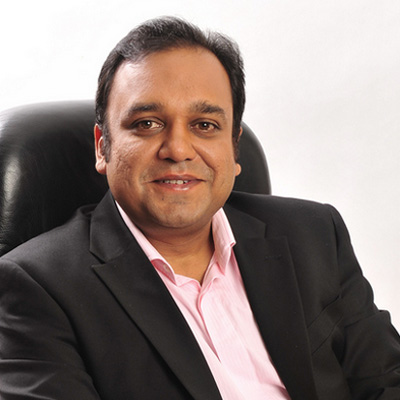
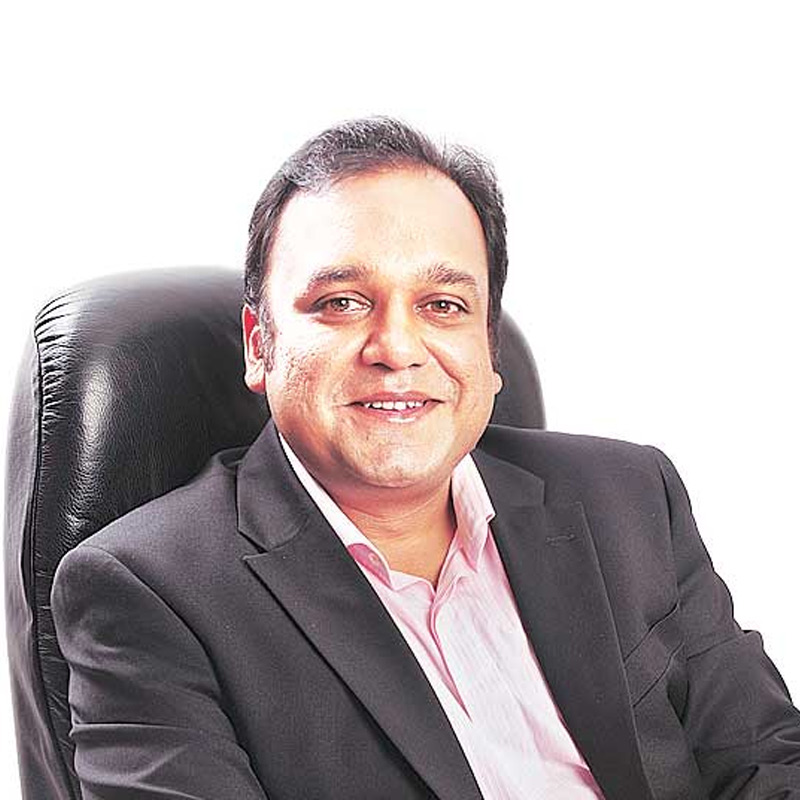
    Says Zee MD & CEO and BARC chairman Punit Goenka, MD & CEO of ZEE: “We are happy with the interest shown by global vendors of technology and research in our project. The RFPs are going out to all of them. This will be followed by discussions and evaluation of these proposals.”

    Adds BARC CEO Partho Dasgupta: “This is our second step towards initiating a cutting edge measurement system which will see marriage of technology and research. The first step was the establishment survey which the TechCom (technical committee) led by Shashi Sinha and Paritosh Joshi has already initiated.”

  • BARC appoints Partho Dasgupta as CEO

    BARC appoints Partho Dasgupta as CEO

    Mumbai: It has been in the making for around three years now. But the Broadcast Audience Research Council (BARC) – the Indian media sector‘s riposte to the government‘s irritation with ratings agency TAM – finally seems to be gathering some momentum. It today announced the appointment of Partho Dasgupta as its first chief executive officer.

    The announcement was made by BARC chairman and Zee MD and CEO Punit Goenka. He said: “We are delighted to have Partho on board. BARC is moving ahead aggressively with its plans. Partho has an excellent background in leadership, in successful start-ups, in broadcast, in research, in consumer products and in other industries. He will help us put the organisation in place and roll out BARC’s services in a tight time frame.”

    On his appointment Dasgupta said, “The foot is on the pedal – we have to just start accelerating. On a serious note, I am happy to do another start-up in broadcast and media. The Board is full of friends from the industry and I am looking forward to working with them and make BARC happen.”

    A general management professional having experience in diverse consumer industries and media management experience in print, television and out of home.

    A keen observer of consumer and media trends, Dasgupta is now in the leadership team of Educomp,an education company. His career has been in media and consumer industries where he did large and small startup media projects.

    He also had an entrepreneurial stint where he cofounded a media company. He also advised media startups and venture firms and their invested companies on brand strategies earlier.

    Dasgupta has led startup teams and management teams of Times Now, Future Media, The Economic Times and Times Multimedia.

    IPG Mediabrands India CEO Shashi Sinha is the chairman of the technical committee of BARC.

    BARC was officially launched in March 2012. It aims to set up a transparent and credible television audience measurement system in India, which is expected to give out its first report by March 2014.

    It would be the umbrella body and television audience measurement service providers like TAM Media Research, a joint venture of Nielsen and Kantar, will function under it for the purpose of providing ratings.

    BARC is 60 per cent owned by the Indian Broadcasting Foundation (IBF) and 20 per cent each by the Advertising Agencies Association of India (AAAI) and the Indian Society of Advertisers (ISA).

  • Jayaraman to head Zee’s distribution and placement business

    Jayaraman to head Zee’s distribution and placement business

    MUMBAI: Former Hathway Cable & Datacom managing director and CEO K Jayaraman is joining Zee Group as head of distribution and placement business. He will also guide and anchor all such roles across the businesses of the Zee group which requires his specialisation.

    Designated as president, Jayaraman will take over his new role from 12 March and will report directly to Zee Entertainment Enterprises Ltd MD and CEO Punit Goenka.

    He can also advise and guide the directors on the board of Media Pro to maximise the revenue for the distribution company. Media Po is a joint venture between Star Den and Zee Turner.

    “He will be responsible to the promoters of the group in updating and providing necessary heads up on various issues of the domain. He will hold hand and provide all kind of support to the CEO of Siticable business, without getting involved on day to day affairs of the business,” Goenka wrote in an internal note.

    Deepti Verma, who has been leading the initiatives so far, will report to Jayaraman.

    A Chartered Accountant and with more than 15 years experience in the media distribution industry, Jayaram had resigned from Hathway after Jagdish Kumar took over as MD and CEO of the company. Jayaraman was made vice chairman of Hathway, a post he did not accept.

  • Television Audience Measurement: What next?

    Television Audience Measurement: What next?

    Yesterday, BARC took a decisive step forward. Punit Goenka in his role as Chairman, BARC announced the issuance of a Request for Information or RFI from entities worldwide who might be interested in participating in the forthcoming Request for Proposal stage.

    While the television rating system in India has shown great durability and adaptiveness, the pace of growth and change in the television landscape has consistently outstripped it. BARC is premised on finding and adopting best-in-class tools, technologies and processes that will not just close the gap, but create a constantly evolving and, thus, future ready audience measurement infrastructure.

    Here are the challenges that the new system will be expected to meet and overcome.

    1. Comprehensiveness: Television reaches very nearly two-thirds of all households in India. As economic development continues apace and more people have discretionary income, entertainment and information start assuming increasing prominence in their scheme of things. A cable-connected television is, and will remain, the least expensive single-point source of meeting this need, and new consumers waste little time in acquiring it.

    The household is now exposed to content but also to advertising that becomes a potent driver of new demand for a range of previously unknown products and services. Over the last decade, almost 10 million new households have entered the television footprint every year and the number doesn’t appear to be slowing down yet. A comprehensive measurement system must be able to recognise these burgeoning television households and keep them in the sights of broadcasters, advertisers and advertising agencies.

    2. Accuracy: There has been talk over the years of making broadcasters more accountable for audience deliveries. A number of deals are done on the basis of cost-per-rating-point (CPRP) but broadcasters have, rightly, complained that fair valuation of their inventory would have to be based on cost-per-thousand (CPT) or, as the print media call it, the mille rate. The current system falls some ways short of being able to facilitate the change from CPRP to CPT. Marketeers and broadcasters are looking forward to a system where actual audience deliveries in a defined target audience can be accurately quantified so that accountability for audiences can be fixed and reciprocally paid for.

    3. Adaptiveness: We still talk of single television homes as being the dominant model in India. Apparently, we are oblivious of the emergence of second and third screens that are being used by the younger demographic for consuming what was previously available exclusively on the television in the family room. The emergence of the smartphone and more recently of new devices like tablets (or even more recently, the rather inelegantly named ‘phablets’) has placed new content consumption devices in the hands of millions of young consumers. Content is now available to be consumed not just at a location but while on the move. Just like cellular telephony transformed communication from locational to personal, these screens and a constantly improving wireless broadband infrastructure are transforming television. The imminent arrival of 4G and crashing tablet prices will place highly mobile content consumption devices in millions of hands. The audience measurement system must be able to capture such mobile content consumption and stay adaptive with every future transformation of the television environment.

    4. Auditability: Being owned and managed by BARC, a joint industry body (or JIB in the pro parlance), stakeholders will have audit rights over the system that can ask searching questions about every aspect of the process, thus ensuring its integrity and ethical standards. All the key stakeholders are represented within BARC and this will ensure that the system remains always true, fair and transparent.

    These are not challenges unique to India but are faced universally by every television audience measurement system. Responses to the RFI will unearth a great body of valuable knowledge that the BARC can use to start building a gold standard system in India.

    It is good to finally say this: BARC has BITE.

  • BARC starts process for new TV viewership measurement architecture

    MUMBAI: The Broadcast Audience Research Council (BARC) on Thursday called for information on state-of-the art television audience measurement from players across the globe, in a first step towards creating India‘s own architecture for computing television viewership ratings.

    The BARC has issued a global Request for Information (RFI) to seek understanding of the state-of-the art in the area of television audience measurement research in particular and audience measurement research in more general terms.

    In a statement, BARC says the RFI seeks ideas, templates, experiences, that will help BARC to blueprint the new television audience measurement system. It has sought responses to a list of questions which respondents may consider addressing as a part of their response to the RFI. The responses have to be submitted to BARC by 5 February.

    Punit Goenka, chairman BARC and MD & CEO, ZEE, said, “BARC is committed to building a Television Audience Measurement System that becomes ipso facto the Gold Standard in its class worldwide. Given that BARC addresses a population of over 1 billion, of which over 0.6 Billion have access to television in some form, I am confident that BARC will settle for nothing less than being the best.”

    BARC said respondents would also have to make a presentation, in addition to providing their credentials, information on TV measurement markets currently in their portfolio, their organisation structure, their focus towards India and finally their experience with TV audience measurement research.

    Shashi Sinha, Chairman, Technical Committee of BARC and CEO-Lodestar UM & CEO-IPG Mediabrands India said, “It is clear that legacy architecture of the (audience measurement) system, that has evolved incrementally, is now ready for seminal change. However, what is not clear is the contours of the new system, which BARC aims to define.”

    At various times, more than one vendor has attempted to provide audience measurement but from 2002, TAM Media Research, India — a joint venture of Nielsen and Kantar, has been the de facto provider of the measurement currency, being widely used by all stakeholder constituencies for all commercial and marketing decision-making.

    The BARC Technical Committee members comprising Shashi Sinha (representing Advertising Agencies Association of India), Paritosh Joshi, Principal, Provocateur Advisory (representing Indian Broadcasting Foundation) and Smita Bhosale, Head, CMI-Brand Building-South Asia, Hindustan Unilever Ltd (representing Indian Society of Advertisers) would evaluate the responses received.
    Respondents will receive the Request for Proposal (RFP) after BARC concludes its study of the responses received.

    Television audience measurement in India has been around for nearly three decades. Beginning with a simple diary based system in the early 1980s covering Doordarshan, then the state-owned monopoly broadcaster, it evolved parallel to the evolution of the Indian television market. By the mid-1990s, it was already covering satellite television and in the early part of this century, India was one of the earliest television markets to have a pure Peoplemeter based system.

    The challenges for an audience measurement system in an era of digital delivery of television channels brings in its wake a massive expansion in choice of content coupled with accelerating adoption of new technologies that are shifting consumption away from the fixed time chart (FTC); and shifting it to personal digital appliances are altogether different from the era when television meant living rooms, common choices and shared family experience. 

    BARC said it understands that a good system rests as much on a sound understanding of the footprint of the medium: the Establishment Study; as it does on continuous tracking of viewing behaviour: the Television Meter Panel.

    BARC is also aware of a number of technologies at varying stages of development that promise non-intrusive or minimally intrusive viewership measurement. BARC is also aware of developments in the area of integrated media consumption metrics, e.g. IPA‘s Touchpoints 4 exercise scheduled for next year.

    “All these are of interest to the architecture of the future system in India. BARC expects respondents to incorporate their own experiences in these areas as items of emphasis in the response to this RFI,” said BARC.

    The following are some of the areas BARC expects respondents to address:

    1. In-house knowledge and experience in the Television and more broadly, Media Audience Measurement space

    2. Global best practices in a number of areas including

    a. Vendor owned and managed vs. Joint Industry Body (JIB) or Joint Industry Committee (JIC) owned and managed – Advantages and Disadvantages 

    b. System architecture- Establishment, Metering, other services 

    c. One vendor or many vendors

    d. If multiple vendors, how scopes of work are clearly delineated

    e. If multiple vendors, how accountability is clearly defined

    3. Sampling design: How viewership volume, viewing intensity, audience economic attractiveness and other factors are accommodated 

    4. Measuring viewing across multiple screens

    5. Measuring viewing across individual, family and community settings

    6. Familiarity with Ascription, Data Fusion and Data Synthesis in multimedia measurement

    a. Need for fusing consumption data from multiple media

    b. How fused data are being introduced into commercial application

    7. Typical relative error levels in measurement systems operating in different geographies.

    a. Levels considered generally acceptable for a robust Peoplemeter system 

    b. Sampling designs that will ensure a systematically lower relative error

    8. Audit mechanisms typically put in place to ensure reportability of data

    9. Keeping Panels representative of a fast changing Universe while allowing for continuity of data reads without trend breaks.

  • Zee News Ltd Q2 net up 18% to Rs 70 mn

    Zee News Ltd Q2 net up 18% to Rs 70 mn

    MUMBAI: Zee News Limited’s (ZNL) consolidated net profit rose 18.2 per cent to Rs 70.2 million in the second quarter ended 30 September from a year earlier on the back of a 39.1 per cent rise in subscription revenues which more than offset a 9.7 per cent fall in its advertising revenue.

    ZNL, which had decided to reduce its advertisement air time by 30 per cent beginning in the first quarter, has seen its advertising revenue come down to Rs 439.2 million in the second quarter from Rs 486.5 million a year earlier.

    The news network’s subscription revenue increased to Rs 222.6 million from Rs 160.1 million a year earlier. In the first quarter, ZNL’s subscription income was Rs 176 million.

    ZNL’s consolidated revenues for the quarter fell 11.6 per cent to Rs 700.3 million from Rs 792.6 million in the year before period. The company’s operating expenditure fell 12.4 per cent during the quarter to Rs 621.7 million from Rs 709.4 million a year earlier.

    Consolidated Ebitda stood at Rs 78.6 million in the second quarter compared with Rs 83.2 million a year earlier.

    The company said it has established a wholly owned subsidiary in the name of 24 Ghantalu News Ltd for housing its Telugu News channel ‘Zee 24 Gantalu’ and has invested initial capital of Rs 0.5 million in the subsidiary.

    Earlier the company had decided to shutter Zee 24 Gantalu citing economic unviability as the reason.

    ZNL MD Punit Goenka said, “The media industry continued to face slowdown issues in the second quarter especially in the months of July and August. ZNL always has had subscription revenue stream supplementing the ad revenues which helps the company counter any slowdown in the advertising industry. However, we expect that the advertising would be quite buoyant in the coming quarters.”

  • ‘We have a 3-tier growth plan and are eyeing a bn viewers internationally in 3 years’ : MD & CEO – ZEE Punit Goenka

    ‘We have a 3-tier growth plan and are eyeing a bn viewers internationally in 3 years’ : MD & CEO – ZEE Punit Goenka

    For Subhash Chandra the last 20 years has been one man‘s war. He has allied and fought against Rupert Murdoch, fallen and bounced back in winning spirit, triumphed over the competitors, and grown a media empire that can make anybody proud. A nationalist to the core, he has a strong footprint in all the value chains of the media business and stands independent in a media landscape that is occupied by the multinationals.

    When in my early years of journalism, I remember the day I rushed to my editor. I told him that I heard from a source that the merger talks between Chandra and Murdoch had snapped. He told me to go ahead with the story and I was afraid that I could be proven wrong.

    I felt happy that the divorce took place. Some may call this a sadistic pleasure but it made me feel nice that my story in The Financial Express was right and, more importantly, allowed me to observe the growth of a warrior who was blessed with intuitive powers, strong business acumen and an innate ability to get into untapped areas.

    Chandra showed his true colours very early in life and in 1991 got the better of Hong Kong tycoon Li Ka-Shing who asked for $5 million to lease a transponder on AsiaSat. He signed a deal with Richard Li a few months later that would kick-start his Zee empire.

    Zee‘s unchallenged growth from its origins in October 1992 halted in 2000 when Murdoch‘s Star launched Kaun Banega Crorepati (KBC) and the three Balaji ‘K‘ soaps. Chandra‘s convergence game also went nowhere and kicked in losses. But Zee expanded into the regional language markets and Chandra also ventured into online lottery with Playwin.

    The rebound in the Hindi entertainment business happened slowly. Chandra appointed Pradeep Guha as CEO in 2005 and inducted his son Punit Goenka  into the organisation.

    Zee Telefilms Ltd (ZTL) got demerged in late 2006 into Zee Entertainment Enterprises Ltd (Zeel), Zee News Ltd (ZNL), Wire and Wireless India Ltd (WWIL) and Dish TV (DTH). He acquired Ten sports and has a growing sports broadcasting business.

    Chandra‘s sprawling empire is not just in India but has strong positions in different corners of the world with his Indian content.

    Even in 2012, Chandra is not in full retreat. He has passed on the baton to his son but is still around. His overwhelming personality can‘t be missed in the Zee office.

    Asked to “get off the fence” and “get in the game” as head of Zeel in 2008,Goenka has proved that he definitely is his father’s son. He ended the rivalry with Murdoch and formed a distribution joint venture company in 2011 to correct revenue leakages and lift subscription revenues. He has identified growth areas in regional, international and new media. His target: to reach a billion viewers internationally in three years.

    Punit (as he is called by his colleagues in the Zee group) is hungry to grow his charge; whether it is sports broadcasting, entertainment, overseas or in niche genres. In a tete a tete with Indiantelevision.com’s Sibabrata Das, he speaks pretty forthcomingly about the road ahead.

    Excerpts:

    Q. When did you first realise that your father was building a media powerhouse in India and that you would be part of this momentous history of television broadcasting?
    For over 12 years, he was practically handling the business by himself. He was running around, surmounting all hurdles, and being a pioneer in all ways to spearhead private satellite television in India. I never thought I would run this kind of organisation. But when he told me to get into it, I quickly became a part of the Zee culture and liked it.

    Q. Now when you look back, do you see any lost opportunities amid this explosive growth of the company?
    The company has grown so rapidly in such a short span of time that it completely overshadows everything else. Zee started in 1992 from a single channel network and two hours of original programming – and look at where it is today! In fact, the first ten years were maddening growth. We have grown to 31 channels spread across genres, languages and geographies. Our international business is also very healthy. And today Zee (read Zee Entertainment Enterprises Ltd) is one of the top ranked Ebitda delivered companies in the media sector.

    Q. What did you feel when the joint venture with Rupert Murdoch collapsed and your father bought out New Corp‘s stakes in Asia Today, Patco and Siticable?
    The split was bound to happen. Murdoch violated the JV agreement and began to show Hindi content. The pact prescribed Star to focus only on non-Indian language programming. When Zee bought out the JV companies, it was a proud moment for all of us.

    Q. You broke this 12-year divorce three years after you took charge as CEO of Zeel and inked a JV agreement for the distribution business. What made you overcome the past enmity?
    We formed Media Pro Enterprise to correct the faulty distribution structures of the analogue cable TV business. It took us almost a year to finalise the agreement. The purpose is to fix the problems of the industry. There are revenue leakages in the distribution business and broadcasters get a small share of the subscription income collected by the cable networks.

    The media industry has matured and we are living in a period of history when there is need to both compete and co-operate. That is what Star and Zee are doing in India. And it has been beneficial for all the partners. Zee and Star were growing their subscription incomes from domestic cable by 6-7 per cent when they were handling the distribution of their bouquet of channels independently. But both the companies are seeing 15 per cent growth from cable subscription income in the first year of operations of Media Pro itself. We are happy with the way Media Pro is shaping up.


    ‘The industry can’t survive on ARPUs of Rs 180. Broadcasters have heavily subsidised the content cost to support the DTH companies to grow. A similar trend is happening in digital cable‘


    Q. Media Pro is currently distributing 75 channels and more launches are planned by the JV partners. Won‘t this be too heavy a load and the logic of a distribution JV become irrelevant in a completely digitised television carriage-services environment? Are we completely different from the rest of the world where broadcast companies manage their carriage agreements independently?There is no reason why we can‘t work independently in India as well. In a transparent environment, there may not be a need. In any case, the JV agreement is only for five years. We will weigh the market conditions then and take a call after that.

    But having said that, Media Pro has been set up not to just take care of revenue leakages. There are other challenges in the distribution side of the business. The industry can‘t survive on ARPUs (average revenue per user) of Rs 180. Broadcasters have heavily subsidised the content cost to support the direct-to-home (DTH) companies and allow them to grow. A similar trend is happening in digital cable. But content is worth much more and we will have to lift ARPUs.

    Q. Zeel gets subscription income of Rs 4.58 billion from content supply to 20 million paying DTH customers while domestic income from analogue cable is Rs 4.14 billion. What is the potential revenue growth from cable after the networks are digitised?
    We expect healthy growth in subscription income over the next few years. As the cable TV subscriber universe becomes transparent, the paying subscribers will automatically become much more than DTH. Zee will be able to monetise its digital cable subscribers and the revenue gains will be significant. ARPUs will also have to go up.

    Q. Since you have taken charge of Zee‘s broadcasting business, what are the future growth engines that you have identified amid new challenges of digitisation, audience fragmentation and competition from multinationals and big Indian corporates who are tiptoeing into the media business?
    We have identified three-tier strategies for our growth. On the domestic front, regional will drive growth for us. We will participate in fragmenting the regional markets. Our launch of a Bengali movie channel, Zee Bangla Cinema, is part of this game plan. We are working on other genres and in other languages.

    On the international front, we plan to expand our reach from 650 million viewers to 1 billion viewers within three years. We will not just restrict our focus on South Asian audiences; we will have to address local audiences in those geographies as well.

    We have identified Middle East as a key market for us and intend to invest between Rs 1 billion and Rs 2 billion over the next two years. We have just launched our second Arabic channel, Zee Alwan. This will complement Zee Aflam, our first Arabic channel that shows Bollywood movies dubbed in Arabic. We plan to invest $100 million in that market.

    Q. What made Zee so bullish about the Middle East market?
    We had success with Zee Aflam which is a profitable channel. We are also look aggressively at growing in Russia (digitisation by 2014 in that market) and Africa. Russian audiences love Bollywood and our drama content. Besides, we are doing extensive research for the Indonesian and Malaysian markets where we are growing in single digits.

    Q. Is new media a big growth piece for you?
    Yes, this forms the third pillar of our future growth strategy. We have launched our over-the-top (OTT) television distribution platform, Ditto TV, in India and plan to take it to the rest of the world next year. We also have India.com and will continue to offer content across leading genres. With these content formats and advanced distribution avenues, we intend to target new audience segments. I cannot give you a number (in terms of investments or revenues), but we are committed to see that these businesses become successful.


    ‘On the domestic front, regional will drive growth for us. Internationally, we plan to expand our reach from 650 mn to 1 bn viewers in 3 years.New media forms the third pillar of our future growth strategy‘

     
    Q. Digitisation will throw open a lot of growth opportunities. Will we see a more aggressive Zee launching new genre channels and addressing new geographies as distribution costs fall?
    We are getting into the kids TV segment and will be launching Zee Q. The content will aim at ‘learning through fun and entertainment.‘ In the past year, we have already launched six channels.

    But only the four metros will have digital cable. The real action will start in the second phase of digitisation when we go to the smaller towns. We have not studied the potential yet. We will have to wait for knowing the impact after the first phase of digitisation rollout. And then possibly you will see a flurry of channel launches.

    We will also have to keep in mind what we are launching and whether it is going to cannibalise on our Hindi product. And let us not forget that there may be free-to-air (FTA) opportunities in the broadcasting space as well.

    Q. Zeel is sitting on a cash pile of Rs 11 billion. Will you acquire channels to grow in a digital environment?
    We are looking at acquisition opportunities if they come at the right price and make business sense for us. But we are also aware that it is cheaper to build.

    Q. Zee has always been conscious of its costs and its Ebitda margins from non sports business is around 34 per cent and is higher than Star‘s. But with plans to increase original content hours on flagship Hindi GEC Zee TV and more channel launches in the pipeline, will Ebitda margins fall?
    There should be some fall. Even in this fiscal, we are increasing our original content from 24.5 hours to 32-34 hours. This in itself will amount to a rise in content cost by 14-15 per cent. Our revenue in the first quarter of this fiscal has also seen strong growth.

    Q. Zee has already renewed the South Africa and Zimbabwe cricket boards at around 10 per cent inflation cost. But Star has bought out Disney‘s stake in ESPN Star Sports and Sony, deprived of the BCCI rights, will be hungry for acquiring cricket rights. There is also the threat of ESPN entering the marketplace after the two-year non compete contract with Star is over. So will we see Zee bid aggressively to renew the rights for the three boards that are going to come up?
    We are in active negotiations with two boards. But we will be aggressive up to a reasonable level. We realise that sports is a strategic business for us. It gives us dedicated youth and male audiences and adds to our viewership base.

    Q. Will forex fluctuations affect the earlier target of the sports business turning around in FY‘14?
    Yes it could, as most of our sports content is contracted in dollars. But we expect our sports business to come out of the negative zone. We also realise at the same time that sports broadcasting across the world is a low Ebitda margin business.

    Q. Is Zee News Ltd planning to launch an English-language general news channel?
    At ZNL, we are working on our English language strategy. We believe the news channel business will go through a phase of consolidation.

  • New media to open up new revenue streams: Punit Goenka

    New media to open up new revenue streams: Punit Goenka

    MUMBAI: Entertainment in today’s times cannot be termed as evolution anymore, it is a ‘revolution’, Zee Entertainment Enterprises MD and CEO Punit Goenka said on Wednesday while delivering a keynote address at Ficci Frames 2012.

    According to Goenka, there are two main factors that are driving the revolution — young population with high disposable income; and a new generation that is ready to embrace new technology at the drop of a hat.

    Emphasising on the fact that new media would create unique revenue generation models for the entire value chain, he said that with the spread of adoption of content consumption, very soon new media will not be new media. It will be “The media”.

    Goenka said content consumption is going through a sea change. Broadcasters are increasingly looking to engage young audiences through new media offerings. “With dependence on ad revenues going down, newer avenues will open up for content players. Niche and sports channels, currently unprofitable ventures, will start becoming viable businesses. 3G, 4G and Wireless Broadband will evolve as new platforms for distribution of content. Also, smart devices will drive consumption of content on-the-go.

    Goenka also said that the ratings system in India is inadequate. It needs to be enhanced to give the right picture of TV viewing.

    He said that GenNext is redefining the TV broadcast industry and to move forward content creators, content delivery platforms and broadcasters have to work in sync to meet their expectations.

    “India’s young population is demonstrating huge appetite for digital content. Broadcasters and content providers need to ride on the tech wave to seize the opportunity. Technology is re-defining industries and consumer consumption. Broadcasters and content houses are working towards building anytime, anywhere access to content. Content producers are looking at partnerships with platform owners. Distribution players need to evolve into an intelligent pipe,” he added.

    Niche is the way forward in the television space. “It is imperative to have fair price for the content available. Content has to scale up to command fair share of consumer’s wallet. Premium pricing should be demanded for exclusive content and consumers are willing to pay for such content.”

    Talking about digitisation, Goenka said, “Consolidation and co-option will drive digitisation. Less than 20 per cent channels are profitable on standalone basis. With the implementation of DAS, as per the announced timelines, there would be accelerated conversion from analogue to digital subscribers. I believe that over the next 4-5 years, the television distribution business can evolve to a more transparent, organised and service oriented industry.”

    “Young Indian with an average age of 29 constitutes a majority of wealth accumulators. They will decide which way the entertainment content and delivery mechanism moves over the next few years. At least 2.2 million jobs will be created over the next two years, resulting in the changing lifestyle of India‘s younger generation. Over the next 10 years, GenNext should constitute the majority of ‘wealth accumulators’,” he added.

    As smart phones gain in popularity and acceptance, emerging youth markets such as China and India offer a bigger opportunity in terms of market size and potential. “India will leapfrog the United States and Europe’s combined markets to become the second largest youth smart phone market with 66 million owners,” he added.

  • Zee News Ltd Q3 net up 61% to Rs 99.7 m

    Zee News Ltd Q3 net up 61% to Rs 99.7 m

    MUMBAI: Zee News Ltd (ZNL) has posted a fiscal third-quarter consolidated net profit of Rs 99.7 million (after minority interest), even as its advertising revenue has degrown marginally compared to the year-ago period.

    Advertising revenue dipped 4.2 per cent as the effect of festival season overlapped with previous quarter. Subscription income, however, grew 3.7 per cent growth.

    ZNL said that the real growth in subscription revenues was higher as they were booked net of expenses.
    “This change was necessitated due to the formation of Media Pro, a joint venture, which pays subscription revenues to Zee, net of expenses. Hence, the numbers are not comparable to those of corresponding period last year,” it said.

    The company posted a revenue of Rs 782.74 million for the three-months ended 31 December, up 5.1 per cent.

    ZNL’s Ebitda margin was at 24.6 per cent, compared to 18.1 per cent in the corresponding quarter of the previous fiscal. This includes the losses from the new business. The margins stand at 33.3 per cent for the existing businesses.

    ZNL had posted a net profit of 618.4 million for the third-quarter of FY’11 on a revenue of Rs 744.44 million.

    The company, which operates the news channels of the Zee brand, said that the corresponding quarter financials are not comparable as it discontinued the Tamil channel Zee Tamil on 31 March last year.

    ZNL chairman Subhash Chandra said, “The Indian economy has been facing headwinds of increased inflation, interest rate hikes and bearish markets forcing the GDP growth forecast to pare down to 7 per cent or so. My faith in the Indian economy for the long term remains intact. While there are as many views of impending slowdown in the economy as there are of bounce back, I remain cautiously optimistic in the short run that the situation is likely to improve in the next few quarters. The Company continues with its focus on innovative growth and I have full confidence that we will be able to come out stronger than most in the current year, in line with the trend of our past performances.”

    He added, “As has been pending for a few years, the media industry has begun to consolidate. This is obvious from the various deals being announced over the past few months. We see this consolidation as a confident step forward towards making this industry more profitable.”

    ZNL MD Punit Goenka added, “While the investment related policy decisions have been under pressure due to current political environment, Parliament’s clearing of cable digitisation signals the establishment’s commitment to make the media industry more efficient. The ad industry, meanwhile, has been hit as the advertisers have increasingly become choosy about their spends. The euphoria of a sustained industry growth which was prevalent at the beginning of the year has been dampened considerably. However, ZNL has shown exceptional operational efficiencies and posted strong financial results for the quarter. Going forward, we hope to maintain the edge in our performance.”

    Ebitda for the quarter under review stood at Rs 192.7 million and profit before tax at Rs 162.4 million. In the previous year quarter, Ebitda was Rs 134.5 million and PBT Rs 103.6 million.

    ZNL’s advertising revenue stood at Rs 518.8 mn for the quarter ended 31 December, as compared to Rs 541.7 million in the year ago period. Subscription revenue for the quarter was at Rs 192.7 million, which constituted 24.6 per cent of the total revenue.

    The expenses of the company stood at Rs 590 million, slightly lower as compared to the year-ago period when the expenses were Rs 609.9 billion.

    ZNL posted Ebitda profit of Rs 249.8 million (225.2 million in the year ago period) from its existing business (Zee News, Zee Business, Zee 24 Taas, Zee Punjabi and 24 Ghanta). The company’s Ebitda loss from new business has come down to Rs 57.1 million (from a loss of Rs 90.7 million in the year ago period) from its new business (Zee 24 Gantalu and Zee News UP).

    ZNL CEO Barun Das said, “We had sensed the slowdown in the industry by the beginning of the last quarter and made adjustments in our operations accordingly. Our top lines and strict vigil on our costs has resulted in our margins being strong at 24.6% despite slowdown, which is likely to be an exception. With the Media Pro initiative settling down, our subscription revenue has shown growth towards the end of the quarter and it is a trend that is likely to continue. We remain confident regarding our ability to grow in the current financial year.”