Tag: Punit Goenka

  • “Govt needs to look at broadcast as an important sector”: Uday Shankar

    “Govt needs to look at broadcast as an important sector”: Uday Shankar

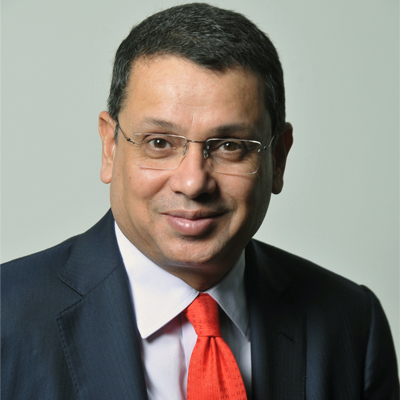
    MUMBAI: It was in September that Star India’s Uday Shankar was once again handed over the reins of Indian Broadcasting Foundation (IBF), and since then, he has been working on a three-point agenda.


    Says the man who has been very vocal about his views on digitisation in India, “When you are heading an organisation like IBF, there are three things that we all need to look at. First and foremost is digitisation. It is the most fundamental thing that the industry requires and so we need to ensure that we engage with government and put the digitisation road map back on track.”


    The second is the carriage fees for both big and small channels, particularly for niche channels which are dying under the weight of this. He points out that the investment done by niche channels on content is totally destroyed because they don’t have the money. “Most of them are going bankrupt and carriage fee is the single biggest destructive influence on the industry. The key objective of digitisation was that it would expand carriage capacity and the carriage fees will get substantially reduced or would go away. That has not happened. We need to work on that,” he says.


    Thirdly, the foundation needs to make sure that the new government looks at broadcast as an important sector. “The government is genuinely reviewing it also,” he adds.


    The view at the IBF , currently, is that broadcast will play a huge role in the Narendra Modi government’s agenda of creating more jobs, creating more opportunities, entrepreneurship and wealth for people. “We as IBF want to take the plan to the government and tell them the way we can carry forward the government’s agenda,” says Shankar.


     With a view to benefit the industry and the customer, the foundation aims to work closely with all its synergies as well as other bodies like BARC India.   

  • BARC India adopts NCCS as new classification

    BARC India adopts NCCS as new classification

    MUMBAI: In its endeavour to interact, engage and share with its stakeholders – key developments and initiatives – Broadcast Audience Research Council (BARC) India has embarked upon itself to unravel the puzzle of TV audience measurement system in India.
    One of the biggest changes that the measuring body has adopted is the New Consumer Classification System (NCCS).  The ‘New SEC’ system as it is referred to in the MRSI documents was co-developed by Market Research Society of India (MRSI) and Media Research Users Council (MRUC) as the new classification system for industry use.
    The new SEC system, which has been in existence since 2008, was developed after rigorous research as a better discriminator of the purchasing power of a household compared to the SEC. “Research has to evolve over time; and so have systems. In the 80s, MHI was used to classify purchasing power, which gave way to a better system called the SEC in the 90s. It is now time to embrace the new age system,” points out BARC India CEO Partho Dasgupta.
    Alternative systems – a point-based system including education of CWE, press exposure of housewife, ownership of durables and usership of consumer goods; and a system considering ‘best type’ of consumer durables owned – were considered before settling on the present NCCS.
    It is based on the assumption that a system that throws up more inequalities is more discriminating.
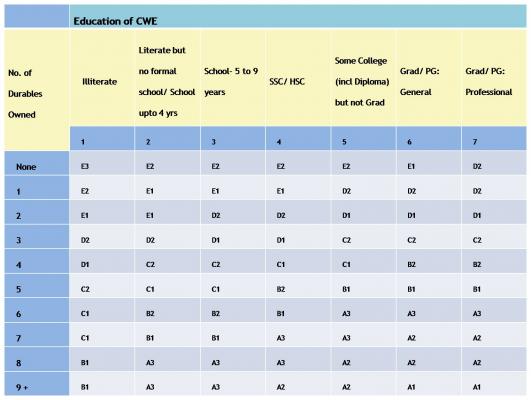
    The new SEC system is used to classify households in India and is based on two variables:  education of chief wage earner and number of consumer durables (from a predefined list) owned by the family.
    The 11 shortlisted durables (electricity connection, ceiling fan, gas stove, refrigerator, two wheeler, washing machine, colour TV, computer, four-wheeler, air conditioner, agricultural land (in rural areas) were identified as the best discriminators of the ‘purchasing power’ of a household after evaluating the series of variables, including education of housewife, type of dwelling (house), amenities, number of rooms, ownership of durables and usership of consumer goods.
    Dasgupta believes that the new system will be of great value to the industry due to various factors. “To name a few; (a) Advertisers do not discriminate between urban and rural India from their sales perspective; and the NCCS is a single system for urban and rural India, (b) It is not linked to only one individual in the household, but to the entire household, (c) It is dynamic, having the ability to change over time as discriminators change, and (d) It captures the affordability quotient of household and hence marketers can target more precisely.”
    NCCS v/s SEC – A Comparison:

    NCCS Grid has 12 grades ranging from A1 to E3:


  • IDOS 2014: A must, say industry stalwarts

    IDOS 2014: A must, say industry stalwarts

    MUMBAI: The broadcast, cable, DTH industry and the regulatory body is all set for the biggest confab of the year.  To be held in Goa, starting 25 September with a big bang opening night party organised by HBO Hits and Defined, all the heads of India’s pay TV market, distribution, broadcast, cable and DTH industry are gathering to brainstorm and suggest the way forward for the already delayed digitisation at the Indian Digital Operators Summit (IDOS) 2014. 


    The extension in the deadline as announced by the Information and Broadcasting Minister Prakash Javadekar has somewhat delayed the plans of many in the pay TV circuit. While the biggest concern currently is smooth rollout of the phase III and phase IV of digitisation, industry biggies will also ideate on how, with consumers moving to other screens apart of television, can be monetised.


    The tenth edition of IDOS, is themed around, ‘Digitisation: The Next Big Push.’ Organised by Indian Television Dot Com and Media Partners Asia, the conference unites stakeholders across the value chain to drive meaningful dialogue and facilitate practical solutions to drive the content and distribution markets forward.


    “The forum provides opportunity for interaction with all key people involved in the broadcasting sector, not only digital operators but others as well,” says Dish TV CEO RC Venkateish.


    According to Venkateish, the theme is very relevant given digitisation is an ongoing process. “That process is something we all hope will take the industry to the next level,” he adds.  The Dish CEO expects the conclave to be a platform for exchange of news, information and opportunity to share some of their view points with the regulator.


    For Maharashtra Cable Operators Foundation president Arvind Prabhoo, IDOS’ concept is most pertinent in today’s market scenario. “Once digitisation was announced, all the players in the ecosystem needed to come together and voice their opinion to benefit from it,” says Prabhoo adding that Indiantelevision.com was the first to identify this need and organise such a conference.


    “It is a really good one and is only going to get bigger,” he opines.


    On the theme for this year’s IDOS, Prabhoo says, “Everyone needs a push, after all the struggle that happened in phase I and phase II. There had to be some kind of out-of-the-box thinking. And this is what will come out in the next two days of the conference.”


    Prabhoo is looking forward to Telecom Regulatory Authority of India chairman Rahul Khullar, Hathway director Viren Raheja and Tata Sky MD and CEO Harit Nagpal amongst others to come up with the kind of impetus that can be given by large corporate houses.


    BBC Global News India COO Naveen Jhunjhunwala is another industry stalwart who is looking forward to some meaningful sessions and interactions at IDOS, this year. “The TV industry is progressing rapidly and the theme for this year’s conference is a positive step towards bringing together the stakeholders and tapping into opportunities that exist in digitisation,” he concludes.   

  • Bharat Ranga bids adieu to ZEEL

    Bharat Ranga bids adieu to ZEEL

    MUMBAI: After serving Zee Entertainment Enterprises Limited (ZEEL) for close to 16 years, the network’s chief content and creative officer Bharat Ranga has decided to move on. Ranga, who put down his papers on 23 September, according to a source in the network will serve his last day on 7 October 2014.


    Being a part of ZEEL since 1998, he took over the content role in April 2012 where he was managing content business for all domestic entertainment channels of the network.


    He is the man who can be credited for the launch of &pictures, labelled as India’s first interactive movie channel.


    Prior to that, he was the executive director – international operations, leading and managing international business of the company. Before joining ZEEL, he was with Times of India.


    A commerce graduate from the University of Rajasthan, Ranga has done his MBA from the University of Ajmer and an Advanced Management Program from Wharton Business School.


    A letter was sent out by ZEEL MD and CEO Punit Goenka today morning to the team in the network to announce Ranga’s resignation. The letter read:


    “We wish to inform that Mr Bharat Ranga has decided to pursue his career beyond ZEE. With deep regret, we have accepted his decision and will always wish him the very best for his future endeavours.


    Bharat has been with the organisation since 1998 and he has had a long checkered career with us. Bharat moved across functions and domains seamlessly, from sales to business head roles to being the International Business Head and then, the Chief Creative and Content Head for the organisation. During his tenure, Bharat has been instrumental in creating value and building opportunities for the organisation.


    During his career span with the ZEE, Bharat has contributed to the overall growth of the organisation by leveraging new revenue opportunities, bringing about path breaking content, starting new streams of content through new channel launches and transcending the business beyond geographies; to name a few. Bharat had the capability to move with ease in managing the environment and challenges. We wish to sincerely thank him and put on record his valuable contribution made to the organisation.


    Bharat’s last day with the organisation will be 7 October 2014. All those verticals and functions which reported to Mr. Bharat Ranga will now report to the undersigned until further advised.


    We wish Bharat the very best for his future endeavor and the team continued success for future.”


    Best Wishes


    Punit Goenka


    MD & CEO

  • GEC is not Disney’s priority, says Siddharth Roy Kapur

    GEC is not Disney’s priority, says Siddharth Roy Kapur

    MUMBAI: The more the merrier seems to be the chant of all networks, these days.


    It was in 2011 that Star India launched its second general entertainment offering, Life OK. The sister channel of Star Plus, which replaced the defunct youth-oriented channel Star One, made headlines for its bold steps and differentiating content from the usual melodrama shown on the leading ones.


    Soon, Zee, the number two channel as per TAM TV ratings, plunged into already congested market with Zindagi. The second GEC from the network brought in popular shows from across the border to please the niche premium audience.


    If the two big networks had ventured into second GEC place, how could Sony stay behind? With Sony Pal, launched on 1 September, the Multi Screen Media (MSM) network added one more channel to its kitty.

    However, Disney, which has created content for channels, has popular television channels as well as numerous successful movies in different genres in its bag, still doesn’t have a GEC on its mind.


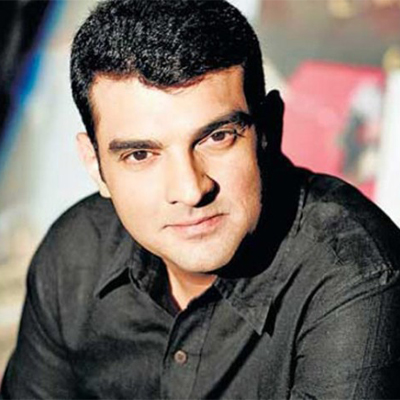
    “With kids’ channel we have presence among 4 to 14 years old, with bindass offerings we will be strongly placed for 14 to 34 years old and movie channels capture all across the age segments,” says Disney MD Siddharth Roy Kapur. The network will soon launch bindass Play, a music channel, which will take forward the philosophy and brand values of its most revenue generating channel, bindass.


    So will we see a GEC coming from the network’s stable? “We want to only concentrate on categories which are profitable and work with our core strengths,” he replies while elaborating that though everyone expects it to come up with a GEC, the network is not even thinking about it.

  • IBF appoints Uday Shankar as the new president

    IBF appoints Uday Shankar as the new president

    MUMBAI: At the just concluded Indian Broadcasting Foundation (IBF) 15th annual general meeting (AGM), Star India CEO Uday Shankar has been appointed as the new president of the organisation.


    The position was earlier held by MSM non executive chairman Man Jit Singh.


    This is a comeback for Shankar who held on to the position from 2010 to 2012.


    Confirming the news to indiantelevision.com, Shankar said that he was happy to take charge. “I am privileged to be trusted by the members of IBF to lead the industry body at a critical juncture when the industry needs to leap to the next level by working collaboratively with the Government and other stake holders,”said Shankar and added, “Punit Goenka would have been my personal preference for the president’s role since I have already done a stint as IBF president.  However, in view of Punit’s existing commitment to BARC, he proposed that I hold the reigns at IBF”.


    The IBF Board also elected Punit Goenka as vice president – Measurement, N P Singh as vice president – Distribution, Rajat Sharma as vice president – Strategic Affairs and Rahul Johri as treasurer.

  • Prakash Javadekar confirms the new digitisation deadline

    Prakash Javadekar confirms the new digitisation deadline

    MUMBAI: The first deadline for complete digitisation in the country, 31 December 2014 has been pushed to 2015 and 2016, as first reported by indiantelevision.com.


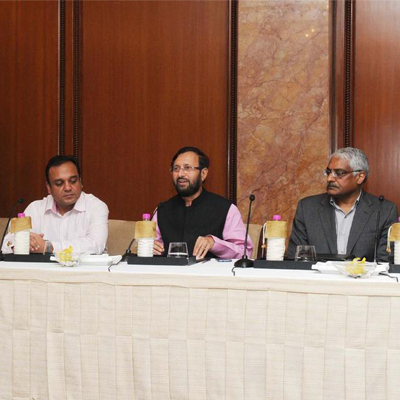
    Now, the Information and Broadcasting (I&B) Minister Prakash Javadekar has assured stakeholders who were present at the Indian Broadcasting Foundation’s (IBF) annual general meeting that “Digitisation is on track and will happen as per new schedule.”


    Phase III of digitisation is scheduled to be completed by December 2015 and phase IV by December 2016.


    Javadekar once again emphasised that one of the key reasons for pushing digitisation to a further date was to allow time for Indian set top boxes (STBs) to be manufactured.


    Regarding industry rating body Broadcast Audience Research Council (BARC), the Minister said that the government was also keen to have its rollout to have multiple agencies for ratings.


    A meeting to discuss carriage fees is also likely to happen sometime soon between Javadekar and members of the IBF.


    The Home Ministry has also given the I&B Ministry approval to treat files pending with it for more than three months as ‘cleared’ to speed up channel licence clearances.

  • ErosNow acquires worldwide rights to Zee TV’s content

    ErosNow acquires worldwide rights to Zee TV’s content

    MUMBAI: EroS International Media is riding high on success. Its on-demand entertainment portal ErosNow has acquired the worldwide rights of popular Zee TV shows.


    With this development, the content from Zee will be available to members with no extra subscription costs. With a reach of more than 169 countries and access to more than 670 million viewers globally, Zee TV is the largest media franchise serving the South Asian Diaspora.


    The partnership will allow ErosNow to showcase Zee’s premier television content ranging from top rated serials and soaps to reality shows. Shows like -Ek Mutti Aasmaan, Pavitra Rishta, Fear Files, Sapne Suhane Ladakpan Ke, Jodha Akbar, Do Bandhe Ek Dori Se, Kumkum Bhagya, Qubool Hai, Aur Pyar Ho Gaya and Armano ki Doli.


    ErosNow CEO Rishika Lulla Singh feels that partnering with Zee for compelling content is a natural step to providing the best of Indian entertainment to the consumers worldwide. “We aim to provide a robust customer experience with an extensive content offering. We are thrilled to introduce prime television programming from Zee TV into our content mix. We are very excited to bring these shows to the platform and  are confident this content  will  be enjoyed worldwide  on ErosNow.”


    According to Zee MD and CEO Punit Goenka it is a logical extension for the channel to make its programs available on ErosNow. “Zee has always been a leader in the media and entertainment space, having evolved from being a broadcaster to a content creator and aggregator.”


    Goenka further adds “Our premium television content is enjoyed by a large global audience across diverse platforms, with a definitive surge in younger viewers who are more accustomed to consuming entertainment via digital platforms. By partnering with ErosNow, we hope to capture viewers from around the world with the best shows from Zee’s library thus living up to our corporate brand philosophy of “Vasudhaiva Kutumbakam- The World Is My Family.”

  • Romil Ramgarhia quits Zeel, joins BARC India

    Romil Ramgarhia quits Zeel, joins BARC India

    MUMBAI: Broadcast Audience Research Council (BARC) India has appointed Romil Ramgarhia as its chief business officer. This is a move to strengthen its core management team as the joint industry body moves closer to the launch of its services. In his new role, Ramgarhia will report to BARC CEO Partho Dasgupta.


    Ramgarhia brings with him more than 12 years of experience across media, telecom and manufacturing sector. In his last role, he was Zeel chief commercial officer. Before Zeel, he was also associated with Viacom18, Bharti Airtel, Asian Paints and ACC, in different capacities.


    Zeel MD and CEO and BARC chairman Punit Goenka said, “Romil has played a key role during his limited assignment at Zeel. It is unfortunate that he has quit the company, however I am confident that his rich experience will bring greater value to BARC India. As he now moves on to a new challenge in a new role and domain, I wish him luck for his continued success.”


    Dasgupta added, “BARC India is moving closer to launch. Romil has an excellent background in broadcast, in telecom and in other industries. He was already associated with BARC India as part of its commercial committee and hence is well initiated in the processes. With his great business acumen he will further strengthen the organisation.”


    Talking about his appointment, Ramgarhia said, “My assignment with Zeel and Viacom18 has been one of my most challenging as well as gratifying periods of my professional career. It is great to be a part of a start-up which is slated to be the biggest audience measurement system across the world.” 

  • Zindagi: A bet that worked

    Zindagi: A bet that worked

    MUMBAI: “I have always gone by my gut feeling and that is the most important for me,” is what Zeel MD & CEO Punit Goenka had said when he first announced the launch of a new GEC, Zindagi, from the network’s cadre.

    And seems like, Goenka’s gut feeling has once again hit the bulls eye.

    Zindagi, the mass premium channel, was launched on 23 June with just four shows – Zindagi Gulzar Hai, Aunn Zara, Kash Mein Teri Beti Na Hoti and Kitni Girhain Baqi Hain – from Pakistan with a promise of ‘Jodey Dilon Ko.’

    The shows were an instant hit amongst viewers especially the urbanites who went gaga over them on the social media. They struck a chord with viewers and the word of mouth had the social networking sites abuzz with tweets, wall posts and blog posts. The impact was such that the channel in a short span already has more than 4500 followers on Twitter and approximately 2.2 lakh likes on Facebook.

    The same was reflected in the TAM TV ratings, which were finally released after several weeks of waiting, as the newbie took over even the 14 year old channel, Sahara One. The channel witnessed 28,700 GVTs in week 29 and 27,013 in week 28.

    It has received an overwhelming response from viewers across all age groups as it broke away from the stereotypes of ‘traditional TV viewing in India’. The media analysts believe that the numbers received by the channel are decent for a new entrant in the already cluttered and highly competitive market of Hindi general entertainment channels (GECs).

    “If we look at the highly marketed show of megastar Amitabh Bachchan on Sony, Yudh, it was able to generate 1,199 TVTs.  Going by this for a niche channel like Zindagi, there is nothing to worry about,” says Havas Media Group India and south Asia CEO Anita Nayyar.

    The planners weren’t even expecting big numbers from the channel in the initial weeks, since according to them it is still in the nascent period wherein both the channel and the audience are sampling the content. 

    Zindagi Gulzar Hai, that generated a lot of buzz on social media, reported 346 TVTs, down from 415 TVTs, Noorpur Ki Rani scored 197 TVTs (week 29), Kaash Main Teri Beti Na Hoti stood at 262 TVTs, up from 252 TVTs and Kitni Girhain Baqi Hai noticed 209 TVTs, up from 167 TVTs.

    Like the current shows on Zindagi, even in the 80s, Pakistani series Dhoop Kinare, Tanhaiyaan, Ankahi had caught Indian viewers’ fancy. “The content from across the border is very different from the one showcased here, thus it has always made people notice it,” points out Nayyar.

    The shows’ timings too are different from the pattern the Indian shows follow. The first show starts at 8pm, followed by the next at 8:55 pm, then 9:45 pm and last, at 10:15 pm. However, media observers believe that it will take viewers some time to get used to the new pattern and over time, will become a part of everyone’s routine. In return, adding more GVTs to its kitty.

    On the other hand, a planner from down south says that though the channel was launched pan-India, the distribution needs to improve in the region which will give a push to the ratings. “A lot of money has been spent in marketing and slowly the numbers will show as well. But a little more push is needed in the area,” he says while agreeing on the fact that it’s too early to judge the channel’s performance by these numbers alone. “It takes time to form a trend,” he adds.

    While media analysts agree that the ratings are very low as compared to the big players in the genre, they also feel that it’s a good start. The early report card will not impact the deals the channel has with its current main sponsors: Fogg, Askme.com and Fortune- Edible Oils and Foods.  And with the festive season just around the corner, the channel will have reasons to rejoice.

    While others (media reports) have already jumped the gun and declared the fate of the channel, we at indiantelevision.com feel that the channel’s content has won many hearts and will continue to do so. ‘Zindagi’ Gulzar Hai…