Tag: Punit Goenka

  • ZEEL appoints Shariq Patel as CEO of Essel Vision Productions

    ZEEL appoints Shariq Patel as CEO of Essel Vision Productions

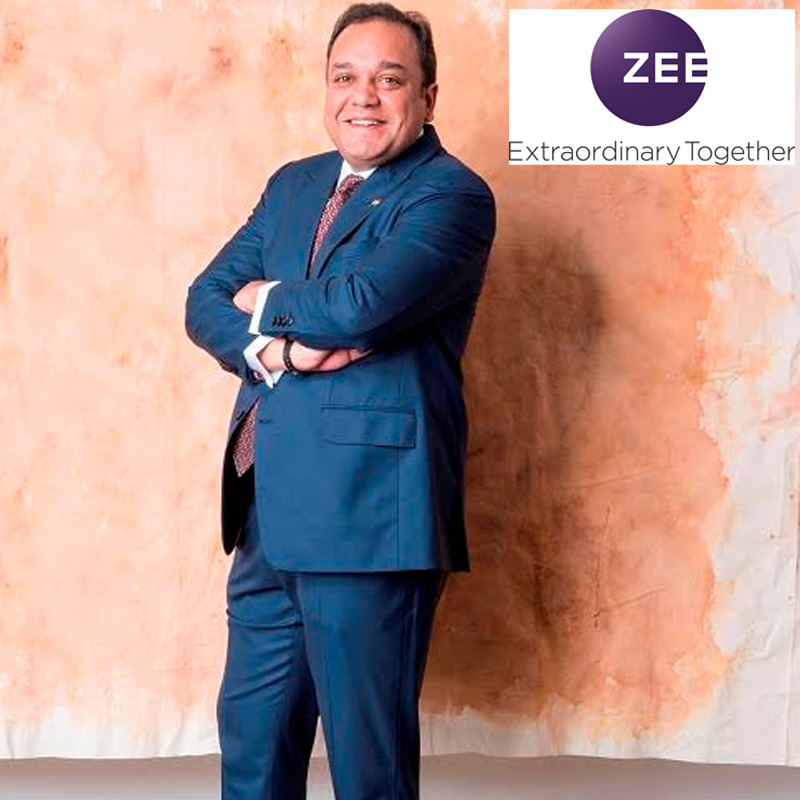
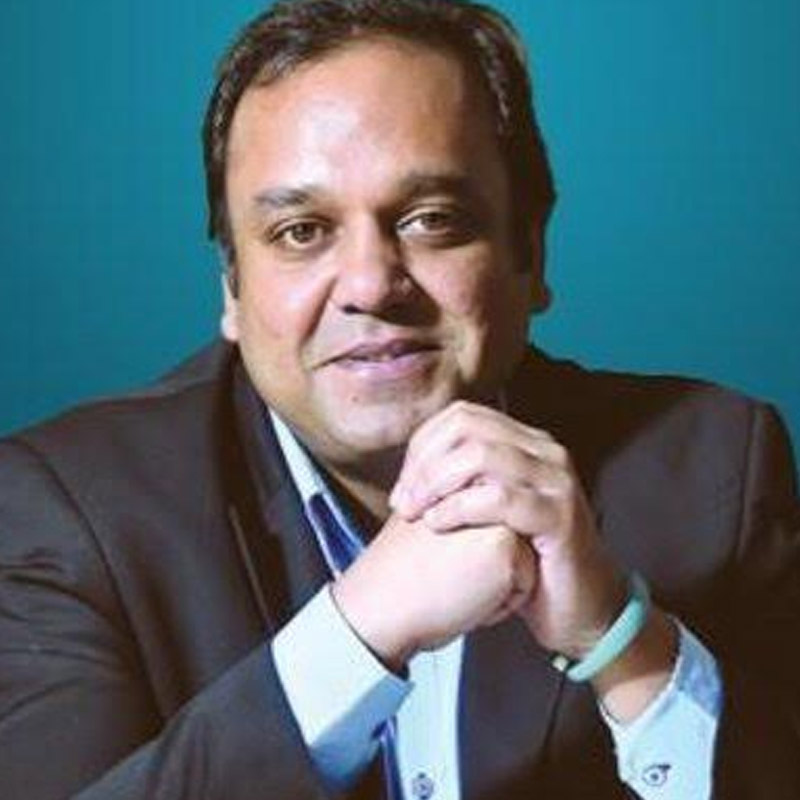
    MUMBAI: Zee Entertainment Enterprises Ltd (ZEEL), one of India’s leading media and entertainment companies, has appointed Shariq Patel as the chief executive officer of Essel Vision Productions Ltd. Patel will report to ZEEL MD & CEO  Punit Goenka.

    Along with its other leading businesses, film and television content production have been fundamental business verticals for the media conglomerate, both having immense growth potential.

    Essel Vision Productions produces soap operas, reality TV, comedy, game shows, entertainment and factual programming in several Indian languages. 

    Patel has more than 20 years of experience across various industries spanning financial services, radio, internet, telecom, sports management and films. He has earlier worked with Radio One 94.3 FM as Vice President, Marketing & Station Head, post which he had a short stint with Essel Sports as Senior Vice President, Marketing & Operations – Indian Cricket League. He then moved to Viacom 18 Media as Executive Vice President, (STUDIO18) Production before starting out with his own venture Trigno Media Pvt Ltd. His appointment further enhances ZEEL’s approach in strengthening its films and television content production arms.

    Also Read:

    Zeel numbers up on higher ad revenue in third quarter

    ZEEL CEO Punit Misra says: “We intend to compete fairly”

    ZEEL elevates Atul Das as president – affiliate rev & dist

  • Zeel operating profit up; board recommends 290% dividend

    Zeel operating profit up; board recommends 290% dividend

    BENGALURU: Subhash Chandra-led Zee Entertainment Enterprises Ltd (Zeel) reported higher operating profit (EBITDA) for the year and quarter ended 31 March 2018 (FY 2018, the year under review; Q4 2018, the quarter under review) as compared with the corresponding periods of the previous year (FY 2017, Q4 2017). Profit after tax (PAT) for the quarter and year under review was, however, lower due to higher tax and lower extraordinary/exceptional items as against the previous year. The Zeel board of directors has recommended an equity dividend of 290 per cent per share of face value of Re 1.

    Zeel’s EBITDA for FY-2018 increased by 7.7 per cent to Rs 2,076.14 crore (31.1 per cent margin) from Rs 1,926.86 crore (29.9 per cent margin) in fiscal 2017. EBITDA for Q4 2018 rose by 8 per cent to Rs 506.20 crore (29.3 per cent margin) from Rs 468.70 crore (30.7 per cent margin). PAT for FY 2018 declined 33.4 per cent to Rs 1,477.75 crore from Rs 2,220.11 crore.

    Zeel’s operating revenue for FY 2018 was 3.9 per cent higher at Rs 6,685.68 crore than the Rs 6,434.13 crore in FY 2017. Operating revenue for Q4 2018 grew by 12.9 per cent year-on-year (yoy) to Rs 1,725.31 crore from Rs 1,527.95 crore. Total revenue for FY 2018 increased by seven per cent to Rs 7,126.30 crore from Rs 6,658.17 crore in the previous year. Total revenue for the quarter grew by 14.6 per cent yoy to Rs 1,813.43 crore from Rs 1,582.89 crore. Revenue growth during both periods can be attributed to growth in advertising revenue partly offset by a decline in subscription revenue.

    Advertising revenue in FY 2018 increased by 14.5 per cent to Rs 4,204.76 crore from Rs 3,673.50 crore in the previous year. The company said in its earnings release that on a comparable basis— excluding sports, RBNL and Indian Web Portal Pvt Ltd (IWPL)—domestic advertising revenue grew by 15.9 per cent to Rs 3,848.88 crore. International advertising revenue increased by 26.2 per cent in FY 2018 to Rs 214.3 crore. International business revenue in Q4 2018 was Rs 66.2 crore.

    Subscription revenue during the year under review declined by 10.3 per cent to Rs 2,028.73 crore from Rs 2,262.91 crore in FY 2017. The company said in its release that adjusted for sale of Zeel’s sports business, subscription revenue actually grew by 11.8 per cent. The company also said that subscription revenue growth for the year was slightly impacted by the delay in phase-III monetisation due to the uncertainty regarding TRAI’s tariff order. Domestic and international subscription revenue for Q4 2018 declined by 0.7 per cent yoy and eight per cent yoy, respectively, primarily on account of the sale of the sports business. Subscription revenue in Q4 2018 decreased by two per cent yoy to Rs 546.52 crore from Rs 557.92 crore. International business subscription revenue in Q4 2018 declined to Rs 94.4 crore.

    Zeel’s other sales and services include revenue from its movie production business, content syndication, music label and commission on sales. Other sales and services revenue decreased by 9.1 per cent in FY 2018 to Rs 452.19 crore from Rs 497.72 crore in the previous fiscal. For Q4 2018, other sales and services revenue increased by five per cent yoy to Rs 129.24 crore from Rs 123.09 crore in Q4 2017. Other sales and services revenue from the international business in Q4 2018 was Rs 53.7 crore.

    Other income, during the year under review, soared by 96.5 per cent to Rs 440.35 crore from Rs 224.04 crore whereas, during the quarter, increased by 60.4 per cent to Rs 88.12 crore from Rs 54.94 crore.

    For FY 2018, total costs increased by 2.3 per cent to Rs 4,609.50 crore. The underlying increase was higher but offset by the sale of the sports business. On a like-to-like basis, programming cost increased due to higher original content hours across the network and higher movie amortisation cost while the reported programming cost declined due to the sale of the sports business. Advertising, publicity and other expenses increased by 25.6 per cent to Rs. 1,416.4 crore on account of brand refresh, launch of ZEE5 and costs related to silver jubilee events.

    Zeel’s total expenditure in Q4 2018 at Rs 1,219.1 crore was higher by 15.1 per cent as againt Q4 2017. Programming cost for the quarter at Rs 689.3 crore increased by 6.7 per cent yoy. This increase was driven by higher original programming hours in regional channels, higher movie amortisation costs and content cost for ZEE5. Advertising, publicity and other expenses for the quarter grew by 44 per cent yoy to Rs 3,66 crore on account of the ZEE5 launch expense and increased marketing activities for new properties. Additionally, the expense base for Q4 2017 was lower as some marketing and promotion events were held back due to demonetisation, the release stated.

    Zeel chairman Subhash Chandra said, “Looking at our performance one might not realise that the first half of the year was not as smooth, which is a testimony to the strength of our team. Being the number one TV entertainment network is a result of our strategy and the consistent hard work we have put in over the years. With the launch of ZEE5, we have taken a major leap towards our preparation for the future and we are confident that like TV business we will be in the leadership position in the digital space as well.”

    Zeel CEO and managing director Punit Goenka said, “We launched our new digital platform ZEE5 with over 100,000 hours of content across 11 languages. We are happy with the initial response and are confident that the sheer depth and breadth of our content offering will enable it to become the number one digital entertainment platform in India. We have also focused on the peculiarities of Indian market and designed technological features to improve the user experience. Unlike most of the existing apps which are either focused on the English-speaking segment or the youth audience, ZEE5’s vast content catalogue is designed with an objective to cater to all sections of video viewing audience.”

    Goenka added, “We are delighted with the strong operating and financial performance during the quarter. Domestic ad revenue growth of 24 per cent is driven by broad based recovery in advertising spends. With high visibility of product campaigns, improving consumer demand and GST related benefits trickling down to ad spends, we are confident of continued traction in advertising spending. The full-year domestic subscription revenue growth of 12 per cent is a tad lower than our initial expectations due to some unforeseen events. However, there is no change in our medium-term outlook for the same.”

    Also Read :

    Zee Media reports higher ad revenue growth in Q3 2018

    Zee, Turner to work independently for subscription revenue
  • BARC reacts to malicious statements regarding operations

    BARC reacts to malicious statements regarding operations

    MUMBAI: Recently, television ratings body Broadcast Audience Research Council (BARC) was slandered with a number of statements which it termed as ‘malicious, baseless and grossly inaccurate’. It said that some stakeholders had publicly commented on its operations and organisation structure.

    Addressing the issue, the company issued a statement that BARC was a joint body set up by the Indian Broadcasting Foundation (IBF), Indian Society of Advertisers (ISA) and Advertising Agencies Association India (AAAI), adhering to section eight of the Companies Act. It is a debt funded company, and there is absolutely no foreign direct investment.

    Being an industry body promoted by IBF, ISA and AAAI, BARC India is neither owned by any broadcaster/advertiser/agency, nor controlled by any single company. “Therefore, the question of undue influence of any single entity on BARC India’s operations simply does not arise. It has a strict governance structure as laid down in its Articles of Association, which ensures its ‘arm’s length’ relationship with all stakeholders,” the body said in a statement.
    IBF President Punit Goenka said, “We take pride in saying that BARC India works in an extremely transparent and neutral environment. Its data adds immense value to industry, and we would encourage and support it to remain focused on the great work its team does, and not get detracted by false statements and unattributed innuendos. BARC India has established a measurement system at par with international standards, which should be a matter of pride for the industry.”

    With a sample size of 135,000 individuals across the nation, BARC India operates the largest TV sample/panel in the world – much larger than the US TV sample of 90,000.

    ISA chairman Sunil Kataria said, “BARC India data helps advertisers reach and understand consumers even in the most remote and unexplored areas. It enables the Rs. 25000 crore advertising industry to take informed decisions since the data is truly representative of ground reality.”

    AAAI president and BARC India chairman Nakul Chopra said, “It should be applauded as in these positive and progressive times it provides essential and reliable data that is powering many industries make better decisions towards economic growth.”

    Also Read:

    No reason for GECs to panic as IPL grabs eyeballs

    The era of dance reality shows

    Owning IP not priority for Big Synergy

  • Mr. Punit Goenka honoured with ‘Outstanding Contribution to Media’ Award at AIMA Managing India Awards 2018

    Mr. Punit Goenka honoured with ‘Outstanding Contribution to Media’ Award at AIMA Managing India Awards 2018

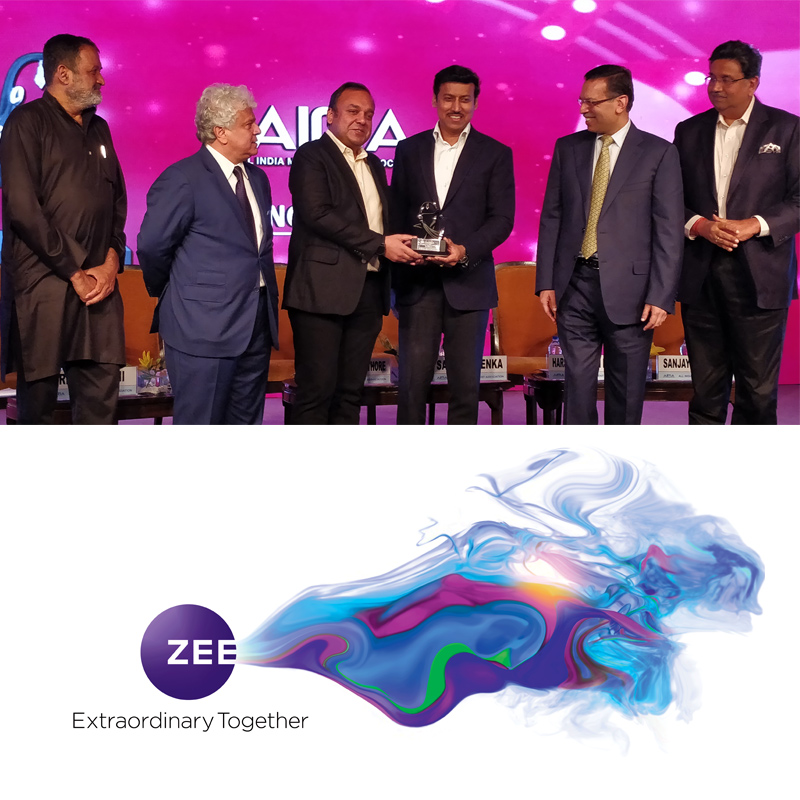
    19 April 2018, New Delhi: One of the most coveted leadership honours in the country, AIMA Managing India Awards, today awarded Mr. Punit Goenka, MD & CEO, Zee Entertainment Enterprises Ltd. (ZEEL) with the ‘Outstanding Contribution to Media’ Award.

    The 8th edition of the Award ceremony was held today in New Delhi in the presence of Rajyavardhan Singh Rathore, Minister of State (Independent Charge) for Sports and Youth Affairs. Chaired by Mr. Sanjiv Goenka, Chairman, RP-Sanjiv Goenka Group, the jury nominated eminent personalities who are awarded under various categories The AIMA Awards facilitates outstanding achievers who have made a fundamental difference in the industry setting new benchmarks and created an edge above peers for others to emulate.

    On being recognised for his contribution, Mr. Punit Goenka said, “I dedicate this award to our Chairman, Shri. Subhash Chandra. It was his pioneering vision, which has sparked up an entire industry in itself, creating millions of jobs across the nation. With the advent of enhanced bandwidth and connectivity, the screens might multiply, their dimensions might change, the prime time might change, but ZEE’s focus on creating extraordinary content, will never change. As pioneers in many aspects than one, ZEE’s entrepreneurial spirit will never let us pause, in taking innovative steps in the realm of media & entertainment.”

    Since its inception in 2010, the AIMA Awards have been conferred on leading icons from the Indian industry, media, sport and entertainment. Over the years, AIMA Managing India Awards have become one of the most coveted leadership honours in the country and are greatly value.

    Notes to Editors:

    About Zee Entertainment Enterprises Limited (ZEEL)

    Zee Entertainment Enterprises Ltd. (ZEEL) is a worldwide media brand offering entertainment content to diverse audiences. With a presence in over 173 countries and a reach of more than 1.3 billion people around the globe, ZEEL is among the largest global content companies across genres, languages, and platforms.

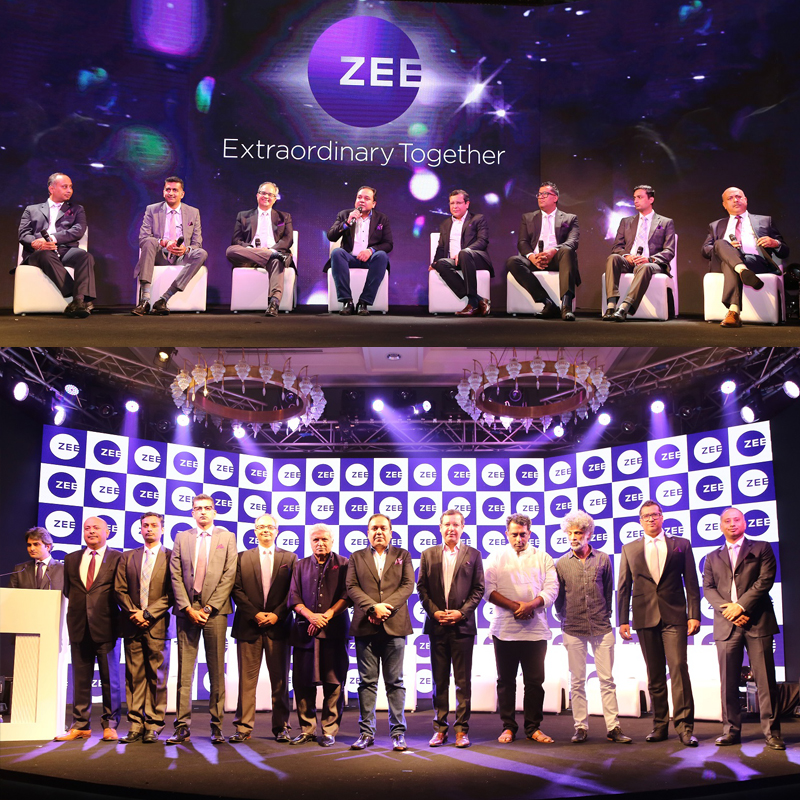
    With its new brand ideology and purpose – “Extraordinary Together”, ZEEL aspires to provide a unified brand experience and to delight consumers across the world by creating extraordinary entertainment and experiences that inspire to transcend the ordinary and become extraordinary.

    ZEEL is present across broadcasting, movies, music, digital, live entertainment and theatre businesses, both within India and overseas. ZEEL has more than 250,000 hours of television content and houses the world’s largest Hindi film library with rights to more than 4,200 movie titles across various languages. ZEEL has also produced several movies for theatrical release and is the fastest growing music label in India. It has presence in the digital space with ‘dittoTV’ and ‘OZEE’ and has also ventured into live events.

    More information about ZEE and its businesses is available on www.zeetelevision.com.

  • Diverse language content the pivot for ZEE5’s growth

    Diverse language content the pivot for ZEE5’s growth

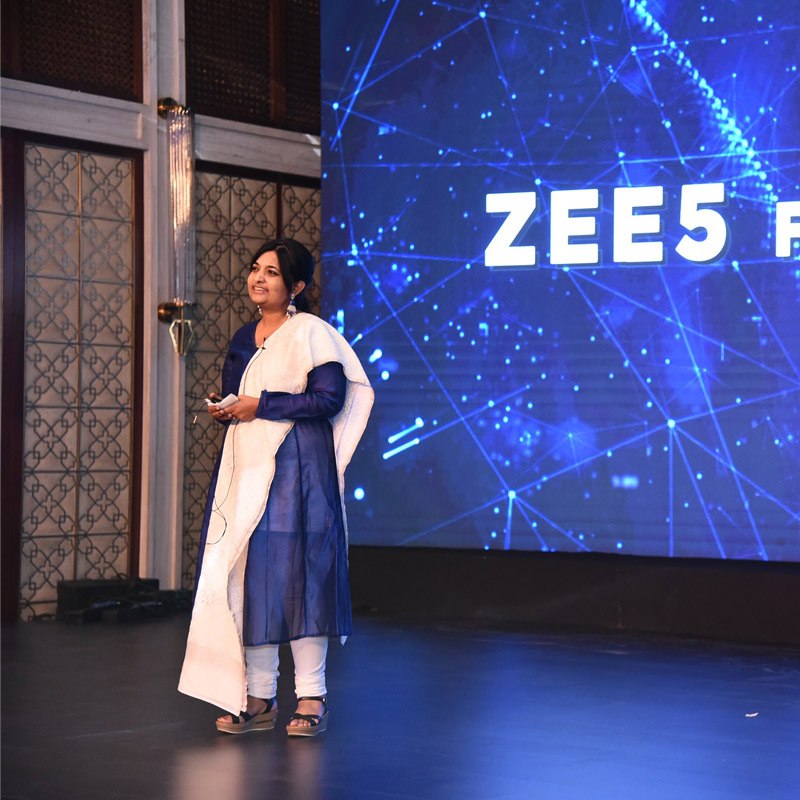
    MUMBAI: The Zee Group’s much anticipated new digital platform ZEE5 (Z5) has finally launched, a few months down the brand refresh that was given to media behemoth’s entertainment channels. Offering everything from Indian and international original content, movies, TV shows, music, live TV and health and lifestyle content, Z5 gives viewers the opportunity to pick their entertainment from 11 browsing (and content) languages—English, Hindi, Bengali, Malayalam, Tamil, Telugu, Kannada, Marathi, Bhojpuri, Gujarati and Punjabi.

    During the launch event, Zee International and Z5 global CEO Amit Goenka said, “As a global content company, our biggest strength is how well we understand our consumers and translate this into content they love. Every aspect of Z5 is based on our deep understanding of our consumers and their local ecosystem. It is both local and global at the same time and we know it is going to change the way you watch content.”

    Z5 is seeking to addresses the entertainment demands of a young India that is increasingly digital savvy and globally connected, yet fundamentally rooted in its culture. Aggregated and original content is offered in the 11 languages as well as Odiya. “Digital will play a critical role in fuelling this growth and we wanted to ensure that we had a strong offering and presence in the space. With the launch of Z5 we see ourselves catapulting into the next phase of growth,” added Amit.

    A silent preparation of 1.5 years went into Z5 to include content and features that cannot be found on any other Indian platform. While revealing the mystery of the silence Zee Entertainment Enterprises MD and CEO Punit Goenka said, “We have invested immense amount of time and energy in creating and acquiring rich and engaging content for Z5, which I am sure will be cherished by our viewers across the nation and worldwide. The launch of Z5 further strengthens us as a media and entertainment powerhouse.”

    While talking about the strategies for India, ZEE5 digital head Archana Anand said, “We see ZEE5 as filling a definite need-gap in the Indian market for strong language content and navigation experience across Indian languages. Our platform will be as relevant to the urban elite as it is to the new digital audiences experiencing Internet for the first time. India’s digital story is going to be fuelled by new language consumers and that’s exactly who ZEE5 is for. 

    Our Brand Anthem celebrates this spirited new India, globally savvy, yet happiest in the language of their comfort. We believe this market to be hugely underserved and hence, see this approach as key to driving our India win.”
    Z5 is banking on India’s rich diversity of languages to bag it the popularity. “Our brand anthem celebrates this spirited new India, globally savvy, yet happiest in the language of their comfort. We believe this market to be hugely underserved and hence, see this approach as key to driving our India win,” she added. Tie ups have been made with regional producers for language content. 

    The platform’s brand anthem has been directed by Dangal director Nitesh Tiwari, composed by Amit Trivedi and written by Amitabh Bhattacharya. Keeping in mind the distinct audiences, two versions of the anthem have been created – one for the North market and one for the South, each catering to the specific market nuances for authenticity and connect.

    Z5 has a freemium pricing model with both free and paid premium content to cater to a mix of audiences. Viewers who subscribe to the subscription pack will get access to the entire library of content at a special launch offer price of Rs 99 per month instead of the actual monthly pack price of Rs 150. The advertisers will have a strong involvement in their free wall offerings. Those with Zee’s older digital platforms, i.e. Ozee will automatically upgrade to Z5, whereas Ditto TV will ask for an upgrade from the viewer. However, originals, international movies, old shows, Zee theatre and many more things will fall under its paid offerings. The live news TV offering will not only provide Zee News but also other news broadcasters’ feeds on it.

    People can watch 100 movies that have never been shown on TV with subtitles and with dubbing in their language of choice. Fresh series will be either launched together or on a weekly basis. Punit said that Z5 will focus towards the production of kids’ content in the near future. Anand also added that they will look at acquisitions in the kids’ space in regional languages. 

    Z5 is also available as a progressive web app (PWA) to address the patchy connectivity and low phone storage scenarios.

  • Union Budget 2018: Industry expects govt to favour consumption

    Union Budget 2018: Industry expects govt to favour consumption

    MUMBAI: Union Budget 2018 has snuck up on us. This Thursday, the government will unveil its budget for fiscal year 2018-19 and many market watchers are expecting a slew of incentives for businesses. After a difficult year, some course correction is certainly on the anvil. Here’s what some of the leaders in the industry had to say:

    public://puneet-goenka_1.jpg

    “In the rapidly changing landscape, we believe that the distinction between telecom, IT and broadcasting technology has disappeared and that a convergence of these sectors is required. A positive consideration of this demand in the 2018 budget will certainly help in the rapid growth and generation of substantial employment in our country. Also, similar to the telecommunications sector, television broadcasting organisations including direct-to-home (DTH), cable services and headend in the sky (HITS) require huge investments in setting up technology and distribution networks and, as such, are ‘asset-rich’ organisations. Hence, just like in the software and telecom sectors, it is necessary to allow for the carry-forward of losses in the case of amalgamation or merger of companies in the broadcasting sector.

    For the budget 2018, we are also hopeful that the government will issue a clarification stating that transponder hire charges are not ‘royalty’ in order to avoid protracted litigation.” 

    Indian Broadcasting Foundation president Punit Goenka 

    public://ashish_0.jpg

    “I anticipate that the Union Budget of 2018 will drive growth and whenever the economy grows, the advertising industry benefits. I see a particular thrust from the government in the areas of infrastructure development as well as for rural development. We have had a reasonably good monsoon, rural economy is starting to look up and another push in the same direction  will significantly benefit all consumption-led sectors, including FMCG, which are heavily advertised.

    I think the government will make efforts  to ensure that there is more money in the pockets of the common man, hopefully by giving some relief on the income tax front and will use technology for better tax compliance, thereby keeping the fiscal deficit under control. The fiscal deficit is very important from the point of view of controlling inflation.

    Specifically for the advertising industry I hope that there are some simplifications around the services part of GST that are announced. While GST has been a progressive step for the country, my feeling is that the services sectors  were relatively less focused upon and hence the step that was supposed to simplify indirect taxation has actually ended up complicating it significantly, particularly for advertising agencies that operate out of different cities and states and service clients who may be based all over the country. Under the thrust of the government for ease of doing business, I hope this issue gets addressed. The advertising industry doesn’t mind paying the taxes but needs simplification of processes, which are taking away too much of unproductive manpower and blocking working capital.

    Over all I feel that India is poised to see  good economic growth over the next 10 years and a little bit of help from the government policies, through the Union Budget of 2018 will further help the economy outperform the rest of the world.”

    —     Dentsu Aegis Network chairman and CEO (South Asia) Ashish Bhasin

    public://sahil-chopra_0.jpg

    “The announcement of Union budget is just around the corner with discussions & debates being conducted around it. There is hush-hush regarding the assumptions when everyone is expecting a positive release. As far as digital is concerned, besides the allocation of budgets on Digital Infra Development, there is a need to initiate a few reforms. Digital is the fastest growing sector of India and should be highly benefitted from the Union Budget.

    As per my understanding, budgets should be allocated to PSUs for investing in digital marketing. This will lead to a win-win situation as for the organisation the digital mediums will help gain recognition and support. While the digital agencies will spread awareness and educate the audience about the benefits of the organisation. Even the digital organisations paying taxes dutifully should be recognised well and given the right opportunities to flourish.

    Even on a personal level, the entrepreneurs who are platinum taxpayers should be given certain advantages as a reward for their contribution towards the nation. Any individual paying heavy taxes on time should be entitled to such benefits which could be in the form of a card similar to the other identity cards we have. This will not only be a welcomed move, but it will also ignite the zeal among the others to be a part of that category thereby benefitting the country.

    However, what the budget is going to be will be interesting to witness and I hope for some reforms that help the digital sector in various ways.”

    — iCubesWire CEO and founder Sahil Chopra

    public://mitesh-shah_0.jpg

    “Given the NDA Government’s strong intent to drive reforms, we definitely anticipate some rationalisation in tax structures and strengthening of related  infrastructure. While the GST council has already taken some proactive measures, we hope the Government will reemphasize on a roadmap for simple and business friendly GST compliance and administration systems. More importantly, over the course of next few months, initiate all necessary constitutional amendments to ensure that there are no other State or Local Body Taxes, as they defeat the very purpose of bringing uniformity in tax structure, while ensuring proper input credit for taxes. 

    For the accelerated growth of the start-up sector and economy at large, it’s important that the push for digitisation should continue with more vigour. Initiatives by the Government including waving MDR on debit cards on transactions upto Rs 2,000 really go a long way in attaining this objective and we hope, on similar lines in post-budget period, rationalisation mechanisms are introduced around credit cards rates as well–which will continue to be a major mode of payments. UPI should be made more cost effective and should be given a much larger push to increase its adoption in India. 

    We do expect the Government to take up and address IT infrastructure and allied issues this year, taking into account some serious issues that are being faced by the entertainment/media sector such as Piracy. The IT laws must be strengthened to address the root cause for these issues that are constantly causing a substantial hit to the overall revenues for the sector.” 

    — BookMyShow head of finance Mitesh Shah  

    public://Rubeena-Singh_0.jpg

    “In this budget, we look forward to the government focusing on the upliftment of the rural economy and job creation. 49 per cent of the Indian population is engaged in the rural economy. More money in their hands will lead to rebalancing of media spends by corporates that provide goods and services to the rural market. This will be a positive for the advertising industry.”

    —     iProspect India CEO Rubeena Singh

    public://amit-shukla_0.jpg

    “India’s hospitality industry is one of the key drivers of growth of its service sector. With a turnover of USD 71.53 billion in 2016, it accounted for 9.6 per cent of GDP and was the third largest foreign exchange earner for the country. The sheer volume of business it is generating makes streamlining GST on hospitality imperative for Budget 2018.

    Government has somewhat eased its taxation policy by downward revision of rates or rationalization of tax slabs, however, a more detailed approach for resolving issues that still plague GST is required. For instance, IGST in not available to Hotels, tax is calculated on declared rather than actual tariffs, luxury travel and stay are taxed at considerably higher rates, food and beverages sector suffers from the loss of input tax credit, all of which increase costs for end-users and subliminally disincentivises consumption. With experts predicting overall industrial growth between 100 and 200 per cent in next couple of years, 2018 should see a significant expansion in HORECA industry; hence it would be highly beneficial if government would fuel this growth with some planned tax benefits.

    Hotel industry is highly capital intensive. Granting infrastructure status to this sector would enable hotels secure long term loans at competitive rates, which would help reduce room tariffs. Facilitating loan availability to small and medium enterprises under Mudra scheme with easier accessibility and larger outlays and granting tax benefits to remote businesses can further help the industry.

    In addition, leading hospitality industries around the world revolve around a core group of highly skilled individuals – an area where India still lacks. Benefits of creating and maintaining a talent pool of skilled manpower would be significant. Were government to allocate some portion of the budget to this area, it would go a long way in making India the global leader in the hospitality sector.”

    —Pursuite.com CEO Amit Shukla

  • Zeel numbers up on higher ad revenue in third quarter

    Zeel numbers up on higher ad revenue in third quarter

    BENGALURU: Subhash Chandra-led Zee Entertainment Enterprises Ltd (Zeel) today reported an 11.5 per cent and 28.3 percent increase in consolidated total revenue and profit after tax (PAT), respectively, for the quarter ended 31 December 2017 (Q3-18) as compared with the corresponding quarter of the previous year (year-on-year [y-o-y]). Zeel’s consolidated operating revenue, which comprises advertisement, subscription and other sales and services revenue, rose by 12.1 percent y-o-y in Q3-18.

    Zeel reported consolidated total revenue of Rs 1,886.11 crore for Q3-18 as against Rs 1,691.58 crore a year ago. PAT for the quarter under review was Rs 321.72 crore vis-a-vis Rs 250.80 crore for the corresponding year ago quarter. Consolidated operating revenue was Rs 1,838.07 crore up from Rs 1,639.12 crore in Q3-17.

    Adjusted earnings before interest, taxation, depreciation and amortisation (EBITDA) for Q3-18 increased by 15.2 percent y-o-y to Rs 594.42 crore (31.5 percent margin) from Rs 515.79 crore (30.5 percent margin). Adjusted EBITDA includes cost of fair value loss on financial instruments at fair value through profit and loss (net) of Rs 41.92 crore in Q3-18 and of Rs 71.35 crore in Q3-17.

    Operating revenue break-up

    Ad revenue in the quarter under review increased by 25.8 percent y-o-y to Rs 1,202.02 crore as compared with Rs 955.45 crore. Zeel said in its earnings release that adjusted for the sale of its sports business, domestic advertising grew by 30.4 percent to Rs 1,137.3 crore. Subscription revenue declined by 15.5 percent y-o-y to Rs 501.69 crore from Rs 593.46 crore. Adjusted for the sale of the sports business, domestic subscription revenue grew by 7.5 percent to Rs 403.6 crore. International subscription revenue stood at Rs 98.1 crore. Other sales and services revenue swelled by 48.1 percent to Rs 134.36 crore.

    Other income decreased by 8.1 percent y-o-y to Rs 48.04 crore in the quarter under review from Rs 52.46 crore.

    Company speak

    Zeel chairman Chandra said, “It is very heartening to see the rebound in the economy after four quarters. The initiatives taken by the government had some short-term impact on the growth but these measures will strengthen the economy in the long run. The Indian M&E sector will be a beneficiary of this growth story as people spend more time and money on consuming entertainment content. ZEEL, with its strong portfolio of entertainment offerings, is well positioned to capitalise on this opportunity.”

    Zeel managing director and CEO Punit Goenka said, “We are delighted to deliver a strong operating performance during the quarter. The slower growth in the last four quarters was due to specific events that required advertisers to recalibrate spends. As the impact of these factors is now behind us, ad spends have bounced back strongly and the outlook remains encouraging. The recent cut in GST rates across a wide category of products should aid the growth. Our domestic ad revenue growth of 26 percent is a testimony to the fact that television continues to remain the most effective medium for brand building. With a dominant time share along with an increasing reach, television will remain an important medium for advertisers in the foreseeable future. On top of this, digital platforms are driving incremental video consumption which represents another growth opportunity for content monetisation. Our new digital platform, Zee5, scheduled to be launched in February, will enable us to capture this growth.

    “The domestic subscription growth for the quarter was at 7.5 percent. The growth so far has been lower than what we had last year as the content deals with our distribution partners are taking slightly longer to conclude due to litigations regarding the TRAI tariff regulation. Last year we had closed majority of these deals in the second and third quarter. However, this does not have any significant impact on our full year outlook for subscription growth.”

    In a tweet today, Goenka had this to say:

    Let us look at the other numbers reported by Zeel

    Zeel’s total expenditure increased by 8.9 percent y-o-y in the quarter under review to Rs 1,338.38 crore from Rs 1,228.60 crore. Operating costs reduced by 4.3 percent y-o-y to Rs 672.98 crore from Rs 703.50 crore. Employee benefits expense in Q3-18 increased 8.2 percent y-o-y to Rs 153.54 crore from Rs 141.88 crore. Advertising and publicity expenses increased by 71.2 percent y-o-y to Rs 179.62 crore from Rs 104.90 crore. Other expenses increased by 37.2 percent to Rs 237.51 crore from Rs 173.05 crore.

    Also Read:

    Zeel ad revenue & profit up in Q2 despite GST impact

    ZEEL reports steady Q1 FY2018 results

    Launch of ZEEL’s lifestyle channels round the corner

  • ZEEL’s Amit Goenka: Target 3 billion audiences in the next 5 years

    ZEEL’s Amit Goenka: Target 3 billion audiences in the next 5 years

    MUMBAI: To conquer half the world – that is the aim of the 25-year old Zee Network. Barely weeks into the channel refresh of Zee Entertainment Enterprises (ZEEL) channels, the conglomerate has a new brand philosophy – ‘Extraordinary Together’.

    ZEEL CEO Punit Goenka admits that for the last 25 years it has been choosing the time slot for people to watch television. “But in next 25 years we have to listen to the consumers and where he wants to consume, in which format and through which medium. That is the biggest change we see going forward,” he adds.

    The company has reached 1.3 billion viewers globally with the presence in over 173 countries since 23 years. The foray into producing international content is recent and today Zee produces content in nine different languages. “We plan to produce more global content but 80 per cent will stay Indian content. We plan to target three billion audiences in the next five years,” says ZEEL International broadcast business CEO Amit Goenka.

    In India, ZEEL will soon enter the Malayalam market. Along with this, the network plans to launch its consolidated digital platform Z5 soon.

    Punit Goenka is optimistic that the company’s content will differentiate it from others. It will span Hindi and 11 regional languages, and a large film library in multiple languages. Though TV content will be on Z5, there will be original ones too.
    He also said and expressed his wish to take theatre to extreme heights both in India and abroad.

    Goenka clarified that ZEEL isn’t abandoning its earlier philosophy of Vasudeva Kutumbakam, but it is rather encompassing it all together.

  • Broadcasters, DPOs to crack down on piracy, analogue transmission

    Broadcasters, DPOs to crack down on piracy, analogue transmission

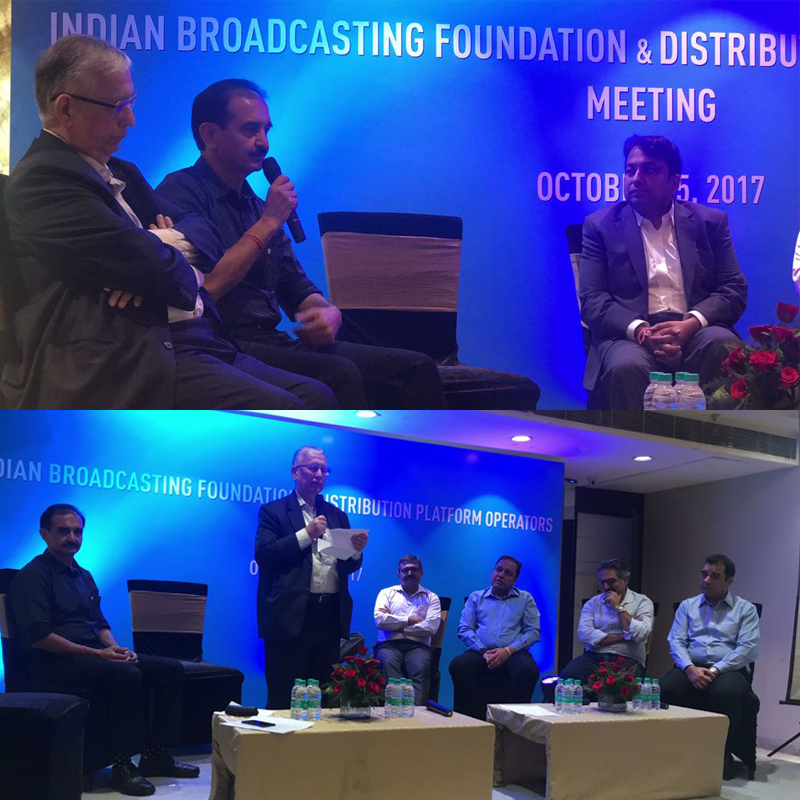
    NEW DELHI: There is general agreement among broadcasters and delivery platform operators including direct to home (DTH) as well as digital cable operators that a joint industry task force should be set up to check and report cases of piracy in the third and fourth phases of digital addressable system (DAS).

    There was general consensus that certain states – particularly Andhra Pradesh and Telengana – had high levels of pirated material on local television channels.

    Such were the thorny issues being discussed in a meeting held between the All India Digital Cable Operators Federation and the DTH Operators with the Indian Broadcasting Foundation (IBF) on Wednesday.

    As senior AIDCF member Ashok Mansukhani said that it was more appropriate for the stakeholders to meet in this manner than in courts of law.

    Among others, the meeting was addressed by IBF President Punit Goenka, Jawahar Goel of Dish TV, AIDCF President Rajan Gupta and senior office-bearer S N Sharma.

    Goel said there was an attempt by Punjab and other states to bring back what he termed as the ‘inspector raj’ by imposition of local taxes. Furthermore, he said broadcasters were free to give content to OTT or YouTube, but this should not be live as it would directly hit the DPOs like the DTH players and digital cable operators.

    The larger multi-system operators (MSO) said the inefficient handling of piracy by broadcasters was the cause of their suffering. Broadcasters neglect to take actiom against operators carrying analogue signal. There are small MSOs who do not have CAS & SMS system and do not follow TRAI QoS guidelines so broadcasters should refrain from giving content to them. Hence a joint industry task force should be made to raid such operators / MSOs and initiate legal action against those operators. The News Broadcasters Association should also be made part of this.

    Issues were also raised relating to OTT, Doordarshan’s FreeDish, and Reliance Jio and the DPOs alleged that providing signals to these entities led to huge losses to the digital cable and DPOs.

    Answering various question in a presentation, Goenka said OTT rights and digital cable rights were two different issues and should not be confused. OTT was an interactive and on-demand platform and in any case was never free being part of a subscription bandwidth. Thus this should not be compared with other platforms.

    YouTube content are only the ones that have already been broadcast and therefore, there was no conflict of interest. He denied any concessions to Reliance Jio and said it was in fact paying more than digital cable.

    He expressed concern by the Jio announcement that its mobile phone could receive the signals of not only new LCD/LED television sets but also the old sets. AIDCF said that this would bring Jio under TRAI’s regulations.

    Goenka said he will advise IBF members to take up the issue with OTT providers, especially Reliance Jio. In any case, he said the present contracts forbid such activity.

    He said broadcasters are not offering OTT content on television screen by connecting Reliance Jio phone through a cable and they prohibit such an activity. But agreeing with the concern of the AIDCF, he said this would be rigorously monitored and action will be taken in case there is any violation.

    Referring to the AIDCF charge that pay channels were being given as Free to Air (FTA) to Doordarshan’s FreeDish after paying huge carriage fees, Goenka said that broadcasters like Star and Sony are offering paid live content free on Freedish but with a time lag of one year. He agreed that this should be implemented across all genres and it should be completely free to all platforms.

    He said that in any case digital cable had more channels than FreeDish which primarily comprised FTA channels and so it was unreasonable to compare the two especially as the content was also being provided to digital cable operators.

    The speakers from AIDCF said MSOs have invested around Rs 200 billion in digitisation and are yet to get the return on their investment. This is primarily on account of the growth in rates that the broadcasters demand every year. Hence it was now the question of viability and survival of the MSOs that broadcasters should come out with their MRP based pricing.


  • Zeel ad revenue & profit up in Q2 despite GST impact

    Zeel ad revenue & profit up in Q2 despite GST impact

    BENGALURU: The Subhash Chandra led Zee Entertainment Enterprises Limited (Zeel) reported a 2.9 percent increase in advertising revenue for the quarter ended 30 September 2017 (Q2-18, current quarter) as compared to the corresponding year ago quarter (y-o-y). Zeel says in a press release that despite the adverse impact of GST on advertising, domestic advertising grew by 5.8 percent y-o-y, on a comparable basis (excluding sports, RBNL and IWPL) to Rs 9028 million.

    Zeel’s net profit after tax (PAT) for the period more than doubled (2.48 times) y-o-y in the current quarter to Rs 5908 million as compared  to Rs 2384 million due the slump sale of its sports broadcasting business that resulted in a net gain of Rs 1346.1 million for the current quarter. Zeel’s subscription revenue declined 14 percent y-o-y to Rs 5014.1 million in the current quarter as compared to Rs 5833.4 million. However, adjusted for the sale of sports business, domestic subscription revenue grew by 7.2 percent to Rs. 4043 million. International subscription revenue stood at Rs 971 million. Other sales and services revenue in the current quarter was lower y-o-y at Rs 939 million as compared to Rs 1529.4 million.

    Overall, Zeel’s revenue increased 2.7 percent y-o-y in Q2-18 to Rs 17,851.8 million on higher other income as compared to Rs 17,386.7 million in Q2-17. Other income in the current quarter more than quadrupled y-o-y to Rs 2031.3 million as compared to Rs 432.3 million. EBIDTA in the current quarter was almost flat y-o-y (up 0.4 percent) at Rs 4912 million as compared to Rs 4892 million.

    Company speak

    Zeel chairman Subhash Chandra said, “We are now a 25 years old organisation and it is with great satisfaction and pride that I look back at this journey and the numerous milestones we have achieved. Starting as India’s first private television channel, we have grown into a truly global entertainment content company with a worldwide footprint and a strong presence across all forms of entertainment. Indian M&E industry has grown by leaps and bounds but it is just the beginning. I am confident that we will continue to shape the entertainment industry, much like we have done over the last two and a half decades.”

    Zeel managing director and CEO Punit Goenka commented, “At Zeel, it has been an exciting 25 years during which we significantly increased our viewership and expanded our regional as well as global presence. This was achieved while delivering a strong financial performance. It has been possible because of our ability to evolve our content offerings in line with changing consumer preferences. Another step in this evolution would be the launch of our new digital product, ‘Z5’, in the second half of this financial year. It will offer an unrivalled content catalogue appealing to all demographics and bring unique viewing experience to the consumer.”

    “We are satisfied with our performance against the backdrop of tough macro-economic environment during the quarter. Our advertisers were negatively impacted during transition to GST which led to a temporary pull-back on their ad spends. Post the decline in the first half of the quarter, the growth recovered strongly and is back on track. Despite the adversity, our domestic ad revenue grew at 5.8 percent on a comparable basis,” said Goenka.

    “The domestic subscription growth for the quarter was at 7.2 percent. As against the early closure of deals last year, content deals with distributors are taking slightly longer due to litigations regarding the TRAI tariff regulation. However, our full year outlook for subscription growth remains unaltered. Despite the loss of advertising revenue and elevated expenses during the quarter, we have been able to deliver a healthy margin of 31 percent,” assured Goenka.

    “The acquisition of 9X Media follows our stated strategy of expanding into regional markets and niche genres. 9X Media’s six music channels enjoy leading market shares in their respective segments and will further strengthen our entertainment offering to the consumer. The channels will benefit immensely from our network’s strength to achieve higher growth potential and cost synergies,” revealed Goenka.

    Let us look at the other numbers reported by Zeel

    The company’s total expenditure in the current quarter declined 9.6 percent y-o-y to Rs 10,909 million from Rs 12,062 million. Employee Benefit Expense in Q2-18 increased 18.4 percent y-o-y to Rs1814 million from Rs 1533 million. Operating costs in the current quarter declined 24.7 percent y-o-y to Rs 5789 million from Rs 7688 million. Advertising and Publicity expenses increased 22.3 percent y-o-y in Q2-18 to Rs 1410 million from Rs 1153 million in Q2-18. Other expenses increased 12.3 percent in the current quarter to Rs 1896 million from Rs 1688 million in Q2-17.

    Also Read:

    Zee Content Hub originals slate for DISCOP SA: First Indian-African drama, lifestyle and factual programmes offered

    Zee TV new logo unveiled; refreshed digital platform Zee5 launch soon

    ZEEL’s Punit Misra: Our new logo signifies aspiration of Indian middle class