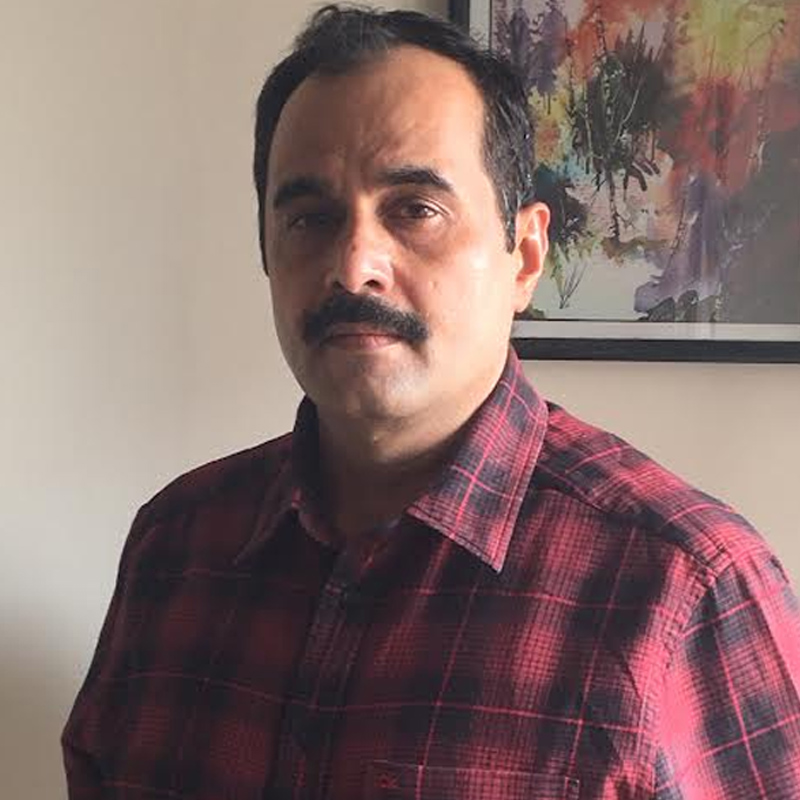
Tag: Puneet Avasthi

  • Audiences have replaced slots as the new language of transaction: Kantar’s Puneet Avasthi

    Audiences have replaced slots as the new language of transaction: Kantar’s Puneet Avasthi

    Mumbai: Following the ratings controversy in the US that led to the revocation of Nielsen’s MRC accreditation, the TV measurement Company late last month announced an “Impressions First Initiative” to support an industry-wide move to impression-based buying and selling in local markets across the US. This shift to an impression-based currency will lay the groundwork for implementing Nielsen ONE – Nielsen’s single cross-media product – across local, national, and digital measurement.

    The alacrity with which the Company has acted indicates the growing importance of CTV measurement for advertisers and how it has been at the core of the entire unrest. Closer home, similar voices are being heard, though at a much lower intensity. One may recall that at the height of the Barc TRP controversy last year, a section of the industry had expressed dissatisfaction with the ratings agency’s efforts and even intentions to bring forth a unified, cross-platform measurement system.

    According to Ormax Media’s recent research, the Indian OTT audience universe is now 353.2 million people, translating into a penetration of 25.3 per cent. This means that one in four Indians watched online videos at least once in the last one month. CTV viewing in India increased by 31 per cent as per mediasmart’s India CTV Report 2021. Amazon streaming services that were once considered niche in India are today being accessed by 99 per cent of the pin codes in the country. Now that Amazon has turned into a super app with the launch of Prime Video Channels, further massification is expected. Add to all this, the availability of linear TV on OTT platforms, and the medium becomes a staple in media plans for brands across categories.  

    Needless to say, advertisers are clamouring for a third party measurement system for OTT and a unified metric across linear and connected TV that serves all their data needs. While there is no industry body that has been recognised as the standard, individual players both global and independent, are working to meet marketers’ demands, with each contributing its own unique technology, methodology as well insights to evolve a robust and competitive OTT measurement ecosystem in the country.

    Taking the discussion forward, Indiantelevision.com’s Ashee Sharma connected with Kantar director (specialist businesses) –South Asia Insights Division, Puneet Avasthi to understand the work being done by the data and insights Company in the field of OTT measurement in India, and the shift in TV measurement over the years.

    Edited Excerpts:

    On the big shift in TV measurement

    The advertising market has seen a significant shift in recent years with the old order of having TV commercials placed on (time) slots changing. Instead of slots, audiences are being sold today, and that has become the new language of transaction. In the old linear TV viewing world where there used to be a fixed time for a content piece, we were measuring the viewership for a particular time spot. But now as viewership and programming become non-linear we have to offer audiences in terms of size and profile, at a particular point in time, and on the content of choice. This effectively means that what used to be a time-centric measurement system is today viewer-centric.

    On the challenges of measuring OTT

    OTT Measurement is challenging because, one has to not just measure the time when the audiences are available online but, also what content are they watching on the OTT platforms. In the earlier world, the task was principally to estimate how many people are going to be watching TV and which channel, and that could be used to ascertain the particular programme being watched and therefore you had the rating. Now you are estimating not just the viewership at a particular time slot, but also looking at the content that has been specifically beamed into a device. So, media measurement is going to be about both time as well as the content.

    On the problem of duplication

    In a world of multi-screeners, it is possible that a million impressions that have been counted might actually be fewer because the same individual who is toggling screens may have been served the ad multiple times. Therefore, when it comes to OTT viewership we should ideally be capturing the frequency i.e. how many times someone has watched a particular ad, and not how many times it was served. The latter is what the OTT platforms are able to tell anyway. 

    On how Kantar is addressing these issues

    Kantar, along with its partner VTION, measures OTT viewership through a consent-based app that can be installed on android devices of people who have been recruited into a 16000-strong panel online. We focus on all on-mobile viewership in towns that have a population of over one lakh. Since it is a recruited panel we have a fairly good understanding of the audience profile. The system allows us to tell the time of viewing and the content that is being watched. It is also possible to extend this service to measure ‘what ads have been served on various devices’, and therefore, theoretically speaking, it is possible to assess the reach of advertising, online.

    Another level at which we measure OTT is through the annual baseline or internet usage study called ICUBE. It is conducted on a sample size of 75000 to determine the reach of the internet across urban and rural India. Within that we track the usage of different internet services which includes video entertainment as well; OTT specifically. This gives us an idea of the reach and how it has evolved over a period of time for different OTT platforms.

    On Convergence

    Eventually, there has to be a convergence where one is able to integrate the viewership of programmes across different modes of content delivery, whether linear on OTT. That is something everybody is working towards. There are technologies that are available. 
  • KAM Summit ’21- Decoding the digital native kid: How kids influence the decision-making process

    KAM Summit ’21- Decoding the digital native kid: How kids influence the decision-making process

    Mumbai: Children have become an important consideration for marketers when they plan promotions for products/services meant for family consumption. Marketers are weighing in on buying decisions on products and services beyond those meant for children.

    At the session, ‘Decoding the digital native kid: How kids influence the decision-making process’ held on the first day of the KAM Summit 2021, Kantar senior executive director Puneet Avasthi decoded what today’s children are all about and how do the little ones connect with the world around them in the current times. He dived deep into what kind of idioms and personality type do they actually aspire for and how technology impacts their decision-making.

    Decoding the digital native kid, Avasthi went on to explain how the Indian kid has evolved. He mentioned that the children are probably more tech-savvy than most of the other members of the house, hence a larger influence. “Kids are the key pillars of growth for a variety of digital sectors, including entertainment, edutech, gaming and influence that extends well beyond.”

    He further added, “Kids highly influence food (buying as well as what they eat) followed by household items and kids’ products. Parents allow the kids to dictate their media consumption. More than a third of TV viewing kids buy the product seen in the ad, if they like the ad.”

    At least 75 per cent of the time, the child’s sanction and permission is non-negotiable when shopping for them. Parents today dare not pick anything for their children without the approval of their kid. In circumstances where something was picked up without the child’s approval, they did not use the product at all in most cases. The emotional state of the kids is linked to their performance. Doing well in studies/sports makes them happy, confident, and proud; while doing bad in studies makes them sad.

    Instead of the child seeking approval, parents are seeking approval when it comes to buying anything for the house, like furniture. So, the shopping decisions of the kids these days go beyond food, clothes, and stuff meant for them. Parents rely a lot on children and the choices of the young ones go beyond simply picking products based on their favourite colour or cartoon. They decide what they like on the basis of their exposure to technology and the advertisements they watch. Avasthi went on to say that if at all there is a negotiation, “the child is the winner clearly.”

    At 33 per cent of the purchase decisions concerning buying cellphones are taken by kids, as Avasthi’s survey pointed out. Similarly, in 33 per cent of the cases, the little munchkins end up influencing their family’s decision to buy TV sets as well. 

    “Indian kids like affectionate and intelligent characters like Doraemon and Chota Bheem. So, if you want to aim at mass appeal for their age-group, do more sober, simple, and intelligent characters. Communicate with the kids. They are the buzz creators with lots of positivity and influence,” pointed out Avasthi.

    Kids prefer ads that are reality-based. Although kids like ads with their favourite celebrities, they may not always like the product. But, an interesting ad generates word of mouth. Although fitting in with a group of friends is important for more than half the kids, the majority of them don’t want to copy or blindly follow their friends. They are individualistic. 

    “Kids are very impressionable. One in three kids end up buying what they see in advertisements online or on television. Children have a strong influence on purchase of high value items for the household, besides merchandise they need,” Avasthi concluded.

    You can watch the session here from 50:02

  • Great opportunities for BFSI, hygiene brands in rural India: Report

    Great opportunities for BFSI, hygiene brands in rural India: Report

    NEW DELHI: Consumers in rural India are increasingly concerned about health, safety, and future well-being, especially of the chief earners in their families, shifting their focus to better financial planning, revealed the recent Rural Covid Barometer Report, released by Kantar in partnership with GroupM’s experiential marketing unit- Dialogue Factory. The report stated that the rural Indian is balancing the budget by cutting on “indulgence” categories like cold drinks, ready to eat snacks like chips etc and diverting the savings towards hygiene products. They are also looking to buy health and insurance products, opening up a large market for the BFSI segment.

    The report aims to provide a unique, fact-based perspective on consumer sentiments, their consumption choices and the behavioural changes brought about by the pandemic. This survey was conducted in 17 Indian states and deep dives into the lives of rural consumers and their adaptations post-Covid2019, providing valuable inputs for any brand’s rural strategy.

    With one in three rural adults being impacted by Covid2019, the rural economy is likely to take a hit, stated the report. However, with fewer job losses and consequent reduction in the incomes of the affluent households, the overall impact on rural consumption pattern is likely to be muted in the future. This presents an opportunity for businesses to sharply target their products towards the upper end of the rural consumer spectrum.

    However, brands will have to focus on their distribution and last-mile connectivity, since product availability in the local village stores will significantly impact brand choices of the rural shopper.

    It also highlighted that like their urban counterparts, rural Indians are increasingly relying on digital services for their day to day activities. With the pandemic accelerating digital adoption, there is a huge potential for businesses and brands to leverage mobile as a medium to reach rural consumers.

    Dialogue Factory head of experiential marketing – APAC Dalveer Singh said, “Rural India has always had a higher degree of resilience which makes it more confident for a rapid recovery than the urban areas during these unprecedented times. This report, which is one of the biggest assessment of the impact of the pandemic on rural areas, speaks volumes on the new, defining values that are shaping rural India – resilience, planning for future, protection from falling sick and growing reliance on digital.”

    Kantar senior executive director – insights division – Puneet Avasthi added, “For businesses, we would recommend a regional prioritisation. We believe that western India is likely to bounce back earliest. On the other hand, indications seem to suggest that rural South might take longer to recover as the impact of Covid2019 on employment has been more severe, which in turn has depressed the economic outlook of consumers there. We see this as an opportunity for brands to deploy their resources across zones in a graded and phased manner.”

    The report also assessed the impact of reverse migration. The study suggests that nearly 53 million migrant workers in India have returned to their villages. 80 per cent of migrants who have returned due to Covid2019 come from five states.

    Avasthi noted, “With one out of three rural migrants not planning to go back to urban India, we are likely to see a huge shift in rural consumption choices. This will also affect the availability of labour in urban India”

    The report also highlights a deep sense of optimism regarding India’s economic future; stemming from healthy growth in the agricultural sector and near-universal reach of targeted government programs (75 per cent of all consumers claimed to have received at least one of the major government schemes for rural India; 66 per cent claimed to have received free rations under PM Garib Kalyan Yojana).

  • Kantar IMRB & Payback launch ‘shopper barometer’

    MUMBAI: Kantar IMRB and Payback have published a comprehensive report named Shopper Barometer that monitors the shoppers’ perceptions of the economy and their financial well-being that impacts their buying decisions. This is the first study to track sentiments among consumers thus providing a real-time view of validated spends and thereby create robust models to predict future spends.

    * Lower middle social classes (SEC B/C) i.e. petty traders, small shop keepers etc. showing signs of financial distress

    * Weakening of spend appetite in IT and Start-up hubs i.e. Delhi-NCR, Bengaluru, and Hyderabad while traditional manufacturing and trade hubs such as Mumbai and Chennai are more buoyant

    * Eating Out resilient even among those who have reduced spending overall

    * Fashion and Telecom to showing upward momentum despite above average change in relevant category CPI for urban markets

    * Contrary to expectations, the consumer market for Automotive is likely to be subdued this summer.

    Talking about the study, Kantar Shopper EVP Sushmita Balasubramaniam said, “Shopper sentiments are down but not out – the financial strain is more likely a response to the current economic environment rather than lack of cash or affordability. It is evident that they are prioritizing what they choose to spend on – some categories like fashion, dining out have shown an increase in spends. The sentiments also vary by cities; those which have a population less dependent on IT & IT enabled services are more buoyant. A Shopper Index is a valuable tool for marketers & retailers, especially since it provides inputs into category spends apart from the overall shopper sentiment. This can input into crafting strategies that will either ride the wave or address shopper concerns for specific categories.”

    Kantar IMRB’s Shopper Barometer surveys Payback’s (India’s largest Loyalty program) customers on two key areas i.e. spends and the disposition to spend – overall and by key categories. The study gives a complete read of the trendsetter urban markets and the consuming classes.

    Commenting on the study, Payback India VP and head of partner management Rijish Raghavan said, “Payback network spans over 50+ brands, primarily leaders across each of the consumer spend categories and more than 60 million members engaging across this network. This places us in a unique position to access and develop high level intelligence and insights on consumer behaviour and buying patterns. This partnership and recent study with Kantar is another step in this process to leverage the understanding of our network of consumers to create actionable insights for retailers across the country around consumer sentiments and spend patterns by understanding the pulse of the consumer. This study will enable marketers to develop strategies around personalised experiences and engagement customised to specific service categories and consumer choices.”

    Currently, the Shopper Barometer covers a strong panel of 1200 Payback customers drawn from the Upper to Middle Social Classes (SEC ABC) in the 8 leading metros of the country – Mumbai, Delhi- NCR, Kolkata, Chennai, Bengaluru, Hyderabad, Ahmedabad, and Pune.

    “Both Kantar IMRB and Payback track consumer spending across a large basket of categories. We have come together to combine our data strengths to create a bell weather indicator of Shopper Sentiments validated by spending patterns,” said Kantar IMRB senior ED – data alliance Puneet Avasthi.

    The study has been envisaged as a track with multiple waves over a period. The recently conducted first wave provides a good read on the Shopper sentiments post budget as a baseline. A follow-up wave is proposed later this year, to read shopper mood once GST starts settling in as also factors such as Monsoon etc.