Tag: Puneet Avasthi

  • Mathemedia: Shripad Kulkarni launches podcast for media’s next era

    Mathemedia: Shripad Kulkarni launches podcast for media’s next era

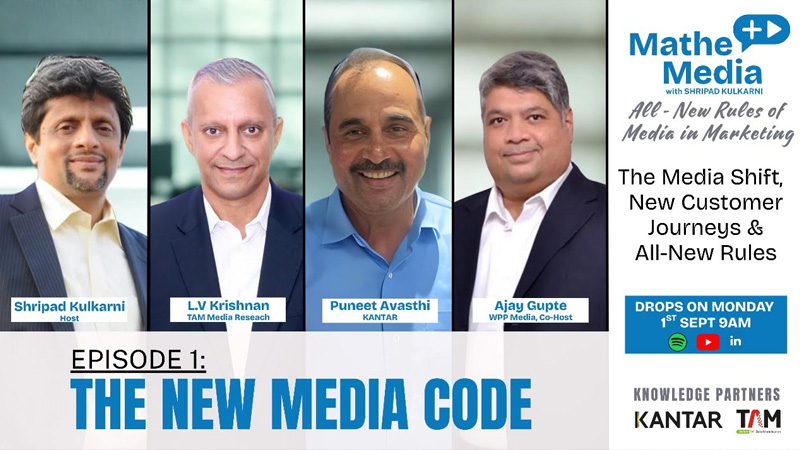
    MUMBAI:  Shripad Kulkarni, veteran media maven and former ceo of Vizeum, is launching MatheMedia, a first-of-its-kind podcast that promises to crack the code of India’s fast-changing media landscape.

    Streaming from 1 September 2025, the long-format series blends a CMO briefing with a masterclass, featuring over 25 industry heavyweights from advertising, tech, publishing, and brand leadership. The opening episode, aptly titled ‘The New Media Code’, will bring together voices such as L.V. Krishnan (TAM Media Research), Puneet Avasthi (Kantar), and Ajay Gupte (WPP Media) to decode the seismic shifts shaking the industry.

    “We live in a world of channel chaos, with more platforms and fragmented audiences than ever before,” said MatheMedia, founder, Shripad Kulkarni. “Gone are the days when we could think & work linear & measure with a linear mindset. Today’s marketer faces multiple challenges. With more category entry points, brand assets & personalised messaging needs, brand strategy is being redefined. Brand custodians face growing pressure from a crowded network of channels and partners. It’s time for new rules in strategy, media, measurement, and collaborations.”

    The podcast’s 12-episode debut season will tackle hot-button issues: the rise of AI in advertising, quick commerce, evolving consumer journeys, and the urgent need for unified, privacy-compliant measurement systems. Expect candid debates, sharp insights, and a dash of storytelling to simplify complex industry jargons.

    Guests lined up include Schbang’s Akshay Gurnani, Google India’s Priya Choudhary, Dentsu Creative Isobar’s Sahil Shah, and India Today’s Vivek Malhotra, to name just a few. Think of it as a roundtable where India’s top media minds redraw the playbook for marketers navigating chaos.

    Kulkarni, who has advised marquee brands from Fevicol and BMW to Airbnb and Yes Bank, brings his three-decade expertise and signature wit to the mic. His goal is to help professionals not just adapt to disruption, but shape it.

    Episodes will drop every Monday across Spotify, YouTube, LinkedIn and Instagram. So, whether you’re a CMO, a curious marketer, or just wondering why your ads keep following you around the internet, MatheMedia might just be the formula you need.


  • Kantar study: CTV revolution gains ground as 23 per cent  Indians ditch linear TV

    Kantar study: CTV revolution gains ground as 23 per cent Indians ditch linear TV

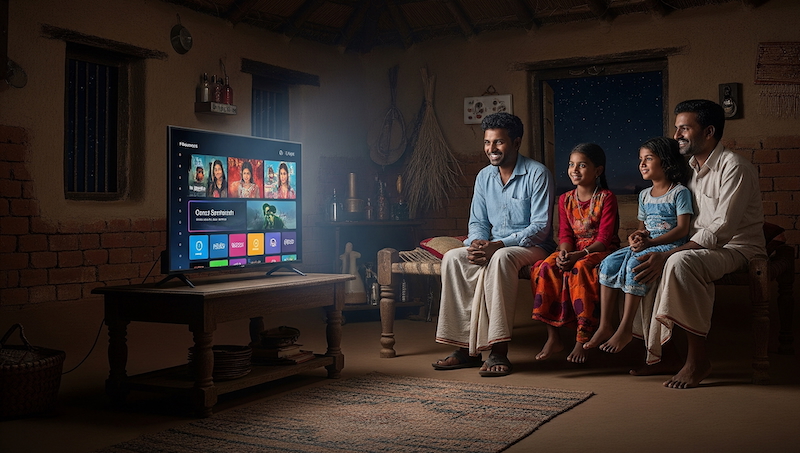
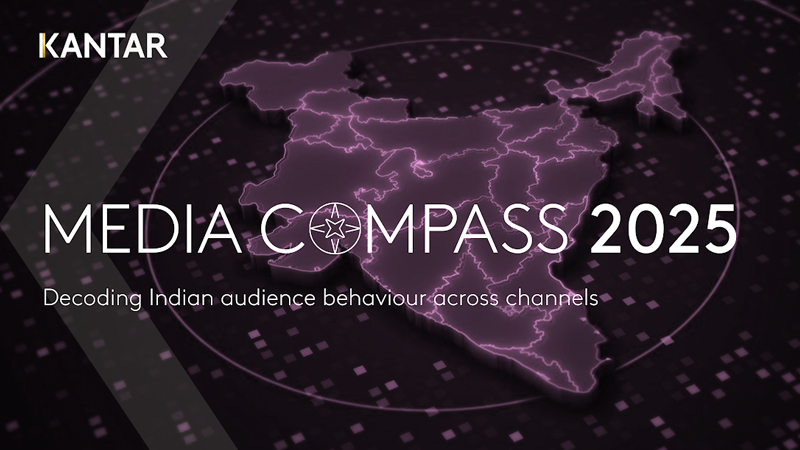
    MUMBAI: India’s media landscape is turning the page, and the headline is clear: Connected TV (CTV) is booming, and one in four Indians is now digital-only. That’s the key takeaway from Kantar’s Media Compass 2025, which maps the country’s evolving media consumption habits across linear TV, print, and digital.

    With a whopping 87,000-strong sample and quarterly tracking, Kantar’s new offering aims to replace outdated guesswork with data-driven firepower. And the early signs are disruptive: 35 million Indians have jumped on the CTV bandwagon, and 23 per cent of the population now accesses the internet without watching a second of linear TV.

    While linear TV still claims 58 per cent monthly reach, the shifts are seismic. CTV, once a metro darling, is now reaching deep into rural India. And digital-only audiences are mushrooming among young, male, and lower-income demographics—dispelling old myths and throwing up new marketing equations.

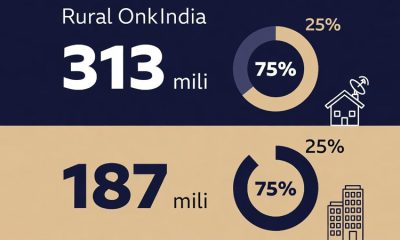
    Media preferences split starkly by age: 55 per cent of Indians aged 15–34 favour OTT and social platforms, while 44 per cent of those above 45 remain loyal to the TV set. Notably, 75 per cent of digital-only and linear TV viewers reside in rural areas, demolishing the notion of urban dominance.

    CTV remains a premium medium, with its incremental growth concentrated in NCCS A households, while digital is democratising access in lower-income groups.

     Kantar director – specialist businesses, insights division (south Asia) Puneet Avasthi said: “In today’s fragmented and fast-evolving media landscape, brands are under pressure to make every media rupee count. Yet, most decisions are still being made using outdated or incomplete data, leading to suboptimal media planning and missed connections with consumers. Media Compass 2025 aims to correct this and equip advertisers with timely, in-depth insights across platforms- enabling smarter media planning, stronger audience engagement and sharper targeting for maximum impact.”

    The message to marketers? India’s media map is redrawn. The compass has shifted. Time to follow the data.

  • Media gets a reality check as Kantar maps India’s new viewing habits

    Media gets a reality check as Kantar maps India’s new viewing habits

    MUMBAI: In a world where content is king and attention spans are currency, India’s media playbook is in desperate need of an update and Kantar just handed the industry a fresh set of rules. With the launch of Media Compass, the insights giant has dropped a data bomb, charting a 360-degree view of how Indians are consuming media across TV, print, digital, and even influencer content in 2025.

    The numbers are as revealing as they are disruptive. Based on a rolling sample of 87,000 consumers with quarterly reporting, Media Compass throws a spotlight on emerging behaviours that marketers can no longer afford to ignore. For starters, a staggering 23 per cent of Indians are now digital-only, they’re online but off the TV grid entirely. Even more surprising: 74 per cent of these digital-only users live in rural India, upending the long-held urban-tech stereotype.

    While 58 per cent of Indians still watch linear TV every month, the small screen’s dominance is being nibbled away at by the rise of Connected TV (CTV). With 35 million new viewers, CTV has quietly become a premium battleground, especially among NCCS A households and younger male audiences. In fact, CTV viewership now splits evenly between urban and rural India, proving that the shift is not just a metro phenomenon.

    Age remains a clear divider. Viewers aged 15–34 are tuning in to digital (55 per cent), OTT (55 per cent), and social media (57 per cent), while the 45 plus demographic still prefers the comfort of linear TV (44 per cent). Meanwhile, both CTV and digital-only audiences skew 57 per cent male, signalling a need for more inclusive programming and targeting.

    Perhaps the most quietly revolutionary insight? Digital is not just democratising entertainment, it’s also redrawing the socio-economic map. Digital-only consumption is over-indexed among lower NCCS groups, showing that smartphones and cheap data are bridging access gaps once thought insurmountable.

    “We’ve gone nearly five years without a formal, holistic view of Indian media consumption,” said Kantar director of specialist businesses and insights division for South Asia Puneet Avasthi. “Media Compass is here to fix that. In a fractured landscape, we’re giving advertisers the clarity and precision they’ve been craving.”

    With quarterly updates and multi-platform granularity including cross-media interactions and influencer reach Media Compass doesn’t just raise the bar for media research in India. It torches the old one.

  • India’s faith tourism unveiled: Kantar’s insights on spiritual journeys

    India’s faith tourism unveiled: Kantar’s insights on spiritual journeys

    MUMBAI: Every morning, as the first rays of sunlight kiss the banks of the Ganges, Haridwar awakens to a symphony of temple bells and the resonant chants of priests. Here, faith isn’t just a belief – it’s a way of life.

    Across the country, from the towering gopurams of Tirupati to the serene dargahs of Ajmer Sharif, millions embark on pilgrimages driven by devotion and tradition, weaving India’s cultural fabric tighter with each journey.

    In a nation where the Brihadaranyaka Upanishad counts 33 crore deities, faith flows as freely as the rivers that nourish its plains. Festivals celebrating these gods often transform cities into oceans of colour, light, and devotion.

    And the devotion runs deep: as of 2023, Indians spent a staggering Rs 3.02 lakh crore on gods, rituals, and religious pursuits – 2.32 per cent of the nation’s GDP. Fast-forward two years, and this figure is likely to have quadrupled, reflecting the unshakable bond between Indians and their faith.

    According to Kantar’s TGI Report for 2024, one in four Indians now travels to a spiritual destination, making religious tourism a booming sector. Haridwar stands tall as the most visited site, followed by Shirdi, Tirupati, Ayodhya, and Ajmer Sharif – each place carrying its own story of miracles, faith, and divinity. Religious sites now outnumber schools and hospitals, becoming pillars of India’s social and economic framework.

    But this devotion raises poignant questions: Why do we have more temples than schools? Why do festivals outshine public healthcare initiatives in funding? And how does a country balance its cultural identity with pressing developmental needs? As faith drives millions to destinations like Shirdi, Ayodhya, and Ajmer Sharif, the impact of this spiritual odyssey on India’s economy and priorities becomes a tale worth unravelling.

    In a nation where gods outnumber mortals, the power of belief is not just a cultural phenomenon – it’s a thriving industry.

    In a pioneering move, Kantar is set to launch its Maha Kumbh Mela 2025 Report in April, offering granular insights into pilgrim movements, behaviours, and opportunities for brands to engage meaningfully with this growing audience.

    Kantar insights division-south Asia specialist businesses director, Puneet Avasthi commented, “Religious tourism significantly contributes to India’s economy, presenting unique opportunities for brands to forge authentic connections with audiences. Our Maha Kumbh Mela Report will provide actionable insights into consumer motivations, purchasing patterns, and engagement strategies for one of the world’s largest cultural gatherings.”

    Key insights from the TGI report:

    1    Haridwar’s dominance: Haridwar emerged as the top pilgrimage site, attracting 54 per cent of North Indian tourists. In contrast, Tirupati saw 82 per cent preference among South Indian visitors, reflecting regional cultural ties.

    2    Demographic dynamics: Pilgrims aged 25-44 dominated religious travel. Younger travellers (25-34) preferred Haridwar, while the 35-44 group gravitated toward Ayodhya.

    3    Gender disparity: Haridwar and Ayodhya showed significant male dominance among visitors, at 61 per cent and 69 per cent, respectively. This trend highlights the potential to create more inclusive travel experiences for women.

    4    Affluent travel: Religious tourism leaned heavily towards the affluent, with NCCS A-class individuals forming a significant share of the visitor base.

    This upcoming report will provide an in-depth understanding of pilgrim behaviours, including spending habits, travel preferences, and the role of digital platforms in enhancing experiences. It aims to empower brands with tools to create targeted, culturally relevant strategies.

    Kantar’s TGI 2024 surveyed 63,622 individuals, of whom 17,734 reported visiting religious destinations. The study spanned urban and rural areas, covering males and females aged 15-55 across socio-economic categories NCCS A-E.

    Kantar’s Maha Kumbh Mela 2025 Report is poised to bridge the gap between faith and commerce, enabling brands to navigate the intersection of culture, spirituality, and consumerism with precision.

  • Gen Alpha kids prioritise close bonds with parents over peers: Kantar Kidscan report India 2024

    Gen Alpha kids prioritise close bonds with parents over peers: Kantar Kidscan report India 2024

    Mumbai: Post-pandemic, Gen Alpha’s engagement with digital media has surged, significantly influencing family choices in food, entertainment, IT products, durable goods, and FMCG.

    To explore this generation’s impact, Kantar has launched the 2024 Kidscan India report, providing insights into the lives of nearly 2,500 children aged 5-14 and their parents across 14 Indian cities from NCCS A, B, and C households. The report examines Gen Alpha’s interactions with brands in food, beverages, technology, and media, with a focus on television and digital platforms, and delves into their preferences, ambitions, and lifestyle influences.

    Kantar director, specialist businesses, insights, South Asia, Puneet Avasthi said: “Gen Alpha is reshaping the family dynamic in ways we haven’t seen before. Their influence is far-reaching, from tech and entertainment choices to key household purchases. The 2024 Kidscan Report captures these shifts, providing brands with invaluable insights into the preferences and digital behaviours of this new generation. For brands, understanding Gen Alpha is not just an opportunity but an imperative to stay relevant in a rapidly evolving landscape.”

    Key highlights of the report:

    1.    Gen Alpha kids today enjoy enormous freedom and discretion in their career choices – 55 per cent of parents are allowing full discretion to their kids over their career choices.

    2.    Children are wielding growing influence over family purchase decisions across various product categories- 1.46X increase in incidence of parents taking into considerations their kid’s choice or opinion when purchasing a Smart TV as compared to 2022.

    3.    Gen Alpha is increasingly gravitating towards digital media, with online video consumption sharply rising – Kids now spend 60 per cent more time watching online videos than they did in 2022.

    4.    Gen Alpha is increasingly driven to a more digital recreational experience. 69 per cent of kids find video games more enjoyable than outdoor play.

    5.    Gen Alpha kids increasingly value close, friendly bonds with their parents over traditional peer relationships – 57 per cent more kids now choose to confide their secrets in their mothers over friends

  • Hybrid media & digital surge redefine rural India: Rural Barometer report 2024

    Hybrid media & digital surge redefine rural India: Rural Barometer report 2024

    Mumbai: WPP’s media investment group, GroupM, and Kantar, a global marketing data and analytics company, have released the fifth edition of the Rural Barometer report. This report provides insights into rural India’s current sentiments, consumption patterns, and economic behaviors, along with the growing adoption of digital technologies and their impact on various sectors, offering a detailed view of the rural landscape.

    The 2024 Rural Barometer highlights a 60 per cent increase in the average FMCG basket size among rural consumers, rising from 5.8 in 2022 to 9.3 in 2024, driven by a preference for convenience products. This growth reflects lifestyle changes and rising purchasing power in rural areas. States like Jammu & Kashmir (39 per cent), Maharashtra (41 per cent), and Odisha (26 per cent) show moderate FMCG basket growth despite fewer financial concerns. This trend is supported by rising rural incomes and diversified income sources, including salaried income.

    The report also reveals a divide: 19 per cent of rural individuals rely solely on agricultural income, with 82 per cent of them facing financial concerns, while the remaining 81 per cent with diverse income sources report less stress and larger basket sizes.

    In media consumption, rural India increasingly adopts a hybrid approach of traditional and digital media, with 47 per cent following this trend, especially in areas with better digital infrastructure. States like Bihar, Jharkhand, Uttar Pradesh, Madhya Pradesh, and Chhattisgarh, however, remain less digitally connected, requiring targeted media strategies.

    GroupM OOH solutions in India MD Ajay Mehta added, “The rural landscape is no longer just a geographical space; it’s a digital frontier ripe with opportunities. As rural consumers embrace online platforms, brands must adapt their strategies to meet them where they are. By investing in digital initiatives that resonate with rural India’s aspirations, brands can  contribute to the nation’s development and tap into a burgeoning market that promises substantial  growth.”

    “2024 Rural Barometer report shows that rural consumers are experiencing rising purchasing power and evolving lifestyles, as seen in increased basket sizes and a preference for convenience products, despite ongoing financial concerns. Regional differences in financial resilience are linked to diverse employment opportunities. We are also seeing rural media consumption shifting toward a hybrid of traditional and digital formats, though digital access remains uneven across states,” said Kantar director – specialist businesses, insights division – Puneet Avasthi.

    As rural India evolves, digital platforms are becoming crucial for engaging consumers. From payments and e-commerce to gaming and lifestyle content, the digital landscape is expanding. While traditional media remains important, a hybrid approach combining online and offline channels is key to reaching rural audiences. By understanding rural consumers’ needs and preferences, brands can tap into this growing market.

    Rural consumers are increasingly interested in lifestyle content, such as fashion, health, and travel, reflecting their desire for topics that align with their daily lives and aspirations.

    The report also highlights a shift towards digital payments, now used by 42 per cent of active internet users, and e-commerce, used by 23 per cent. This indicates growing financial and digital inclusion in rural India.

    Highlights:

    1. Rural India has seen a marked increase in the average basket size from 5.88 in 2022 to 9.3 in 2024, driven by higher consumption in convenience categories like RTE, beverages, etc.

    2. States where rural consumers have less concerns on the current financial situation, largely have shown higher growth in basket size.

    3. Rural consumers with diversified income streams display the least financial concerns and have larger monthly category basket size.

    4. Rural India’s media consumption is increasingly hybrid, with nearly one in two of rural consumers exposed to both online and offline media.

    5. Telecom and digital can be effective in providing incremental reach in Hindi-speaking markets.

    6. Digital platforms for payments, e-commerce, and gaming platforms are gaining traction, while genres like fashion, travel and fitness are popular among rural online users reflecting a growing interest in lifestyle-oriented topics.

  • Market Research Society of India elects new managing committee

    Market Research Society of India elects new managing committee

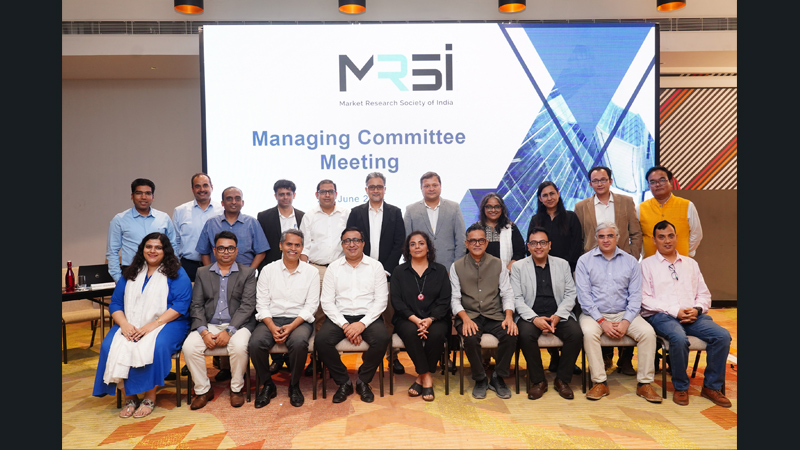
    Mumbai: Market Research Society of India (MRSI), India’s foremost industry-led market research body today announces the formation of the Managing Committee for the tenure of 2024-2027. TAM Media Research Pvt. Ltd. chief growth & partnerships officer Nitin Kamat was elected as the new President and takes over from Kantar managing director, South Asia, Insights Division,Pari Minocha. Nitin worked as the treasurer for MRSI’s Managing Committee 2022-2024. He was also part of the MRSI’s ISEC Committee.

    Additionally, Puneet Avasthi and Shuvadip Banerjee were elected as vice-presidents, Anila Vinayak as the secretary, and Parijat Chakraborty as the treasurer for MRSI. The new Managing Committee was announced at MRSI’s 36th Annual General Meeting held on 27 June 2024 in Mumbai.

    MRSI’s Managing Committee is represented by companies across Research Agencies, Research Users and Service Providers in the market research industry. The newly elected Managing Committee continues to stay committed to promote, protect, improve and propagate the highest quality standards in all branches of market research, thereby establishing India as a dominant force in the global market research industry. For the next couple of years, MRSI aims to capitalize on its recent successes while fostering a more collaborative network for its members, resulting in effective knowledge and resource sharing. Additionally, MRSI will continue to develop the next generation of market research professionals and instil a deep sense of pride in the impactful work being done by the Indian market research industry.

    Congratulating the newly elected president, Minocha said, “I am grateful for the unwavering trust MRSI members placed in the current Managing Committee. Key initiatives like the launch of the Socio-economic Classification System, ‘ISEC’, and the Market Sizing report of FY 2022-23, have given a new direction and scale to the vision of the association going forward. As I pass on the baton, I wish the incoming Managing Committee under the leadership of Nitin Kamat all the best.”

    Soon after its inception, the former Managing Committee adopted the strategy of focusing on three broad pillars- building Profile, building Pride and building the Network and reach. The committee was responsible for the successful implementation and adoption of the new Socio-economic Classification System, ‘ISEC’. Among the various industry stakeholders that adopted ISEC are The Indian Society of Advertisers (ISA), research users of various organisations such as ITC, HUL, Marico, Dabur India, etc., research agencies including Kantar, IPSOS, as well as key media agencies. Additionally, MRSI also indicated that the market research sector, once again recorded positive growth, and will formally announce The Indian Research & Insights Industry 2024 Update in September 2024.

    On being announced as the newly elected president of MRSI, Kamat said, “I am honoured to take forward the role of MRSI President. The market research industry has seen a seismic shift, making it crucial to stay ahead of the curve. My focus will be to engage new minds, to not only maintain existing standards but also implement a new set of ideas and initiatives. In addition to building MRSI’s 3 Pillars – Profile, Pride, and Network, I firmly believe, ‘Building Trust’ is another crucial pillar that we will work upon. I look forward to strengthening global connects, deepening government connects and driving more initiatives for active participation from regional players. I am confident of achieving these goals along with the new elected managing committee members.”

    MRSI’s Managing Committee for the term of 2024-2027

    Sr. No 

    Name 

    Organization 
    1

    Abhinav Goel

    Nestle India

    2

    Amitabh Mishra

    Dr. Reddy’s Laboratories

    3

    Anila Vinayak

    Hindustan Unilever Limited

    4

    Ankit Dhanuka

    Robas Research

    5

    Arindam Bhattacharya

    Lucid (A Cint Group Company)

    6

    Dixit Chanana

    Toluna | MetrixLab – India

    7

    Geetika Kambli

    Future Factory

    8

    Girish Upadhyay

    Axis My India

    9

    Nandita Singh

    Purple Audacity

    10

    Nitin Kamat

    TAM Media Research Pvt. Ltd.

    11

    Parijat Chakraborty

    Ipsos Research Pvt. Ltd.

    12

    Paru Minocha

    Kantar
    13

    Prashant Kolleri

    NielsenIQ India Pvt. Ltd

    14

    Preet Doshi

    Amazon India

    15

    Puneet Avasthi

    Kantar

    16

    Sathyamurthy Namakkal

    AIMO Marketing Services LLP (DataPOEM)

    17

    Saurabh Aggarwal

    Knowledge Excel

    18

    Saurin Shah

    Godrej Consumer Products Ltd

    19

    Shuvadip Banerjee

    ITC Limited

    20

    Vishal Anam

    Datamatics
    21

    Vivek Malhotra

    TV Today Network Ltd.

  • Kantar’s AI-volution: Making AI-dable connections in consumer insights

    Kantar’s AI-volution: Making AI-dable connections in consumer insights

    Mumbai: India’s digital landscape is evolving, and at its heart lies a burgeoning AI revolution. With over 724 million users already engaging with AI features, the country is on the brink of a transformative shift. Kantar, a global leader in marketing data and analytics, delves into this dynamic AI market, offering actionable insights for brands. From the widespread adoption of AI in fitness and social media apps to the emergence of virtual assistants and smart home automation, the AI wave is reshaping consumer experiences.

    But it’s not just about adopting AI; it’s about humanizing it. Kantar’s innovative suite of AI-powered research solutions empowers brands to understand consumer behavior like never before, paving the way for sustainable growth and competitive advantage in an increasingly AI-driven world.

    Indiantelevision.com in conversation with Kantar MD and chief client officer- South Asia, insights division Soumya Mohanty and Kantar senior executive director, South Asia, insights division Puneet Avasthi delved into Kantar’s AI Summit that was held on 24 April 2024; the ways in which Indian consumers are incorporating AI into their daily lives, on Kantar’s AI-based offerings and more…

    Edited Excerpts:

    On the Kantar AI Summit and its key insights

    Puneet: The AI Summit is a platform where we’re going to be sharing the details of our full range of investments leveraging AI and our unique models, and datasets for the purpose of addressing client questions in this fast-paced world of AI. We have a very rich understanding of how consumers in India have adopted AI and the different features that really go under the umbrella of AI. This is really what matters from a connect-with-consumer standpoint and that is something that we’ve understood in depth.

    We’ve looked at, not just understanding the different features of AI in the country, we’ve also looked at an understanding of what kind of apps are enabling that usage. So that’s something that we’re going to be talking about in the AI Summit.

    On the ways in which Indian consumers are incorporating AI into their daily lives, and the implications that this has for marketers

    Puneet: AI in India has started out principally as a feature to make things more efficient for the Indian activator and user. There are people who are living in this very fast-paced digital world and AI really helps make life easier for them a lot more. And that’s really why AI has a reason to exist from a consumer standpoint.

    In that, it has started out with powering recommendation engines, image enhancement. So some of those features are pretty much reaching saturation levels and are going to be growing at the rate at which the internet grows in India, which is five-six per cent per annum. But really the big growth over the next two-three years is going to be in terms of virtual assistants and that is something that is going to be radically changing the way we see it how brands are also going to be creating unique experiences to reach out to consumers as the virtual assistants are growing very rapidly in terms of their reach.

    We are seeing a rapid growth and I think the next four-five years are going to be transformational in terms of the device and durable ecosystem at home with many more smart and connected devices at home that are going to be used by consumers.

    Soumya: Also, if you look at it broadly, AI will help marketers analyze data faster than they are able to do today because you can real-time analyze data and real-time take decisions. AI will improve experience of your customers because if you use recommendation engines better, you will improve the kind of experience they get through that method because you know what they are. I mean you look at something very simple, the kind of choices that you are shown when you go to an e-commerce site or when you are watching an OTT, all of that is AI-driven. So as AI becomes better and more powerful, those choices will become, what you expose the consumer to, will also become much more nuanced and much better.

    Today it is based on, let’s say, only my past history. Tomorrow it’s going to be based not just on my past history but maybe, the kind of browsing I do. Maybe I’ve spent just five minutes and I’ve stopped watching something. That can be fed into it. Other things that I’m doing can be fed into it. It can make a much richer experience for me. And finally, I think you can just sort of create marketing strategies on the fly.

    I can do a lot of that with AI. Of course, all this will be within, by the way, you can also type an answer to what AI will do for marketers using GoViolet or using ChatGPT. So it is generally transformative in that sense. But I think the challenge is that you are going to have walled gardens like Facebook.

    You won’t be able to follow the consumer through those walls. You really won’t. Actually, there will be stricter and stricter privacy laws. There already are, and they will become even more stricter.

    So, all this will have to be done keeping in mind that the data access that you have today may also reduce. Then, therefore, it will become important to have an understanding or a framework with which you analyze that data. That’s where actually the Kantar tools come in. Because we do so much of consumer research, we actually have an understanding of how consumers behave. We have a lot of data. Now, it’s not just random data, which is there on Twitter or on Facebook or whatever. It’s the data in a framework.

    So that’s the advantage when you start working with folks like us to make more sense of the data that you are surrounded by.

    On the ethical considerations that marketers should keep in mind when deploying AI-powered marketing strategies

    Soumya: The first one would be bias. I think AI is as good, apart from the fact that it’s as good as the data it is trained on, which is garbage in, garbage out.

    There is also some amount of analyst bias or the person who is actually writing the code bias that comes into any kind of AI. Obviously, after some time, open AI, etc, but it regards itself. But somewhere, some human intervention has led to its learning. So it can go horribly wrong at times.

    Just like social listening can go horribly wrong. If you are on Twitter, you will be served with what you are actually seeing, and you will end up believing what you are reading. For instance, during election season, you may end up believing whatever you are shown because it becomes such an echo chamber. Social media is getting weaponized. Marketers have to be really, really careful that it’s unbiased, it is neutral, it is objective.

    The challenge, again, is that we are in an era where two or three big players actually dominate the Internet in a way. Everything is dominated. It’s not as open as we think. That’s where I think they’ll have to take the data that is getting given to them with a pinch of salt. They will have to ensure the algorithms are not biased. There’s a lot of work to be done here.

    On Kantar’s AI-based offerings and how does it work for marketers

    Puneet: So Kantar has traditionally developed a very strong suite from the standpoint of understanding consumers and understanding specific marketing activities, whether it is ROI, whether it is creative. Naturally, when it’s about consumers, it is about understanding the needs of the consumers, understanding what trends are defining consumers.

    So what we’ve done is we’ve taken those frameworks which have been owned over several decades through the different researches that we’ve done and developed those models into a framework which is now pretty much where we’ve got the data across a multitude of studies that have been done over years along with our powerful engines which have been fed into the machine learning models as such to create a suitable mechanism of ensuring that the machine is able to process diverse data sets and create appropriate learnings about the consumer as such, whether it is understanding trends, whether it is leveraging the large database of ad pre-tests that we’ve been doing over years.

    In India, for example, we’ve done over 28,000 ads being pre-tested over the last couple of decades. Using that data, we’ve created a very nuanced understanding of what kind of ads are going to be working. That is particularly relevant in this new age where ads need to get rolled out very quickly in this digital age and particularly the YouTube age as such.

    In these environments, the ability to be able to test out the likely results that a particular ad or a creative is going to deliver in a fairly quick turnaround time is something that is a differentiator in itself. That is something that Link AI does very effectively. Similarly, we’ve got other tools such as Trend AI, which allows you to understand trends that are bubbling up and defining the consumer today, leveraging a multitude of data sources, unstructured data sources, that are being fed into our machine learning algorithms to create suitable understanding of how consumers are evolving.

    These are some of the offerings. We’ve got Needscope, which allows you to understand consumer needs, needs based on how, what are the spaces that a brand can take within their targeting framework.

    Soumya: So if I was to say how useful this is, less than one per cent of ads that are put out are tested. Most advertisers don’t test advertising. Now with our AI offer, they can actually test a lot more advertising and the chances of failure of ads reduces.

    If there’s something horribly off, at least you don’t have to risk putting it online and then taking it down because there is a big backlash. At least you can avoid those kind of mistakes by using these AI solutions that we have.

    On marketers effectively humanizing AI technologies to create innovative and relatable brand experiences for consumers

    Puneet: So to humanize AI, to create those superlative brand experiences and brands are always looking at ways and means of delighting the consumer because in a manner where the message of the brand is consistent and delivered in a way that it anchors itself to what is relevant to the consumer and is truly differentiated versus whatever, you know, are the options that are set in the marketplace.

    Brands are looking to create those superlative experiences and what AI and technologies do is, it creates a new mechanism of reaching out to consumers, targeting them effectively in their own spaces. Now AI is something that is increasingly getting embedded in consumers’ ways of living.

    There is a cohort of consumers and a fairly large chunk of consumers who are looking at a variety of images and playing with their own images, anything on their own and using some of those features of AI which are brilliantly available in a whole host of social media apps. So a lot of these things are already now, defined by consumers. It is actually about the marketer leveraging some of these trends that have already, the technologies and trends, both are actually in place now.

    You’ve got the technology, you’ve got the trend, consumers have adopted it. It’s for marketers to leverage it effectively and create those superlative brand experiences. Some that come to mind are, for example, what Britannia has done recently where they have leveraged the power of trend, the reach of trend as such and created something that is almost, a surreal dreamlike experience. You would imagine a newspaper and what if the images were to be moving and you’ve got this little QR code there which you scan using a mobile phone and it reaches out to the camera and it creates a big CRT which is quite brilliant. And you’ve got Ranveer Singh who’s suddenly talking about the brand message to the consumer. It’s done in a very interesting manner and leverages a tremendous amount of computing capacity and creates a very, a superlative brand experience.

    Similarly, Mondelez had done something very effectively where they had created a hyperlocal targeting program where they had helped retailers across various micro-markets to, grow their business or gain their business traction as such post the pandemic and they’ve done it very effectively through a campaign where they used the face of Shah Rukh Khan who spoke to the consumer in various parts of the country as such in that particular micro-market, advocating a specific retailer. That is something that is fantastic for the retailer and it is also a delight for the consumer who is residing in that particular market. These are some very interesting examples of how AI has been used to humanize this technology and create great brand experiences for consumers.

    Soumya: The simplest way in which AI can be humanized is that basically you can segment your audience better and you can target your audience better. The moment you start targeting better, you are creating personalized experiences, personalized recommendations. So automatically you are sort of humanizing it. Apart from these brilliant examples of using technology to make an experience normalized.

    On the role that you see AI playing in shaping the future of consumer insights and market research

    Soumya: It will make market research more accessible to a lot more people. In India, by the way, market research is probably penetrated less than 10 per cent, even less than that. If you look at how big the Indian economy is, and if you look at how big marketing and advertising spends are, that itself is very low in India. Within that, research and insights is even lower. So, effectively, the coming of AI and, of course, social media and the internet can increase the reach of everything, from marketing and advertising. Marketing and advertising itself will grow, and so will consumer research.

    Number one, it will improve accessibility. It will make it faster. It will make it more cost-effective for the kind of clientele that today may not be able to afford large-scale work. Having said that, what is most important is that you finally need a human behind the AI because the data that goes into the AI, and the algorithm that is written, is the most important part. Otherwise, AI can go horribly wrong.

    On the threats that AI can pose

    Soumya: I think more than threat, it’s an opportunity, because we are a neutral, third-party, objective source of information, and we have very validated, strong consumer frameworks.

  • Nine in ten Indian internet users are already using AI in some form or the other: Kantar AI research findings

    Nine in ten Indian internet users are already using AI in some form or the other: Kantar AI research findings

    Mumbai: The internet in India is democratized and widely used; but now the country sits on the cusp of an AI revolution. ICUBE* data shows that AI is already touching the lives of nine in ten internet users in India, powered by the enormous computing capabilities on their phones, connectivity, and cloud infrastructure. Kantar, the world’s leading marketing data and analytics business unveils a probe into this burgeoning AI market to dish out actionable insights for marketers. Furthermore, the company also unveiled an AI-powered suit of research solutions that will enable brands and brand builders to understand consumer behavioral data better and stay ahead of the curve in future.

    The current AI user base of the country stands at 724 million and poised to grow YoY at six per cent. These are users who have used any of the AI features like image filters, personalized recommendations, smart devices, etc till now.

    Kantar also found that ‘fitness’ and ‘social media’ apps are driving AI adoption with an average of 2.3 AI-led features embedded in these applications. ‘Entertainment’ apps are a close second, standing at 2.0 AI features on average. AI is also touching ‘digital commerce’ and ‘pharmacy apps’ at an average of 1.8 AI features each. Kantar also anticipates that many more digital commerce & entertainment apps will adopt AI features to enhance quality of customer experience and stay in line with the emerging trends. Adoption however is slower in the ‘BFSI’, ‘job search’ and ‘short video’ apps segments, at an average of 1.2 features each.

    Adoption of AI among users is currently high for popular features while enhanced AI functionalities are catching up. Incidence among AI users in 2023:

    1. 88 per cent consumers used AI-based algorithms which analysed their preferences, behaviours, and interests to create personalized recommendations for tailored experiences. This segment grew at six  per cent YoY.

    2 . 88 per cent consumer also automated various tasks and streamlined routines to enhance efficiency and productivity in their daily lives using AI. This segment grew at six per cent YoY.

    3 . 86 per cent used ‘image enhancement filters’ so that the resulting image is improved in terms of sharpness, contrast, brightness or with other features. This segment grew at five per cent YoY.

    4 . At 21 per cent, ‘smart home automation’ is a smaller segment but growing at 25 per cent YoY.

    5 . 15 per cent consumers enhanced their ‘user experience through virtual assistants’. This segment is the fastest growing at 27 per cent YoY.

    While AI technologies are touching most internet users of India today, their usage is expectedly higher among the youth (19–24-year-olds) at 92 per cent and interestingly, at a high 81 per cent for the older (45 plus year old) age bracket as well.

    Speaking about AI and addressing the marketers, Kantar MD & chief client officer – South Asia, insights division Soumya Mohanty said “AI is inevitable. Historically, technology adoption has always been a dominant determinant of a brand’s trajectory. We at Kantar feel that it is important to help marketers humanise AI to innovate successfully, help activate AI to predict future performance, maximize ROI and use AI strategies to build competitive advantage for sustainable growth. We have created a range of offerings which will benefit marketers and consumers by extension. LINK AI is one such solution, which helps evaluate creative effectiveness at scale and has helped uncover new insights into creating better video ads on YouTube which has a proven track record of growth, following Google’s ABCD framework. Similarly, we have introduced best in class offerings like LIFT ROI, Trend AI and NeedScope AI for various stages of brand growth as well.”

    Kantar Sr executive director, South Asia, insights division Puneet Avasthi added “Generative AI is set to become a $1.3T market by 2034 with a possible 42 per cent CAGR growth over the next 10 years. We are sitting at a point of inflection where the next few years will enable a competitive edge between businesses who adopt early and others. As the usage of AI grows rapidly, it is critical for marketers to not use AI in isolation and as a gimmicky fad, but weave in consumer behavioral data into it to remove biases, continue to focus on building equity and not just to run activations. Kantar is at the forefront of this AI revolution and is assisting brand builders to strengthen creative testing, innovation using it’s AI based solutions.”

  • MIS 2024: Screen revolution: The future of advertising on OTT & CTV

    MIS 2024: Screen revolution: The future of advertising on OTT & CTV

    Mumbai: The Media Investment Summit 2024 which is being held on 4 April at Novotel, Mumbai is a dynamic platform that aims to bring together minds from the brand, media, advertising, digital & TV fraternity to explore the ever-evolving landscape of content, Adtech, Martech, metaverse and Web 3.0, the evolution of traditional media planning and buying, data and privacy infringement and ROI on advertising.

    The day-long affair is to make sure to tantalise the thoughts of those looking for answers to myriad topics under branding, advertising, TV, digital media planning, and buying a roof.

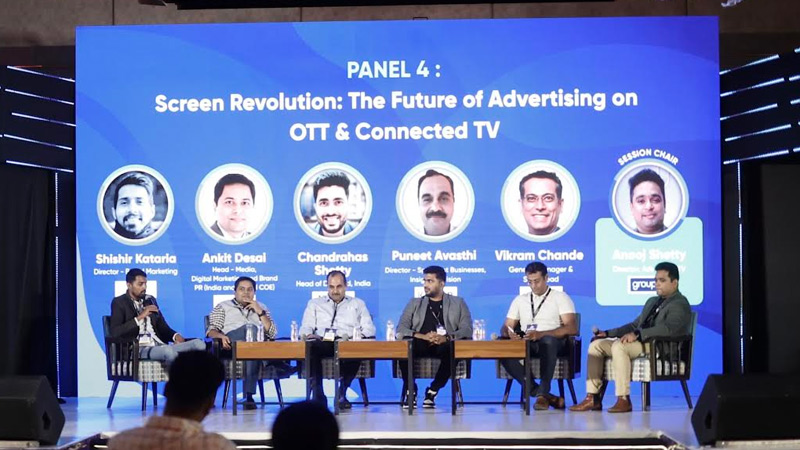
    The session will cover a range of topics relevant to the evolving landscape of OTT and Connected TV advertising, providing an opportunity to share valuable insights and experiences on how one can achieve the right balance between the two.

    The session was chaired by GroupM Nexus Advance TV director Anooj Shetty which includes panellists – Tata CliQ director – brand marketing Shishir Kataria,   head of media, digital marketing and brand PR (India and Global COE) Marico,

    Ankit Desai, Magnite head of demand, India, Chandrahas Shetty, Kantar director- specialist Businesses, insights division Puneet Avasthi, Samsung Ads general manager & sales lead Vikram Chande.

    Here are the insights shared by industry experts regarding the overall growth observed in OTT and CTV and how it has impacted our brand and advertising strategies.

    Tata CliQ director – brand marketing Shishir Kataria

    I believe Connected TV (CTV) is an excellent channel to reach premium audiences. As we’ve been strategizing for 2025, we’ve continually questioned how to achieve 100 per cent penetration of CTV, considering that’s where our audience is. Consequently, we’ve been collaborating with media and other partners to allocate more advertising focus and budget towards TV. Another significant aspect, which I’ve observed since my days at Hotstar, is the ability to customize creative content based on the context. Unlike traditional TV, CTV and OTT platforms allow for the rapid deployment of customized creatives tailored to what consumers are watching. This capability, both from a distribution and creative perspective, is crucial.

    Hence, we anticipate a considerable shift in media investment not only from Tata Cliq but also from other premium and luxury brands towards CTV and OTT platforms.

    Marico, head of media, digital marketing and brand PR (India and Global COE) Ankit Desai

    I believe that when we talk about mass appeal, we’re essentially catering to a wide range of consumer profiles, including both premium and mass brands. As mentioned, it’s evident that different audiences require different approaches. For instance, during a recent visit to rural Rajasthan, I encountered a woman who wasn’t a Connected TV (CTV) consumer but was still accessing content via alternative means. Despite not being affluent, she was resourceful with her budget and took advantage of free data provided with the 5G launch, allowing her to consume content on her phone without needing to pay a cable operator. However, she acknowledged that this situation might change if data prices were to increase. This illustrates that targeting only affluent households is no longer sufficient. While it’s a valuable marker, it’s not the only one. We need to view TV as just the beginning of a continuum that spans multiple screens, including traditional TV, mobile, and CTV. To effectively reach consumers, we must adapt our strategies across all these screens. Additionally, while it’s not ideal to simply transfer TV ads to CTV or OTT platforms without adaptation, this presents a challenge for marketers in refining their communication paths for each platform and screen. It’s an evolving landscape with flux and change, both in consumer behaviour and media platforms, but I’m confident we’re heading towards a better understanding and adaptation.

    Samsung Ads general manager & sales lead Vikram Chande

    What’s happening now is that the concept of TV has evolved from being just a singular device to becoming a culmination of various mediums through which content is consumed. The nature of TV devices has changed significantly over the past decade, particularly in terms of hardware. Previously, not all TVs were equipped with smart operating systems or provided content recommendations. If you disconnected the cable, you would often encounter several steps to access content. However, as Ankit mentioned, today’s smart TVs offer a different experience. Even in remote areas like rural Rajasthan, individuals are now accessing content via streaming platforms, making them consumers of brands regardless of their income level.

    Smart TVs have revolutionized audience targeting strategies due to their connectivity to the internet and ability to provide data insights. This allows advertisers to tailor their strategies based on audience demographics and geographical targeting. Additionally, the shift from linear TV advertising to platforms like Connected TV (CTV) has opened up new possibilities. Advertisers can now measure incremental reach effectively, combining data from both traditional linear TV and CTV. Smart TVs can cater to advertisers’ needs, whether targeting affluent households or those with varying income levels, by providing valuable audience signals. This comprehensive approach enables advertisers to craft audience-driven strategies supported by creative content, leading to a deeper understanding of campaign deployment and impact measurement.

    Magnite head of demand, India, Chandrahas Shetty

    We’ve come a long way from where we were a couple of years back when programmatic was primarily associated with remnant inventory. Now, a significant portion of buying happens through programmatic guarantees, shifting away from the old resistance of buying through IOs to automatic buying on programmatic guarantees. This shift benefits both publishers and advertisers, with publishers achieving complete 100 per cent fill rates and advertisers gaining confidence in purchasing premium, clean inventory. The landscape of programmatic buying has evolved significantly, offering more than just the open auction format of the past. Today, there’s a wide range of buying options, including PMP buys, providing advertisers with greater flexibility and control over their campaigns. In India alone, we have over 50 platforms, and globally, the number reaches about 110, offering advertisers the option to access all inventory across OTT and CTV through a single dashboard. With programmatic growth at a staggering rate of 32 per cent according to the recent Magna report, India is gradually catching up, currently accounting for 44 per cent of digital inventory bought programmatically. This trend is driven by the increasing flexibility, control, and efficiency that programmatic buying offers, allowing advertisers to capitalise on the growing inventory available as more users switch to streaming and connected TVs.

    Kantar director- specialist Businesses, insights division, Puneet Avasthi

    By ownership itself, CTV distinguishes itself as an affluent audience. So, that in itself is a marker of affluence and upward mobility, something that tends to differentiate. But I think there are other elements to the CTV audience versus those who are still in the linear TV space. There are differences. Likely, many people who are adopting CTV are also younger. So, there is a profile element in terms of affluence and youth, and where they are in terms of their life stage. Additionally, some elements differentiate them in terms of how they consume communication or media. Data from PGI indicates that the audience who are cord cutters, and cord-cutters are not necessarily solely on CTV, but they could also be consuming content on their mobile devices or smaller form factors. Both groups are more likely to consume a larger part of the ad. As a result, those who are on linear TV are more likely to switch channels frequently, possibly because the targeting ability of the audience is sharper, leading to messages that are more relevant to their interests. This greater stickiness to the ad results in the message registering better. So, yes, there are those differences. I completely resonate with that.