Tag: Pune

  • India to be guest of honour at Clermont-Ferrand short film fest

    India to be guest of honour at Clermont-Ferrand short film fest

    MUMBAI: India will be the guest of honour at the 35th Clermont-Ferrand Short Film Festival which will be held from 1-9 February next year.

    Jacques Curtil, from the festival team, will soon be traveling to Kolkata, Chennai and Pune to view films and establish further contacts for the preparation of the Indian retrospective programmes at the festival.

    The winning short films from Clermont-Ferrand will be screened in the above mentioned three cities in September.

    The Clermont-Ferrand Short Film Festival, to be held from 1 to 9 February 2013, is one of the most important short film festivals in the world and the second largest film festival in France after Cannes in terms of audience and professional attendance.

  • Raj Kapoor museum on anvil near Pune

    Raj Kapoor museum on anvil near Pune

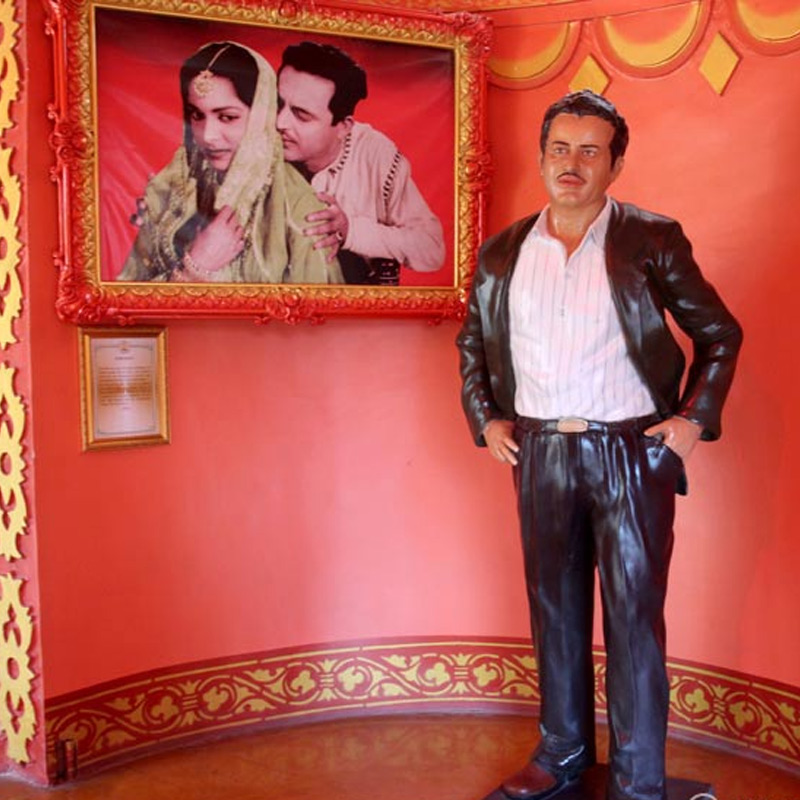
    MUMBAI: Ten years after the Raj Kapoor family gave away their Rajbaug Farms at Loni near Pune to MIT Institute of Design, a museum dedicated to the late Raj Kapoor is coming up in the complex.

    “People who have been to the farm way back in those days will not be able to recognise what they see today. But I like what Dr Karnad, Director of MIT Institute of Design, has done to the place. It looks no less than Harvard right here on the outskirts of Pune. Dr Karnad is now working on transforming my father’s house there into a museum of sorts that will feature a lot of dad‘s work,” said Rajiv Kapoor in a statement.

    The museum is being constructed with a theme, ‘ The seven pagodas’. Each section will have on display a statue of Raj Kapoor seen as one of the popular characters he played on the big screen.

    The rest of the rooms will showcase posters, photographs, trivia and such other interesting things from the life of the actor during that period.

    The halls will then lead, through a common hallway of paintings of the star, to an amphitheatre, wherein guests will be allowed to watch any of the actor‘s films.

    The construction of the museum is going on in full swing and it‘s a matter of time before the museum is up and ready and open for public viewing.

  • Jo Hum Chahe to release on 18 November

    Jo Hum Chahe to release on 18 November

    MUMBAI: Aman Gill‘s maiden film Jo Hum Chahe will release on 18 November.


    The film is a modern coming of age romance that reflects the current urban landscape of contemporary India focusing on the aspirations of the youth and what they do to achieve their desires.
     
    The film has been written and directed by debutant Pawan Gill, earlier first assistant director at Yash Raj Films from 2005-2007.


    Jo Hum Chahe, shot in Mumbai, Goa, Pune and Ladakh, will see the acting debut of Sunny Gill and Simran Kaur Mundi.


    Gill used to earlier look after film acquisitions and domestic film distribution at Studio18.

  • Amol Palekar makes first documentary on Kishori Amonkar

    Amol Palekar makes first documentary on Kishori Amonkar

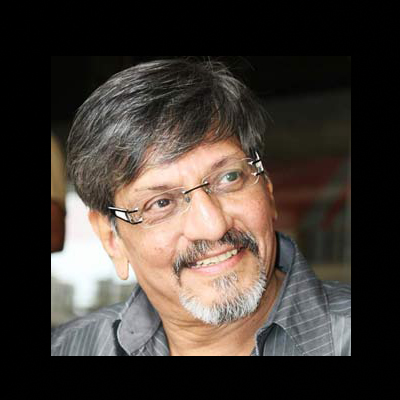
    MUMBAI: The first-ever documentary on music stalwart Kishori Amonkar has been made by Amol Palekar and his wife Sandhya Gokhale.
     

    The 72-minute long film Bhinna Shadja will be screened in Pune at the National Film Archive of India on 30 August.
     

    Talking of how the idea was conceived, Palekar recalls, “Once, she was chatting with me after a concert and the topic of documentaries on different maestros came up. I asked her why there wasn’t even one on her and she said, ‘You are the kind of person who should make it.’ I was taken aback by her response but did not say anything at that moment.”

    After a lot of thought, they decided to only focus on her art, her contribution to music and her thought process without going into the nitty gitties. “We were not sure whether she would agree to this or not. However, when we met her, she gave us complete freedom of interpretation. That was a great relief for us considering that in the past, many people including Vijaya Mehta and Nana Patekar did approach her for making a documentary but that didn’t work out,” averred Palekar.


    The duo took more than six weeks to respond, which upset Amonkar. But they used that period for homework, looking at more than 40 films and documentaries on various legends from art and culture. “This gave us an idea as to what we shouldn’t be doing,” recollects Gokhale.


    Shot in Goa, Mumbai and Pune, the film features music stalwarts such as Pandit Hariprasad Chaurasia, Pandit Shivkumar Sharma and Ustad Amjad Ali Khan, all recalling their association with Amonkar and her music.

  • Shiv Sena ransacks Mumbai office of IBN7, IBN Lokmat

    Shiv Sena ransacks Mumbai office of IBN7, IBN Lokmat

    MUMBAI: IBN7 and IBN Lokmat’s Mumbai office was ransacked by Shiv Sena activists on Friday, using iron rods, cricket stumps and baseball bats.

    A mob of 20-30 people attacked journalists and damaged property at the offices of the IBN Network. The attackers told employees that they would not accept reports criticizing the Shiv Sena and their supremo Bal Thackeray.

    The police later arrested seven Shiv Sena activists for vandalising these offices.

    Meanwhile, eight Shiv Sena workers in Pune were arrested for damaging an IBN7 OB van and pelting stones at the channel’s office in the city.

    Reportedly, attackers in Mumbai told employees they were looking for IBN Lokmat editor-in-chief Nikhil Wagle, and wanted to “teach him a lesson”.

    Condemning the attack, Broadcast Editors’ Association has issued a statement, describing it as an “attack on freedom of expression” and the handiwork of elements who want to undermine the role of pen, microphone and camera. “Such attacks go against the basic tenets of democracy and need to be condemned in the harshest possible terms,” it said.

  • ‘Online consumption of content in India is more pervasive than we think it is’ : Kamal Gianchandani – BigFlicks COO

    ‘Online consumption of content in India is more pervasive than we think it is’ : Kamal Gianchandani – BigFlicks COO

     BigFlicks, Reliance Entertainment’s online film rental service, plans to invest $100 million over three years. The plan includes a strong offline presence as well. With 50 offline rental stores already dotting the landscape, the ramp up agenda includes 200 stores by the end of this year.


    In an interview with Indiantelevision.com’s Ashwin Pinto, BigFlicks COO Kamal Gianchandani talks about the company’s growth plans.


    Excerpts:

    What progress has BigFlicks made so far?
    We have over 1000 films on our online library. We have acquired TV content that runs into thousands of hours. We also have short form content. So the content part has grown exponentially. In terms of registrations which are free, we have 400,000 customers.


    We have done lakhs of streams. In terms of the rental business in India, we have reached 50 stores. We operate in 10 cities spread across Bangalore, Hyderabad, Indore, Ahmedabad and Pune.

    BigFlicks is investing $100 million over three years. Where will this mostly go?
    The key areas would be our rental service, followed by Video-on-Demand (VoD). We would also add community features as we go along. This will also take investments.

    What is the revenue model for BigFlicks?
    The model for the rental business is subscription. In VoD the model is two-fold. One can download films for a fee ranging from $2-$10. As we go along we will have ad revenue from free streaming. But it is too early to speak about revenue targets.

    What is BigFlicks’ USP vis-a-vis other film rental companies?
    We offer convenience, multiple access points. We offer stores in combination with an online service. Most competitors offer either online or offline. We offer both as an integrated service. Our presence is more pervasive. We have a call centre with a common number. Customers can also reach us through SMS. Typical mom and pop stores do not offer these multiple access points.

    What are the synergies that exist between Big Flicks and Reliance Entertainment’s other verticals?
    Some synergies are apparent. There is direct synergy with Big TV for instance. It offers VoD of limited titles. We have a broad spectrum of titles for VoD.


    Then there are synergies that are not so apparent and which are diverse. For instance in Delhi and Mumbai, Reliance Energy has a huge base of consumers who use the power that they supply. This offers us bundling opportunities.


    Which company in Reliance Entertainment acquires films for various platforms?
    We have a central acquisition team. They acquire films for all platforms and also make sure that each department’s interests are looked after. If, however, a title’s rights are broken up, then we will acquire it for VoD directly from the producer.

    Who are the major content owners that Big Flicks has deals with?
    We have deals with several parties. Shemaroo is one of them. We also have deals with smaller players. On the television side, we have deals with the likes of NDTV, Raj Television, Zoom. Most of them are revenue sharing deals. Some of them are also fixed amount deals. In our VoD business, we have over a thousand titles. For rental we have 15,000 titles.

    What strategy has BigFlicks followed to create awareness?
    In India we will be doing a 360 degree marketing campaign. This will encompass television, print, online, radio, outdoor. We will also look at alliances as we move forward.


    For the overseas markets, we have done a lot of search related marketing. We have done things like banner displays. We have also done alliances with services that target the same audience. We have tied up with Reliance India Calling Cards. They are big in the US which is also our main market abroad. We do a lot of marketing and promotional activities with them. On television, we have a tie up with below.tv. They are a broadband site that offers cricket subscription.


    We recently did a deal with Willow TV for the IPL. We also have a deal with Remit2India which is a Times of India Group company. They target NRIs who send money to India.

    When you talk about the online space, piracy is a big headache. How is Big Flicks approaching this challenge?
    We monitor this actively. We keep a track of the rights we have and we are vigilant. If a site is offering downloads of a film illegally, then we inform the producers and right owners. We let them take action against the concerned parties. BigFlicks also has DRM software to prevent illegal downloads.

    What trends have been noticed in terms of how films are consumed online?
    Films are the dominant form of online media consumption. They also offer repeat value. While we offer new titles that are popular, the older titles like Golmaal also get consumed a lot.


    What we are also seeing is that there is preference in consuming short form content which could be three minutes in duration. This is consumed when people are on the move or when they are in the home and wish to break the monotony. We have music videos and other kinds of short form content.

    Is the TG mainly the net savvy youth or do older people also go online?
    Our main TG is in the 18-35 year age bracket. People who are on the older side also visit, but they are a small portion.

    Could you give me examples of unique promotions that BigFlicks does?
    When we launched Jab We Met we had free streaming for 24 hours. We advertised this move. The reception was positive. We also did a Laughter Riot Week where comedies were showcased.


    We have weeks where we focus on an actor and we pull out all his films and put it for our users. Going forward, we will be doing interactive initiatives involving film stars. This could be in the form of contests.

    If you want to have business of a certain scale in India, then you need to be offline as well

    How is BigFlicks leveraging the online social networking phenomenon?
    We will be adding community features. The idea is to create more stickiness on the site. While consumers come to rent or watch streaming movies, they also have their need to express opinions.


    Some elements like reviews and ratings given to movies are already present. But web 2.0 features like having a forum, tagging are being introduced so that consumers will not feel the urge to jump onto another site to express their viewpoints.

    In terms of allowing people to transfer downloaded content to the mobile, what arrangement has been made to facilitate this?
    We already have the backend to support this. We are looking at doing this in the next three months.
    Why did Big Flicks feel the need for an offline presence in India?
    At the current level if you want to have business of a certain scale in India, then you need to be offline. If you are only an online player, then you will target a smaller segment.

    What were the logistical challenges faced in setting up stores?
    The biggest challenge is the lack of an organised delivery mechanism. The postal service and courier companies deliver goods one way. The return path, though, is complicated for them. We have had to hire delivery boys on our own. They have to be trained. Inventory has to be managed. We do not have an efficient third party solution yet in the country.


    We also have a customer relationship management (CRM) team that focusses on the consumer. They look at feedback, complaints and issues that customers raise. Our call centre is a part of it. In any case training is in the DNA of Reliance Entertainment. We constantly train our people and ensure that their skills get upgraded. This is an on-going process.

    How many stores will there be by the end of the year?
    We will have 200 stores by the end of the year. The first 50 stores are our own. The next 75 will be with Reliance World. We will do a shop-in-shop model.


    The remaining 75 will come through franchisees. We have received a lot of queries in this regard but we have not formulated a franchise plan as of now.

    The dynamics of the home video market are changing due to aggressive pricing. What is the strategy of BigFlicks in this regard?
    Aggressive pricing is good for the market as it encourages consumers to buy DVD players and consume more content at home. It also fights piracy. We focus on our quality of service.


    We want to aggregate as much content as possible. People want access to a huge catalogue in one place. Our monthly charge schemes are Rs 250, Rs 399 and Rs 499. There is no restriction on the number of DVDs one can take in a month and there is no time limit to return a DVD.

    What would be more popular in India – downloads or rentals?
    In the near to mid term, monthly rentals would be more popular. But the future lies in digital copies being downloaded.

    Will offline or online be more important down the line?
    Our main business will be online. The broadband bottleneck will have been broken by then. Already companies like Reliance and Tatas are working to achieve this goal.


    The offline space will become more of a customer acquisition point and more about customer relationship management. But servicing and watching films will happen more online.

    What have the learnings been from servicing consumers?
    Indian consumers want a dependable service. They do not just want a cheap service. At the same time, price elasticity is less in our business. Online consumption of content in India is more pervasive than we think it is. Eighty per cent of our members use the online service.


    Overseas, the phenomenon of the long tail is visible. People consume content that has been seen repeatedly. Niche content also has a lot of takers overseas.

    What kind of tie ups and alliances are you looking at in India?
    We are talking with DVD manufacturers. We are also talking with retail outlets for cross promotional tie ups. We will offer subscription as a bundle like when somebody buys DVDs or say a data card for the laptop which has a net connection, they get a monthly subscription. For a retail store if the customer’s billing reaches a certain amount, then he/she gets a monthly subscription from BigFlicks.
    Are you looking at acquiring companies operating in the home video space?
    At the moment we have nothing on the table. But if a suitable opportunity comes, we will look at it. It would depend on the strategic value that the other company brings to the table.

    In the US a film that does not fare too well in cinema halls, can recover the rest through home video, PPV and even make a profit. How far away are we from seeing this happen in India?
    In developed markets like the US, the home video business is bigger than theatrical. The cinema route is used to set up a film and build a brand. The money comes from other avenues like VoD, television rights, etc.


    In India we still depend heavily on theatrical revenues. I don’t see the situation changing drastically in the near term. But the home video segment is growing. The amount of revenue a film gets from theatres has come down to around 60 per cent from 80 per cent earlier.


    As entertainment economies get more mature, the trend globally is that people increasingly watch movies at home. A similar trend will happen in India.

  • IBN Lokmat set for launch by March-end

    IBN Lokmat set for launch by March-end

    NEW DELHI: IBN Lokmat, the upcoming Marathi news channel from the GBN-Lokmat joint venture company, is all set to launch by March-end.

    “We will be officially launching it between 16 March but before 1 April,” editor-in-chief Nikhil Wagle told indiantelevision.com.

    Wagle said that the existing 13 bureaux are fully functional and two more are being added. Four OB vans from the four key cities – Mumbai, Pune, Nagpur and Aurangabad – will be used for the most “vibrant live coverage and programming.”

    “We are completely ready after the training by the American technological and editorial experts have done their work over the past few months, and this will give us the competitive edge,” Wagle held.

    He added that the channel has 13 leased lines from across the state, so that direct and live news content can be shown throughout the day.

    However, Wagle refused to disclose any programming or coverage pattern, saying: “Already there are many copycats who are getting half-baked information of the kind of programming we are going to do, and are copying them. I do not want to disclose the content beforehand.”

    Asked about the usual repeated show of violence that the Ministry of Information & Broadcasting has been seriously upset with, Wagle said that if there is violence in society, it will be shown, but in a responsible manner, so that further violence is not fomented.

    Reminded that most channels had shown old footage of violence against north Indians during the Raj Thackeray arrest on 12 February, but without mentioning that those were old file photos, Wagle asserted that this will not be done in IBN Lokmat.

    “I do care for TRPs but I shall not stoop so low for TRPs that it gets away from serious but popular journalism, because that is what I have done in my 20 years of print and the past decade of television journalism. I believe that TRPs will come if one does serious and popular but highly credible journalism,” Wagle clarified.

  • CNN-IBN launches special series ‘Whose City is it Anyway?’

    CNN-IBN launches special series ‘Whose City is it Anyway?’

    MUMBAI: CNN-IBN has launched a weeklong series Whose City is it Anyway? that explores the rising threat of a clash between locals and migrants over space, jobs and other urban opportunities.

    Each day, the series delves into the inside story of the conflict between old and new in the cities that include Mumbai, Delhi, Bangalore, Pune, Guwahati and Ludhiana.

    CNN-IBN editor-in-chief Rajdeep Sardesai said, “What has happened in Mumbai is a manifestation of the growing anger and intolerance that is taking place in all major cities across the country.

    Whose City is it Anyway? takes a city-by-city look at what is plaguing some of India’s most populous urban centres with regard to rising migration.”

  • Radio One launching in Chennai Wednesday

    Radio One launching in Chennai Wednesday

    MUMBAI: Radio One 94.3 launches operations in Chennai tomorrow after 9 days of test runs in the southern city.

    The past few days have seen the station gearing up for the Chennai launch with promotional activities which included branding its name and logo on tea stalls across Chennai to garner more visibility.

    A Mid Day Multimedia Limited and BBC Worldwide venture, Radio One is already present in Mumbai, Delhi and Bangalore. Chennai will be the FM station’s fourth foray.

    Speaking on the issue of how it would take on some of the bigger more established radio stations like Surya and Radio Mirchi, Radio One station head LV Navaneet said, “These are major players and more established as they had the first mover advantage. Radio One will concentrate on 
    content and attitude to position itself. In fact content is at the centre of our universe.”

    The channel is looking at a target group of 20 to 30-year-olds and the content and the feel of the radio station leans towards the youth.

    “The focus will be on fast tempo Tamil music because this is what the youth in Chennai are more interested in. And this fast, racy music will be played throughout the day. Even if you switch on the channel at 6 o’clock in the morning, the music that will greet you will be up tempo not slow spiritual sounds,” according to Navaneet. In fact he goes on to mention that no melodies pre 1990 will be played on the station.

    The sound of the station is also young in keeping with its youth centric theme. Most of the RJs on the station were selected through a RJ hunt and the criteria was to have the right attitude to be part of Radio One.

    On D-day, the station plans to start the day with a celebrity RJ hosting a 2-hour show where the celebrity will talk about issues that affect him in the city and grouses faced by the city’s denizens. “Mumbai and Delhi are perceived as rocking cities by people who live there and even outside.

    Chennai, on the other hand, is not considered cool enough. With this initiative we want to instill a sense of pride within Chennaiites, make 2007 a year to celebrate Chennai.”

    The celebrity RJ concept sure seems to be catching on as the show will be flagged off with television actor Vijay Adhiraj taking on the airwaves and over the weeks 50 other celebrities will host the show. Other stars lined up on the station include film stars like Vikram and Surya.

    Another unique initiative is a team of journalists who will scour the city in search of news, views and opinions focused on the Chennai youth. This will be used as part of regular programming by the various RJs on their shows.

    Radio One will soon launch more stations in Pune, Kolkata and Ahmedabad.

  • Dopod launches in India with convergent mobiles

    Dopod launches in India with convergent mobiles

    NEW DELHI: Dopod International Corporation, a leading PDA phone and Smartphone provider, today opened their India operations, setting up office in New Delhi. The company is launching here with three models that has convergent technology powered by Microsoft.

    Dopod also announced the appointment of Ajay Sharma as the Regional Sales Manager, Dopod Communications (India) Private Limited, to oversee its Indian operations.

    Sharma told indiantelevision.com “Initially, we are introducing three handset models – C800, C720 and 818Pro in India. These devices are aimed at providing the combined power of telecom and IT through a unique, convergent solution with Microsoft.”

    Sharma will manage Dopod International’s new office, serving as India’s first Regional Sales Manager, India, overseeing all marketing and business development activities in the region.

    Asked about the company’s investment plans in India, Sharma said: “Presently, we are just setting up a distribution base here to cater to the Indian market. In due course we will be investing a substantial amount in marketing and sales related activities”.

    The models being introduced are 818Pro, a GSM Quad Band PDA phone that enables users to communicate by voice, any place around the world; the C720W, which supports Bluetooth v2.0 w/A2DP & AVRCP, and USB 1.1 for charging and data transfer and also provides GSM Quadband with GPRS & EDGE & hi-speed WLAN access 802.11g.; and C800, which has a sliding QWERTY keypad and 5-way navigation button that “makes messaging a breeze”.

    The last also offers the “ultimate connectivity”, with Bluetooth v2.0 w/A2DP & AVRCP, and a USB port for charging and data synchronisation, and provides GSM Quadband with GPRS & EDGE & hi-speed WLAN access 802.11g.

    Company executives explained that Dopod have entered the Indian market late, after it has seen the expansion phase into the B and C class cities, and the Class A cities have matured into creating a large demand for convergent mobile phones.

    “Dopod International would offer sophisticated and innovative converged solutions to the Indian consumers, which would be at par with the best designs and trends prevalent internationally. The distribution of its handsets models in India would start through a strategic tie-up with National Distributor, Jaina Marketing & Associates,” Sharma said.

    Asked about the roadmap for the company in India, Sharma said, “In the first phase Dopod plans to make its handsets available to Indian customers in 10 cities: Delhi, Mumbai, Kolkata, Chennai, Bangalore, Hyderabad, Pune, Ahmedabad, Surat and Chandigarh.

    Dopod International Corporation was founded in 2002, and has expanded rapidly, Sharma said.

    By the end of 2007, Dopod plans to set up operations in 25 cities in the country.Talking about the models on offer, Sharma said: “818Pro is designed simply to appeal to the no-fuss crowd. It is a light, small and futuristic device which comes in lifestyle design with incredibly enhanced features.”

    The machine packs a host of comprehensive connectivity options, including WiFi 802.11b/g, Bluetooth, Infrared, GPRS (on top of basic features like SMS and MMS), making it “an unparalleled choice for not only general consumers but also mobile business professionals”, Sharma claimed.

    Powered by the advanced Microsoft Windows Mobile Version 5.0, the 818Pro comes with a full suite of applications for viewing and editing files, like Pocket Word, Excel, Power Point, managing address book and e-mails like Pocket Outlook while allowing users full access to the Internet.

    In addition, the 818Pro also comes bundled with the WorldCard Mobile Business Card Capture Solution software. “This means users can now enjoy easy business card data input. All they need is to take a picture of a business card with the intelligent software and all their contacts are instantly captured, recognised, sorted and stored,” according to Sharma.

    Model C720W has a lean and mean design, Sharma said, adding that runs on user-friendly Windows Mobile 5.0 Smartphone operating system. “Windows Mobile 5.0 with DirectPush Technology allows you to instantly synchronise emails, calendars and schedules, and besides, you can access PDF, Word, Excel and PowerPoint documents allowing you to work even while on the go,” Sharma explained. It has a built-in 128 MB ROM, 64 MB RAM with persistent storage and a Micro-SD card slot, he added.

    Model C800 is the “slimmest PDA Phone with slide-out QWERTY keyboard”, but apart from that has all the features of C720W.