Tag: Publishers

  • Indian game makers unite under new industry body

    Indian game makers unite under new industry body

    MUMBAI: India’s game publishers and developers have found a single banner. A new industry body, the Indian Game Publishers and Developers Association (IGPDA), has been launched to give the sector a unified voice and global ambition.

    The association brings together studios, publishers, training outfits, facility providers, and investors. Its brief: to champion homegrown intellectual property, showcase Indian stories, and build skills across animation, VFX, gaming, and comics.

    Nine firms are on the founding roster, from Nazara Technologies (World Cricket Championship) and Gametion (Ludo King) to nCore Games (FAU-G: Domination), Reliance Games (WWE Mayhem), SuperGaming (Indus Battle Royale), Tara Gaming (The Age of Bhaarat), underDOGS Studio (Mukti), Aeos Games (Unleash the Avatar), and Dot9 Games (Apna Games).

    “For the first time, India’s developers and publishers have a unified voice,” said NCore founder and IGPDA chairman Vishal Gondal. “This is about more than games — it’s about building iconic IP and creating a cultural legacy for India.”

    IGPDA has already pitched a partnership with the Maharashtra government to position Mumbai as a global gaming hub through policy incentives. Its first event is slated for later this year in Mumbai.

    The launch comes hard on the heels of the Online Gaming Bill, which won presidential assent on 22 August. The law bans real-money platforms — betting, gambling, lotteries, card games with cash stakes, and fantasy sports — but draws a clear line between those and what it calls “online social games.”

    The government says it will promote esports and safe online gaming as a job creator, export booster, and innovation driver.

  • Sell-side ad firm Magnite launches Magnite Audiences in India

    Sell-side ad firm Magnite launches Magnite Audiences in India

    MUMBAI:  It’s hoping to get a large enough agency side audience in India. Independent sell-side advertising company Magnite  announced the expansion of Magnite Audiences and its debut in India and southeast Asia. The solution empowers publishers to unlock the full value of their audiences, while helping buyers connect with high value audiences at scale. Magnite Audiences sits within the Magnite Access suite, a collection of audience and addressability tools purpose-built for publishers and buyers to maximise the value of their data assets.

    Magnite Audiences’ standardised, scalable segments based on publisher first-party data enable publishers to monetise their audiences and protect their user data. These audience segments, which include interest, purchase intent, demographic, seasonal and custom categories, provide the value and scale buyers want to achieve their campaign goals across key demographics. They offer significant reach from a trusted pool of standardised data originating from first party sources without compromising quality.

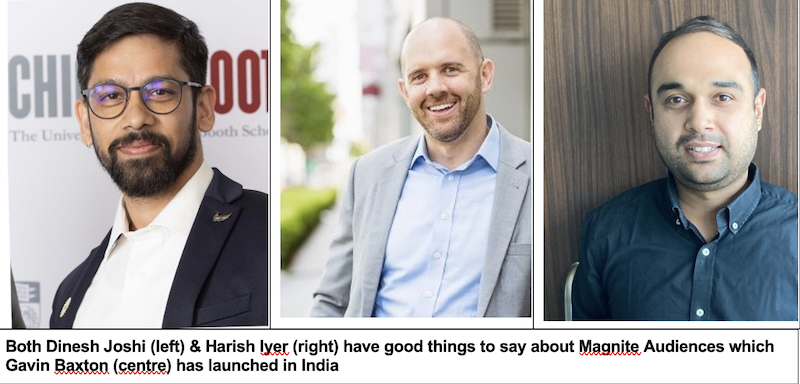
    “It’s essential for us to be able to create value from the vast amount of data at our disposal so that we can both enable precise targeting for advertisers while also enhancing the user experience we provide,” said NDTV vice-president product monetisation & analytics Dinesh Joshi. “Leveraging Magnite Audiences is helping us tap into new revenue streams and increase the attractiveness of our ad offerings, while bringing more personalisation to our readers and viewers.”

    “As a full-service digital marketing agency, we constantly look for new ways of activating audience data at scale,” said Interactive Avenues (the digital arm of IPG Mediabrands India) EVP, media & investment Harish Iyer. “We are confident that Magnite Audiences will play a pivotal role in this journey by helping us curate customized ad inventory that aligns with our clients’ campaign goals. We look forward to leveraging this partnership to drive measurable impact for leading brands.”

    “Amid the changing identity landscape, buyers and publishers need to explore different models and approaches to solve for audience addressability,” said Magnite Asia managing director Gavin Buxton. “Magnite is committed to providing our clients with solutions like Magnite Audiences to help buyers and publishers package, find and reach audiences in new ways. The tool is ready and available for activation in India and southeast Asia, and we look forward to continued adoption as more publishers and buyers begin to leverage it to their benefit.”

  • Manika Wadhwa joins Teads as industry director

    Manika Wadhwa joins Teads as industry director

    MUMBAI: Television, digital, and branded content sales – she’s done it all. And now Manika Wadhwa has transitioned to  the programmatic advertising platform side. She has hopped on to Teads – a leading cloud-based, omnichannel platform that enables programmatic digital advertising across a global ecosystem of quality digital media.

    As an end-to-end solution, Teads’ modular platform allows partners to leverage buy-side, sell-side, creative, data and AI optimization technologies. For advertisers and their agencies, Teads offers a single access point to buy the inventory of many of the world’s best publishers and content providers.

    Manika has joined Teads as industry director from November 2024.

    She has the pedigree: sales lead -west for ESPN Digital (ESNPcricinfo, ESPN Sports) at Disney Star India; national sales head for The Economist (at Zirca Digitla Solutions); manager – sales, monetisation, brand solutions – digital media at Sony Pictures  Networks India (for SonyLiv), assistant manager digital meida – Aidem Ventures and assistant manager -NDTV India.

    “Thrilled to join the team and contribute to this journey. Let’s aim for the stars!,” she said on Linkedin.  

    So be it!

  • Boosting local market manufacturing will help the Indian M&E industry to become a supplier to the world: CII Big Picture Summit 2022

    Boosting local market manufacturing will help the Indian M&E industry to become a supplier to the world: CII Big Picture Summit 2022

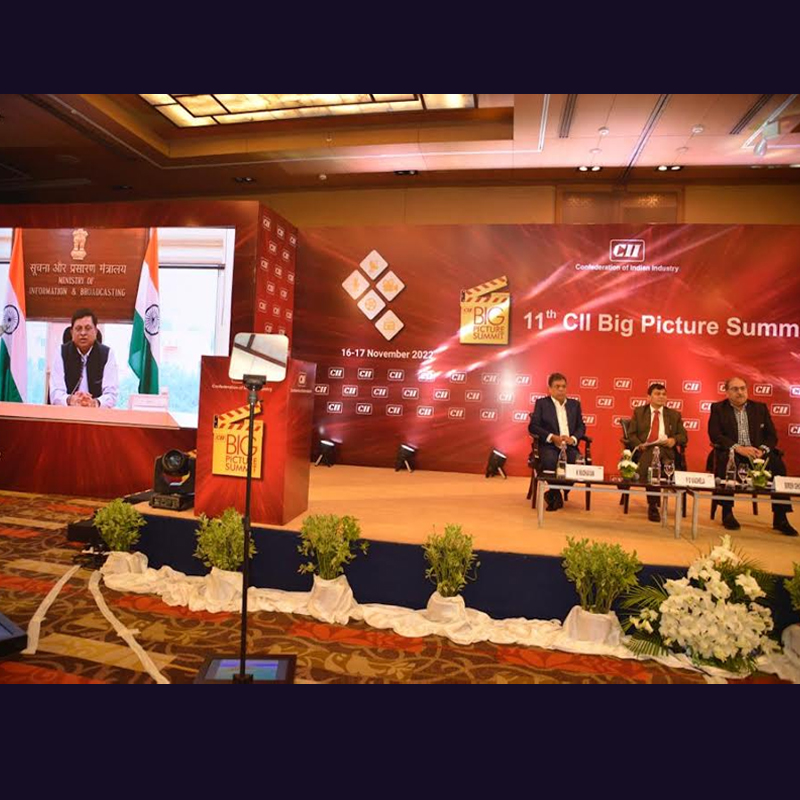
    Mumbai: The 11th edition of the Big Picture Summit 2022, organised by the Confederation of Indian Industry (CII), is a two-day event that is taking place on 16-17 November. The Summit witnessed the participation of various eminent panellists and marked the release of the CII-BCG report on “Shaping the Future of Indian M&E” and the CII-IBDF-KPMG report on “Sports Broadcasting in India.”

    CII Big Picture Summit 2022, with a range of sessions, has participation from content creators, broadcasters, buyers, studios, production companies, publishers, distributors, and developers across the gamut of the Media & Entertainment (M&E) landscape.

    On 16 November, the first day of the event, discussions centred around global trends and opportunities, the bounce-back of revenues to pre-pandemic levels, domestic consumer preferences, and local opportunities for a global audience through digital platforms that have never existed before, especially for the creative industry, storytellers, and technology providers.

    Speaking at the event, the ministry of information and broadcasting (MIB) secretary Apurva Chandra, stated that MIB, along with the Indian M&E industry, has set a goal of making the M&E sector a $100 billion industry by 2030. Chandra acknowledged the announcement by the ministry on the incentive policy for cinema at the Cannes Film Festival this year, out of which many proposals have been accepted for foreign productions in India.

    He further revealed, “The animation, visual graphics, gaming, and comics (AVGC) taskforce, which was launched as a part of the budget 2022, has completed its deliberations and is in the process of finalisation. The government will soon work towards actioning on the recommendations that come out of the report.” As regards the broadcasting sector, Chandra stated that the ministry has recently revised the guidelines for uplinking and downlinking for satellite television channels in India to ease the burden of compliance on channels.

    Telecom Regulatory Authority of India (Trai) chairman Dr. P.D. Vaghela highlighted the significance of the Indian M&E sector in the national growth story and economic prosperity. With about half of the population being young, the Indian demographic dividend presents a huge opportunity for Indian M&E services. Television is the largest and fastest-growing segment, representing around 50 per cent of the total media and entertainment revenue.

    He added that during the last decade, the M&E sector in the country has undergone several radical changes and is experiencing a paradigm shift due to the advancement of technologies and innovations in the creation, distribution, and consumption of media. He stressed that the traditional media would lose ground unless it understands, adopts, and merges its own business models with society 5.0, AI, machine learning, and other technologies that are being unleashed. Vaghela further mentioned, “The government needs to come out with policies that are flexible in nature and allow new players to easily enter the industry while at the same time not strangling the traditional sector with numerous regulations.”

    MIB joint secretary Sanjiv Shankar mentioned the various efforts made by the ministry in the recent past to ensure significant interventions in the regulatory framework, largely based on ease of doing business, Atmanirbhar Bharat, and Make in India. He stressed on the Broadcast Seva portal, which offers a single point facility to various stakeholders and applicants to apply for various permissions, registrations, licences, etc., for the development and integration of the broadcast industry.

    CII National Committee on media & entertainment chairman and Disney Star country manager & president K Madhavan, in his opening remarks commended CII for bringing together key stakeholders and policy makers together to discuss the future of India’s M&E industry and its potential in shaping societies. The M&E sector in India is underpenetrated, with a contribution of 0.9 per cent to the GDP compared to 3-4 per cent for many developed countries.

    He further advocated the potential for growth for the industry, owing to the presence of 300 million households in India, of which about 100 million households still have no access to television headsets. He further urged for timely support by policymakers in the areas of privacy, ensuring a supportive IPR protection measure, and announcing content-related policies while taking note of changing consumer habits and helping the industry to reinvent itself and adapt to creating travelable content.

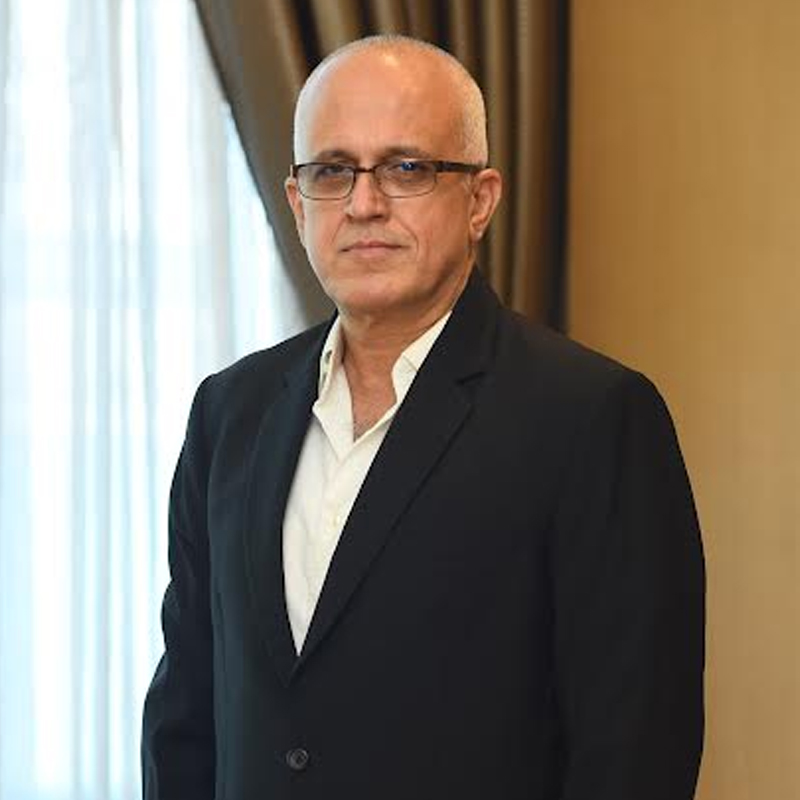
    CII National Committee on media & entertainment chair & CII sub committee for AVGC & Immersive Media – vice chairman, and Technicolor India country head Biren Ghose in his closing remarks mentioned about the need to evolve in the ways content is being created and urged the stakeholders to look at growth from a different lens, particularly away from a linear vertical growth. Moreover, he mentioned fostering collaboration between government, industry, and academia for the continued growth of the M&E sector.

    Furthermore, Trai advisor Anil Bharadwaj said that while Trai is trying to enable a positive, consultative-based, industry-friendly approach with regards to the new tariff order (NTO), the industry needs to focus on building capacities and centres of excellence.

    CII has been driving several initiatives to take the Indian M&E sector to new heights and expand its global footprint in close collaboration with MIB. These include representing the Indian film and entertainment industries at the prestigious Cannes Film Market for the past 20 years, at the Berlin Film Festival for the past five years, and at the Toronto Film Festival for the past three years. CII’s strength in policy advocacy is acknowledged and accepted by both the government and media industries.

  • GUEST ARTICLE: What are the advantages of the advertising industry with the new 5G technology

    GUEST ARTICLE: What are the advantages of the advertising industry with the new 5G technology

    Mumbai: In the recently ended spectrum sale, India auctioned 51,236 MHz of spectrum to incumbent operators for Rs 1,50,173 crore across several 5G networks. This implies a speedier experience for customers, with mobile devices interacting with wireless networks significantly faster and users seeing enhanced download and upload speeds. According to a Deloitte analysis, India’s digital economy is expected to reach one trillion dollars by 2025 as a result of growing smartphone use, fast internet penetration, and the acceleration of mobile broadband and data connectivity. However, 5G is expected to be the primary driver of this expansion.

    5G, like the radio, the internet, and other disruptive technologies before it, will allow advertisers to better engage customers by sending enormous amounts of data at speeds significantly quicker than current 4G technologies allow. Although 78 per cent believe 5G technology will be superior to 4G, 95 per cent are unaware of which 4G features are currently available on their devices. More than 70 per cent are prepared to pay for new technologies (with payment used as a proxy for perceived value). Faster downloads are significant for 71 per cent of 5G users. Respondents do not grasp the phrases “connectivity,” “capacity,” and “latency” and place a low value on these benefits. Here are the advantages for the advertising industry with the new 5G technology:

        Making your creatives suitable for 5G users.

    5G users interact with gadgets in a unique way, which can assist in personalising advertisements to what they’re most interested in. 5G has several concrete benefits, such as downloading a two-hour HD movie in roughly 18 minutes, live streaming a concert or live event to friends or family in HD, and low-latency gaming with 30-50 millisecond ping. However, tailoring your ads to fit consumers’ preferences is extremely critical for 5G over 4G. Users that have a strong interest in gaming, entertainment, and live streaming are more likely (92 per cent) to pay for 5G technology and purchase a 5G enabled phone early on, compared to the overall average (81 per cent). With all of the new 5G updates, there is also a huge opportunity to get creative with brand advertisements and innovate with new benefits.

        5G technology unlocks AR/VR advertising

    Because of 5G’s low latency and rapid download rates, advertisers and publishers will have more options to build new streaming media formats with better capabilities. As customers spend more time on 5G phones, they want new experiences to justify the higher cost. Therefore, advertising must capitalise on this. AR and VR have several applications. Over the next year, it is predicted that 100 million consumers will utilise augmented reality for purchasing. Creating increasingly meaningful, immersive experiences is the future of online engagement, and 5G will usher in those capabilities more naturally.

        Analytics will go real-time

    Already, a fraction of the data we can handle and analyse is considered real-time data. 5G will enable the integration of a broader variety of activities and impressions in real time. If a consumer makes a purchase in the future, they may no longer get any advertising connected to that product or product category. Fundamentally, this will improve targeting, segmentation, customer experience, and customer journey, as well as brand and consumer efficiencies.

        Serve advertisements that leverage 5G advantages

    Users may interact with adverts in novel ways thanks to the ability of 5G for advertisers to create more creative and original immersive content. Real, realistic on-device advertising experiences may be made possible in various ways with minimal latency. Advertisers may display full-screen commercials that let viewers see how a character or product appears in various settings that they can design and modify right from the creative. Additionally, brands may employ VR to present a 360-degree image of the gaming or social environment. Greater capacity also allows for the production of advertisements in a wide variety of audio and video formats. 5G technology has a tonne of unrealized potential, so businesses should be committed to coming up with fresh approaches to interacting with consumers through advertising.

    As with previous technological breakthroughs, advertisers will need to have their fingers on the pulse in order to fully capitalise on the new opportunities presented by 5G and avoid falling behind. Fundamentally, it’s fantastic for innovation that our most imaginative ideas may now confront fewer technological constraints. However, adapting our strategy to the new digital context will be a problem.

    The author of this article is Hotstuff Medialabs founder and CEO Arun Fernandes.

  • Why new age-media is the focal point for content publishers?

    Why new age-media is the focal point for content publishers?

    Mumbai: Let’s start with some simple math: Newspapers used to have an average engagement of one hour in the 1990s. This has fallen to two to three minutes today, which is 1/20th or 1/30th of what it used to be. Even if we imagine ad density has remained the same (it has actually increased as papers have become thinner), then ad CPMs for newspapers today are 20-30 times of what they used to be.

    TV and radio stats tell a similar story. Additionally, due to the non-targeted nature of newspaper, TV and radio ad outcomes are poor. That is why advertisers have been shifting dollars to the new age/digital. Obviously, as ad revenue largely drives the media industry, there is a large amount of focus and interest in digital. For that part of traditional media that is trying to shift away from its reliance on advertising, the path forward is still through digital subscription revenues.

    The important question is not why new age media needs to be a focal point for content publishers, but how to execute it successfully. Let’s take a brief look at how the content publishing landscape has evolved.

    Newspapers have existed since the 17th century, radio since the early 20th century, and TV since the mid-20th century. With the introductions of each of these forms of media, the richness of media evolved, from text to audio to video. But the fundamental delivery of media did not change – it remained one too many.

    Early internet and digital media mimicked non-digital media in this aspect – websites continued to be static, one to many deliveries of content to all audiences. Editorial teams within traditional media companies doing digital still manage static line-ups on pages delivered to their audiences manually. They try to cram as much information as they can on their home page because of the low hit rate on what they provide vis-a-vis their audiences and interests. This constrains the usability of digital websites run by traditional media organisations.

    Additionally, traditional media companies tend to be insular, and do not create a conducive work environment for critical skillsets for building great digital consumer products – engineers, designers, product managers, and social/digital marketers. This causes traditional media-created end consumer websites and apps to be several steps behind other digital consumer products.

    This has continued to remain true even as the rest of the internet itself has evolved across phases of consumption – from desktops using static bulletin boards and directory services; to a combination of desktops and laptops in search-driven interfaces; and finally to what we see today – mobile consumption driven by discovery and personalisation. As a result of this evolution, audiences today expect their content to be provided to them in a personalised, easy to consume fashion and delivered via a functionally and emotionally satisfying product.

    This difference in what traditional media organisations provide vs consumer expectation is why there is a massive gap in the user engagement (as measured by the number of visits and on the length of sessions within those visits) on traditional media- run digital websites vs other digital content providers such as social media. Traditional media companies urgently need to transform in order to bridge this gap.

    As a media CEO, I’m not going to sugarcoat how tough the journey is that lies ahead. This journey is hard, both in its initiation and in its sustenance. I have seen this personally in leading the transformation at one of India’s largest media brands as its digital CEO and the group and chief digital officer. In my role as CEO, I had to build a strong, growing, profitable digital business to form the future core of the company. In my role as the CDO, I had to help the rest of the group transform and become digital-first. This portfolio included India’s largest network of radio stations, some of the biggest and well-known newspapers in the country, and a sprawling education portfolio.

    We overcame resistance to change and other challenges to build one of only two profitable digital media businesses in the country. We put the larger group on a solid transformational path, divesting from non-core areas with a poor organisational fit and investing into areas of growth, particularly in digital. A lot of talent entered the company in areas such as technology, digital content leadership, product and user experience design. This team ended up creating one of the world’s fastest-growing traditional media websites.

    Today, the digital business is the media house’s crown jewel. But much of the talent that needed to spearhead its growth has scattered and overall transformation has stalled. The journey was well begun but has been hard to sustain.

    (Rajiv Bansal is the founder and CEO of OPOYI.com. The views expressed in the column are personal and Indiantelevision.com may not subscribe to them)

  • Taboola starts trading on Nasdaq as publicly listed company

    Taboola starts trading on Nasdaq as publicly listed company

    KOLKATA: Taboola, a content discovery and advertising platform, announced it has become a publicly listed company trading on Nasdaq under the new ticker symbol ‘TBLA’.

    Taboola reported revenue of $303 million and net income of $18.6 million in Q1 2021, outperforming its original revenue and profit projections and raising its full-year expectations, the company said in a statement.

    Taboola joins Nasdaq at a time when online advertising on the open web accounts for more than an estimated $60 billion in spending per year. Taboola’s direct partnerships with digital properties and the value inherent in being an editorial recommendation engine positions the company well in a dynamic privacy environment, it added.

    “Today is a significant milestone for Taboola, one that cements our commitment to power recommendations and be the champion for the open web,” said Taboola CEO and founder Adam Singolda.

    Advertising and publishing industry veterans Deirdre Bigley and Lynda Clarizio were added to Taboola’s board of directors, effective April 2021. Taboola recently announced Gilad Shany, CEO of ION as an addition to its board as well.

  • PallyCon adds App Security to its digital arsenal

    PallyCon adds App Security to its digital arsenal

    New Delhi: PallyCon, a global leader in Multi DRM, forensic watermarking services, and anti-piracy technology on Monday launched its state-of-the-art app security service.

    A simple plug-n-play solution, it is dedicated to helping content developers and publishers protect their content from manipulation and theft. The solution is conceptualized with no single line of code and offers robust security that’s affordable, said the company.

    INKA Entworks Inc, CEO and founder, James Sungim Ahn said, “With the increasing popularity and rise in viewership of OTT apps, the chances of theft and leakages have increased multiple times. It takes a lot of effort and money to produce content, and illegal access and copying are causing significant revenue losses. Hence, data security should be considered mandatory, and all content creators should adopt a 360-degree security along with DRM service for OTT apps to protect their investment”.

    The solution offers a real-time threat analytics dashboard for content creators to trace the source of piracy and hacking of streaming content in real-time. It works in tandem with a high-performing DRM video protection service to identify leakages right to the last user who leaks or consumes the content illegally, thus offering endless scalable security.

    Discussing the potential of the service, INKA Entworks Inc, head of global business, Govindraj Basatwar said, “Cyber-attacks against OTT apps and content creators are on the rise. Without adequate security, apps can be easily hacked, which poses a threat to the privacy of data, revenue and puts the brand image at risk too. With this launch, we aim to create a fearless and thriving environment for all content creators and protect their data from potential threats,” he added.

    With new security standards set by Hollywood studios, it becomes critical for OTT platforms to protect their apps in runtime. The solution supports Android, iOS, and other hybrid apps.

  • MIB has eyes on digital media publishers too

    MIB has eyes on digital media publishers too

    KOLKATA: The social media-Indian government tussle regarding compliance of new IT rules has hogged all the limelight lately. Along with these platforms, digital media, OTT platforms were also given a three-month window to comply with a new set of rules.

    The digital media division of the ministry of information and broadcasting (MIB) has sent a notice to digital media publishers seeking information under Rule 18 of the Information Technology (Intermediary Guidelines and Digital Media Ethics Codes) Rules, 2021.

    The ministry has asked publishers to furnish information in the applicable format within 15 days of the notice as different formats were devised for traditional media publishing news and current affairs on digital media, pure-play digital publishers, and OTT platforms.

    A total of around 60 publishers, and their associations, have also informed the ministry that they have already initiated the process of formation of self-regulatory bodies under the new rules. Some publishers have also written to the ministry regarding registration with the ministry under the rules, MIB noted in its missive.

    The notice highlighted that the ministry held interactions with the publishers of online curated content, as well as the publishers of news on digital media duly after notifying the new rules.

    Meanwhile, the News Broadcasters Association (NBA) has written to MIB requesting exclusion of traditional television news media and its extended presence on digital news platforms from the aforementioned rules, as per reports.

    “While NBA appreciates the need for regulations, the traditional news media need not be subjected to and/ or covered under the scope of the IT Rules 2021, since it is already sufficiently regulated by various statutes, laws, guidelines and codes, regulations, and judgments set,” NBA said in a letter.

    The electronic news media is no different from print media and majority of content hosted on their digital platforms is nothing but a replica of content which is already a part of the broadcast, the body argued.

  • New digital media rules to bring level playing field: Parliamentary panel

    New digital media rules to bring level playing field: Parliamentary panel

    KOLKATA: The parliamentary standing committee on IT has said that the new digital media rules under the IT Act will bring a level playing field for all media categories. However, the panel headed by Shashi Tharoor also mentioned that more initiatives are required, according to media reports.

    The parliamentary panel also asked the ministry of information and broadcasting (MIB) to launch an awareness campaign about its new rules for social media intermediaries, OTT and digital news platforms.

    While maintaining a robust oversight mechanism, the panel hoped that the ministry would implement the rules with due regard to the importance of promoting creativity and protecting freedom of expression.

    The government laid down new rules for social media platforms, digital media, OTT platforms on 25 February. In a gazette notification, it spoke of a three-tier oversight mechanism for online content.

    In light of this, a PIL has been moved before the Delhi high court challenging the new rules under the Information Technology Act to regulate internet intermediaries, over-the-top (OTT) platforms and digital news media. The petition has been filed by the Foundation of Independent Journalism which publishes The Wire. A similar plea by another petitioner was filed in the Kerala high court. The courts have issued notices to the Centre in this regard.