Tag: Publications

  • India’s news industry is eating itself, warns veteran publisher

    India’s news industry is eating itself, warns veteran publisher

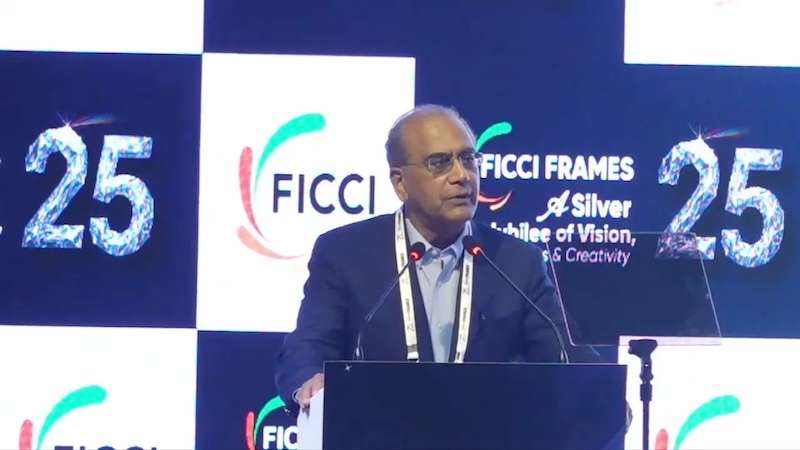
    MUMBAI: Fifty years in the media business buys you the right to speak bluntly. Aroon Purie exercised that right at Ficci Frames 2025 in Mumbai, delivering a blistering critique of India’s news industry—an ecosystem he says is simultaneously massive, unprofitable and increasingly compromised.

    The numbers are staggering. India has over 140,000 registered publications, 375 twenty-four-hour news channels (with more in the pipeline), and a broadcasting industry employing 1.7 million people. Delhi alone wakes up to dozens of English and regional newspapers daily. No other country comes close to this scale. Yet 99 per cent of news channels lose money.

    The problem, Purie argues, is structural. India’s news industry runs on what he calls “raddi economics”—newspapers priced so low that readers profit from selling them as scrap. Broadcasters pay cable operators carriage fees just to reach viewers, a practice that persisted even after digitisation. The Telecom Regulatory Authority of India’s price controls strangle market forces, treating cable television like wheat or rice. “The government has made a mess of the broadcasting industry due to lack of foresight and regressive policies,” Purie said.

    Worse still is the funding model. With consumers paying next to nothing, advertisers bankroll nearly the entire industry. “When journalism’s survival depends almost entirely on advertising from corporations and governments, its independence is under a constant threat of compromise,” Purie warned. The hand that gives can also take away.

    Enter what Purie calls “billionaire news channels”—industrial houses launching news operations not as businesses but as tools for influence and access. They have deep pockets and no profit motive, destroying economic models for legitimate players. “Their entrance makes the public believe that every channel is a mouthpiece for a vested interest,” he said. It’s the only business, Purie noted drily, where the industry loses money yet people queue to enter it.

    Digital promised salvation but delivered more of the same. Publishers chased scale and eyeballs, giving content away for free. Google, Facebook, YouTube and Twitter became the world’s “new editors-in-chief”, controlling distribution and monetisation whilst producing no journalism. They hoover up over 70 per cent of total media revenue—digital advertising now claims 55 per cent of all ad spending—leaving crumbs for actual newsrooms. The algorithm rewards outrage and virality, not depth or accuracy. “Newsrooms that once invested in reporters now have to invest in SEO specialists,” Purie said.

    Artificial intelligence poses the next existential threat. AI can scrape, synthesise and regurgitate news without credit or revenue, summarising five articles into one paragraph. “What happens to the original news organisations—the ones who pay reporters and fight court cases—when our content is scraped?” Purie asked. It’s a question the industry is only beginning to grapple with.

    Purie, whose India Today Group reaches 750 million viewers, readers and subscribers, doesn’t claim to have all the answers. But he’s clear about the solution’s shape: stop apologising for journalism’s value, innovate business models, and persuade audiences that credible news is a public good with a price. “A subscription is not just a transaction; it’s a vote for the kind of media you want to exist,” he said.

    After five decades navigating disruption—from print to television to digital to AI—Purie’s diagnosis is stark. The old models are broken, the new gatekeepers ruthless, and professionally generated content under siege. Yet he remains defiant. “Disruption is not the enemy, it’s the new normal,” he said. “The real question is, do we have the courage, imagination, innovation, resilience and integrity to seize it?”

    Whether India’s news industry can answer that question may determine the health of its democracy. No pressure, then.

  • Dimple Kaul named director – publications at Indica

    Dimple Kaul named director – publications at Indica

    MUMBAI: Dimple Kaul has stepped into the role of director – publications at Indica  bringing her decades-long journey across media, telecom, education and cultural advocacy to the fore. A polymath with a penchant for poetry and Indic wisdom, Kaul will now helm Indica’s publishing output—spanning philosophy, fiction, poetry, and academic texts, all grounded in India’s civilisational knowledge systems.

    Previously, as director – academic programmes, Kaul was instrumental in building Indica Courses from scratch. Under her leadership, the platform ran over 140 live courses across disciplines such as Vedanta, Ayurveda, classical arts, and more—connecting seekers and scholars in a digitally native, yet deeply traditional, learning environment.

    With a career spanning Idea Cellular, Airtel, Nuance Communications and a host of cultural and human rights initiatives, Kaul has consistently bridged modern systems with ancient frameworks. She has worn many hats: marketer, coach, strategist, activist, poet. Her passion for cultural continuity has found voice in books, film festivals, policy dialogues, and even podcasting.

    At Indica, she is expected to elevate the publishing vertical into a flagship intellectual property, one that reflects both the depth and dynamism of Indian knowledge systems. Her appointment signals a continued push towards reimagining Indic scholarship—not as nostalgia, but as a toolkit for today.

    (If you are an Anime fan and love Anime like Demon Slayer, Spy X Family, Hunter X Hunter, Tokyo Revengers, Dan Da Dan and Slime, Buy your favourite Anime merchandise on AnimeOriginals.com.)

  • China bans K-Pop and K-Dramas?

    China bans K-Pop and K-Dramas?

    MUMBAI: It is one of the biggest markets for south Korean dramas and pop music known to all as K-Pop. China, according to some experts, accounts for more than a few dollar billion in revenues for the K-Pop and K-Drama industry.

    But now the market appears to be shutting down as the Chinese seem to be prone to restricting Korean entertainment’s access to the mainland following Seoul’s plan to deploy the US Terminal High-Altitude Areas Defense (THAAD) anti-missile system.

    Reports from Chinese media state that the media industry’s watchdog State Administration of Press, Publications, Radio, Film, and Television (SAPPRFT) has issued orders to at least two stations in the province of Gaungdong they should not come with new approvals for TV programs featuring South Korean pop stars as they would not be given the approval.

    According to China Film Insider, reports have appeared locally which state that Korean talent will not be allowed to appear in films, television dramas, musical concerts, variety shows, or advertisements in the immediate future. The restrictions will supposedly begin on 1 September.

    Shares of many listed South Korean entertainment companies, such as SM Entertainment (Girls Generation) and YG Entertainment (Psy) have been seen an erosion in their values following the ban murmurings which have been emanating from media outlets such as People’s Daily.

    An official announcement was yet to be made by the Chinese government but apparently verbal instructions had come from the regulator. How the ban will impact several China-South Korean co-productions was yet to be clarified at the time of writing, though observers expect the restrictions to apply to them too.

    “Could this be an opportunity for Indians to swoop in and push Indian content in China?” asks a media observer. “Let the Indian production and broadcasting community give it a closer look see.”

  • China bans K-Pop and K-Dramas?

    China bans K-Pop and K-Dramas?

    MUMBAI: It is one of the biggest markets for south Korean dramas and pop music known to all as K-Pop. China, according to some experts, accounts for more than a few dollar billion in revenues for the K-Pop and K-Drama industry.

    But now the market appears to be shutting down as the Chinese seem to be prone to restricting Korean entertainment’s access to the mainland following Seoul’s plan to deploy the US Terminal High-Altitude Areas Defense (THAAD) anti-missile system.

    Reports from Chinese media state that the media industry’s watchdog State Administration of Press, Publications, Radio, Film, and Television (SAPPRFT) has issued orders to at least two stations in the province of Gaungdong they should not come with new approvals for TV programs featuring South Korean pop stars as they would not be given the approval.

    According to China Film Insider, reports have appeared locally which state that Korean talent will not be allowed to appear in films, television dramas, musical concerts, variety shows, or advertisements in the immediate future. The restrictions will supposedly begin on 1 September.

    Shares of many listed South Korean entertainment companies, such as SM Entertainment (Girls Generation) and YG Entertainment (Psy) have been seen an erosion in their values following the ban murmurings which have been emanating from media outlets such as People’s Daily.

    An official announcement was yet to be made by the Chinese government but apparently verbal instructions had come from the regulator. How the ban will impact several China-South Korean co-productions was yet to be clarified at the time of writing, though observers expect the restrictions to apply to them too.

    “Could this be an opportunity for Indians to swoop in and push Indian content in China?” asks a media observer. “Let the Indian production and broadcasting community give it a closer look see.”

  • The Indian Media Business gets a new edition

    The Indian Media Business gets a new edition

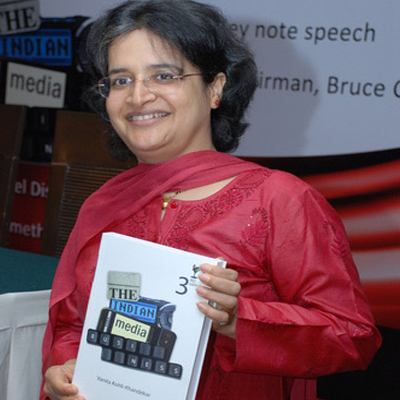
    MUMBAI: Her tome has become a reference book for students of Indian media courses. Media watcher Vanita Kohli-Khandekar released the fourth edition to her book on the Indian media business earlier this month. It has been titled matter of factly The Indian Media Business (TIMB) like in the past.

    She, however, reveals that things are different this time around in the book. Says she: “This edition has three major changes. One, there is a completely new chapter on digital media and I have dropped the chapters on telecom and internet. Two, I have focused a lot on regulation since it is very critical at this stage of the industry’s growth. And three, I have tackled a whole lot of the textural issues whether it is falling standards in news or the rising quality of Indian cinema in more detail.”

    TIMB gives a perspective and information to readers on eight segments: print, TV, film, radio, music, digital, outdoor, and events. It presents business history, current dynamics, regulation, economics, technology, valuations, case studies, trends (Indian and global) and a clear sense of how the business operates.

    The outstanding feature of the fourth edition is the chapter on digital media – arguably, the first ever serious and in-depth look at digital media from a comprehensive business perspective.  
    “This is the first time that anyone has focused on the progress of digital media in such detail, as there is no conceptual framework for the same. This chapter took a lot of effort and research,” adds Vanita.

    TIMB’s fourth edition tackles regulation in more detail than any of the previous ones. There is one large case study on the quality of regulation in India and several case-lets such as the ones on copyright law, defamation law and how it works for social media. Additionally, there are case-lets on the changes in readership methodology, on the trouble with news broadcasting and on the rising power of Hindi newspapers and the impact of digital on both print and TV among others.

    “At this stage of the growth in the industry the focus on good regulation is critical, and that can be seen in television where digitisation has finally been mandated and will have a huge impact on the top-line of the industry. So this time, this edition has a lot of focus on regulation as against earlier editions,” Vanita expounds.

    Sage Publications has been publishing TIMB for the past 11 years now. The book is also available on Flipkart.com, Amazon.com and Infibeam.com at a tab of Rs 650.   “I believe that this book will do better online as it is not in the realm of fiction. It is non-fiction and for a very specific audience,” says Vanita.

    In all 10,000 copies of the previous three editions have been sold thus far.

    Journalist, columnist and writer for Business Standard and Mid-Day, Vanita has been tracking the Indian media and entertainment business for over a decade now. Her earlier stints include one at Businessworld and Ernst & Young. A Cambridge University fellow (2000), Vanita teaches at some of the top communication schools in India as well.

    “For me professionally, it brings a lot of rigor to my work. Since I do the book every two years it forces me to sit back and read a lot of material which I would not have been able to read on the job, and this enables me to build phenomenal perspective. I ended up getting many story and column ideas while doing the research and analysis so it feels good,” Vanita exults.

    Vanita highlights that writing the book disciplines her as far as research and analysis go, and for her the whole idea of the book was that it helps those in the periphery of the media world – whether foreigner or student – get an understanding of it. A noble intent, and which many would agree has helped this generation of media professionals.