Tag: Public Service Broadcaster

  • Throwback2020: DD’s importance stood out this year

    Throwback2020: DD’s importance stood out this year

    NEW DELHI: 2020 was a challenging year for public broadcasting. But it was also the year when public broadcasting made its presence felt and reminded people of the reason it exists. That the mission was fulfilled at the peak of the pandemic, when everything was paralyzed, but Doordarshan and All India Radio (AIR) continued their services uninterruptedly.

    Unfortunately, we lost some colleagues to the pandemic. Our reporters tested positive for the coronavirus while they were out in the field. So in that sense, public broadcasting went through the test of times.

    One key area where public broadcasting came through was in delivering social messages and creating awareness about the pandemic. Doordarshan emerged as the top five social advertisers, which underscores the value of public messages put out by us. We also saw record viewership ratings in the early days of the lockdown.

    Then, the tele-classes on Doordarshan ensured that the academic year did not go waste for students from far-flung areas. India is blessed with the only free to air satellite platform DD FreeDish, reaching thirty-five million plus households. With thirty plus Doordarshan channels and fifty-one educational channels, we have eighty-six channels delivering tele-classes across different languages.

    This year reminded us why people tune into Doordarshan. It remains the only platform where the entire family can come together and watch iconic content, no matter which region they belong to. This will be our focus going forward- to create selective iconic content that is not only a part of the heritage of the country but will appeal to the entire population and becomes a benchmark for the decades to come. Content like Mahabharata, Ramayana, Shaktimaan, which have a recall value that spans decades.

    But it’s not just content, but also a question of production values. People, especially youth, have high expectations. The benchmark is, what they call ‘over the top (OTT) quality,’ coupled with the latest use of technologies, graphics, and visual effects. We will try to ensure that the projects we work on bring in those elements.

    At the same time, we need to acknowledge that public broadcasters operate on public funds. There are constraints. So it cannot invest in the same manner that a private sector media house could do.

    NewsOnAir application proved to be a dramatic game-changer this year on the radio front, just like DD FreeDish proved to be a game-changer on the television front. It ensured that traditional radio listening is no longer restricted to the terrestrial reach of the transmitters. Now, it does not matter where you are, you can listen to your favourite channel. It has changed radio listening habits for audiences across the world.

    It also brought all radio services of AIR under one umbrella. Unlike TV where everything is uplinked in the satellite so you can monitor what is going on, with radio, it used to be restricted to that particular radius of a few kilometres. But, now we can tune into any of the radio stations among the 200 livestreams. It has also brought a degree of transparency and accountability.

    We also saw Doordarshan regional channels discovering life beyond the satellite way of traditional broadcasting. From our TV rating standpoint, they may be struggling with the private channels, because there are hundreds of channels, so it’s a huge challenge for a public broadcaster to stand out. However, on the digital side, each of these channels has acquired a distinct place. Several of them crossed half a billion subscriber base on YouTube, because of teleclasses being available on demand.

    I have a special mention for north-east Doordarshan because it saw dramatic growth in the news this year. The news was available in languages that were otherwise not available in Garo, Khasi, and Assamese. DD News Guwahati and DD News Shillong performed very well digitally as youth increasingly consumed content through the internet and smartphones.

    Apart from that, the most interesting thing has been the DD archives. In order to take full advantage of the nostalgia, we had started putting the archival content online, digitising it and making it available online. Old plays, old serials, old songs, all content will be made available. So it has driven renewed interest in regional languages.

    On the revenue side, the income was fairly steady, except for some disruptions, on the radio side. There were some hiccups for DD FreeDish too and some channels had to leave, but many new channels came on board, including three movie channels in the recent auction. Overall DD FreeDish remains on a steady path and a source of substantial revenue.

    On the advertising side, we definitely saw an uptick in commercial advertising because of the renewed interest in Mahabharata. But some of the biggest sporting events did not happen, so that was a disappointment. Hopefully, we will catch up in 2021.

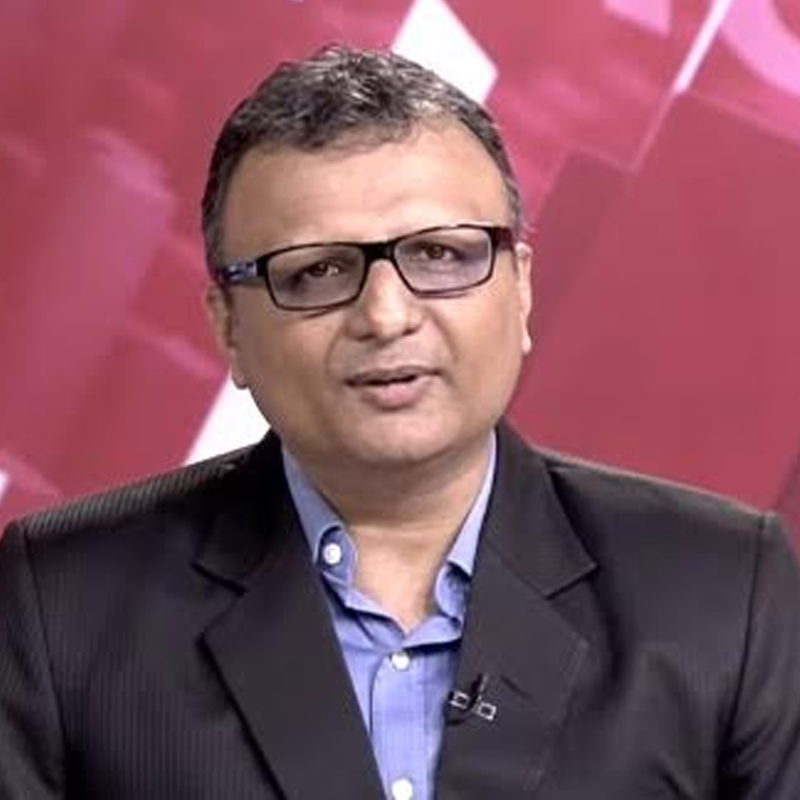
    (Shashi Shekhar Vempati is the CEO of Prasar Bharati. This is an excerpt from a conversation he had with Srishti Choudhary)

  • Comment: DD birthday debate should be on change in attitude

    Comment: DD birthday debate should be on change in attitude

    Indian pubcaster Doordarshan, which claims to be one of the largest television network in the world in terms of reach, appears all set to take on a new look — is searching for a new logo, has auctioned prime time slots on DD National channel, is moving forward on acquiring newer technology, among other things.

    But even as the pubcaster marks its 59th birthday on 15 September 2017, will all such moves get it out of the morass it has got itself into, and clear the dust and rust that has settled on umpteen reports making suggestions for improvement, including the Sam Pitroda report that was presented early in 2014?

    Why does Doordarshan not function the way BBC World does, putting out the best of programmes without having to worry about the costs involved in production and minimum of influence from its political masters?

    Perhaps, the answers to all these vexing questions lie in the unexplained relationship between the government and Prasar Bharati, which is the parent of DD and sibling All India Radio. Often, the query is raised whether Doordarshan was better off as a direct wing under Ministry of Information and Broadcasting (MIB) till the 1990s, or has it benefitted by becoming ‘autonomous’ after Prasar Bharati Act was enacted in 1997.

    A perusal of questions answered in Parliament is very revealing. The replies in most cases begin with the lines that Prasar Bharati is an autonomous body and the government does not interfere, and yet MIB issues directives when it wants to.

    Clearly, the answers will come when the details of this relationship become clear. Because, the biggest stumbling block to the pubcaster moving ahead in a fast changing world of broadcasting, according to a section of critics, is the government of the day, which does not leave it free to move on its own and instead believes in the general principle of he who pays the piper plays the tune. For the records, a major portion of funding of Prasar Bharati comes from the government.
    Doordarshan was born on 15 September 1959 to beam for half an hour, three days a week with educational programmes. However, as its programming timing grew, so did the control by the government, which found in DD a perfect tool for propaganda.

    Immediately after the national Emergency in 1977 when DD was used by the then Prime Minister Indira Gandhi, the national party that took over reins in the late seventies decided to work on autonomy for the public broadcaster. The then Minister for Information and Broadcasting L K Advani set up the B G Verghese Committee that recommended the formation of an Akash Bharati Trust.

    Interestingly, DD saw its best days in the eighties when it was a department of the government with a series of programming that literally had the whole nation mesmerized. These path-breaking shows included ‘Hum Log’, ‘Buniyaad’, ‘Ramayana’, ‘Mahabharat’, `Tamas’ and ‘Nukkad’.

    However, it was only in 1990 that Prasar Bharati Act was passed but it was much later in September 1997 that it was notified and Prasar Bharati became functional as an ‘autonomous’ corporation — though still dependent on the government.  

    BBC World is today held as one of the best examples of an autonomous public service broadcasters although it is also dependent to an extent on the British government for funding. But its main source of income comes from a license fee that each consumer household has to pay.

    But the case of DD is different: despite being dependent on the government, it is running low on financial resources with each successive government insisting that Prasar Bharati should start generating its own resources.

    In India, there have been several committees even after the B G Verghese Committee, which have gone into various aspects, but to little effect, and now the recommendations of the Sam Pitroda Committee — the lone committee after the pubcaster was operationalized — are being worked on.

    But unfortunately, this report came out with nothing new that was not already being done by the broadcaster or had not been said by many a Parliamentary Standing Committee in reports year after year.

    At a time when the country has around 900 licensed television channels, all in the private sector, Doordarshan cannot remain complacent by telling itself it is the most seen and heard broadcaster in the country.

    Perhaps these lines by a Canadian author, who penned the fantasy series ‘Morningstar’, aptly sum up the confused state of Prasar Bharati that is completing two decades this month: “If you think you know what your purpose is, but can never seem to gain satisfaction from it, then it’s probably not the purpose you’re destined for.”

    ALSO READ:

    Prasar Bharati’s monopolistic-era mind-set has to change: CEO Jawhar Sircar

    New Prasar CEO to leverage DD’s reach & bank on creative content, tech & social media

    Prasar Bharati’s main role is of pubcaster, not revenue generator, says Rathore

    Reducing targets no solution, Prasar Bharati needs to lead