Tag: Public Broadcaster

  • Prasar Bharati to monetise its premium and archival content

    Prasar Bharati to monetise its premium and archival content

    Mumbai: Prasar Bharati has approved a policy on monetisation of archival and premium content of All India Radio, Doordarshan and new units of the public broadcaster.

    “This policy will ensure that archival and premium contents of Prasar Bharati are syndicated to third parties through an open and transparent mechanism of e-auction, in order to fetch maximum market value of content on-demand basis,” it said in a statement.

    The broadcaster observed that TV channels as well as new channels on OTT are looking for good saleable content. This has created a demand for programme content of Prasar Bharati in India and overseas for the purpose of broadcast as well as streaming. The possibility for monetising this content requires a well-defined content syndication policy, it noted.

    As per the policy, the public broadcaster will monetise its available content through e-auction to third parties for linear broadcasting (TV/Radio) and on-demand viewing/listening through internet platforms. The available content will be curated into compelling catalogues for the purpose of syndication at the catalogue level.

    An online portal will be created for the management of the entire life cycle of the syndication from registration to grant of rights, payment and content sharing. The e-auction may be held for global linear broadcast rights, global on-demand rights, India linear broadcast rights and India on-demand rights, it said on Thursday.

  • DD, AIR go paperless with 100% adoption of e-Office

    New Delhi: Use of technology has turned the operations at Prasar Bharati around. It’s no more business as usual, as in less than two years, 577 Centers and 22,348 employees of Doordarshan (DD) and All India Radio (AIR) have embraced e-Office operations. The initiative has helped the public broadcaster to cut down its expenditure on paper by almost 45 per cent in the last two years.

    “Kudos to all 500+ field units of Prasar Bharti across DD and AIR as we cross a significant milestone with 100 per cent adoption of e-office. For an organisation which was 100 per cent paper-based till three years ago, it is a remarkable transformation,” tweeted Prasar Bharti CEO Shashi Shekhar Vempati.

    According to the public broadcaster, the IT enablement of routine office functions through e-Office on the Cloud came as a blessing during the pandemic with the flexibility to work remotely, keeping operational decision making going and reducing the need for unnecessary physical movement of files.

    Prasar Bharti had introduced e-Office in August 2019 a year before the pandemic spread across the world. The idea was to make operations more efficient and paperless. Of total 577 Prasar Bharati centers across the country, 10 per cent adopted e-Office in 2019 (Aug – Dec), 74 per cent in 2020 and the remaining 16 per cent have joined by 18 June, it said in a recent statement.

    The transformation has not only brought speed and transparency in the working of the organisation, but led to creation of more than 50,000 e-Files with the status of every file available online. Internally, concerned departments can trace their files, whether it is in movement or parked or closed.

    “On an average, the complete process of clearing one physical file used to take almost a week. Through e-Office, this has been drastically reduced to 24 hours on an average, sometimes even a couple of hours,” said the public broadcaster. As a result, the figures on total volume of cleared files over almost the last two years and average number of files cleared every month during the same period have jumped significantly, the statement added.

    Apart from reducing Carbon footprint, paperless work also enhanced the COVID safety during the pandemic through remote working, work from home, etc, thus reducing the chances of infections.

  • DD Free Dish adds six new MPEG-2 slots

    DD Free Dish adds six new MPEG-2 slots

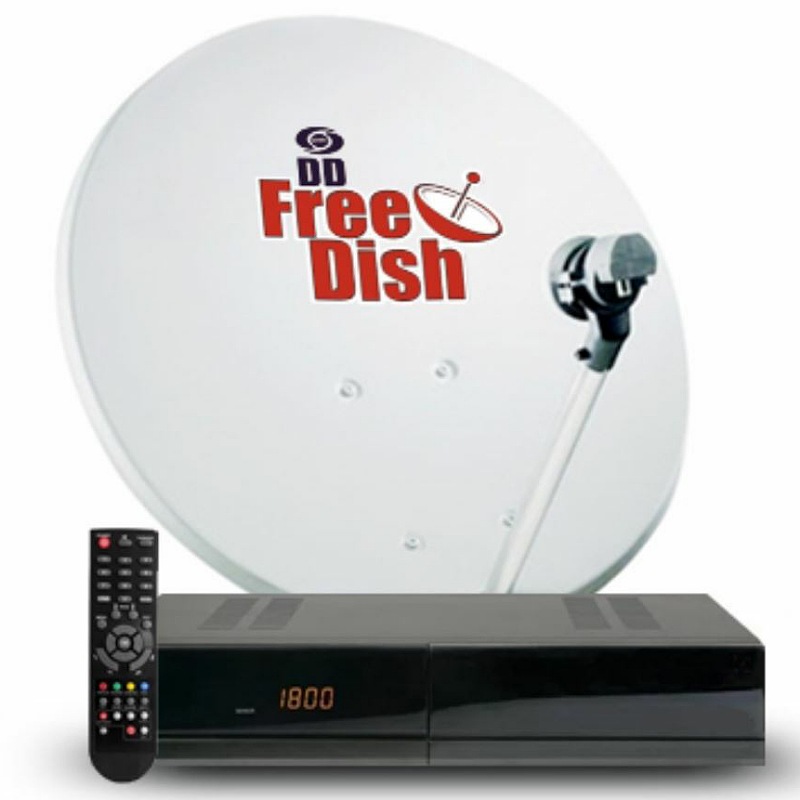
    KOLKATA: Public broadcaster Prasar Bharati's free-to-air DTH platform service DD Free Dish has added six new MPEG-2 slots, on the back of having surpassed an estimated 40 million subscribers.

    The move comes at a time when the platform witnessed a significant jump in the overall sales of MPEG-2 slots at the recently concluded 52nd e-auction of DD Free Dish. It raked in Rs 731.34 crore from the sale of 57 MPEG-2 slots, compared to Rs 594.25 crore collected from the sales of 53 slots in March 2020.

    The third annual e-auction was conducted from 22 February and ended on 27 February. Applications were received for e-auction under six different buckets. 57 channels were allocated slots on various buckets after multiple rounds of robust bidding.

    Prasar Bharati also amended the policy guidelines for DD Free Dish slots in late February. According to the new rules, the reserve price for MPEG-4 slots have been fixed at Rs 50 lakh per annum. Earlier, the reserve price was Rs 5 lakh per annum.

    The amended rules termed ‘Policy guidelines for allotment of slots of DD Free Dish Direct-to-Home Platform to satellite TV channels (Third amendments), 2021’ came into force from 22 February. “Bidding in the e-auction of vacant unreserved MPEG-4 slots will be open to all genre (language) channels at a reserve price of Rs 50.00 Lac/annum,” Prasar Bharati wrote in a notification.

    DD Free Dish earned nearly Rs 10 crore through 53rd e-auction of MPEG-4 slots of DD Free Dish and 11 channels were successfully allocated MPEG-4 slots post the auction. According to estimates, the platform could cross 50 million households by 2025.

  • Broadcasters want mandatory DD channels to be part of NCF base pack

    Broadcasters want mandatory DD channels to be part of NCF base pack

    MUMBAI: Prasar Bharati and other private broadcasters want the 25 DD mandatory channels to be part of 100 FTA channels permitted in the Network Capacity Fee of Rs 130. The public broadcaster is of the view that the channels notified by the central government should be made available to subscribers without any additional monetary burden on the subscribers.

    The public broadcaster has shared its comments only related to the question of whether 25 DD mandatory channels be over and above the One hundred channels permitted in the NCF of Rs 130 in Telecom Regulatory Authority of India (TRAI)’s consultation paper on tariff-related issue for broadcasting and cable services.

    Private broadcasters like Zee TV, Sony Entertainment Television, Discovery Communications, Times Network and IBF have shared similar views on the question raised by TRAI.

    TRAI had received several consumer complaints wherein consumers have shown concerns about the mandatory DD channels within one hundred channels. Consumers are of view that since NCF is prescribed to cater for 100 SD channels capacity, subscribers must be allowed the freedom to select 100 SD channels. Mandatory 25 channels of DD are an additional burden on the consumers. They are of the opinion that either customers should be given freedom not to choose any/all DD mandatory channels or these channels should be over and above the 100 channels selected by the subscriber.

    Therefore, the authority had asked the industry in its consultation, Whether 25 DD mandatory channels be over and above the One hundred channels permitted in the NCF of Rs. 130/-? To which Prasar Bharati commented that 25 channels notified by the central government should be available to all even if the subscribers is not able to renew its subscription still they should be able to avail public broadcasting services.

    It further said, “Since the STBs are not yet technically interoperable Prasar Bharati is of the view that in case a subscriber does not renew its subscription, the notified channel should continue to be available to such subscribers in order to benefit the subscribers to avail public broadcasting services. This will ensure dissemination of any information of national importance to the subscribers, whether his connection is active or not at that time. However, for such subscribers, any repair or maintenance charges towards customer premises equipment shall be payable by the subscriber as per rates prescribed by the operator. This will also help containing e-waste.”

    “These channels are primarily public service broadcasting channels intended to inform, educate and entertain the masses of India. In fact, the intent of the government, and rightly so, is to provide these channels of the public service broadcaster and channels of Lok Sabha and Rajya Sabha to the citizens of India, free of cost, through any possible means of licensed/authorised delivery mechanism. Therefore, it is necessary that, in provisioning of these channels by various DPOs to their subscribers, no condition should be prescribed by them which affects reachability of such channels to the masses,” it opined. 

    IBF said, “It should be a part of the 100 channels. In view of the aforesaid regulatory regime already existing, it is in the best of interest of the subscribers, the authority allows the system to grow at the current existing practices and then review after a period of two years.

    Discovery Communications said, “In our opinion, the system currently introduced and in place should be continued and tested for a longer period of time. There should not be any changes made in the NCF pack even before the new regime is fully implemented. In our view, TRAI should allow the current NCF pack to continue with 25 DD channels for at least 2 years before it starts reviewing the regime again. Therefore, in our opinion, the 25 mandatory DD channels should continue to be included in the 100 FTA channels permitted in the NCF of Rs 130.”

    Times network said, “The Doordarshan channels are important channels and they should be included in the basic tier. A consumer would not mind watching these channels/ having access to these channels or paying small amount of NCF charges for the same keeping the national interest in mind.”

    Zee TV also said that the 25 DD mandatory channels should be provided to each and every subscriber by the DPO within the initial 100 channels only.  

  • Doordarshan sees major dip in revenue & business generation in 2015-16

    Doordarshan sees major dip in revenue & business generation in 2015-16

    NEW DELHI: Public broadcaster Doordarshan’s revenues fell sharply during 2015-16, showing a total of Rs 340 crore by way of net revenue and business generation until the end of December as compared to Rs 582.02 crore for the same period in 2014-15.


    Doordarshan sources told Indiantelevision.com that in the Rs 340 crore figure for 2015-16, the net revenue was Rs 138 crore, whereas the business generation figure stood at Rs 202 crore. 


    The corresponding figures for 2014-15 for the same period were Rs 320.88 crore as revenue and Rs 261.14 crore as business generation, totalling to Rs 582.02 crore.


    The revenue from April to November 2015 (nine months) stood at just over Rs 128 crore, whereas in the month of December 2015, the revenue was just under Rs 10 crore.


    The revenue generation in December 2015 came from the Ministries of Personnel and Pensions, Home, Consumer Affairs, Health and Family Welfare, Road Transport and Highways, and Social Justice and Empowerment.


    This was mainly from the publicity of 15 different programmes or campaigns run by these six ministries of which six were for Health and Family Welfare, and four for Social Justice and Empowerment.

  • Prasar Bharati CEO Jawhar Sircar pooh-poohs ‘budget hike’ reports

    Prasar Bharati CEO Jawhar Sircar pooh-poohs ‘budget hike’ reports

    NEW DELHI: The Indian pubcaster has been a soft target since time immemorial. In the light of media articles citing ratings data by the Broadcast Audience Research Council (BARC) India, which say that Doordarshan’s viewership has been poor despite a hike in budget and hiring of expert consultants, Prasar Bharati CEO Jawhar Sircar pooh-poohs it all. 


    In an exclusive interaction with Indiantelevision.com, Sircar informs that the pubcaster has not even received full reimbursement of government salaries for employees recruited prior to October 2007.


    Sircar goes on to point out that as per a decision by the then Group of Ministers (GoM), which was looking into the financial status of Prasar Bharati, it had been decided during the tenure of the previous government that the Central Government will bear the salaries and other allowances of all employees in service as on 5 October, 2007.


    Sircar says, “As a result, our own revenue funds that are meant for ‘Content’ have gone to meet this salary gap.” He said that Prasar Bharati had been stressing this fact for the past three years. However, it seems like its voice fell on deaf ears.


    At the outset, Sircar says, “I still cannot understand why some people are always raising this question of “hike in budget”? What budget? All the money we get is for paying salaries of 29,000 government servants, who were recruited by the Information and Broadcasting Ministry some 30 to 35 years ago. The government has to pay their salaries as long as they are in service and Prasar Bharati is mainly their administering body and the Ministry passes this salary bill on to Prasar Bharati, who had to engage these persons to disburse their government-scale salaries, without any leeway or choice.”


    He added that while the Ministry used to set aside a sum of approximately Rs 80 – 100 crore for several years for creating content for “special areas,” this funding had also stopped, leaving behind several liabilities. 


    With the choked fund pipeline for content, Sircar asks, “How does content improve? One way out is to offer our ‘time bands’ to external producers provided they cover our costs.” 


    “We are waiting patiently for our funds to be returned. Since these issues are coming out publicly through vague terms like ‘an I&B Ministry official said,’ I would welcome an open debate on this question though we prefer to discuss these matters across the table. But after all, DD is a public institution and it is ready to face any public scrutiny,” Sircar opines.


    No longer in a mood to take things lying down, Sircar posed a few pertinent questions:


    1) Can we cut down costs on the huge infrastructure, some of which appears to be meaningless?


    2) Do we really need to have analogue TV transmission in this satellite age?


    3) Why do we spend so much to strengthen short wave and medium wave radio, when it is FM that is in demand?


    “I have raised these questions as no one was raising them and many in this organization are not happy at all,” he adds.


    Specifically referring to the media reports, he says, “If the programmes that DD has paid for (‘Commissioned’ or ‘SFC’ in DD’s language) do not appear to be attracting enough eyeballs, then we have to reach out to better producers like we used to do for MahabharatRamayan and Buniyaad, etc. DD did not produce its own programmes then or did not decide to pay or commission producers to make programmes for DD. We are seriously thinking about it. But we will have to go over this option very carefully.”


    Drawing a comparison between the British Broadcasting Corporation (BBC) and the Indian pubcaster, Sircar says, “There is a box in the news that advises DD to stay out of the numbers game and become a popular brand distinction like BBC. Do you have any idea of what this means? Every British citizen pays Rs 15,000 per year for the BBC’s quality programmes. But in India, Prasar Bharati struggles to earn its ‘content funds’ through content generated revenue against fierce competition.”


    According to Sircar, as per calculations done by the Sam Pitroda Committee, in India the cost per person works out to a mere 31 cents or approximately Rs 20 by way of support to Doordarshan and All India Radio (AIR). “BBC gets Rs 35,000 crore per year from the exchequer,” he adds. 


    Signing off, Sircar says, “So why do we make such meaningless comparisons and indulge in wishful thinking?”

  • DD to set up four new channels in the north eastern part of India

    DD to set up four new channels in the north eastern part of India

    NEW DELHI: Pubcaster Doordarshan is working towards launching four channels in the north east in the near future.


    Three of these channels will be in Guwahati, Imphal, Arun Prabha (Itanagar), and “Ma-Mi-Na” (Aizawl).


    While presenting his budget in February, Information and Broadcasting Minister Arun Jaitley who also holds the Finance Portfolio had said Prasar Bharati was actively working on a 24×7 television channel for the north-east, for which the clearance of the Standing Finance Committee headed by the I&B secretary had been forwarded to the pubcaster on 24 September.


    The channel was expected to provide a strong platform to rich cultural and linguistic identity of the region.


    However, Prasar Bharati has proposed that the existing north east channel be trifurcated by launching two additional 24X7 satellite channels for north eastern region designated as Arun Prabha Itanagar and “Ma-Mi-Na” Aizawl.


    The proposal is under finalization for circulation to appraisal agencies.


    The proposed Arun Prabha channel will cater to the states of Arunachal Pradesh and Sikkim and the second channel will cater to the states of Nagaland, Mizoram and Manipur and the third to Assam and Meghalaya.


    While applauding this move, the Parliamentary Standing Committee on Information Technology which also examines I&B said recently that these projects are needed to be implemented on a priority basis and specific time-frames be prescribed within which the channels would be operationalised. The Committee wanted to be apprised of the progress.


    It can be noted that at present there is a single 24X7 north east channel which is inadequate to meet the aspirations and needs of the vast north eastern region of the country, comprising eight states where multiple languages and dialects are followed.


  • France 24 to launch on DD DIRECT + and DISH TV to 31 million additional households in India

    France 24 to launch on DD DIRECT + and DISH TV to 31 million additional households in India

    FRANCE 24 has concluded a new distribution agreement in India and will be available on free-to-air Direct-To-Home service (DTH) DD DIRECT +. Owned by public broadcaster Prasar Bharati, the platform will begin broadcasting FRANCE 24 English version on November 1st.

    Thanks to this agreement, FRANCE 24 will also be available on DISH TV basic offer, the n°1 private satellite operator in the country.

    Thanks to this new agreement – which represents the most important deployment for the channel on the Asian market – FRANCE 24 will now be available 24/7 to 31 million additional households across the country. These will be in addition to the 7 million households that already receive the channel via cable.
    One in every four Indian televised households can now access FRANCE 24 and a special operation will take place in New Delhi in November to mark this major agreement.

    For more real time information on FRANCE 24’s distribution worldwide, go to: http://f24.my/ijOOim

  • Against all odds, Prasar Bharati continues to swim upstream : Brigadier V A M Hussain Member (Personnel) Prasar Bharati

    Against all odds, Prasar Bharati continues to swim upstream : Brigadier V A M Hussain Member (Personnel) Prasar Bharati

    An institution that has been the chronicler and mirror of India‘s history is feeling crippled. With a tenacious CEO under a dynamic Minister of Information & Broadcasting, it is striving to reinvent itself to meet the challenges of contemporary media scenario. Many new experiments are on to change the behemoth called Prasar Bharati that cost the exchequer a whopping Rs 150 crore every month. This public service media organisation is one of the oldest statutory bodies with a hoary past. It is under siege and calls for expeditious intervention to revive the glory of the old faithful that is All India Radio. Doordarshan, the audio-visual arm of Prasar Bharati is always in the public eye with viewers asking for more sumptuous and scintillating fare.

    The Organisation is saddled with a disgruntled work force of about 50,000 who did not get a promotion for decades. To make matters worse, there was no attempt to infuse new blood in the system, either. An out-of-the-box solution is inescapable to break shackles of archaic regulation. The definition of autonomy needs to be revisited to meet the upheavals on the audio- visual landscape, in recent years. Section 33 of the Prasar Bharati Act directs prior government approval for all regulations governing conditions of service. Every employee appointed before October 2007 is considered a government servant on deemed deputation and their promotion is in government ambit. Instead of being a nimble, vibrant media organisation driven by merit, seniority and ‘babudom’ rule the roost. Proposal for a Prasar Bharati Recruitment Board as mandated by the Act of Parliament vide Sections 9 and 10 of The Prasar Bharati Act 1990 is gathering dust in files while government persisted in stalling promotions and new recruitments for two decades now. In effect, Prasar Bharati is like a ship caught in the turbulent waters in the mid sea with none to care on the shore for the SOS of the ship-wrecked crew. Merit and flexible structures are essential for a dynamic and extremely competitive media sector. Meeting the content needs of 750 million people through regional and national infra structure and boosting DTH and terrestrial audience are complex challenges, CEO Jawhar Sircar faces, along with ‘Sarkar‘, the real power.

    A recent experiment showed how independence in Prasar Bharati can make an impact. A truly independent team with young professionals in DD News prime time has rattled the industry with ratings showing an upswing.
    _____****_____

    A recent experiment showed how independence in Prasar Bharati can make an impact. A truly independent team with young professionals in DD News prime time has rattled the industry with ratings showing an upswing. Doordarshan launched a big advertising campaign for the revamped time bands of DD News, DD National and DD Urdu. This was the first such campaign in decades. A little more attention and circumspection are needed at AIR too which got maligned unfortunately by recent media reports of alleged harassment of its women Radio Jockeys. It is staring at a PIL now. FM Gold channel, with practically no permanent staff, earns substantial revenue for the entire AIR network while private FM channels are yearning for popularity with smart young professionals even in small towns and villages. The recently appointed Sam Pitroda Committee has set itself tasks suggesting visible changes for reviving Prasar Bharati. There is a wealth of data and content in archives that can propel AIR to the top of the charts. The expert groups are offering many practical suggestions and initiatives on many fronts including technology, content management, financial independence, government relations and human resources. Dr. Pitroda believes that generational change can be brought about by radical thinking instead of mere cosmetic changes.

    The financial situation continues to be precarious for Prasar Bharati with complex legacies. An unprepared bureaucracy opted for accrual system of accounting and enforced income tax while loans in perpetuity and penal interests soared.The government rescued Prasar Bharati by writing off large sums due as segment hiring and space spectrum charges incurred in the course of broadcasting mandated content, non commercial in nature. Income tax claims stand withdrawn while local bodies continue levying the public broadcaster with huge taxes on property of Union of India but Prasar Bharati has just been permitted use of the government emblem. This is a paradox since 50,000 salaried employees of government are using these assets for functions statutorily assigned by an Act of Parliament. Welcome initiatives of the GOM relieved Prasar Bharati from its financial crystal maze for now by converting loans in perpetuity as grants.

    The need of the hour is to professionalise Prasar Bharati with content-driven channels and professional-driven management owing total allegiance to Prasar Bharati to meaningfully accomplish objectives that were originally dreamt and scripted by the authors of an autonomous public service broadcaster. The dream is worth realising.
    _____****_____

    Apprehensions often raised on the need for a government-funded national public broadcaster are ill-founded. We need an unbiased institution to bench mark initiatives on information, education and entertainment. At the same time, the government needs a media window to show case its policies, initiatives and views by running its own video and audio channels. Government staffing of DD News and AIR News Service Division through Indian Information Service is controlled by the Ministry. The easiest course would be to sever the current nebulous association with Prasar Bharati and declare them government channels on the lines of Lok Sabha and Rajya Sabha TVs and leave Prasar Bharati to professionalise with autonomy.

    The efforts of the government to empower through The Sports Broadcasting Signals (Mandatory Sharing with Prasar Bharati) Act 2007 get breached frequently. Private business houses that own broadcasting rights of World Cricket tours use pre-embedded feeds of commercials and cause losses in hundreds of crore to Doordarshan. Expeditious amendments would help Prasar Bharati and the government. Despite its huge work force, Prasar Bharati has inadequate structure of professionals managing its own security, assets, property, content, new media, revenue and marketing at the highest levels. The need of the hour is to professionalise Prasar Bharati with content-driven channels and professional-driven management owing total allegiance to Prasar Bharati to meaningfully accomplish objectives that were originally dreamt and scripted by the authors of an autonomous public service broadcaster. The dream is worth realising.

    Will the Committee of Sam Pitroda be able to persuade the government to truly empower Prasar Bharati? On thoughts like this, we often remember Baba Amte’s saying “Faith is the promise of tomorrow” while the swimming upstream by Prasar Bharati continues.

  • DD to launch English news channel by July

    DD to launch English news channel by July

    NEW DELHI: Doordarshan hopes to launch a separate English news channel by July this year by splitting the present bilingual English-Hindi news channel.


    DD News Director General S M Khan told indiantelevisiom.com he was confident of achieving the target of July for creating two news channels – English and Hindi – from the existing DD News channel.


    He said the public broadcaster had conducted a survey which showed that viewers favoured separate channels for the two languages.

        
    He was also confident that both the news channels — DD Samachar and DD News — will continue to get adequate advertisement support.


    Khan said the two channels would pool news and work in unison. Some new programmes were also being planned as there would be more time available on both the news channels.


    DD Director General Tripurari Sharan said that discussions and news will be presented in one-hour format for both Hindi and English news.


    Attempts have also been made to make use of appropriate technology to upgrade the standard of presentation, Sharan said.