Tag: Pubcaster

  • DD Free Dish woos regional channels with special reserve price of Rs 2 crore in 26th e-auction

    DD Free Dish woos regional channels with special reserve price of Rs 2 crore in 26th e-auction

    MUMBAI: With Doordarshan’s free to air (FTA) direct to home (DTH) service DD Free Dish expected to acquire the capacity to carry more channels, the pubcaster has made a conscious effort to attract regional television channels.

    For the very first time, DD has reserved regional language DTH slot to attract regional channels to its bouquet and has fixed a lower reserve of Rs 2 crore even as the price for the other channels remains Rs 4.3 crore in its 26th e-auction, which is scheduled to take place on 15 February.

    The Online e-auction will be held for filling up of slot reserved for regional language channels and the general slots for DD Free Dish. This has been done considering the tremendous reach of DD Free Dish in semi-urban and rural areas all over the country.

    The reserved slot for regional language channel includes only non-Hindi channels (news or non-news). Bhojpuri channels and Hindi regional channels have been kept as part of the general slots.

    The participation amount (EMD) of reserved slot for regional language channel is Rs 50 lakh. Incremental amount will be Rs 5 lakh for reserved slot and every e-auction will be of 15 minutes duration as in previous auctions.

    The participation amount (EMD) of general DTH slot is Rs 1.5 crore and incremental amount of general DTH slot will be Rs 10 lakh.

    The non-refundable processing fee will be Rs 10,000 for reserved regional language DTH slot and general DTH slot.

    Currently, DD Free Dish has 64 channels including its own channels, and Lok Sabha and Rajya Sabha TV. But with acquisition of its new technology by the end of next month, it hopes to have a capacity of carrying 112 TV channels.

    The successful regional language channels are required to deposit Rs 50 lakh (first instalment) of reserve price within one month from the placement of the TV channel on DD Free Dish along with service tax at 14.5 per cent on the total bid amount. The second instalment amounting to Rs 50 lakh has to be deposited by the successful channel in the second month from the placement of the channel. 

    The successful general DTH channel is required to deposit Rs 1.10 crore within one month from the placement of the channel on DD Free Dish along with service tax at 14.5 per cent on the total bid amount. The second instalment of Rs. 1.10 crore has to be deposited by the successful channel in the second month from the placement of the channel.

    The balance bid amount for both the regional language and general DTH channels should be deposited on or before six months from the placement of the channel on Free Dish platform failing which the deposited amount will be forfeited and channel will be discontinued from the platform after serving 21 days discontinuation notice.

  • Doordarshan turns 56: Time to celebrate or introspect?

    Doordarshan turns 56: Time to celebrate or introspect?

    NEW DELHI: 15 September, 2015 marks 56 years to the day when Indian public broadcaster Doordarshan (DD) was first launched with an experimental telecast starting in Delhi in 1959 with a small transmitter and a make shift studio.


    The regular daily transmission started in 1965 as a part of All India Radio (AIR) and that’s when DD too began a five-minute news bulletin. The television service was extended to Bombay (now Mumbai) and Amritsar in 1972. Up to 1975, only seven Indian cities had a television service and Doordarshan remained the sole provider of television in India. Krishi Darshan was the first program telecast on Doordarshan. It commenced on 26 January, 1967 and is one of the longest running programs on Indian television.


    Television services were separated from radio on 1 April, 1976. Each office of AIR and DD were placed under the management of two separate director generals (DG) in New Delhi.


    Finally, in 1982, DD came into being as a National Broadcaster. National telecasts were introduced in 1982. In the same year, colour TV was introduced in the Indian market with the live telecast of the Independence Day speech by the then Prime Minister Indira Gandhi on 15 August, 1982, followed by the 1982 Asian Games, which were held in Delhi.


    Since then, DD has seen growth in many ways. Today, DD broadcasts in 17 languages including DD Urdu, and has the country’s only free-to-air (FTA) sports channel. DD Bharati has kept alive the decades-old archives of broadcasting in the country, DD India reaches almost the entire world and is watched by the diaspora, and it also recently launched DD Kisan, which is a dedicated channel for farmers. In addition, DD News – barring a few aberrations – remains one of the most dependable news channels in the country.


    More than five decades down the line, while the numbers have changed with greater reach, little else has and the pubcaster is struggling for viewership. Though it is claimed that DD has the largest viewership in the country since it is a terrestrial network, the fact remains that viewers in the metros and the larger cities generally tend to stay away from Doordarshan, which despite the so-called autonomy is perceived a propagandist channel.


    Today, Doordarshan’s terrestrial coverage is estimated to be available to about 92 per cent of population spread over 81 per cent area of the country. There are 1416 TV transmitters of varying power in the country. However, by the government’s own admission, the percentage of rural viewers who are accessing Doordarshan through its terrestrial network is a mere seven – eight per cent of 170 million TV households.


    The areas uncovered by terrestrial transmitters along with rest of the country have been provided with multichannel TV coverage through Doordarshan’s free to air DTH service FreeDish. Pertinent to note here is that despite claims that its capacity would be raised to accommodate over 100 channels, FreeDish today has a total of 56 channels, of which a majority are DD’s own channels.


    As far as the clause for all platforms to mandatorily show DD channels in the prime band is concerned, very few are doing so and in any case viewers do not bother since they feel attracted to the juicer sagas that most channels put out.


    Even though it has been in the eye of constant criticism, DD has still not been able to ensure that private DTH players or even its own FreeDish carries the name of the programme and a basic summary – something which DTH players do for all the major private broadcasters.


    The British Broadcasting Corporation (BBC) – arguably having the most diverse, exciting and long history – keeps examining and re-examining its role as a pubcaster and independently takes its decisions about changes it wishes to make to reach out to more and more viewers in an era of increasing competition from private broadcasters.


    The BBC, which will be marking its centenary in 2022, has come out with a Green Paper, which examines whether it is failing audiences, whether it should be advertisement-funded or take licence fee as it has been doing, and even whether it should be putting on-air certain shows that have drawn the ire of the general public. Not only that, the document has been made public for viewers to react as it would help decide the pubcaster’s future course.


    In comparison, Doordarshan has failed to make any in-depth study into why it has failed to make a dent in the hearts of the viewers despite its largest geographical reach. Its own Audience Research Unit exists only in name, and with a sample of only 900 homes, TAM does not cover DD adequately. Now that BARC India and TAM have formed a JV to form a meter management company, what DD’s representation in that will be, remains to be seen.


    If BBC has issued a Green Paper, there have been endless reports before Doordarshan became part of the pubcaster Prasar Bharati through an act of Parliament of 1990, which was only half-heartedly notified in 1997. And it had taken the country around 20 years to – at least on paper – notify an autonomous body since the first report on such a body came in the form of the BG Verghese Committee report in 1978, the aftermath of the manner in which the electronic media was controlled by then Prime Minister Indira Gandhi during the National Emergency.


    Sadly, there has been just one report after the pubcaster was operationalised: the Sam Pitroda Committee Report.


    Unfortunately, this report came out with nothing new that was not already being done by the pubcaster or had not been said by the Parliamentary Standing Committee in report after report, year after year.


    The pubcaster’s real test would have been to implement the recommendations given by the Sam Pitroda Committee but that is not the case. This is because the biggest stumbling block to the pubcaster moving ahead is the government, which does not leave it free to move on its own and instead believes in the general principal of he who pays the piper plays the tune.


    If there has been any movement within Prasar Bharati – like the recent appointment of a large number of fresh talent to fill the huge number of vacancies – it has been due to the individual action of the different chief executive officers or chairmen of the Board at different times. 


    What Prasar Bharati needs to do is to take a serious look at the Sam Pitroda Committee recommendations to find out why these were not implemented when they were under consideration much before the Committee came on the scene, and also to radically examine the relationship of Prasar Bharati with the Government or the ruling party.


    However, that is easier said than done, since the pubcaster and particularly Doordarshan continues to be a valuable tool for the government in power.


  • Doordarshan automates its commercial operations

    Doordarshan automates its commercial operations

    NEW DELHI: Doordarshan is going full swing on its proposed revamp. And it’s not just the new programming lineup that the pubcaster is looking at.


    As reported earlier by indiantelevision.com , DD has been working hard at upgrading its backend services and in the process was looking at moving from its semi-integrated software that handles different departments manually, to Broadcast Air Time Scheduling System (BATS) software, which integrates all the departments online. The software has been provided by Media Nucleus.


    In the latest, Doordarshan has officially launched the BATS traffic and billing software which will now connect its Delhi and Mumbai offices. It can be noted that the pubcaster was looking at completing the integration in three phases. “This is the phase I of the process, in which we have integrated Delhi and Mumbai offices. Our aim is to complete the integration of all the 67 kendras by February 2015,” informed Doordarshan deputy director general CK Jain.

       
    The aim of the BATS software is to provide satisfactory services to the pubcaster’s clients and advertising agencies. Inaugurated by Prasar Bharati chairman Dr A Surya Prakash, the application will integrate all the departments of scheduling, sales and billing, which were earlier being handled manually causing delays and several disputes with agencies.

     
    The application will provide an integrated solution for all processes including sales, scheduling, billing and receipts. It is a menu driven enterprise, an ad scheduling and billing software which has been customised to the needs of Doordarshan. It has various modules associated with respective departments involved in ad-scheduling, logging and billing.

     
    The decision of upgrading the backend was taken since Doordarshan with its wide network of kendras and regional channels across the country was facing difficulty to monitor its outstanding revenue initially, as it was done manually.


    The chairman appreciating the initiative said, “Doordarshan should have taken this step 10 years ago but nonetheless this would bring much needed fairness and transparency into the system and will improve the overall efficiency and productivity of the organisation. Doordarshan is a media unit and has to function like a professional media unit as its activities are closely watched by all.”  

     
    Once implemented, BATS will bring much needed efficiency into commercial operations. This centrally-monitored software has all the relevant commercial details available on a single webpage for the management to check at one go. It ensures that all the information is relayed in real time across locations and networks.


  • Over 50% of Prasar Bharati’s expenditure for 2013-14 went into salaries: Rathore

    Over 50% of Prasar Bharati’s expenditure for 2013-14 went into salaries: Rathore

    NEW DELHI: Prasar Bharati spent 51 per cent of its total expenditure for 2013-14 on salaries, Parliament was told today.

    Minister of State for Information and Broadcasting Rajyavardhan Singh Rathore said that approximately 15 per cent was spent by the pubcaster on infrastructure.

    Only an approximate 11 per cent was incurred by Prasar Bharati on programming during 2013-14.

    In the budget announced on February last year (2013), the grants-in-aid for Prasar Bharati had been raised from the revised estimates of Rs 172.904 crore to Rs 218.037 crore but there was no separate investment by the Government in the pubcaster as in previous years.

    However, there was provision for investment of Rs 20 crore from Internal and Extra-budgetary resources for Prasar Bharati.

    An explanatory memorandum said the grants-in-aid were towards meeting the salary and salary related expenditure.

    Prasar Bharati sources had then told indiantelevision.com that this had been done to meet the extra expenditure on salaries which has fallen on the shoulders of the Government since all Prasar Bharati employees who were in employment as on 5 October 2007 have been given deemed deputation status.


  • DD Freedish readies for 18th online e-auction with reserve price of Rs 3.7 crore

    DD Freedish readies for 18th online e-auction with reserve price of Rs 3.7 crore

    NEW DELHI: Aiming at a target of 112 television channels in the next few months, Doordarshan has set a reserve price of Rs 3.7 crore per slot for the 18th online e-auction to be conducted on 28 November.

     However, it is learnt that the bid amount went up to Rs 4.2 crore in the last e-auction held on 12 November. This came shortly after the 16th e-auction on 28 October.


    Prasar Bharati CEO Jawhar Sircar had said recently that the future of Doordarshan was in Freedish and digitisation. He had added that this may mean that some channels would have to be attracted to Freedish by means other than e-auction.
     
    DD sources also said that while Freedish may be encrypted to keep a tab on the number of subscribers, it would remain free-to-air.

     The e-auction will be conducted by Synise Technologies, Pune on behalf of Prasar Bharati.   

     The reserve price in the 15th e-auction was Rs 3 crore and was raised to Rs 3.7 crore in the 16th auction.

     Prior to the sixteenth auction, the total number of channels on Freedish was 58.

     Meanwhile, a Doordarshan official declined to give the number of successful bids on 28 October as engineers of the pubcaster had to test these channels before verifying any numbers.

     A Prasar Bharati official told indiantelevision.com that DD had decided not to disclose the number of slots to be e-auctioned to prevent bidders forming consortia to bid or resort to other malpractices.

     The eligibility terms and conditions including other relevant details for this e-auction are displayed on DD website: www.ddindia.gov.in.

     However, the participation amount (EMD) in the e-auction is Rs.1.5 crore which has been deposited in advance on or before 11 November evening along with processing fee of Rs.10,000 (Non-refundable) in favour of PB (BCI) Doordarshan Commercial Service, New Delhi.

     Applicants have also been asked mandatorily to deposit a demand draft of Rs 5,500 registration amount favouring M/s. Synise Technologies Ltd., payable at Pune at the time of submission of the application. The time for every slot e-auction will be of fifteen minutes duration.

     The applicants must provide details of the uplink/downlink permission documents received from the concerned Ministries with the Applications to ensure they are not rejected.

     The demand drafts of unsuccessful bidders will be returned immediately or within a week after the e-auction process is completed.  


  • DD working to woo top producers for its nationals, Jaitley chairs meeting

    DD working to woo top producers for its nationals, Jaitley chairs meeting

    NEW DELHI: Several producers who have made some memorable series for Doordarshan have promised to return if certain changes are made in the pattern of the financial agreements with them.


    This assurance was given by the producers to Information and Broadcasting Minister Arun Jaitley, Minister of State (MOS) Col. Rajyavardhan Singh Rathore and secretary Bimal Julka at a meeting initiated by Doordarshan director general Vijaylaxmi Chhabra. Prasar Bharati CEO Jawhar Sircar and senior advisor Brig VAM Hussain were also present.


    The Minister said that the pubcaster wanted to revive the trust of the producers in DD and come back, and this was generally welcomed by those present.


    Hats Off Productions owner JD Majethia and also co-chairman of Association Of Motion Pictures & Television Programme Producers (AMPTPP) says, “The agenda of the meeting was that in the last 10-12 years with the birth of new general entertainment channels (GECs), DD had somewhere lost its glory. Now, DD wants to revive and expand its content portfolio with the help of top-line producers like us and bring back the long lost glory on DD.”


    The producers said that the revenue sharing model of DD was not acceptable to them as the marketing was handled by the broadcaster. Issues relating to Intellectual Property Rights were also raised since it was said that DD reserved the copyright of the works of the producers and they wanted an examination of this.


    On behalf of DD, they were assured that the pubcaster would examine the schemes under which serials are obtained since it has already stopped commissioning of programmes.


    It is learnt that consequent to the meeting, DD has re-drafted the guidelines relating to the self-financing scheme and will await the remarks of the producers before giving it a final shape.


    The meeting was attended by producers namely – BP Singh (Fireworks Productions), Sunjoy Wadhwa (Sphereorigins chairman and managing director), Abhimanyu Singh (Contiloe Entertainment) and others. It is also learnt that Chhabra visited Mumbai to meet some producers in this connection.

  • 2014-15 Interim Budget: Prasar Bharati gets enhanced grants-in-aid

    2014-15 Interim Budget: Prasar Bharati gets enhanced grants-in-aid

    NEW DELHI: The grants-in-aid for Prasar Bharati has been raised marginally to Rs 2,331.58 crore for 2014-15 from the revised estimates of Rs 2,089.56 crore in 2013-14. There is no separate investment by the government in the pubcaster for the second year in a row.


    In the interim budget (vote-on-account) for 2014-15 presented in Parliament in view of general elections later this year, the government has made a provision of Rs 200 crore from Internal and Extra-budgetary resources for Prasar Bharati and the total plan outlay for broadcasting of Rs 641.58 crore.


    The explanatory memorandum says the grants-in-aid are for meeting the salary and salary-related expenditure of Prasar Bharati. Prasar Bharati sources told indiantelevision.com this had been done to meet the extra expenditure on salaries which has fallen on the shoulders of the Government since all Prasar Bharati employees who were in employment as on 5 October 2007 have been given deemed deputation status.


    The allocation under ‘Secretariat – Social services’ covering centenary of cinema celebrations and digitisation of cable television among other things has gone up to Rs 129.55 crore from revised estimates of Rs 79.72 crore in the current year. Other subjects under this head include the National Film Heritage Mission, anti-piracy measures, promotion of Indian cinema overseas, production of films and documentaries, and setting up a centre of excellence for animation, gaming and visual effects. The explanatory note says Secretariat – Social services also covers expenses on development of community radio, and development support to the north-east as well as Jammu and Kashmir and ‘other identified areas’.


    The total budget of the Information and Broadcasting Ministry has been raised to Rs 3,216 crore for 2014-15 from the revised budget of Rs 2,855.03 crore (against the initial allocation of Rs 3035.65 crore) for the year 2013-14.


    The allocation under the Film Sector has, unlike last year, been increased to Rs 135.81 crore for 2014-15. The budget for the film sector for 2013-14 was Rs 117.17 crore while the revised estimates had put this figure at Rs 116.42 crore. There is an additional outlay of Rs 7.18 crore towards certification of cinematographic films.


    For the fifth year in a row, the government has not announced any investment in the National Film Development Corporation.


    The allocation for Press Information Services which includes grants to the Press Council of India has been marginally increased to Rs 65.44 crore from last year’s revised estimates of Rs 57.56 crore to meet the expenses for the Press Information Bureau, the Press Council of India, and to the Press Trust of India for running the non-aligned countries news pool.


    The allocation to the Electronic Media Monitoring Centre has been increased to Rs 13.75 crore for 2014-15 from the revised estimates of Rs 7.17 crore in 2013-14. The EMMC was set up for monitoring television and radio channels for violation of programme and advertising codes.


    The allocation for advertising and visual publicity has been lowered to Rs 227.37 crore against the revised estimates of Rs 241.6 crore and budget allocation of Rs 239.06 crore for 2013-14, covering expenditure incurred by the Directorate of Advertising and Visual Publicity for publicity campaigns through advertising and other printed materials, as well as through radio, television, exhibitions and other outdoor campaigns.


    Interestingly after several years, the allocation for research and training in mass communication has been doubled to Rs 33.54 crore as against the revised estimates of 15.91 crore and the budgetary allocation of Rs 17.85 crore for 2013-14. This covers the Indian Institute of Mass Communication and the Research and Reference Division of the I and B Ministry which collects and collates basic information on subjects of media interest for providing assistance to the Ministry and to its media units, Indian missions overseas, and newspapers and news agencies.


    There is a major increase in the lump sum provision for projects/schemes for development of North-eastern areas including Sikkim to Rs 90.5 crore for 2014-15. The budgetary allocation had been the same in the 2013-14 but had come down in the revised estimates to Rs 74 crore.

  • Balaji Films returns to DD as Jeetendra appreciates its marketing and growth

    Balaji Films returns to DD as Jeetendra appreciates its marketing and growth

    NEW DELHI: Television entrepreneur Ekta Kapoor, who commenced her career with Itihaas on Doordarshan, is back on the national broadcaster with a family-oriented love story.

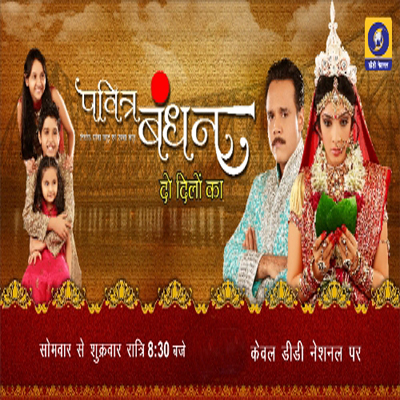
    Pavitra Bandhan – Do dilon ka will be telecast from Mondays to Fridays commencing from 9 September at 8:30 pm.

    Balaji Films chairman and renowned actor Jeetendra recalled at a press meet here how the pubcaster had given him support when he and his daughter Ekta first launched their programmes. He said that DD was a king at one time as it was the only one in the race, but it has gradually re-emerged as a major player with this new marketing policies and increasing revenues. ‘The king is content, and not stars, and DD banks on content’, he said.

    Pavitra Bandhan is a journey of two strangers Aashima and Girish, who are completely opposite to each other by nature but are destined to meet. But their priorities do not change when they meet and their main concerns remain their respective families.

    Deputy Director General Raj Shekhar Vyas, currently in charge of the primary channel DD I, said Ekta had commenced on DD Metro with Itihaas, but had now come on the primary channel. He claimed that the viewership of DD National was now the largest in the world with 1.25 crore viewers.

    He said that the channel had acquired world rights of Pavitra Bandhan and it had also been decided that 60 per cent of the revenue from commercials will come to Doordarshan, the balance going to Balaji Films.

    Vyas added that DD had now gone on a marketing binge and was also advertising in the print media and through hoardings. A sum of Rs 2 crore had gone to newspapers in recent months on advertising.

    V K Jain who is in charge of public relations in Doordarshan said that DD will soon launch cross-channel publicity, and already had over 2,000 hoarding sites in different parts of the country.

    Yash Tonk, who plays the male lead, said that he found working in films and television equally challenging. However, he admitted that he had a greater name in TV.

    Hritu Dudhani who plays the female lead said she had also acted as a police officer in an early serial on Doordarshan, and acted in Bandhini with Balaji Films.

    Others in the cast are Yamini Thakur, Shabnam Sayeed, Shailley Kaushik, Munni Jha, Shalini Arora, and Rajat Dahiya.

    Mallika Dutt who has written the story and screenplay denied that Balaji series appeared to go on and on and said this series will only last as long as the viewers want it.

  • Pubcaster to discuss possible legal action against TAM

    NEW DELHI: Prasar Bharati, which has the largest reach terrestrially through local cable operators and around 20 per cent of the market through various DTH platforms, is also piqued by the way TAM has been side-stepping Doordarshan in the television ratings.

    Encouragd by NDTV‘s lawsuit, Prasar Bharati is exploring legal options against TAM. Prasar Bharati chief executive officer Jawahar Sircar told indiantelevision.com that it was astonishing that TAM had never attempted to give importance to capturing DD‘s viewership with greater details despite it being the largest broadcaster and the fact that every platform has to mandatorily show its channels.

    Sircar said that the pubcaster was also considering taking legal action against TAM and the action in this regard will be finalised in the meeting of the Prasar Bharati Board on 6 August afternoon.

    The pubcaster was also in discussions with its legal counsel and their view would be placed before the Board, he added.

    The issue has been raised regularly by the pubcaster with both the Ministry and the Parliamentary Standing Committee. In fact, with TAM covering a very small number of cities and towns, 62 million of 112 million TV homes were outside the ambit of television audience measurement ratings as they were in rural areas.

    The action by Prasar Bharati comes close on the heels of the case filed by NDTV in a New York court against The Nielsen Co, a global research and information firm, and Kantar Media Research, the owners of TAM Media in this regard.

    Doordarshan with a reach of 92 per cent in the country through 1415 transmitters has a terrestrial reach to around 25 million viewers, apart from those getting the feed through the DTH and other platforms. In fact, Sircar claimed that DD Direct Plus is reaching out to another ten million viewers, thus taking the direct reach to 35 million.

    It has 37 channels including DD Bharati and DD National besides four allied channels like Lok Sabha and Rajya Sabha TV.

    The commercial revenue have been adversely affected because of being totally ignored by TAM which only wants to cater to private channels.

    Doordarshan earned just Rs 7.94 billion – a little over half the projection of Rs 12 billion – during 2011-12 through commercial means.