Tag: PSLV

  • PSLV-C34 successfully launches 20 satellites in a single flight

    PSLV-C34 successfully launches 20 satellites in a single flight

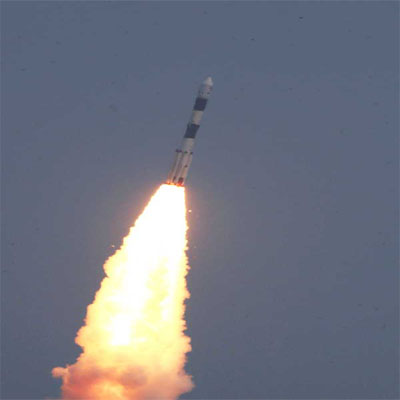
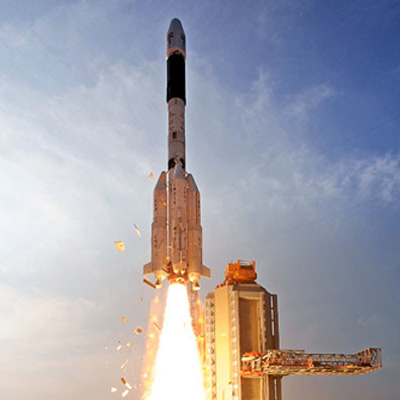
    MUMBAI: In its thirty sixth flights (PSLV-C34), ISRO’s Polar Satellite launch Vehicle successfully launched the 727.5 kg Cartosat-2 Series Satellite along with 19 co-passenger satellites today morning (June 22, 2016) from Satish Dhawan Space Centre SHAR, Sriharikota. This is the thirty fifth consecutively successful mission of PSLV and the fourteenth in its ‘XL’ configuration.  The total weight of all the 20 satellites carried on-board PSLV-C34 was 1288 kg.

    After PSLV-C34 lift-off at 0926 hrs (9:26 am) IST from the Second Launch Pad with the ignition of the first stage, the subsequent important flight events, namely, strap-on ignitions and separations, first stage separation, second stage ignition, heat-shield separation, second stage separation, third stage ignition and separation, fourth stage ignition and cut-off, took place as planned. After a flight of 16 minutes 30 seconds, the satellites achieved a polar Sun Synchronous Orbit of 508 km inclined at an angle of 97.5 degree to the equator (very close to the intended orbit) and in the succeeding 10 minutes, all the 20 satellites successfully separated from the PSLV fourth stage in a predetermined sequence.

    After separation, the two solar arrays of Cartosat-2 series satellite were deployed automatically and ISRO’s Telemetry, Tracking and Command Network (ISTRAC) at Bangalore took over the control of the satellite. In the coming days, the satellite will be brought to its final operational configuration following which it will begin to provide remote sensing services using its panchromatic (black and white) and multispectral (colour) cameras.

    The imagery sent by the Cartosat-2 series satellite will be useful for cartographic applications, urban and rural applications, coastal land use and regulation, utility management like road network monitoring, water distribution, creation of land use maps, precision study, change detection to bring out geographical and manmade features and various other Land Information System (LIS) and Geographical Information System (GIS) applications.

    Of the 19 co-passenger satellites carried by PSLV-C34, two – SATHYABAMASAT weighing 1.5 kg and SWAYAM weighing 1 kg – are University/Academic institute satellites and were built with the involvement of students from Sathyabama University, Chennai and College Of Engineering, Pune, respectively.

    The remaining 17 co-passenger satellites were international customer satellites from Canada (2), Germany (1), Indonesia (1) and the United States (13). 

    With today’s successful launch, the total number of satellites launched by India’s workhorse launch vehicle PSLV has reached 113, of which 39 are Indian and the remaining 74 from abroad.
  • Antrix earned over 80 million Euros through foreign satellite launch between January 2013 and December 2015

    Antrix earned over 80 million Euros through foreign satellite launch between January 2013 and December 2015

    New Delhi: Antrix, the commercial wing of Indian Space Research Organization, earned revenue of 80.6 Million Euros through launching of 28 international customer satellites. 

    The Cryogenic Rocket Development Programme is funded by the Government, Minister of State for Space Dr Jitendra Singh told Parliament today. 

    During the last three years starting from January 2013 until December 2015, a total of 28 International customer satellites belonging to nine countries were launched – Austria (two), Canada (five), Denmark (one), France (one), Germany (one), Indonesia (one), Singapore (one), United Kingdom (six), and United States (four).

    These satellites were launched onboard India’s Polar Satellite Launch Vehicle (PSLV) under the commercial arrangement entered into between Antrix Corporation Limited (Antrix), the commercial arm of ISRO and the international customer.

    A leading space company from the United States is under initial phase of discussion with Antrix to utilise India’s Geosynchronous Satellite Launch Vehicle (GSLV) launch services for one of its communication satellite.

    Entities from other countries that have shown interest in utilising GSLV launch services include space agencies/ companies from Canada, France, Republic of Korea and Turkey.

  • Antrix earned over 80 million Euros through foreign satellite launch between January 2013 and December 2015

    Antrix earned over 80 million Euros through foreign satellite launch between January 2013 and December 2015

    New Delhi: Antrix, the commercial wing of Indian Space Research Organization, earned revenue of 80.6 Million Euros through launching of 28 international customer satellites. 

    The Cryogenic Rocket Development Programme is funded by the Government, Minister of State for Space Dr Jitendra Singh told Parliament today. 

    During the last three years starting from January 2013 until December 2015, a total of 28 International customer satellites belonging to nine countries were launched – Austria (two), Canada (five), Denmark (one), France (one), Germany (one), Indonesia (one), Singapore (one), United Kingdom (six), and United States (four).

    These satellites were launched onboard India’s Polar Satellite Launch Vehicle (PSLV) under the commercial arrangement entered into between Antrix Corporation Limited (Antrix), the commercial arm of ISRO and the international customer.

    A leading space company from the United States is under initial phase of discussion with Antrix to utilise India’s Geosynchronous Satellite Launch Vehicle (GSLV) launch services for one of its communication satellite.

    Entities from other countries that have shown interest in utilising GSLV launch services include space agencies/ companies from Canada, France, Republic of Korea and Turkey.

  • ISRO launches India’s fifth navigation satellite IRNSS-1E

    ISRO launches India’s fifth navigation satellite IRNSS-1E

    MUMBAI: The Indian Space Research Organisation’s (ISRO) Polar Satellite Launch Vehicle, PSLV-C31, successfully launched the 1425 kg IRNSS-1E, the fifth satellite in the Indian Regional Navigation Satellite System (IRNSS) on the morning of 20 January, 2016 from Satish Dhawan Space Centre SHAR, Sriharikota.


    This is the 32nd consecutively successful mission of PSLV and the 11th in its ‘XL’ configuration.


    After the PSLV-C31 lift-off at 0931 hrs (9:31 am) IST from the Second Launch Pad with the ignition of the first stage, the subsequent important flight events, namely, strap-on ignitions and separations, first stage separation, second stage ignition, heat-shield separation, second stage separation, third stage ignition and separation, fourth stage ignition and satellite injection, took place as planned. After a flight of about 18 minutes 43 seconds, IRNSS-1E Satellite was injected to an elliptical orbit of 282.4 km X 20,655.3 km inclined at an angle of 19.21 degree to the equator (very close to the intended orbit) and successfully separated from the PSLV fourth stage.


    After injection, the solar panels of IRNSS-1E were deployed automatically. ISRO’s Master Control Facility (at Hassan, Karnataka) took over the control of the satellite. In the coming days, four orbit manoeuvres will be conducted from Master Control Facility to position the satellite in the Geosynchronous Orbit at 111.75 deg East longitude with 28.1 deg inclination.


    IRNSS-1E is the fifth of the seven satellites constituting the space segment of the Indian Regional Navigation Satellite System. IRNSS-1A, 1B, 1C and ID, the first four satellites of the constellation, were successfully launched by PSLV on 2 July, 2013, 4 April, 2014, 16 October, 2014 and 28 March, 2015 respectively. All the four satellites are functioning satisfactorily from their designated orbital positions.


    IRNSS is an independent regional navigation satellite system designed to provide position information in the Indian region and 1500 km around the Indian mainland. IRNSS would provide two types of services, namely, Standard Positioning Services (SPS) – provided to all users – and Restricted Services (RS), provided to authorised users.


    A number of ground stations responsible for the generation and transmission of navigation parameters, satellite ranging and monitoring, etc., have been established in eighteen locations across the country. In the coming months, the remaining two satellites of this constellation, namely, IRNSS-1F and IG, are scheduled to be launched by PSLV, thereby completing the entire IRNSS constellation.

  • ISRO launches India’s fifth navigation satellite IRNSS-1E

    ISRO launches India’s fifth navigation satellite IRNSS-1E

    MUMBAI: The Indian Space Research Organisation’s (ISRO) Polar Satellite Launch Vehicle, PSLV-C31, successfully launched the 1425 kg IRNSS-1E, the fifth satellite in the Indian Regional Navigation Satellite System (IRNSS) on the morning of 20 January, 2016 from Satish Dhawan Space Centre SHAR, Sriharikota.


    This is the 32nd consecutively successful mission of PSLV and the 11th in its ‘XL’ configuration.


    After the PSLV-C31 lift-off at 0931 hrs (9:31 am) IST from the Second Launch Pad with the ignition of the first stage, the subsequent important flight events, namely, strap-on ignitions and separations, first stage separation, second stage ignition, heat-shield separation, second stage separation, third stage ignition and separation, fourth stage ignition and satellite injection, took place as planned. After a flight of about 18 minutes 43 seconds, IRNSS-1E Satellite was injected to an elliptical orbit of 282.4 km X 20,655.3 km inclined at an angle of 19.21 degree to the equator (very close to the intended orbit) and successfully separated from the PSLV fourth stage.


    After injection, the solar panels of IRNSS-1E were deployed automatically. ISRO’s Master Control Facility (at Hassan, Karnataka) took over the control of the satellite. In the coming days, four orbit manoeuvres will be conducted from Master Control Facility to position the satellite in the Geosynchronous Orbit at 111.75 deg East longitude with 28.1 deg inclination.


    IRNSS-1E is the fifth of the seven satellites constituting the space segment of the Indian Regional Navigation Satellite System. IRNSS-1A, 1B, 1C and ID, the first four satellites of the constellation, were successfully launched by PSLV on 2 July, 2013, 4 April, 2014, 16 October, 2014 and 28 March, 2015 respectively. All the four satellites are functioning satisfactorily from their designated orbital positions.


    IRNSS is an independent regional navigation satellite system designed to provide position information in the Indian region and 1500 km around the Indian mainland. IRNSS would provide two types of services, namely, Standard Positioning Services (SPS) – provided to all users – and Restricted Services (RS), provided to authorised users.


    A number of ground stations responsible for the generation and transmission of navigation parameters, satellite ranging and monitoring, etc., have been established in eighteen locations across the country. In the coming months, the remaining two satellites of this constellation, namely, IRNSS-1F and IG, are scheduled to be launched by PSLV, thereby completing the entire IRNSS constellation.

  • ISRO successfully launches Astrosat along with six foreign satellites

    ISRO successfully launches Astrosat along with six foreign satellites

    MUMBAI: The Indian Space Research Organisation (ISRO) has been having a swell 2015. Just a few days after its Mars Orbiter completed a successful one year around the Red planet, ISRO has now launched its first dedicated multi wavelength space observatory along with six foreign customer satellites.


    In its 31st flight (PSLV-C30) conducted today (28 September, 2015), India’s Polar Satellite Launch Vehicle (PSLV) successfully launched Astrosat – multi wavelength space observatory and six foreign customer satellites into a 644.6 X 651.5 km orbit inclined at an angle of 6 deg to the equator. The achieved orbit is very close to the intended one. This was the thirtieth consecutive success for PSLV.


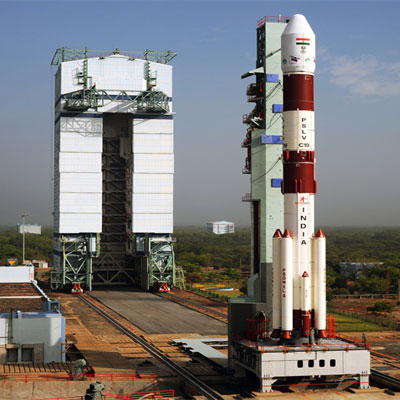
    PSLV was launched in its heaviest ‘XL’ version with six strap-on motors of the first stage. The launch took place from the First Launch Pad at the Satish Dhawan Space Centre SHAR (SDSC SHAR), Sriharikota, the spaceport of India.


    The 320 tonne, 45 m tall PSLV-C30 carrying seven satellites including the 1513 kg Astrosat, lifted off at 10:00 Hrs IST. About 22 minutes after lift-off, Astrosat was successfully placed in orbit and separated from the fourth stage of PSLV-C30. The separation of all the six co-passenger satellites was completed in the subsequent three minutes. The seven satellites carried by PSLV-C30 together weighed about 1631 kg at lift-off. 


    After a 50 hour smooth count down, the 320 ton PSLV-C28 was launched with the ignition of its first stage. The important flight events included the ignition and separation of the strap-ons, separation of the first stage, ignition of the second stage, separation of the payload fairing after the vehicle had cleared the dense atmosphere, second stage separation, third stage ignition and third stage separation, fourth stage ignition and fourth stage cut-off.  


    Through 30 successful flights during 1994-2015 period, PSLV has launched a total of 84 satellites including the seven satellites successfully launched today. The vehicle has repeatedly proved its reliability and versatility by successfully launching satellites into a variety of orbits including polar Sun Synchronous, Geosynchronous Transfer and Low Earth orbits of small inclination thereby emerging as the workhorse launch vehicle of India. 


    So far, 51 satellites have been launched by PSLV for customers from abroad. Today’s launch of six co-passenger satellites by PSLV-C30 was facilitated by Antrix Corporation Limited, the commercial arm of ISRO, a government of India Company under the Department of Space (DOS). 


    Soon after its separation from PSLV-C30, the two solar arrays of Astrosat were automatically deployed and the Spacecraft Control Centre at the Mission Operations Complex of ISRO Telemetry, Tracking and Command Network (ISTRAC) at Bangalore took control of Astrosat.


    Astrosat is India’s first dedicated multi wavelength space observatory. This scientific satellite mission endeavours for a more detailed understanding of our universe. Astrosat is designed to observe the universe in the Visible, Ultraviolet, low and high energy X-ray regions of the electromagnetic spectrum simultaneously with the help of its five payloads. 


    Astrosat was realised by ISRO with the participation of all major astronomy institutions including Inter University Centre for Astronomy and Astrophysics (IUCAA) of Pune, Tata Institute of Fundamental Research (TIFR) at Mumbai, Indian Institute of Astrophysics (IIAP) and Raman Research Institute (RRI) of Bangalore as well as some of the Universities in India and two institutions from Canada and the UK.


    In the coming days, Astrosat will be brought to the final operational configuration and all its five scientific payloads will be thoroughly tested before the commencement of regular operations.

  • ISRO’s Antrix earns Rs 1860 crore in 2014-15, up Rs 700 crore from 2010-11

    ISRO’s Antrix earns Rs 1860 crore in 2014-15, up Rs 700 crore from 2010-11

    NEW DELHI: The turnover of Antrix Corporation Limited, the commercial arm of the Indian Space Research Organisation (ISRO), was Rs 1860.71 crore (unaudited) during 2014-15 as compared to Rs 1113.58 crore in 2010-11, the Parliament has been informed. 

    Earlier, Minister in the Department of Space had informed the Parliament that India had earned a sum of approximately Rs 662 crore ($17 million and 78.5 million Euros) by launching 45 satellites from 19 countries using ISRO’s Polar Satellite Launch Vehicle (PSLV).

    Antrix has signed agreements for launching 28 more foreign satellites from six countries namely Algeria (3), Canada (4), Germany (4), Indonesia (2), Singapore (6) and the United States (9).

    The launches of these foreign satellites are envisaged during the 2015-2017 time period. Discussions with foreign agencies and companies are going on for providing launch services to their satellites on-board ISRO’s PSLV and Geo-synchronous Satellite Launch Vehicle (GSLV).

    The details of the commercial income generated by Antrix for the last five financial years are: 

    (Rs in crore)

  • PSLV successfully launches five British satellites into orbit

    PSLV successfully launches five British satellites into orbit

    NEW DELHI: The Polar Satellite Launch Vehicle PSLV-C28 successfully launched three identical DMC3 commercial Earth Observation Satellites along with two smaller satellites from United Kingdom into a polar Sun Synchronous Orbit, which was very close to the intended orbit of 647 km height.


    The five satellites, together weighing about 1440 kg at lift-off, were launched by the Indian Space Research Organisation (ISRO) from Satish Dhawan Space Centre (SDSC) SHAR, Sriharikota on 10 July.


    The five satellites were launched as part of the agreement entered into between DMC International Imaging (DMCii), a wholly owned subsidiary of Surrey Satellite Technology Limited (SSTL), UK and Antrix Corporation Limited, the commercial arm of ISRO, a government of India company under the Department of Space (DOS). This was the twenty ninth consecutively successful flight of PSLV. 


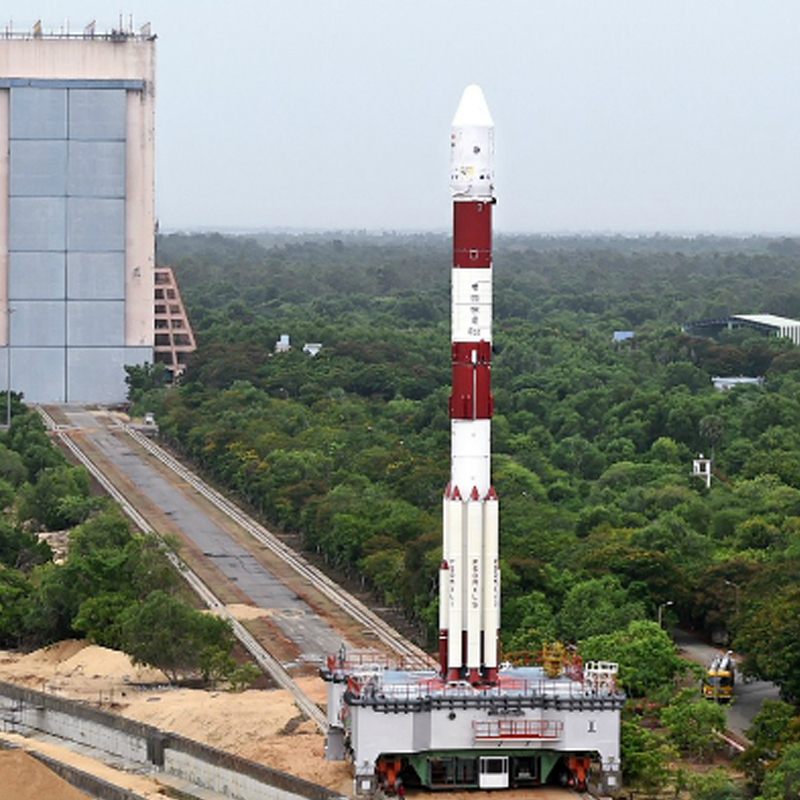
    PSLV was launched in its heaviest ‘XL’ version with six strap-on motors of the first stage. This flight was unique since for the first time, the ‘XL’ version of PSLV was used to launch foreign payloads exclusively. Till now, the lighter ‘core alone’ version of PSLV has been used to launch foreign payloads exclusively. PSLV has successfully launched 45 satellites for customers from abroad including five UK satellites launched. 


    Through 29 successful flights (of a total 30) during the period between 1994 and 2015, PSLV has launched a total of 77 satellites with a total mass of 32.04 tons, of which 4.64 tons (about 14 per cent) comprises 45 satellites for customers from abroad. The vehicle has repeatedly proved its reliability and versatility by successfully launching satellites into a variety of orbits including polar Sun Synchronous, Geosynchronous Transfer and Low Earth orbits thereby emerging as the workhorse launch vehicle of India. 


    After a 62.5 hour smooth count down, the 320 ton PSLV-C28 lifted off from the First Launch Pad (FLP) at SDSC SHAR at 2158 hrs (9:58 pm) IST with the ignition of its first stage. The important flight events included the ignition and separation of strap-ons, separation of the first stage, ignition of the second stage, separation of the payload fairing at about 118 km altitude after the vehicle had cleared the dense atmosphere, second stage separation, third stage ignition and third stage separation, fourth stage ignition and fourth stage cut-off. 


    Once in proper orbit, the three DMC3 satellites were successfully deployed about 18 minutes after lift-off in quick succession. Following this, the seven kg Nanosatellite De-OrbitSail and the 91 kg Microsatellite CBNT-1 were also successfully deployed.

  • ISRO’s GSLV D5  successfully launches GSAT-14

    ISRO’s GSLV D5 successfully launches GSAT-14

    MUMBAI: The first time it was about to launch in august 2013 a technical snag forced an abortion. But now Indian Space Research Organisation’s (ISRO) twenty third communication satellite GSAT-14 has been successfully launched on 5 January 2014 from launch vehicle Geosynchronous Satellite Launch Vehicle GSLV-D5 that is using an indigenous cryogenic engine for the first time. The launcher propelled the satellite into a Geosynchronous Transfer Orbit (GTO) after which it used its own propulsion system to settle itself at 74 degrees east longitude orbit.

    The mission was an important one for ISRO since India has been developing cryogenic engines or two decades but till now had been dependent on Russian ones. This launch puts India at a prominent position in space science at par with countries like the US and Russia. Previous attempts at launches using a cryogenic engine have ended up in a mess. The launch that was telecast live on DD National saw the rocket being propelled up into space with each stage crossing at its intended time. 

    ”Team ISRO has done it. The cryogenic engine has performed as predicted and injected GSAT- 14 in the intended orbit. This is an important day for science and technology and space technology in the country. 20 years of our effort in realising an indigenous crygoenic engine has now fructified. We have put in excruciating efforts of three and a half years after test flight of cryogenic stage in 2010,” said an ecatatic ISRO chairman K Radhakrishnan as the whole team rejoiced  when the the cryogenic stage was initiated and completed and years of ISRO’s hard work paid off. The launch cost approximately Rs 370 crore.

    The previous attempt to blast off GSLV into space was aborted following a fuel leak in its engine that developed hours before launch. ISRO worked on it and gave it a better metal covering following which it decided to give it another shot. A three stage rocket- the first stage runs on solid fuel, second on liquid fuel and third on the cryogenic engine – the GSLV-D5 carried the 1982 kgs GSAT-14 to replace GSAT-3 that wa decomissioned in 2010.

    The new satellite’s structure is based on ISRO’s two ton weighing (I-2k satellite bus). The satellite has six Ku band transponders (51.5 dBW EOC-EIRP), six C band transponders (36 dBW EOC-EIRP) and 2 Ka band transponders and will be co-located with INSAT-3C, INSAT-4CR and KALPANA-1.

    A 29 hour countdown began at 11: 16 am on 4 January and the launch was at 4: 18 pm on 5 January from the Satish Dhawan Space Centre at Sriharikota in Andhra Pradesh. The 17 minutes and 8 second flight launch is the first of 2014 after the postponement of Space X’s launch of Thaicom-6 from 3 January to between 6 to 9 January. The Elon Musk backed company decided to go in for a later liftoff as problems had emerged with Falcon-9 rocket’s fairing.

    This mission is likely to have a beneficial spinoff. It could lead to orders to build more rockets that can carry payloads of up to 5 tonne to Lower Earth Orbit. Till now ISRO has been using Polar Satellite Launch Vehicle (PSLV) that carries loads of around a tonne.

  • Space capsule recovered

    Space capsule recovered

    MUMBAI: The Space capsule Recovery Experiment (SRE-1) that was launched by Polar Satellite Launch Vehicle (PSLV-C7) from Satish Dhawan Space Centre (SDSC) SHAR Sriharikota on 10 January, was successfully recovered today after being maneuvered to reenter the earth’s atmosphere and descend over Bay of Bengal about 140 km East of Sriharikota.

    Since its launch, SRE-1 was going round the earth in a circular polar orbit at an altitude of 637 km. In preparation for its reentry, SRE-1 was put into an elliptical orbit with a perigee (nearest point to earth) of 485 km and an apogee (farthest point to earth) of 639 km by issuing commands from the Spacecraft Control Centre (SCC) of ISTRAC at Bangalore on January 19, 2007. The critical de-boost operations were executed from SCC, Bangalore supported by a network of ground stations at Bangalore, Lucknow, Mauritius, Sriharikota, Biak in Indonesia, Saskatoon in Canada, Svalbard in Norway besides shipborne and airborne terminals.

    The recovery operations were supported and carried out by the Indian Coast Guard and Indian Navy using ships, aircraft and helicopters.

    During its stay in orbit for the last 12 days, the two experiments on board SRE-1 were successfully conducted under micro gravity conditions. One of the experiments was related to study of metal melting and crystallizations under micro gravity conditions. The second experiment, designed by National Metallurgical Laboratory, Jamshedpur, was intended to study the synthesis of nano-crystals under micro gravity conditions. This experiment can help in designing better biomaterials having closest proximity with natural biological products. The experimental results will be analysed in due
    course by the principal scientific investigators of the two experiments.

    The successful launch, in-orbit operation of the on board experiments and reentry and recovery of SRE-1 has demonstrated India’s capability in important technologies like aero-thermo structures, deceleration and flotation systems, navigation, guidance and control. SRE-1 is an important
    beginning for providing a low cost platform for micro-gravity experiments in space science and technology and return specimen from space.