Tag: PSLV

  • ISRO to launch 103 satellites early Feb

    ISRO to launch 103 satellites early Feb

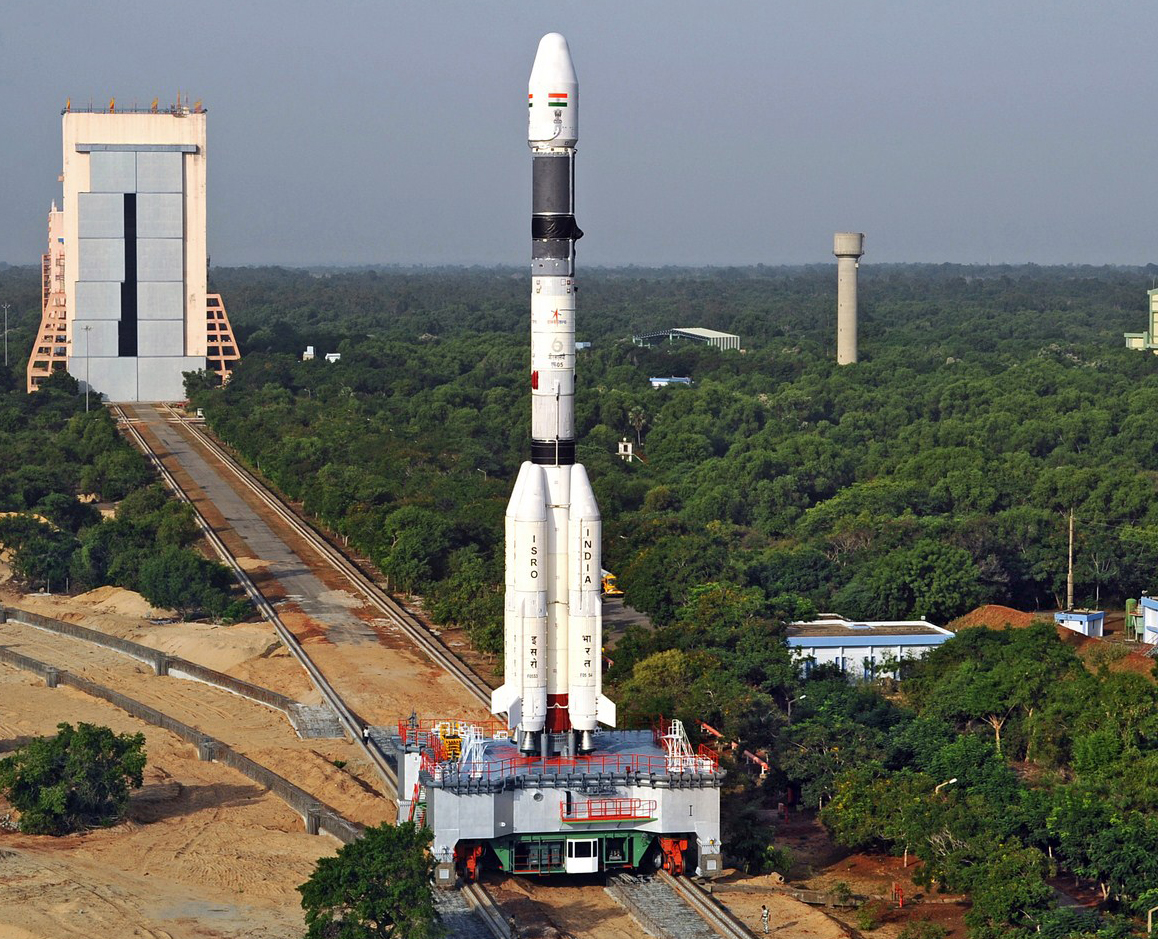
    NEW DELHI: Indian Space and Research Organisation (ISRO) will launch a record 103 satellites in one go using its workhorse PSLV-C37 in the first week of February, while the prime minister Narendra Modi’s pet South Asian satellite project will take off in March. Majority of the satellites (almost 100) set for launch in February are for foreign nations, including the U.S. and Germany.

    “We are making a century by launching over 100 satellites at one go,” a PTI report quoted S Somnath, Director of the Liquid Propulsion Systems Centre of the ISRO, as saying yesterday. The space agency had earlier planned a launch of 83 satellites in the last week of January, of which 80 were foreign. But with the addition of 20 more foreign satellites, the launch was delayed by a week and will now take place in first week of February, Somnath said.

    He, however, did not specify the number of countries that would launch its satellites in this mission, but said the list includes countries like the US and Germany. “These will be 100 micro-small satellites, which will be launched using a PSLV (Polar Satellite Launch Vehicle) – C37. The weight of the payload will be 1350 kgs, of which 500-600 kgs will be the satellite’s weight,” Somnath added in the PTI report.

    The launch will be a major feat in country’s space history as no exercise on this scale has been attempted before. Last year, ISRO launched 22 satellites at a go and this launch will have almost five times the number of crafts. The South Asian satellite will be a part of GSAT-9, which will be launched in March this year, said ISRO Associate Director M Nageshwara Rao.

    The communication satellite was to be launched in December 2016, but was slightly delayed as some other satellites are to be launched before that. PTI quoted unnamed sources saying talks with Afghanistan to have the country on-board for the project is in its final stages.

    Envisaged as a gift to its neighbours, the project, earlier known as SAARC satellite, faced stiff resistance from Pakistan. The neighbouring country wanted it to be launched under the aegis of the South Asian regional forum. It later backed out of the project. Apart from India, the satellite will benefit Sri Lanka, Maldives, Bangladesh, Nepal and Bhutan.
  • ISRO launches RESOURCESAT-2A Remote Sensing Satellite

    ISRO launches RESOURCESAT-2A Remote Sensing Satellite

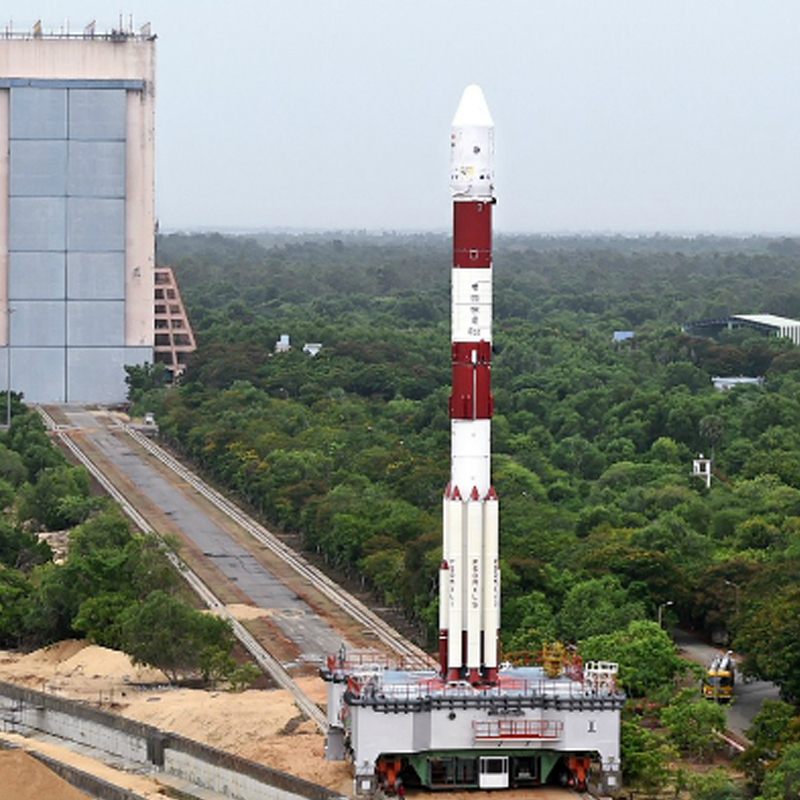
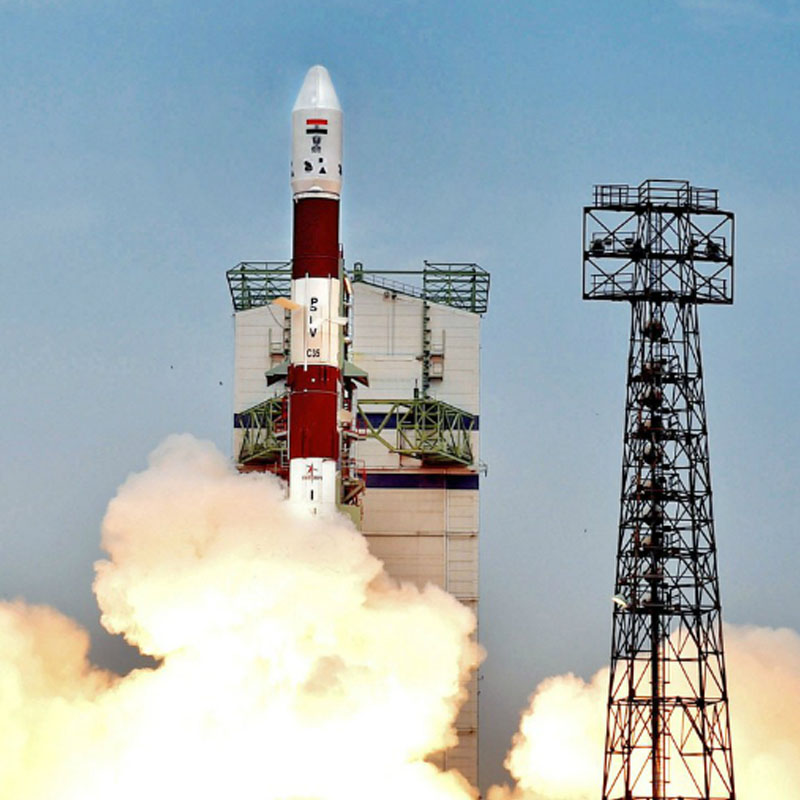
    NEW DELHI: The 1,235-kg RESOURCESAT-2A Satellite was launched successfully yesterday morning by the PSLV-C36, ISRO’s Polar Satellite Launch Vehicle, in its thirty eighth flight from the Satish Dhawan Space Centre SHAR, Sriharikota.

    This is the thirty seventh consecutively successful mission of PSLV.

    With this, the total number of satellites launched by India’s workhorse launch vehicle PSLV including today’s RESOURCESAT-2A has now reached 122, of which 43 are Indian and the remaining 79 are from abroad.

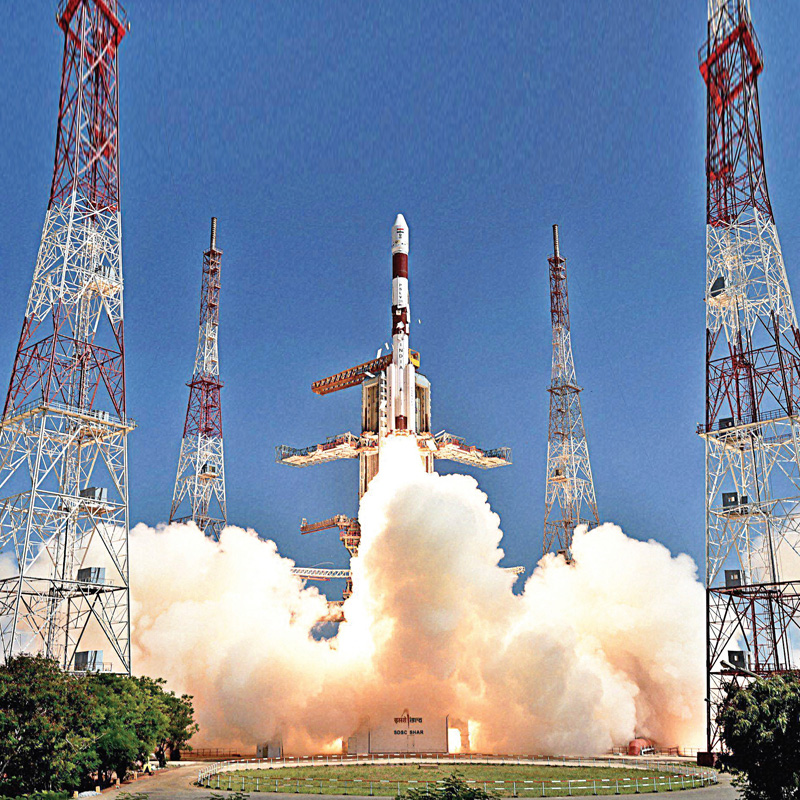
    After PSLV-C36 lift-off at 10:25 am IST from the First Launch Pad with the ignition of the first stage, the subsequent important flight events, namely, strap-on ignitions and separations, first stage separation, second stage ignition, payload fairing separation, second stage separation, third stage ignition and separation, fourth stage ignition and cut-off, took place as planned. After a flight of 17 minutes 05 seconds, the vehicle achieved a polar Sun Synchronous Orbit of 824 km height inclined at an angle of 98.725 degree to the equator (very close to the intended orbit) and 47 seconds later, RESOURCESAT-2A was separated from the PSLV fourth stage.

    After separation, the two solar arrays of RESOURCESAT-2A deployed automatically and ISRO’s Telemetry, Tracking and Command Network (ISTRAC) at Bangalore took over the control of the satellite. In the coming days, the satellite will be brought to its final operational configuration following which it will begin to provide imagery from its three cameras. The data sent by RESOURCESAT-2A will be useful for agricultural applications like crop area and crop production estimation, drought monitoring, soil mapping, cropping system analysis and farm advisories generation.

    Like its predecessors RESOURCESAT-1 and 2, RESOURCESAT-2A has a unique 3-Tier imaging system with Advanced Wide Field Sensor (AWiFS), Linear Imaging Self Scanner-3 (LISS-3) and Linear Imaging Self Scanner-4 (LISS-4) cameras. The AWiFS provides images with a sampling of 56 metres, a swath of 740 km and a revisit of five days whereas the LISS-3 provides 23.5 metre sampled images with 141 km swath and a ‘repitivity’ of 24 days. LISS-4 provides 5.8 metre sampled images with 70 km swath and a revisit of five days.

    Meanwhile, the Parliament was told yesterday that ISRO successfully carried out the first experimental mission of Reusable Launch Vehicle – Technology Demonstrator (RLV-TD) on 23 May 2016 from Sriharikota. In this mission, critical technologies such as autonomous navigation, guidance & control and reusable thermal protection system have been successfully demonstrated.
    The space minister Jitendra Singh said the Development of Reusable Launch Vehicle is a technical challenge and it involves the development of many cutting edge technologies. Presently, it is in the preliminary stage of total developmental process. A series of technology demonstration missions would be required before it is made operational.

  • ISRO launches RESOURCESAT-2A Remote Sensing Satellite

    ISRO launches RESOURCESAT-2A Remote Sensing Satellite

    NEW DELHI: The 1,235-kg RESOURCESAT-2A Satellite was launched successfully yesterday morning by the PSLV-C36, ISRO’s Polar Satellite Launch Vehicle, in its thirty eighth flight from the Satish Dhawan Space Centre SHAR, Sriharikota.

    This is the thirty seventh consecutively successful mission of PSLV.

    With this, the total number of satellites launched by India’s workhorse launch vehicle PSLV including today’s RESOURCESAT-2A has now reached 122, of which 43 are Indian and the remaining 79 are from abroad.

    After PSLV-C36 lift-off at 10:25 am IST from the First Launch Pad with the ignition of the first stage, the subsequent important flight events, namely, strap-on ignitions and separations, first stage separation, second stage ignition, payload fairing separation, second stage separation, third stage ignition and separation, fourth stage ignition and cut-off, took place as planned. After a flight of 17 minutes 05 seconds, the vehicle achieved a polar Sun Synchronous Orbit of 824 km height inclined at an angle of 98.725 degree to the equator (very close to the intended orbit) and 47 seconds later, RESOURCESAT-2A was separated from the PSLV fourth stage.

    After separation, the two solar arrays of RESOURCESAT-2A deployed automatically and ISRO’s Telemetry, Tracking and Command Network (ISTRAC) at Bangalore took over the control of the satellite. In the coming days, the satellite will be brought to its final operational configuration following which it will begin to provide imagery from its three cameras. The data sent by RESOURCESAT-2A will be useful for agricultural applications like crop area and crop production estimation, drought monitoring, soil mapping, cropping system analysis and farm advisories generation.

    Like its predecessors RESOURCESAT-1 and 2, RESOURCESAT-2A has a unique 3-Tier imaging system with Advanced Wide Field Sensor (AWiFS), Linear Imaging Self Scanner-3 (LISS-3) and Linear Imaging Self Scanner-4 (LISS-4) cameras. The AWiFS provides images with a sampling of 56 metres, a swath of 740 km and a revisit of five days whereas the LISS-3 provides 23.5 metre sampled images with 141 km swath and a ‘repitivity’ of 24 days. LISS-4 provides 5.8 metre sampled images with 70 km swath and a revisit of five days.

    Meanwhile, the Parliament was told yesterday that ISRO successfully carried out the first experimental mission of Reusable Launch Vehicle – Technology Demonstrator (RLV-TD) on 23 May 2016 from Sriharikota. In this mission, critical technologies such as autonomous navigation, guidance & control and reusable thermal protection system have been successfully demonstrated.
    The space minister Jitendra Singh said the Development of Reusable Launch Vehicle is a technical challenge and it involves the development of many cutting edge technologies. Presently, it is in the preliminary stage of total developmental process. A series of technology demonstration missions would be required before it is made operational.

  • ISRO to launch eight satellites using PSLV on 26 September

    ISRO to launch eight satellites using PSLV on 26 September

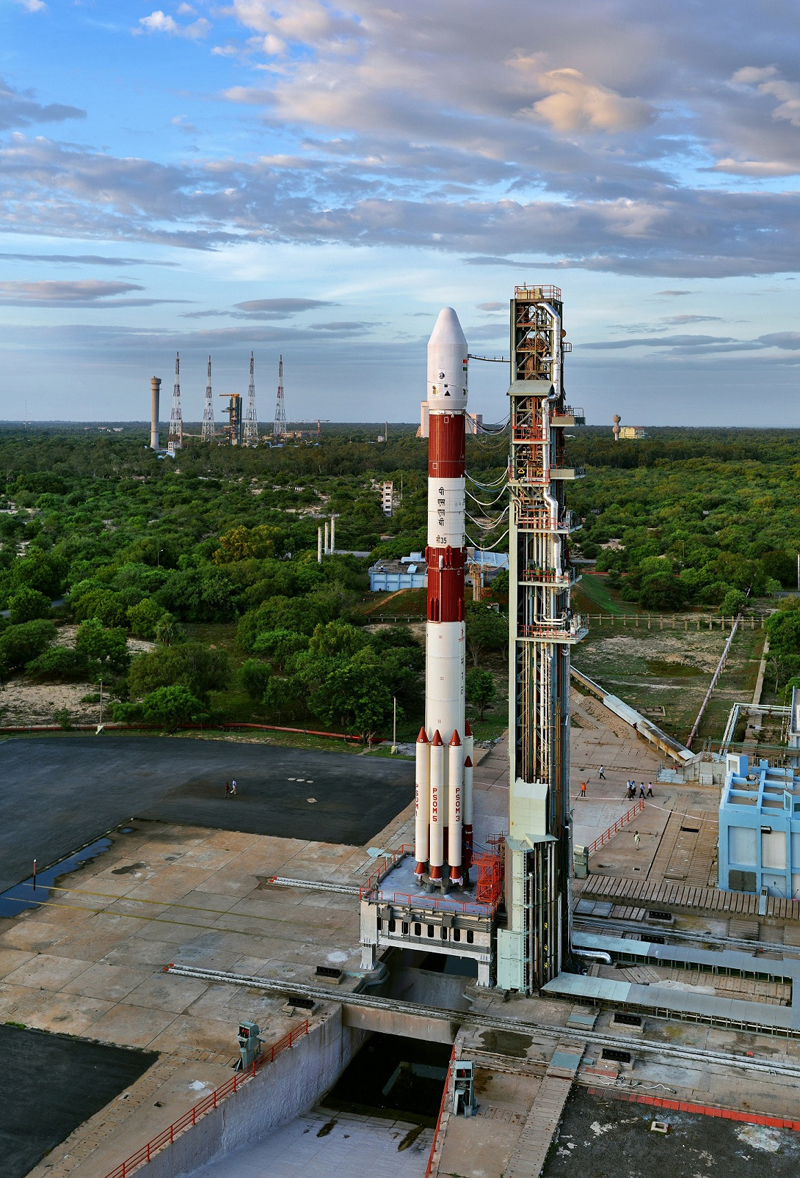
    MUMBAI: It will be the second satellite launch this month for the Indian Space Research Organisation (ISRO). On 26 September 2016 at exactly 9:12 am the PSLV C35 will blast off from the first launch pad of the Satish Dhawan Space Centre in Sriharikota, Andhra Pradesh. It will mark the 37th mission and 15 th flight of the PSLV in ‘XL’ configuration (with the use of solid strap-on motors) which will put eight satellites into orbit.

    ISRO will, with the PSLV C35, be undertaking its longest launch and probably most complicated mission ever attempted as it is using the same rocket to launch satellites into two different orbits. The Scatsat-1 satellite, weighing 371 kg for ocean and weather related studies, will be hurled into polar sun synchronous orbit at an altitude of 730 km 17 minutes after liftoff.

    Two Indian universities/ academic institute satellites (Pratham-10kg, IIT – Bombay and Pisat-5.25 kg, PES University, Bengaluru and its consortium) and five foreign satellites will be placed into a 670 km polar orbit. The five co-passenger satellites are from Algeria (three of them – Alsat-1B 103kg, Alsat-2B 117kg, Alsat-1N 7kg), Canada (NLS-19, 8kg) and the US (Pathfinder-44kg).

    What makes the mission complicated is that once Scatscat-1 is launched, the fourth stage engine of the PSLV-C35 will come to a halt. India’s space agency will then keep a tab on the engine health from the ground and will restart it after about 60 minutes for another 20 seconds which will give it the required thrust to take the rocket into the next orbit and release the payload of seven satellites. ISRO has planned to attempt ‘multiple burn technology’ as it is an effective method in cutting costs during satellite launches.

    Earlier this month on 8 September, IISRO had successfully launched its weather satellite INSAT-3DR, a two tonner, using the GSLV-F05, the tenth flight of India’s Geosynchronous Satellite Launch Vehicle (GSLV), The launch took place from the second launch pad at Satish Dhawan Space Centre. It was significant because it was the first operational flight of GSLV carrying Cryogenic Upper Stage (CUS). The indigenously developed CUS was carried on-board for the fourth time during a GSLV flight in the GSLV-F05 flight.

  • ISRO to launch eight satellites using PSLV on 26 September

    ISRO to launch eight satellites using PSLV on 26 September

    MUMBAI: It will be the second satellite launch this month for the Indian Space Research Organisation (ISRO). On 26 September 2016 at exactly 9:12 am the PSLV C35 will blast off from the first launch pad of the Satish Dhawan Space Centre in Sriharikota, Andhra Pradesh. It will mark the 37th mission and 15 th flight of the PSLV in ‘XL’ configuration (with the use of solid strap-on motors) which will put eight satellites into orbit.

    ISRO will, with the PSLV C35, be undertaking its longest launch and probably most complicated mission ever attempted as it is using the same rocket to launch satellites into two different orbits. The Scatsat-1 satellite, weighing 371 kg for ocean and weather related studies, will be hurled into polar sun synchronous orbit at an altitude of 730 km 17 minutes after liftoff.

    Two Indian universities/ academic institute satellites (Pratham-10kg, IIT – Bombay and Pisat-5.25 kg, PES University, Bengaluru and its consortium) and five foreign satellites will be placed into a 670 km polar orbit. The five co-passenger satellites are from Algeria (three of them – Alsat-1B 103kg, Alsat-2B 117kg, Alsat-1N 7kg), Canada (NLS-19, 8kg) and the US (Pathfinder-44kg).

    What makes the mission complicated is that once Scatscat-1 is launched, the fourth stage engine of the PSLV-C35 will come to a halt. India’s space agency will then keep a tab on the engine health from the ground and will restart it after about 60 minutes for another 20 seconds which will give it the required thrust to take the rocket into the next orbit and release the payload of seven satellites. ISRO has planned to attempt ‘multiple burn technology’ as it is an effective method in cutting costs during satellite launches.

    Earlier this month on 8 September, IISRO had successfully launched its weather satellite INSAT-3DR, a two tonner, using the GSLV-F05, the tenth flight of India’s Geosynchronous Satellite Launch Vehicle (GSLV), The launch took place from the second launch pad at Satish Dhawan Space Centre. It was significant because it was the first operational flight of GSLV carrying Cryogenic Upper Stage (CUS). The indigenously developed CUS was carried on-board for the fourth time during a GSLV flight in the GSLV-F05 flight.

  • Isro to outsource satellite manufacturing to private companies

    Isro to outsource satellite manufacturing to private companies

    MUMBAI: Now that it has been building and launching satellites for decades now, the Indian Space Research Organisation (Isro) has decided to outsource its technology to private companies to help them develop satellites. Isro wants to concentrate on research and deep space missions.

    The space organisation had earlier floated a tender to jointly manufacture a satellite and it has already received 40 responses. This move is being talked about as a first step by Isro to outsource its technology to serve domestic and international needs for satellite capacity.

    Based on its demand for space communications, India and Isro need to launch a satellite a month for the next five years or so. Some will be needed to replace ageing satellites, some will be new birds. There has been a great deal of demand from India’s DTH operators for capacity as they race to have enough transponders to deliver the spate of TV channel launches.

    Isro has stated that it will be handholding, jointly building, testing and certifying at least two nagivation satellites in the short term. Amongst the companies it is targeting include Planet Labx, Terra Labs, Spire Global, all of whom are its clients for whom it has launced satellites using its Polar Satellite Launch Vehicle.

    For Isro, a few firms based in Silicon Valley such as Planet Labs, Terra Labs and Spire Global are customers of Isro, using Isro launchers to hurl their satellites into space. Now, Isro is looking to expand the relationship with them and other firms like SpaceX to make satellites locally in India.

  • Isro to outsource satellite manufacturing to private companies

    Isro to outsource satellite manufacturing to private companies

    MUMBAI: Now that it has been building and launching satellites for decades now, the Indian Space Research Organisation (Isro) has decided to outsource its technology to private companies to help them develop satellites. Isro wants to concentrate on research and deep space missions.

    The space organisation had earlier floated a tender to jointly manufacture a satellite and it has already received 40 responses. This move is being talked about as a first step by Isro to outsource its technology to serve domestic and international needs for satellite capacity.

    Based on its demand for space communications, India and Isro need to launch a satellite a month for the next five years or so. Some will be needed to replace ageing satellites, some will be new birds. There has been a great deal of demand from India’s DTH operators for capacity as they race to have enough transponders to deliver the spate of TV channel launches.

    Isro has stated that it will be handholding, jointly building, testing and certifying at least two nagivation satellites in the short term. Amongst the companies it is targeting include Planet Labx, Terra Labs, Spire Global, all of whom are its clients for whom it has launced satellites using its Polar Satellite Launch Vehicle.

    For Isro, a few firms based in Silicon Valley such as Planet Labs, Terra Labs and Spire Global are customers of Isro, using Isro launchers to hurl their satellites into space. Now, Isro is looking to expand the relationship with them and other firms like SpaceX to make satellites locally in India.

  • ISRO mulling over using private enterprise for satellite launches

    ISRO mulling over using private enterprise for satellite launches

    NEW DELHI: The Indian Space Research Organzation (ISRO) is considering the possibility of involving Indian industry in a greater role to meet the increased national requirements and possible commercial demand for launch services.

    Discussions are being held with the Indian industry towards formulating a plan & strategy to enhance the capacity and capability of managing the Polar Satellite Launch Vehicle (PSLV) programme on an end to end basis.

    Space Minister Jitendra Singh told Parliament today that ISRO has been pursuing a conscious approach of building up and nurturing the industrial capabilities in the country to maximally support the Indian Space Programme.

    Through appropriate transfer of technology and hand-holding, ISRO is making focused efforts to consolidate and enhance participation of Indian industries for manufacturing and production of space related hardware such as rocket engine & stages, propellant tanks, spacecraft structures, solar panels, thermal control systems, electronic packages etc., required for satellites and launch vehicles.

    A provision exists for private players to operate communication satellites on their own in the country through an established mechanism called Committee for Authorising the establishment and operations of Indian Satellite Systems (CAISS).

  • ISRO mulling over using private enterprise for satellite launches

    ISRO mulling over using private enterprise for satellite launches

    NEW DELHI: The Indian Space Research Organzation (ISRO) is considering the possibility of involving Indian industry in a greater role to meet the increased national requirements and possible commercial demand for launch services.

    Discussions are being held with the Indian industry towards formulating a plan & strategy to enhance the capacity and capability of managing the Polar Satellite Launch Vehicle (PSLV) programme on an end to end basis.

    Space Minister Jitendra Singh told Parliament today that ISRO has been pursuing a conscious approach of building up and nurturing the industrial capabilities in the country to maximally support the Indian Space Programme.

    Through appropriate transfer of technology and hand-holding, ISRO is making focused efforts to consolidate and enhance participation of Indian industries for manufacturing and production of space related hardware such as rocket engine & stages, propellant tanks, spacecraft structures, solar panels, thermal control systems, electronic packages etc., required for satellites and launch vehicles.

    A provision exists for private players to operate communication satellites on their own in the country through an established mechanism called Committee for Authorising the establishment and operations of Indian Satellite Systems (CAISS).

  • PSLV-C34 successfully launches 20 satellites in a single flight

    PSLV-C34 successfully launches 20 satellites in a single flight

    MUMBAI: In its thirty sixth flights (PSLV-C34), ISRO’s Polar Satellite launch Vehicle successfully launched the 727.5 kg Cartosat-2 Series Satellite along with 19 co-passenger satellites today morning (June 22, 2016) from Satish Dhawan Space Centre SHAR, Sriharikota. This is the thirty fifth consecutively successful mission of PSLV and the fourteenth in its ‘XL’ configuration.  The total weight of all the 20 satellites carried on-board PSLV-C34 was 1288 kg.

    After PSLV-C34 lift-off at 0926 hrs (9:26 am) IST from the Second Launch Pad with the ignition of the first stage, the subsequent important flight events, namely, strap-on ignitions and separations, first stage separation, second stage ignition, heat-shield separation, second stage separation, third stage ignition and separation, fourth stage ignition and cut-off, took place as planned. After a flight of 16 minutes 30 seconds, the satellites achieved a polar Sun Synchronous Orbit of 508 km inclined at an angle of 97.5 degree to the equator (very close to the intended orbit) and in the succeeding 10 minutes, all the 20 satellites successfully separated from the PSLV fourth stage in a predetermined sequence.

    After separation, the two solar arrays of Cartosat-2 series satellite were deployed automatically and ISRO’s Telemetry, Tracking and Command Network (ISTRAC) at Bangalore took over the control of the satellite. In the coming days, the satellite will be brought to its final operational configuration following which it will begin to provide remote sensing services using its panchromatic (black and white) and multispectral (colour) cameras.

    The imagery sent by the Cartosat-2 series satellite will be useful for cartographic applications, urban and rural applications, coastal land use and regulation, utility management like road network monitoring, water distribution, creation of land use maps, precision study, change detection to bring out geographical and manmade features and various other Land Information System (LIS) and Geographical Information System (GIS) applications.

    Of the 19 co-passenger satellites carried by PSLV-C34, two – SATHYABAMASAT weighing 1.5 kg and SWAYAM weighing 1 kg – are University/Academic institute satellites and were built with the involvement of students from Sathyabama University, Chennai and College Of Engineering, Pune, respectively.

    The remaining 17 co-passenger satellites were international customer satellites from Canada (2), Germany (1), Indonesia (1) and the United States (13). 

    With today’s successful launch, the total number of satellites launched by India’s workhorse launch vehicle PSLV has reached 113, of which 39 are Indian and the remaining 74 from abroad.