Tag: programming

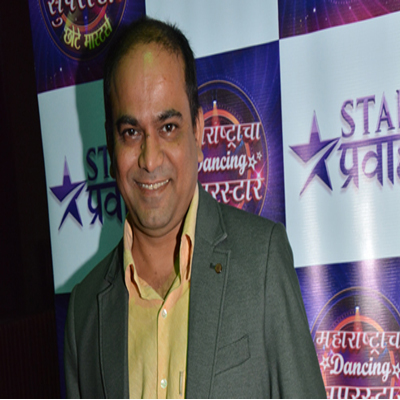
  • Jayesh Patil takes charge of Star Pravah’s programming

    Jayesh Patil takes charge of Star Pravah’s programming

    MUMBAI: A change of face will mark a change of programming strategy on Marathi GEC channel Star Pravah. Jayesh Patil has been roped in as the new programming head for the channel, filling in the shoes of Shrabani Deodhar who has been elevated to a higher position which is yet unknown.

    Patil was previously with Reliance Big Productions for nearly two and a half years where he led the programming as fiction head. Prior to that, he has been a writer for several popular shows starting off with Ek Mahal Ho Sapno Ka and continuing with trend setters such as Kumkum, Jassi Jaisi Koi Nahi, Laagi Tujhse Lagan and more recently with Bade Achche Lagte hain.

    Taking charge on 26 August, he has already got to work to study the market and to strategise new plans. “Marathi space is very attractive. There is lots of scope for experimentation and there will be a lot of focus on events,” says Patil. He says he has had enough of writing and now it is time for him to reinvent himself as well as the programming strategy of Pravah.

    As far as competition is concerned Patil says that it is always good to have competition. Marathi as a genre has been lagging as compared to other regional genres but Patil says that this was the case a few years ago, but not anymore.

    Pravah faces competition from Zee Marathi and E TV Marathi but as of now it is leading in the genre.

  • Life OK’s Sunday programming experiment

    Life OK’s Sunday programming experiment

    Attention! An experiment is about to hit Indian televisionscreens come Sunday 23 June. If you‘ve not been switching on your television set on Sunday morns or noons for want of there being any original programming – apart from movies, and have had enough of watching singing and dancing shows in the evenings, then Life OK may be your new destination this weekend.

    Bringing a new kind of programming, extending its spheres, Life OK promises uninterrupted entertainment 12 noon to 12 midnight (baara – se – baara) on 23 June. Life Ok general manager Ajit Thakur is bracing himself for this Sunday gamble…

    But is this attempt a first of its kind? A recap of Sunday programming tells us that there was a time in India, a couple of decades ago; when streets were deserted owing to the single channel king Doordarshan and its strong Sunday programming. Flashing forward from the era of a single channel universe, leading general entertainment channels (GECs) like Star Plus and more recently, Colors have also encroached this territory.

    While Star struck an emotional chord with the nation by launching the very successful Aamir Khan anchored social show Satyameva Jayate, Colors had started airing non-fiction award shows in the early afternoon, followed by a movie screening and concluding it with a soft scripted drama cum reality show- Zindagi Ki Haqeeqat Se Aamna Saamna. Zee TV has Ramayan, a mythology show in the morning slot which, however, is not living up to audience’s expectations.

    Yet, generation of 12 hours full of fresh content is somewhat a brave initiative by Star Plus’s sister GEC.

    Life OK, over the past couple of weeks has grown steadily in terms of GRPs (though it shed GRPs in week 24). The weekend slot of the channel is grabbing more and more eye balls with each passing week. With this as an opportunity, Life OK thought of going all the way and see if it works.

    Life OK GM Ajit Thakur is taking a punt with his baara – se – baara initiative on this Sunday (23 June)

    Thakur states: “I am quite delighted with the way we have received responses from the viewers over the past couple of weeks. Talking about 12pm to 12am, on weekends, we have found a bit of a gold mine as people are available throughout the day. Unlike other markets, in LC1 markets there is a lot of viewership happening. Everybody is doing show launches and wants to target between 8pm – 12am time slots so we thought to bring a change by extending our programming which has not been done by anybody till now.”

    The channel aims to own this Sunday with a combination of crime, terror, mythology programming. Audiences will get to see Savdhaan movie- part 2, which is going to be much more informative and different from the first one.

    New reality series on the list include Police dial 100, a new innovation where the channel crew will accompany the Delhi cops, running behind them, observing how they solve the cases and recording them. The reality show, produced by Endemol, will occupy a double slot along with the Savdhaan movie -Part 2. The channel had already shot 10 episodes of the show at the time of writing.

    The channel will also air fresh episodes of Mahadev and Shapat.

    More on the entertainment side, Life OK also plans to air a special Bollywood movie to garner more eyeballs.

    “Let’s raise the ambition with maha – thriller weekend baara – se – baara.” asserts Thakur when asked why he chose particularly Sunday and not Saturday as part of his weekend programming. “Saturday in terms of viewership, is not that high as Sunday. Besides, a large chunk of India works on Saturday’s and it‘s a humongous task for me to ask my team and my producers to do such a hectic programming, as 12 hours is a lot of time.”

    What is rather disappointing is the fact that this unique 12 hour programming is slated only for the coming Sunday. Thakur reasons: “To be frank, we want to test it first, this is the trail run. I wanted advertiser’s feedback and we attained success when we did 6am -6pm on 2 June. We received good responses in terms of viewership and advertisers as well. So we thought of further strengthening it by bringing baara – se – baara and I am sure we will get good responses for this as well. And when we do might it make it a regular initiative at least once a month.”

    The channel plans to promote the weekend initiative largely in the coming three days. However, the focus will be more on promoting across social media platforms rather than on-ground activities. Its management plans to leave no stone unturned to make its presence felt on digital media by targeting fan driven pages and profiles of their flagship shows likeMahadev and Savdhaan. To top it all, the channel is also buying air time on other channels, out of which, the promotion will be huge on Star network channels while few news channels and youth-based channels are also being approached.

    When asked what makes Life OK and Star Plus different in terms of content and programming Thakur says: “Star plus targets women in the household a lot more and that has always been Star’s strength. On the other hand, Life OK targets the whole family. In terms of content, Star talks about aspirations and about new Indian relationships whereas Life OK deals with crime, mythology, terror, spirituality and cops. Star Plus talks about relationships between Nanad – Bhabhi and new thinking and that is why ‘nayi soch’ whereas Life OK talks about today’s reality of life through our stories and what makes life OK on a daily basis. Life OK tries to inspire people by picking up serious social topics.”

    Further elaborating on the fact that this Sunday is an experiment, Thakur shares: “For us it is the experiment to change the rules of the game. I always have the support of Uday Shankar (Star India CEO) and Sanjay Gupta (Star India COO). And yes it is a big risk I am taking as nobody has gone into 12 hours of programming. Some would say wow great… while some would say it is too much. While, everybody is giving repeats to the audiences and we are giving original programming. What is more important for us is how our viewers will react to it.”

    Vivaki Exchange CEO Mona Jain says the experiment should do well for Life OK

    But will this trial run work for the channel? Vivaki Exchange CEO Mona Jain asserts: “There are many channels which are plugging in for reality shows on Sunday’s. Life OK is taking a good initiative by coming up with 12-hours of programming to create more impact with the audiences at large, where most of the people are at home resting. Mahadev and Savdhaanare high property shows and are taking the same route that is weekend slots, making it easy for them to spot on the ratings. And people who are loyal audiences of Life OK will watch these shows no matter what. Thus I am quite sure that this kind of experimentation should do well.”

    We, along with team Life OK, wait with anxious eagerness to know the result of this experiment…

  • BBC announces religious programming this Easter

    MUMBAI: BBC has announced that this Easter BBC Religion and Ethics reflects on the life and legacy of Jesus through major documentaries, sacred music, readings and live worship.

    BBC One will broadcast The Royal Maundy Service on 21 April live from Westminster Abbey, presented by Huw Edwards. The service coincides with Her Majesty Queen Elizabeth II‘s 85th birthday, the first time this has happened during her reign.

    The service will see some of Her Majesty‘s subjects receive the gift of Maundy money as recognition of the work they have done in their communities. Music during the service will include Praise To The Holiest In The Heights, Give Almes Of Thy Goods and Handel‘s Zadok The Priest.

    For Holy Week, BBC One presents a special documentary does Does Christianity Have A Future? Ann Widdecombe looks at the changing face of Christianity in the UK and asks if there is still a role for an established church.

    Also during Holy Week, BBC One will broadcast The Story Of Jesus, a two-part series that explores the life and teaching of Jesus, using the very latest archaeological, historical and theological research with dramatic reconstructions of key moments in the Gospels.

    The Story Of Jesus is a co-production for BBC One between CTVC and Big Book Media.

    On BBC Radio 3, Joan Bakewell explores the beliefs of artists, thinkers, religious leaders and other public figures in a returning series of Belief, broadcast Monday to Friday during Holy Week. Guests for the week are: comedian Omid Djalili, philosopher Raymond Tallis, novelist Salley Vickers, composer Tarik O‘ Rega, and American theologian Stanley Hauerwas.

    To mark Good Friday, BBC One presents What Is The Point In Forgiveness? Historian Bettany Hughes explores the notion of forgiveness throughout history. Bettany undertakes a journey through more than 2,000 years to find out whether and how forgiveness has benefited humankind.

    Just after 3 pm, as Christians mark the hour of Christ‘s suffering in words of prayer, readings and music, BBC Radio 4 presents Good Friday Liturgy. Professor Tina Beattie, Director of the Digby Stuart Research Centre for Catholic Studies at Roehampton University, visits Jerusalem and what may have been the actual places of trial, suffering and resurrection in the story of Christ‘s Passion.

    On BBC Radio 2, Aled Jones presents At The Foot Of The Cross. St Albans Cathedral is the glorious setting for meditation in words and music for Good Friday. Music, poetry and readings from the Bible read by Hugh Bonneville and Emma Fielding tell the story of the crucifixion with, at its centre, a complete performance of Fauré‘s Requiem.

    On the Saturday of Holy Week (Easter Eve), Radio 4 provides an early start to the day with spiritual comment and prayer on Prayer For The Day with the Bishop of London, the Rt Rev Richard Chartres.

    And in The Lamentations Of Jeremiah, on Radio 3, Catherine Bott looks at the poems in the Book Of Jeremiah and considers what inspired so many composers to set these dark texts to music. Music features includes pieces by Brumel, Heinichen, Durante, Byrd, Tallis, White, Palestrina, Lassus, Victoria and Zelenka.

    Choruses and hymns will also reflect the emotions and power of the gospel later on Easter Eve, with the welcome return on BBC Two of Easter From King‘s which tells, in words and music, the story of the last days of the earthly life of Jesus and his resurrection. Music sung by the world-famous Chapel choir, directed by Stephen Cleobury, includes Lotti‘s Crucifixus, pieces from Handel‘s Messiah and Mozart‘s Ave Verum Corpus.

    On Easter Morning, worship on the BBC begins in the Sunrise Service on Radio 4. The Dean of Liverpool Cathedral Metropolitan Cathedral Canon Anthony O‘Brien presents a service for the beginning of Easter Day. Joyful Easter carols include: Ye Sons And Daughters, Walking In A Garden, I Know That My Redeemer Lives and Thine Be The Glory.

    Sunday Worship, Easter Day, also on Radio 4, will come live from St George‘s Chapel Windsor Castle. The joy of Easter is celebrated in a communion service from the Book Of Common Prayer, live from St George‘s Chapel, Windsor Castle. Hymns include Jesus Christ Is Risen Today, This Joyful Eastertide, and Thine Be The glory. The Preacher and celebrant: The Revd Dr Hueston Finlay.

    BBC One will show live Easter Day Eucharist from Salisbury Cathedral. The service will be introduced by the Dean of Salisbury, the Very Rev. June Osborne, who will also preach and the President is the Rt Rev. Dr Christopher Herbert. The programme opens with the lighting of the Paschal Candle, symbolising the Light of Christ, which will be lit from a bonfire outside the Cathedral just before dawn on Easter morning.

    BBC One will also transmit Pope Benedict XVI‘s traditional Easter message and blessing Urbi Et Orbi, “to the city and the world”.

    Songs Of Praise on BBC One celebrates Easter Day with traditional hymns from Wesley Memorial Church in Oxford, plus songs from tenor Wynne Evans and mezzo-soprano Melanie Marshall. Actors Bill Paterson and Tamsin Greig read the Easter Story from the King James Bible.

  • Suvarna scripts a programming turnaround

    Star’s Kannada offering Suvarana is on a roll these days. The channel seems to be on the path to entrenching itself, at least for now, in the number two slot in the Kannada GEC space. The top three positions were for long occupied by the Sun Network’s Udaya TV, the number one player by far; Ramoji Rao’s ETV Kannada at No 2; and Zee Kannada, a relatively newer entrant at the third spot.

    “Suvarna stands for fresh entertainment. Call it fiction or non-fiction or any program for that matter; our approach is to offer differentiated and fresh concepts as programs,” says Suvarana business head Anup Chandrasekharan.

    The channel says that it is attempting through a planned strategy that it calls a ‘Threshold Strategy’ to grow its viewership by attracting the 15-24 age group, which did not consume Kannada television. “We decided that once we had the people to sample our offering through reality shows, we will ensure that stickiness prevails in the form of fiction,” reveals Chandrasekharan.


    “Our reality shows such as ‘Pyete Hidigir  Halli Lifu’ (PHHL), ‘Halli Hyda Pyeteg Banda’ (HHPB) ‘Pyete Mandi Kadige Bandru’ (PMKB) have helped bring in younger and newer audiences – the 15-24 year olds, to Kannada television. To our pleasant surprise we find that even the 25 plus age groups are glued to PMKB during the 8-9 pm time slot,” avers Chandrasekharan.


    “Also to  to attract the youngster, we have NGC programs with a Kannada voice over on air for an hour. We have brought in successful soaps such as ‘Lakumi’, a weekend comedy talk show ‘Maja with Sruja’, mythology shows like ‘Guru Raghvendra Vaibhava’, a weekend horror reality show ‘Shhh’, Tulu language shows, etc., into our programming mix,” informs Chandrasekharan.

    He adds: “To present soaps in a new light and form to Kannada viewers, we have set our own rules for producing. For example, the protagonist has to be in the age group of 15-25, she has to be new to the television. Similarly, new to TV yet experts as directors are introduced. Four out of the six soap directors are from cinema, and have made their debut on the small screen through Suvarna.”

    He clarifies that while reality shows have been bringing in the numbers for Suvarna, the effort has been to reduce the number of hours per week of reality programming. “Contrary to perception, we have only one daily reality show Monday to Friday during the 8-9 pm slot and one weekend horror reality show,” states Chandrasekharan.

    The channel experimented with fresh programming concepts such as the tribal theme series with PHHL in May this year. The show had 10 city girls experience 50 days of village life with one winner for the finale. It immediately followed that with HHPB wherein it took the reverse tack in the show. Eight tribal boys were mentored by eight city girls to find who amongst them survived the best in the city.

    The third and culminating sequel this year to the tribal theme is the currently on air PMKB which has 12 city bred Bangalore youngsters-young men and women in their twenties, to rough it out like tribal folk in a dense forest in Karnataka for 60 days. This is a first by any channel in a forest in India – other forest-theme programs have been shot abroad.

    Another first by the channel in the Kannada GEC space is that the grand finale episodes of the two completed tribal reality show sequels have been aired on a Sunday, with each final episode being over 14 hours in duration. This has helped the channel rake in huge mid week GRPs and a leading position for that period in the Kannada GEC space.

    For bringing in new audiences and to ensure viewership involvement and stickiness, the channel has initiated proceedings to help people indentify and associate themselves with the channel. It has started ‘Ladies Clubs’ in various towns and cities in the state.

    “We have started the Ladies Club initiative to involve audiences, to try and understand its pulse, to find out what is that they want,” explains Chandrasekharan.

    Membership to the Ladies Club has strict and special eligibility conditions. Chandrasekharan says the team has so far met and brainstormed with the Ladies Club members in three cities on weekends. To build continued loyalty, during meetings, Suvarna has also given an opportunity to some of the talented Ladies Club members to display any special skill sets they have on air.

    Suvarna has also focused on high intense innovative activities over print and outdoor to promote its soaps. Its religious story ‘Guru Raghavendra Vaibhava’ has been promoted through activities like projecting the episodes on a giant screen everyday between 6.30 pm and 9.30 pm at Mantralaya temple where thousands of devotees gather. The channel has distributed the Mantralaya Prasadam to 200,000 homes in 10 towns along with information on the show.


    Suvarna claims that it has set a record with the world‘s biggest friendship band as part of its initiative to promote the show ‘Classmates.’ ‘Classmates’ has friendship at schooldays as its core theme. It has also implemented classroom-to-classroom promotions in over 170 colleges in 10 towns.

    These efforts seem have borne rich fruit for the channel. TAM ratings furnished by the Suvarana management indicate that over almost four years (starting from calendar year 2007 to week 48 of the current year) viewership for the Kannada GEC space has shrunk. Suvarana has, however, managed to grow its own numbers by double digits year on year, bucking the overall negative trend.


    As per the chart above, Kannada CS 4+ viewership fell from 4147 in 2007 to 4079 in 2009 and to 4014 till the 48th week of this year, while Suvarna moved from the last position in 2007 with ratings of 84 to 251 GRPs (week 48 of 2010).

    Suvarana’s ten week average GRPs from September 2010 to November 2010 are 335. Thanks to the 14 hour long marathon grand finale on a Sunday of HHPB, the channel reached its peak GRPs for the year at 418.

    To quite an extent the channel has nibbled away numbers from Udaya, ETV, Zee and even Kasturi which stood at number four in 2008 just before Star took a controlling stake in Suvarana.

    In 2007, Udaya’s mean GRPs for the year stood at an unassailable 780. The following year they stood at 637, in 2009 at 545, and during the first 48 weeks of the current year, they were at 502. Comparable figures for ETV Kannada during the same period are 372, 283, 246 and 208 GRPs, while those of Zee Kannada are 85, 209, 194 and 169 GRPs. Kasturi’s figures for the same period are 107, 143, 107 and 96 GRPs.

    “The channel (Suvarana) has been producing quality serials and shows at very low cost. Its reality show cost per episode is one-tenth of what it would cost a national level channel to produce,” informs an industry source who has worked with the channel. The source further informs Indiantelevision.com, “This year the channel should turn the corner and show a very decent profit.”

    “From nowhere Suvarna has come up to a respectable position in the Kannada space,” adds a senior Bangalore-based media executive. “Its programming seems to be working well for it.”
     

  • Big fight is in Hindi GEC middle rung

    Think television and what commonly springs to mind are Hindi general entertainment channels (GEC) like Star Plus, Zee TV, Sony, etc… That list keeps getting longer with ever new entrants in the space.

    This has forced existing channels to pull up their socks and gird for the fight that is only going to get more fractious. At present though, the sorting is like this: Channels number 1 and 2 are head and shoulders above the pack. Much lower down in the second tier are another two contenders slugging it out. Then come the also rans (at least for the present), each trying to make an impression.

    These are some observations that can be highlighted after analyzing the performances in the Hindi GEC arena over the last six months (July to December 2007) based on data provided by Tam (C&S 4+, HSM), both relative market share and GRPs.

    Star drops but still leads; Zee closes gap, slips back

    There is still no argument. Star Plus, as has been the case for the last seven+ years, holds firmly onto pole position, despite Zee TV‘s best efforts at tipping the ratings scales in its favour.

    Looking at the channel shares, Star Plus garnered 36 per cent in July and was consistent till September. But it picked up strongly to reach 39 per cent in October. Nach Baliye 3 had a big role to play in strengthening Star Plus‘ position.

    Star India VP marketing and communication Prem Kamath says, “Zee TV saw an increase in the ratings post Sa Re Ga Ma Pa launch, which had narrowed the gap between Star Plus and Zee. Though there are a number of other things that have happened in Star Plus which have pushed the channel back to its place.”

    Relative channel share
    Channel Jul Aug Sep Oct Nov Dec
    Star 36 36 36 39

    39

    38
    Zee 29 29 32 32 30 29
    Sony 14 15 14 11 11 11
    Star One 7 7 7 6 6 7
    Sahara 9 9 9 8 8 8
    Sab 5 4 3 3 4 3
    9X 0 0 0 0 2 4
    Source: Tam (c&s 4+, HSM)

    “Last four to five weeks‘ data clearly say that Star Plus is considerably ahead of Zee. Several initiatives that we launched further strengthened our position. A weekly fiction based show called Sangam was launched in August. With Sangam, we extended our prime time to 7 PM, followed by Santan at 7:30 PM Santan is doing extremely well in its time band with 2+ rating. Bidaai, which launched in the 9 PM slot is fetching good numbers. All the newly launched shows cumulatively have consolidated our position in the genre,” says Kamath.

    On the other hand Zee TV started with a market share of 29 per cent, peaked and at 32 per cent in September. After staying consistent in October , it again fell to 30 per cent and 29 per cent in November and December.


    Says Joy Chakraborthy, Zee Entertainment Enterprises Ltd (Zeel) president and revenue, “This year Zee TV has done phenomenally well. Every inventory was utilised. We got more campaigns than any other channel. We have traded well and that speaks well of us.”

    The year brought good fortune for Zee TV as programmmes like Banoo Main Teri Dulhann and Sa Re GA Ma Pa could put down the Super Ks of Star Plus in terms of TVR, on several occasions. Its other shows like Saat Phere have also enjoyed steady eyeballs.

    Queried about Zee‘s drop in channel share, Chakraborthy says, “Dips in GRPs do occur when a show ends. But that is marginal. Our FPC is designed strategically and it offers variety of programs across categories. That has helped us in getting and retaining advertisers.”

    “We would love to overtake Star. Our sales have hyped and we are anyways ahead of them in weekday prime time GRP (Monday to Friday) 7-10 PM,” avers Chakraborthy.

    GRP January 2008, week days – all day
    Channel Week 1 Week 2
    Star 368.16 344.83
    Zee 273.7 271.84
    Sony 90.46 77.17
    Star One 72.71 75.51
    Sahara 64.49 66.45
    Sab 25.11 29.08
    9X 40.17 37.75
    Source: Tam (c&s 4+, HSM)


    GRP January 2008, weekdays – Prime Time
    Channel Week 1 Week 2
    Star 226.65 192.42
    Zee 169.04 170.84
    Sony 52.51 46.77
    Star One 37.05 41.93
    Sahara 27.13 27.74
    Sab 12.08 12.59
    9X 15.47 17.02
    Source: Tam (c&s 4+, HSM)


    Third position at stake

    While Star Plus and Zee TV are currently out of reach for the ‘best of the rest‘, it leaves a lot of room for other channels to slug it out for third position.

    The three channels in this turf would be Sony Entertainment Television (SET), Star One and Sahara One.

    The momentum is clearly with Star One and today it is laying claim to being the number three GEC. It almost stayed cosistent at seven per cent till September before falling down to six per cent in October and November and increased its pie by one per cent in December.

    However what has been spectacular is that the channel saw a phenomenal increase in the GRPs of the first two weeks of this year.

    Kamath says, “We launched Dil Mil Gaye, which has touched a TRP of 2, Annu Ki Ho Gayi Wah Bhai Wah, Choona Hain Aasman, we are launching Pari Hoon Main in the next week, which kind of completes our week day prime time. In the week end we have launched Bol Baby Bol which again has a TRP of 2. We have tasted fair success with Chak De Funjabi. There are lots of vacant time bands in Star One which has not been programmed. There are couple of other shows which will make Star One as the big player in the space.”

    Relative channel share
    Channel Jul Aug Sep Oct Nov Dec
    Star 36 36 36 39

    39

    38
    Zee 29 29 32 32 30 29
    Sony 14 15 14 11 11 11
    Star One 7 7 7 6 6 7
    Sahara 9 9 9 8 8 8
    Sab 5 4 3 3 4 3
    9X 0 0 0 0 2 4
    Source: Tam (c&s 4+, HSM)

    From a year-long look, the biggest downslide has been witnessed by SET of course. The times when it held the second position in the channel stakes are but a distant memory today.

    Not for lack of trying though. It has launched a variety of new shows like Amber Dhara, Jhalak Dikhla Jaa 2, Khwahish and Kuchh Is Tara but none have really clicked. Even Ekta‘s famous K factor failed to spark any TRP magic. The network went heavy with movie acquisitions, changed the network packaging, but to little avail.

    So much so that its GRPs in the first week of January 2008 came down from 90.46 to 77.17 in the second week of 2008, which is just 1.66 points ahead from Star One. If Sony doesn‘t arrest the slide, and soon, Star One could soon be the clear number three in the Hindi GEC space.

    That brings us to the third player in the tier two category – Sahara One.

    The channel has held steady even though it has seen its fair share of rise and fall in GRPs.

    When reality ruled Star Plus, Zee TV, SET and Star One, this channel was not behind either. Sahara One opened its cards with Biggest Loser Jeetega. It then unveiled its second big reality property, Jhoom India, which ended its run last week.

    Looking at the Week 1 and Week 2 data of 2008, we find that Sahara One‘s GRPs have remained consistent during weekdays.

    9X gives an impressive start; cannibalises Sab

    November also saw the launch of 9X. It started well with two per cent relative market share and jumped to four per cent in December.

    If observed carefully. The channel which got directly effected by 9X was Set‘s sibling Sab. Sab‘s market share is down from five per cent in July to three per cent in December.

    The GRPs for the first two weeks of January show that 9X has crossed the first hurdle and is now ahead of Sab.

    Sab has been experimenting to establish its prime time slot since long. Presently it has Left Right Left and Jersey No 10 as its stable shows.

    It is struggling to fill up its prime time with a variety of shows. In the process it also discontinued Sab Ka Bheja Fry, a comedy show which was launched targeting the male viewers.

    A lot of activity can be predicted with the landscape getting crowded with new entrants.

    “This will only increase the cost of production, carriage fees and placement. However the competition will help us grow. The GRPs will increase and advertising revenues will increase as more viewers will sample the shows,” says Chakraborthy.

    Whether up on the channel share scale or not, all channel programming teams agree on the need to present clutter breaking concepts to court viewers. That no channel is really walking the talk is another matter of course.

    According to some media planners, the viewership from GECs has shifted to news channels and movie channels which means that an advertiser will get a better viewer profile on news and movie channels.

    Still, there is experimentation going on. Let‘s us see which property clicks for which channel.